













Introduction: Spinach Is Simple — Until You Look Closer
Spinach looks like one of the easiest vegetables to handle.
It cooks fast. It’s available year-round in Dubai. And most people assume they’re already using it “correctly.”
But in practice, that assumption is where most problems start.
Across restaurant kitchens, catering operations, and even home cooking in the UAE, spinach is often:
- Overcooked to the point of losing texture
- Washed improperly, leading to grit or spoilage
- Combined in ways that reduce its nutritional value
- Bought without understanding variety differences
The result is not just a weaker dish — it’s wasted product, inconsistent flavor, and missed nutritional benefits.
In Dubai’s food ecosystem, where spinach is largely imported and supply chains move quickly, these small mistakes compound. What should be one of the most efficient, high-value vegetables becomes unpredictable.
This article breaks down what experienced buyers, chefs, and nutrition-focused professionals in Dubai actually do differently — and why it matters.
Not All Spinach in Dubai Is the Same
Most buyers treat spinach as a single product.
In reality, what you’re getting under the label “fresh spinach Dubai health benefits” can vary significantly depending on:
- Origin (local greenhouse vs imported)
- Leaf maturity (baby vs mature)
- Handling during transport
- Time since harvest
Baby Spinach vs Mature Spinach
This is the first distinction that affects both cooking and nutrition.
Baby spinach:
- Smaller, tender leaves
- Mild flavor
- Lower fiber structure
- Best for raw use or light cooking
Mature spinach:
- Larger, thicker leaves
- Slightly bitter taste
- Holds structure under heat
- Better for sautéing and curries
In Dubai’s wholesale markets, baby spinach is often preferred by:
- Salad-focused restaurants
- Cafés
- High-turnover kitchens
While mature spinach is more common in:
- Traditional cooking
- Bulk meal prep
- Catering operations
The mistake most people make is using these interchangeably.
They’re not.
The Real Issue: Overcooking Spinach
Ask most chefs in Dubai what goes wrong with spinach, and the answer is consistent: too much heat, for too long.
Spinach cooks faster than almost any other leafy vegetable.
Yet in many kitchens, it’s treated like cabbage or kale — vegetables that need time to soften.
What Happens When Spinach Is Overcooked?
- Leaves collapse completely
- Water content floods the pan
- Flavor becomes dull or metallic
- Nutrient density drops
This is especially noticeable in buffet environments and large-scale catering, where spinach sits on heat for extended periods.
From a supply perspective, this leads to a common complaint:
“The spinach quality is inconsistent.”
In many cases, the issue isn’t the spinach — it’s the handling.
Raw vs Cooked Spinach: What Actually Matters?
There’s a lot of confusion around raw vs cooked spinach nutrients, especially when discussing iron absorption.
Let’s simplify it.
Raw Spinach
- Higher in vitamin C
- Contains oxalates (compounds that reduce iron absorption)
- Best for salads and cold dishes
Cooked Spinach
- Reduced oxalates
- Better iron availability
- More concentrated nutrients (due to water loss)
So which is better?
Neither is universally “better.”
It depends on how you’re using it.
What Nutrition-Focused Buyers in Dubai Do
Instead of choosing one approach, they balance both:
- Raw spinach for freshness and texture
- Lightly cooked spinach for nutrient absorption
This is particularly relevant in health-conscious segments of Dubai’s market, where buyers are increasingly asking about:
- Functional nutrition
- Ingredient efficiency
- Meal optimization
The Iron Myth: Why Spinach Isn’t Working for You
Spinach is often associated with iron.
But many people in the UAE consume it regularly without seeing real benefits.
The reason comes down to absorption, not content.
The Problem
Spinach contains iron — but also oxalates, which bind to that iron and make it harder for the body to absorb.
The Practical Fix
Professionals in nutrition and food preparation often adjust how spinach is paired:
- Combine with vitamin C sources (lemon, tomatoes)
- Avoid pairing with calcium-heavy ingredients in the same meal
- Use light cooking methods to reduce oxalates
This is where cooking technique directly affects nutritional outcome.
And it’s one of the most overlooked aspects of spinach use in Dubai.
Washing Spinach the Wrong Way (A Costly Mistake)
In wholesale supply discussions, one issue comes up repeatedly:
“Spinach spoils too fast.”
Often, the problem starts during washing.
Spinach is delicate. It absorbs water easily. And improper handling can reduce shelf life by 30–50% in some cases.
Common Mistakes
- Washing too early before storage
- Leaving excess moisture on leaves
- Using warm water
- Rough handling that bruises leaves
What Experienced Kitchens Do Instead
- Wash only before use
- Use cold water
- Dry thoroughly (salad spinner or air drying)
- Store with airflow, not sealed moisture
For businesses, this directly affects:
- Waste levels
- Consistency
- Cost control
In Dubai’s climate, where temperature and humidity already create pressure on fresh produce, these small steps matter more than most realize.
Why Spinach Quality Feels “Inconsistent” in Dubai
Many buyers — from households to restaurant managers — express the same concern:
“Sometimes spinach is great, sometimes it’s not.”
This perception is real, but the reasons are often misunderstood.
Key Factors Behind Variability
- Import cycles
Spinach supply shifts depending on sourcing regions and seasonal availability. - Cold chain handling
Any break in temperature control affects leaf quality quickly. - Time since harvest
Spinach degrades faster than many vegetables. - Storage conditions after purchase
Even good-quality spinach can deteriorate quickly if stored incorrectly.
In practice, suppliers working closely with Dubai-based distributors such as JMB Farm Fresh often observe that complaints about quality are frequently tied to post-purchase handling rather than sourcing alone.
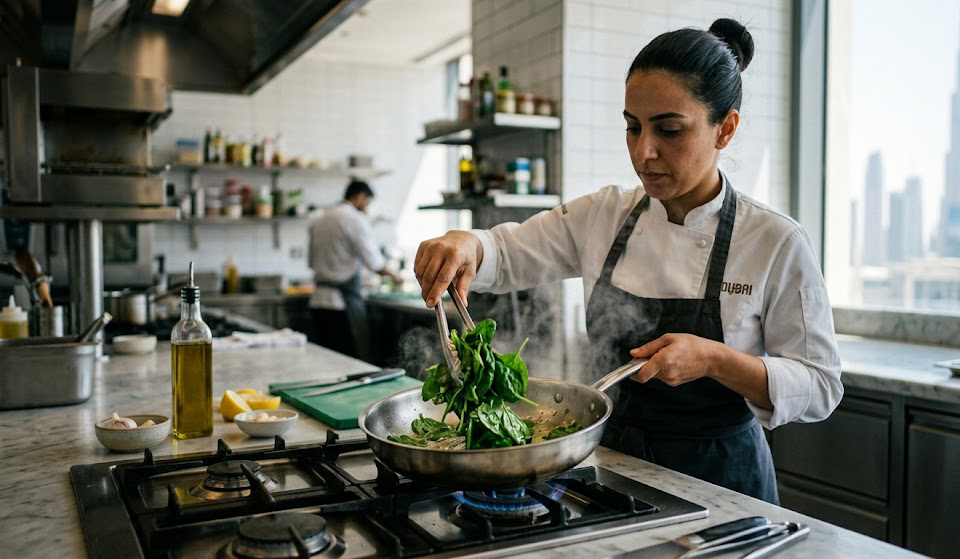
The Right Way to Cook Spinach (According to Professionals)
The goal is simple: preserve structure, flavor, and nutrients.
The Method Most Professionals Use
- Heat pan first
- Add minimal oil
- Add spinach briefly (30–90 seconds)
- Stir lightly — do not compress
- Remove as soon as leaves wilt
That’s it.
No prolonged cooking. No heavy simmering.
This approach is common in:
- Modern restaurant kitchens
- Health-focused meal prep operations
- High-efficiency catering setups
Because it delivers consistency.
When “Healthy” Spinach Becomes a Kitchen Liability
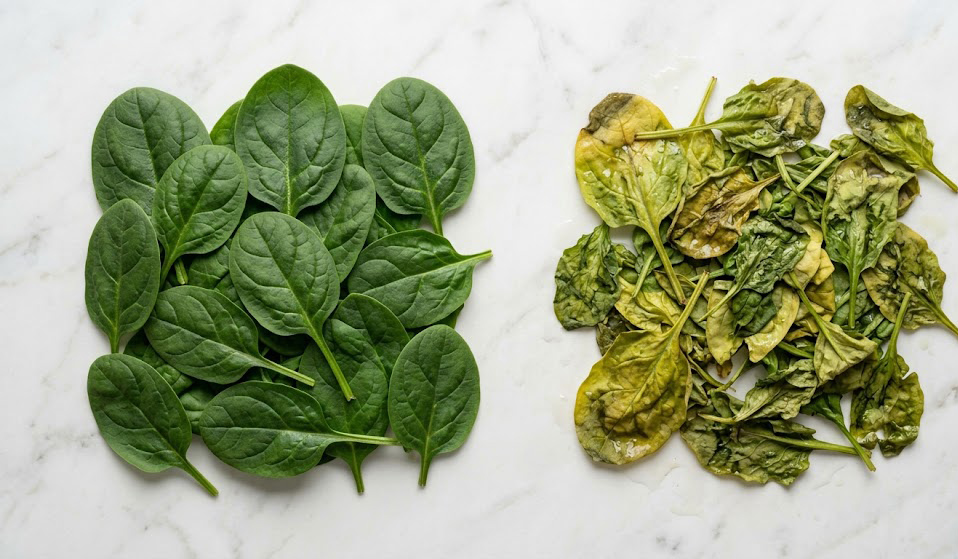
Spinach is often treated as a low-risk ingredient.
It’s inexpensive relative to other greens, widely available, and easy to prepare. But in Dubai’s food supply environment, spinach can quietly become one of the most waste-prone vegetables in the kitchen.
This is especially true in:
- Hotel buffets
- Catering operations
- High-volume family kitchens
- Meal prep businesses
The issue isn’t demand. It’s handling speed versus product sensitivity.
Why Spinach Wastes Faster Than Expected
Spinach has:
- High water content
- Thin leaf structure
- Minimal physical protection
That means it reacts quickly to:
- Temperature changes
- Moisture buildup
- Compression during storage
In practical terms, a batch of spinach can go from usable to unusable within 24–48 hours if not managed properly.
This is why many buyers in Dubai believe:
“Spinach quality is unreliable.”
But from a supply perspective, spinach is actually predictable — just less forgiving than other vegetables.
Buying Spinach in Dubai: What Experienced Buyers Look For
Whether sourcing for a restaurant or a household, experienced buyers don’t rely on appearance alone.
They assess spinach based on a few consistent indicators.
1. Leaf Structure and Tension
Fresh spinach leaves should:
- Hold their shape
- Feel slightly firm
- Not collapse under light pressure
If leaves look “flat” or overly soft, they’re already losing structure.
2. Moisture Condition
Spinach should feel:
- Dry to the touch
- Not sticky
- Not visibly wet inside packaging
Excess moisture is one of the earliest signs of potential spoilage.
3. Color Consistency
Look for:
- Deep green leaves
- Minimal yellowing
- No dark patches
Color variation often indicates uneven storage or aging.
4. Smell (Often Ignored)
Fresh spinach has a mild, clean scent.
A slightly sour or “earthy-heavy” smell suggests early breakdown.
This is particularly relevant in Dubai, where extended transport and storage can accelerate these changes.
Baby Spinach Online vs Bulk Spinach: A Real Tradeoff
With the rise of buy baby spinach online Dubai searches and delivery-based grocery models, many buyers are shifting toward pre-packed formats.
But this introduces a tradeoff that’s not always obvious.
Pre-Packed / Retail Spinach
Advantages:
- Convenient
- Pre-washed (in many cases)
- Consistent portion sizes
Limitations:
- Higher moisture retention
- Shorter shelf life after opening
- Less control over batch quality
Bulk / Wholesale Spinach
Advantages:
- Better control over handling
- Often fresher at point of purchase
- More cost-efficient at scale
Limitations:
- Requires proper washing and storage
- More variation between batches
- Needs faster turnover
This is why many experienced buyers in Dubai don’t fully commit to one model.
They adjust sourcing based on:
- Volume needs
- Storage capacity
- Usage speed
Some UAE buyers prefer working with established wholesale produce providers rather than fragmented retail sourcing, especially when consistency matters over convenience.
Organic vs Conventional Spinach in the UAE
Another growing area of confusion is organic spinach UAE delivery versus conventional sourcing.
Demand for organic produce is increasing in Dubai, especially among:
- Health-focused households
- Premium cafés
- Nutrition-led brands
But the assumption that organic automatically means “better” needs context.
What Changes with Organic Spinach?
- Grown without synthetic pesticides
- Often more delicate
- Shorter shelf life in some cases
What Does NOT Automatically Change?
- Handling requirements
- Storage sensitivity
- Cooking outcomes
In fact, organic spinach can be more sensitive to poor handling due to the absence of certain protective treatments.
From a supply perspective, the key question is not:
“Is it organic?”
But rather:
“How fresh is it, and how has it been handled?”
The Hidden Role of Seasonality in Spinach Quality
Spinach is available year-round in Dubai.
But that doesn’t mean it behaves the same throughout the year.
Winter Months (Peak Stability)
During cooler periods:
- Supply chains are more stable
- Leaf quality is stronger
- Shelf life tends to be longer
This is when spinach performs most consistently.
Summer Months (Higher Risk)
During peak heat:
- Cold chain pressure increases
- Transit conditions become more critical
- Shelf life shortens
Even small delays or storage issues can affect quality quickly.
For buyers, this translates into:
- More frequent purchasing
- Smaller batch sizes
- Closer attention to storage
This seasonal shift is often overlooked, leading to frustration that seems like “supplier inconsistency” but is actually environmental pressure.
How Cooking Method Affects Supply Efficiency
Cooking technique doesn’t just affect taste or nutrition.
It also affects how much spinach you need to buy.
Example: Volume Shrinkage
Spinach reduces significantly when cooked.
- 1 kg raw spinach can shrink to a fraction of its original volume
- Overcooking increases this shrinkage further
For restaurants and catering operations, this creates a planning issue:
- Underestimating raw volume leads to shortages
- Overestimating leads to waste
Efficient Kitchens Adjust in Two Ways
- They cook in smaller batches
This prevents overcooking and reduces waste. - They match spinach type to dish
- Baby spinach for light dishes
- Mature spinach for cooked meals
This alignment between product and use case is one of the key differences between efficient and inefficient kitchens.
Common Spinach Mistakes in Dubai Kitchens
Across both commercial and home settings, the same patterns appear.
1. Treating Spinach Like a Long-Cooking Vegetable
Spinach doesn’t need time. It needs timing.
2. Washing Too Early
Leads to faster spoilage and unnecessary waste.
3. Buying Based on Price Alone
Lower-priced spinach often reflects shorter remaining shelf life.
4. Ignoring Storage Conditions
Even high-quality spinach degrades quickly without proper refrigeration and airflow.
5. Overloading the Pan
Causes uneven cooking and excessive water release.
A Quiet Shift in Dubai’s Food Scene
There’s a noticeable shift happening in how spinach is being used across Dubai.
More buyers are starting to:
- Think in terms of nutrient efficiency
- Focus on cooking methods, not just ingredients
- Align sourcing with actual usage patterns
This shift is subtle but important.
It reflects a broader movement toward:
- Less waste
- Better consistency
- More informed buying decisions
And spinach — despite being simple — sits right at the center of this change.

What Dubai’s Nutritionists Actually Recommend (In Practice)
When you speak with nutrition-focused professionals in Dubai, the advice around spinach is rarely complicated.
But it is specific.
They don’t focus on trends or labels. They focus on how spinach behaves in the body and in the kitchen.
1. Don’t Rely on Spinach Alone for Iron
Spinach contributes to iron intake, but it shouldn’t be treated as a primary source.
Instead, nutritionists often recommend:
- Pairing spinach with vitamin C (lemon juice, tomatoes)
- Combining it with a broader mix of vegetables
- Using it as part of a balanced plate, not the centerpiece
This approach improves overall nutrient absorption without overcomplicating meals.
2. Use Light Cooking — Not Raw Only, Not Fully Cooked
The common advice is:
“Don’t overcook, but don’t rely only on raw either.”
A mix of preparation styles works best:
- Raw spinach in salads for freshness
- Lightly sautéed spinach for better nutrient availability
This balanced approach avoids the extremes that many people fall into.
3. Cook It Fresh — Not in Advance
Spinach doesn’t hold well after cooking.
In both household and commercial kitchens, pre-cooked spinach tends to:
- Lose texture quickly
- Develop a dull flavor
- Release excess water
This is why many experienced kitchens in Dubai:
- Prepare spinach just before serving
- Avoid holding it under heat for long periods
4. Think in Terms of Absorption, Not Just Nutrition
One of the more advanced shifts in thinking is this:
It’s not just about what spinach contains — it’s about what your body can use.
This is where small adjustments matter:
- Adding acidity (lemon)
- Avoiding heavy dairy combinations in the same dish
- Using proper cooking techniques
These changes don’t require new ingredients.
Just better use of existing ones.
A Practical Spinach Workflow (Home & Commercial Use)
To bring everything together, here’s how experienced buyers and kitchens in Dubai typically handle spinach from purchase to plate.
Step 1: Buy Based on Use Case
- Baby spinach → salads, light dishes
- Mature spinach → cooking, bulk meals
Avoid buying without a clear plan for how it will be used.
Step 2: Store Correctly
- Keep refrigerated immediately
- Avoid sealed moisture buildup
- Use breathable storage where possible
Even a few hours outside proper conditions can reduce shelf life.
Step 3: Wash Only Before Use
- Use cold water
- Handle gently
- Dry thoroughly
This step alone can significantly reduce spoilage.
Step 4: Cook Quickly
- Preheat pan
- Use minimal oil
- Cook for under 90 seconds
Remove as soon as leaves wilt.
Step 5: Pair Smartly
- Add lemon or tomato for better iron absorption
- Avoid overloading with heavy ingredients
- Keep flavors clean and simple
The Bigger Picture: Why Spinach Reflects the Entire Produce System
Spinach might seem like a small detail in Dubai’s larger food supply chain.
But it reflects a broader truth.
Fresh produce is not just about sourcing.
It’s about:
- Timing
- Handling
- Understanding product behavior
Spinach simply exposes these factors more clearly because it reacts faster than most vegetables.
This is why experienced buyers — whether households or large-scale kitchens — treat spinach as a precision ingredient, not a basic one.
A Note on Supply Relationships
In Dubai’s produce ecosystem, consistency often comes down to relationships rather than one-time purchases.
Buyers who work closely with structured suppliers tend to:
- Understand seasonal changes better
- Adjust expectations based on supply cycles
- Receive more consistent batches over time
In practice, suppliers working within organized distribution networks, including operations such as JMB Farm Fresh (jmbfarmfresh.com), often observe that long-term buyers face fewer quality surprises compared to those sourcing from fragmented retail channels.
This isn’t about brand preference.
It’s about alignment between sourcing and usage.
Conclusion: Spinach Isn’t Difficult — It’s Just Unforgiving
Most people aren’t “cooking spinach wrong” because they lack skill.
They’re cooking it wrong because spinach doesn’t tolerate casual handling.
It requires:
- Short cooking times
- Careful storage
- Thoughtful pairing
When those are in place, spinach becomes:
- Consistent
- Efficient
- Nutritionally effective
When they’re not, it quickly becomes:
- Waste-prone
- Flavorless
- Misunderstood
In a city like Dubai — where food quality, cost control, and efficiency all matter — understanding these small details makes a measurable difference.
FAQ Section
1. What is the best way to cook spinach correctly in the UAE?
The best method is quick sautéing. Heat a pan, add a small amount of oil, and cook spinach for 30–90 seconds until just wilted. Avoid prolonged cooking.
2. Is raw or cooked spinach better for nutrients?
Both have benefits. Raw spinach retains vitamin C, while cooked spinach improves iron absorption by reducing oxalates. A mix of both is ideal.
3. How can I improve spinach iron absorption?
Pair spinach with vitamin C-rich foods like lemon or tomatoes, and avoid combining it with high-calcium foods in the same meal.
4. Why does spinach spoil so quickly in Dubai?
High temperatures, moisture buildup, and delayed refrigeration can reduce shelf life. Proper storage and handling are essential.
5. Should I buy baby spinach or regular spinach in Dubai?
Choose based on use. Baby spinach is better for salads, while mature spinach is more suitable for cooking and bulk meals.








 Home
Home  Whishlist
  Compare
  Checkout