




Introduction
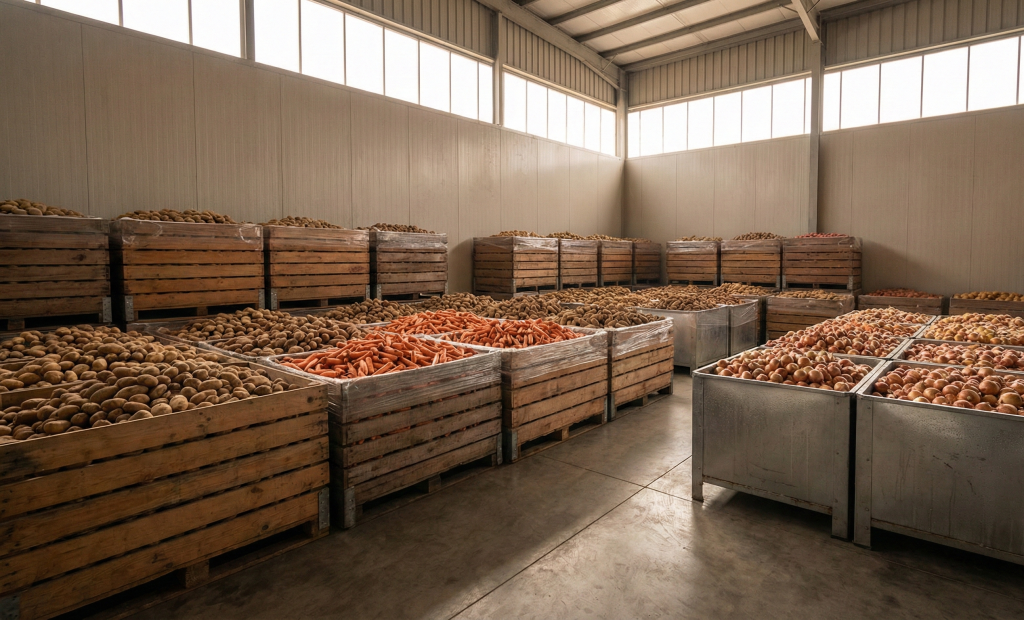
Anyone who buys fresh produce in volume—whether for a restaurant, hotel kitchen, grocery shelf, or family table—eventually notices a pattern. Leafy greens wilt quickly. Berries soften in days. Tomatoes turn uneven. Yet potatoes, carrots, onions, and beets seem to hold their shape and quality far longer.
This is not accidental. Root vegetables are biologically designed to survive storage. Their structure, moisture content, and growth cycle make them naturally more durable than most fruits and vegetables.
Understanding why root vegetables last longer is more than a curiosity. It affects:
- Food waste levels
- Purchasing schedules
- Storage planning
- Cost control
- Menu and inventory reliability
For buyers in the UAE, especially during winter when imports and regional harvests overlap, proper root vegetables storage becomes a practical advantage rather than a niche skill.
This article explains the science behind their shelf life and sets the foundation for a practical vegetable shelf life guide for professional and household use.
What Counts as a Root Vegetable?
In supply terms, “root vegetables” usually refers to crops that grow underground and store energy in their root or bulb. Common examples include:
- Potatoes
- Carrots
- Beets
- Turnips
- Radishes
- Onions
- Garlic
They differ from leafy vegetables or fruiting crops because the edible part is a storage organ, not a fast-growing leaf or exposed fruit.
This distinction is central to their durability.
Why Root Vegetables Last Longer Than Most Produce
1. They Are Built for Dormancy
Root vegetables exist to store energy for the plant’s next growth cycle. Starches and sugars are packed into dense tissues underground, protected from sun, wind, and pests.
Once harvested, that same structure slows down:
- Water loss
- Bacterial growth
- Respiration (how fast the vegetable “uses itself up”)
In contrast, leafy vegetables remain biologically active and fragile after harvest. Their cells are thin and exposed.
This is the first reason why root vegetables last longer: they evolved to survive inactivity.
2. Lower Surface Moisture = Lower Spoilage Risk
Soft produce such as strawberries or lettuce has high surface moisture and thin skin. That creates ideal conditions for mold and decay.
Root vegetables usually have:
- Thicker outer layers
- Dry skins or natural peels
- Less exposed flesh
Moisture is still present inside, but it is sealed by structure rather than exposed to air.
From a storage perspective, this reduces:
- Fungal growth
- Odor transfer
- Cross-contamination risk
It is one reason bulk buyers prefer roots for longer holding periods.
3. They Are Less Sensitive to Light and Oxygen
Most fruits continue ripening after harvest because oxygen triggers chemical reactions inside them. Root vegetables are not designed to ripen. They remain in a suspended biological state unless exposed to warmth and light.
This is why:
- Potatoes sprout when exposed to light
- Onions soften when kept warm
- Carrots shrivel when humidity drops
The problem is not time alone—it is the wrong storage environment.
Handled correctly, these crops remain stable much longer than tomatoes or peppers.
Storage Life Compared to Other Produce
A simplified comparison illustrates the difference:
| Produce Type | Typical Shelf Life (Proper Storage) |
|---|---|
| Leafy greens | 3–7 days |
| Soft fruits (berries) | 2–5 days |
| Tomatoes | 5–10 days |
| Root vegetables | 2–8 weeks (or more) |
This is why root vegetables appear in nearly every professional best way to store vegetables guide. They offer predictability, which matters more than perfection when planning food supply.
Winter Context in the UAE
In the UAE, winter brings increased availability of:
- Imported European root crops
- Regional production from nearby climates
- Higher turnover in wholesale markets
However, this also introduces risk:
- Temperature shifts between ports, trucks, and storage rooms
- Variability between suppliers
- Mixed harvest ages arriving in the same week
In practice, buyers working with structured distributors rather than ad-hoc retail sourcing often notice more consistent root vegetable quality because storage conditions are managed before the product ever reaches the kitchen. Suppliers familiar with regional conditions—such as Dubai-based operations including JMB Farm Fresh—typically see fewer spoilage issues with root crops compared to leafy imports during winter months.
This does not mean root vegetables are immune to problems. It means their biology gives them a wider margin for error.
Common Misunderstandings About Root Vegetables
“They last forever.”
They last longer, not indefinitely. Improper storage will still cause:
- Sprouting
- Softening
- Rot
- Bitter flavors
Shelf life depends more on environment than calendar days.
“All root vegetables store the same way.”
Potatoes, onions, and carrots are often lumped together. In reality:
- Potatoes prefer cool darkness
- Onions prefer dry airflow
- Carrots prefer higher humidity
Treating them identically shortens their usable life.
Understanding how to store potatoes and carrots properly requires separating them instead of grouping them.
“Refrigeration solves everything.”
Cold storage slows decay but can also damage texture and flavor:
- Potatoes turn starchy and sweet in cold air
- Onions absorb moisture and soften
- Garlic loses firmness
Not all root vegetables belong in the refrigerator.
Why Shelf Life Matters to Buyers
For commercial kitchens and distributors, shelf life affects:
- Order frequency
- Cash tied up in stock
- Waste disposal
- Menu stability
For households, it affects:
- Grocery planning
- Food safety
- Budget control
In both cases, the same logic applies: longer-lasting produce reduces risk but only if stored correctly.
This is where root vegetables storage becomes an operational skill rather than a kitchen habit.
The Biological Tradeoff
Root vegetables last longer because they grow slower and store energy. The tradeoff is:
- They bruise internally without showing damage
- They can rot from the inside out
- Visual inspection is less reliable than with leafy produce
This is why professional buyers squeeze gently, check necks and tips, and avoid bulk bags that show condensation.
Durability does not equal invulnerability.
What This Means for Storage Strategy
At this point, three principles emerge:
- Root vegetables last longer because of structure, not treatment
- Most spoilage comes from incorrect temperature and humidity
- Mixing storage methods shortens shelf life
The next step is understanding how to store potatoes and carrots, and how onions and garlic differ from both.
That requires looking at temperature, airflow, light, and separation in practical terms.
Temperature, Humidity, and Light: The Three Controls That Matter
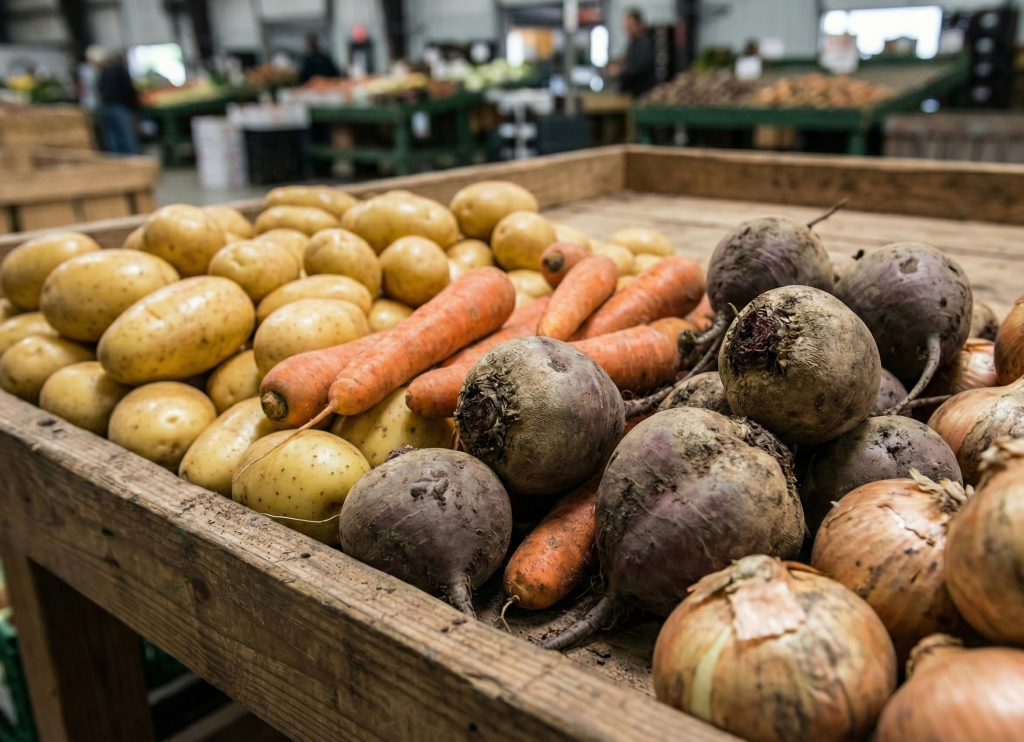
When people ask for the best way to store vegetables, they often focus on containers or packaging. In reality, three environmental factors control shelf life more than anything else:
- Temperature – how fast the vegetable’s internal chemistry moves
- Humidity – how quickly it loses or absorbs moisture
- Light – whether it stays dormant or begins to grow
Root vegetables tolerate time better than most produce, but they react strongly to these three elements.
How to Store Potatoes and Carrots (They Should Not Be Treated the Same)
Potatoes: Cool, Dark, and Dry
Potatoes are tubers designed to remain underground until the next growing season. Light and heat signal them to sprout.
Best conditions:
- Temperature: cool but not refrigerated
- Environment: dark
- Airflow: moderate
- Container: breathable sack or open crate
Avoid:
- Plastic bags (trap moisture)
- Sunlight (causes greening and bitterness)
- Refrigerators (converts starch to sugar, affecting taste and texture)
A common professional mistake is storing potatoes near onions. Onions release gases that accelerate sprouting in potatoes.
Carrots: Cool and Moist, But Not Wet
Carrots behave differently. They are roots, not tubers, and they dehydrate faster.
Best conditions:
- Temperature: refrigerated or cold room
- Humidity: high
- Container: perforated bag or lined crate
Avoid:
- Dry air (causes shriveling)
- Standing water (causes rot)
- Storage next to apples or pears (ethylene gas softens them)
This is why how to store potatoes and carrots must be treated as two separate systems rather than one generic rule.
Onion Storage Tips: Dryness Matters More Than Cold
Onions are bulbs with layered skins designed to dry naturally after harvest.
Best conditions:
- Temperature: room temperature or slightly cooler
- Humidity: low
- Airflow: strong
- Light: minimal
Avoid:
- Refrigerators
- Plastic wrapping
- Stacking in sealed boxes
Moisture is the enemy of onions. Once softened, they decay quickly and contaminate surrounding produce.
Garlic follows similar rules but tolerates cooler storage slightly better.
Why Mixing Root Vegetables Causes Problems
One of the most common storage errors is grouping all root vegetables together.
Problems that arise:
- Onions trigger potato sprouting
- Potatoes absorb onion odor
- Carrots lose moisture in dry potato rooms
- Mixed crates hide early rot
Separation improves shelf life more than expensive packaging ever will.
In professional kitchens, roots are often stored in separate bins based on humidity needs rather than vegetable type.
The Role of Harvest Age and Transport
Shelf life begins long before storage.
Two potatoes may look identical but behave differently because:
- One was harvested weeks earlier
- One traveled longer in transit
- One experienced temperature swings
This explains why buyers sometimes feel confused when “the same product” lasts different lengths of time.
Wholesale buyers notice this more than retail customers because they hold stock longer. It is also why quality varies more during seasonal transitions.
In winter, for example, UAE markets may receive:
- Early European harvests
- Late regional harvests
- Cold-stored inventory from previous months
Each behaves differently in storage.
Common Mistakes Businesses and Households Make
1. Overwashing Before Storage
Washing removes natural protective layers. For potatoes and carrots, it increases surface moisture and speeds decay.
Better approach:
Brush off soil and wash only before use.
2. Using Sealed Plastic Containers
Sealed containers trap:
- Moisture
- Heat
- Gases
This creates a microclimate that encourages rot.
Breathable packaging extends shelf life more than airtight storage.
3. Trusting Appearance Alone
Root vegetables can rot internally while still looking firm.
Warning signs include:
- Sweet or sour smell
- Soft necks
- Dark spots near tips
- Moist patches
Professional buyers rely on touch and smell more than color.
4. Treating Refrigeration as a Universal Solution
Cold slows decay but damages certain roots.
Potatoes, onions, and garlic degrade in refrigerators over time.
Carrots and beets benefit from cold.
Understanding which category each vegetable belongs to prevents flavor loss and waste.
Real-World Supply Scenarios
Restaurant Storage Room
A restaurant receiving 50 kg of mixed roots weekly often stores them together for convenience.
Result:
- Potatoes sprout early
- Onions soften
- Carrots dehydrate
Separated storage increases usable life by several days without changing supplier or price.
Catering Operation
Caterers experience variable demand. Roots provide buffer stock.
However, mixing imported winter carrots with locally sourced ones often leads to uneven performance. One batch wilts faster, creating inconsistency.
This is not a supplier issue alone; it reflects harvest timing and transport.
Household Pantry
Households often store potatoes near windows for accessibility.
Light exposure creates green patches and bitterness.
Simple relocation extends shelf life by weeks.
Wholesale vs Retail Storage: A Balanced View
Wholesale sourcing offers:
- Larger batch consistency
- Controlled transport
- Fewer handling stages
Retail sourcing offers:
- Smaller quantities
- Faster turnover
- Less storage responsibility
Tradeoffs exist:
- Wholesale requires better storage discipline
- Retail reduces planning burden but increases price per unit
Some UAE buyers prefer working with established wholesale produce providers rather than fragmented retail sourcing because it reduces variability, especially during peak winter imports.
This does not eliminate spoilage risk, but it improves predictability.
Seasonal Risk: Winter in the UAE
Winter brings:
- Higher volume
- Lower prices
- Mixed supply origins
It also brings:
- Condensation risk
- Cold chain breaks
- Faster spoilage when moved into warm kitchens
Root vegetables tolerate these shifts better than leafy produce, but improper acclimation can still cause:
- Surface sweating
- Mold
- Internal breakdown
Allowing produce to stabilize before storage is often overlooked.
Practical Takeaways So Far
From a storage and sourcing perspective:
- Root vegetables last longer because of biology, not luck
- Storage environment matters more than packaging
- Separation improves shelf life
- Season and origin affect durability
- “One rule for all vegetables” shortens life
The remaining piece is knowing how to judge usable life and when to discard stock.
That is where a practical vegetable shelf life guide becomes useful.
A Practical Vegetable Shelf Life Guide (Root Crops Focus)
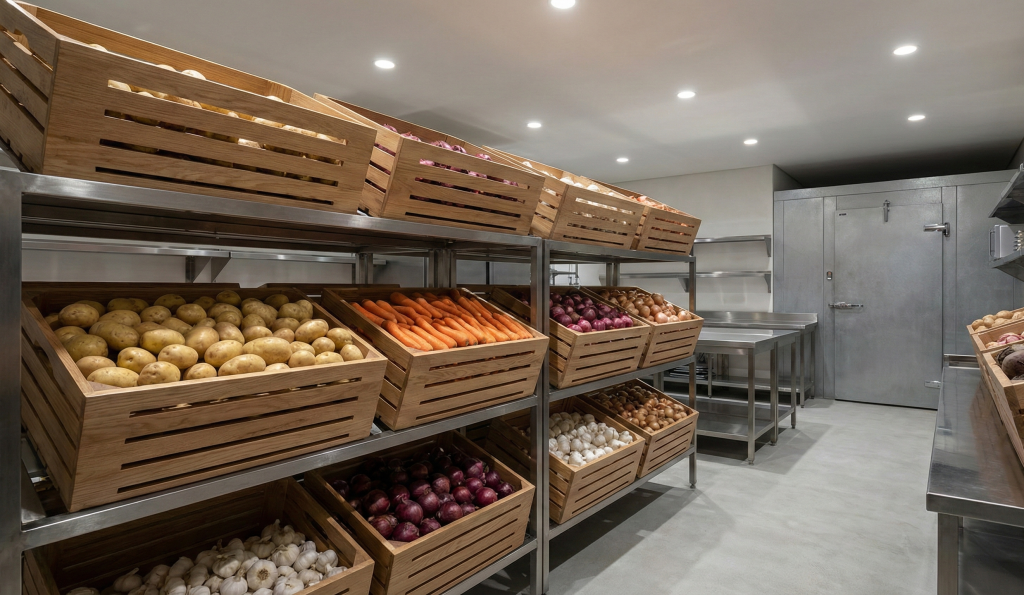
Shelf life is not a fixed number of days. It depends on harvest age, transport conditions, and how the product is handled after arrival. Still, broad ranges help with planning.
Under correct storage conditions:
- Potatoes: 2–6 weeks
- Carrots: 2–4 weeks
- Onions: 3–8 weeks
- Garlic: 4–8 weeks
- Beets and turnips: 2–4 weeks
These are working averages, not guarantees. A batch that experienced heat or moisture during transit will fall below these ranges.
This is why experienced buyers track both arrival date and storage behavior, not just delivery volume.
How to Judge Root Vegetables Beyond Appearance
Visual inspection is only a first filter. Root vegetables can deteriorate internally before showing clear external signs.
Better indicators include:
- Weight: Lighter-than-expected roots usually mean dehydration
- Firmness: Soft necks and tips indicate breakdown
- Smell: Sour or sweet odor often signals internal rot
- Surface feel: Damp patches suggest microbial activity
Professional kitchens often rotate stock by touch rather than color. This reduces surprise spoilage during service hours.
When Storage Fails: What Actually Causes Waste
Waste is rarely caused by “bad produce” alone. It is usually a system issue.
Common failure points:
- Receiving produce warm and storing it immediately
- Mixing old and new stock
- Storing onions and potatoes together
- Keeping carrots in dry storage
- Washing roots too early
- Leaving stock in sealed plastic
These mistakes appear small, but they shorten usable life significantly.
In practice, suppliers working closely with Dubai-based distributors such as JMB Farm Fresh often observe that most root vegetable losses come from post-delivery handling rather than field quality.
Buying and Storage: A Balanced Perspective
Root vegetables are often chosen because they feel “safe.” They last longer and tolerate transport better.
That does not mean they are risk-free.
Benefits of root vegetables in sourcing:
- Lower spoilage rates
- Stable pricing compared to leafy produce
- Greater storage flexibility
- Easier inventory planning
Tradeoffs:
- Hidden internal rot is harder to detect
- Flavor degrades if stored too cold
- Sprouting creates waste even when texture is intact
- Long storage dulls sweetness and aroma
For restaurants and caterers, this means roots should still be rotated actively, not treated as permanent stock.
For households, it means buying smaller amounts more frequently often results in better taste, even if waste is already low.
Local vs Imported Roots in Winter
In winter, UAE markets receive mixed origin root vegetables.
Local or regional supply tends to be:
- Fresher
- Shorter in transit
- Less temperature stressed
Imported supply tends to be:
- Larger in volume
- More uniform in size
- Stored longer before arrival
Both can be good. The key difference is storage behavior.
Imported roots may already be partially aged when they arrive. They require stricter rotation. Local roots often last longer at home but may vary more in size and shape.
This explains why buyers sometimes feel confused by inconsistent shelf life across similar-looking batches.
The Real Reason Root Vegetables Are Reliable
Root vegetables last longer than most produce because:
- They evolved to store energy underground
- They lose water more slowly
- They are less sensitive to oxygen
- They tolerate transport better
Their durability is biological, not technological.
Storage success depends on respecting that biology:
- Keep them cool but not cold
- Dry but not sealed
- Separate by type
- Use smell and touch, not just sight
These are simple rules, but they prevent most waste.
Conclusion
Root vegetables are not durable by accident. Their structure and purpose in nature make them some of the most stable foods in the fresh produce chain.
Understanding why root vegetables last longer allows buyers to:
- Reduce spoilage
- Plan orders more confidently
- Store stock more effectively
- Improve food quality without increasing cost
The difference between a potato that lasts two weeks and one that lasts six is rarely the farm. It is usually the storage room.
For both businesses and households, learning proper root vegetables storage is one of the simplest ways to improve produce reliability.
Frequently Asked Questions
1. What is the best way to store vegetables in general?
Store vegetables according to their moisture and temperature needs. Roots prefer cool, dark, and breathable conditions. Leafy vegetables need cold and humidity. Mixing storage methods shortens shelf life.
2. How should I store potatoes and carrots at home?
Potatoes should be kept in a cool, dark, dry place. Carrots should be refrigerated or stored in a humid environment. They should not be stored together.
3. What are the most important onion storage tips?
Keep onions dry, well-ventilated, and away from refrigeration. Moisture causes softening and rot. Avoid sealed plastic bags.
4. Why do root vegetables last longer than leafy vegetables?
Root vegetables store energy underground and have dense tissue and protective skins. Leafy vegetables are biologically active and lose moisture quickly.
5. How can I tell if a root vegetable has gone bad?
Check for softness, sour or sweet smell, damp patches, and unusual lightness. Visual appearance alone is not reliable.








 Home
Home  Whishlist
  Compare
  Checkout