












Introduction: Summer Heat Changes How Dubai Shops for Vegetables
In Dubai, summer is not just a season. It is a logistical reality.
From May through September, outdoor temperatures regularly exceed what most fresh produce prefers. Leafy greens wilt faster. Soft fruits bruise easily. Even well-managed cold chains face pressure during transport, storage, and last-mile delivery.
This is one reason root vegetables remain a quiet constant in Dubai homes during summer. Families, restaurants, and food buyers rely on them not because they are trendy, but because they are practical.
Root vegetables tolerate heat better, travel more predictably, and offer longer usable shelf life when handled correctly. In a market shaped by imports, storage, and daily consumption planning, these traits matter more than many people realize.
This article explains why root vegetables hold their place in summer kitchens, how shoppers in the UAE can think about freshness more clearly, and which types tend to last longer under Dubai conditions.
Why Root Vegetables Matter More in Hot Climates
Root vegetables grow below ground. That simple fact shapes their behavior after harvest.
Unlike tender vegetables that depend on surface moisture and delicate cell structures, roots are naturally built to store energy and resist environmental stress. In hot regions like the UAE, this biological advantage translates into practical benefits.
Built for Storage, Not Speed
Many summer vegetables are grown to be eaten quickly. Root vegetables are grown to endure.
They typically have:
- Lower surface moisture
- Denser flesh
- Protective outer skins or layers
This makes them less sensitive to short temperature spikes, which can happen during unloading, transport delays, or home storage.
For Dubai households and buyers, this means fewer sudden losses and less daily pressure to restock.
Less Dependence on Perfect Refrigeration
Cold storage is essential in the UAE food system, but not every stage is equal.
Root vegetables are more forgiving when:
- Delivery vehicles are briefly exposed to heat
- Home refrigerators fluctuate
- Market displays are not perfectly chilled
This tolerance is one reason root vegetables Dubai households buy in summer often feel more consistent than other categories, even when sourced from different origins.
The Summer Shopping Reality in the UAE
To understand why root vegetables perform well, it helps to look at how produce moves in the UAE during summer.
Import-Driven Supply
Most fresh vegetables consumed in Dubai are imported during the hotter months. Even when produce is high quality at origin, distance adds risk.
Buyers frequently notice:
- Inconsistent sizing
- Variable freshness between batches
- Shorter shelf life for tender vegetables
Root vegetables absorb these variables better than many alternatives.
High Turnover vs. Predictability
Supermarkets prioritize fast-moving items. Households often assume high turnover equals freshness.
In summer, this assumption is not always reliable.
Fast-moving leafy items can still:
- Spend long hours in transit
- Lose moisture rapidly
- Deteriorate within a day or two at home
Root vegetables may move more slowly, but their usable life after purchase is often longer, which matters for families planning meals across several days.
Why Dubai Homes Lean on Root Vegetables in Summer Cooking
Beyond supply chains, cooking habits shift in hot weather.
Practical Meal Planning
During summer:
- People cook fewer elaborate meals
- Kitchens are used for shorter periods
- Leftovers are planned more carefully
Root vegetables fit this pattern well. They can be:
- Stored for several days
- Cooked in batches
- Used across multiple dishes without rapid spoilage
This reliability reduces waste, which is a growing concern among UAE households facing fluctuating produce quality.
Cultural Versatility
Root vegetables adapt easily to different cuisines common in Dubai homes.
They appear in:
- South Asian curries
- Middle Eastern stews
- Western roasts and sautés
- Simple boiled or pan-cooked dishes
This versatility makes them low-risk purchases, especially when shoppers are unsure how long other vegetables will last.
Which Root Vegetables Perform Best During Summer in Dubai?
Not all root vegetables behave the same. Storage life depends on structure, moisture content, and handling.
Below are the categories that tend to perform most reliably in UAE summer conditions.
Potatoes: The Most Forgiving Staple
Potatoes remain one of the most widely consumed root vegetables in Dubai for good reason.
When stored properly, they offer:
- Long shelf life
- Minimal moisture loss
- Stable texture even after days in storage
This is why potatoes fresh delivery Dubai buyers receive in summer often remains usable longer than expected, even outside ideal conditions.
Common issues to watch:
- Sprouting from excess warmth
- Green patches from light exposure
Both are manageable with correct storage away from light and heat.
Carrots: Reliable When Kept Dry
Carrots perform well in hot climates, but moisture control matters.
In Dubai:
- Excess humidity causes sliminess
- Dry storage preserves firmness
Many households notice that carrots UAE markets sell in summer last longer when removed from plastic and stored dry, rather than sealed tightly.
Carrots also tolerate short refrigeration gaps better than leafy vegetables.
Beetroot: Dense and Stable
Beetroot is often underestimated.
Its dense structure allows it to:
- Retain moisture internally
- Resist rapid softening
- Travel well over long distances
This makes beetroot Dubai shoppers buy during summer a consistent option, especially for roasting, boiling, or juicing.
Beetroot does require trimming of leaves if attached, as greens draw moisture from the root.
Freshness Is Not Just About Appearance
A common misconception among UAE buyers is that visual perfection equals freshness.
In reality, especially during summer, freshness is about internal condition, not surface shine.
Root vegetables may show:
- Minor surface scarring
- Uneven shapes
- Dry skins
These are often signs of natural growth, not quality loss.
What matters more:
- Firmness
- Absence of soft spots
- Neutral, earthy smell
Experienced buyers focus on these traits rather than cosmetic perfection.
Where Buyers Often Get Confused
Even seasoned shoppers misunderstand how root vegetables behave in summer.
Common assumptions include:
- “Smaller roots are always fresher”
- “Imported means lower quality”
- “Refrigeration fixes everything”
In practice, storage history matters more than origin. A well-handled imported root vegetable can outperform a poorly stored local one, especially during extreme heat.
Understanding these nuances helps households and businesses reduce waste and make calmer buying decisions.
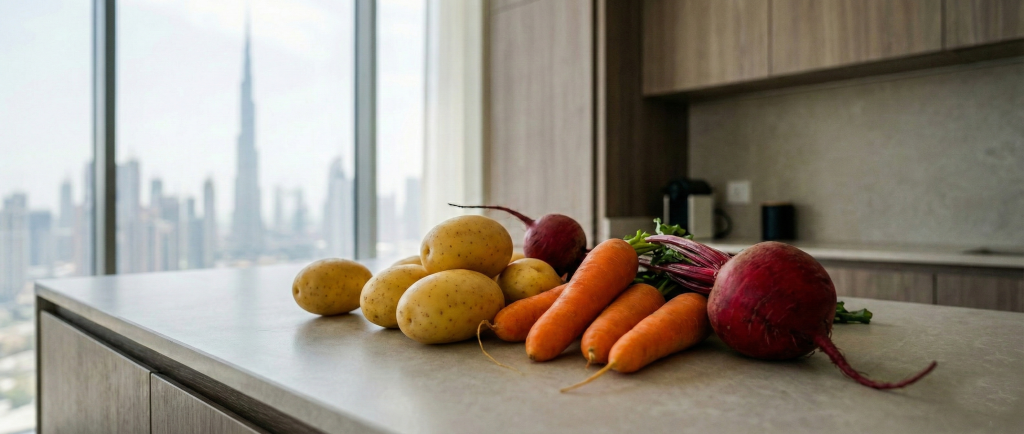
How Summer Heat Affects Freshness After Purchase
Most discussions about produce quality focus on farms and suppliers. In Dubai summers, what happens after purchase often matters just as much.
Once root vegetables leave controlled storage, three factors determine how long they stay usable:
- Heat exposure
- Air circulation
- Moisture control
Understanding these helps explain why some households experience rapid spoilage while others do not, even when buying from the same store.
Heat Is a Stress Multiplier
Root vegetables tolerate heat better than leafy greens, but tolerance is not immunity.
Short heat exposure is usually fine. Prolonged exposure accelerates:
- Internal moisture loss
- Enzyme activity that softens texture
- Sprouting in potatoes
This is why summer shopping habits matter. Leaving vegetables in a parked car for an hour can undo days of careful cold-chain handling.
Plastic Packaging Can Work Against You
Many buyers assume sealed plastic equals protection. In hot, humid environments, the opposite is often true.
Plastic traps moisture. Trapped moisture encourages:
- Surface slime on carrots
- Mold growth on beetroot
- Early spoilage in mixed vegetable bags
Experienced buyers often remove root vegetables from plastic as soon as they get home and store them loosely, allowing airflow.
Wholesale vs Retail: What Buyers Often Misunderstand
A recurring question in UAE food discussions is whether wholesale produce is “less fresh” than supermarket produce.
This idea persists because people confuse presentation with handling history.
The Real Difference Is Turnover Control
Wholesale produce typically:
- Arrives in larger volumes
- Moves through fewer display cycles
- Is handled by buyers who expect to store and process it
Retail produce:
- Is repacked frequently
- Sits under lighting for long hours
- May be misted to improve appearance
In summer, misting and lighting can shorten shelf life, even if the vegetable looks fresh on the shelf.
For root vegetables, wholesale batches often perform better simply because they experience fewer cosmetic interventions.
Why Restaurants Think Differently Than Homes
Restaurants and caterers judge vegetables by:
- Yield after peeling
- Consistency across batches
- Waste percentage
Households tend to judge by:
- Appearance
- Immediate firmness
- Brand familiarity
Neither approach is wrong, but summer conditions reward the professional mindset. Predictability matters more than surface polish.
Common Summer Mistakes That Increase Waste
Even when buying the right vegetables, small mistakes can create unnecessary losses.
Mistake 1: Refrigerating Everything
Not all root vegetables benefit from refrigeration.
Potatoes, for example:
- Develop sweetness and texture changes when too cold
- Store better in cool, dark, ventilated spaces
Carrots and beetroot tolerate refrigeration better, but only when kept dry.
A mixed approach works best, rather than a single rule.
Mistake 2: Washing Before Storage
Washing removes soil, which seems logical. But moisture left behind speeds decay.
Best practice:
- Store unwashed
- Clean only before use
- Brush off excess soil instead of rinsing
This is especially relevant for root vegetables Dubai homes buy during summer, when ambient humidity is already high.
Mistake 3: Buying for Appearance Instead of Use
In summer, uniform size and bright color matter less than density and firmness.
Slightly rough skins often indicate:
- Thicker protective layers
- Better storage potential
Choosing vegetables for how they will be cooked, not how they look raw, reduces disappointment.
How Professionals Judge Root Vegetable Freshness
Food buyers and procurement managers rarely rely on one indicator.
They check combinations:
- Weight relative to size (heavier usually means fresher)
- Resistance when pressed
- Smell near the skin, not just the surface
For carrots, flexibility is a warning sign. For beetroot, softness near the crown suggests age. For potatoes, excessive sprouting points to prolonged warm storage.
These checks take seconds but prevent waste later.
Seasonal Patterns Buyers Should Be Aware Of
While this article focuses on summer, seasonality still matters.
Summer Is About Storage, Not Harvest
Most root vegetables consumed in UAE summers were harvested earlier and stored.
That means:
- Storage conditions at origin matter
- Handling consistency matters more than harvest date
During winter, local and regional production increases, and freshness dynamics shift.
Understanding this helps buyers set realistic expectations rather than assuming quality fluctuations are random.
Quiet Role of Reliable Distribution
While households rarely see it, distribution discipline plays a large role in summer quality.
In practice, suppliers working closely with Dubai-based distributors such as JMB Farm Fresh often observe that consistency comes not from chasing the cheapest batch, but from maintaining stable sourcing and handling routines throughout the hot months.
This stability reduces surprises, which is valuable for both businesses and families.
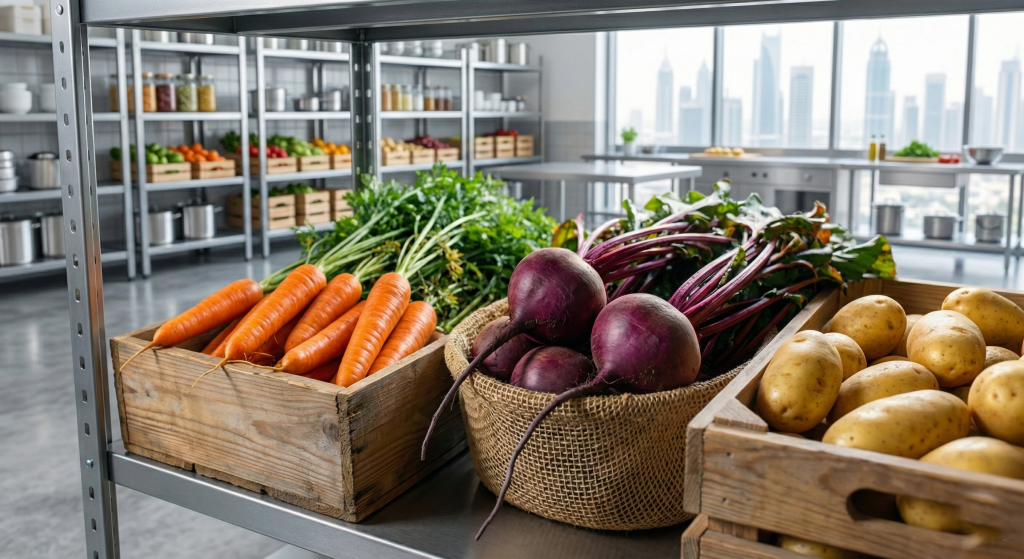
How Dubai Households Can Make Root Vegetables Last Longer
Small adjustments at home often make a bigger difference than switching stores.
During summer, the goal is not perfection. It is slowing decline.
Simple Storage Principles That Work in the UAE
These habits are common among experienced buyers and kitchen professionals:
- Store root vegetables separately from fruits
(fruits release ethylene gas, which speeds aging) - Keep them away from direct light
(especially potatoes) - Prioritize airflow over airtight sealing
- Accept that “cool” is better than “cold” for some items
No storage method stops time, but these steps extend usability by days, sometimes a full week.
Planning Meals Around Shelf Life
One quiet reason root vegetables remain staples is how well they support flexible cooking.
A practical approach many Dubai families use:
- Cook faster-spoiling vegetables first
- Keep root vegetables as backup ingredients
- Rotate usage rather than storing everything until the end
This mindset reduces pressure to cook daily and lowers waste during peak heat.
Tradeoffs and Limitations to Keep in Mind
Root vegetables are reliable, but they are not flawless.
Understanding limitations prevents unrealistic expectations.
Texture Changes Over Time
Even when safe to eat, older root vegetables may:
- Lose sweetness
- Become starchier
- Require longer cooking
This is normal, not a failure of quality.
Imported Does Not Mean Inferior, but It Means Older
During summer, most root vegetables are imported.
This does not automatically mean lower quality, but it does mean:
- Longer time since harvest
- Greater dependence on storage quality
Buyers who understand this judge produce more fairly and waste less.
Why Root Vegetables Remain a Summer Anchor in the UAE
In hot climates, food habits evolve around reliability.
Root vegetables succeed in Dubai summers because they:
- Absorb supply chain stress better than tender produce
- Fit flexible cooking and storage patterns
- Reduce daily shopping pressure
- Offer predictable yields across cuisines
This is why summer vegetables UAE households rely on are often less about freshness on day one, and more about usability over several days.
It is not nostalgia or tradition. It is adaptation.
Final Thoughts: Practical Choices Beat Perfect Produce
Dubai’s summer food reality rewards calm, informed decisions.
Root vegetables are not exciting. They are dependable.
For families, restaurants, and food buyers alike, that dependability translates into:
- Lower waste
- Fewer surprises
- Better control over meals and costs
In a market shaped by heat, distance, and timing, those advantages matter more than appearance.
Frequently Asked Questions
1. Why do root vegetables last longer than leafy vegetables in Dubai summer?
They have denser structures, lower surface moisture, and protective skins that tolerate heat and storage stress better.
2. Are imported root vegetables less fresh than local ones?
Not necessarily. Handling and storage conditions often matter more than origin, especially in summer.
3. Should potatoes be refrigerated in the UAE?
No. Potatoes store better in a cool, dark, ventilated space. Refrigeration can affect taste and texture.
4. Why do carrots become slimy in summer?
Excess moisture and sealed plastic packaging trap humidity, accelerating spoilage.
5. Are root vegetables suitable for bulk buying during summer?
Yes, when stored correctly. They are among the safest categories for bulk purchasing in hot months.








 Home
Home  Whishlist
  Compare
  Checkout