
















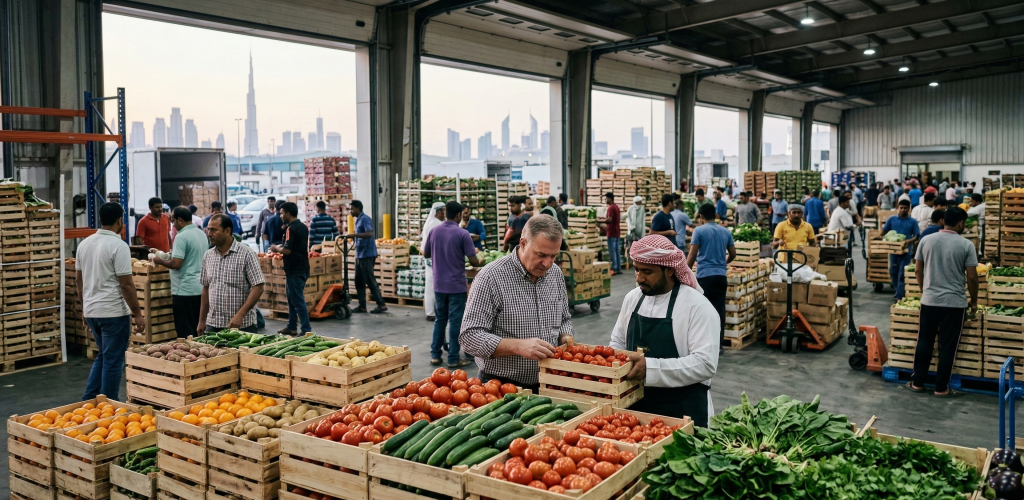
Dubai’s food culture moves fast.
Restaurants operate on tight margins, families cook for larger households, and catering companies prepare meals for hundreds of people daily. In this environment, buying fruits and vegetables one retail basket at a time often becomes inefficient.
Over the past few years, many restaurants, hotel kitchens, and even households in Dubai have started to buy fruits and vegetables in bulk rather than relying entirely on supermarket shopping. The shift isn’t only about saving money. It’s about consistency, freshness, supply reliability, and reducing waste.
Understanding why this shift is happening requires looking at how the produce supply chain in Dubai actually works — from import markets and wholesale distributors to restaurant kitchens and family homes.
This article explores the practical reasons behind the growing interest in bulk produce buying in Dubai, what buyers should understand before switching, and how seasonality and sourcing affect the quality of fruits and vegetables across the UAE.
The Unique Food Supply Environment in Dubai
Unlike many agricultural regions, the UAE imports a large portion of its fruits and vegetables.
Dubai’s markets rely on a complex supply chain that connects farms from multiple regions, including:
- India
- Pakistan
- Egypt
- Turkey
- Jordan
- South Africa
- Europe
Local farms in the UAE also contribute fresh vegetables, particularly during the cooler winter months when growing conditions improve.
Because of this international supply network, wholesale produce markets in Dubai play a critical role in maintaining food availability for restaurants, hotels, and retailers.
These wholesale channels typically receive produce earlier in the distribution chain than retail supermarkets. That difference can affect both freshness and price stability.
For businesses that depend on consistent ingredient quality, this distinction matters more than most people realize.
Why Bulk Produce Buying Is Growing in Dubai
The move toward bulk grocery shopping in Dubai did not happen overnight.
It developed gradually as restaurants, caterers, and even families began noticing a few recurring problems with retail produce purchasing:
- Inconsistent availability
- Fluctuating supermarket prices
- Packaging waste
- Smaller portion sizes that increase cost per kilogram
Wholesale purchasing addresses many of these concerns.
But the appeal goes beyond simple economics.
1. More Predictable Supply for Restaurants and Caterers
Restaurants operate on schedules that leave little room for ingredient shortages.
If a kitchen runs out of tomatoes, onions, or herbs during service, it can disrupt the entire operation.
Bulk purchasing from wholesale produce channels allows businesses to:
- Plan weekly or bi-weekly deliveries
- Maintain consistent ingredient stocks
- Reduce emergency grocery runs
For catering companies preparing large events, this predictability becomes essential.
A single wedding or corporate event may require hundreds of kilograms of vegetables and fruit. Buying those ingredients individually from retail outlets is rarely practical.
2. Lower Cost Per Kilogram Without Sacrificing Quality
Many buyers initially assume wholesale produce must be lower quality.
In reality, the opposite is often true.
Wholesale markets typically receive produce closer to the import or farm stage, meaning the fruits and vegetables may have spent less time in cold storage or display shelves.
The pricing difference usually comes from:
- Larger order volumes
- Reduced packaging
- Direct distribution channels
Supermarkets often add costs related to:
- Retail space
- Individual packaging
- Shelf display handling
- Smaller batch logistics
When buyers purchase fruits and vegetables in bulk in Dubai, they are often paying for the product itself rather than the retail presentation.
This distinction becomes especially noticeable for high-volume ingredients like:
- Potatoes
- Onions
- Tomatoes
- Citrus fruits
- Leafy greens
3. Reduced Food Waste in High-Volume Kitchens
Food waste is one of the most overlooked operational costs in restaurants.
When produce quality varies from day to day, kitchens struggle to predict shelf life. Some items spoil faster than expected, especially delicate vegetables and herbs.
Bulk sourcing from consistent suppliers can reduce this variability.
Experienced buyers often look for suppliers who:
- Deliver produce harvested or imported within predictable windows
- Maintain controlled storage during transport
- Provide consistent grading and sizing
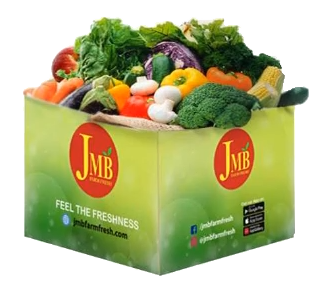
In practice, suppliers working closely with Dubai-based distributors such as JMB Farm Fresh often observe that kitchens waste less produce when deliveries follow a regular, predictable schedule.
Consistency reduces surprises.
And fewer surprises mean less spoilage.
Families Are Also Adopting Bulk Grocery Shopping
Restaurants were the first to adopt wholesale purchasing habits, but families in Dubai are increasingly following the same approach.
Several factors contribute to this trend.
Larger Households
Many households in Dubai include extended family members, visiting relatives, or shared accommodations.
Cooking for five or six people daily quickly increases the amount of fruits and vegetables required each week.
Bulk buying helps families:
- Reduce frequent grocery trips
- Store staple produce items for longer periods
- Manage weekly food budgets more effectively
Growing Awareness of Produce Freshness
Consumers today pay closer attention to freshness than they did a decade ago.
Supermarket produce sometimes spends several days moving through distribution centers before reaching shelves.
Wholesale channels often shorten this timeline.
For items like cucumbers, tomatoes, berries, and leafy greens, even one or two days can noticeably affect texture and flavor.
Families who regularly cook at home begin noticing these differences over time.
Community Buying and Shared Orders
Another emerging trend in Dubai is group grocery purchasing.
Friends, neighbors, or apartment residents sometimes place larger produce orders together and divide the items afterward.
This approach works well for bulk items such as:
- Potatoes
- Citrus fruits
- Bananas
- Onions
- Carrots
It allows households to benefit from wholesale pricing without needing commercial storage space.
Common Misunderstandings About Wholesale Produce
Despite its advantages, many buyers still hesitate to explore wholesale produce in Dubai because of a few common misconceptions.
Understanding these concerns helps buyers make more informed decisions.
“Wholesale Produce Is Lower Quality”
This assumption usually comes from confusion between wholesale distribution and lower-grade produce markets.
In reality, wholesale channels handle produce across multiple grades and quality levels.
High-end restaurants often source from the same distribution networks used by grocery retailers.
Quality depends more on:
- Supplier relationships
- Storage conditions
- Delivery timing
- Seasonal sourcing
Not the wholesale model itself.
“Bulk Buying Means Too Much Storage”
Storage is a real consideration.
However, most bulk produce purchases do not require industrial refrigeration.
Many fruits and vegetables store well for several days when handled properly.
Examples include:
- Potatoes and onions (cool, dry spaces)
- Apples and citrus fruits (refrigerated storage)
- Carrots and cabbage (long shelf life in cold storage)
Buyers simply need to plan orders around realistic consumption patterns.
“Supermarkets Always Offer the Freshest Produce”
Supermarkets prioritize visual presentation and shelf stability.
That often means produce must survive longer display periods.
Wholesale channels sometimes move products faster because they serve high-volume kitchens and food businesses.
For certain fruits and vegetables, faster turnover can translate to better freshness.
Understanding Seasonal Produce in the UAE
Seasonality plays a major role in produce quality across Dubai’s markets.
Even though the city imports fruits and vegetables year-round, seasonal patterns still affect:
- Price stability
- Flavor quality
- Supply availability
This is especially noticeable during the UAE winter growing season, which runs roughly from November through April.
During these cooler months, local farms produce a wider range of vegetables, including:
- Tomatoes
- Cucumbers
- Zucchini
- Eggplant
- Lettuce
- Herbs
Local produce during winter often reaches wholesale markets quickly because transportation distances are shorter.
Buyers who understand these seasonal cycles can make smarter purchasing decisions.
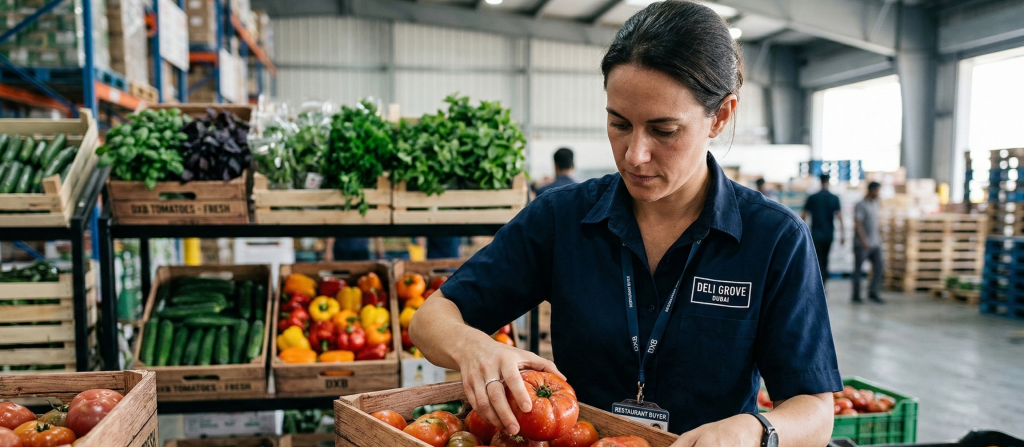
Import Cycles and Their Impact on Fresh Produce in Dubai
Outside the winter growing window, Dubai relies more heavily on imported fruits and vegetables.
Import cycles influence both price and quality. Produce arriving from nearby agricultural regions typically reaches UAE markets faster than shipments traveling longer distances.
For example:
- Indian and Pakistani produce often arrives quickly due to geographic proximity.
- Egyptian vegetables are common during certain seasonal harvest periods.
- European fruits tend to appear during specific export windows.
- South African citrus and grapes frequently enter UAE markets during the Southern Hemisphere harvest season.
Each supply route carries its own timing and freshness characteristics.
Buyers who purchase bulk produce often learn to track these patterns. When certain fruits or vegetables are in peak harvest periods, they are usually more abundant, more flavorful, and more price-stable.
This knowledge is particularly useful for restaurants planning seasonal menus or families looking to maximize value when they buy fruits and vegetables in bulk in Dubai.
How Experienced Buyers Judge Produce Quality
One reason many restaurants prefer wholesale sourcing is the ability to inspect produce more closely.
Retail stores package and label produce for convenience. Wholesale markets, however, typically present fruits and vegetables in crates or cartons, allowing buyers to evaluate quality directly.
Experienced buyers tend to look for a few simple indicators.
Visual Freshness Signals
Even without technical expertise, several signs can help determine freshness:
- Color consistency: Natural, vibrant color often indicates recent harvest or proper storage.
- Firm texture: Soft or wrinkled produce may signal aging stock.
- Leaf condition: Fresh greens should look crisp rather than wilted.
- Moisture levels: Excess moisture inside packaging can indicate condensation from temperature fluctuations.
These visual cues are especially important when evaluating delicate items like herbs or leafy vegetables.
Aroma and Natural Fragrance
Many fruits release subtle natural aromas when fresh.
For example:
- Citrus fruits often have a clean, bright scent.
- Ripe mangoes or melons carry a gentle fragrance.
- Fresh herbs should smell strong and green rather than dull.
While aroma alone does not determine quality, it often complements visual inspection.
Size and Grading Consistency
Produce is typically graded by size and quality standards.
Uniform sizing matters for restaurant kitchens because it helps maintain consistent cooking results and portion control.
Wholesale buyers often select suppliers who provide reliable grading. Consistency in size reduces preparation time and helps maintain predictable recipe outcomes.
The Practical Economics of Bulk Produce Buying
While freshness and supply reliability matter, cost management remains a key motivation for many buyers.
Food businesses operate on tight margins. Even small changes in ingredient costs can influence overall profitability.
Bulk purchasing affects cost in several practical ways.
Reduced Packaging Costs
Retail produce usually comes in smaller packages designed for individual shoppers.
Wholesale distribution often eliminates much of this packaging.
This reduces:
- Plastic wrapping
- Individual labeling
- Retail display preparation
The savings from reduced packaging often contribute to lower per-kilogram costs.
Fewer Distribution Layers
Retail produce frequently moves through multiple distribution steps before reaching supermarket shelves.
Wholesale supply chains may involve fewer intermediaries.
In simpler terms:
Farm → Importer → Wholesale distributor → Buyer
Instead of:
Farm → Importer → Distribution center → Retail chain → Store shelf → Customer
Each additional step introduces transportation and handling costs.
By purchasing closer to the wholesale stage, buyers may avoid some of those additional expenses.
Better Planning and Inventory Management
Bulk purchasing encourages buyers to plan meals and ingredient usage more carefully.
Restaurants often structure weekly purchasing schedules around expected demand.
Families adopting bulk grocery shopping habits frequently begin planning weekly cooking routines as well.
This planning helps reduce impulse purchases and improves overall food utilization.
The Tradeoffs Buyers Should Understand
Despite its benefits, wholesale sourcing is not always the right solution for every situation.
Bulk purchasing introduces its own challenges.
Understanding these tradeoffs helps buyers make balanced decisions.
Storage Limitations
Not all households or businesses have adequate storage space.
Some produce items require refrigeration, while others need cool, dry environments.
Buyers should consider:
- Refrigerator capacity
- Kitchen storage conditions
- Expected consumption rates
Overestimating storage capacity can lead to unnecessary spoilage.
Minimum Order Quantities
Many wholesale suppliers set minimum order sizes.
This makes sense for distribution efficiency but can be inconvenient for smaller households.
Some buyers solve this problem by sharing orders with friends, neighbors, or nearby businesses.
Community purchasing helps distribute larger quantities across multiple households.
Learning the Rhythm of Produce Supply
Retail supermarkets simplify the shopping experience by keeping many items available year-round.
Wholesale markets reflect seasonal supply more directly.
Buyers may notice that certain fruits or vegetables fluctuate in availability depending on harvest cycles.
Learning these seasonal rhythms takes time but ultimately helps buyers make more informed choices.
Why Consistency Matters More Than Price Alone
Many first-time wholesale buyers focus primarily on price.
Experienced buyers usually focus on consistency instead.
Consistent produce quality affects several aspects of food preparation:
- Cooking times
- Flavor balance
- Portion control
- Menu reliability
Restaurants in particular depend on predictable ingredient quality.
A tomato that varies significantly in moisture or acidity can change the flavor of an entire dish.
For this reason, professional kitchens often prioritize suppliers who deliver stable quality rather than simply the lowest price.
In the Dubai food industry, long-term supplier relationships often become more valuable than occasional short-term cost savings.
The Role of Trusted Produce Suppliers
Wholesale produce markets in Dubai are highly active, and buyers can choose from many suppliers.
However, reliability tends to matter more than variety alone.
Suppliers who maintain consistent sourcing practices and controlled storage conditions help buyers avoid unpredictable quality changes.
Some UAE buyers prefer working with established wholesale produce providers rather than fragmented retail sourcing because it simplifies logistics and improves planning.
In practice, distributors familiar with the regional supply network — including companies such as JMB Farm Fresh — often observe that buyers value predictable deliveries and stable product grading above almost everything else.
Consistency builds trust across the supply chain.
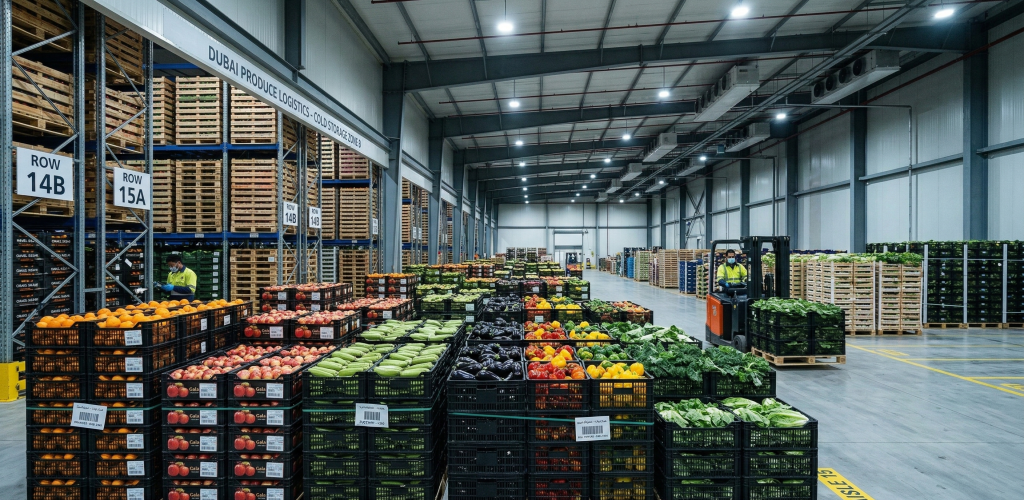
Practical Tips for Buyers Considering Bulk Produce Purchasing
For buyers who are new to wholesale sourcing, a few practical habits can make the transition much easier.
Bulk buying works best when it is approached with planning rather than impulse.
Start With High-Volume Items
Not every fruit or vegetable needs to be purchased in bulk.
Most experienced buyers begin with staple ingredients they use frequently.
Common bulk items include:
- Potatoes
- Onions
- Tomatoes
- Citrus fruits
- Carrots
- Bananas
These ingredients have relatively stable shelf lives and appear in many recipes.
Starting with these items allows buyers to learn storage and consumption patterns before expanding into more delicate produce.
Understand Shelf Life Differences
Different fruits and vegetables behave very differently in storage.
For example:
Longer shelf-life items
- Potatoes
- Onions
- Apples
- Cabbage
- Carrots
Shorter shelf-life items
- Spinach
- Lettuce
- Herbs
- Berries
- Mushrooms
Bulk purchasing works best when buyers balance long-lasting produce with smaller quantities of delicate items.
This reduces the risk of spoilage.
Learn Basic Storage Practices
Proper storage can extend the life of fresh produce significantly.
A few simple practices make a noticeable difference:
- Keep potatoes and onions in cool, dry, well-ventilated spaces.
- Store leafy vegetables in refrigerators with moderate humidity.
- Avoid sealing fresh herbs in completely airtight containers.
- Separate fruits that release ethylene gas (such as bananas) from sensitive vegetables.
These small adjustments can add several extra days of usable freshness.
Track Weekly Consumption
Bulk buying becomes more effective when buyers track how much produce they actually consume.
Restaurants already do this as part of kitchen inventory management.
Families can adopt a similar, simpler approach.
For example:
- How many kilograms of tomatoes are used each week?
- How quickly do bananas or citrus fruits disappear?
- Which vegetables regularly go unused?
After two or three weeks of observation, most buyers gain a clearer sense of ideal order quantities.
Seasonal Produce Awareness in the UAE
Dubai’s food markets operate year-round, but produce quality still follows seasonal patterns.
Buyers who pay attention to these cycles often find better flavor and more stable pricing.
During winter months in the UAE, local farms produce a wider variety of vegetables.
These often include:
- Tomatoes
- Cucumbers
- Eggplant
- Zucchini
- Leafy greens
- Fresh herbs
Because these vegetables travel shorter distances to reach Dubai markets, they often arrive fresher than imported alternatives.
In contrast, summer months rely more heavily on imported produce.
This doesn’t necessarily reduce quality, but longer transportation times can influence price and availability.
Understanding these seasonal differences helps buyers plan purchases more realistically.
Why Bulk Produce Buying Reflects a Broader Food Trend
The growing interest in bulk grocery shopping in Dubai reflects a broader change in how people think about food sourcing.
Restaurants, catering companies, and households increasingly want to understand where their ingredients come from and how they move through the supply chain.
Wholesale markets provide a clearer view of that process.
Instead of seeing produce only as packaged items on supermarket shelves, buyers begin to recognize:
- harvest cycles
- regional growing seasons
- import routes
- grading standards
- storage conditions
This deeper understanding often leads to better purchasing decisions.
Over time, buyers become more confident in evaluating freshness, planning orders, and managing kitchen inventory.
Conclusion
The shift toward bulk produce buying in Dubai is not simply a passing trend.
It reflects practical changes in how restaurants, food businesses, and families approach ingredient sourcing.
Buying fruits and vegetables in bulk can offer several advantages:
- more predictable supply
- improved cost efficiency
- reduced packaging waste
- better alignment with seasonal produce availability
At the same time, bulk purchasing requires thoughtful planning.
Buyers must consider storage capacity, consumption patterns, and seasonal supply cycles.
When approached carefully, wholesale sourcing can become a reliable way to maintain consistent ingredient quality while reducing unnecessary costs.
For many kitchens in Dubai — both professional and household — this balance between freshness, planning, and supply reliability is what makes bulk produce buying increasingly appealing.
FAQ: Bulk Produce Buying in Dubai
1. Is it cheaper to buy fruits and vegetables in bulk in Dubai?
In many cases, yes. Wholesale purchasing often reduces the cost per kilogram because it removes some retail packaging and distribution costs. However, the total value depends on how efficiently the produce is used before spoilage.
2. Do restaurants in Dubai buy produce from wholesale markets?
Yes. Many restaurants, hotels, and catering businesses rely on wholesale suppliers to maintain consistent ingredient availability and stable pricing for high-volume kitchens.
3. Is wholesale produce lower quality than supermarket produce?
Not necessarily. Wholesale channels often receive produce earlier in the supply chain. Quality depends more on supplier practices, storage conditions, and delivery timing than on the wholesale model itself.
4. What fruits and vegetables are best to buy in bulk?
Items with longer shelf lives tend to work best, such as potatoes, onions, carrots, apples, and citrus fruits. Delicate items like herbs or berries are usually better purchased in smaller quantities.
5. When is the best season for fresh vegetables in the UAE?
Winter months, typically from November through April, are when local farms produce more vegetables. During this period, produce often reaches markets faster due to shorter transportation distances.








 Home
Home  Whishlist
  Compare
  Checkout