

















Introduction
If you buy fruits and vegetables in Dubai long enough—whether for a restaurant, hotel, grocery shelf, or your own kitchen—you start to notice patterns. Tomato prices jump without warning. Leafy greens feel affordable one week and expensive the next. Imported fruits arrive looking perfect one month and inconsistent the next.
These changes are not random. They are the result of how Dubai’s food supply system works: fast-moving, import-dependent, seasonal, and highly sensitive to external shocks.
This article breaks down why vegetable prices in Dubai fluctuate, what’s really happening behind the scenes in the UAE produce market, and how experienced buyers adjust without chasing short-term bargains or compromising quality.
No sales language. No shortcuts. Just how the system actually behaves.
Dubai’s Produce Market Is Built on Movement, Not Storage
Dubai does not grow most of what it eats.
While there is increasing investment in local farming, the UAE still relies heavily on imports for everyday fruits and vegetables. Produce arrives by air, sea, and land from multiple regions, often traveling thousands of kilometers before reaching a wholesale market or distribution center.
That has two immediate effects on pricing:
- Prices react quickly to disruption
- Supply decisions are made weeks before buyers feel the impact
Unlike shelf-stable goods, fresh produce cannot wait. Once harvested, it moves—or it loses value.
This is why fruit price fluctuation in Dubai tends to feel sharper than in countries with large domestic farming bases. The market is designed for speed, not buffering.
Why Vegetable Prices in Dubai Change So Often
1. Seasonality Still Matters—Even in a Global Market
A common misunderstanding is that global sourcing eliminates seasonality. It doesn’t.
It only shifts it.
When European fields slow down, buyers lean more on North Africa. When Asian monsoons disrupt harvests, alternatives come from Turkey or Australia. Each shift changes:
- Transport costs
- Harvest timing
- Shelf life expectations
- Available varieties
During winter, the UAE often sees better availability of leafy greens, citrus, and certain root vegetables. But this does not guarantee stable pricing. Winter demand also rises, especially from hospitality and catering sectors.
More volume moving at once increases competition at the wholesale level.
2. Import Timing Creates Invisible Price Waves
Produce pricing is decided long before it reaches Dubai.
Growers, exporters, freight forwarders, and importers all lock decisions based on forecasts. If demand is overestimated, excess volume pushes prices down. If demand is underestimated, prices spike fast.
Buyers often experience this as:
- “The price doubled overnight”
- “Quality changed but price didn’t”
- “Availability disappeared mid-week”
In reality, the shift began two or three weeks earlier.
This is a core dynamic of the produce market in the UAE: pricing lags behind decisions, not conditions.
3. Freight and Fuel Costs Hit Produce First
Fresh produce absorbs logistics costs more directly than most food categories.
Why?
- It moves frequently
- It requires temperature control
- It has limited tolerance for delays
Even modest changes in fuel pricing, shipping capacity, or air cargo availability can alter landed costs. These increases rarely appear as line items. They show up as higher crate prices or tighter availability.
Wholesale produce trends often reflect logistics before they reflect agriculture.
4. Quality Variability Is Priced In—Whether Buyers Notice or Not
Not all price changes are about cost.
Some are about risk.
When weather issues reduce consistency at origin, exporters hedge by adjusting pricing to cover expected losses. Buyers may receive:
- Shorter shelf life
- Size inconsistencies
- Higher spoilage rates
At the wholesale level, prices may stay flat while usable yield drops. This is one of the most overlooked cost drivers for restaurants and caterers.
What looks cheaper on paper can become more expensive after trimming and waste.
Wholesale vs Retail Pricing: A Common Source of Confusion
Many buyers compare supermarket prices to wholesale prices and assume one is “overcharging.”
That comparison rarely holds.
Retail pricing is often stabilized through:
- Long-term supplier contracts
- Cross-subsidization across categories
- Promotional buffering
Wholesale pricing reflects real-time supply pressure. It moves faster, both up and down.
This is why wholesale produce trends can feel volatile, even when retail prices appear calm. One market absorbs fluctuation. The other exposes it.
Neither model is wrong. They serve different purposes.
Local vs Imported Produce: Not a Simple Cost Equation
Local produce in the UAE is growing in importance, especially during winter months. It can reduce transport time and improve freshness.
However, local does not always mean cheaper.
Factors that affect local pricing include:
- Limited scale
- Controlled-environment farming costs
- Energy and water inputs
Imported produce benefits from scale but carries freight risk. Local produce offers stability but with narrower volume and variety.
Experienced buyers mix both, depending on category and season.
The Real Consequences Buyers Care About
Price alone is rarely the biggest issue.
Across restaurants, hotels, and grocery operations, the real pain points tend to be:
- Inconsistent quality week to week
- Unpredictable shelf life
- Menu planning disruptions
- Higher waste during price spikes
Families feel it differently but still feel it—especially when weekly shopping costs change without obvious reason.
Understanding why prices fluctuate doesn’t eliminate the problem. But it does change how buyers respond.
What Smart Buyers Do Differently
Before discussing tactics, it’s important to clarify one thing:
There is no way to “beat” the produce market consistently.
But there are ways to reduce exposure to its sharpest swings.
Smart buyers tend to:
- Track seasonal patterns instead of weekly prices
- Adjust menus and assortments gradually
- Focus on usable yield, not sticker price
- Maintain relationships with fewer, more reliable suppliers
In practice, suppliers working closely with Dubai-based distributors such as JMB Farm Fresh often observe that buyers who plan around seasons—not promotions—experience less disruption overall.
This is not about loyalty. It’s about information flow.
A Note on Winter Produce in the UAE
Winter is often seen as a “safe” season for buying produce in Dubai. Availability improves, and quality is generally stronger.
But winter also brings:
- Higher demand from tourism and events
- Faster market movement
- Less tolerance for forecasting errors
Prices may be more predictable, but competition for volume increases. Buyers who assume winter equals stability often get caught off guard.
How Experienced Buyers Adapt Without Chasing Price Drops
The buyers who handle produce volatility best are rarely the ones who negotiate hardest week to week.
They are the ones who plan with the market instead of reacting to it.
That planning usually shows up in small, practical habits rather than dramatic strategy shifts.
They Buy Around Seasons, Not SKUs
One of the most common mistakes in Dubai is treating fruits and vegetables as fixed products.
A tomato is not always the same tomato.
A cucumber in January is not the same as one in July.
Experienced buyers think in categories, not items.
Instead of locking into a single variety, they ask:
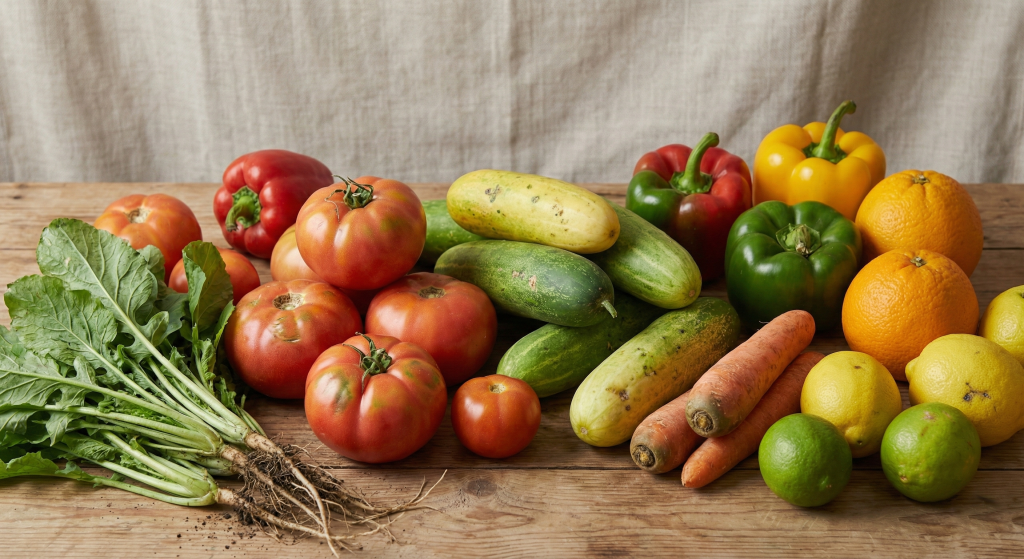
- What vegetables are naturally abundant right now?
- Which fruits are entering or exiting peak harvest?
- Where is supply tightening before prices move?
This flexibility allows menu planning, promotions, and purchasing to move gradually, instead of scrambling after prices have already shifted.
They Measure Cost by Yield, Not Invoice Price
Sticker price is easy to compare.
Usable yield is harder—but far more important.
Two cartons at the same price can deliver very different results once trimming, spoilage, and shelf life are considered.
Smart buyers track:
- Average trim loss
- Shelf life under their own storage conditions
- Waste percentage over a full week
This is especially relevant during periods of fruit price fluctuation in Dubai, when quality inconsistency increases before prices visibly rise.
Lower-quality produce often costs more in practice, even when it looks cheaper on paper.
They Expect Quality to Move Before Price Does
In wholesale markets, quality shifts often appear first.
Signs include:
- Shorter shelf life
- Wider size variation
- Softer textures on arrival
Price adjustments usually follow.
Buyers who notice these early signals can adjust volumes or switch origins before pricing catches up.
Those who ignore them often end up absorbing losses quietly through waste.
They Avoid Overreacting to Short-Term Dips
A brief price drop is not always a signal of improvement.
It can indicate:
- Excess volume clearing quickly
- End-of-season stock
- Import oversupply with limited shelf life
Buying aggressively during these dips can backfire if quality doesn’t hold.
Seasoned buyers treat sudden discounts cautiously, especially during shoulder seasons when transitions are underway.
Wholesale Sourcing: Benefits and Tradeoffs
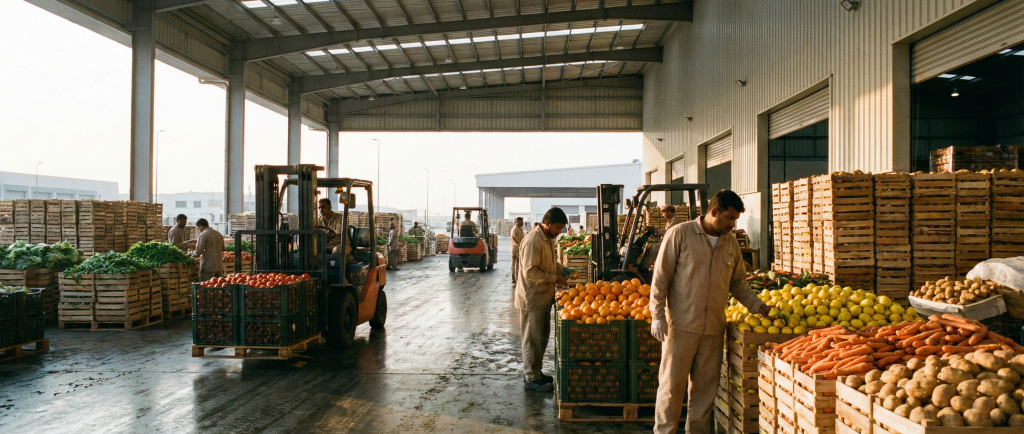
Wholesale sourcing plays a central role in Dubai’s food supply system. It offers access, volume, and price transparency.
But it is not frictionless.
Benefits
- Better alignment with market pricing
- Access to broader seasonal variety
- Faster response to supply changes
Tradeoffs
- Less price buffering
- Greater exposure to volatility
- More responsibility for quality evaluation
Wholesale works best when buyers understand the rhythm of the produce market UAE operates within—not when they expect retail-style stability.
Common Mistakes That Increase Cost Without Buyers Realizing
Across hospitality, retail, and household buyers, a few patterns appear again and again.
Chasing the Cheapest Line Item
This often leads to higher waste and inconsistency.
Ignoring Seasonal Transitions
Prices rarely jump at the start of a season. They jump when the transition is halfway through.
Treating All Suppliers as Interchangeable
Information quality matters as much as price accuracy.
Overbuying During “Good Weeks”
Produce does not freeze well—financially or physically.
The Role of Supplier Relationships (Without the Sales Pitch)
Stable pricing in a volatile market rarely comes from contracts alone.
It comes from shared visibility.
Buyers who work with established wholesale produce providers tend to receive earlier signals about:
- Incoming supply shifts
- Quality risks
- Timing-sensitive categories
This allows planning decisions to happen before pressure builds.
It is less about preferential treatment and more about alignment.
Families and Small Buyers Feel This Too—Just Differently
Households often experience produce price volatility as confusion rather than cost analysis.
Common reactions include:
- Switching stores frequently
- Assuming price changes are arbitrary
- Reducing fresh produce variety
In reality, the same forces apply—just on a smaller scale.
Shopping seasonally, staying flexible with recipes, and understanding origin labels can soften these swings without sacrificing quality.
Winter Isn’t “Cheaper”—It’s Just Different
Winter produce in the UAE often delivers better quality and broader availability.
But winter also concentrates demand.
Hotels, events, catering, and tourism all increase volume pressure at the same time. This tightens competition at the wholesale level.
Prices may feel calmer, but they move faster when disrupted.
Buyers who plan winter menus as if supply is unlimited often discover bottlenecks they didn’t expect.
What the Market Rewards Over Time
Over years, not weeks, the produce market tends to reward buyers who are:
- Flexible rather than rigid
- Informed rather than reactive
- Focused on consistency rather than bargains
There is no perfect sourcing model. But there are fewer unpleasant surprises when decisions are made with an understanding of how the system actually behaves.
The final piece is pulling these insights together into practical guidance that buyers can apply consistently.
Practical Takeaways Buyers Can Apply Immediately
Understanding why produce prices fluctuate is only useful if it changes how decisions are made.
The following practices do not eliminate volatility, but they reduce its impact over time.
1. Plan Menus and Assortments With Seasonal Flexibility
Avoid locking into specific varieties year-round. Build alternatives into menus and purchasing plans so adjustments feel routine, not disruptive.
2. Watch Quality Signals as Closely as Price
Texture, shelf life, and consistency usually change before pricing does. Treat these as early indicators, not minor inconveniences.
3. Buy for Throughput, Not Optimism
Overbuying during a “good week” often creates waste later. Match volume to realistic usage, especially during seasonal transitions.
4. Compare Cost Per Use, Not Cost Per Crate
A slightly higher price with better yield often performs better over a full week than a cheaper option with higher loss.
5. Accept That Stability Comes From Process, Not Prediction
No one forecasts produce markets perfectly. Stability comes from repeatable habits, not perfect timing.
How This Perspective Changes Risk Awareness
Many buyers treat produce price changes as a procurement problem.
In reality, it’s a risk management issue.
The risk is not that prices go up.
The risk is being unprepared when they do.
When buyers understand how vegetable prices in Dubai respond to seasonality, imports, logistics, and demand pressure, decisions feel calmer. Adjustments become incremental instead of reactive.
That alone reduces cost.
A Balanced View of Wholesale Produce Trends
Wholesale sourcing remains central to Dubai’s food ecosystem because it reflects reality quickly.
That transparency is uncomfortable at times, but it is also informative.
Buyers who expect wholesale pricing to behave like retail often feel frustrated. Buyers who understand that wholesale prices reflect real supply conditions tend to make better long-term decisions.
Neither model is superior in isolation. Each works best when its limitations are understood.
Final Thoughts: Adaptation Is the Advantage
Produce pricing in Dubai will continue to fluctuate.
Imports will remain sensitive to weather, logistics, and global demand. Local production will continue to grow, but not eliminate variability. Winter will remain busy, not effortless.
The buyers who thrive are not the ones who guess right every week.
They are the ones who adapt early, waste less, and make decisions based on how the market actually works—not how they wish it would.
Frequently Asked Questions
Why do vegetable prices in Dubai change so quickly?
Because most produce is imported, prices respond rapidly to seasonality, logistics costs, and supply timing rather than local storage or long-term buffering.
Is wholesale produce always cheaper than retail?
Not always. Wholesale reflects real-time market conditions, while retail prices are often stabilized. Wholesale can be lower or higher depending on timing and category.
Does winter mean lower produce prices in the UAE?
Winter often brings better availability and quality, but demand also increases. Prices may feel steadier, but they can move quickly when supply tightens.
How can buyers reduce waste during price fluctuations?
Focus on yield, shelf life, and realistic volume planning instead of chasing short-term price dips.
Is local produce more stable than imported produce?
Local produce can offer fresher supply and shorter lead times, but limited scale and higher production costs mean prices are not always lower or more stable.








 Home
Home  Whishlist
  Compare
  Checkout