

















Introduction: The Quiet Cost No One Tracks
Fruits. In Dubai, fruits and vegetables move fast.
Hotels serve hundreds of meals a day. Restaurants depend on daily freshness. Caterers manage tight margins. Grocery buyers juggle quality complaints and shrinkage.
Yet across all these businesses, one cost quietly slips through the cracks: overpaying for produce without realizing it.
Not through obvious mistakes.
Not because buyers are careless.
But because produce pricing is shaped by factors most people are never taught to question.
Many businesses assume higher prices mean better quality. Others believe wholesale automatically means cheaper. Some trust that seasonal produce will “work itself out.”
In reality, most overpayment comes from small structural misunderstandings — how produce is sourced, priced, handled, and replaced.
This article is not about chasing the lowest price.
It is about understanding why produce costs what it does in Dubai, where waste creeps in, and how informed buyers reduce hidden losses without compromising quality.
Why Fruits Pricing in Dubai Is Rarely Straightforward
Dubai’s fresh produce supply chain is complex by design.
Unlike agricultural regions with large domestic harvests, the UAE depends heavily on imports, regional sourcing, and seasonal trade routes. Prices shift not just by week, but sometimes by day.
Several forces shape what businesses pay.
Import Dependency and Layered Costs
Most fruits and vegetables in Dubai travel long distances before reaching kitchens or shelves.
Each step adds cost:
- Harvesting and packing at origin
- Cold storage and export handling
- International freight
- Port clearance and inspections
- Local distribution and short-term storage
By the time produce reaches a buyer, pricing reflects far more than farm value.
This is why two suppliers can quote different prices for the same item on the same day — not because one is dishonest, but because their cost structure differs.
Seasonality Isn’t Optional — Even Indoors
Dubai’s climate limits local farming to select crops and seasons. That makes seasonality unavoidable, even for climate-controlled facilities.
When produce is in season at origin, supply is stable and pricing is predictable.
When it isn’t:
- Quality becomes inconsistent
- Shelf life shortens
- Rejection rates rise
- Prices include higher risk margins
Businesses that ignore seasonality often pay more and experience higher waste.
The “Stable Price” Illusion
Some buyers prefer suppliers who keep prices steady.
It feels safe. It simplifies budgeting.
But in produce, a flat price during volatile weeks often hides costs elsewhere:
- Lower-grade produce substituted quietly
- Smaller sizes delivered
- Reduced shelf life leading to faster spoilage
Stable pricing is not always bad — but it is rarely free.
Wholesale vs Retail: The Assumption That Causes Overpayment
One of the most common misunderstandings in Dubai’s food sector is this:
“Wholesale is cheaper than retail.”
Sometimes it is. Sometimes it is not.
The difference lies in how wholesale buying is managed.
When Wholesale Saves Money
Wholesale sourcing works best when:
- Volumes are consistent
- Specifications are clear
- Deliveries are frequent enough to reduce storage time
- Quality standards are communicated, not assumed
In these cases, buyers reduce per-unit cost and control waste.
Restaurants sourcing fresh produce for restaurants through structured wholesale relationships often see better yield per kilogram, not just lower invoice totals.
When Wholesale Quietly Costs More
Overpayment happens when businesses:
- Buy bulk without turnover planning
- Accept mixed-grade produce unknowingly
- Store produce longer than intended
- Pay for volume they cannot use before spoilage
A cheaper box that loses 20% to waste costs more than a slightly higher-priced box that sells or cooks cleanly.
This is especially common among first-time wholesale buyers transitioning from retail sourcing.
Quality Isn’t Binary — And That’s Where Money Leaks
Most buyers think in simple terms: good or bad quality.
Produce quality is not binary.
It exists on a spectrum shaped by:
- Harvest maturity
- Time since picking
- Storage temperature history
- Handling during transport
Two tomatoes may look identical on arrival but behave very differently after 48 hours.
The Cost of “Looks Fine Today”
One of the most expensive mistakes businesses make is judging produce only at delivery.
Hidden quality issues show up later as:
- Faster wilting
- Uneven ripening
- Internal bruising
- Shortened usable window
When this happens repeatedly, businesses compensate by over-ordering “just in case” — a quiet form of overpayment.
Experienced buyers track usable life, not appearance.
The Role of Specifications (Or Lack of Them)
Many buyers overpay simply because they never define what they actually need.
Without clear specifications, suppliers default to safe assumptions.
Examples include:
- Medium sizes delivered instead of small or mixed
- Higher cosmetic grade than required
- Packaging formats that increase handling cost
A vegetable supplier in Dubai may quote higher prices not because produce is superior, but because the buyer never clarified acceptable variance.
Clear specs reduce unnecessary upgrades.
Winter Produce in the UAE: Opportunity and Risk
Winter is often seen as the “best time” for fruits and vegetables in the UAE.
That is mostly true — but not universally.
Why Winter Prices Feel Better
During winter:
- Regional supply increases
- Transit times shorten
- Quality consistency improves
- More varieties become available
This creates better value for many items, especially leafy greens, citrus, root vegetables, and selected berries.
The Hidden Winter Trap
Higher availability encourages overbuying.
Businesses assume:
“It’s cheaper now, so let’s stock more.”
But winter also brings:
- Higher menu experimentation
- More SKU complexity
- Faster rotation pressure
Without disciplined ordering, winter savings disappear into waste.
Some buyers working with established wholesale fruits and vegetables Dubai distributors quietly adjust order frequency in winter rather than volume — a small change with outsized impact.
Why Price Per Kilogram Is a Misleading Metric
One of the most common habits in produce buying is comparing prices per kilogram.
It feels logical. It is easy.
It is also incomplete.
What Price Per Kilogram Ignores
This metric ignores:
- Trim loss
- Spoilage rate
- Usable yield
- Labor time for sorting and cleaning
Two suppliers may quote the same price per kilogram, yet one delivers significantly more usable product.
Over time, the cheaper option often isn’t cheaper at all.
Smart buyers look at cost per usable unit, even if they calculate it informally.
The Real Cost of Inconsistent Supply
Inconsistent supply forces businesses into reactive buying.
That usually means:
- Emergency purchases at retail prices
- Menu substitutions
- Customer dissatisfaction
- Staff inefficiencies
Each reaction carries cost.
Buyers rarely connect these downstream expenses back to sourcing decisions, but they add up quickly.
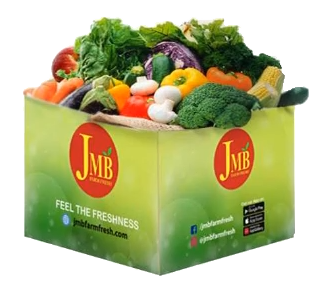
Some Dubai-based distributors, including long-standing operations like JMB Farm Fresh, often observe that consistency — not headline price — is what ultimately protects margins.
How Overbuying Becomes the Default (Without Anyone Deciding It)
Most businesses do not choose to overbuy fruits and vegetables.
They drift into it.
It starts with one or two bad experiences — a delivery that spoils faster than expected, a weekend rush that empties stock early, or inconsistent sizing that disrupts prep.
To avoid disruption, buyers add a buffer.
That buffer slowly becomes habit.
Safety Stock vs Silent Waste
In theory, safety stock protects operations.
In practice, produce buffers often lead to:
- Excess inventory sitting through temperature swings
- Partial crates carried over longer than intended
- Staff selecting “best pieces” and leaving the rest behind
None of this shows up as a line item called overpayment.
It shows up as shrinkage, waste, and rising cost ratios.
The buyer sees spoilage, not the root cause.
Why Price Volatility Feels Random (But Isn’t)
Many buyers describe produce pricing as unpredictable.
It rarely is.
Price movement usually follows patterns tied to logistics and seasonality — patterns that are not visible at retail level.
Common Drivers Behind Sudden Price Changes
When prices move quickly, it is often due to:
- Weather disruptions at origin
- Port congestion or inspection delays
- Sudden demand spikes from hospitality events
- Temporary shortages caused by crop transitions
Buyers who do not understand these triggers may assume suppliers are “raising prices arbitrarily.”
In reality, suppliers are often reacting defensively to protect continuity.
Businesses that chase yesterday’s price often end up paying more tomorrow.
Local vs Imported Produce: The Oversimplified Debate
“Local is fresher.”
“Imported is better quality.”
Both statements are incomplete.
What “Local” Really Means in the UAE
Local produce in the UAE typically offers:
- Shorter transit times
- Faster replenishment
- Lower freight exposure
But availability is limited by climate and season.
Local does not automatically mean cheaper, and it does not always mean longer shelf life. Some locally grown items are harvested young to manage heat stress, affecting durability.
Imported Produce: Strengths and Tradeoffs
Imported fruits and vegetables often provide:
- Greater variety
- Larger, more uniform sizing
- Established grading systems
But imports also carry risks:
- Longer cold-chain exposure
- Customs-related delays
- Variable ripeness at arrival
Overpayment happens when buyers assume one category is always superior.
The best sourcing strategies mix both — guided by season, usage speed, and menu needs.
The Hidden Cost of Cosmetic Standards
Many businesses unknowingly pay for appearance they do not need.
Uniform color, perfect shape, and polished skin matter in retail displays.
They matter far less in kitchens.
Yet many buyers never tell suppliers what level of cosmetic variation is acceptable.
When Looks Inflate Cost
Higher cosmetic grades often mean:
- More sorting at origin
- Higher rejection rates upstream
- Increased handling
If produce is being peeled, chopped, cooked, or blended, much of that premium adds no value.
Some buyers quietly reduce costs by allowing controlled cosmetic variance — without sacrificing freshness or safety.
Storage Practices That Turn Fair Prices Into Expensive Ones
Even well-priced produce becomes costly when storage practices are mismatched.
This is not about poor hygiene or neglect.
It is about misunderstanding produce behavior.
Common Storage Missteps
Businesses often store produce:
- Too cold for its variety
- Too warm for its respiration rate
- In mixed crates with incompatible items
For example, storing ethylene-producing fruits next to sensitive vegetables accelerates spoilage.
The cost shows up days later — long after the purchase decision.
Why “Cheapest Supplier” Is Rarely the Lowest-Cost Option
Price-focused sourcing tends to rotate suppliers frequently.
Each change introduces variability.
Variability increases risk.
Risk increases waste.
This cycle quietly raises total cost.
The Value of Familiarity
Suppliers who understand a buyer’s:
- Volume rhythm
- Quality tolerance
- Delivery timing
tend to deliver more accurately over time.
This does not require exclusivity or blind loyalty — only consistency.
Some businesses working with established wholesale produce providers notice that once expectations stabilize, pricing disputes decrease naturally.
Not because prices fall, but because outcomes improve.
The Procurement Blind Spot: Yield vs Invoice
Many procurement teams measure success by invoice totals.
Operations teams measure success by usable output.
When these two views are disconnected, overpayment hides in plain sight.
Yield Is Where Margins Live
Yield is affected by:
- Trim loss
- Damage rates
- Ripeness alignment with usage
- Shelf life stability
Two invoices with identical totals can produce very different outcomes.
Buyers who occasionally audit yield — even informally — make sharper decisions without needing complex data systems.
Winter Buying Mistakes That Erase Seasonal Advantage
Winter supply conditions in the UAE create opportunity.
They also create complacency.
Common Winter Errors
- Expanding SKUs too quickly
- Ordering larger volumes instead of increasing frequency
- Testing unfamiliar items without demand validation
Winter abundance encourages experimentation, but experimentation without discipline increases waste.
Experienced buyers often keep winter orders leaner than expected — relying on faster replenishment instead of stockpiling.
The Quiet Role of Communication in Produce Cost Control
Overpayment is rarely caused by dishonesty.
It is caused by assumptions.
Many buyers never communicate:
- What went to waste
- What arrived too ripe or too raw
- What held up well
Suppliers cannot adjust what they do not know.
Clear feedback — factual, not emotional — improves alignment faster than renegotiation.
This is one reason long-term relationships tend to stabilize costs without formal price pressure.
Practical Ways Businesses Reduce Overpayment (Without Chasing Cheap Produce)
Avoiding overpayment does not require complex systems or aggressive negotiations.
Most improvements come from small, repeatable habits.
1. Buy for Turnover, Not Storage
The fastest way to reduce produce cost is to shorten how long it sits unused.
That often means:
- Smaller orders, more frequently
- Aligning delivery days with prep cycles
- Avoiding “top-up” buying at retail
Even when unit prices rise slightly, overall cost usually falls due to lower spoilage.
2. Define What “Acceptable” Actually Means
Many buyers assume suppliers know what they want.
They don’t — unless it is stated clearly.
Helpful clarifications include:
- Acceptable size range
- Cosmetic tolerance
- Ripeness preference on arrival
- Items intended for immediate use vs holding
These details reduce silent upgrades that inflate cost.
3. Track Problems, Not Just Prices
Instead of focusing only on invoice comparisons, track:
- Items that spoil first
- Produce frequently trimmed heavily
- SKUs that cause last-minute replacements
Patterns emerge quickly.
Once patterns are visible, sourcing decisions become clearer without needing constant price checks.
4. Use Seasonality as a Planning Tool
Seasonality should guide menus, not just purchasing.
When winter produce in the UAE is abundant, buyers can:
- Simplify menus around stable items
- Reduce reliance on high-risk imports
- Improve consistency without increasing volume
Seasonal alignment is one of the most reliable cost controls available.
The Tradeoffs of Wholesale Sourcing (A Balanced View)
Wholesale sourcing is not a universal solution.
It works best under certain conditions and poorly under others.
Where Wholesale Shines
- Predictable volume
- Professional storage and handling
- Clear quality standards
- Operational discipline
These environments benefit most from wholesale fruits and vegetables Dubai suppliers.
Where Wholesale Struggles
- Highly variable daily demand
- Limited storage control
- Small, irregular purchasing volumes
In such cases, a hybrid approach — combining wholesale with selective retail buying — may be more practical.
The goal is not purity.
It is efficiency.
A Note on Trust, Not Loyalty
Long-term supplier relationships reduce overpayment — but not through blind trust.
They work because:
- Communication improves
- Expectations align
- Mistakes are corrected faster
Some buyers prefer working with experienced distributors who understand local supply dynamics. In practice, suppliers operating within Dubai’s wholesale ecosystem, including firms like JMB Farm Fresh, often emphasize consistency and feedback loops over short-term price competition.
This approach rarely looks dramatic.
It simply works over time.
Why Many Businesses Never Notice They’re Overpaying
Produce costs are fragmented.
A little waste here.
A rushed purchase there.
An inconsistent delivery next week.
Individually, none feel significant.
Together, they quietly erode margins.
Because overpayment does not appear as a single expense, it is easy to miss.
The businesses that control it best are not obsessed with price.
They are attentive to outcomes.
Conclusion: Paying Less Starts With Understanding More
Most businesses in Dubai do not overpay for fruits and vegetables because they make poor decisions.
They overpay because the system is opaque, fast-moving, and rarely explained.
When buyers understand:
- How pricing forms
- How seasonality shapes risk
- How quality affects yield
- How storage and turnover change outcomes
Costs stabilize naturally.
Not by cutting corners.
Not by pressuring suppliers.
But by making sourcing decisions with clearer eyes.
In fresh produce, knowledge is often the most reliable cost control.
Frequently Asked Questions
Why do wholesale fruit and vegetable prices change so often in Dubai?
Prices reflect seasonality, import conditions, logistics, and demand. Small disruptions at origin or ports can affect availability quickly.
Is wholesale produce always cheaper than supermarkets?
Not always. Wholesale can reduce cost when volume, turnover, and storage are managed well. Poor handling can erase savings.
How can restaurants judge produce quality beyond appearance?
Track how long items last, how much is trimmed or discarded, and how they behave after 24–48 hours, not just on delivery.
Does local produce in the UAE last longer than imported?
Sometimes, but not always. Shelf life depends on harvest timing, handling, and storage, not just distance traveled.
What’s the biggest mistake businesses make when buying produce in bulk?
Overbuying to feel “safe.” Excess stock often leads to waste, which quietly increases total cost. Fruits Fruits Fruits Fruits Fruits








 Home
Home  Whishlist
  Compare
  Checkout