















Introduction
Leafy greens are among the most fragile items in the fresh produce chain. Spinach, lettuce, rocket, and herbs can lose quality within hours if conditions are wrong. In hot climates, this process accelerates sharply.
For households, spoilage means wasted food. For restaurants and caterers, it means unstable menus and higher costs. For buyers and distributors, it creates constant pressure to move stock quickly while maintaining food safety.
Understanding why leafy greens deteriorate so fast is the first step toward storing them better. Heat alone is not the only cause. Moisture, airflow, harvesting methods, and transport all interact in ways that many buyers never see.
In practice, suppliers working closely with Dubai-based distributors such as JMB Farm Fresh often observe that quality issues blamed on “bad batches” usually trace back to handling conditions rather than the farm itself.
This article explains what actually happens to leafy vegetables in hot weather, and why proper leafy greens storage requires more than just refrigeration.
Why Heat Is the Enemy of Leafy Greens
Leafy vegetables remain alive after harvest. They continue to respire, using oxygen and releasing moisture and carbon dioxide. Heat increases this respiration rate.
When temperature rises:
- Water evaporates faster from leaf cells
- Enzymes break down cell walls
- Natural sugars are consumed more quickly
- Microbes multiply more easily
The result is familiar: limp leaves, dark spots, slime, and off smells.
Unlike root vegetables or thick-skinned fruit, leafy greens have:
- High surface area
- Thin cell walls
- Very high water content
This makes them biologically efficient for photosynthesis — but structurally weak for storage.
In desert climates, the gap between farm temperature, truck temperature, and storage temperature can be extreme. Each jump adds stress to the plant tissue.
What “Fresh” Really Means for Leafy Vegetables
Many buyers judge freshness by color alone. Bright green leaves look healthy, but that does not tell the full story.
True freshness depends on:
- Time since harvest
- Temperature stability
- Humidity control
- Air exposure
- Mechanical damage
A box of spinach harvested at dawn and cooled immediately behaves very differently from spinach harvested late morning and cooled hours later.
This explains why two visually similar batches may perform very differently in storage.
When people ask, how long do leafy greens last? the honest answer is: it depends less on the calendar and more on the journey.
The Hidden Role of Moisture
Moisture is a double-edged factor in leafy greens storage.
Too little moisture:
- Leaves dehydrate
- Edges curl and yellow
- Texture becomes papery
Too much moisture:
- Mold forms
- Bacteria multiply
- Slime develops on surfaces
In hot weather, moisture control becomes harder because warm air holds more water vapor. When warm produce enters a cold fridge, condensation forms on leaf surfaces.
That condensation creates micro-pools of water where microbes thrive.
This is why many cases of spoilage happen inside refrigerators rather than outside them.
Why Refrigeration Alone Is Not Enough
Refrigeration slows biological processes, but it does not stop them.
Several problems commonly occur:
1. Temperature cycling
Repeated door opening in kitchens or warehouses causes fluctuations. Greens warm slightly, then cool again. This stresses leaf tissue and accelerates breakdown.
2. Poor airflow
Packed crates block circulation. Cold air never reaches inner leaves, creating warm pockets inside boxes.
3. Ethylene exposure
Some fruits release ethylene gas, which accelerates aging in leafy vegetables. Storing greens next to tomatoes or bananas shortens shelf life.
4. Incorrect packaging
Sealed plastic traps moisture. Open boxes dry out leaves. Both can cause loss.
These issues explain why even buyers who follow basic how to store leafy vegetables advice still experience losses.
Transport in Hot Regions: The Critical Window
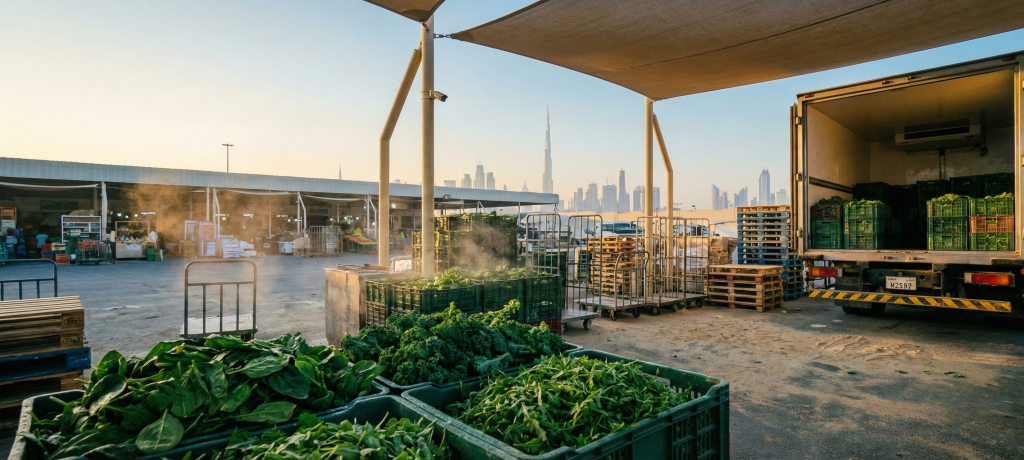
In hot climates such as the UAE, the most dangerous period for leafy greens is between harvest and cold storage.
Key risk moments include:
- Field packing under direct sun
- Delays at consolidation points
- Loading bays without shade
- Last-mile delivery during midday
Even short exposure to heat can reduce shelf life later by days.
This is why winter produce in the UAE often lasts longer: not because the plants are different, but because the logistics environment is cooler.
Common Mistakes Buyers and Kitchens Make
Many spoilage problems come from well-meaning but flawed habits.
Washing before storage
Leaves stored wet rot faster unless dried thoroughly.
Storing near raw meat or fish
Cross-contamination increases bacterial risk.
Tightly compressing greens
Crushing damages cell walls and releases enzymes that speed decay.
Ignoring harvest dates
Without knowing when greens were cut, shelf life becomes guesswork.
These errors affect both households and professional kitchens.
Why Spinach Is Often the First to Fail
Spinach appears sturdy but is structurally fragile.
Reasons spinach spoils quickly:
- Thin epidermal layer
- High iron content, which accelerates oxidation
- High respiration rate
- Sensitive to both dryness and excess moisture
Spinach storage tips differ from lettuce or kale. It needs:
- Very stable cold
- Minimal handling
- Moderate humidity
- Loose packing
This explains why spinach often collapses while other greens still look usable.
How Long Do Leafy Greens Last in Real Conditions?
Under ideal commercial storage:
- Spinach: 5–7 days
- Romaine lettuce: 7–10 days
- Herbs (parsley, coriander): 4–6 days
- Rocket (arugula): 3–5 days
In home refrigerators, these numbers are usually shorter because:
- Temperature fluctuates more
- Humidity is not controlled
- Produce is washed early
- Packaging is improvised
In hot regions, shelf life shortens further unless cold chain discipline is strict.
Why Hot Weather Exposes Weak Supply Chains
Heat does not create spoilage problems. It exposes them.
If produce quality varies wildly in summer, it usually means:
- Cooling was delayed
- Packaging was unsuitable
- Storage space was overloaded
- Transport timing was inconsistent
Buyers often assume the farm is at fault. In reality, the breakdown often occurs between farm and fridge.
Some UAE buyers prefer working with established wholesale produce providers rather than fragmented retail sourcing because consistency matters more than appearance when temperatures are extreme.
The Link Between Sourcing and Storage
Storage success begins before delivery.
Better outcomes occur when:
- Harvest time is early morning
- Cooling begins immediately
- Transport is temperature controlled
- Greens are not mixed with ethylene-producing fruit
- Boxes allow airflow
Storage techniques can only preserve what already exists. They cannot restore damaged leaves.
This is why “best way to store fresh greens” advice often fails without sourcing context.
At this point, we have examined why leafy greens deteriorate so quickly in hot weather and how heat, moisture, transport, and handling interact.
Next, we will look at practical storage methods for homes and businesses, including step-by-step handling practices and realistic trade-offs between wholesale and retail sourcing.
Practical Storage Principles That Actually Work
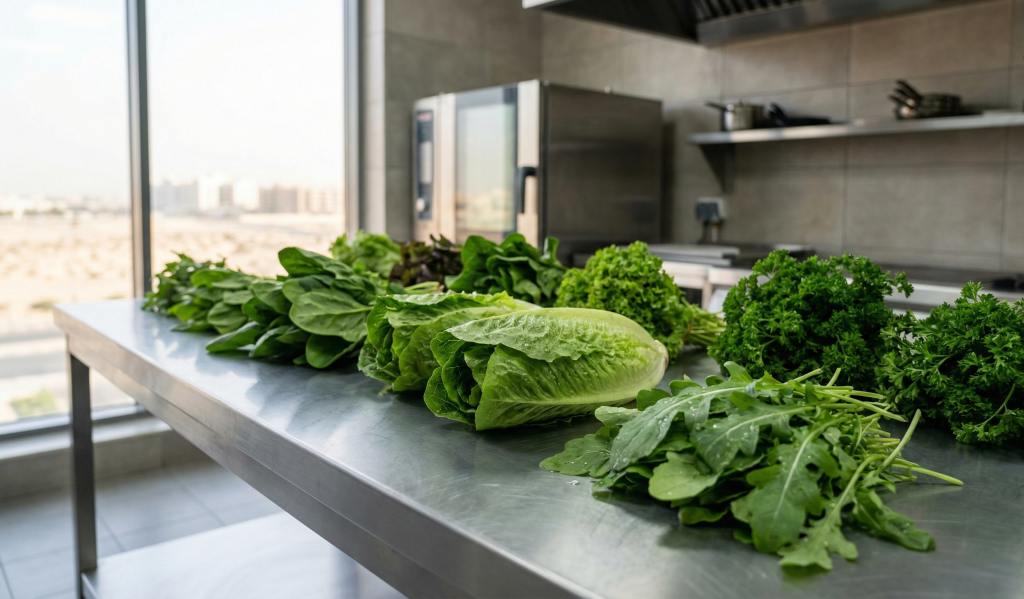
Good leafy greens storage is based on slowing biological processes without creating new risks. This requires balancing three factors: temperature, humidity, and airflow.
There is no single method that fits all vegetables. Spinach behaves differently from kale. Parsley behaves differently from lettuce. Still, several principles apply across most leafy vegetables.
1. Keep Temperature Stable
Leafy greens prefer cold but not freezing conditions.
Ideal range for most greens:
1°C to 4°C
More important than the exact number is consistency. Rapid warming and cooling causes cell walls to rupture. This is why greens stored in frequently opened fridges degrade faster.
In commercial kitchens and stores, problems often appear when:
- Deliveries sit outside refrigeration during peak hours
- Walk-in coolers are overloaded
- Doors are left open during prep
Each of these creates micro-heat events that shorten shelf life.
2. Control Humidity Without Trapping Water
Leafy vegetables need moisture in the air, but not water on their surfaces.
Best practice involves:
- Lightly drying leaves before storage
- Using breathable liners (paper towels or perforated liners)
- Avoiding sealed plastic unless modified-atmosphere packaging is designed for greens
This approach allows water vapor to escape while preventing dehydration.
This is especially important when trying to keep vegetables fresh in Dubai heat, where condensation forms easily when warm produce enters cold storage.
3. Protect Leaves From Physical Stress
Leaf damage accelerates spoilage.
Common stress sources include:
- Overfilling containers
- Heavy items placed on top
- Tight rubber bands
- Rough handling during transfer
Once the cell structure is broken, enzymes and microbes work faster. This is why the bottom of a crate often spoils first.
How to Store Leafy Vegetables at Home
Household storage often fails because kitchens combine washing, prep, and storage in one step.
A practical method:
- Remove damaged leaves immediately
One spoiled leaf spreads decay. - Wash only when needed
If washing before storage, dry thoroughly. - Wrap loosely
Use a dry cloth or paper towel around the leaves. - Place in ventilated container
Avoid fully sealed bags. - Store in the crisper drawer
This zone maintains higher humidity.
This method works for most lettuces, spinach, and herbs.
For herbs with stems (parsley, coriander):
- Trim stem ends
- Stand upright in a small container
- Cover loosely with a breathable bag
- Refrigerate
This slows dehydration while preventing rot.
How Restaurants and Caterers Can Reduce Waste
Commercial kitchens face higher risk because of volume and frequency of handling.
Simple adjustments reduce loss:
- Store greens in shallow containers rather than deep bins
- Label by delivery date
- Rotate stock daily
- Separate high-risk items (rocket, spinach) from sturdier greens (kale, romaine)
- Keep prep areas cool when handling large volumes
One of the most common errors is mixing washed and unwashed greens in the same container. Moisture from washed leaves spreads to dry ones and speeds decay.
The Role of Packaging in Shelf Life
Packaging does not just protect produce physically. It controls gas exchange.
Leafy greens release carbon dioxide and consume oxygen. If oxygen drops too low, leaves begin anaerobic respiration, creating unpleasant odors and faster breakdown.
Effective packaging:
- Allows slow gas exchange
- Absorbs excess moisture
- Maintains structure
Ineffective packaging:
- Traps condensation
- Blocks airflow
- Creates warm zones
This explains why some retail packs last longer than loose bunches, while others spoil faster.
Wholesale vs Retail Sourcing: Storage Implications
Many buyers assume supermarket produce lasts longer because it looks cleaner and more uniform.
In reality:
- Retail produce is often washed and trimmed
- Wholesale produce may be closer to harvest
- Retail storage time may already include several days in transit
Each model has trade-offs.
Wholesale advantages:
- Often fresher at delivery
- Larger volume consistency
- Less pre-handling
Wholesale risks:
- Requires better storage discipline
- Larger losses if mishandled
Retail advantages:
- Smaller quantities
- Pre-packaged
- Less initial handling
Retail risks:
- Unknown harvest date
- Often older
- Short remaining shelf life
For businesses, storage performance depends more on handling than on channel.
Why Seasonality Matters Even Indoors
Many buyers assume refrigeration eliminates seasonality. It does not.
During cooler months:
- Field temperatures are lower
- Transport stress is reduced
- Cooling is easier to maintain
- Greens retain firmness longer
This is why winter produce in the UAE often performs better even indoors.
During summer:
- Transit stress increases
- Cooling demand rises
- Shelf life shortens
- Waste rates climb
Understanding this cycle helps buyers adjust order sizes and menu planning.
Why “Best Way to Store Fresh Greens” Has No Single Answer
Online advice often suggests:
- “Always wash first”
- “Always seal tightly”
- “Always use plastic”
These rules fail because they ignore:
- Type of green
- Local climate
- Time since harvest
- Intended use
- Storage duration
Spinach for next-day use behaves differently from lettuce stored for a week.
Good storage practice is adaptive, not fixed.
What Buyers Should Ask Suppliers
Better storage begins with better information.
Useful questions include:
- When was this harvested?
- How was it cooled?
- Was it stored with fruit?
- What temperature was maintained in transport?
These questions matter more than appearance.
Buyers who understand handling history make better storage decisions.
Real-World Scenario: Summer Delivery vs Winter Delivery
Consider two deliveries of rocket leaves:
Winter batch
- Harvested at dawn
- Packed in cool air
- Delivered mid-morning
- Stored at stable temperature
Shelf life: 4–5 days
Summer batch
- Harvested late morning
- Warm during packing
- Delivered at noon
- Refrigerated after heat exposure
Shelf life: 1–2 days
The leaves may look similar on arrival. Their future behavior will not be.
This pattern explains why kitchens feel produce quality “drops” in hot months.
At this stage, we have covered how leafy greens respond to heat and how practical storage choices influence shelf life.
Next, we will examine sourcing decisions, supply chain risks, and how buyers can reduce spoilage through smarter planning rather than stricter refrigeration alone.
Storage Is Only Half the Solution
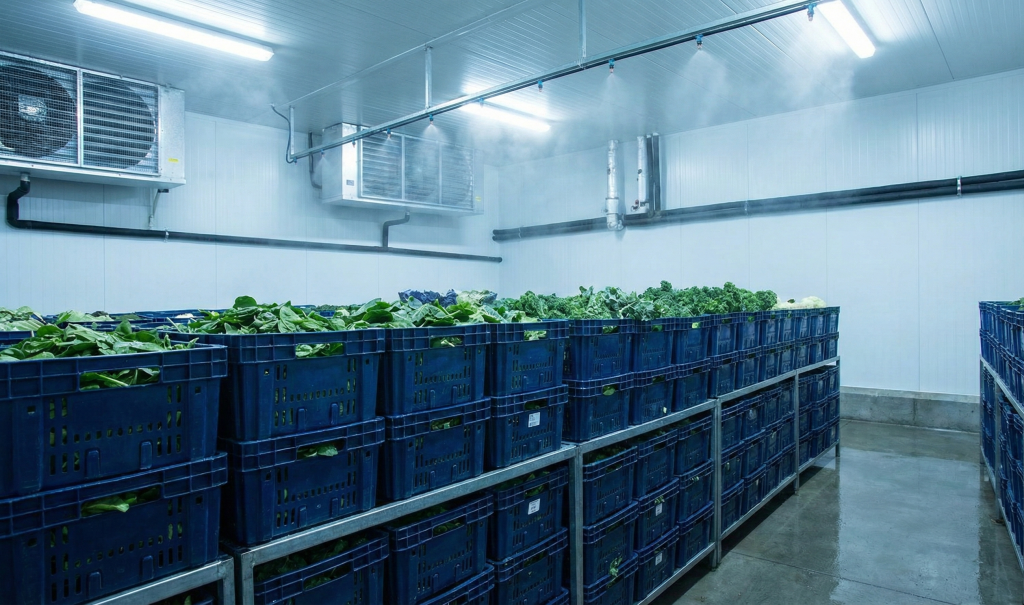
Many buyers focus on storage equipment and overlook sourcing strategy. Yet storage only preserves what arrives. It cannot reverse damage caused earlier.
When leafy greens arrive already stressed, even perfect refrigeration only delays visible spoilage by a short time.
Better outcomes usually come from aligning three decisions:
- Order size based on realistic turnover
- Delivery timing that avoids peak heat
- Storage method suited to the specific green
This approach reduces waste more reliably than trying to “store longer” through colder temperatures alone.
Planning for Heat Instead of Fighting It
In hot climates, the goal is not to defeat heat but to work around it.
Effective planning includes:
- Smaller, more frequent orders during peak summer
- Early-morning delivery windows
- Separating fast-spoiling greens from sturdier vegetables
- Adjusting menus to use high-risk greens quickly
These changes reduce exposure time rather than trying to compensate afterward.
Many businesses experience fewer losses when they treat leafy greens as short-cycle inventory rather than long-hold stock.
Why Supply Chain Transparency Matters
Leafy greens behave differently depending on how they were handled before arrival.
Transparent supply chains provide:
- Harvest timing
- Cooling method
- Transit duration
- Storage history
Without this information, buyers rely on guesswork.
Some UAE buyers prefer working with established wholesale produce providers rather than fragmented retail sourcing because predictable handling history makes storage decisions more accurate.
In practice, suppliers working closely with Dubai-based distributors such as JMB Farm Fresh often observe that consistent post-harvest handling reduces waste more than any single packaging method.
Risk Awareness: Food Safety and Spoilage
Spoilage is not just a quality issue. It can become a food safety risk.
Warm, wet leaves encourage:
- Listeria growth
- Salmonella survival
- Mold development
These risks increase when:
- Greens are stored wet
- Containers are reused without sanitation
- Old and new stock are mixed
Discarding questionable greens is safer than trimming around damaged areas.
This is why many professional kitchens set conservative shelf-life limits rather than pushing storage time.
Practical Takeaways for Better Leafy Greens Storage
For households:
- Do not wash until needed
- Dry thoroughly if washing early
- Store loosely with airflow
- Keep away from fruit
For restaurants and caterers:
- Separate high-risk greens
- Control humidity, not just temperature
- Rotate stock daily
- Adjust ordering to season
For buyers:
- Ask about harvest and cooling
- Avoid midday deliveries in summer
- Treat summer greens as shorter-life inventory
These steps address causes rather than symptoms.
Understanding the Trade-Offs
No system eliminates spoilage entirely.
Longer storage increases:
- Moisture loss
- Microbial risk
- Flavor decline
Shorter storage increases:
- Delivery frequency
- Handling labor
- Ordering complexity
The best balance depends on:
- Volume
- Climate
- Menu use
- Storage space
There is no universal best way to store fresh greens. Only context-based decisions.
Conclusion
Leafy greens spoil quickly in hot weather because their biology, structure, and moisture content make them sensitive to heat, stress, and condensation.
Refrigeration helps, but it is not a cure. True shelf life depends on what happens before storage: harvest timing, cooling speed, and transport conditions.
By understanding these factors, buyers and households can make smarter decisions — not just about how to store leafy vegetables, but about when to buy them and how much to hold.
In hot climates, freshness is less about finding perfect storage and more about reducing exposure to the conditions that cause damage in the first place.
FAQ
1. How long do leafy greens last in the fridge?
Most last 3–7 days depending on type, handling, and moisture control. Spinach and rocket spoil faster than romaine or kale.
2. Should leafy greens be washed before storage?
Only if they can be dried thoroughly. Storing wet leaves increases mold and bacterial growth.
3. Why do leafy greens rot faster in summer?
Heat increases respiration and microbial activity. Transit and handling stress are also higher in hot months.
4. Is sealed plastic good for leafy greens storage?
Not usually. Sealed bags trap moisture unless designed for gas exchange.
5. Can freezing preserve leafy greens?
Freezing stops spoilage but destroys texture. Frozen greens are best for cooking, not salads.








 Home
Home  Whishlist
  Compare
  Checkout