














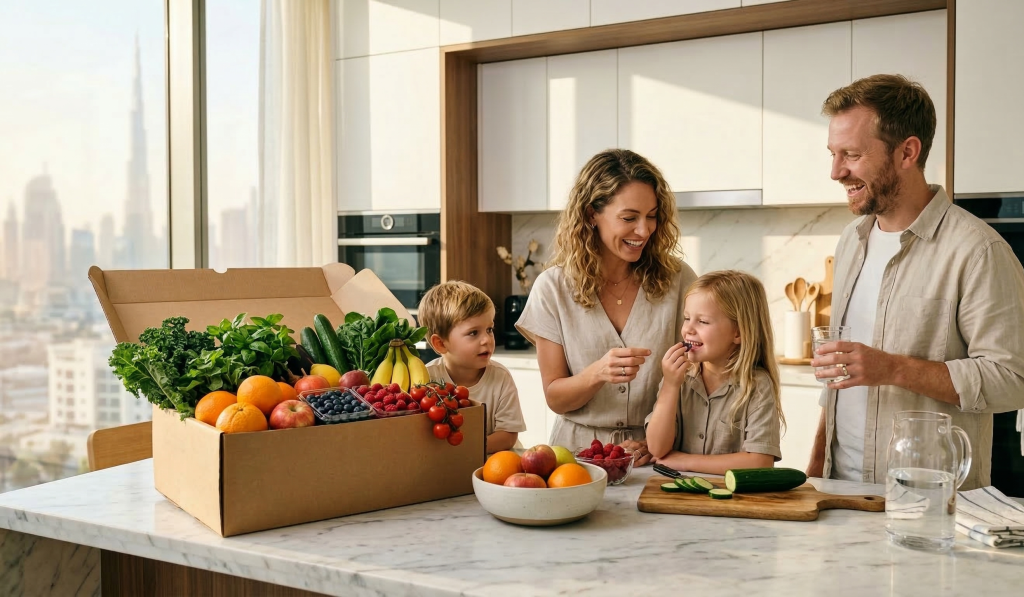
Dubai’s organic grocery scene has changed in a practical way over the past few years.
For many expat households, the shift is not really about trend-driven “clean eating.” It is about control. People want fruit that arrives in better condition, vegetables that last longer in the fridge, and buying routines that feel more predictable than last-minute supermarket runs. At the same time, Dubai’s produce system gives buyers more choice than many realize: home delivery platforms, specialist organic retailers, farm-led boxes, and the wider wholesale ecosystem around Al Aweer and Ras Al Khor all shape how food moves across the city.
That growing interest also comes with confusion.
Many buyers use the word organic loosely. Some mean certified organic. Some mean chemical-free. Some simply mean fresher, less waxed, or less handled. In the UAE, those are not the same thing. Organic products are governed by federal law, and official guidance makes clear that certified organic products should meet defined production standards and carry recognized certification or labeling support.
This matters because people are not only paying for produce. They are paying for trust.
In online discussions about fruit and vegetable buying in Dubai, the same concerns appear again and again: quality can vary from branch to branch, market prices may be better but consistency is not always guaranteed, and some shoppers still prefer to choose produce by hand because delivered items can occasionally arrive overripe or bruised.
That gap between promise and reality is exactly why more health-conscious expats are changing how they buy.
What the current search landscape gets right — and what it often skips
A review of current supplier blogs, market pages, consumer discussions, and UAE official guidance shows a pattern.
Most articles explain the benefits of organic produce in broad terms. They talk about wellness, convenience, freshness, and sustainability. Supplier content also tends to emphasize sourcing, next-day delivery, and curated boxes. Those points are not wrong, but they often stop before the details that buyers actually care about once they start spending more each week.
What is often missing is the practical middle layer:
- how to tell certified organic apart from vague “natural” language
- why one order lasts five days and another only two
- why prices move even when the same retailer is used
- why local winter produce behaves differently from imported fruit
- when wholesale-style buying helps, and when it creates more waste than savings
This is where many households feel misled.
They do not necessarily want the cheapest box. They want fewer unpleasant surprises. They want fruit that ripens in sequence rather than all at once. They want salad vegetables that still look alive after two or three days. And they want to know whether paying more is actually improving quality, or just improving the label. Those concerns come through clearly in Dubai buyer discussions, where convenience is appreciated, but spoilage, inconsistency, and branch-level quality differences still shape trust.
Why organic delivery appeals especially to expat households
Health-conscious expats in Dubai often sit in a very specific buying position.
They may have higher awareness of labels and sourcing claims. They may come from places where organic certification is already familiar. They also tend to rely more heavily on delivery because of work schedules, traffic, family routines, and the habit of ordering groceries digitally instead of shopping several times a week.
Organic delivery fits that lifestyle because it solves three problems at once.
The first is time. Instead of visiting multiple shops for fruit, greens, and salad items, buyers can consolidate their weekly basket.
The second is predictability. A specialist organic seller usually has a narrower range than a hypermarket, but often a more focused handling system. That matters because produce quality is affected not only by where it was grown, but by packing, cold-chain discipline, delivery timing, and how long it sat before dispatch. Dubai’s food safety framework places strong emphasis on storage, transport, hygiene, and proper handling across the supply chain.
The third is perceived trust. Even when buyers cannot inspect every item in person, they often feel more confident ordering from a specialist organic platform than from a broad grocery marketplace. That confidence is strongest when the seller is clear about whether products are local, imported, certified, seasonal, or mixed.
Organic does not always mean local in Dubai
This is one of the biggest misunderstandings in the market.
Many buyers assume that if produce is organic, it is probably local. In Dubai, that is not always true. The UAE has local organic and controlled-environment farming, and official and industry sources also point to continued national support for organic agriculture and innovation. But the structure of the market still means a large share of produce available to consumers is imported, especially for items that do not suit the local climate year-round.
For households, that has two direct consequences.
First, price volatility is normal. Import costs, freight conditions, seasonal supply shifts, and source-country availability all affect what shows up on a delivery app or in a box that week.
Second, freshness works differently by category. Locally grown winter greens, cucumbers, tomatoes, herbs, and some salad vegetables may reach buyers with less travel stress during the cooler months. Imported berries, grapes, stone fruit, or specialty organic fruit can still be excellent, but they move through a longer chain and may have a shorter ideal eating window once delivered.
So the smarter question is not, “Is local always better?”
It is, “Which items benefit most from local winter availability, and which imported items are still worth buying?”
Why winter changes the equation in the UAE
Winter is the most forgiving season for produce buying in the UAE.
Cooler weather supports a stronger range of local and regional vegetables, especially leafy greens, herbs, and many staple salad items. Industry sources focused on seasonal supply in the UAE repeatedly point to winter as the period when vegetables perform better in flavor, shelf life, and general quality.
That seasonal shift matters for both families and bulk buyers.
When more suitable produce is available closer to market, the usual trade-offs become easier to manage:
- less heat stress during growing and transport
- lower risk of soft or tired leafy items
- better value on everyday cooking vegetables
- more realistic opportunities to buy in semi-bulk without immediate spoilage
This is also the period when the line between retail organic delivery and wholesale-style sourcing becomes more interesting. Buyers who understand the season can often make better choices by combining the two rather than relying fully on one.
The real reason some expats start looking at wholesale prices
Most households do not begin with wholesale thinking.
They begin by noticing that small, frequent organic orders are expensive. Then they realize some staples do not need boutique packaging. Items like oranges, bananas, apples, cucumbers, tomatoes, carrots, onions, potatoes, and herbs are often easier to manage in larger volumes than fragile berries or delicate greens.
That leads to a practical question: can a household access better value by buying part of the weekly basket closer to wholesale pricing?
In Dubai, the answer is often yes, but with limits.
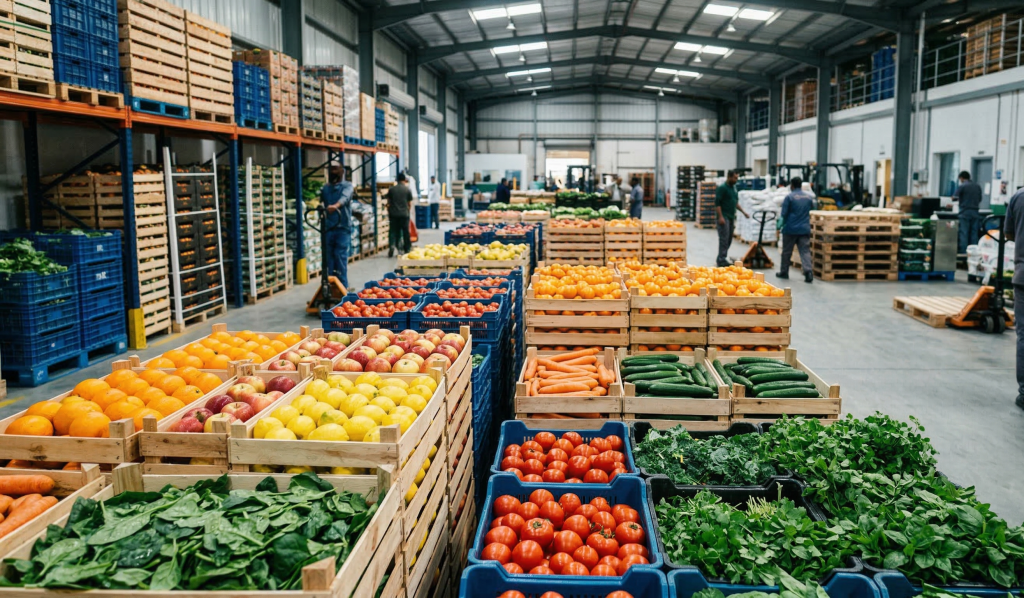
The wholesale ecosystem around Al Aweer and Ras Al Khor is real and well established, and many buyers know it as the place where larger-volume fruit and vegetable trade happens. Forum discussions also show that some residents use these markets or market-linked sellers specifically because they believe the value can be much better than premium supermarket retail, even if quality selection takes more effort.
The important point is this: wholesale prices are not automatically household-friendly. Better unit cost can be cancelled out by waste, poor storage, or buying the wrong mix of produce.
That is why the smartest buyers do not chase wholesale for everything. They use it selectively.
What “wholesale organic” really means for a household buyer
This is where a lot of searchers get confused.
When people look up wholesale organic fruits UAE or organic fruits Dubai delivery, they often imagine a direct path from farm to doorstep at a lower price. In reality, wholesale usually means larger trading volumes, different packing formats, and less hand-holding. It does not always mean every item is sold in a family-friendly quantity, and it does not always mean the produce is certified organic just because it is described as natural, fresh, or farm sourced. UAE buyers are already exposed to both certified organic retail channels and broader wholesale markets, but the two systems do not operate in exactly the same way.
For households, the best use of wholesale-style buying is usually selective.
The most sensible approach is to use larger-volume buying for items with one or more of these traits: stable shelf life, frequent household use, easy storage, and low bruising risk. Citrus, apples, carrots, onions, potatoes, cucumbers, and some herbs often fit that model better than peaches, berries, avocados, or soft salad leaves. The mistake is assuming that saving on unit price always lowers the real food bill. If 20 percent of the box spoils before it is eaten, the cheaper purchase was not actually cheaper.
That is one reason many expat households end up using a hybrid routine.
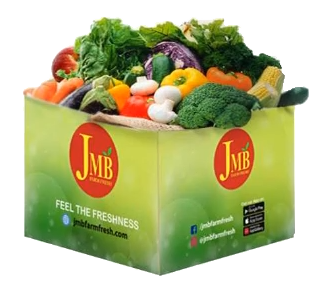
They buy their delicate, highly perishable, or certified-organic items through a trusted delivery source. Then they source sturdy weekly staples in larger quantities when the season and storage conditions make sense. In practice, suppliers working closely with Dubai-based distributors such as JMB Farm Fresh often observe that buyers become more efficient when they separate “high-risk perishables” from “safe bulk staples” rather than trying to buy the whole basket through one channel.
Why some buyers are disappointed after switching to organic delivery
The disappointment usually comes from expectation, not from the idea itself.
A common belief is that organic fruit should automatically look perfect, last longer, and taste better every time. But produce quality depends on several moving parts: variety, harvest stage, transport time, temperature control, packing, and how quickly the customer refrigerates or uses it. Dubai’s food handling framework makes it clear that safe storage and transport conditions matter throughout the chain, not just at the point of sale.
So when a buyer receives produce that looks less polished than supermarket fruit, that does not necessarily mean the product is worse. It may simply have less cosmetic grading or less aggressive handling for visual uniformity.
At the same time, some disappointments are valid.
Buyer discussions in Dubai show repeated concerns around inconsistency: one order can be excellent, while the next feels average; market pricing can look attractive, but quality may be mixed; and not everyone agrees on which sellers are worth the premium. That pattern matters because trust in produce buying is built over repeated weekly experience, not one good order.
How to judge freshness without overcomplicating it
Many people think freshness is hard to assess unless they shop in person.
It is not as hard as it seems. The trick is to stop looking for “perfect” produce and start looking for “appropriate” produce.
For fruit, good buying usually means checking whether the item matches how soon you plan to eat it. A slightly firmer mango or avocado may actually be a better delivery choice than one that is ready on arrival, because it gives you a longer use window.
For vegetables, the signs are more practical:
- leafy greens should feel lively, not damp or tired
- cucumbers should feel firm, not soft at the tips
- tomatoes should have skin tension without deep bruising
- herbs should smell fresh and stand upright, not collapse into the pack
- root vegetables should feel dense for their size, without soft spots
This matters even more with fresh organic grocery delivery Dubai because organic produce may sometimes show natural size variation or less uniform appearance. That is not the same as poor quality.
The price question: why organic costs move so much in Dubai
This is one of the biggest buyer frustrations, and it is often explained badly.
Prices fluctuate because Dubai sits at the meeting point of local greenhouse output, regional supply, and imports from multiple countries. Some products can be sourced locally in cooler months. Others remain import-dependent for much of the year. Retail packaging, certification compliance, freight conditions, and waste rates all influence what the final customer pays. Sources serving Dubai’s organic market openly note that local UAE farm supply is stronger in winter, while non-winter sourcing often relies more on imported partner farms.
That means price movement is not always a sign of unfair markup.
Sometimes it reflects genuine supply-chain pressure. A buyer who understands this is less likely to make poor substitutions just because one item spiked that week. Often the smarter move is to shift categories rather than insist on the exact same fruit twelve months a year.
For example, winter is a better time to lean into citrus, salad vegetables, herbs, and regionally suited items. Off-season dependence on fragile imported fruit can make the basket more expensive and less stable.
Local versus imported: which should you choose?
The honest answer is that both have a place.
Local or regional produce tends to make the most sense where speed and shelf life matter most. Greens, herbs, cucumbers, tomatoes, and some seasonal vegetables often benefit from shorter supply routes in the cooler part of the year. Imported produce can still be the better option for specialty fruit, wider variety, or products not available locally at the right standard.
Where buyers go wrong is turning this into an identity question, as if local is always morally or nutritionally superior, or imported is always inferior.
The more practical rule is this:
Choose local when freshness window matters most.
Choose imported when variety, consistency, or availability matters more.
That is also why many experienced buyers build a flexible basket instead of a fixed one.
Common mistakes health-conscious households make
The first mistake is buying too wide a range.
A basket with too many soft fruits, ready-to-eat avocados, herbs, greens, and cut items can feel healthy on delivery day and frustrating three days later. Variety is appealing, but over-diversification increases spoilage risk.
The second mistake is paying for labels they have not checked.
Some buyers search for chemical-free vegetables Dubai and assume that the term carries the same weight as certified organic. It does not. If certification matters to you, the label and source information matter more than the marketing language around it. Official UAE rules distinguish organic production from loose descriptive claims.
The third mistake is trying to copy restaurant-style bulk buying at home.
Commercial buyers can move volume faster. A family of three or four usually cannot. What works for a catering kitchen can create unnecessary waste in a home fridge.
The fourth mistake is treating delivery as a substitute for planning.
Delivery helps with convenience, but it does not replace deciding what will be eaten first, what should be refrigerated immediately, and what should ripen at room temperature. Good buying is only half of the equation. Good handling at home is the other half.
A better way to think about value
The best produce buyers in Dubai are usually not the people chasing the lowest visible price.
They are the ones reducing hidden costs: spoilage, duplicate shopping, emergency supermarket top-ups, and food that looked good online but was not practical for the week ahead.
That is why the shift toward buy organic produce online Dubai is not only about wellness. It is often about system-building inside the home: fewer rushed purchases, clearer weekly planning, better category choices, and more realistic use of wholesale-style buying where it genuinely works.
The question is no longer simply, “Is organic delivery worth it?”
It is, “For which items, in which season, and in what quantity does it make sense?
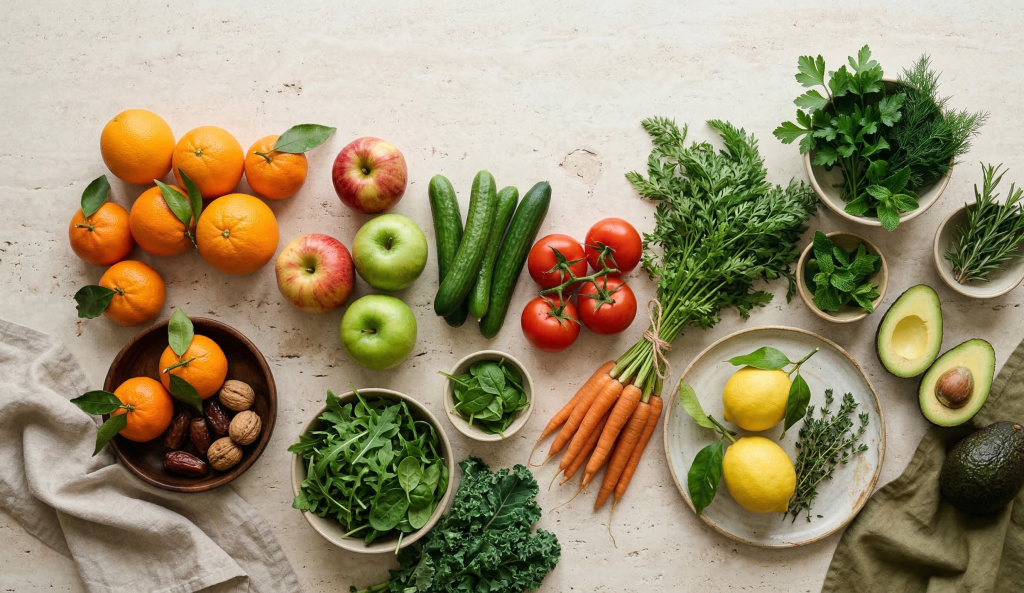
A practical sourcing approach for expat households in Dubai
For most households, the most reliable system is not “all retail” or “all wholesale.”
It is a simple mixed approach.
Use specialist delivery for the items where trust, certification clarity, and careful handling matter most. Then use larger-volume buying only for the staples your household finishes consistently. That approach fits the way Dubai’s produce market actually works: certified organic products are regulated separately, while the wider fruit and vegetable trade includes large wholesale activity in Ras Al Khor serving different buyer types and quantity needs.
A practical weekly basket often looks like this:
- Good candidates for organic delivery: berries, salad greens, herbs, baby vegetables, avocados, premium citrus, and produce where certification matters strongly to the buyer
- Good candidates for selective bulk buying: onions, potatoes, carrots, cucumbers, apples, oranges, bananas, and other fast-moving staples
- Use caution with bulk quantities: soft fruit, ready-to-eat stone fruit, mushrooms, delicate greens, and anything your household only eats occasionally
This is where many households quietly improve value without becoming “bulk buyers” in the commercial sense.
When wholesale prices help — and when they do not
Wholesale-style buying helps when three conditions are true.
First, the item has a stable shelf life.
Second, your household uses it regularly.
Third, you have enough storage discipline to protect the quality after delivery or pickup.
It usually does not help when the purchase is driven by price alone. A lower unit cost can still lead to a higher real cost if the product ripens too quickly, gets lost in the fridge, or was bought in a format designed more for trade than for home use.
That is also why many online searches for wholesale organic fruits UAE are a little misleading in practice. Wholesale can reduce cost per kilo, but it can also shift more sorting, storage, and waste risk onto the buyer. The benefit is real, but so is the tradeoff.
What matters most in winter
Winter is the easiest season for Dubai buyers to be selective.
This is the time to lean more confidently into locally or regionally suitable vegetables, herbs, and salad staples. Official UAE policy continues to support stronger local agricultural capability, including organic farming and more competitive local supply, which is one reason winter baskets can feel more stable and practical than summer ones.
For buyers, that means winter is often the best time to:
- widen the vegetable side of the basket
- reduce dependence on fragile imported items
- test semi-bulk purchases of sturdy staples
- compare quality across channels without taking the same spoilage risk seen in hotter months
This does not mean imported produce becomes unimportant. It simply means winter gives buyers more room to be efficient.
A final word on trust
The strongest buying habit is not chasing the perfect supplier.
It is learning how to read the category.
When households understand the difference between certified organic and vague natural-language claims, when they know which items are better bought for the week versus for the next two days, and when they stop forcing every item through the same channel, their grocery decisions become calmer and usually more cost-aware. In the UAE, organic labeling and product standards are part of a defined legal framework, which is why careful buyers should rely more on clear product information than on soft marketing phrases like “farm fresh” or “chemical-free.”
That is the deeper reason many health-conscious expats in Dubai are shifting toward organic delivery.
Not because it is fashionable.
Because, used properly, it gives them a more manageable food system.
And where wholesale pricing fits, it usually fits quietly in the background: not as a lifestyle statement, but as a practical tool for selected items, in the right season, and in realistic quantities.
Conclusion
The move toward organic fruits Dubai delivery reflects a broader change in how expat households think about food.
They are not only buying ingredients. They are reducing friction. They are trying to lower waste, improve consistency, and make better weekly decisions in a market where source, season, handling, and labeling all matter.
The smartest approach is rarely extreme.
A full premium organic basket is not always necessary. A full wholesale approach is not always efficient. But a balanced routine — certified or carefully sourced produce for sensitive categories, bulk buying for dependable staples, and more local winter-season choices where possible — usually gives better results than either method alone.
That is where value becomes real: not just in price, but in fewer disappointments at home.
FAQ
1. Is organic fruit delivery in Dubai always certified organic?
No. Some products are certified organic, while others are described with broader terms like natural or chemical-free. Buyers should check the actual product labeling and source details rather than assuming the wording means the same thing.
2. Is wholesale produce cheaper than retail in Dubai?
Often on a per-kilo basis, yes. But total value depends on waste, storage, and whether the quantity suits a household. Wholesale is most useful for durable staples, not every category.
3. What produce is easiest to buy in bulk for a family?
Usually onions, potatoes, carrots, apples, oranges, bananas, and similar staples that are used often and store reasonably well.
4. Is local produce always better than imported produce?
No. Local produce is often a strong choice when freshness window matters, especially in winter. Imported produce still has an important role for variety and year-round availability.
5. When is the best season to buy vegetables in Dubai?
Winter is generally the easiest season for vegetables, herbs, and salad staples because local and regional supply conditions are more favorable, and UAE policy also continues to support stronger local agricultural production.








 Home
Home  Whishlist
  Compare
  Checkout