



















Introduction: Why Produce Prices in Dubai Deserve a Closer Look
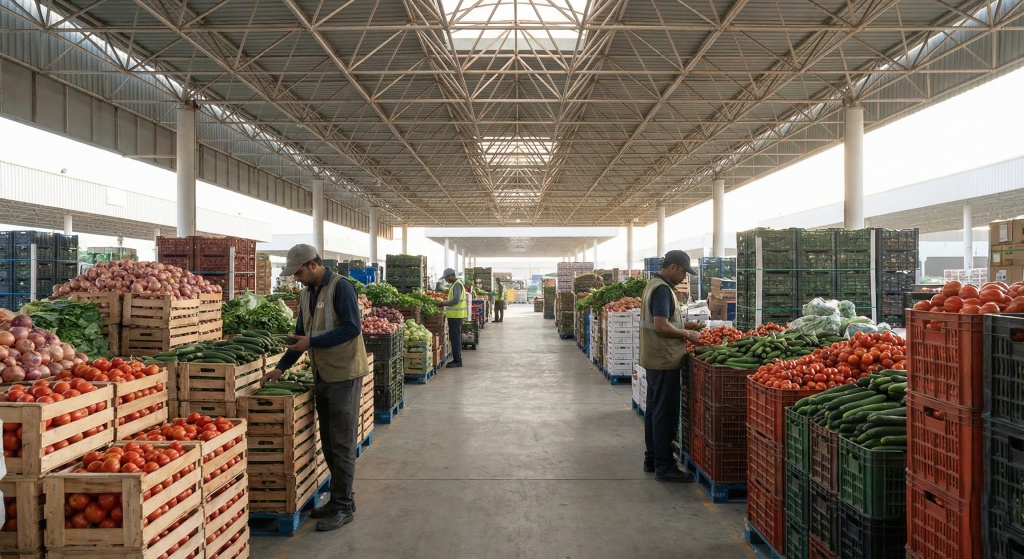
In Dubai, fresh vegetables are available almost everywhere. Supermarkets stock year-round imports, neighborhood grocers refresh displays daily, and wholesale markets move produce by the ton before sunrise.
Yet many buyers—families, restaurants, caterers, and even grocery operators—still ask the same question:
Why is wholesale produce cheaper than retail, and what does that price difference actually reflect?
The short answer is that price is rarely just about the vegetable itself.
It reflects how produce moves through the supply chain, how risk is shared, and how much handling happens before it reaches the buyer.
This article looks beyond surface-level price comparisons. It explains how wholesale vegetables in Dubai differ from retail produce in structure, cost drivers, and real-world outcomes—without sales language or shortcuts.
Whether you are buying a few kilos or a few pallets, understanding these differences can help you reduce waste, improve consistency, and make smarter sourcing decisions.
Understanding Dubai’s Fresh Produce Supply Chain
Dubai does not grow most of the vegetables it consumes. Even during peak winter months, local production covers only a portion of demand.
Most fresh vegetables in the UAE follow a similar path:
- Origin
Produce is sourced from local farms (mainly in winter) or imported from countries such as India, Jordan, Egypt, Iran, and Europe. - Arrival and clearance
Imports pass through ports or borders, undergo inspection, and move quickly to central distribution areas. - Wholesale markets and distributors
Bulk volumes are traded early in the morning, often changing hands within hours. - Retail channels
Supermarkets, groceries, and specialty stores buy smaller quantities, repackage them, and sell to end consumers.
Each step adds cost, handling, and time.
Wholesale and retail pricing diverge because they operate at different points in this chain.
What “Wholesale Produce” Really Means in Dubai
Wholesale vegetables in Dubai are not a different category of food.
They are the same tomatoes, onions, cucumbers, and leafy greens—but sold under different conditions.
Wholesale typically involves:
- Bulk quantities
Crates, cartons, or sacks rather than individual units. - Minimal packaging
Produce is sold as received from farms or importers, with little or no retail-style presentation. - Shorter holding time
Stock moves quickly to reduce spoilage and price risk. - Buyer responsibility
The buyer manages sorting, storage, and final use.
This model suits restaurants, caterers, hotels, and households that cook frequently or store produce properly.
Lower prices are possible because costs are spread across volume, not because quality is inherently lower.
How Retail Produce Is Structured Differently
Retail produce is built around convenience and presentation.
Supermarkets and groceries handle:
- Repacking into smaller units
- Visual grading and display
- Chilling, misting, and lighting
- Staff handling and shrinkage (unsold waste)
These services are valuable, especially for households buying small quantities.
But they come at a cost.
When comparing fresh vegetable prices in the UAE, retail prices include:
- Higher labor input
- Losses from unsold produce
- Longer shelf exposure
- Marketing and store overheads
The result is a higher price per kilo, even when the produce comes from the same shipment as wholesale stock.
Why the Price Difference Is Often Larger Than Expected
Many buyers assume the gap between retail and wholesale pricing reflects a simple markup. In reality, several factors amplify the difference.
Volume Risk vs Convenience
Wholesale buyers accept volume risk.
If demand slows or storage fails, losses fall on the buyer.
Retailers absorb that risk on behalf of consumers—and price it in.
Time Sensitivity
Fresh vegetables are perishable.
Every extra day between harvest and sale increases spoilage risk.
Wholesale channels prioritize speed.
Retail channels prioritize availability.
That difference alone can shift prices significantly.
Handling and Sorting
Retail produce is often sorted more finely for appearance.
Wholesale produce may include size variation that is perfectly usable but less uniform.
For a restaurant kitchen, this difference is often irrelevant.
For a retail shelf, it matters.
Retail vs Wholesale Produce: Common Misunderstandings
“Wholesale produce is lower quality”
This is one of the most persistent myths.
In practice, wholesale markets often receive produce earlier than retail stores. Quality depends more on:
- Harvest timing
- Cold chain control
- Storage conditions after purchase
Poor handling can ruin excellent produce—regardless of where it was bought.
“Retail vegetables are always fresher”
Retail vegetables are not necessarily fresher; they are often better presented.
A vegetable that looks perfect under supermarket lighting may have spent more time in transit or storage than a wholesale equivalent.
“Bulk buying always saves money”
Buying produce in bulk in Dubai only works when:
- Turnover is fast
- Storage is adequate
- Menu planning or household use is consistent
Without these, waste can erase any price advantage.
Who Typically Benefits Most From Wholesale Sourcing?
Wholesale vegetables in Dubai tend to suit buyers who value:
- Predictable usage
- Cost control over presentation
- Flexibility in preparation
- Direct visibility into supply conditions
This includes:
- Restaurants and cafés
- Catering companies
- Hotel kitchens
- Large families with frequent cooking habits
Retail remains the better option for buyers prioritizing small quantities, convenience, and minimal handling.
The choice is less about right or wrong—and more about matching sourcing to actual needs.
Where Buyers Often Get Caught Off Guard
Even experienced buyers can misjudge the wholesale vs retail decision.
Common mistakes include:
- Buying bulk without storage planning
- Ignoring seasonal price swings
- Comparing prices without accounting for waste
- Assuming uniform quality across suppliers
These issues become more pronounced during seasonal transitions, especially in winter when local and imported supply overlap.
That seasonal context—and how it affects pricing and quality—deserves closer attention.
Seasonality in the UAE: Why Winter Changes Everything
Winter is the most misunderstood period in the UAE produce market.
From roughly November to March, buyers often expect prices to stabilize because “local supply is available.” In reality, winter introduces more complexity, not less.
What Winter Actually Brings
During winter months:
- UAE farms increase output of items like tomatoes, cucumbers, leafy greens, and herbs
- Imports continue, often at reduced volumes
- Quality varies more widely between farms and shipments
- Prices fluctuate daily based on weather and demand
For wholesale buyers, this means opportunity—but also risk.
Local produce can be fresher and cheaper, but supply consistency is not guaranteed. Retail channels smooth out these fluctuations by blending sources, which partly explains why retail prices feel more stable than wholesale prices during winter.
Local vs Imported Produce: How It Affects Price and Quality
Dubai buyers often frame the decision as “local versus imported.” In practice, the real issue is supply reliability.
Local Produce in Winter
Local vegetables typically offer:
- Shorter travel time
- Less transit damage
- Faster market entry after harvest
However, local supply can be uneven. Weather shifts, labor constraints, and farm-scale limitations all affect availability.
Wholesale buyers often benefit most here, as they can adapt quickly when quality or volume changes.
Imported Produce Year-Round
Imported vegetables:
- Offer consistent sizing and grading
- Follow established export standards
- Are less affected by UAE weather conditions
But imports face border delays, fuel cost changes, and currency swings—factors that directly affect wholesale vegetables in Dubai.
Retail prices tend to average these fluctuations over time. Wholesale prices respond immediately.
Why Wholesale Prices Fluctuate More Than Retail
One of the biggest frustrations buyers express—especially on forums and in procurement discussions—is price volatility.
Wholesale prices can change daily. Retail prices often lag behind.
This happens because wholesale reflects real-time market conditions, including:
- Arrival volumes at ports
- Quality variations within shipments
- Sudden demand from large buyers
- Seasonal oversupply or shortage
Retailers, on the other hand, adjust prices more slowly to avoid confusing consumers.
For businesses buying produce in bulk in Dubai, understanding this dynamic is essential. A “cheap” day is not always a “good” day if quality or shelf life is compromised.
How Quality Is Judged Differently at Wholesale Level
Wholesale quality assessment is practical, not visual.
Buyers focus on:
- Firmness and weight
- Smell and moisture
- Cut freshness
- Shelf-life expectation
Retail quality emphasizes:
- Uniform size
- Color consistency
- Cosmetic perfection
This difference explains why wholesale produce may look less polished but perform better in kitchens.
Experienced chefs often prefer wholesale vegetables because they judge quality by cooking performance, not shelf appearance.
Real-World Buying Scenarios: What Actually Happens
Scenario 1: A Restaurant Switching to Wholesale
A mid-sized restaurant moves from supermarket sourcing to wholesale vegetables Dubai markets offer.
Initial results:
- Lower per-kilo cost
- Better flavor consistency
- Higher prep efficiency
Challenges appear after two weeks:
- Excess stock during slower weekdays
- Storage limitations for leafy greens
- Inconsistent sizing affecting portion control
The takeaway: wholesale works best when purchasing aligns tightly with menu planning and daily volume tracking.
Scenario 2: A Family Buying Produce in Bulk
A large household decides to buy produce in bulk Dubai markets provide, hoping to save money.
Success depends on:
- Splitting quantities across meals
- Proper refrigeration
- Adjusting shopping frequency
Without these habits, spoilage rises—and costs creep back up.
The Hidden Cost Most Buyers Miss: Waste
When comparing retail vs wholesale produce, buyers often focus on price per kilo. They rarely calculate usable yield.
Waste comes from:
- Overbuying
- Poor storage
- Unexpected demand changes
- Quality misjudgment
Wholesale savings disappear quickly if 10–20% of produce is discarded.
Retail buyers pay more upfront but outsource waste risk to the store.
Neither approach is wrong—but the tradeoff should be intentional.
How Experienced Buyers Reduce Risk in Wholesale Purchasing
Seasoned buyers apply a few consistent practices:
- Buying smaller quantities more frequently
- Adjusting orders based on weather and demand
- Inspecting produce personally or via trusted agents
- Maintaining flexibility in menus or meal planning
In practice, suppliers working closely with Dubai-based distributors such as JMB Farm Fresh often observe that buyers who treat wholesale sourcing as an ongoing process—rather than a fixed routine—achieve the best balance of cost and quality.
When Retail Still Makes More Sense
Despite its higher price point, retail produce remains the better option when:
- Quantities are small
- Storage space is limited
- Usage is unpredictable
- Time is more valuable than cost savings
For many buyers, a hybrid approach works best: wholesale for core items, retail for specialty or low-turnover produce.
Understanding when to use each channel is where real savings and consistency emerge.
The final piece of the puzzle is knowing how to make better sourcing decisions, regardless of where you buy.
Practical Guidelines for Smarter Produce Sourcing in Dubai
Whether you buy from wholesale markets or retail stores, better outcomes usually come from better decision-making—not from chasing the lowest price.
Below are principles experienced buyers rely on, regardless of scale.
Match Purchase Size to Real Usage
The most common sourcing error is buying based on price instead of consumption.
Ask simple questions before purchasing:
- How many days will this produce realistically last?
- Can it be prepped, stored, or repurposed?
- What happens if demand drops unexpectedly?
Wholesale vegetables in Dubai reward discipline. Without it, waste becomes the hidden cost.
Judge Freshness by Function, Not Appearance
Especially when comparing retail vs wholesale produce, appearance can be misleading.
Focus on:
- Texture and firmness
- Moisture levels (excess moisture shortens shelf life)
- Aroma (especially for herbs and leafy greens)
- Cut surfaces (fresh cuts indicate recent harvest)
A slightly imperfect-looking vegetable often performs better in cooking than a visually flawless one that has spent extra days in cold storage.
Respect Seasonal Reality
Winter produce in the UAE brings opportunity, but also volatility.
Prices and quality can shift quickly due to:
- Weather changes affecting local farms
- Import adjustments as demand fluctuates
- Short harvest windows for certain items
Buyers who stay flexible—rather than locking rigid purchasing habits—navigate winter sourcing more successfully.
Avoid Over-Specializing Your Supply Channel
One of the quieter lessons from experienced procurement teams is this:
no single sourcing method works for everything.
Many buyers find stability by:
- Using wholesale for high-turnover staples
- Using retail for low-volume or highly specific items
- Adjusting the mix seasonally
This approach reduces exposure to sudden price swings and quality gaps.
What the Price Difference Really Means
When you step back, the price gap between wholesale and retail produce in Dubai is not mysterious.
It reflects:
- Who absorbs risk
- How much handling occurs
- How quickly produce moves
- Who manages waste
Wholesale prices are lower because buyers take on more responsibility.
Retail prices are higher because convenience, consistency, and risk management are built in.
Understanding this helps buyers stop asking, “Why is this cheaper?”
and start asking, “Is this right for how I use produce?”
A Balanced Perspective for Dubai Buyers
There is no universal “better” option between wholesale and retail produce.
There is only a better fit.
Buyers who succeed over time tend to:
- Understand their own usage patterns
- Respect seasonality instead of fighting it
- Measure waste as carefully as price
- Choose sourcing channels intentionally
In the UAE’s fast-moving food supply environment, clarity beats shortcuts.
Conclusion: Price Is Only the Starting Point
Fresh vegetable prices in the UAE tell only part of the story.
The real difference between wholesale and retail produce lies in how food moves, how risk is shared, and how well buyers align sourcing with reality.
When those elements are understood, price becomes a tool—not a trap.
Frequently Asked Questions
Is wholesale produce always fresher than retail produce in Dubai?
Not always. Wholesale produce often reaches the market earlier, but freshness depends on handling and storage after purchase.
Can households benefit from buying produce in bulk in Dubai?
Yes, if consumption is frequent and storage is managed well. Otherwise, waste can offset savings.
Why do wholesale vegetable prices change daily?
They reflect real-time supply, demand, arrivals, and quality variations, especially during seasonal shifts.
Is local produce cheaper than imported produce in winter?
Sometimes. Local supply can reduce transport costs, but availability and quality vary, affecting pricing.
What matters more than price when buying produce?
Usable yield, shelf life, and consistency often matter more than the price per kilo.








 Home
Home  Whishlist
  Compare
  Checkout