
















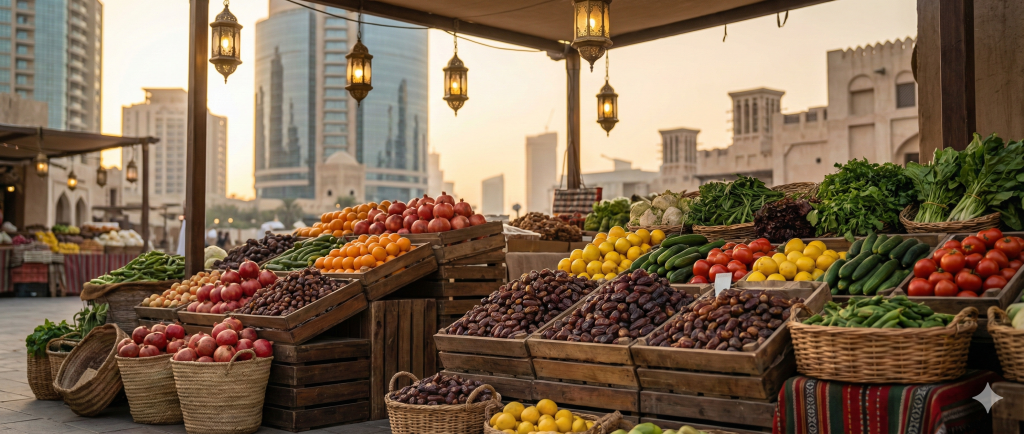
Ramadan in Dubai changes how people buy food.
Homes cook in larger quantities. Restaurants adjust menus. Hotels increase buffet planning. Catering companies work on tighter timelines. Demand for Fresh Ingredients for Iftar in Dubai rises sharply within a short window.
But demand alone is not the real challenge.
The real challenge is consistency — quality, timing, pricing, and supply stability during a month when consumption patterns shift almost overnight.
This guide is written for families, restaurant buyers, hotel procurement teams, and catering managers who want clarity. Not marketing. Not promotions. Just practical insight into sourcing fresh fruits and vegetables in Dubai during Ramadan.
Understanding Ramadan Food Supply Dynamics in Dubai
Ramadan does not increase overall annual food consumption dramatically. What it changes is timing and concentration.
Most meals move to sunset (Iftar) and pre-dawn (Suhoor). That means:
- Higher daily peak demand
- Increased pressure on delivery schedules
- Faster stock turnover
- Greater sensitivity to freshness
Suppliers and distributors prepare months in advance. Importers adjust orders. Wholesale markets monitor volume patterns closely.
Buyers who understand this cycle face fewer disruptions.
What “Fresh” Really Means in the Dubai Market
In Dubai, fresh produce generally comes from three main sources:
- Local UAE farms (seasonal)
- Regional imports (Jordan, Egypt, Iran, Oman)
- International imports (Europe, India, Africa)
Each has tradeoffs.
Local Produce (Peak in UAE Winter)
From November to April, the UAE experiences its main growing season. During this time, you’ll see strong availability of:
- Leafy greens
- Cucumbers
- Tomatoes
- Capsicum
- Eggplant
- Herbs
Winter is the most stable period for local sourcing. Quality is often high because transit time is short. Less handling usually means longer shelf life.
However, local production volume is limited compared to overall demand. During Ramadan (which often falls partly within the UAE’s cooler months), supply may tighten quickly.
Imported Produce
Imported fruits and vegetables fill the gaps.
For example:
- Citrus from Egypt or Spain
- Apples from Europe
- Berries from Morocco
- Bananas from the Philippines or Ecuador
- Onions and potatoes from India or Pakistan
Imported produce can be excellent quality. But freshness depends heavily on:
- Harvest timing
- Cold chain management (temperature control from farm to buyer)
- Port clearance speed
- Storage handling
Buyers sometimes assume imported equals lower freshness. That is not always true. But imported produce typically has a longer supply chain, which increases variables.
Understanding this helps when planning Ramadan grocery shopping in Dubai at scale.
Where to Buy Fresh Ingredients for Iftar in Dubai
There are four primary sourcing channels in Dubai:
- Retail supermarkets
- Online grocery platforms
- Wholesale produce markets
- Direct supplier relationships
Each suits different needs.
1. Supermarkets (Retail Purchase)
Suitable for:
- Families
- Small gatherings
- Low-volume buyers
Benefits:
- Immediate access
- Visual inspection
- Small quantities
Limitations:
- Higher per-unit cost
- Limited negotiation
- Inconsistent batch quality
- Peak-hour stockouts during Ramadan evenings
For families preparing Iftar at home, supermarkets remain practical. But during peak Ramadan days, shelf restocking delays are common.
2. Fresh Fruits Dubai Delivery Platforms
Online grocery delivery has grown rapidly in Dubai.
Suitable for:
- Busy households
- Small offices
- Last-minute Iftar preparation
Advantages:
- Convenience
- Time savings
- Scheduled delivery
Risks:
- No physical inspection before purchase
- Substitution issues during high demand
- Delivery window delays close to Maghrib
For small quantities, this model works well. For hotels or restaurants, it is rarely sufficient alone.
3. Wholesale Produce Markets
Dubai’s wholesale markets operate early mornings. Buyers include:
- Restaurants
- Cafeterias
- Caterers
- Grocery resellers
Benefits:
- Better pricing per carton
- Bulk availability
- Wide selection
Challenges:
- Requires product knowledge
- Quality varies by vendor
- Early procurement timing
- Transport logistics responsibility
This channel is where many search for the best vegetable supplier Dubai options. But selecting the right vendor requires experience.
Wholesale does not automatically mean better quality. It means volume efficiency. Quality still depends on sourcing standards and storage discipline.
4. Direct Supplier Partnerships
Many medium and large buyers work directly with structured produce distributors rather than purchasing daily from open markets.
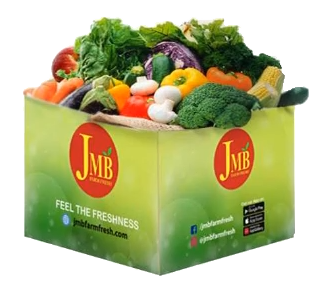
In practice, suppliers working closely with Dubai-based distributors such as JMB Farm Fresh often observe that clients prefer predictable grading, fixed delivery windows, and centralized invoicing during Ramadan.
Benefits:
- Consistent grading standards
- Planned delivery schedules
- Reduced daily sourcing effort
- Better forecasting
Tradeoffs:
- Requires volume commitment
- Less flexibility for spontaneous menu changes
- Relationship-based model
For hotels and catering companies preparing large Iftar buffets, predictability often outweighs daily price fluctuations.
What Buyers Often Get Wrong During Ramadan
Across industry discussions — including hospitality forums and procurement groups — the same patterns appear every year.
Mistake 1: Waiting Too Long to Secure Volume
Ramadan demand is not sudden. It is predictable.
Yet many buyers increase orders only days before peak demand. This leads to:
- Limited grade selection
- Higher spot-market prices
- Forced substitutions
Advance planning reduces this pressure.
Mistake 2: Ignoring Shelf Life in Menu Planning
Certain vegetables wilt quickly in high humidity kitchens.
Examples:
- Spinach
- Coriander
- Mint
- Lettuce
Without proper cold storage (ideally 2–5°C for leafy greens), spoilage increases.
During Ramadan, kitchens are hotter and busier. Waste risk rises.
Understanding storage requirements is part of any serious Iftar preparation guide.
Mistake 3: Confusing Appearance with Freshness
Shiny skin does not always mean fresh.
Look for:
- Firm texture
- Natural scent
- No internal soft spots
- Clean cut stems (not dried or darkened)
Wholesale buyers often rely on experience rather than surface shine.
Seasonal Considerations: Winter Produce in the UAE
When Ramadan overlaps with cooler months, buyers benefit from:
- Strong cucumber supply
- High tomato quality
- Abundant leafy greens
- Better herb availability
Prices tend to be more stable compared to peak summer months.
However, as temperatures rise toward late April or May:
- Local yields decrease
- Import dependency increases
- Volatility returns
Monitoring seasonal transitions protects margins.
Healthy Dubai Ramadan Meals Start with Sourcing Strategy
Iftar meals are traditionally rich.
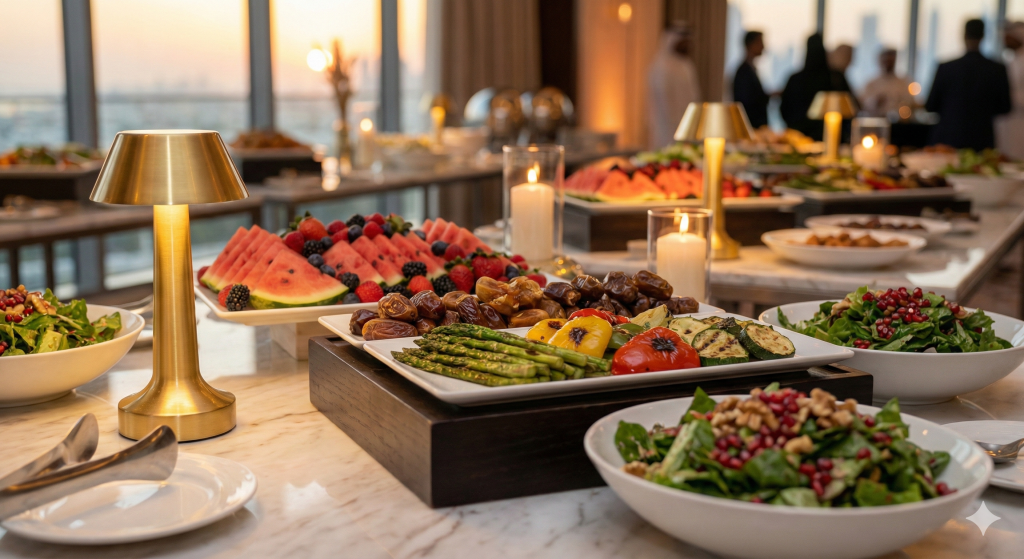
But there is growing interest in lighter, healthier options. Hotels and caterers increasingly feature:
- Fresh fruit platters
- Grilled vegetables
- Cold mezze
- Fresh juices
This shift increases demand for premium fruits and vegetables in Dubai.
Quality expectations rise.
Bruised fruit or inconsistent grading becomes more visible on buffet displays. Presentation matters more during Ramadan because meals are shared communally.
Buyers who prioritize consistent sizing and grading see better guest feedback.
How to Plan Iftar Procurement Without Overbuying
One of the most common concerns during Ramadan grocery shopping in Dubai is over-purchasing.
Demand increases, but so does uncertainty. Guest counts fluctuate. Corporate bookings shift. Family gatherings expand unexpectedly.
The result? Excess produce sitting in cold rooms.
Forecasting for Restaurants and Hotels
Professional kitchens typically rely on three inputs:
- Historical Ramadan sales data
- Confirmed reservations or event bookings
- Menu-specific ingredient yield calculations
Yield calculation means understanding how much usable product you get from raw weight.
For example:
- 1 kg of whole watermelon does not equal 1 kg of usable fruit.
- Leafy herbs lose weight during trimming.
- Eggplants shrink during roasting.
Without yield awareness, purchasing volumes can overshoot by 10–20%.
During Ramadan, that margin can significantly affect food cost control.
Balancing Wholesale Efficiency vs Retail Flexibility
Buyers often debate whether to rely fully on wholesale suppliers or supplement with retail purchases.
There is no single correct answer.
Wholesale Advantages
- Lower unit cost per carton
- Standardized grading
- Bulk availability
- Scheduled delivery
Ideal for:
- Hotels
- Catering companies
- Mid-to-large restaurants
Retail Advantages
- Smaller pack sizes
- Immediate availability
- Useful for top-up purchases
Ideal for:
- Last-minute needs
- Small gatherings
- Specialty items in low volume
Many experienced procurement managers use a hybrid model:
- Core vegetables and high-volume fruits via structured supplier
- Specialty herbs or sudden requirements from nearby retail
This reduces dependency on one channel while controlling cost.
Price Volatility During Ramadan: Why It Happens
A frequent question in industry discussions is:
“Why do vegetable prices fluctuate so much during Ramadan?”
The reasons are operational, not arbitrary.
1. Demand Compression
Demand increases within a narrow daily timeframe. Suppliers must allocate stock carefully.
2. Import Lead Times
Imported produce depends on:
- Shipping schedules
- Port clearance
- Regional supply conditions
Any disruption causes ripple effects in Dubai’s market.
3. Weather Shifts
Late-season heat in the UAE reduces local yields quickly. A few degrees of temperature change can impact crop output.
4. Grade Selection
Higher grades (uniform size, minimal blemishes) are in greater demand for Iftar buffets. Premium grade availability can tighten faster than standard grade.
Understanding these mechanics helps buyers avoid panic purchasing.
Short-term price spikes are not always signs of manipulation. Often, they reflect supply chain strain.
Evaluating a Vegetable Supplier in Dubai
When searching for the best vegetable supplier Dubai businesses often focus on price first.
Price matters. But consistency matters more.
Consider evaluating suppliers based on:
- Cold storage capacity
- Delivery punctuality
- Replacement policy for rejected goods
- Grading transparency
- Communication clarity during peak demand
In practice, structured suppliers typically provide clearer batch labeling and temperature-controlled logistics compared to fragmented market vendors.
That structure reduces spoilage risk.
It is not about brand names. It is about systems.
What Makes Premium Fruits and Vegetables Different?
“Premium” does not simply mean expensive.
Premium grading typically includes:
- Uniform sizing
- Minimal surface blemishes
- Strong firmness
- Proper maturity (not under- or over-ripe)
- Clean packaging
For buffet displays or high-end catering, appearance consistency matters.
However, for cooked dishes like stews or curries, premium grading may not always be necessary.
Understanding end use prevents overspending.
A balanced approach ensures healthy Dubai Ramadan meals without unnecessary cost escalation.
Storage Discipline During Ramadan
Procurement is only half the equation.
Improper storage can undo careful sourcing.
Recommended General Storage Guidelines
- Leafy greens: 2–5°C, high humidity
- Root vegetables: 4–8°C
- Bananas: 13–15°C (never too cold)
- Tomatoes: Avoid very cold storage; quality declines
Common mistakes include:
- Overloading cold rooms
- Blocking airflow between cartons
- Mixing ethylene-producing fruits (like bananas) with sensitive vegetables
Ethylene is a natural gas released by some fruits. It accelerates ripening. Poor separation causes faster spoilage.
In Ramadan, kitchens operate longer hours. Door openings increase. Temperature stability becomes harder to maintain.
Monitoring becomes critical.
Family Buyers: Practical Iftar Preparation Guide
For households, the strategy differs slightly.
Instead of volume forecasting, focus on:
- Buying 3–4 day cycles rather than weekly bulk
- Checking firmness rather than surface shine
- Storing herbs in breathable wrapping
- Washing only before use, not immediately after purchase
When using fresh fruits Dubai delivery services, try scheduling earlier daytime delivery rather than close to sunset.
This allows time to check quality and request replacements if needed.
Local vs Imported: Which Is Better for Iftar?
This debate appears frequently in online discussions.
The truth is situational.
Choose Local When:
- It is peak UAE season
- You want shorter transit time
- You need leafy greens with longer shelf life
Choose Imported When:
- Specific fruit varieties are unavailable locally
- You require consistent size grading
- Seasonal gaps exist in UAE supply
The key is not choosing one over the other.
The key is understanding seasonality.
Professional buyers track seasonal calendars. Families can simply ask retailers about origin. Transparency is improving across Dubai’s market.
Waste Control: The Hidden Cost of Poor Sourcing
During Ramadan, food waste increases.
This affects:
- Cost margins
- Sustainability goals
- Operational efficiency
Common causes include:
- Overestimating attendance
- Buying premium grade for cooked applications
- Poor rotation practices (FIFO — first in, first out)
- Lack of clear trimming standards
Even a 5% reduction in spoilage can meaningfully impact monthly food cost.
Structured sourcing and disciplined handling reduce this risk significantly.
Building Reliable Supply Relationships
In Dubai’s fast-moving food market, relationships matter.
Long-term suppliers understand:
- Your average weekly volume
- Your preferred grade
- Your peak demand patterns
- Your rejection thresholds
This reduces friction during Ramadan.
Some UAE buyers prefer working with established wholesale produce providers rather than shifting between market vendors daily. Stability often matters more than marginal price differences.
Trust develops over seasons, not days.
At this point, we’ve examined procurement channels, price behavior, storage discipline, and sourcing tradeoffs.
The final part of this guide will focus on actionable Ramadan checklists, common buyer questions, and a structured summary for both families and commercial buyers.
— End of Part 2. Write “continue” to proceed.
continue
Ramadan Buying Checklist: Practical Steps for Smarter Sourcing
Whether you are managing a hotel kitchen or preparing meals at home, structure reduces stress.
Below is a practical checklist for sourcing Fresh Ingredients for Iftar in Dubai.
For Restaurants, Hotels & Caterers
- Confirm projected daily covers (guest count) at least one week ahead
- Lock in core vegetable volume 5–7 days before peak Ramadan weekends
- Separate premium display items from cooking-grade items
- Inspect first delivery batch carefully; maintain consistent rejection standards
- Monitor cold room temperature twice daily during peak service
- Review spoilage reports weekly
These simple controls prevent last-minute scrambling.
For Families & Small Gatherings
- Shop earlier in the day to avoid evening stock shortages
- Choose firmness over shine
- Plan 3–4 day produce cycles instead of overstocking
- Store herbs separately in breathable wrapping
- Avoid mixing fruits like bananas with leafy vegetables
Small changes reduce waste and improve meal quality.
Common Concerns Buyers Raise Each Ramadan
Through industry discussions and buyer conversations, several recurring questions appear.
“Is wholesale quality lower than supermarket quality?”
Not necessarily.
Wholesale often provides produce in bulk cartons without cosmetic sorting. Supermarkets may re-sort and repackage for appearance.
Quality depends on source and handling — not the sales channel alone.
“Why do some items suddenly double in price?”
Often due to:
- Import shipment delays
- Weather shifts affecting regional harvest
- Short-term grade shortages
- Increased buffet demand for specific items
Understanding that volatility is sometimes structural — not opportunistic — allows buyers to respond calmly rather than reactively.
“Should I buy premium fruits and vegetables in Dubai for every dish?”
No.
Reserve premium grading for:
- Fresh platters
- Salad bars
- Buffet displays
- High-visibility presentations
For stews, curries, and blended juices, consistent but non-premium grade is usually sufficient.
Matching grade to purpose protects margins.
The Role of Planning in Healthy Dubai Ramadan Meals
Nutrition has become a larger part of Ramadan conversations.
More families and hospitality operators are:
- Offering fruit-forward Iftar options
- Reducing fried components
- Adding fresh salads and grilled vegetables
This shift increases the importance of dependable supply.
Fresh produce must hold texture, flavor, and color throughout the evening service window.
When planning healthy Dubai Ramadan meals, sourcing decisions become part of the nutritional outcome.
Wilted greens or overripe fruit reduce both appeal and value.
When to Reevaluate Your Supplier Strategy
Ramadan often exposes weaknesses in supply systems.
Consider reviewing your approach if you experience:
- Frequent late deliveries
- Inconsistent grading
- High spoilage percentages
- Poor communication during stock shortages
Structured sourcing partners typically provide better forecasting visibility.
In practice, suppliers working closely with Dubai-based distributors such as JMB Farm Fresh tend to emphasize grading consistency and cold-chain discipline during peak months, as these two factors directly affect buyer trust.
That said, every buyer should evaluate based on measurable performance, not name recognition.
A Balanced View: Wholesale vs Retail vs Direct Supply
There is no universal “best” model.
Wholesale markets provide flexibility and price advantages but require experience.
Retail channels offer accessibility and convenience but may carry higher cost per unit.
Direct suppliers provide predictability and logistics structure but often require volume commitment.
The right approach depends on:
- Your purchase volume
- Storage capacity
- Cash flow
- Menu stability
- Operational discipline
Choosing the wrong model does not always create immediate problems.
It creates gradual inefficiencies.
Ramadan simply magnifies them.
Final Thoughts: Sourcing with Clarity, Not Urgency
Ramadan in Dubai is vibrant, generous, and communal.
Food plays a central role.
But successful sourcing is not about chasing the lowest price or buying the most visually perfect produce.
It is about:
- Understanding seasonality
- Planning realistic volumes
- Matching grade to purpose
- Maintaining storage discipline
- Building reliable supply relationships
Whether you are a family preparing Iftar at home or a procurement manager overseeing large-scale operations, clarity reduces waste and stress.
In a market as dynamic as Dubai’s, informed buyers consistently perform better than reactive ones.
Fresh ingredients are widely available in Dubai. The difference lies in how, when, and from whom you source them.
Frequently Asked Questions (FAQ)
1. Where can I buy fresh ingredients for Iftar in Dubai?
You can source from supermarkets, online delivery platforms, wholesale produce markets, or direct suppliers. The right option depends on volume, storage capacity, and consistency needs.
2. Is wholesale produce cheaper during Ramadan?
Wholesale pricing per carton is usually lower, but prices can fluctuate during peak demand. Planning ahead reduces exposure to short-term spikes.
3. How can I judge vegetable freshness quickly?
Check firmness, natural scent, stem condition, and absence of soft spots. Avoid relying only on shiny skin.
4. Are local UAE vegetables better than imported ones?
Local produce often has shorter transit time during winter season. Imported produce can also be high quality if the cold chain is maintained properly.
5. How can families reduce food waste during Ramadan?
Buy in smaller cycles, store correctly, and plan realistic meal portions. Avoid overbuying perishable leafy greens.








 Home
Home  Whishlist
  Compare
  Checkout