














Introduction: Why Rambutan Is Suddenly Everywhere in Dubai
Walk through any high-end grocery aisle or scroll through exotic fruits listings in Dubai, and one thing becomes clear: rambutan is no longer a curiosity — it’s becoming a regular purchase.
For many buyers, the first reaction is visual. A small red fruit covered in soft, hair-like spikes doesn’t immediately signal “easy to eat” or “worth the price.” Yet demand continues to rise across households, restaurants, and catering businesses.
This shift isn’t random.
It reflects a broader change in how Dubai sources and consumes fruit:
- Greater exposure to Southeast Asian produce
- Increasing demand for unique textures and flavors
- A growing preference for seasonal, imported specialties
Still, despite its popularity, many buyers don’t fully understand what rambutan is, how to judge its quality, or why its price fluctuates so much in the UAE market.
This article breaks that down clearly — from origin to sourcing decisions — in a way that helps both casual buyers and professional procurement teams make better choices.
What Exactly Is Rambutan?
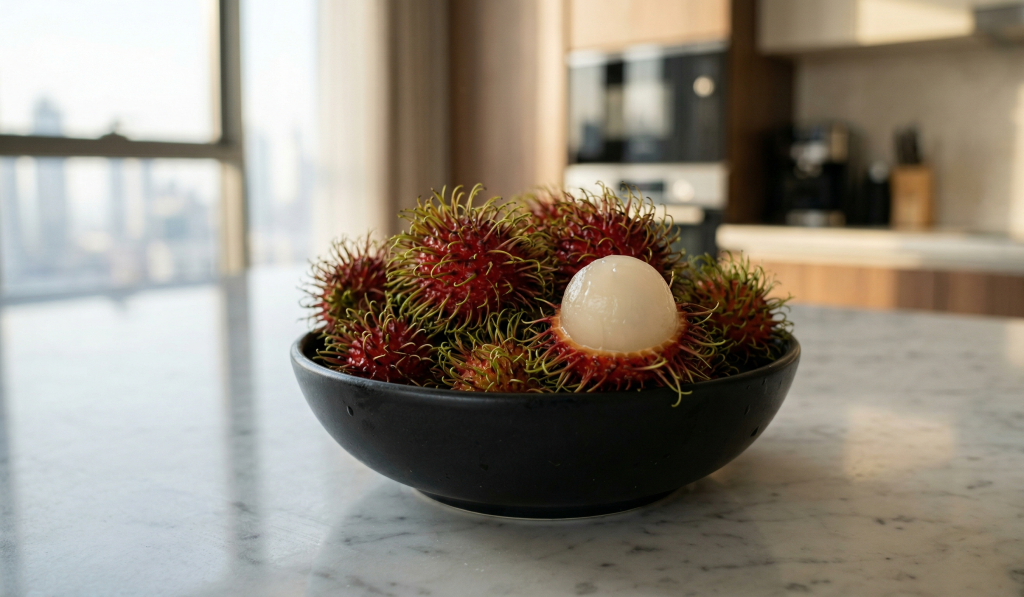
Rambutan is a tropical fruit native to Southeast Asia, especially Vietnam, Thailand, Indonesia, and Malaysia.
The name “rambutan” comes from the Malay word rambut, meaning “hair” — a direct reference to its distinctive outer shell.
Inside the Fruit
Beneath the bright red or yellow skin is:
- A translucent white flesh
- A texture similar to lychee, but slightly firmer
- A single seed in the center
The taste is often described as:
- Mildly sweet
- Lightly floral
- Slightly less acidic than lychee
For first-time buyers in Dubai, the closest comparison is lychee — but rambutan tends to feel more “substantial” when eaten, with a cleaner finish.
Why Is Rambutan Popular in Dubai Right Now?
There are three main reasons why searches for rambutan Dubai and buy rambutan online UAE have increased in recent years.
1. Exposure Through Restaurants and Cafés
Many upscale restaurants and dessert-focused cafés have started using rambutan in:
- Fruit platters
- Mocktails
- Fusion desserts
Once customers try it in a controlled setting, they become more confident buying it for home use.
2. Growth of Online Exotic Fruit Supply
Dubai’s produce ecosystem has evolved rapidly.
Instead of relying only on supermarket availability, buyers now have access to:
- Direct import listings
- Specialty fruit suppliers
- Seasonal delivery platforms
This has made rambutan delivery Dubai far more accessible than it was even five years ago.
3. Demand for “Different but Safe” Fruits
Unlike more extreme exotic fruits (which can have strong smells or unfamiliar textures), rambutan sits in a comfortable middle ground:
- Visually unique
- Flavor is familiar
- Easy to consume
This makes it appealing to:
- Families trying new fruits
- Hotels designing fruit buffets
- Caterers creating premium offerings
Where Does Rambutan in Dubai Actually Come From?
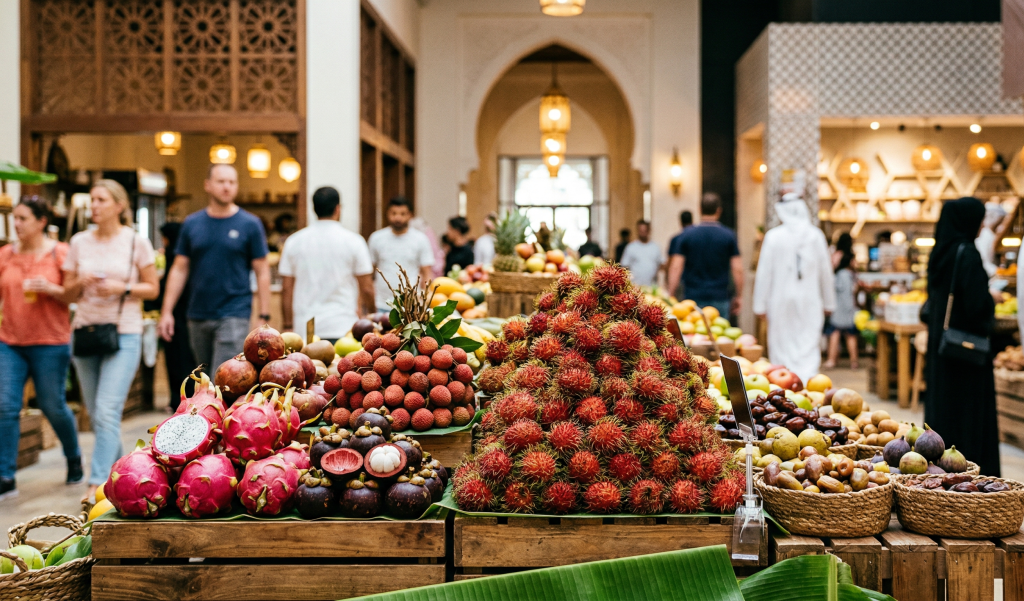
Most rambutan available in the UAE is imported, primarily from:
- Vietnam
- Thailand
- Indonesia (less frequently)
Why Vietnam Dominates Supply
Vietnam has become a key supplier due to:
- Consistent export quality
- Reliable harvesting cycles
- Efficient cold-chain logistics
For Dubai buyers, this matters more than origin alone.
What affects quality is not just where it comes from, but:
- How quickly it is shipped
- How well temperature is maintained
- How long it sits before reaching the end buyer
In practice, suppliers working closely with Dubai-based distributors such as JMB Farm Fresh often observe that handling and timing impact freshness more than country of origin alone.
When Is Rambutan in Season in the UAE?
Rambutan is not grown locally in the UAE, so availability depends entirely on import cycles.
Typical Peak Windows
- Main season: May to September
- Secondary availability: Limited off-season imports (higher cost, lower consistency)
However, this is where many buyers get confused.
Common Misunderstanding: “Available” vs “Fresh”
Just because you can buy rambutan online UAE year-round does not mean:
- It is in peak condition
- It has optimal sweetness
- It will last long after delivery
Out-of-season fruit often:
- Travels longer distances
- Stays in storage longer
- Loses moisture and texture
For restaurants and bulk buyers, this can directly affect:
- Plate presentation
- Customer experience
- Food waste
How to Tell If Rambutan Is Fresh (Before You Buy)
One of the biggest challenges — especially for first-time buyers — is judging quality.
Unlike apples or bananas, rambutan gives more subtle signals.
Key Visual Indicators
Look for:
- Bright red or vibrant yellow skin
- Soft, flexible “hair” (spines), not dried or brittle
- No dark patches or shriveling
Avoid:
- Brown or dull skin
- Completely dried-out spines
- Cracked outer shell
Texture Check (If Buying Physically)
If you can touch the fruit:
- It should feel slightly firm, not hard
- The skin should not feel dry or papery
What Online Buyers Often Miss
When ordering rambutan delivery in Dubai, buyers rely on images.
This creates a gap between:
- Expected freshness
- Actual delivered quality
Common complaints seen in buyer discussions include:
- Fruit arriving dry
- Flesh sticking too tightly to the seed
- Reduced sweetness
These are usually signs of:
- Delayed logistics
- Old stock
- Poor storage conditions
Rambutan vs Lychee: Which One Should You Choose?
This is one of the most common “People Also Ask” questions.
While they are similar, the differences matter depending on use.
Rambutan
- Slightly firmer texture
- Less juicy
- Better for plating and handling
Lychee
- Softer and juicier
- More aromatic
- More delicate shelf life
Practical Insight
For:
- Buffets and displays → Rambutan performs better
- Juices and desserts → Lychee may be preferred
Understanding this helps buyers avoid mismatches between expectation and application.
Why Rambutan Prices Fluctuate in Dubai
Searches like rambutan price Dubai often spike during certain months — and not always for obvious reasons.
Key Factors Behind Price Changes
- Seasonality in source countries
- Air freight vs sea freight costs
- Import volume fluctuations
- Demand spikes (events, holidays, tourism)
A Common Buyer Frustration
Many assume:
“Same fruit, same size — price should stay stable.”
In reality, imported fruits like rambutan are highly sensitive to:
- Logistics disruptions
- Weather in origin countries
- Shipment delays
This is why pricing can vary even within the same week.
The Hidden Risk: Shelf Life and Waste
One of the biggest real-world concerns — especially for businesses — is not price, but waste.
Rambutan has a relatively short usable window after arrival.
Typical issues include:
- Skin drying within days
- Loss of sweetness
- Reduced visual appeal
For:
- Restaurants → affects presentation
- Retailers → affects sell-through
- Families → leads to unused fruit
Understanding how and when to buy becomes more important than simply finding availability.

How to Store Rambutan Properly in Dubai’s Climate
Dubai’s heat is not forgiving to tropical fruit.
Even though rambutan comes from warm regions, the journey it takes — harvesting, packing, shipping, customs, delivery — makes it far more fragile by the time it reaches the UAE.
What Happens If You Don’t Store It Correctly
Poor storage leads to:
- Rapid moisture loss from the skin
- Browning of the outer shell
- Flesh becoming less juicy and slightly rubbery
This can happen within 24–48 hours if left at room temperature.
Best Storage Practice (Household Use)
- Keep rambutan in the refrigerator (4–8°C)
- Store it in a perforated plastic bag or breathable container
- Avoid sealing it completely (trapped moisture causes spoilage)
Consume within:
- 2–4 days for best quality
- Up to 5–6 days if properly stored, but with noticeable decline
Storage Considerations for Businesses
For restaurants, hotels, and catering teams:
- Do not overstock unless turnover is predictable
- Keep it in controlled cold storage, not open refrigeration units
- Rotate stock daily (first in, first out)
This is where many procurement teams make mistakes — treating rambutan like apples or citrus, which have longer shelf lives.
Buying Rambutan Online in Dubai: What Actually Matters
The rise of buy rambutan online UAE searches has made sourcing easier, but not necessarily more transparent.
What Most Listings Don’t Tell You
Online product pages usually show:
- Ideal, freshly harvested fruit
- Uniform size and color
- Clean, polished presentation
But they rarely explain:
- Harvest date
- Time in transit
- Storage duration before dispatch
This gap is where most buyer dissatisfaction comes from.
How Experienced Buyers Evaluate Suppliers
Instead of focusing only on price or visuals, experienced buyers look at:
- Turnover speed → How quickly inventory moves
- Import frequency → Weekly shipments vs occasional bulk imports
- Cold chain consistency → Whether temperature is maintained throughout
In practice, some UAE buyers prefer working with established distributors who manage consistent import cycles rather than relying on fragmented retail listings.
A Practical Rule
If a supplier offers rambutan year-round at the same price and appearance, it usually indicates:
- Cold storage dependency
- Longer holding periods
- Reduced freshness
Seasonal variation is not a weakness — it’s often a sign of authenticity in fresh produce sourcing.
Common Mistakes Buyers Make With Rambutan
Across forums, buyer discussions, and procurement feedback, the same issues come up repeatedly.
1. Buying Based Only on Appearance
Bright red skin does not always mean fresh fruit.
Some fruit may look good externally but:
- Have dry flesh
- Lack sweetness
- Be difficult to peel
2. Ignoring Seasonality
Many buyers assume availability equals peak quality.
In reality:
- Off-season rambutan often has lower flavor intensity
- Shelf life becomes shorter
- Cost increases without matching quality
3. Overordering
This is especially common in:
- Catering businesses
- Event planners
Rambutan’s short shelf life means excess stock quickly turns into waste.
4. Confusing Texture With Ripeness
Some buyers expect extremely soft flesh like lychee.
But rambutan naturally has:
- Slight firmness
- A cleaner bite
Mistaking this for “underripe” leads to unnecessary complaints.
Wholesale vs Retail Rambutan: What’s the Real Difference?
This is one of the most misunderstood areas in Dubai’s produce market.
Retail (Supermarkets & Small Orders)
Pros:
- Easy access
- Smaller quantities
- Immediate purchase
Limitations:
- Higher price per kg
- Often older stock
- Limited variety
Wholesale (Bulk & Supplier Networks)
Pros:
- Fresher arrivals (closer to import cycle)
- Better consistency across batches
- More control over quantity and timing
Tradeoffs:
- Requires planning
- Minimum order quantities
- Not always suitable for casual buyers
The Reality Buyers Often Miss
Wholesale does not automatically mean better quality.
It depends on:
- Supplier practices
- Storage handling
- Delivery timing
However, when managed well, wholesale sourcing reduces:
- Unit cost
- Variability
- Supply gaps
How Restaurants and Hotels Use Rambutan Differently
Rambutan is rarely used randomly in professional kitchens.
It serves specific roles depending on the setting.
In Hotels
- Breakfast fruit displays
- Premium buffet sections
- Guest experience enhancement
The visual appeal matters as much as taste.
In Restaurants
- Garnishes for desserts
- Mocktail and beverage elements
- Southeast Asian-inspired dishes
Here, consistency and texture are more important than volume.
In Catering
- Event fruit platters
- High-end presentation trays
This is where timing becomes critical.
A delay of even one day can affect:
- Appearance
- Taste
- Client perception
Is Rambutan Worth Buying in Dubai?
This depends on expectations.
It Makes Sense If You:
- Want variety beyond common fruits
- Are serving guests or clients
- Care about presentation and uniqueness
- Understand seasonal buying
It May Not Be Ideal If You:
- Expect long shelf life
- Prefer very sweet, juicy fruits only
- Buy in bulk without immediate use
A Balanced Perspective
Rambutan is not a “daily fruit” for most households.
It sits in a category of:
- Occasional purchase
- Experience-driven consumption
- Seasonal indulgence
For businesses, it becomes valuable when used intentionally — not as a staple, but as a differentiator.
The Bigger Picture: What Rambutan Reveals About Dubai’s Food Supply
Rambutan’s rise is not just about one fruit.
It reflects how Dubai’s food system is evolving:
- Faster global sourcing
- More diverse consumer demand
- Greater reliance on import logistics
- Increased awareness of freshness and quality
Fruits that were once considered niche are now part of everyday conversations.
But with that access comes responsibility:
- To understand sourcing
- To manage expectations
- To reduce waste
Buyers who treat exotic fruits like standard produce often face disappointment.
Those who understand the system behind them tend to get consistent value.
How to Actually Buy Better Rambutan in Dubai (Without Overpaying or Wasting It)
By this point, it becomes clear that buying rambutan is less about finding it — and more about understanding timing, handling, and expectations.
Whether you are a household buyer or managing procurement for a business, a few practical adjustments can make a noticeable difference.
1. Buy Closer to Peak Import Cycles
If possible, align purchases with:
- Early arrivals in the main season (May–September)
- Fresh shipment windows rather than end-of-cycle stock
This reduces:
- Dryness
- Texture issues
- Short shelf life
2. Start Small Before Scaling Up
For first-time buyers:
- Purchase a small quantity
- Test taste, texture, and storage response
For businesses:
- Run trial batches before adding to menus or buffets
This avoids committing to a product that may not fit your use case.
3. Ask the Right Questions (Even Online)
When possible, check:
- How frequently new stock arrives
- Whether fruit is shipped by air or sea
- Estimated time between arrival and delivery
Even basic answers can reveal how fresh the product is likely to be.
4. Match the Fruit to Its Purpose
Instead of buying based on curiosity alone, define the use:
- For display → Choose visually vibrant, uniform fruit
- For consumption → Prioritize freshness over appearance
- For events → Time delivery as close as possible to usage
This small shift prevents mismatches that lead to waste.
5. Accept That Variation Is Normal
Even in well-managed supply chains, rambutan can vary in:
- Size
- sweetness
- ease of peeling
This is not always a quality issue — it is a natural part of seasonal, imported produce.
A Quiet Note on Supply Consistency
In practice, suppliers working within structured distribution networks in Dubai tend to maintain more predictable quality compared to fragmented sourcing.
Some buyers working with established distributors — including those sourcing through networks connected to providers like JMB Farm Fresh — often report fewer fluctuations in freshness and handling consistency over time.
The difference usually comes down to:
- Regular import cycles
- Controlled storage
- Faster movement from port to customer
Not branding — just process.
Final Thoughts: Rambutan Is Not Just a Fruit — It’s a System
Rambutan looks simple on the surface.
A small, hairy fruit. Easy to peel. Mildly sweet.
But behind it is a complex chain:
- Tropical farms in Southeast Asia
- Harvest timing and export logistics
- Cold storage and distribution networks
- Retail or wholesale handling in Dubai
Understanding that system changes how you buy.
Instead of asking:
“Where can I find rambutan in Dubai?”
A more useful question becomes:
“When, how, and from whom should I buy it to get the best outcome?”
That shift — from availability to understanding — is what separates a good purchase from a disappointing one.
Frequently Asked Questions (FAQ)
1. What does rambutan taste like?
Rambutan has a mildly sweet, slightly floral taste with a firm, juicy texture. It is often compared to lychee but is less acidic and slightly more substantial.
2. Is rambutan available year-round in Dubai?
It can be found year-round through imports, but peak quality is usually between May and September. Off-season fruit may have lower freshness and shorter shelf life.
3. How do you know if rambutan is fresh?
Look for bright skin, soft spines, and no dryness or browning. Fresh rambutan should feel slightly firm and not brittle on the outside.
4. Why is rambutan expensive in Dubai?
Pricing depends on import costs, seasonality, logistics, and demand. Air freight and limited supply periods can significantly increase prices.
5. How long does rambutan last after purchase?
Typically 2–4 days in the refrigerator for best quality. It can last longer, but texture and taste will decline.








 Home
Home  Whishlist
  Compare
  Checkout