















Introduction: A Quiet Shift in How Dubai Buys Vegetables
Over the last few years, many families in Dubai have started to look more closely at where their vegetables come from.
This shift is not driven by trends or labels. It is driven by experience.
Tomatoes that soften too fast. Okra that loses firmness after a day. Brinjal that looks perfect on the shelf but cooks unevenly. These small frustrations add up, especially for households that cook frequently or value consistency.
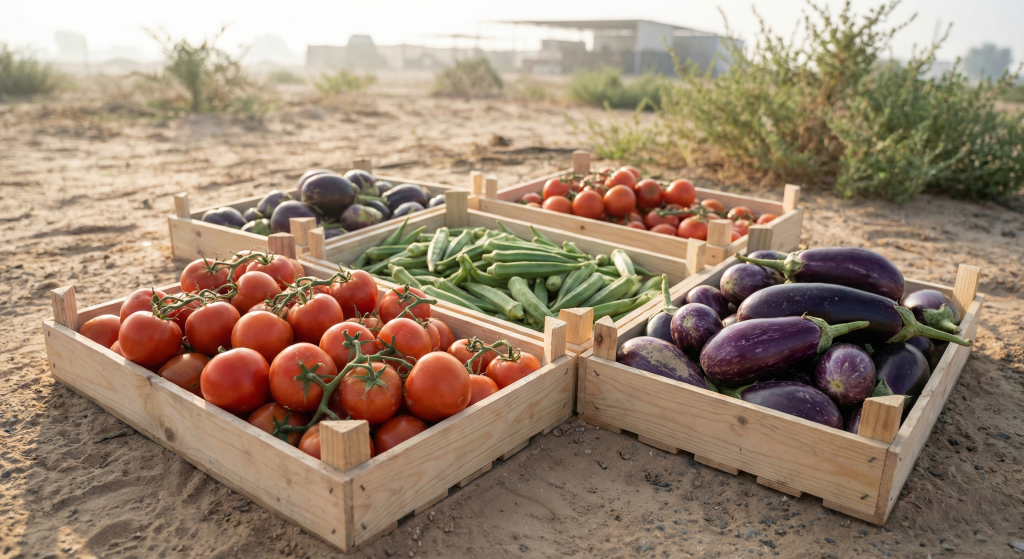
As a result, more residents are paying attention to fresh fruiting vegetables in Dubai, particularly everyday items like tomatoes, okra, and brinjal. Instead of focusing only on appearance or convenience, buyers are asking practical questions:
- How fresh is this produce, really?
- Was it harvested locally or imported?
- How long will it last in my kitchen?
- Why does quality change week to week?
This article looks at why tomatoes, okra, and brinjal have become central to this conversation, and how seasonal realities in the UAE shape what ends up on the table.
Why Fruiting Vegetables Matter More Than Most People Realize
Fruiting vegetables are plants where the edible portion develops from the flower. Tomatoes, okra, and brinjal fall into this group.
They behave differently from leafy greens or root vegetables.
Because they contain more moisture and continue to respire (release gases) after harvest, their quality is highly sensitive to:
- Time since harvest
- Temperature control
- Handling during transport
- Storage conditions
Even a short delay or temperature fluctuation can change texture, taste, and shelf life.
This is why fruiting vegetables often reveal the gap between farm-fresh produce in the UAE and long retail supply chains more clearly than other crops.
Tomatoes in Dubai: Appearance vs Usability
What Buyers Often Notice First
Tomatoes are one of the most purchased vegetables in Dubai households. They are also one of the most misunderstood.
In supermarkets, tomatoes often look uniform:
- Same size
- Same color
- Smooth skin
But appearance alone does not tell the full story.
Many shoppers notice that supermarket tomatoes:
- Ripen unevenly at home
- Turn soft near the stem
- Lose flavor when cooked
These issues are not random. They are usually linked to harvest timing and transport distance.
Why Timing Matters
Tomatoes destined for long retail chains are often picked before full maturity. This helps them survive shipping and storage but reduces flavor development.
Locally grown or regionally sourced tomatoes, especially during peak season, are usually harvested closer to ripeness. This leads to:
- Better cooking performance
- More consistent texture
- Less internal breakdown
This difference becomes more noticeable in winter, when UAE-grown tomatoes are more widely available.
Okra in the UAE: Freshness Is Non-Negotiable
A Vegetable That Exposes the Supply Chain
Okra is particularly sensitive to age.
Within 24–48 hours after harvest, okra can:
- Lose firmness
- Develop fibrous texture
- Darken at the tips
For buyers, this means okra quality is a direct reflection of how short—or long—the supply chain is.
Common Frustrations with Retail Okra
Families often report that okra bought from large retail stores:
- Becomes slimy quickly
- Requires heavy trimming
- Cooks unevenly
These issues usually indicate that the okra was harvested several days earlier or stored at inconsistent temperatures.
During peak local harvest periods in the UAE, fresher okra tends to:
- Snap cleanly when bent
- Cook faster
- Hold structure in stews and sautés
This is one reason okra is often cited by households as the vegetable where “farm fresh” makes the most noticeable difference.
Brinjal (Eggplant): More Than Just Size and Color
Why Brinjal Quality Varies So Much
Brinjal vegetables in Dubai come in many varieties, from long purple types to round, lighter-skinned cultivars.
Regardless of variety, freshness affects:
- Seed development
- Bitterness
- Oil absorption during cooking
Older brinjal tends to absorb more oil and develop spongy interiors, even if the skin still looks firm.
The Local Advantage in Peak Season
During UAE winter months, locally grown brinjal is more widely available. When harvested at the right stage, it typically has:
- Smaller, softer seeds
- Tighter flesh
- More predictable cooking results
For families cooking traditional dishes or plant-forward meals, these differences matter more than cosmetic perfection.
Winter in the UAE: The Most Important Season for Fruiting Vegetables
Understanding Seasonal Reality
The UAE’s climate limits year-round production of many vegetables. However, winter months offer favorable conditions for fruiting crops such as tomatoes, okra, and brinjal.
This period often brings:
- Higher local availability
- Shorter harvest-to-market times
- More stable quality
It also reduces reliance on long-distance imports, which can introduce variability.
Why Prices and Quality Fluctuate
Many buyers are confused when prices change even within the same season.
Common reasons include:
- Sudden weather shifts affecting yields
- Changes in import volumes
- Differences in farm-level grading
These factors affect both supermarket and wholesale channels, but their impact is more visible in produce with short shelf lives.
Understanding this context helps families make sense of why one week’s tomatoes last five days, while another week’s last only two.
Supermarket vs Farm-Fresh: Where the Confusion Comes From
Most supermarkets in Dubai operate on scale and consistency. This has benefits, but also limitations.
Retail systems are designed to:
- Handle large volumes
- Standardize appearance
- Reduce visible spoilage
Freshness, however, is harder to standardize.
This is why many households are beginning to explore alternatives that prioritize shorter supply chains, even if it means less visual uniformity.
The shift is not about rejecting supermarkets entirely. It is about understanding which vegetables are more sensitive to time and handling—and adjusting buying habits accordingly.
How Families Are Learning to Judge Freshness More Accurately
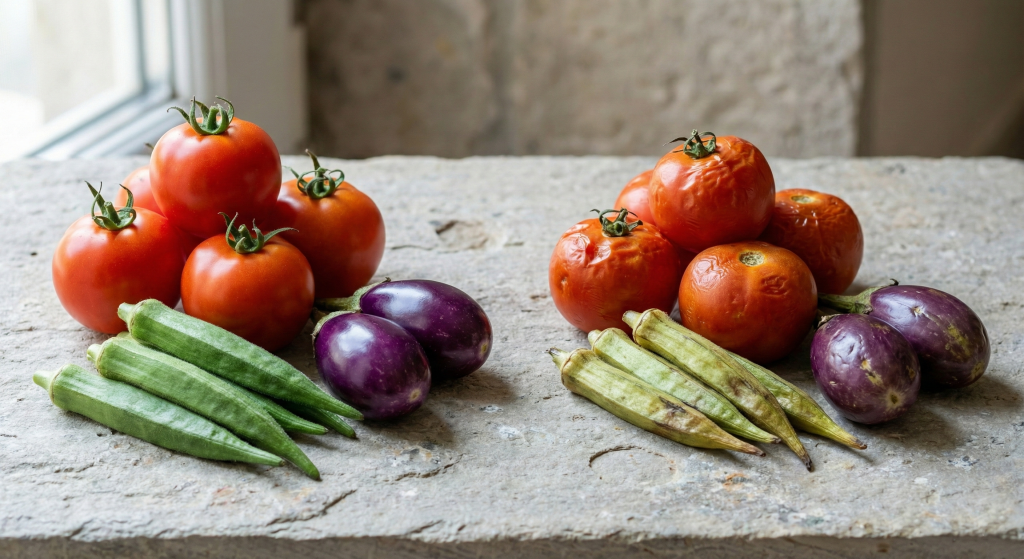
One of the biggest changes among Dubai households is not where they buy vegetables, but how they assess them.
Instead of relying only on price tags or packaging, buyers are learning simple, practical checks that reveal a lot about freshness—especially for fruiting vegetables.
What Experienced Buyers Look For
For tomatoes, families increasingly check:
- Weight relative to size (heavier usually means higher moisture)
- Even firmness, not just firm skin
- Natural scent near the stem
For okra, common checks include:
- Clean snap when bent
- No rubbery feel
- Bright, consistent green without darkened tips
For brinjal, buyers often notice:
- Tight, glossy skin without wrinkles
- Lightness of seeds when sliced
- Firm flesh that springs back slightly when pressed
These habits develop over time, often after repeated disappointment with produce that looks good but performs poorly at home.
Wholesale vs Supermarket: A More Nuanced Reality
There is a common belief that wholesale automatically means lower quality. This misconception persists because “wholesale” is often associated with bulk handling and price sensitivity.
In practice, quality depends less on the sales channel and more on:
- Harvest timing
- Storage conditions
- Speed of distribution
Wholesale systems that serve restaurants and caterers are often optimized for freshness rather than shelf life. Produce moves quickly, sometimes within hours of arrival.
Supermarkets, by contrast, are optimized for display stability. Vegetables must survive:
- Central warehousing
- Shelf stocking
- Customer handling
- Multi-day display cycles
Neither system is inherently better. They simply serve different priorities.
This distinction explains why some families quietly prefer sourcing part of their vegetables through distributors that also serve professional kitchens, especially for sensitive items like okra and tomatoes.
Why Price Volatility Confuses Buyers
Price changes are one of the biggest frustrations voiced in community discussions and local forums.
Families often ask:
- “Why did tomatoes jump in price this week?”
- “Why is okra cheaper now but worse in quality?”
- “Why does brinjal size change with no warning?”
These questions usually have supply-side answers.
Key Drivers Behind Price Changes
- Weather variation
Even during winter, temperature swings affect flowering and yields. - Harvest cycles
Fruiting vegetables do not mature evenly. Gaps between harvests create short-term shortages. - Import overlap
When local supply and imports overlap, prices may drop, but quality can vary widely. - Sorting and grading
Higher grades move faster to foodservice buyers, leaving mixed grades in retail.
Understanding these factors helps buyers avoid assuming that higher price always equals better quality—or that lower price means poor produce.
Common Mistakes Households Make When Buying Fruiting Vegetables
Through years of observation across retail and wholesale environments, a few patterns appear repeatedly.
Mistake 1: Buying for Appearance Alone
Uniform size and shine are not reliable indicators of freshness.
In fact, overly uniform produce may indicate:
- Early harvesting
- Extended cold storage
This is especially relevant for tomatoes and brinjal.
Mistake 2: Overbuying Sensitive Vegetables
Okra and ripe tomatoes do not store well.
Buying smaller quantities more frequently often reduces waste, even if the unit price is slightly higher.
Mistake 3: Ignoring Seasonality Labels
Not all “local” produce is in peak condition year-round.
During winter, local fruiting vegetables are generally more reliable. Outside peak months, quality depends heavily on handling.
Local vs Imported: Moving Beyond the Debate
The local-versus-imported discussion often becomes emotional, but experienced buyers take a practical view.
Local produce in the UAE typically offers:
- Shorter harvest-to-kitchen time
- Better texture for cooking
- Lower spoilage risk
Imported produce can offer:
- Year-round availability
- Consistent sizing
- Wider varietal choice
The key is alignment with use.
For everyday cooking, especially dishes that rely on texture and moisture control, many families find local or regionally sourced vegetables more dependable during peak season.
What “Farm Fresh” Really Means in Practice
The term “farm fresh” is widely used but rarely defined.
In operational terms, it usually means:
- Fewer intermediaries
- Shorter storage duration
- Faster turnover
It does not automatically mean:
- Organic
- Premium grade
- Higher price
Some Dubai-based distributors quietly focus on shortening this chain rather than marketing it. In practice, suppliers working closely with established operators such as JMB Farm Fresh often observe that households value consistency and usability more than labels or packaging.
This preference is subtle but growing.
Tradeoffs Families Are Willing to Accept
Choosing fresher supply often involves compromises.
Families report being comfortable with:
- Slight variation in size
- Less polished appearance
- Seasonal availability gaps
In exchange, they gain:
- Better cooking results
- Less waste
- More predictable flavor
This tradeoff mindset is similar to how professional kitchens operate, which may explain why household buying behavior is slowly converging with foodservice logic.

Practical Takeaways for Better Vegetable Sourcing at Home
By the time families reach this point in their buying journey, most are no longer asking where vegetables are cheapest. They are asking where vegetables are most reliable.
A few practical habits consistently lead to better outcomes:
- Buy fruiting vegetables in season, especially during UAE winter months
- Purchase smaller quantities more frequently for okra and ripe tomatoes
- Prioritize texture and weight over appearance
- Accept natural variation as a sign of shorter supply chains
- Adjust expectations by vegetable, not by store type
These habits do not require changing where you shop entirely. They simply require paying attention to how different vegetables behave after harvest.
Why This Shift Is Likely to Continue
Dubai’s food ecosystem is maturing.
As more residents cook at home, host gatherings, and pay attention to ingredient quality, everyday vegetables are receiving the scrutiny once reserved for specialty items.
Tomatoes, okra, and brinjal sit at the center of this change because they are:
- Used frequently
- Sensitive to handling
- Easy to compare across sources
When families notice consistent differences in taste, shelf life, and cooking performance, behavior changes quietly but permanently.
This is not a rejection of supermarkets. It is a refinement of expectations.
Conclusion: Choosing with Understanding, Not Labels
The move toward farm-fresh fruiting vegetables in Dubai is not about trends or claims. It is about reducing frustration and waste in daily cooking.
When buyers understand:
- How seasonality affects supply
- Why freshness matters more for certain vegetables
- Where quality losses typically occur
They make calmer, more informed choices.
Tomatoes that cook evenly. Okra that stays tender. Brinjal that absorbs less oil. These outcomes matter more than any label on a shelf.
In the end, the most reliable vegetables are not the ones that look perfect under lights—but the ones that behave predictably in the kitchen.
—
Frequently Asked Questions
1. What are fruiting vegetables, and why do they spoil faster?
Fruiting vegetables develop from flowers and contain more moisture. After harvest, they continue to respire, making them sensitive to time, temperature, and handling.
2. Is local produce always better than imported produce in Dubai?
Not always. Local produce tends to perform better during peak winter season, while imports can offer consistency outside local harvest windows.
3. Why does okra quality vary so much week to week?
Okra deteriorates quickly after harvest. Even small delays in transport or storage can affect texture and shelf life.
4. Are supermarket vegetables less fresh than wholesale vegetables?
Not inherently. Supermarkets prioritize display life, while wholesale systems often prioritize speed. Freshness depends on turnover and handling, not the channel alone.
5. How can I reduce waste when buying tomatoes and brinjal?
Buy smaller quantities, store properly, and avoid mixing very ripe produce with less ripe items to slow spoilage.
—








 Home
Home  Whishlist
  Compare
  Checkout