
















Introduction: A Simple Salad That Reflects Dubai’s Food Culture
Dubai’s food scene moves quickly.
New restaurant openings, global cuisines, and seasonal produce imports constantly reshape what people cook at home and serve in kitchens across the city.
Yet sometimes the most talked-about dishes are also the simplest.
Over the past few seasons, a minimal avocado pomegranate salad recipe has quietly appeared on café menus, home dinner tables, and even catering platters across the UAE. It combines only a few ingredients, but reflects something deeper about how Dubai cooks today: fusion, freshness, and seasonal awareness.
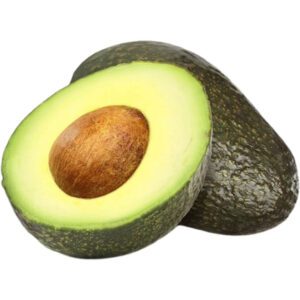
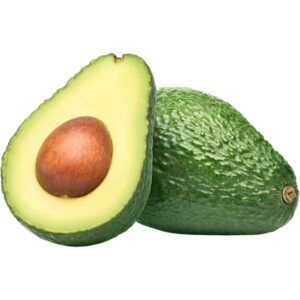
Avocado brings creaminess and richness.
Pomegranate adds sharp sweetness and color.
Together, they create a salad that feels equally at home beside grilled seafood, Middle Eastern mezze, or a modern brunch table.
For restaurant buyers, families, and catering teams, the appeal is obvious:
- Minimal preparation
- Highly seasonal ingredients
- Strong visual presentation
- Balanced nutrition
But there is another reason this dish is gaining attention.
It reflects how produce sourcing works in Dubai—a market where seasonality, imports, and wholesale supply chains influence what appears in kitchens.
Understanding those patterns helps both home cooks and food businesses prepare better meals with fewer quality issues.
Why Avocado and Pomegranate Work So Well Together
At first glance, the pairing might seem unusual.
Avocado originates largely from tropical and subtropical farming regions such as Kenya, Mexico, Peru, and South Africa.
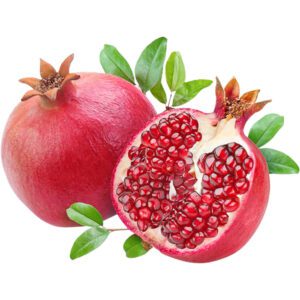
Pomegranates, by contrast, are deeply rooted in Middle Eastern agriculture, with large volumes coming from Iran, India, Turkey, and parts of the Mediterranean.
But when you break down the flavor structure, the combination makes perfect sense.
Flavor balance
The two fruits create a natural balance of taste and texture.
Avocado contributes:
- Creamy mouthfeel
- Mild, buttery flavor
- Healthy fats that soften acidity
Pomegranate contributes:
- Bright sweetness
- Light acidity
- Crisp texture
Together, they form a profile that chefs often describe as “fat + acid + crunch.”
This same structure appears in many successful dishes around the world.
A strong visual component
Another reason this salad spreads quickly across social media and restaurant menus is presentation.
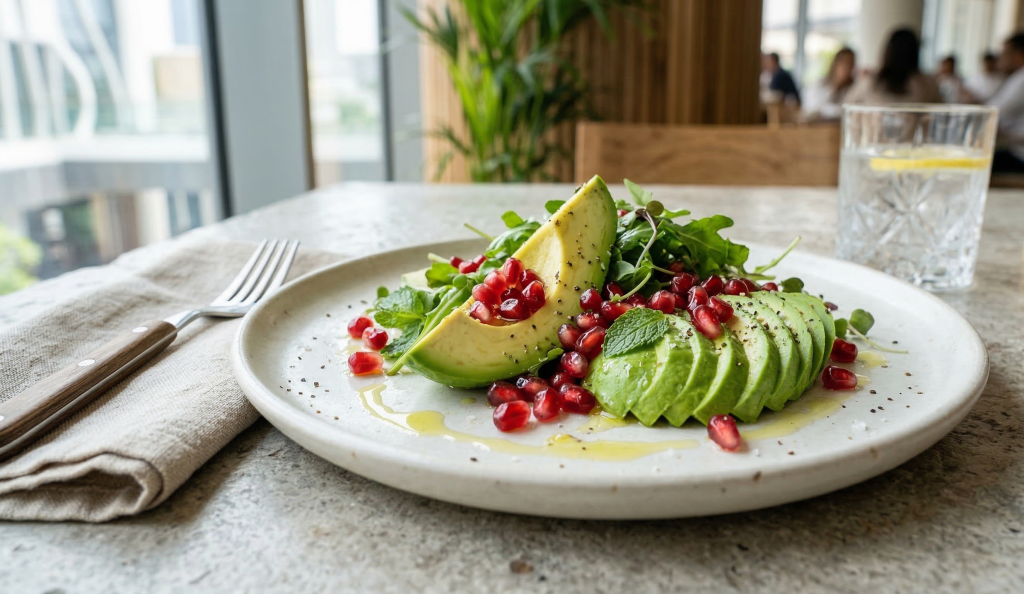
Deep red pomegranate seeds scattered across pale green avocado slices create a high-contrast plate that looks fresh and vibrant.
For cafés and catering teams, dishes that photograph well often become repeat orders.
Nutrition also plays a role
While the recipe itself is simple, the ingredients offer meaningful nutritional value.
Avocados provide:
- Monounsaturated fats
- Potassium
- Fiber
Pomegranates contain:
- Antioxidants
- Vitamin C
- Polyphenols
In Dubai’s increasingly health-aware food culture, these qualities make the salad attractive for brunch menus and lighter evening meals.
The 4-Ingredient Avocado & Pomegranate Salad Recipe
Despite its popularity, the dish remains extremely simple.
Many variations exist, but the most common easy fusion salad recipe UAE kitchens use relies on just four ingredients.
Ingredients
- 2 ripe avocados
- ½ cup fresh pomegranate seeds
- 1 tablespoon extra virgin olive oil
- A pinch of sea salt
Optional additions sometimes include lemon juice, mint leaves, or toasted nuts, but the core recipe remains minimal.
Step-by-step preparation
- Slice the avocados
Cut avocados lengthwise, remove the pit, and slice into wedges or cubes.
Use fruit that is ripe but still firm. Overripe avocados will break apart when mixed.
- Prepare the pomegranate seeds
Fresh seeds work best.
Pre-packaged arils are convenient, but they can sometimes lose firmness during storage.
- Combine gently
Place the avocado slices in a bowl and scatter pomegranate seeds on top.
Avoid heavy mixing. Gentle folding prevents the avocado from becoming mashed.
- Finish with olive oil and salt
Drizzle lightly with olive oil and add a small pinch of sea salt.
The oil enhances the creamy texture while salt sharpens the fruit flavors.
Why simplicity matters
Many cooks instinctively add extra ingredients.
But chefs often recommend restraint.
Too many additions—such as strong dressings or heavy herbs—can overpower the delicate balance between avocado and pomegranate.
The dish works best when fresh produce remains the main focus.
How This Salad Reflects Dubai’s Fusion Food Culture
Dubai’s culinary landscape is shaped by global migration and international supply chains.
Residents come from dozens of culinary traditions, and produce arrives from multiple continents every week.
This environment naturally produces fusion cooking styles.
The avocado and pomegranate pairing reflects that reality.
- Avocado brings influence from Latin American and global health cuisine.
- Pomegranate connects with Middle Eastern traditions.
- Olive oil ties the dish to Mediterranean cooking.
For many diners, the combination feels both familiar and new at the same time.
That is a common pattern in modern Middle Eastern salad Dubai restaurants serve today.
Traditional ingredients appear beside imported produce, creating dishes that feel global yet rooted in regional tastes.
Seasonality in the UAE: Why Timing Matters
One detail many home cooks overlook is produce seasonality.
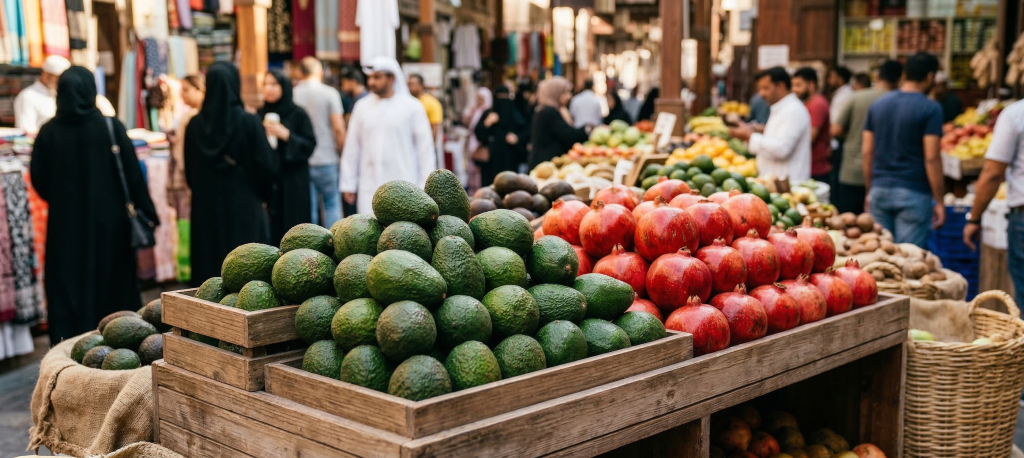
Dubai imports a large percentage of its fruits and vegetables. But imports still follow agricultural cycles in exporting countries.
Understanding those cycles helps prevent common problems like:
- Overpaying for out-of-season produce
- Buying fruit with poor shelf life
- Inconsistent flavor
Pomegranate season
Pomegranates typically peak in the UAE market between October and February.
During this period:
- Quality tends to be higher
- Prices stabilize
- Seeds are sweeter and firmer
Outside these months, availability continues but quality can vary depending on the origin country.
Avocado supply patterns
Avocado supply fluctuates depending on global harvest cycles.
The UAE commonly imports from:
- Kenya
- Peru
- South Africa
- Mexico
Different origins rotate throughout the year.
This is why shoppers sometimes notice sudden price shifts or changes in size and ripeness.
Wholesale buyers understand these patterns closely because import windows determine supply stability.
Why restaurants track these cycles closely
For restaurant kitchens, produce consistency matters.
If avocados arrive underripe or pomegranates become watery, dishes lose quality quickly.
Many hospitality procurement teams monitor:
- Import timing
- Storage conditions
- Supplier reliability
In practice, distributors working closely with Dubai produce networks—including companies such as JMB Farm Fresh—often observe that kitchens performing best are the ones that align menus with seasonal supply rather than fighting it.
The Hidden Challenge: Freshness in Dubai’s Produce Market
A common question buyers ask is simple:
Why does fruit quality sometimes vary between stores?
The answer usually lies in the supply chain.
Fresh produce in Dubai typically passes through several stages:
- International farms
- Export packing facilities
- Shipping containers
- UAE import terminals
- Wholesale markets
- Retail distribution
Each stage affects freshness.
Temperature control matters
Cold chain management—the process of maintaining consistent refrigeration—plays a major role in fruit quality.
If temperature fluctuates during transport, avocados may:
- Ripen too quickly
- Develop internal browning
- Lose shelf life
Similarly, pomegranates exposed to improper storage can develop soft seeds or dull flavor.
These issues are rarely visible immediately.
They often appear days after purchase.
Why buyers sometimes prefer wholesale markets
Restaurants and catering businesses often purchase produce through wholesale networks because the supply chain is shorter.
Wholesale buyers typically receive fruit closer to the original import stage, reducing storage time.
That does not guarantee perfection, but it often improves:
- Freshness
- Shelf life
- Batch consistency
For households preparing dishes like avocado pomegranate salad, these factors can make the difference between a vibrant plate and a disappointing one.
Practical Tips for Preparing This Salad at Home or in Professional Kitchens
Whether prepared in a household kitchen or a restaurant service line, the difference between a good salad and an excellent one often comes down to small details.
The avocado pomegranate salad recipe is simple, but thoughtful preparation improves both flavor and presentation.
Use avocados at the correct ripeness stage
For salads, avocados should be ripe but still structured.
If the fruit is too firm, the texture feels dry and the flavor remains mild.
If it is too soft, slices collapse when mixed.
Many chefs prefer avocados that yield slightly to gentle pressure but still hold a clean cut when sliced.
Chill the pomegranate seeds slightly
A small but useful trick is lightly chilling pomegranate seeds before assembling the salad.
Cool seeds contrast with the creamy avocado texture and help keep the dish refreshing, particularly in warm climates like Dubai.
Plate the salad instead of mixing heavily
Instead of tossing everything together, many kitchens plate the ingredients directly.
For example:
- Arrange avocado slices across the plate
- Sprinkle pomegranate seeds evenly over the top
- Finish with olive oil and sea salt
This approach preserves texture and creates a cleaner visual presentation.
Serve immediately
Avocado-based dishes are best enjoyed fresh.
Even with lemon juice or oil, the fruit will gradually oxidize.
Preparing the salad just before serving keeps the color vibrant and the flavor balanced.
A Quiet Lesson From This Simple Recipe
At first glance, a four-ingredient salad may seem like a small topic.
Yet dishes like this reveal how modern food systems actually work.
Behind every bowl of fruit are complex supply networks connecting farms, exporters, import terminals, wholesalers, and finally kitchens.
For cooks and buyers in the UAE, understanding these systems helps explain:
- Why certain fruits appear in abundance during winter
- Why prices shift from month to month
- Why freshness varies between suppliers
It also explains why experienced buyers often prioritize reliability and handling practices over marketing claims.
In Dubai’s hospitality sector, kitchens that understand produce seasonality often waste less food and maintain more consistent menus.
Why Seasonal Awareness Improves Everyday Cooking
Many households think seasonality only matters for farmers.
In reality, it affects everyday cooking more than most people realize.
When fruits are in season:
- Flavor tends to be stronger
- Storage life improves
- Market availability increases
During the UAE winter months, pomegranates become particularly vibrant, which is why they appear frequently in salads and desserts.
Avocados, sourced from rotating global harvests, remain available throughout the year, but their quality still reflects harvest cycles in exporting countries.
Understanding these rhythms helps cooks choose ingredients when they are naturally at their best.
A Balanced Perspective on Wholesale and Retail Produce
Another insight often overlooked is how produce moves through the market.
Retail supermarkets provide convenience and accessibility.
Wholesale supply networks serve restaurants, catering companies, and bulk buyers.
Both systems play an important role in the UAE food ecosystem.
Wholesale sourcing may offer advantages such as:
- Larger batch consistency
- Shorter storage chains
- More predictable supply for high-volume kitchens
Retail markets, meanwhile, offer flexibility for households and smaller purchases.
Neither approach is universally better.
The right choice depends on scale, storage capacity, and how quickly the produce will be used.
Some Dubai-based buyers find value in working with established distributors that understand the local market. In practice, suppliers connected to wholesale networks—including firms like JMB Farm Fresh—often observe that buyers who plan purchases around seasonal supply patterns experience fewer freshness issues.
Final Thoughts
The popularity of the avocado pomegranate salad recipe says something interesting about how people cook in Dubai today.
It combines global ingredients with regional flavors.
It highlights fresh produce instead of complex techniques.
And it reflects the seasonal patterns that shape the UAE’s food supply.
For home cooks, the lesson is simple:
Good food does not always require complicated recipes.
Sometimes it begins with selecting fresh ingredients at the right time, handling them carefully, and allowing natural flavors to stand on their own.
In a city known for culinary diversity, even a small four-ingredient salad can capture the spirit of modern Dubai dining.
FAQ Section
1. What makes avocado and pomegranate a good combination?
Avocado provides creamy texture and mild flavor, while pomegranate adds sweetness and acidity. Together they create a balanced contrast of fat, freshness, and crunch, which is why many modern Middle Eastern salad Dubai menus feature similar combinations.
2. When is pomegranate season in the UAE?
Pomegranates typically reach peak quality in the UAE between October and February. During this winter period, the fruit is usually sweeter, firmer, and more widely available in markets.
3. Can I prepare avocado pomegranate salad in advance?
It is best prepared shortly before serving. Avocados oxidize once cut, which can darken the flesh. Preparing the dish close to serving time helps preserve color and texture.
4. Where can people buy avocados in Dubai?
Avocados are widely available through supermarkets, wholesale produce markets, and online grocery services. Many households choose to buy avocado Dubai online for convenience, especially when ordering fresh produce deliveries.
5. Is this considered a traditional Middle Eastern salad?
Not exactly. It is better described as a fusion salad, combining globally sourced avocado with regional ingredients like pomegranate and olive oil. This reflects Dubai’s diverse food culture.








 Home
Home  Whishlist
  Compare
  Checkout