













Introduction: A Viral Dish Meets a Very Real Supply Question
The smashed potato is no longer just a social media trend. Across Dubai and the wider UAE, it has quietly moved from short-form video content into real kitchens — from home cooks to casual dining menus.
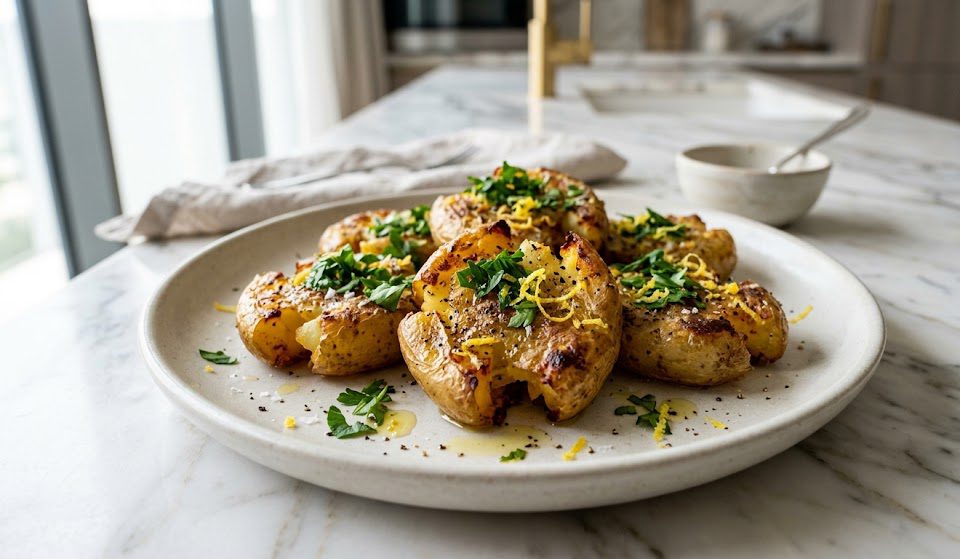
At first glance, it looks simple. Boiled potatoes, flattened, roasted, then topped.
But in practice, the difference between a forgettable version and something worth repeating comes down to one thing: fresh toppings.
This is where many people underestimate the role of produce quality.
In conversations across restaurant groups, catering buyers, and even home cooks sourcing online, a pattern shows up:
- The base (potato) is rarely the problem
- The topping choices are often rushed or inconsistent
- Fresh herbs and greens are used incorrectly or too late
- Storage and sourcing affect flavor more than expected
In a market like the UAE — where most fresh produce is imported and freshness windows are tight — these small decisions have real impact.
This article breaks down six fresh toppings that actually elevate smashed potatoes, while also explaining what buyers in Dubai often get wrong when sourcing herbs, microgreens, and garnishes.
Why Smashed Potato Toppings Matter More in the UAE
It’s Not Just About Taste — It’s About Shelf Life and Handling
In colder regions, herbs and greens can last longer post-harvest. In the UAE, the environment is different.
Even in winter, most fresh herbs:
- Travel long distances
- Pass through multiple cold-chain stages
- Lose moisture quickly once unpacked
That means a topping that looks fine in the morning can become:
- Bitter by evening
- Limp after plating
- Aromatically weak when cooked
This is why many smashed potato attempts fall flat. The issue is not the recipe — it’s produce handling and timing.
The Common Mistake: Treating Toppings Like Decoration
A frequent misunderstanding among both households and smaller food businesses is this:
“Toppings are optional — they’re just for presentation.”
In reality, for smashed potatoes, toppings are the primary flavor driver.
The potato itself is neutral. It acts as a base.
What defines the dish is:
- The freshness of herbs
- The sharpness of greens
- The balance between fat, acid, and texture
When toppings are low quality or poorly handled, the entire dish feels heavy and one-dimensional.
What Buyers in Dubai Often Get Wrong About Fresh Herbs
From procurement discussions and supplier feedback, a few consistent issues come up:
1. Buying Too Much at Once
Bulk buying herbs without a usage plan leads to:
- Wilted leaves
- Loss of aroma
- Higher waste
Unlike root vegetables, herbs have a very short usable window — often 2–4 days in UAE conditions after unpacking.
2. Storing Everything the Same Way
Not all herbs behave the same:
- Soft herbs (parsley, coriander, dill) need moisture control
- Woody herbs (rosemary, thyme) tolerate drier storage
- Microgreens require breathable packaging and minimal stacking
Mixing these storage approaches reduces shelf life significantly.
3. Using Herbs Too Early in Cooking
Many viral smashed potato recipes suggest adding herbs before roasting.
In practice, this leads to:
- Burnt edges
- Bitter flavor
- Loss of aroma
Fresh herbs in the UAE perform best when added:
- After roasting
- Or right before serving
Seasonal Context: Why Winter Changes Everything
Winter in the UAE is a unique window.
While the country relies heavily on imports year-round, winter allows for:
- Better-quality leafy greens
- Improved herb consistency
- Slightly longer shelf life due to lower ambient temperatures
This is why smashed potato recipes tend to “work better” during this period.
Buyers — especially restaurant operators — often notice:
- More reliable batches
- Less spoilage
- Stronger flavor profiles
However, this does not eliminate variability. Sourcing still matters.
In practice, suppliers working closely with Dubai-based distributors such as JMB Farm Fresh often observe that buyers who align purchases with seasonal availability experience less waste and more consistent quality.
The Foundation: Choosing the Right Potato Before Toppings
Before discussing toppings, it’s worth clarifying something often overlooked.
Not all potatoes behave the same when smashed.
What Works Best in the UAE Market
For smashed potatoes, buyers typically look for:
- Medium-sized potatoes (even cooking)
- Waxy or all-purpose varieties (hold shape after boiling)
- Fresh stock (older potatoes become grainy when smashed)
What to Avoid
- Overly large potatoes (uneven texture)
- Very starchy types (break apart instead of crisping)
- Long storage batches (common in poorly rotated supply chains)
This matters because even the best toppings cannot fix a poor base.
6 Fresh Toppings That Actually Make Smashed Potatoes Worth Making
The following toppings are not chosen for trend value, but for how they behave in UAE conditions — including availability, shelf life, and flavor stability.
1. Parsley + Lemon Zest + Olive Oil

4
This is one of the most reliable combinations in Dubai kitchens.
Parsley is widely available, relatively stable, and forgiving if handled correctly.
Why it works:
- Adds freshness without overpowering
- Lemon cuts through the heaviness of roasted potatoes
- Olive oil helps carry aroma
Common mistake:
Using pre-chopped parsley stored for too long. It loses both color and flavor quickly.
2. Garlic Yogurt + Fresh Dill

4
This topping reflects Middle Eastern flavor profiles and works well in UAE households.
Why it works:
- Yogurt adds cooling contrast
- Dill provides a sharp, clean aroma
- Balances richness of roasted potatoes
Supply insight:
Dill is more delicate than parsley and has a shorter shelf life in UAE conditions. It should be used quickly after purchase.
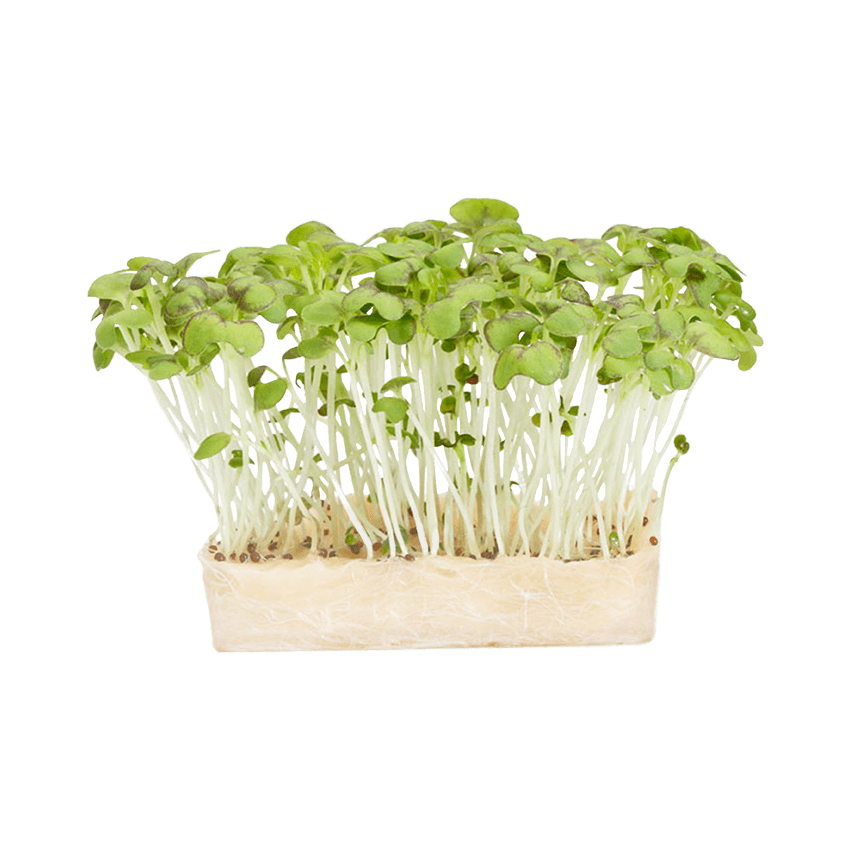
3. Microgreens + Sea Salt + Lemon
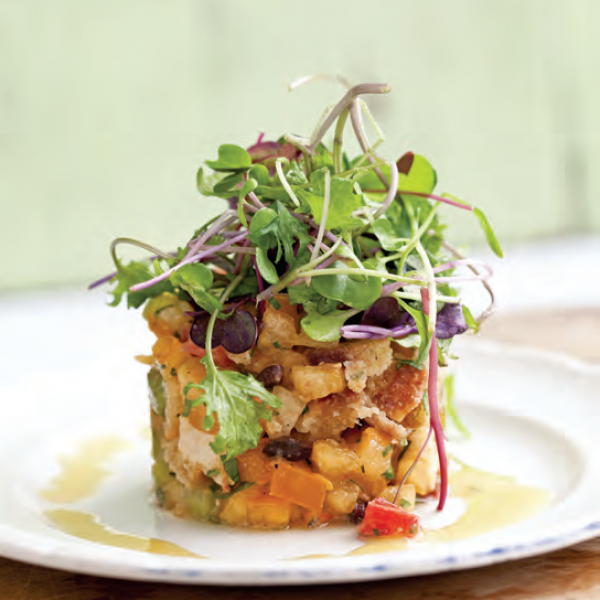
4
Microgreens, including cress varieties, are increasingly used in Dubai kitchens — not just for presentation, but for taste.
Why it works:
- Adds texture and slight bitterness
- Enhances visual appeal without overpowering
- Requires no cooking
Common misunderstanding:
Microgreens are often treated as decorative only. In reality, they contribute flavor — but only if fresh.
Poor-quality microgreens:
- Collapse quickly
- Taste neutral or watery
- Lose structure on warm dishes
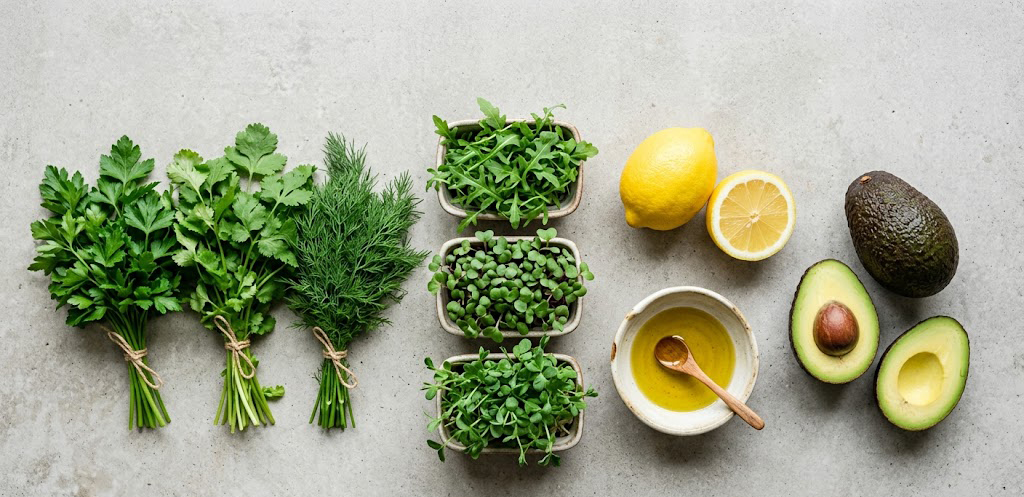
Chili Oil + Fresh Coriander
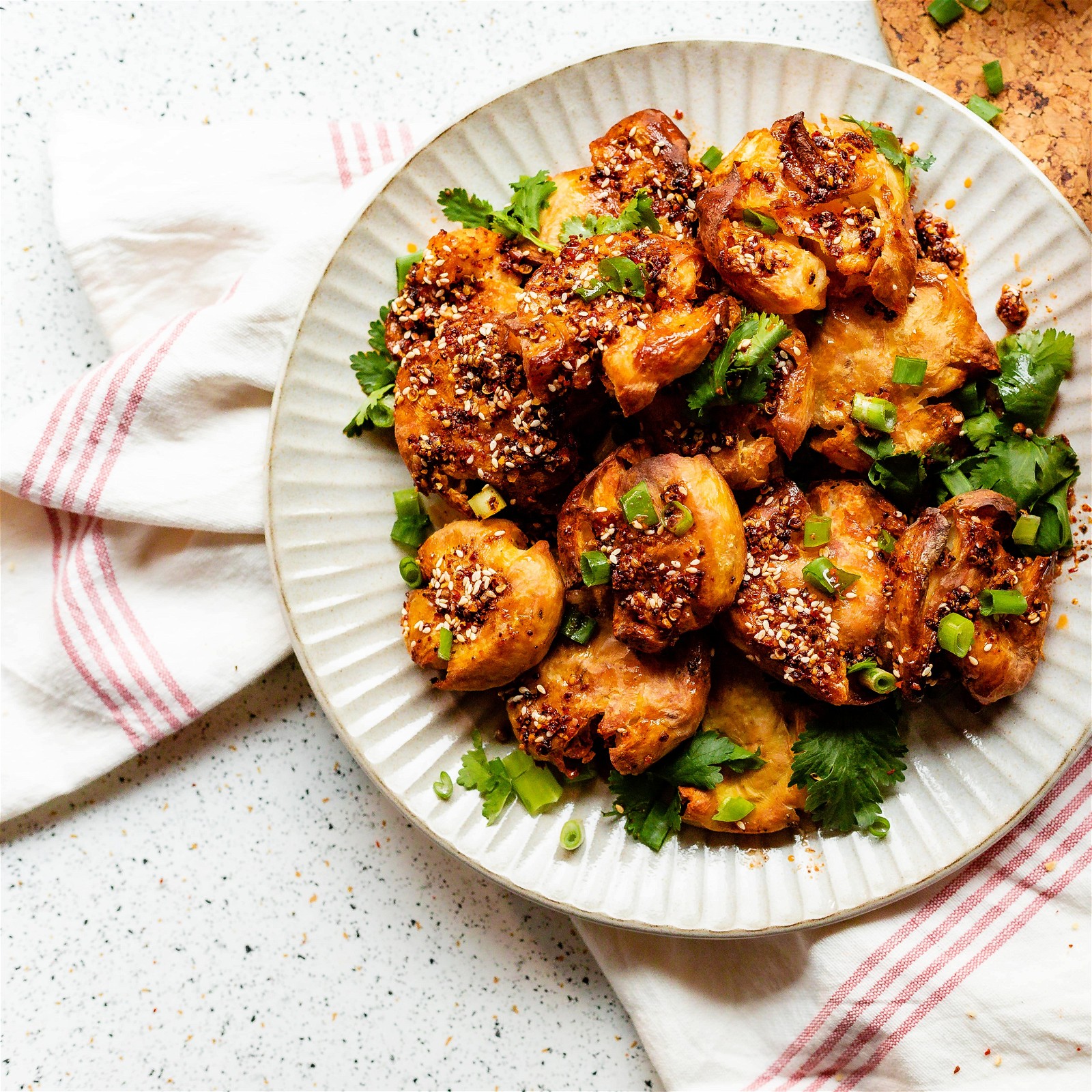
4
This combination has become increasingly visible in casual dining menus across Dubai, especially where Asian and Middle Eastern flavors overlap.
Why it works:
- Chili oil adds depth and controlled heat
- Fresh coriander brings brightness and a slightly citrusy note
- The contrast makes the dish feel lighter despite the oil
Handling insight:
Coriander (cilantro) is widely available in the UAE, but it deteriorates quickly if stored wet or compressed.
For best results:
- Wash only before use
- Keep stems dry during storage
- Use within 2–3 days of purchase
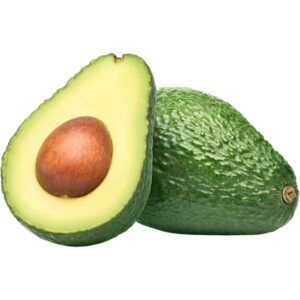
5. Crushed Avocado + Lime + Micro Herbs

4
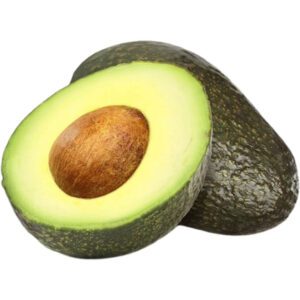
Avocado-based toppings have moved from brunch menus into more casual home cooking in the UAE.
Why it works:
- Creaminess balances the crisp texture of potatoes
- Lime adds acidity that prevents heaviness
- Micro herbs introduce freshness without bulk
Supply reality in the UAE:
Avocados are entirely imported. This creates variability:
- Some batches arrive underripe and hard
- Others soften too quickly due to temperature shifts
Timing matters. Buyers often misjudge ripeness, leading to either:
- Bland flavor (underripe)
- Overly soft, watery texture (overripe)
6. Rocket Leaves (Arugula) + Parmesan + Olive Oil

4
This topping brings a more European profile and is common in higher-end casual dining.
Why it works:
- Rocket adds peppery sharpness
- Parmesan introduces umami and salt
- Olive oil ties the elements together
What buyers often miss:
Rocket leaves are sensitive to:
- Heat exposure
- Compression during transport
- Delayed refrigeration
Inconsistent batches can result in:
- Excess bitterness
- Rapid wilting after plating
Fresh Herb Toppings in the UAE: Delivery vs Market Buying
One of the most discussed topics among buyers — from households to restaurant operators — is whether to source herbs and greens from:
- Traditional wholesale markets (like Al Aweer)
- Online delivery platforms
- Dedicated produce suppliers
Market Buying: Advantages and Tradeoffs
Advantages:
- Direct inspection of freshness
- Potentially lower cost for bulk
- Wider variety on certain days
Tradeoffs:
- Time-intensive
- Quality varies by vendor
- Requires knowledge to assess freshness
Online & Supplier Delivery: What Changes
With delivery-based sourcing, the process becomes:
- More convenient
- More consistent (when suppliers are reliable)
- Less flexible in selecting individual batches
However, the key concern buyers raise is:
“Am I getting the same quality I would pick myself?”
In practice, consistency depends heavily on:
- Supplier sourcing standards
- Cold-chain management
- Order turnover speed
Some UAE buyers prefer working with established wholesale produce providers rather than fragmented retail sourcing, especially when consistency matters more than price alone.
How to Judge Freshness (Quick Practical Guide)
Whether sourcing for a home kitchen or a restaurant, a few simple checks help avoid poor-quality toppings:
For Herbs (Parsley, Coriander, Dill)
- Leaves should be vibrant, not yellowing
- Stems should feel firm, not slimy
- Aroma should be noticeable when lightly crushed
For Microgreens
- Upright structure (not flattened)
- No excess moisture in packaging
- Even color across the batch
For Leafy Greens (Rocket, Mixed Leaves)
- Dry surface (no condensation buildup)
- Crisp edges (not curling or browning)
- Neutral, fresh smell
For Avocados
- Slight give when pressed (not soft)
- No dark sunken spots
- Even skin color for the variety
The Cost Reality: Why Toppings Feel Expensive
A common frustration among UAE buyers is that fresh toppings — especially herbs and microgreens — can feel disproportionately expensive compared to the base ingredients.
This perception is not entirely wrong.
Why Prices Fluctuate
Several factors affect pricing:
- Import origin (Europe, Africa, Asia)
- Air vs sea freight
- Seasonal availability
- Demand from restaurants and hotels
Unlike staple vegetables, herbs and microgreens are:
- More fragile
- More perishable
- More dependent on controlled logistics
This leads to:
- Higher wastage rates
- Shorter selling windows
- Greater price variability
The Real Tradeoff: Freshness vs Convenience
At a practical level, every buyer in the UAE makes a tradeoff:
- Buy in bulk → risk waste
- Buy frequently → higher cost per unit
There is no perfect balance, but experienced buyers tend to:
- Align purchases with immediate usage
- Avoid overstocking delicate items
- Prioritize consistency over lowest price
This approach reduces both waste and inconsistency — two of the most common hidden costs in fresh produce sourcing.
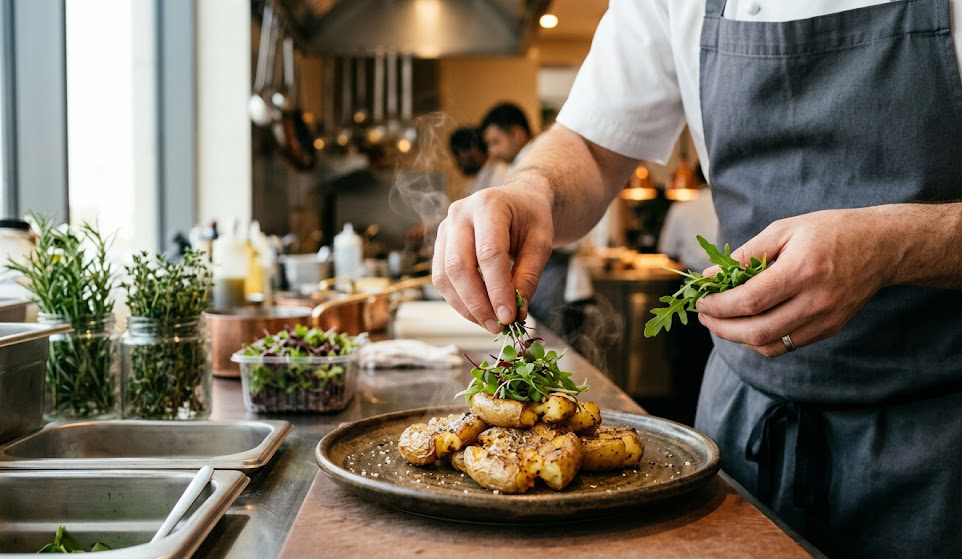
Bringing It Together: How to Build a Smashed Potato That Actually Works
By this point, it becomes clear that a good smashed potato is not about complexity. It is about control — of timing, freshness, and balance.
A simple framework used in professional kitchens can help:
1. Start With a Stable Base
- Use evenly sized potatoes
- Boil until just tender, not falling apart
- Roast until crisp on the outside
2. Add Fat Carefully
- Olive oil or butter helps carry flavor
- Avoid overloading — too much fat dulls fresh toppings
3. Layer Freshness at the End
- Add herbs, greens, and microgreens after roasting
- Avoid exposing delicate toppings to heat for too long
4. Balance With Acid
- Lemon, lime, or yogurt prevents heaviness
- This is especially important in warm climates like the UAE
5. Keep It Simple
- One or two well-handled toppings outperform five poorly handled ones
Real-World Scenario: Why Two Kitchens Get Different Results
Consider two typical setups in Dubai:
Kitchen A (Common Outcome)
- Buys herbs in bulk for the week
- Stores everything together in one container
- Pre-chops herbs for convenience
- Adds toppings before roasting
Result:
- Dull flavor
- Slight bitterness
- Inconsistent texture
Kitchen B (Less Common, More Effective)
- Buys smaller quantities more frequently
- Stores herbs based on type
- Prepares toppings fresh before serving
- Adds delicate ingredients at the end
Result:
- Brighter flavor
- Better texture
- More consistent outcome
The difference is not skill. It is handling and sourcing discipline.
A Note on Trends: Why “Viral Recipes” Often Fail in Practice
The smashed potato trend — often labeled under TikTok potato recipe fresh ingredients — spreads quickly, but rarely accounts for:
- Climate differences
- Ingredient variability
- Supply chain realities
What works in one environment may not translate directly to the UAE.
This is why many people try a viral smashed potato recipe in Dubai and feel underwhelmed.
The missing piece is usually not the method. It is:
- Ingredient freshness
- Timing of use
- Understanding how produce behaves locally
Wholesale vs Retail Thinking — Even for Home Cooking
While wholesale sourcing is often discussed in business contexts, the mindset applies to households as well.
Experienced buyers — including families — often adopt a hybrid approach:
- Bulk purchase for stable items (potatoes, onions)
- Smaller, frequent purchases for herbs and greens
This reduces:
- Waste
- Flavor loss
- Unnecessary spending
In practice, this approach is increasingly observed among UAE households that prioritize both quality and efficiency.
Final Thought: A Simple Dish That Reveals a Bigger Pattern
Smashed potatoes look like a small, casual dish.
But they reveal something larger about cooking in the UAE:
- Freshness matters more than complexity
- Timing matters more than quantity
- Sourcing decisions directly affect outcome
Even a simple topping like parsley or microgreens can change the entire experience — depending on how it was stored, handled, and used.
This is why many buyers, from restaurant kitchens to home cooks, gradually move toward more deliberate sourcing habits rather than relying on convenience alone.
FAQ Section
1. What are the best fresh toppings for smashed potatoes in the UAE?
Parsley, dill, coriander, microgreens, rocket leaves, and avocado-based toppings perform well due to availability and flavor balance when fresh.
2. Can I prepare smashed potato toppings in advance?
It is possible, but not ideal. Fresh herbs and greens lose flavor quickly in UAE conditions. Preparing them just before serving gives better results.
3. Why do my herbs taste bitter on roasted potatoes?
This often happens when herbs are added before roasting. Heat breaks down delicate compounds, leading to bitterness.
4. Are microgreens just for decoration?
No. When fresh, microgreens add texture and mild flavor. However, poor-quality batches may taste neutral or wilt quickly.
5. Is it better to buy herbs in bulk or small quantities in Dubai?
Small, frequent purchases are usually more effective due to short shelf life and high spoilage rates in UAE conditions.








 Home
Home  Whishlist
  Compare
  Checkout