












Introduction
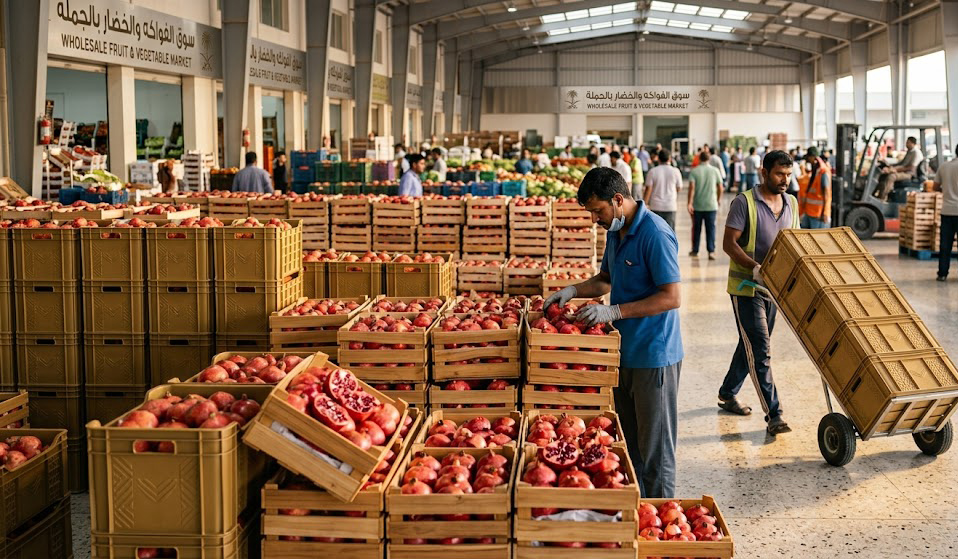
Walk through any wholesale fruit market in Dubai during peak season, and one thing becomes clear very quickly: pomegranates are not just another fruit.
They are a constant.
From restaurant kitchens to family homes, from juice counters to hotel buffets, demand for fresh pomegranate in Dubai has remained steady for years. This is not driven by trend cycles or short-term health fads. It is rooted in something deeper — history, supply reliability, culinary flexibility, and seasonal timing that aligns well with the UAE’s food ecosystem.
Yet, despite how common pomegranates are, many buyers — especially new restaurant owners, procurement teams, and even households — misunderstand key aspects of sourcing, quality, and timing.
This leads to very practical problems:
- Overpaying during off-peak months
- Buying visually appealing but low-yield fruit
- Experiencing inconsistent taste across batches
- Facing spoilage due to poor storage understanding
To understand why pomegranates continue to dominate fruit demand in Dubai, you have to look beyond the surface.
A Fruit With 4,000 Years of Relevance — And Still Practical Today
Pomegranates are not new to this region.
They have been cultivated across Persia, the Levant, and parts of South Asia for thousands of years. Long before modern supply chains, they were valued for two simple reasons:
- They store better than many soft fruits
- They travel relatively well compared to delicate produce
These two traits still matter today.
In a city like Dubai — where a large portion of fresh produce is imported — durability is not a luxury. It is a requirement.
Unlike berries or tropical fruits that degrade quickly under heat stress, pomegranates can tolerate longer transit times when handled correctly. This makes them more stable in the supply chain, especially during peak import windows.
For buyers, this translates into:
- Lower risk of damage during transport
- More predictable shelf life
- Greater flexibility in ordering volumes
This is one of the reasons why wholesale buyers often prioritize pomegranates over more fragile fruits when planning inventory.
Why Demand in Dubai Has Not Slowed Down
1. Consistent Use Across Multiple Segments
Pomegranates are not tied to a single type of customer.
They are used by:
- Restaurants (salads, garnishes, Middle Eastern dishes)
- Juice shops (fresh pomegranate juice Dubai demand remains steady year-round)
- Hotels (buffet displays, breakfast spreads)
- Families (daily consumption, especially during winter months)
Few fruits cross this many use cases without significant variation in demand.
This wide usability reduces volatility. Even when one segment slows down, another continues to drive demand.
2. Seasonal Alignment With UAE Consumption Patterns
Pomegranate season typically aligns with cooler months — roughly from late autumn into winter.
This timing is important.
In the UAE, winter is when:
- Outdoor dining increases
- Fresh fruit consumption rises
- Hospitality demand becomes more active
This creates a natural demand surge exactly when supply is strongest.
From a sourcing perspective, this is one of the more balanced seasonal cycles in the fruit category.
3. Cultural Familiarity and Regional Preference
Unlike exotic fruits that require education or experimentation, pomegranates are already part of regional diets.
There is no learning curve.
Buyers do not need to explain:
- How to eat them
- How to use them in cooking
- What they taste like
This reduces friction in both retail and wholesale environments.
The Supply Reality: Not All Pomegranates in Dubai Are the Same
One of the biggest misconceptions in the market is that pomegranates are interchangeable.
They are not.
Iranian vs Other Origins — What Buyers Actually Notice
A large portion of high-quality pomegranates in Dubai comes from Iran during peak season.
These are often preferred for:
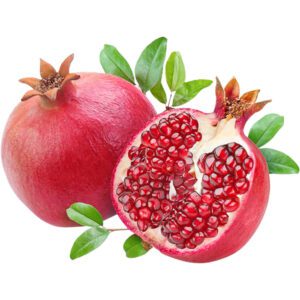
- Deep red arils (the edible seeds)
- Balanced sweetness and acidity
- Higher juice yield
However, supply is not limited to one origin. Depending on the time of year, you may also see:
- Indian pomegranates
- Egyptian varieties
- Turkish supply in certain windows
Each has its own characteristics.
From a buyer’s perspective, the difference is not just taste. It affects:
- Juice output per fruit
- Shelf life
- Consistency across batches
For example, a restaurant sourcing for fresh pomegranate juice needs high-yield fruit. A visually large fruit with pale seeds may look attractive but perform poorly in actual use.
Why Prices Fluctuate More Than Buyers Expect
A common frustration among buyers is price inconsistency.
This usually comes down to three factors:
1. Import dependency
Dubai relies heavily on imported pomegranates. Any disruption — weather, logistics, border delays — affects supply quickly.
2. Peak vs off-season sourcing
Buying outside peak season often means:
- Higher prices
- Lower quality
- Shorter shelf life
3. Grade differences
Not all pomegranates are sorted equally. Higher grades (better color, fewer defects, higher juice content) cost more — but often reduce waste.
Many buyers focus only on price per kilogram, without considering usable yield. This leads to higher actual costs over time.
How to Actually Judge Freshness (Beyond Appearance)
One of the most repeated mistakes — across both households and businesses — is relying only on visual cues.
A shiny, large pomegranate is not always the best choice.
Here is what experienced buyers look for:
1. Weight Relative to Size
A good pomegranate should feel heavy for its size.
This usually indicates higher juice content.
2. Skin Texture
- Slightly rough or leathery skin is normal
- Overly smooth skin can indicate early harvesting
3. Color Depth
While color varies by origin, deeper tones often suggest maturity.
4. Shape
Slightly flattened sides can indicate well-developed seeds inside.
The Hidden Cost of “Good-Looking” Fruit
This is where many buyers get misled.
Visually perfect fruit can still result in:
- Lower juice extraction
- Bland taste
- Faster spoilage once opened
In wholesale environments, this creates real financial impact:
- More fruit needed per liter of juice
- Higher prep time in kitchens
- Increased waste
In practice, suppliers working closely with Dubai-based distributors such as JMB Farm Fresh often observe that experienced buyers shift their focus from appearance to performance over time.
Where Most Buyers Go Wrong When Ordering Pomegranates
From industry discussions and buyer feedback, a few patterns repeat consistently:
Ordering Without Considering Use Case
Not all pomegranates are suited for every purpose.
- Juice production requires high-yield varieties
- Garnishing requires visually vibrant seeds
- Bulk consumption requires longer shelf life
Buying without clarity leads to mismatched expectations.
Ignoring Seasonality
Trying to maintain the same quality year-round is unrealistic.
Off-season pomegranates are often:
- More expensive
- Less flavorful
- Less consistent
Understanding seasonal windows helps avoid unnecessary cost.
Mixing Retail and Wholesale Expectations
Retail buyers often expect:
- Perfect appearance
- Small quantities
- Immediate consumption
Wholesale supply operates differently:
- Larger volumes
- Slight visual variation
- Focus on overall batch performance
This mismatch creates dissatisfaction, especially for new buyers.
Wholesale vs Retail: What Actually Changes With Pomegranates?
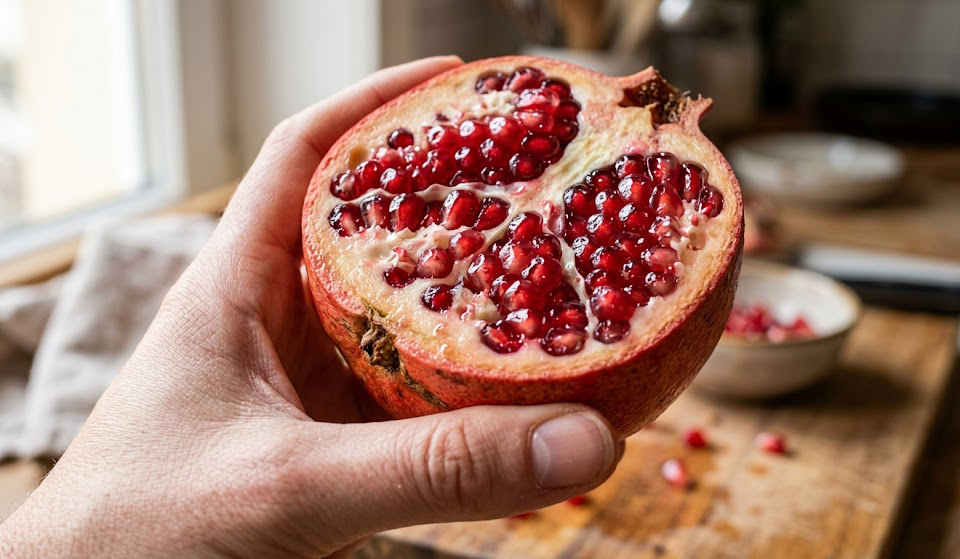
One of the most common points of confusion in Dubai’s produce market is the difference between wholesale and retail quality.
At first glance, retail fruit often looks better.
But appearance does not always translate into better performance.
Retail Supply: Built for Immediate Appeal
Retail environments — supermarkets and small stores — are designed for visual impact.
Fruit is often:
- Sorted for uniform size and color
- Polished or cleaned for presentation
- Sold in smaller, curated batches
This works well for households buying a few pieces at a time.
However, retail sourcing comes with limitations:
- Higher price per kilogram
- Less transparency on origin and batch variation
- Limited control over selection
Wholesale Supply: Built for Use, Not Display
Wholesale pomegranates are handled differently.
They are:
- Sold in bulk cartons
- Sorted by grade rather than appearance alone
- Evaluated based on yield, taste, and durability
For restaurants, juice businesses, and catering operations, this matters more than surface-level aesthetics.
But there is a tradeoff.
Wholesale buyers must:
- Understand grading systems
- Accept minor visual imperfections
- Manage storage properly
When done correctly, wholesale sourcing often leads to:
- Better cost efficiency
- More consistent supply
- Lower overall waste
The Role of Seasonality: Timing Matters More Than Most Buyers Realize
Pomegranates follow a predictable seasonal cycle, but many buyers treat them as a year-round commodity.
This is where problems begin.
Peak Season (Late Autumn to Winter)
This is when:
- Supply is strongest
- Quality is most consistent
- Prices are relatively stable
During this window, buyers can expect:
- Better taste
- Higher juice yield
- Longer shelf life
For most businesses, this is the ideal time to increase volume.
Off-Season Reality
Outside peak months, supply becomes more complex.
You may see:
- Different origins entering the market
- Wider variation in taste and texture
- Higher price volatility
This is not necessarily a supply failure — it is a natural outcome of agricultural cycles.
Experienced buyers adjust expectations instead of trying to maintain peak-season standards year-round.
Storage and Handling: Where Quality Is Often Lost
Even high-quality pomegranates can deteriorate quickly if handled poorly.
This is one of the most overlooked aspects of fruit sourcing in Dubai.
Common Storage Mistakes
Across restaurants and households, the same issues appear repeatedly:
- Storing at room temperature for too long
- Keeping fruit in sealed plastic without airflow
- Delaying use after cutting
These mistakes reduce both shelf life and flavor.
Practical Storage Guidelines
For better results:
- Store whole pomegranates in a cool environment (ideally refrigerated)
- Avoid moisture buildup — it accelerates spoilage
- Once opened, store seeds in an airtight container and use within a few days
For wholesale buyers handling larger volumes, temperature control becomes even more important.
Even small fluctuations can affect:
- Internal seed quality
- Juice consistency
- Shelf life across batches
Pomegranate in UAE Kitchens: More Than Just Juice
While fresh pomegranate juice in Dubai is widely consumed, the fruit’s role goes beyond beverages.
Understanding its culinary use helps buyers choose the right type.
Common Uses in Dubai
- Sprinkled over salads for texture and acidity
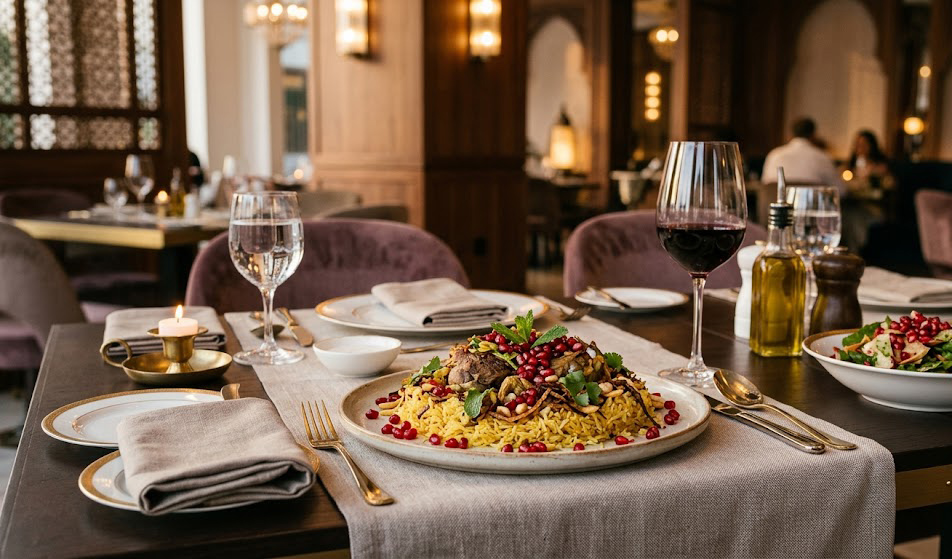
- Used in Middle Eastern rice dishes
- Added to desserts for visual contrast
- Incorporated into sauces and reductions
Each use requires slightly different characteristics.
For example:
- Bright red seeds are preferred for presentation
- Balanced sweetness is important for sauces
- High juice content matters for beverages
This is why “one-size-fits-all” sourcing rarely works well at scale.
The Health Angle — What Buyers Care About vs What Actually Matters
Pomegranates are often associated with health benefits.
In UAE discussions, common associations include:
- Antioxidants
- Heart health
- Digestive support
While these benefits are widely known, most serious buyers focus less on claims and more on consistency.
From a supply perspective, what matters is:
- Freshness at the time of consumption
- Proper storage
- Minimal handling damage
A high-quality fruit that is poorly stored will not deliver the expected benefits.
Import vs Local Reality: Why Origin Still Matters
The UAE has limited local production of pomegranates.
As a result, most supply is imported.
This creates both advantages and challenges.
Advantages
- Access to multiple origins across seasons
- Ability to maintain availability year-round
- Competitive sourcing options
Challenges
- Dependence on logistics and import timelines
- Variation in quality across shipments
- Sensitivity to external factors (weather, transport delays)
For buyers, understanding origin is not about preference — it is about predictability.
Knowing when Iranian pomegranate Dubai supply peaks, for example, helps in planning purchases more effectively.
What Experienced Buyers Do Differently
After spending time in the market, experienced buyers tend to adjust their approach.
They:
- Buy based on use case, not appearance
- Align purchasing with seasonal windows
- Accept variation instead of expecting uniformity
- Focus on yield and performance rather than price alone
This shift reduces both cost and frustration over time.
Some UAE buyers prefer working with established wholesale produce providers rather than fragmented retail sourcing, as it simplifies consistency across orders.
Practical Buying Scenarios: What Works in Real Conditions
Understanding theory is useful, but most challenges with pomegranate sourcing in Dubai appear during actual buying decisions.
Below are real-world scenarios that reflect how different buyers approach the same fruit — and where outcomes diverge.
Scenario 1: A Restaurant Ordering for Juice Production
A mid-sized café wants consistent fresh pomegranate juice Dubai customers expect daily.
A common mistake here is choosing fruit based on size and shine.
Instead, experienced buyers prioritize:
- Heavy fruit with high juice content
- Balanced sweetness (not overly sour batches)
- Consistent origin within the same order
Why this matters:
If juice yield drops even slightly, the business needs more fruit per liter.
This increases cost without being immediately obvious.
Scenario 2: A Hotel Preparing Buffet Displays
Hotels often prioritize visual appeal.
Here, seed color becomes more important than juice volume.
Buyers typically look for:
- Deep red arils for presentation
- Uniform size for clean plating
- Minimal internal variation
However, over-prioritizing appearance can backfire if:
- Seeds lack flavor
- Fruit dries out quickly after cutting
Balancing appearance with taste is key.
Scenario 3: A Household Buying Weekly Supply
Families buying pomegranate for regular use often face a different challenge:
Inconsistency.
One week the fruit is sweet, the next week it is sour or dry.
This usually comes down to:
- Buying across mixed origins unknowingly
- Purchasing outside peak season
- Storing fruit incorrectly
A simple improvement is to:
- Ask about origin when possible
- Buy smaller quantities more frequently during off-season
- Store properly to extend usability
The Overlooked Economics: Yield vs Price
One of the biggest blind spots in the market is how buyers calculate cost.
Most decisions are based on price per kilogram.
But this can be misleading.
What Actually Matters
The more relevant metric is:
Usable output per kilogram
For pomegranates, this means:
- How many seeds are inside
- How much juice can be extracted
- How much waste (peel, damaged seeds) is produced
A Simple Example
Two batches may look similar:
- Batch A: cheaper, lower juice yield
- Batch B: slightly more expensive, higher yield
In practice:
- Batch A may require 20–30% more fruit to achieve the same output
- Batch B may reduce prep time and waste
Over time, Batch B is often more cost-efficient — even if the upfront price is higher.
This is where experienced buyers separate themselves from new entrants.
Common Questions Buyers Ask (And What Actually Helps)
Across forums, procurement discussions, and supplier conversations, a few questions appear repeatedly.
“Why does the same fruit taste different every week?”
Because supply origin changes.
Even within the same category, different countries produce different flavor profiles.
“Is wholesale quality worse than supermarket quality?”
Not necessarily.
Wholesale fruit is selected for performance, not display.
In many cases, it performs better in real use.
“How do I avoid waste?”
- Buy according to actual usage
- Store correctly
- Choose the right grade for your purpose
Waste is often a planning issue, not a supply issue.
“When is the best time to buy pomegranates in Dubai?”
During peak winter months, when supply is strongest and most consistent.
A Quiet Constant in a Changing Market
Dubai’s food supply system is constantly evolving.
New fruits enter the market. Trends shift. Consumer preferences change.
But some products remain stable.
Pomegranate is one of them.
Not because it is fashionable, but because it fits the system well:
- It travels reliably
- It stores reasonably well
- It works across multiple use cases
- It aligns with seasonal demand
In practice, suppliers working within structured distribution systems — including those connected to networks such as JMB Farm Fresh — often observe that demand for pomegranates remains steady even when other fruit categories fluctuate.
This consistency is rare.
Conclusion
Pomegranates have remained relevant in this region for thousands of years for practical reasons, not sentimental ones.
Dubai’s continued demand follows the same logic.
For buyers, the key is not simply finding pomegranates — it is understanding how to source them properly.
That means:
- Buying with purpose, not just appearance
- Aligning purchases with seasonality
- Understanding origin differences
- Focusing on yield, not just price
Once these factors are understood, pomegranates become one of the more predictable and manageable fruits in the supply chain.
And in a market where inconsistency is often the biggest challenge, that predictability has real value.








 Home
Home  Whishlist
  Compare
  Checkout