











Introduction: A Vegetable That Looks Like Design, Not Food
Walk through any high-end Asian kitchen, and you’ll likely find lotus root quietly doing its job.
Not as a trend. Not as a headline ingredient. Just… consistently present.
In Dubai, however, lotus root is still in that early phase where most people have seen it—but very few actually buy it fresh. It shows up sliced in hot pots, stir-fries, or salads in niche restaurants. But in homes, catering kitchens, and even many hotel procurement lists, it’s often missing.
That gap is interesting.
Because when a vegetable is visually striking, versatile in cooking, and already established in global cuisines—but still underused locally—it usually doesn’t stay that way for long.
This is where lotus root sits today in the UAE.
What Is Lotus Root (And Why Does It Look So Unusual)?
If you’ve never handled it yourself, lotus root can feel unfamiliar at first.
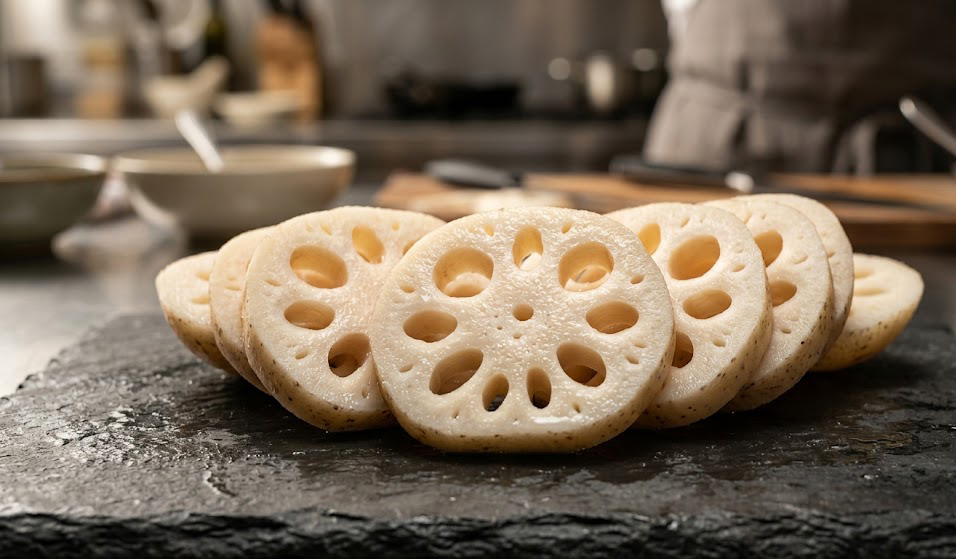
It’s the edible stem of the lotus plant, grown underwater in muddy ponds. When sliced, it reveals a natural pattern of symmetrical holes—almost like a geometric design.
That visual alone has made it popular in plating across modern Asian and fusion kitchens.
But beyond appearance, what matters more is how it behaves in cooking.
Texture Is the Real Story
Lotus root is not soft like zucchini or dense like potatoes.
It sits somewhere in between:
- Crisp when lightly cooked
- Slightly starchy when simmered
- Able to hold structure even after long cooking
This makes it reliable in kitchens where consistency matters—especially in batch cooking or buffet service.
For chefs and buyers in Dubai, where presentation and repeatability are both critical, that combination is rare.
Why Dubai Hasn’t Fully Adopted It Yet
Despite being widely used across China, Japan, and Southeast Asia, lotus root is still not a mainstream purchase in Dubai.
That’s not because of quality or availability.
It’s mostly because of unfamiliarity.
1. “What Do I Even Do With It?”
This is the most common hesitation.
Buyers—whether families or restaurant teams—often avoid ingredients they don’t know how to prepare. Even experienced chefs may not include it unless their cuisine specifically calls for it.
In many procurement discussions across the UAE, this shows up as a pattern:
- Known vegetables get reordered automatically
- Unknown ones stay “optional” indefinitely
Lotus root falls into that second category.
2. Retail Visibility vs Wholesale Reality
In supermarkets, lotus root is often:
- Pre-cut
- Wrapped
- Limited in quantity
- Not always fresh
This creates the impression that it’s a niche or specialty item.
But at the wholesale level, the picture is different.
Suppliers handling Asian vegetables in Dubai typically receive lotus root in consistent volumes, especially during peak import cycles. It’s not rare—it’s just not positioned for everyday buyers.
In practice, suppliers working closely with Dubai-based distributors such as JMB Farm Fresh often observe that demand exists—but it’s fragmented and inconsistent, not steady.
3. Misunderstanding Freshness
Many buyers don’t know how to judge fresh lotus root.
This leads to hesitation at the point of purchase.
Unlike leafy greens, where freshness is obvious, lotus root requires a closer look:
- Skin should be firm and smooth
- No soft spots or excessive dryness
- Interior should be pale, not dark or oxidized
Without this knowledge, buyers either avoid it—or accept lower-quality product without realizing it.
Why That’s Starting to Change
Dubai’s food scene evolves in patterns.
First, chefs experiment.
Then menus adapt.
Then supply chains respond.
Finally, consumers follow.
Lotus root is moving through that cycle right now.
Influence from Asian Cuisine Growth
The rise of authentic Asian dining across Dubai has already introduced lotus root to a wider audience.
Hot pot restaurants, Japanese izakayas, and modern Chinese kitchens are using it regularly.
Once diners become familiar with an ingredient in restaurants, they start looking for it outside.
That shift is already visible.
Visual Appeal in a Presentation-Driven Market
Dubai is a presentation-first market.
Food is expected to look as good as it tastes—especially in:
- Catering
- Events
- Hotel buffets
- Social media-driven dining
Lotus root offers something unique here.
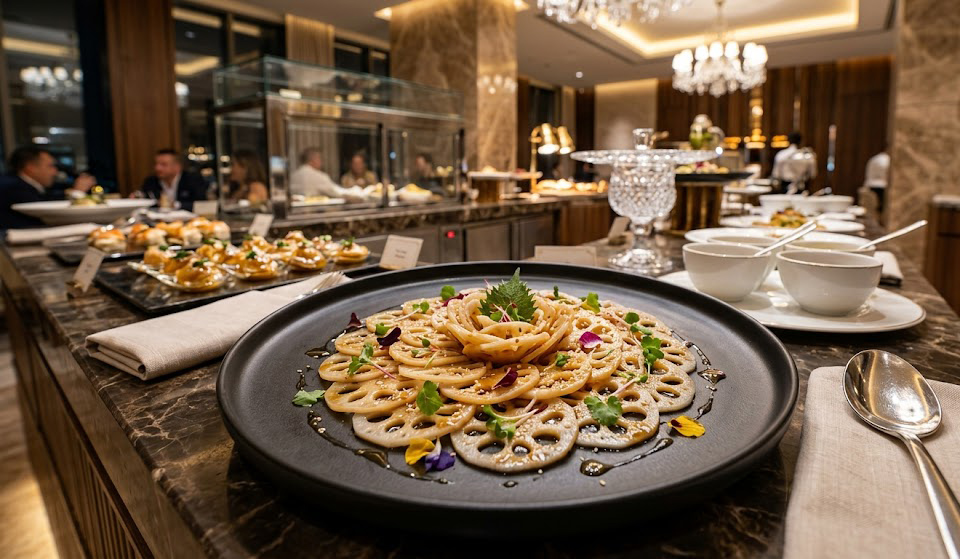
Its natural pattern requires no extra work to look visually refined. Even simple dishes instantly appear more intentional.
For kitchens managing large volumes, that kind of “built-in presentation” is valuable.
A Better Fit for Batch Cooking Than Most Vegetables
One of the less discussed advantages of lotus root is how stable it is during preparation.
In professional kitchens, inconsistency leads to waste.
Vegetables that:
- Turn mushy
- Lose shape
- Discolor quickly
…create problems at scale.
Lotus root avoids many of these issues.
It holds its structure, maintains color with proper handling, and performs reliably across different cooking methods.
That alone makes it worth attention from procurement teams.
Seasonal Context: When Does Lotus Root Make Sense in the UAE?
Like most vegetables in Dubai, lotus root is primarily imported.
Its availability depends on sourcing regions—mainly parts of Asia where it is cultivated year-round, with peak harvesting cycles depending on climate.
Winter Advantage
During the UAE winter months, supply chains for many vegetables stabilize.
This is when buyers often notice:
- Better consistency in imports
- More predictable pricing
- Higher overall quality
Lotus root tends to perform well during these periods, especially when shipments align with peak harvest seasons in exporting countries.
Summer Considerations
In contrast, summer introduces more variability.
High temperatures affect handling, storage, and transport conditions.
For lotus root, this can mean:
- Faster dehydration if not stored correctly
- Increased risk of internal browning
- Greater reliance on cold chain discipline
Buyers who understand this tend to adjust expectations rather than avoid the product entirely.
What Competitors Don’t Explain Clearly
Most articles about lotus root focus on recipes or general benefits.
Very few address the practical side of sourcing and usage in a market like Dubai.
What’s often missing:
- How to judge quality before buying
- Why pricing changes across seasons
- How it behaves in bulk preparation
- Where it fits in real procurement decisions
These are the questions buyers actually care about.
And they’re the ones that determine whether an ingredient becomes part of regular purchasing—or stays occasional.
Where It Fits in a Modern Dubai Kitchen
Lotus root doesn’t replace staple vegetables.
It complements them.
In real kitchens, it’s often used:
- Alongside root vegetables in stews
- As a textural element in stir-fries
- In cold dishes where crunch matters
- In fusion menus where visual identity is important
Its role is not dominant—but it’s distinctive.
And in a competitive food environment like Dubai, distinction matters.
How to Cook Lotus Root in Dubai Kitchens (Without Overcomplicating It)
One reason lotus root remains underused is the assumption that it requires complex preparation.
It doesn’t.
In fact, most kitchens that use it regularly rely on very simple methods.
Basic Preparation (What Actually Matters)
Before cooking, lotus root should be:
- Peeled lightly (outer skin only)
- Sliced evenly (thin for crisp texture, thicker for softer dishes)
- Soaked briefly in water with a little vinegar or lemon
That last step is important.
It helps prevent oxidation (browning), which is one of the small but common issues buyers notice when handling it for the first time.
Cooking Methods That Work Consistently
Instead of focusing on cuisine-specific recipes, it’s more useful to understand how lotus root behaves across techniques.
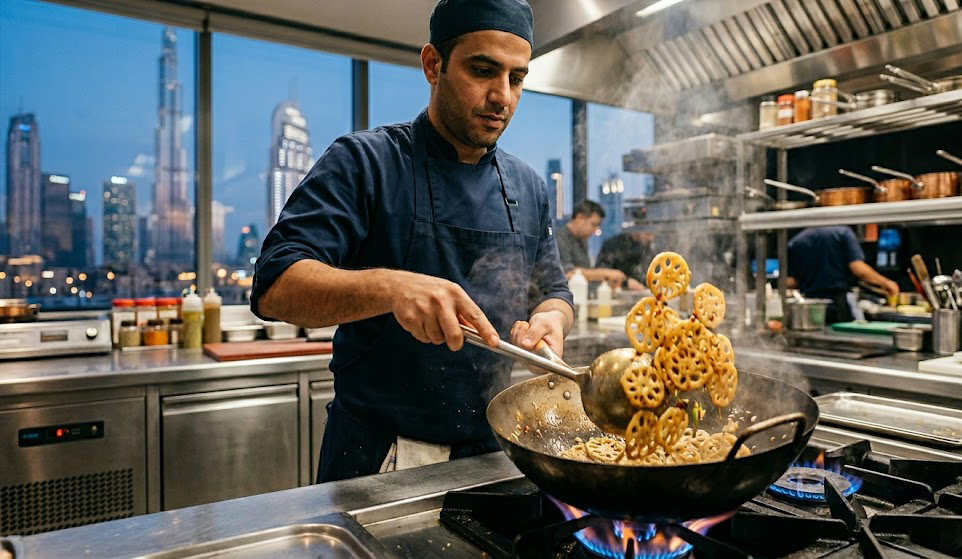
1. Stir-Frying (Fast, High Heat)
- Keeps texture crisp
- Works well with garlic, chili, and light sauces
- Ideal for restaurant-style side dishes
This is often the first method chefs in Dubai adopt because it fits existing workflows.
2. Simmering or Braising
- Softens the texture slightly
- Allows flavors to penetrate
- Works well in broths and stews
This method is common in colder months, especially when menus shift toward warm, comforting dishes.
3. Frying (Chips or Crisps)
- Thin slices become light and crunchy
- Used in modern plating or as garnish
This is where lotus root starts to move from “ingredient” to “visual element.”
4. Cold Preparations
- Blanched and cooled slices
- Used in salads or lightly dressed dishes
In Dubai’s climate, cold dishes have a strong place in menus, especially in catering and casual dining.
Lotus root fits naturally into that space.
Common Mistakes Buyers and Kitchens Make
When an ingredient is unfamiliar, mistakes tend to repeat across different types of buyers.
Lotus root is no exception.
Buying Too Little, Too Late
Because it’s not a staple, many kitchens order it in very small quantities.
This leads to:
- Inconsistent menu usage
- Limited experimentation
- Higher perceived risk
In reality, moderate and planned usage works better than occasional trial.
Treating It Like a Soft Vegetable
Lotus root is often overcooked by those unfamiliar with it.
This removes its main advantage—texture.
Overcooked lotus root becomes:
- Less visually appealing
- Less distinct in taste
- Less valuable in dishes
Understanding cooking time is key.
Ignoring Storage Conditions
Fresh lotus root needs:
- Cool, stable temperatures
- Minimal exposure to dry air
- Proper refrigeration (but not freezing)
When stored incorrectly, it dries out or develops internal discoloration.
This is sometimes mistaken as “low quality,” when it’s actually a handling issue.
Relying Only on Pre-Cut Supply
Pre-cut lotus root is convenient—but not always ideal.
It can:
- Lose moisture faster
- Oxidize more quickly
- Have a shorter usable window
For kitchens aiming for consistency, whole root is often a better starting point.
How to Judge Fresh Lotus Root in the UAE Market
For buyers searching for lotus root Dubai UAE buy fresh, the key challenge is confidence.
What does “good” actually look like?
External Indicators
- Firm, heavy for its size
- Smooth skin without cracks
- Light brown to beige exterior
Avoid:
- Soft spots
- Wrinkled skin
- Signs of excessive dryness
Internal Indicators (When Cut)
- Pale white interior
- Clean, defined hole patterns
- No dark patches or strong odor
If the inside looks grey or uneven, it’s likely older stock.
Supply Chain Reality
In Dubai, lotus root is almost always imported.
This means quality depends on:
- Time from harvest
- Cold chain management
- Handling at distribution level
Some UAE buyers prefer working with consistent wholesale channels rather than relying on retail variability, especially for less common vegetables.
Pricing and Availability: What Buyers Often Misunderstand
Lotus root pricing in Dubai doesn’t fluctuate randomly.
It follows patterns—just not always visible to end buyers.
Key Factors That Influence Price
- Import origin (China, India, Southeast Asia)
- Shipping conditions
- Seasonal harvest cycles
- Demand from hospitality sector
When demand spikes—especially during peak tourism or event seasons—availability tightens.
Why It Sometimes Feels “Expensive”
For many buyers, lotus root appears expensive compared to common vegetables.
But this comparison is often misleading.
It’s not a bulk staple like potatoes or onions.
It’s closer to:
- Specialty vegetables
- Imported herbs
- Premium produce items
Understanding its role helps reframe its cost.
Lotus Root Benefits (From a Practical Perspective)
There’s a lot of discussion online about the health benefits of lotus root.
While many of those points are valid, buyers in Dubai tend to care about something more practical:
“How does this fit into what we already do?”
From a Kitchen Perspective
- Adds texture contrast without complex prep
- Holds shape in large-scale cooking
- Works across multiple cuisines
From a Menu Perspective
- Visually distinctive
- Signals variety and creativity
- Supports modern and fusion dishes
From a Consumer Perspective
- Light, not heavy
- Suitable for warm climates
- Familiar to Asian audiences, new to others
This combination makes it adaptable across different customer segments.
Where It Makes the Most Sense to Use It
Lotus root is not for every dish.
But in the right context, it adds clear value.
Best Fit Environments
- Hotel buffets needing visual variety
- Catering menus with high volume
- Asian or fusion restaurants
- Health-focused meal plans
Less Suitable Use Cases
- Traditional menus with strict ingredient expectations
- Kitchens with very limited prep capacity
- Operations focused only on cost-minimization
Like any ingredient, its usefulness depends on context.
The Bigger Pattern: How Ingredients Enter the Dubai Market
Lotus root is not an isolated case.
Dubai has seen this pattern before with:
- Kale
- Avocado (in earlier years)
- Exotic mushrooms
- Specialty herbs
Each followed a similar path:
- Limited awareness
- Chef-driven adoption
- Gradual supply stabilization
- Wider consumer acceptance
Lotus root is currently between stages two and three.
What This Means for Buyers, Chefs, and Households in Dubai
Lotus root is not just another “new” vegetable entering the UAE market.
It represents a broader shift in how ingredients move from niche to normal.
For buyers and decision-makers, the opportunity is not about chasing trends. It’s about recognizing ingredients that:
- Offer consistency in supply
- Perform reliably in kitchens
- Add value without adding complexity
Lotus root checks those boxes when handled correctly.
For Restaurant Owners and Chefs
The decision is less about adding something new—and more about improving what already exists.
Lotus root can:
- Replace less stable vegetables in certain dishes
- Add texture where menus feel repetitive
- Improve plating without increasing prep time
The key is not to overuse it.
A few well-placed dishes are enough to test demand and build familiarity.
For Procurement Teams and Buyers
From a sourcing perspective, the focus should be on consistency, not experimentation.
Questions worth asking suppliers:
- How frequently is lotus root delivered?
- What is the average shelf life under proper storage?
- Is it supplied whole or pre-cut?
These practical considerations matter more than origin labels or marketing claims.
For Families and Home Cooks
At the household level, lotus root works best when treated simply.
It doesn’t require specialized tools or techniques.
Start with:
- Stir-fried slices with basic seasoning
- Light soups
- Simple fried chips
Once familiarity builds, usage becomes more intuitive.
A Note on Supply Reliability in Dubai
One concern that comes up often—especially in discussions around Asian vegetables—is consistency.
Not every supplier handles less common produce well.
In practice, buyers who work with established wholesale networks tend to face fewer issues. This is largely because these suppliers:
- Manage import cycles more closely
- Maintain better cold chain control
- Handle larger, more predictable volumes
Some UAE-based distributors, including operations like JMB Farm Fresh (jmbfarmfresh.com), are part of this segment—where the focus is less on variety for display, and more on steady supply for real usage.
That distinction matters.
The Tradeoffs: What Lotus Root Does Not Solve
No ingredient is perfect.
Lotus root comes with its own limitations.
Limited Familiarity
Even as adoption grows, many customers still don’t recognize it.
This can affect:
- Menu acceptance
- Sales predictability
- Ordering confidence
Not a Cost-Efficient Staple
It is not designed to replace high-volume, low-cost vegetables.
Using it as a core ingredient in every dish is rarely practical.
Requires Basic Handling Knowledge
While simple to prepare, it still needs:
- Proper slicing
- Controlled cooking time
- Basic storage awareness
Without these, its advantages are reduced.
Looking Ahead: Why Lotus Root Is Likely to Grow in Demand
Dubai’s food ecosystem is driven by exposure.
As more people:
- Travel
- Dine across different cuisines
- Explore new ingredients
…previously unfamiliar vegetables start becoming normal.
Lotus root fits naturally into this evolution.
It is:
- Already established globally
- Visually distinctive
- Technically reliable in kitchens
These are the same characteristics seen in ingredients that successfully transition from niche to mainstream.
Final Thoughts: Not a Trend—A Slow Shift
Lotus root is unlikely to explode overnight in Dubai.
That’s not how most ingredients succeed here.
Instead, it will grow quietly.
Through:
- Chef adoption
- Consistent supply
- Gradual consumer familiarity
For buyers, the advantage is in recognizing this early—not to rush into it, but to understand where it fits.
Because in the food supply industry, the most valuable ingredients are not always the most talked about.
They are the ones that work.
FAQs (Search-Optimized)
1. What is lotus root and is it available in Dubai?
Lotus root is the edible stem of the lotus plant, known for its crisp texture and unique pattern when sliced. It is available in Dubai, mainly through wholesale suppliers and Asian vegetable distributors.
2. Where can I buy fresh lotus root in Dubai UAE?
Fresh lotus root can be found through wholesale produce suppliers, Asian grocery stores, and selected online vegetable distributors in Dubai. Availability is more consistent at the wholesale level.
3. How do you cook lotus root at home?
Lotus root can be stir-fried, boiled, or fried into chips. It is usually peeled, sliced, and briefly soaked in water with lemon or vinegar before cooking to prevent browning.
4. What are the health benefits of lotus root?
Lotus root is known for being light, hydrating, and a source of fiber. It is commonly used in balanced diets and is suitable for warm climates like the UAE.
5. Is lotus root expensive in Dubai?
Lotus root is generally priced higher than common vegetables because it is imported and considered a specialty ingredient. However, its value depends on how it is used rather than its price alone.








 Home
Home  Whishlist
  Compare
  Checkout