








Introduction: The Small Detail Chefs Care About
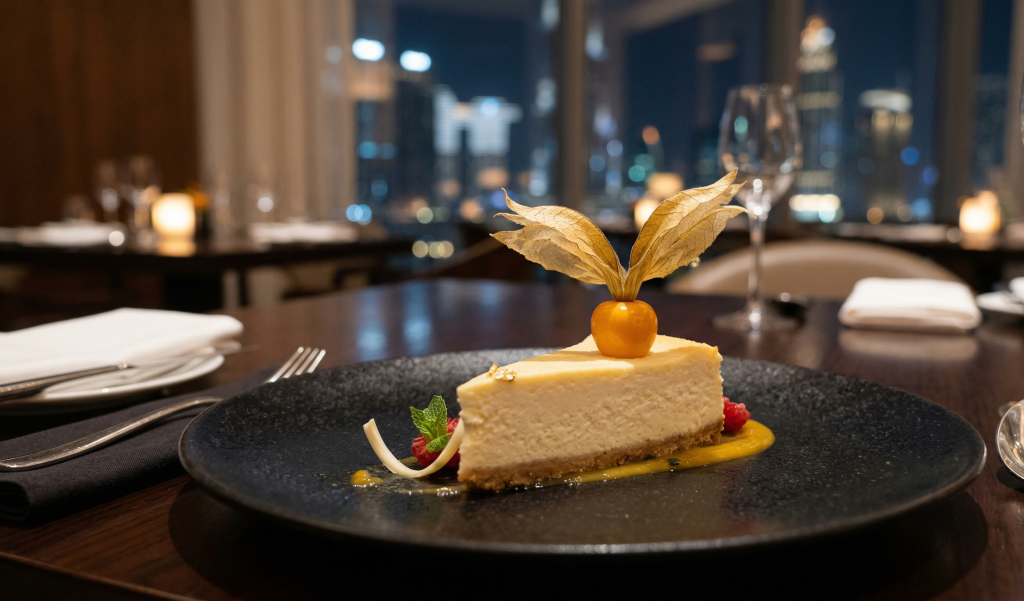
Walk into a high-end restaurant in Dubai, and there is a good chance you will see a small golden fruit sitting quietly on the edge of a dessert plate.
It looks almost decorative — wrapped in a delicate, paper-like husk, slightly open, revealing a bright orange berry inside.
That fruit is physalis.
Sometimes called “golden berry” or “cape gooseberry,” it has moved from being a niche ingredient to a consistent presence across hotel buffets, fine dining desserts, and even upscale catering menus.
But for buyers — whether you are sourcing for a restaurant, a hotel, or even a household — physalis raises a set of practical questions:
- What exactly is physalis?
- Why is it suddenly everywhere in Dubai?
- Is it worth buying fresh?
- And how do you judge its quality when it is still inside a husk?
This article breaks it down from a supply and sourcing perspective — not just what physalis is, but how it behaves in real-world kitchens and supply chains.
What Is Physalis? (And Why It Looks Like It Came Pre-Packaged)
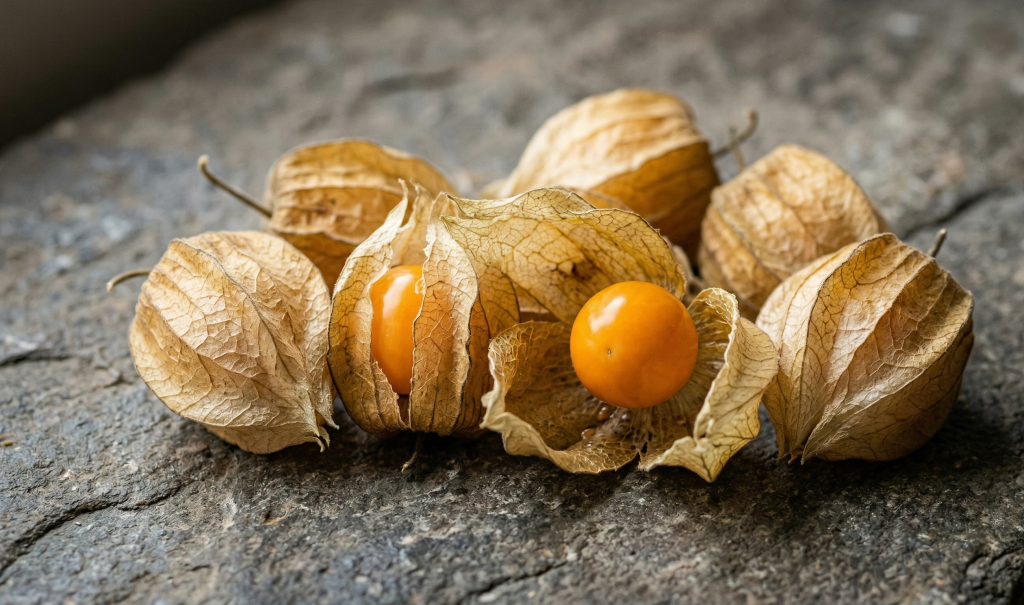
Physalis is a small fruit that grows inside a natural husk — a thin, papery covering that forms around the berry as it develops.
This husk is not packaging in the commercial sense. It is part of the plant itself.
Key characteristics:
- Size: Similar to a cherry tomato
- Color: Bright golden-orange when ripe
- Texture: Smooth skin, slightly firm
- Taste: A mix of sweet and tart, often compared to pineapple, citrus, and tomato combined
The husk serves a practical purpose in nature — it protects the fruit from pests and environmental damage.
In supply chains, that same feature becomes a logistical advantage.
Why chefs and buyers pay attention to the husk:
- It extends shelf life slightly compared to exposed berries
- It protects against minor handling damage
- It gives a clear visual cue of freshness
However, it can also mislead inexperienced buyers.
A physalis fruit can look intact from the outside while being overripe or dehydrated inside.
Why Physalis Is Everywhere in Dubai Right Now
The rise of physalis in Dubai is not random. It sits at the intersection of three trends in the food industry.
1. Visual Presentation Matters More Than Ever
Dubai’s food scene is highly visual.
From hotel buffets to café desserts, presentation plays a major role in perceived value.
Physalis offers something few fruits do:
- A built-in decorative element (the husk)
- A bright color contrast against creams, chocolates, and pastries
- A clean, premium look without additional preparation
For chefs, this reduces plating time while still achieving a refined finish.
2. The Demand for “Exotic but Accessible” Ingredients
Buyers in Dubai — especially in hospitality — are constantly balancing novelty with reliability.
Physalis fits this space well:
- It feels exotic to the end customer
- It is relatively stable in supply compared to more fragile berries
- It works across cuisines (European desserts, Asian fusion, Middle Eastern plating)
Unlike highly seasonal fruits, physalis can be sourced more consistently through imports.
3. Growth of Premium Garnish Culture
In many kitchens, garnishes are no longer an afterthought.
They are part of the product.
Physalis has become a standard garnish because it offers:
- Consistent size and shape
- Minimal trimming or cutting
- Low waste when handled properly
In practice, suppliers working closely with Dubai-based distributors such as JMB Farm Fresh often observe that demand for physalis is less about volume and more about consistency of appearance.
That is what kitchens actually care about.
What Does Physalis Taste Like (And Where It Works Best)
Understanding the taste is important, especially for buyers deciding whether to stock it regularly.
Physalis is not purely sweet.
It has a layered flavor:
- Initial sweetness
- A noticeable citrus-like acidity
- A slightly earthy finish
This balance is why it works particularly well in desserts.
Common uses in Dubai kitchens:
- Garnish for cheesecakes, tarts, and chocolate desserts
- Addition to fruit platters for visual contrast
- Light incorporation into sauces or coulis
- Occasional use in salads for a sweet-acidic element
It is rarely used in large quantities.
Physalis is typically a supporting ingredient, not the main component.
That affects how it should be purchased.
Buying Physalis in Dubai: What Most People Get Wrong
There is a common assumption that physalis is a “safe” fruit to buy because it comes protected.
That is not entirely true.
Mistake 1: Judging Quality Only by the Husk
Many buyers look at the husk and assume:
“If it looks dry and intact, the fruit inside must be fresh.”
In reality:
- A dry husk is normal
- But an overly brittle or discolored husk can indicate age
- The fruit inside may already be soft or shriveled
The husk hides problems as much as it protects the fruit.
Mistake 2: Ignoring Storage History
Physalis is sensitive to temperature fluctuations.
If it has been:
- Over-chilled
- Left in high humidity
- Exposed to repeated handling
It can lose firmness quickly.
This is especially relevant in Dubai, where cold chain consistency varies between suppliers.
Mistake 3: Buying Without Considering Usage Speed
Because physalis is often used as garnish, buyers tend to underestimate how slowly it moves.
This leads to:
- Overstocking
- Gradual quality decline
- Increased waste
For restaurants and catering operations, this is a common issue.
How to Actually Check Physalis Freshness (Practical Guide)
Even with the husk on, there are reliable ways to assess quality.
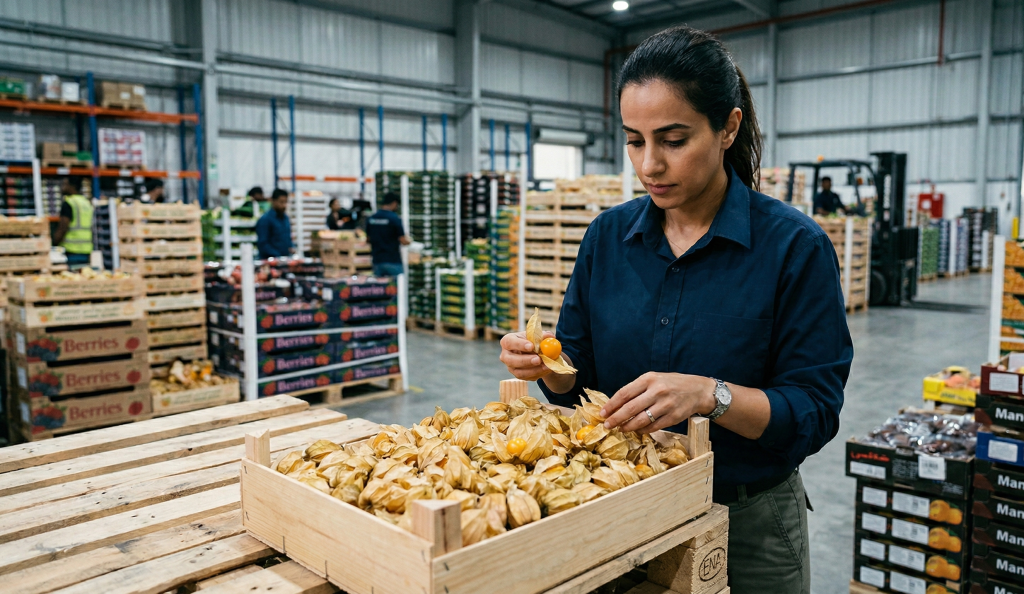
1. Open Random Samples
Do not rely on surface inspection.
Check a few pieces inside the batch:
- The fruit should be firm, not soft
- Skin should be smooth, not wrinkled
- Color should be bright, not dull
2. Look at Husk Behavior
The husk tells a story if you know what to look for:
- Light tan, slightly dry → normal
- Dark brown or spotted → aging
- Damp or sticky → poor storage conditions
3. Smell Test
Fresh physalis has a mild, slightly fruity aroma.
If there is:
- A fermented smell
- Or no smell at all
It may not be at peak quality.
4. Check Consistency Across the Batch
Consistency matters more than perfection.
A batch where:
- 20% is overripe
- 30% is underripe
creates operational inefficiency in kitchens.
Buyers often underestimate this impact.
Wholesale vs Retail: Does It Matter for Physalis?
This is a common question among buyers in Dubai.
Is there a real difference between wholesale physalis and what you find in supermarkets?
The answer is not straightforward.
Wholesale advantages:
- Better batch consistency
- More predictable supply
- Often fresher due to faster turnover
Retail advantages:
- Smaller quantities
- Easier access for households
- Less commitment
However, physalis behaves differently compared to bulk vegetables.
Because it is used in small quantities, even professional kitchens sometimes rely on mixed sourcing.
Seasonal Patterns: When Physalis Is at Its Best in the UAE
Physalis is not locally grown at scale in the UAE.
Most supply comes from imports — commonly from regions like:
- South America
- Africa
- Parts of Europe
This means availability is tied to global production cycles.
In general:
- Winter months in the UAE tend to offer more stable quality
- Extreme summer heat increases handling risk during transport
- Price fluctuations are linked to import routes and air freight conditions
Buyers often notice inconsistency during transition periods between sourcing regions.
This is normal, not necessarily a supplier issue.
Why Prices Fluctuate (And Why That Confuses Buyers)
Physalis pricing can feel unpredictable.
But there are clear reasons behind it:
- It is not a staple fruit, so volumes are lower
- It often relies on air freight for freshness
- Demand is driven by hospitality trends, not daily consumption
Unlike bananas or apples, physalis does not have stable, high-volume supply chains.
This creates natural volatility.
At this point, it becomes important to understand how physalis fits into broader sourcing decisions — not just as a fruit, but as a cost, waste, and consistency factor in real kitchens.
That is where most buyers start to rethink how they purchase it.
How Physalis Fits Into Real Kitchen Operations (Beyond the Plate)
Physalis may look like a small detail, but in operational terms, it behaves like a precision ingredient.
It is not purchased for volume. It is purchased for consistency.
That changes how it should be handled in kitchens.
1. It Is a “Finishing Ingredient,” Not a Base Ingredient
Unlike apples, bananas, or berries used in bulk recipes, physalis is usually added at the final stage.
That means:
- If quality drops, it is immediately visible
- There is no room to “hide” inconsistency
- Even small defects affect presentation
For chefs, this makes physalis high-risk despite its small size.
2. Waste Comes From Timing, Not Quantity
One of the most common issues reported by restaurant buyers is not overbuying — it is mistimed buying.
For example:
- Ordering too early → fruit softens before service
- Ordering too late → limited availability or inconsistent batch
Because physalis is used in small quantities, poor timing leads to:
- Partial spoilage
- Uneven plating quality
- Last-minute substitutions
This is where supply relationships matter more than price.
3. It Requires Gentle Handling Despite Its “Protected” Look
The husk gives the impression that physalis is durable.
In reality:
- The fruit inside bruises easily
- Pressure damage is not visible immediately
- Internal breakdown can happen before external signs appear
This creates a gap between how it looks and how it performs.
Storage Reality: What Actually Extends Shelf Life
There is a lot of confusion around storing physalis, especially in climates like the UAE.
Should you refrigerate physalis?
Yes — but with control.
- Ideal storage: Cool, dry refrigeration
- Avoid high humidity (causes husk deterioration)
- Avoid sealing in airtight containers (traps moisture)
Common storage mistakes:
- Storing in sealed plastic → condensation → faster spoilage
- Washing before storage → moisture damage
- Mixing with high-ethylene fruits (like bananas) → accelerated ripening
Realistic shelf life expectations:
- With husk on and proper storage: ~5–7 days at good quality
- Without husk: significantly shorter
- In inconsistent cold chains: unpredictable
This is why experienced buyers treat physalis as a short-cycle ingredient, not a stock item.
The Hidden Cost of “Cheap” Physalis
A common misconception in sourcing is focusing only on price per box.
With physalis, that approach often backfires.
Why lower-priced batches can be more expensive:
- Higher percentage of unusable fruit
- Inconsistent ripeness → sorting time increases
- Visual defects → cannot be used for plating
In practical terms, a cheaper batch with 25% unusable fruit is more expensive than a premium batch with 95% usability.
This is especially true in hospitality environments where presentation matters.
Import vs Local Handling: What Actually Impacts Quality
Since physalis is mostly imported into the UAE, buyers often assume quality depends on origin.
In reality, handling matters more than geography.
What affects quality the most:
- Time between harvest and arrival
- Temperature control during transit
- Handling during distribution
Two batches from the same origin can perform very differently depending on these factors.
A common misunderstanding:
“Imported fruit is always fresher.”
This is not always accurate.
In many cases:
- A well-handled imported batch is excellent
- A poorly handled one degrades quickly
This is why experienced buyers focus on supplier consistency rather than origin alone.
Retail Buyers vs Professional Buyers: Different Needs, Same Mistakes
While restaurants and hotels use physalis regularly, retail buyers are also starting to explore it.
However, both groups often make similar mistakes — for different reasons.
Retail buyers (households):
- Buy physalis out of curiosity
- Do not use it quickly enough
- Misjudge ripeness due to the husk
Result: perceived “low quality” when the issue is actually handling and timing.
Professional buyers:
- Focus too much on price
- Over-order for visual consistency
- Underestimate storage sensitivity
Result: waste and inconsistency in plating.
Where Physalis Actually Adds Value (And Where It Doesn’t)
Not every kitchen benefits equally from physalis.
Understanding where it fits prevents unnecessary cost.
High-value use cases:
- Dessert plating in cafés and restaurants
- Premium fruit platters
- Event catering with visual emphasis
- Pastry and bakery displays
Low-value use cases:
- Bulk fruit salads
- Juice production
- High-volume buffet items
In these cases, physalis adds cost without meaningful return.
A Practical Sourcing Approach (What Experienced Buyers Do Differently)
Over time, experienced buyers tend to follow a few consistent practices when sourcing physalis.
1. Buy Smaller Quantities, More Frequently
Instead of bulk purchasing:
- Order based on short-term usage
- Align deliveries with service schedules
This reduces waste significantly.
2. Prioritize Batch Consistency Over Price
Consistency saves time and reduces operational friction.
Buyers often prefer:
- Slightly higher cost
- But predictable quality
3. Build Supplier Reliability, Not Just Transactions
Physalis is not a commodity product.
It benefits from:
- Regular communication with suppliers
- Feedback on batch performance
- Adjustments based on kitchen needs
Some UAE buyers prefer working with established wholesale produce providers rather than fragmented retail sourcing, especially when dealing with sensitive items like physalis.
4. Treat It as a Visual Ingredient, Not a Fruit Purchase
This is a mindset shift.
Physalis is not bought for nutrition or volume.
It is bought for:
- Presentation
- Consistency
- Customer perception
Once this is clear, sourcing decisions become easier.
Why Buyers Feel Misled About Physalis Quality
There is a recurring frustration among buyers:
“Sometimes it’s perfect. Sometimes it’s disappointing. And it’s hard to tell why.”
This confusion comes from three factors:
1. The Husk Creates False Confidence
Because the fruit is partially hidden, buyers assume:
“If it looks fine outside, it must be fine inside.”
That is not always the case.
2. Inconsistent Handling Across the Supply Chain
Even within the same city:
- Storage conditions vary
- Delivery timing varies
- Handling practices vary
This creates unpredictable outcomes.
3. Lack of Familiarity
Unlike apples or oranges, physalis is still relatively new to many buyers.
Without experience:
- It is harder to judge quality
- Mistakes feel like supplier issues
In reality, it is often a combination of handling, timing, and expectations.
Using Physalis Without Increasing Cost or Complexity
Once buyers understand how physalis behaves, the next step is using it in a way that makes operational sense.
The goal is not to add a “premium ingredient” — it is to improve presentation without creating waste or inconsistency.
1. Use It Selectively, Not Everywhere
Physalis works best when it feels intentional.
Instead of placing it on every dessert or fruit plate, experienced kitchens:
- Reserve it for signature items
- Use it where contrast matters (color, shape, texture)
- Avoid overuse, which reduces its perceived value
This keeps both cost and impact balanced.
2. Standardize Portioning
Inconsistent use leads to unnecessary waste.
A simple approach:
- Define how many pieces per plate (usually 1–2)
- Train staff to follow that standard
- Monitor usage over time
This is especially important in catering and high-volume service.
3. Prep Only What You Need
Removing the husk in advance may seem efficient, but it reduces shelf life.
A better approach:
- Keep husks on during storage
- Open only what is needed for immediate service
- Avoid pre-washing unless necessary
This preserves both texture and appearance.
4. Pair It Thoughtfully
Physalis has a distinct flavor profile.
It complements:
- Cream-based desserts
- Chocolate
- Citrus elements
- Light pastries
It does not work well in:
- Heavy, overly sweet dishes (it gets lost)
- High-heat cooking (flavor breaks down)
Understanding this prevents misuse.
A Note on Supply Relationships in Dubai
In a market like Dubai, where much of the produce is imported, consistency depends heavily on how suppliers manage sourcing and handling.
Over time, buyers tend to move toward suppliers who offer:
- Stable batch quality
- Clear communication on availability
- Reliable cold chain practices
In practice, suppliers working closely with UAE-based distributors such as JMB Farm Fresh often observe that buyers who treat physalis as a controlled, short-cycle ingredient experience fewer issues with waste and inconsistency.
This is less about the product itself, and more about how it is integrated into operations.
The Bigger Picture: What Physalis Represents in Modern Produce Buying
Physalis is not just another fruit.
It reflects a broader shift in how produce is being used in Dubai.
From volume to precision
Buyers are no longer focused only on bulk staples.
There is growing attention to:
- Presentation-driven ingredients
- Smaller, high-impact items
- Visual consistency across dishes
From availability to reliability
Having access to a product is no longer enough.
What matters is:
- How consistent it is across batches
- How predictable it is week to week
- How well it performs in real kitchens
From price to usability
The lowest price does not always translate to the lowest cost.
Buyers increasingly evaluate:
- Usable yield
- Time spent sorting
- Waste percentage
Physalis makes this shift very clear.
Conclusion: A Small Fruit That Teaches Bigger Lessons
At first glance, physalis looks like a simple garnish.
But in practice, it highlights several important realities of the modern produce industry:
- Appearance does not always reflect internal quality
- Handling and storage matter as much as origin
- Small inefficiencies can create disproportionate waste
- Consistency often matters more than price
For buyers in Dubai — whether in hospitality or at home — physalis is a useful case study.
Not because of its size or popularity, but because of what it reveals about how fresh produce should be evaluated.
When understood properly, it is not a risky ingredient.
It is a controlled one.
And that distinction makes all the difference.
Frequently Asked Questions (FAQs)
1. What is physalis commonly called in the UAE?
Physalis is often referred to as golden berry or cape gooseberry in the UAE. It is typically sold with its husk intact, especially in wholesale and premium retail markets.
2. How does physalis taste?
Physalis has a balanced flavor — slightly sweet with a noticeable tang. Many describe it as a mix between pineapple, citrus, and mild tomato.
3. Where can I buy physalis in Dubai?
Physalis is available through select supermarkets, specialty fruit retailers, and wholesale suppliers. It is often included in exotic fruit or garnish categories.
4. How do I know if physalis is fresh?
Check inside the husk. The fruit should be firm, bright orange, and smooth. Avoid soft, wrinkled, or dull-colored berries.
5. How long does physalis last after buying?
With the husk on and proper refrigeration, physalis can last around 5–7 days. Without the husk, it spoils more quickly.








 Home
Home  Whishlist
  Compare
  Checkout