












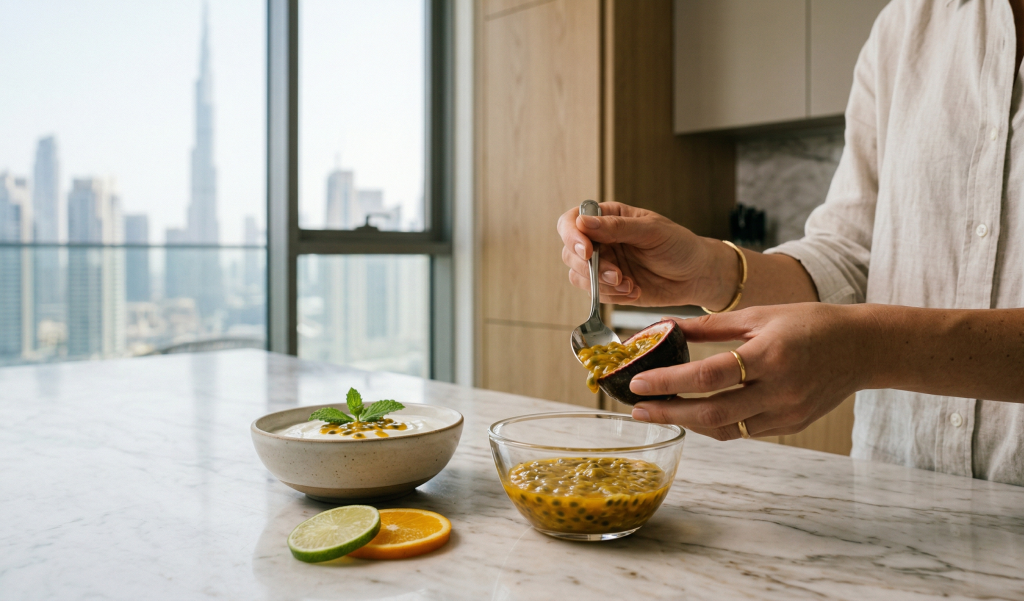
Introduction: A Premium Ingredient Hiding in Plain Sight
Walk into any high-end café in Dubai, and you will notice a pattern.
The most expensive mocktails often have one thing in common: a sharp, aromatic, slightly tangy flavor that cuts through sweetness and adds depth. That flavor almost always comes from fresh passion fruit.
Yet outside the café setting, many buyers—both households and even small F&B operators—treat passion fruit as a rare or luxury ingredient. In reality, during the right supply window, fresh passion fruit in Dubai can be sourced for under 5 AED per piece, especially through wholesale channels.
This gap between perception and reality is where most inefficiencies begin.
Understanding how passion fruit moves through Dubai’s supply chain—when it is available, how quality varies, and how to use it properly—can significantly reduce cost while improving consistency in both home kitchens and commercial operations.
Why Passion Fruit Became a Staple in Dubai’s Mocktail Culture
Flavor That Solves a Real Problem
In beverage design, especially non-alcoholic drinks, balance is difficult.
You need:
- Acidity (to avoid flat sweetness)
- Aroma (to create a premium feel)
- Visual appeal (for presentation)
Passion fruit delivers all three at once.
Its pulp contains natural acids and aromatic compounds that:
- Replace artificial syrups
- Reduce the need for added citrus
- Provide a consistent tropical profile
This is why cafés across Dubai—from hotel lounges to specialty coffee shops—use it as a base rather than a garnish.
Consistency Matters More Than Cost
From a procurement perspective, passion fruit is not just about taste.
It is about reliability.
A single fruit:
- Produces predictable pulp volume
- Has a stable flavor profile
- Stores reasonably well compared to softer berries
For F&B buyers, this reduces menu inconsistency, which is often a bigger cost than the ingredient itself.
Fresh Passion Fruit in Dubai: Supply Reality vs Buyer Assumptions
Common Misunderstanding: “It’s Imported, So It Must Be Expensive”
This is one of the most repeated assumptions in buyer discussions.
Yes, passion fruit is imported into the UAE. But not all imports are equal.
Supply typically comes from:
- Vietnam
- Kenya
- Colombia
- South Africa
Each origin has different:
- Harvest cycles
- Freight costs
- Shelf life characteristics
When supply overlaps (for example, Kenya and Vietnam seasons intersect), prices drop significantly. This is when wholesale buyers access lower per-piece costs.
Retail buyers often miss this window.
Why Supermarket Pricing Feels Inflated
Retail pricing includes:
- Packaging
- Shelf loss (unsold or spoiled fruit)
- Store overhead
This is why a fruit that costs under 5 AED in bulk may appear significantly higher in supermarkets.
It is not necessarily a quality difference—it is a supply chain difference.
When Is Passion Fruit Actually in Season for the UAE?
Understanding Seasonal Overlap
Dubai does not grow passion fruit at scale. So “seasonality” here refers to import seasonality, not local farming.
Typical high-availability periods:
- Late winter to early summer
- Secondary peaks depending on African supply cycles
During these windows:
- Quality improves
- Size becomes more uniform
- Prices stabilize or drop
Outside these periods, supply becomes fragmented, and pricing becomes volatile.
Why Seasonality Affects Taste, Not Just Price
Buyers often focus only on cost, but seasonality affects flavor more than anything.
In peak supply:
- Pulp is fuller
- Seeds are darker and more mature
- Aroma is stronger
Off-season fruit may look similar externally but:
- Has less pulp
- Tastes diluted
- Spoils faster after cutting
For mocktails and desserts, this difference is immediately noticeable.
How to Identify Fresh Passion Fruit (Even Without Cutting It)
This is one of the most common questions from both home buyers and procurement teams.
Visual Indicators
A good passion fruit is not smooth and shiny.
Instead, look for:
- Slightly wrinkled skin
- Deep purple or yellow color (depending on variety)
- Firm but not hard texture
Wrinkling is often misunderstood as spoilage. In reality, it usually indicates ripeness and higher sugar concentration.
Weight vs Size
Heavier fruit typically contains more pulp.
Two fruits of the same size can differ significantly in yield. Experienced buyers will always pick the heavier one.
What to Avoid
- Completely smooth, glossy skin (often underripe)
- Very soft or leaking fruit
- Dull color with no aroma
These indicators are consistent across most supply origins.
How to Eat Passion Fruit (and Why Many People Use It Wrong)
The Correct Way
Passion fruit is simple:
- Cut in half
- Scoop out pulp with seeds
- Eat directly or mix into dishes
The seeds are edible and part of the texture.
Common Mistakes
Many buyers:
- Strain out the seeds unnecessarily
- Over-sweeten the pulp
- Use it only as decoration
This reduces both flavor and value.
Practical Uses Beyond Mocktails
For households and F&B operations, passion fruit can be used in:
- Yogurt and breakfast bowls
- Salad dressings
- Seafood marinades
- Dessert toppings
Because of its acidity, it works similarly to citrus—but with more aroma.
Wholesale vs Retail: Where Most Buyers Lose Money
The Hidden Cost of Small Purchases
Buying small quantities frequently:
- Increases per-unit cost
- Leads to inconsistent quality
- Limits access to peak-season batches
For businesses, this often results in:
- Menu variation
- Higher wastage
- Supplier dependency issues
Why Wholesale Isn’t Just for Large Businesses
Even small cafés and catering setups can benefit from structured sourcing.
In practice, suppliers working closely with Dubai-based distributors such as JMB Farm Fresh often observe that buyers who switch to planned sourcing:
- Stabilize their ingredient quality
- Reduce last-minute purchasing
- Gain better visibility on seasonal availability
This is less about scale and more about planning.
The Real Risk: Spoilage and Misjudged Storage
Passion fruit is more stable than berries, but it is not immune to mishandling.
Typical Storage Behavior
- Room temperature: ripens further
- Refrigeration: slows down deterioration
Once cut:
- Shelf life drops quickly
- Exposure to air reduces aroma
Where Buyers Go Wrong
- Storing unripe fruit in the fridge (stops ripening)
- Cutting too many fruits in advance
- Ignoring humidity levels
These mistakes lead to:
- Flavor loss
- Waste
- Inconsistent output in food service settings
A Practical Scenario: Café vs Home Buyer
Consider two buyers in Dubai:
Café Buyer
- Needs consistent flavor daily
- Uses passion fruit in 3–4 menu items
- Buys in batches
Home Buyer
- Buys occasionally
- Stores without planning
- Uses fruit across multiple days
The café benefits from:
- Predictable cost
- Controlled storage
- Supplier relationships
The home buyer often experiences:
- Price variation
- Mixed quality
- Higher perceived cost
The difference is not access—it is understanding.
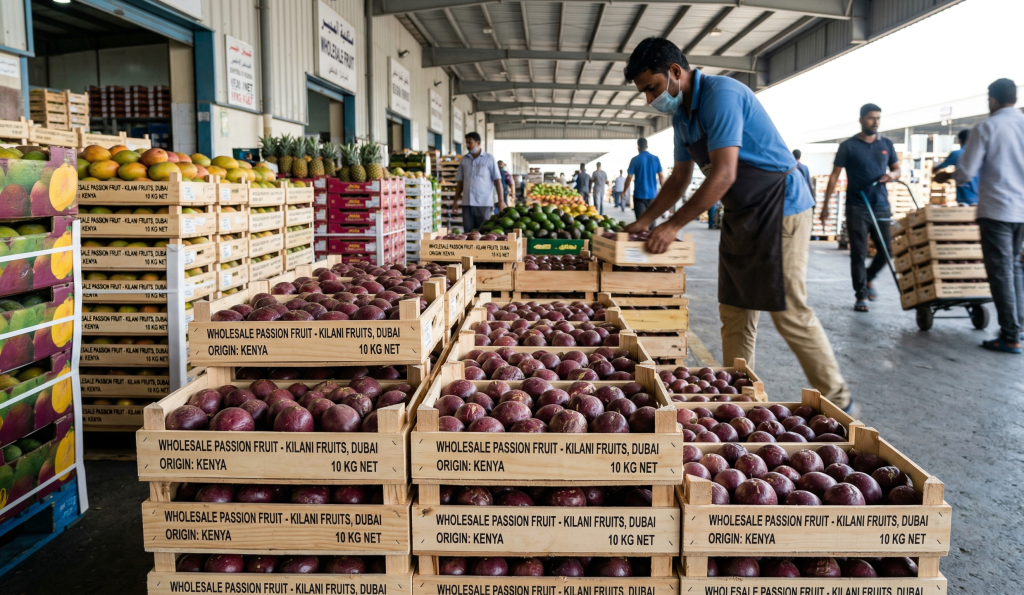
Why Passion Fruit Prices Fluctuate in Dubai (and What Buyers Miss)
Price movement in fresh produce is rarely random. Passion fruit is a good example of how multiple small variables create noticeable swings in the market.
1. Origin Shifts and Freight Dynamics
Unlike staple vegetables, passion fruit relies heavily on air freight for freshness.
When supply shifts between origins:
- Freight routes change
- Transit times vary
- Handling conditions differ
For example:
- East African supply may arrive faster but in smaller volumes
- Southeast Asian shipments may offer volume but face longer transit times
These differences affect not only price but also shelf life on arrival.
2. Demand Spikes from the Hospitality Sector
Dubai’s hospitality industry has a strong influence on demand.
During:
- Tourism peaks
- Event seasons
- Winter outdoor dining periods
Consumption of mocktails and fruit-based beverages increases. This creates short-term demand pressure, even if overall supply remains stable.
3. Quality Grading Within the Same Shipment
Not all passion fruit in a batch is equal.
Within a single shipment:
- Larger, heavier fruits are often reserved for premium buyers
- Smaller or less uniform fruits move into retail or secondary markets
This creates price tiers that many buyers misinterpret as “supplier inconsistency,” when in reality it is standard grading practice.
What Restaurants and Cafés Look for (That Most Buyers Ignore)
Professional buyers evaluate passion fruit differently than casual consumers.
Yield Per Fruit
Restaurants do not think in “pieces.” They think in usable pulp.
A slightly more expensive fruit with:
- Higher pulp content
- Stronger aroma
can outperform cheaper fruit that looks good externally but produces less usable volume.
Flavor Stability Across Batches
For a café, inconsistency is a bigger problem than price.
If one batch is:
- Sourer
- Less aromatic
- Lower in pulp
it affects drink recipes, customer expectations, and repeatability.
This is why experienced buyers prioritize:
- Supplier consistency
- Origin tracking
- Seasonal awareness
over simply chasing the lowest price.
Ease of Handling
In high-volume kitchens, efficiency matters.
Fruits that:
- Cut cleanly
- Have predictable pulp texture
- Require minimal processing
reduce labor time and improve workflow.
Import vs “Local” Perception: Clearing the Confusion
There Is No Large-Scale Local Passion Fruit Industry
A common misconception is that some passion fruit in Dubai is locally grown at scale.
In reality:
- Most commercial supply is imported
- Small-scale regional production exists but does not dominate the market
What buyers sometimes interpret as “local” is actually:
- Recently imported stock
- Repacked or redistributed within UAE markets
Why This Matters for Buyers
Understanding this prevents confusion around:
- Price differences
- Labeling inconsistencies
- Perceived freshness
Freshness is determined more by:
- Transit time
- Handling conditions
- Storage practices
than by whether a fruit is labeled “local” or not.
The Tradeoff: Wholesale Efficiency vs Flexibility
Wholesale sourcing offers clear advantages, but it is not without tradeoffs.
Benefits of Wholesale Sourcing
- Lower per-unit cost during peak supply
- Access to consistent batches
- Better planning for menus or household consumption
Limitations to Be Aware Of
- Requires upfront planning
- Needs proper storage capacity
- Less flexibility for small, last-minute purchases
For some buyers, especially households, retail still plays an important role. The key is understanding when each channel makes sense.
Seasonal Strategy: How Smart Buyers Plan Passion Fruit Usage
During Peak Availability
When supply is strong:
- Increase usage in menus
- Experiment with new recipes
- Purchase slightly larger quantities
This is when passion fruit offers the best balance of:
- Cost
- flavor
- yield
During Low Availability
When supply tightens:
- Reduce reliance on passion fruit-heavy items
- Adjust recipes to blend with citrus or other fruits
- Monitor quality more closely
This approach reduces exposure to:
- Price spikes
- Inconsistent batches
Practical Buying Checklist (Used by Experienced Buyers)
For both businesses and households, a simple checklist can prevent most common issues:
Before Buying
- Is current supply in peak or off-season?
- Does the fruit feel heavy for its size?
- Is the skin slightly wrinkled (not smooth)?
During Purchase
- Check for uniformity across the batch
- Avoid mixing very different ripeness levels
- Smell for a light aroma if possible
After Purchase
- Let underripe fruit sit at room temperature
- Refrigerate once optimal ripeness is reached
- Use within a reasonable timeframe after cutting
This basic discipline reduces waste more effectively than any pricing strategy.
Where Most Content Gets It Wrong About Passion Fruit
After reviewing typical online content and discussions, several gaps appear repeatedly.
1. Overemphasis on Recipes, Not Sourcing
Most articles focus on:
- Mocktail recipes
- Dessert ideas
But ignore:
- Supply variability
- Quality assessment
- Storage practices
For buyers, sourcing is where most value is gained or lost.
2. Simplified “Healthy Fruit” Narratives
While passion fruit has nutritional benefits, focusing only on health claims misses practical concerns like:
- Cost efficiency
- Shelf life
- usability in real kitchens
3. Lack of Supply Chain Context
Very few sources explain:
- Why prices change
- How origin affects quality
- What seasonality actually means in the UAE
Without this context, buyers rely on guesswork.
A Quiet Shift in Buyer Behavior in Dubai
In recent years, there has been a noticeable shift among informed buyers.
Instead of:
- Buying reactively
- Relying on supermarket availability
They are:
- Tracking seasonal windows
- Building relationships with distributors
- Planning usage around supply patterns
This applies not only to large hotel groups but also to:
- Independent cafés
- Small catering businesses
- Even informed households
Some UAE buyers prefer working with established wholesale produce providers rather than fragmented retail sourcing, especially when consistency matters more than convenience.
The Bigger Picture: Passion Fruit as a Case Study in Produce Awareness
Passion fruit is not unique.
It simply highlights a broader issue in how fresh produce is perceived in Dubai:
- Many items appear “premium” in retail settings
- But are accessible and affordable through informed sourcing
Understanding one fruit properly often changes how buyers approach the entire category.
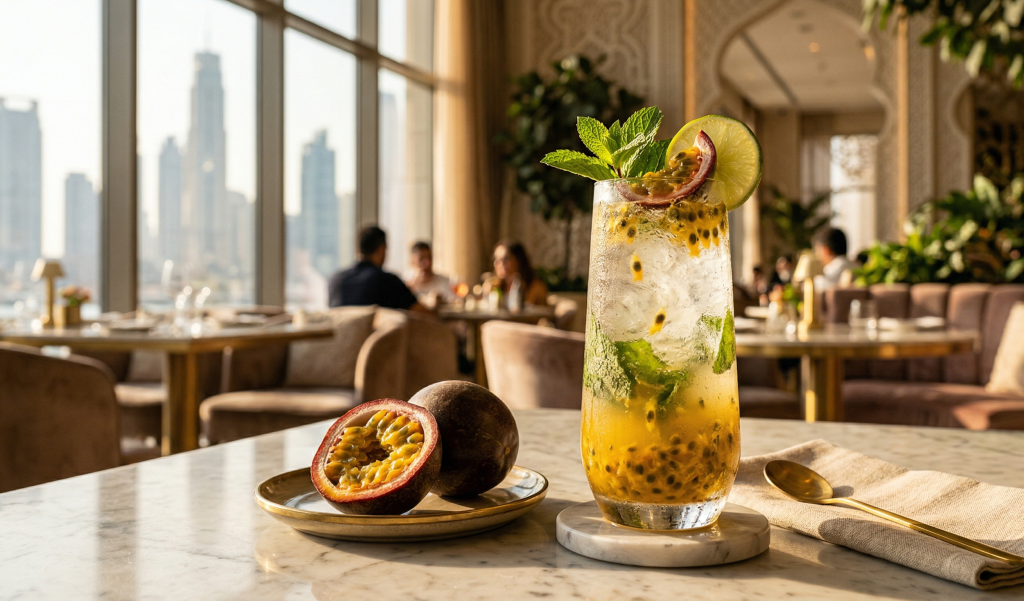
From Café Glass to Kitchen Counter: Making Passion Fruit Practical
For most buyers, the gap between “café ingredient” and “everyday use” is not about availability. It is about familiarity.
Once you understand how to handle passion fruit, it becomes one of the most flexible ingredients in a kitchen.
Turning One Fruit into Multiple Uses
A single passion fruit can be stretched across:
- One mocktail or fresh juice base
- A yogurt or breakfast topping
- A light dressing for salads or seafood
Because of its intensity, a small amount goes a long way. This is where its value becomes clear. Even at a few dirhams per fruit, the cost per use is relatively low.
Simple Mocktail Base Used Across Dubai Cafés
Most cafés use a variation of the same base:
- Fresh passion fruit pulp
- Cold water or soda
- A mild sweetener (optional)
- Ice
The difference between a 35 AED mocktail and a home version is rarely the ingredient itself. It is presentation, dilution balance, and consistency.
For buyers, this means the core ingredient is not inaccessible—it is simply repositioned.
Managing Waste: The Overlooked Cost Driver
In fresh produce, waste is often more expensive than the ingredient itself.
Where Waste Happens
With passion fruit, waste typically comes from:
- Buying at the wrong ripeness stage
- Over-purchasing without a usage plan
- Improper storage after cutting
Even a small amount of spoilage can offset any savings from buying cheaper fruit.
How Experienced Buyers Reduce Waste
They follow three simple rules:
- Match purchase volume to actual usage
- Use ripest fruit first (FIFO: first in, first out)
- Avoid unnecessary pre-cutting
This approach applies equally to households and businesses.
Balancing Quality and Cost Without Overcomplicating It
Many buyers overthink sourcing.
They assume:
- Better quality always means higher price
- Lower price always means lower quality
In practice, the relationship is more nuanced.
What Actually Drives Value
Value comes from a combination of:
- Pulp yield
- Flavor intensity
- Shelf life
A slightly higher-priced fruit that performs well across all three areas often delivers better overall value than a cheaper alternative.
When It Makes Sense to Pay More
- During off-season periods with limited supply
- When consistency is critical (e.g., menu items)
- When labor efficiency matters (easy handling, better yield)
When It Does Not
- When peak-season fruit is widely available
- When usage is flexible
- When minor variation is acceptable
This balanced view helps avoid both overpaying and underestimating quality.
A Note on Supplier Relationships and Trust
Over time, many buyers in Dubai move away from transactional purchasing.
Instead of asking:
“What is the cheapest price today?”
They begin asking:
“What is the most reliable supply this week?”
This shift changes outcomes.
In practice, suppliers working closely with UAE distributors such as JMB Farm Fresh (jmbfarmfresh.com) often observe that buyers who prioritize consistency:
- Experience fewer supply disruptions
- Reduce waste
- Maintain better product quality
This is less about brand preference and more about how supply relationships are managed.
Final Perspective: Why Passion Fruit Feels Expensive (But Often Isn’t)
The perception of passion fruit as a premium item comes from where people encounter it.
- In cafés, it is presented as part of a finished product
- In supermarkets, it is priced for convenience
- In wholesale markets, it is treated as a standard seasonal fruit
These are three different contexts for the same ingredient.
Once buyers understand:
- Seasonality
- Sourcing channels
- Handling practices
the fruit becomes far more accessible and predictable.
In many cases, the “premium” label fades quickly.
Conclusion: A Small Ingredient That Reveals Bigger Patterns
Passion fruit is not just a café trend.
It is a useful example of how Dubai’s fresh produce system actually works.
It shows that:
- Price is often a function of supply timing, not rarity
- Quality depends more on handling than origin labels
- Value comes from understanding yield and usage—not just cost per piece
For buyers—whether managing a restaurant menu or a home kitchen—the real advantage lies in awareness.
Once you start paying attention to how one fruit behaves in the supply chain, it becomes easier to navigate the rest of the produce category with confidence.
Frequently Asked Questions (FAQ)
1. Where can I find fresh passion fruit in Dubai?
Fresh passion fruit is available in supermarkets, traditional markets, and through wholesale suppliers. Availability and pricing vary depending on import cycles and seasonality.
2. Is passion fruit expensive in the UAE?
Not necessarily. During peak supply periods, it can be relatively affordable, especially when sourced in bulk. Retail pricing may be higher due to overhead and packaging.
3. How do I know if passion fruit is ripe?
Look for slightly wrinkled skin, a rich color (purple or yellow), and a fruit that feels heavy for its size. These indicate good pulp content and ripeness.
4. How should passion fruit be stored?
Keep unripe fruit at room temperature. Once ripe, store it in the refrigerator. After cutting, consume it quickly to maintain flavor and freshness.
5. Can I use passion fruit daily in meals?
Yes. It can be used in drinks, breakfast dishes, salads, and desserts. Its strong flavor means only a small amount is needed per serving.








 Home
Home  Whishlist
  Compare
  Checkout