

















Gut health is now part of how many Dubai households think about food.
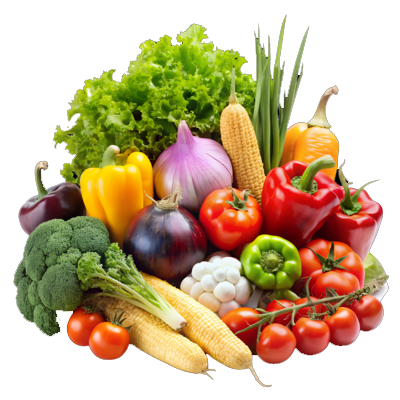
Not in a trendy way, but in a practical one. People want meals that feel lighter, keep digestion regular, and make everyday grocery buying easier to manage. That is one reason high fiber vegetables Dubai shoppers look for each week are no longer limited to basic salad items. Buyers are paying more attention to greens, avocados, apples, carrots, sweet potatoes, berries, and other produce that actually helps them build better daily eating habits.
The useful starting point is simple: fiber comes from plant foods your body does not fully digest. It helps with stool bulk and digestion, and some types of fiber also support gut microbes by acting as prebiotics. Health guidance commonly points adults toward roughly 30g of fiber a day, while also noting that many people still fall short. Fruits, vegetables, beans, oats, and other plant foods all help close that gap.
In Dubai, though, the challenge is not only knowing which foods are good for the gut. It is knowing which ones are practical to order every week without wasting money or ending up with soft berries, tired herbs, or greens that collapse too fast in the fridge. That is where local buying habits, seasonality, and sourcing quality matter just as much as nutrition.
Why gut health grocery buying looks different in Dubai
A lot of generic articles talk about fiber as if every city buys produce the same way.
Dubai does not work like that. The market is shaped by imports, fast retail turnover, and strong differences between premium supermarkets, online grocery platforms, and wholesale-style markets. Local buyers often discuss the same issues: some outlets offer good range but uneven quality, some wholesalers offer much better value, and some online orders can be excellent one week and disappointing the next. In everyday discussion, shoppers repeatedly point to places like Ras Al Khor or other produce markets for better value, while also warning that quality can vary depending on the seller, batch, and timing.
That matters for gut health food Dubai shoppers buy regularly because fiber works best through consistency. A person does not benefit much from buying an ambitious weekly basket full of delicate greens and berries if half of it spoils before it is eaten.
This is where many competitors stay too shallow. They repeat that “fresh is best” or “eat more plants,” but they do not explain the real buying problem:
You are not just choosing healthy produce. You are choosing produce with the right shelf life, season, and usage pattern for your household.
That is why a useful Dubai gut health grocery list should focus on three things at once:
- Fiber value
- Weekly practicality
- Lower spoilage risk
What people usually get wrong about fiber-rich produce
The first misunderstanding is that all “healthy vegetables” are equally useful for weekly ordering.
They are not.
Some vegetables look healthy on paper but do not match real household behavior. A family may order salad leaves with good intentions, then leave them untouched for four days. By then, the leaves are wet, limp, and headed for the bin. In contrast, carrots, cabbage, cucumbers, broccoli, sweet potatoes, and apples often survive the week better and fit more meals.
The second misunderstanding is that expensive or imported always means better. In Dubai, imported produce is important and often necessary, especially for items such as avocados, berries, and off-season specialty greens. But imported does not automatically mean fresher at the point of eating. Transit time, storage handling, and the strength of the cold chain all matter. Industry sources keep highlighting cold chain as one of the main reasons delicate produce can arrive well or arrive tired.
The third misunderstanding is that fiber only means rough, bulky vegetables.
In reality, both fruits and vegetables contribute. Mayo Clinic notes that soluble fiber is found in foods such as apples, bananas, avocados, citrus fruits, peas, and carrots, while insoluble fiber is common in many vegetables and helps move material through the digestive system. Prebiotic foods that support gut microbes also include familiar produce such as apples, berries, carrots, garlic, and sweet potatoes.
So the right weekly grocery list is not about chasing one miracle food. It is about building a mix.
The smartest way to build a weekly high-fiber produce basket
A strong weekly basket in Dubai usually needs a balance between fragile items and durable items.
Fragile items give freshness and variety. Durable items give consistency.
That balance matters even more in the UAE because local growing conditions and import flows change what is naturally easier to source at different times of year. The UAE’s cooler growing period generally runs from October through April, and that season supports better availability of many local vegetables, especially greens and other fresh winter produce. Recent UAE and industry material also shows growing official interest in raising the role of local produce in hospitality and food supply.
For a practical household, the weekly basket often works best when divided like this:
1. The reliable base
These are the items that should quietly carry most of the week.
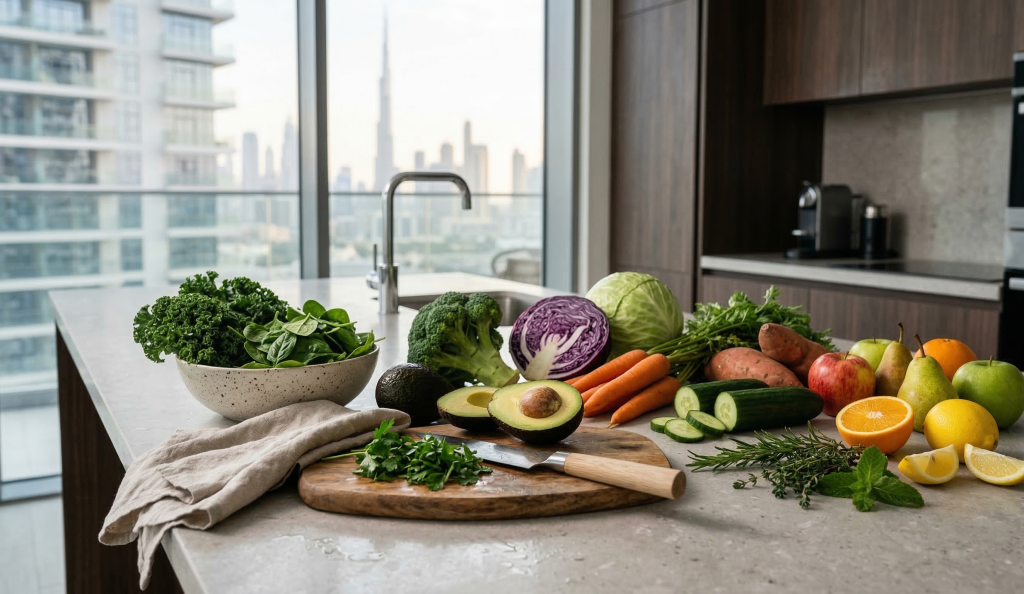
Think carrots, cucumbers, cabbage, broccoli, cauliflower, sweet potatoes, apples, pears, and oranges. They are not flashy, but they usually offer better shelf life and easier meal use. They can go into lunch boxes, soups, trays, salads, stir-fries, or simple snacks.
For buyers trying to improve digestion without overcomplicating meals, this base matters more than trendy add-ons.
2. The fast-use fresh layer
This is where you place more delicate items such as spinach, kale, rocket, herbs, berries, and ripe avocados.
These are useful, but only if you know how they will be eaten. A good rule is to order them with a meal plan already in mind. Two smoothie days, one soup, one salad, one sandwich filling, one side dish. That sounds obvious, but it is often the difference between healthy buying and expensive waste.
3. The support items that increase total fiber without much effort
These include onions, garlic, lemons, and fresh herbs.
They are not always the stars of the basket, but they help you cook the rest of the produce more often. That raises actual intake, which is what matters.
Which fruits and vegetables deserve weekly priority?
For most Dubai households, the best weekly choices are not necessarily the most exotic. They are the ones that combine fiber, tolerance for local buying conditions, and flexible kitchen use.
A practical shortlist would usually include:
Apples
Apples are one of the easiest gut-friendly fruits to keep in weekly rotation. They store well, travel well, and work for adults and children. They are also listed among common prebiotic-friendly foods and soluble fiber sources.
Carrots
Carrots are useful because they are affordable, versatile, and less fragile than many greens. They can be eaten raw, roasted, grated into salads, or added to soups. From a buying perspective, they are one of the easiest ways to reduce waste.
Sweet potatoes
Sweet potatoes are a strong choice for households that want a filling, fiber-supportive staple without relying on processed side dishes. They also work well for meal prep, which matters for busy Dubai families.
Leafy greens
Leafy greens matter for gut-friendly eating, but they should be bought with realism. Kale, spinach, rocket, and similar greens are most useful when you can finish them quickly. They are especially relevant during the UAE’s cooler growing season, when local greens are generally in a better position.
Avocados
Avocados are popular for good reason. They offer fiber along with fats that make meals more satisfying. But they are also one of the easiest items to waste if ripeness is not managed properly. In Dubai, avocado is often a good example of a product where source country, transit timing, and ripeness stage matter more than shelf appearance on the day of delivery.
Berries
Berries can support a fiber-rich fruits UAE shopping plan, but they are also one of the highest-risk items for disappointment. Shopper discussions regularly mention that berries can be inconsistent, and many people become selective about where they buy them. They are best treated as a short-life item, not a bulk staple.
In practice, suppliers working closely with Dubai-based distributors such as JMB Farm Fresh often observe that buyers become more satisfied when they stop shopping by image alone and start shopping by use case, storage life, and seasonal fit.
Why winter is the easiest season to improve your produce basket
Winter is where many Dubai buyers get the best chance to clean up their weekly grocery habits.
Cooler months generally improve the outlook for leafy greens, herbs, brassicas, and many salad vegetables grown locally or regionally. The UAE’s main temperate production window runs from October to April, which is one reason winter baskets often feel easier, fresher, and less fragile than summer ones.
That does not mean everything is local. Dubai still depends heavily on imported produce, and many popular fruits remain import-led categories. But winter often gives buyers a better mix of local freshness and imported variety, which is ideal for plant-based diet Dubai grocery planning.
The real advantage is not only taste.
It is predictability.
And predictability is what turns good intentions into a weekly habit.
How to order for gut health without creating waste
The biggest mistake is buying a “healthy” basket that does not match how the week will actually go.
A better system is to split your order into three speeds: produce you will eat in one to two days, produce that can last four to six days, and produce that can stretch further with basic storage. That is especially important in Dubai, where delicate items such as berries, ripe avocados, and bagged greens can disappoint quickly if handling or cold storage has been weak before delivery. Shopper discussions in Dubai regularly complain about bruised bananas, soft avocados, and crushed strawberries from online grocery orders, which shows that perishables often fail long before they reach the plate.
For most households, the one-to-two-day group includes berries, tender herbs, ripe avocados, mushrooms, and ready-to-eat salad leaves. The midweek group includes cucumbers, tomatoes, broccoli, cauliflower, pears, and citrus. The longer-life group usually includes carrots, cabbage, onions, garlic, apples, and sweet potatoes. This kind of structure helps people actually eat more fiber rather than just admire a full fridge. Fiber guidance is consistent on the basic point: regular intake from fruits, vegetables, oats, beans, and similar plant foods matters more than occasional bursts of “clean eating.”
A practical weekly grocery list for Dubai households
A realistic gut health food Dubai basket should be easy to repeat every week.
That means it should include items that work for breakfast, lunch boxes, side dishes, soups, and simple dinners. It also means not depending too heavily on fragile imports unless there is a plan to use them immediately.
A sensible weekly mix often looks like this:
- Apples
- Pears or oranges
- Avocados
- Carrots
- Cucumbers
- Broccoli or cauliflower
- Spinach or kale
- Cabbage
- Sweet potatoes
- Tomatoes
- Onions and garlic
- Fresh herbs such as mint or parsley
This kind of basket supports both fiber and kitchen flexibility. Apples, avocados, and carrots are commonly cited among foods that provide useful fiber, including soluble fiber, while vegetables and fruit more broadly are recommended as part of everyday intake.
The reason this list works well in Dubai is not that every item is exotic or premium. It works because it balances value, durability, and frequency of use. Cucumbers, for example, are widely available and often in better seasonal shape during the cooler months in the UAE. Local winter production windows make it easier to build weekly baskets around greens, cucumbers, and similar vegetables without depending entirely on long-distance supply.
Which items are worth buying more carefully?
Not all gut-friendly produce deserves the same level of confidence.
Avocados
Avocados fit well into a high-fiber routine, but they are also one of the easiest ways to overspend and waste money. Their ripeness window is narrow. If all of them arrive ready at once, households often lose part of the batch. That makes avocado kale order Dubai style baskets useful only when there is a plan: toast, smoothies, salads, or grain bowls across the first few days. Avocados are recognized as a source of fiber, but from a buying point of view they are best treated as a short-window item, not a background staple.
Kale and other leafy greens
Kale, spinach, and rocket are popular in healthy vegetables online Dubai searches because they match the image of “clean eating.” But the buying reality is harder. Greens can look fine at delivery and still deteriorate fast if they were packed wet, handled roughly, or left too warm in transport. During the cooler UAE season, buyers usually have a better chance of getting stronger greens with better turnover and less stress from heat.
Berries
Berries can absolutely belong in a fiber-rich fruits UAE basket, but they should not be treated as the foundation of a weekly order. They are expensive, soft, and easy to damage. For many households, berries make more sense as a top-up purchase rather than a large weekly commitment. Complaints around squashed strawberries and weak quality control in online perishable delivery show exactly why.
What businesses and families both get wrong
There is an interesting overlap between household buyers and hospitality buyers.
Both groups often focus too much on purchase price and not enough on usable yield. Usable yield means how much of the produce is still worth serving or eating after trimming, storage loss, softening, and spoilage. A cheap case of produce is not truly cheap if too much of it is lost.
This is one area where wholesale versus retail is often misunderstood. Buyers sometimes assume wholesale means lower quality because the price can be lower. But in practice, the real difference is often pack size, turnover speed, and sourcing model, not a simple quality gap. Retail may offer prettier display presentation, while wholesale may offer fresher movement on core lines. The problem is that many articles repeat “wholesale saves money” without explaining that savings only matter when the buyer has enough consumption volume or enough storage discipline to use what they buy before it declines.
That is why households should borrow one habit from professional kitchens: buy based on menu intention. If the coming week includes soups, salad bowls, grilled trays, lunch box fruit, and simple snacks, then the basket should follow that pattern. If the week is busy and unpredictable, the basket should lean more heavily toward durable produce such as apples, carrots, cabbage, onions, and sweet potatoes.
How to judge freshness more intelligently
Many buyers still judge produce with a supermarket mindset: appearance first, use later.
That works poorly for gut-health-focused ordering.
A better method is to ask four practical questions:
1. Does it feel appropriate for the season?
In winter, greens, herbs, cucumbers, brassicas, and salad vegetables often make more sense in the UAE than during hotter months, when stress on delicate produce is naturally higher.
2. Is it at the right ripeness stage for your plan?
A ripe avocado is great for tomorrow, not for five days from now. Hard pears may be more useful than soft ones if they need to last the week. This sounds basic, but it is one of the most important filters in reducing waste.
3. Is the item naturally durable or naturally fragile?
Carrots, cabbage, apples, and onions usually forgive imperfect planning. Berries and salad leaves do not. That means the right “healthy” basket depends on your household rhythm, not just the nutrition label.
4. Can you use it in more than one meal?
Produce that only fits one aspirational recipe often gets wasted. Produce that works in salads, cooked dishes, snacks, and sides gets eaten.
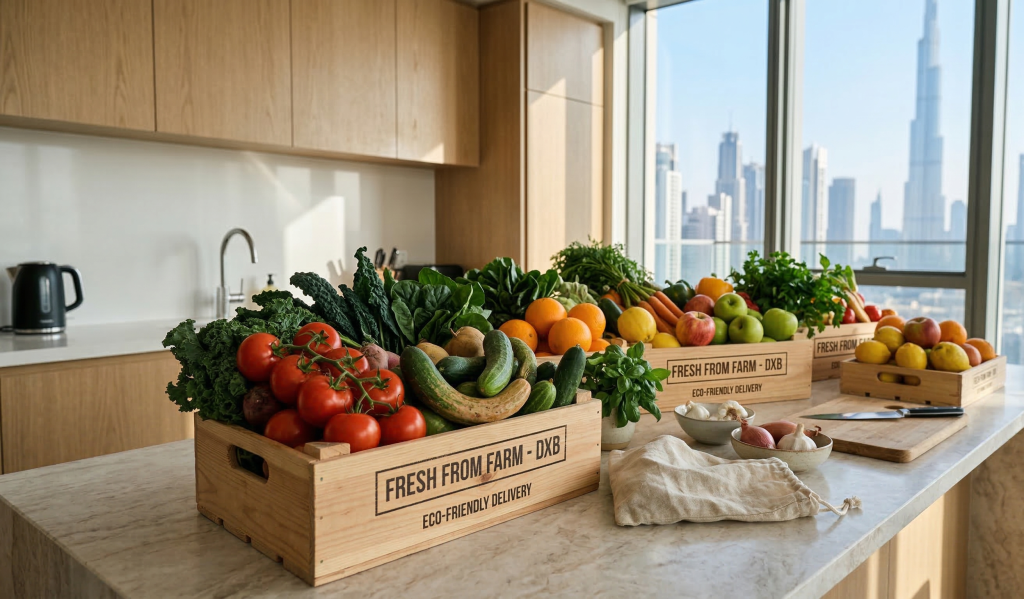
Some UAE buyers prefer working with established wholesale produce providers rather than fragmented retail sourcing because consistency, handling, and repeatable quality matter more over time than a single attractive display on one day. That preference is not about hype. It is about reducing uncertainty.
Common mistakes that quietly make a “healthy” basket less healthy
One common mistake is buying too much variety too fast.
A basket filled with berries, bagged greens, herbs, avocados, and soft fruit may look impressive, but it often creates waste if the household is not used to eating that way every day. A gradual increase in fiber is usually easier on digestion and easier on the budget. NHS guidance also notes that fiber intake should be increased gradually, not all at once.
Another mistake is choosing produce by trend instead of by repeat use.
For example, kale may be useful, but it is only a smart weekly order if it actually gets cooked, blended, or served. Apples, carrots, cabbage, sweet potatoes, and oranges are often less glamorous, but they usually fit more meals and create less waste. From a gut health point of view, consistency matters more than novelty because fiber intake works best as a steady habit rather than a short burst.
A third mistake is assuming online convenience solves freshness.
It can, but only when the supplier handles perishables well. Real buyer discussions in Dubai show a familiar pattern: people are happy to pay for convenience, but they become selective very quickly when avocados arrive bruised or berries arrive soft. That is one reason repeatability matters so much in fresh produce sourcing.
The balanced view on weekly produce ordering
There are clear benefits to ordering a high-fiber basket every week.
It makes meal planning easier. It raises the chance that fruit and vegetables are actually eaten. It also reduces the last-minute habit of filling meals with low-fiber convenience foods. Guidance from both NHS and Mayo Clinic consistently points people toward routine intake of fruits, vegetables, beans, and higher-fiber staples rather than one-off “detox” behavior.
But there are tradeoffs too.
A weekly order only works well when the basket reflects season, shelf life, and household rhythm. Delicate items are still delicate. Imported produce still depends on handling and transport. And not every fiber-rich item needs to be ordered every single week. In Dubai, winter usually gives buyers the easiest window to improve their basket because local and regional vegetables, especially cucumbers and greens, are generally in a better position during the cooler season.
That is the point many articles miss. Good buying is not about chasing the most “superfood” ingredients. It is about building a basket that survives the week, fits real meals, and quietly improves digestion over time.
A simple weekly rule that works
If you want a gut-friendly grocery routine that is easy to repeat, make sure your weekly order includes:
- Two or three durable vegetables
- Two or three easy fruits
- One leafy green you know you will use quickly
- One flexible item such as avocado or sweet potato
- Basic supporting items such as onions, garlic, herbs, or lemons
That structure is simple, but it solves most of the common problems: low fiber intake, wasted produce, and overbuying fragile items.
For households searching healthy vegetables online Dubai or planning a broader plant-based diet Dubai grocery routine, this approach is usually more useful than copying an aspirational shopping cart from social media. In practice, buyers who work with experienced produce distributors, including established names such as JMB Farm Fresh, often do better when they focus on consistency, handling quality, and seasonal fit rather than appearance alone.
Conclusion
A good gut health grocery list in Dubai should not feel complicated.
It should feel workable.
The best weekly basket is usually not the one with the most imported specialties or the most expensive greens. It is the one that gives you enough fiber, enough flexibility, and enough shelf life to get through the week without waste. Apples, carrots, cabbage, cucumbers, broccoli, sweet potatoes, avocados, citrus, and a manageable amount of greens can do far more for most households than a fridge full of fragile “health foods” bought without a plan.
In Dubai, the smart buyer thinks about nutrition and sourcing at the same time. That means watching seasonality, understanding which items are naturally delicate, and buying for actual meals instead of good intentions. Done well, that is what turns fresh produce from a nice idea into a stable weekly habit.
FAQ
1. What are the best high fiber vegetables to buy weekly in Dubai?
Carrots, broccoli, cabbage, sweet potatoes, cauliflower, and leafy greens are practical choices. The best weekly mix is usually a balance of durable vegetables and one or two faster-use greens.
2. Which fruits are most useful for a gut health routine?
Apples, pears, oranges, berries, and avocados are commonly useful choices. Apples and avocados are especially helpful because they pair fiber value with everyday meal flexibility.
3. Is winter the best time to improve a fresh produce basket in the UAE?
For many buyers, yes. The cooler season generally supports stronger availability for local and regional vegetables, especially cucumbers, greens, and other winter-friendly produce.
4. Why do some healthy produce orders still lead to waste?
Because shoppers often overbuy fragile items such as berries, ripe avocados, and salad leaves without a clear plan to use them quickly. Shelf life and handling matter as much as nutrition. Buyer discussions in Dubai reflect this problem often.
5. How should I increase fiber without upsetting digestion?
Increase fiber gradually, drink enough fluids, and build it through regular daily meals rather than a sudden major change. That is the most practical way to improve tolerance and consistency.








 Home
Home  Whishlist
  Compare
  Checkout