















Introduction: A Familiar Basket, A Missed Opportunity
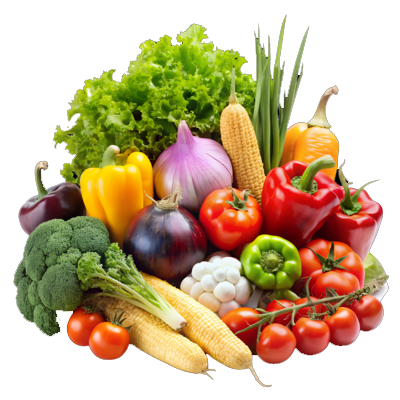
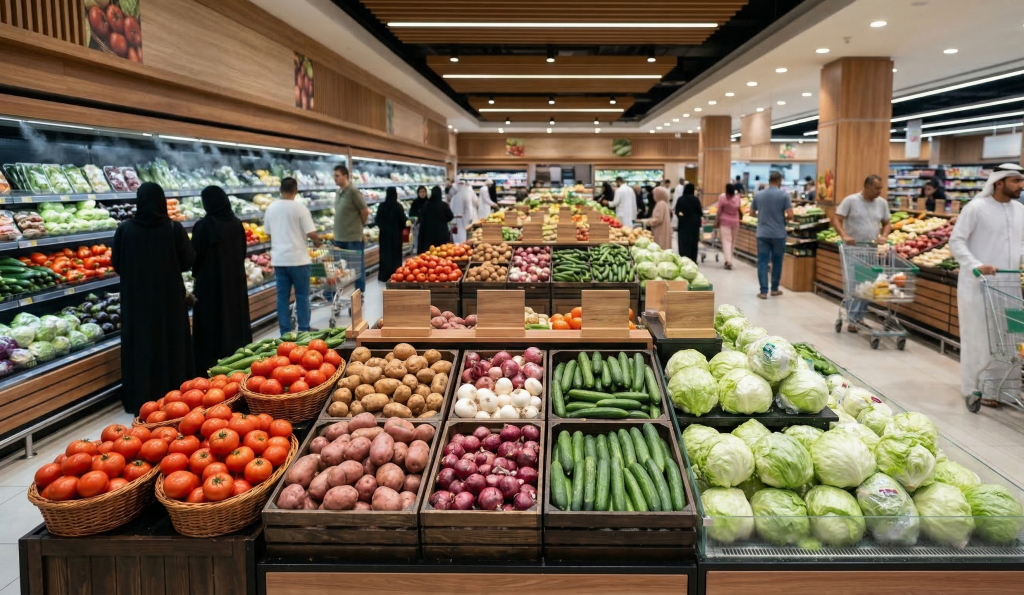
Walk through any supermarket in Dubai or Abu Dhabi, and the vegetable section starts to look predictable.
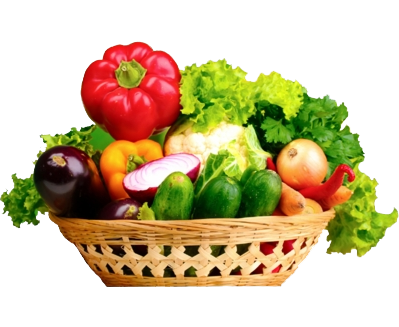
Tomatoes. Potatoes. Onions. Iceberg lettuce. Cucumbers.
These staples dominate shopping baskets across the UAE. They are familiar, easy to cook, and widely available year-round through imports.
But behind that convenience, there’s a quiet inefficiency.
Many residents—both households and food businesses—are overlooking vegetables that are:
- More stable in price during peak season
- Better suited to UAE supply cycles
- Longer-lasting in storage
- More versatile in professional kitchens
In wholesale markets and procurement discussions, this gap comes up often. Buyers focus on what they know, not necessarily what performs best.
This article breaks that pattern.
Not by dismissing commonly bought vegetables—but by showing:
- Why they dominate
- Where they fall short
- And what experienced buyers are choosing instead
Why UAE Buying Habits Stay So Narrow
Before looking at the vegetables themselves, it helps to understand the system behind them.
1. Import Dependency Shapes Availability
The UAE imports a large portion of its fresh produce.
This means:
- Certain vegetables (like tomatoes and lettuce) are available year-round
- Others appear only in short seasonal windows
- Pricing depends heavily on international supply chains
Because of this, retailers prioritize consistency over variety.
Shoppers, in turn, get used to the same selection.
2. Retail Displays Favor Familiarity
Supermarkets are designed for fast decisions.
Vegetables that:
- Look clean
- Require minimal prep
- Are already known to customers
…get prime placement.
Less familiar items—even when fresher or cheaper—often sit unnoticed.
3. Fear of Waste Drives Safe Choices
One of the most common concerns among UAE buyers is spoilage.
This applies to:
- Families buying weekly groceries
- Restaurants managing unpredictable demand
- Catering businesses working with tight margins
So buyers default to vegetables they “understand.”
Even if those vegetables:
- Spoil quickly (like iceberg lettuce)
- Lose quality during transport
- Fluctuate heavily in price
4. Wholesale vs Retail Misunderstanding
A recurring misconception in UAE markets is:
“Supermarket vegetables are higher quality than wholesale.”
In practice, this isn’t always true.
Wholesale produce often:
- Moves faster (less time in storage)
- Comes in seasonal peaks
- Offers wider variety
In conversations with procurement teams, it’s clear that once buyers shift sourcing habits, their vegetable selection expands quickly.
The 10 Vegetables UAE Residents Buy (And Why)
These are the staples found in most UAE kitchens and restaurant supply lists.
1. Tomatoes
Used in nearly every cuisine.
Why they dominate:
- Versatile
- Available year-round
- Familiar across cultures
Where they fall short:
- Quality varies widely depending on origin
- Can become watery in off-season imports
- Price spikes during supply disruptions
2. Potatoes
A core ingredient for both households and food service.
Why they dominate:
- Long shelf life
- Easy storage
- High yield per kg
Limitations:
- Nutritionally limited compared to leafy or colorful vegetables
- Often overused as a filler ingredient
3. Onions
Essential in almost every cooked dish.
Why they dominate:
- Long storage life
- Strong flavor base
- Low cost
Challenges:
- Quality inconsistency across batches
- Sprouting issues in improper storage
4. Iceberg Lettuce
A staple in salads and fast food.
Why it dominates:
- Crisp texture
- Mild taste
- Familiar presentation
Where it underperforms:
- Very low nutritional density
- Spoils quickly once cut
- Sensitive to temperature fluctuations
5. Cucumbers
Widely used raw in salads and side dishes.
Why they dominate:
- Hydrating
- Easy to prepare
- Consistent shape and size
Limitations:
- Limited cooking versatility
- Can lose firmness quickly in storage
6. Carrots
Common across cuisines and cooking styles.
Why they dominate:
- Long shelf life
- Affordable
- Easy to store and transport
Drawback:
- Often used in limited ways (boiled or raw only)
7. Bell Peppers
Popular for color and flavor.
Why they dominate:
- Visual appeal
- Versatile cooking uses
- Widely used in international cuisine
Challenges:
- Price volatility
- Shorter shelf life compared to root vegetables
8. Cabbage (Green)
Used in salads, stir-fries, and traditional dishes.
Why it dominates:
- Affordable
- High yield
- Stores well
Limitation:
- Underutilized in modern cooking styles
9. Eggplant (Aubergine)
Common in Middle Eastern and South Asian dishes.
Why it dominates:
- Strong flavor
- Works well grilled or fried
Challenges:
- Absorbs oil easily
- Requires proper cooking technique
10. Zucchini
Widely used in both home and restaurant kitchens.
Why it dominates:
- Quick cooking time
- Mild flavor
- Works in multiple cuisines
Limitations:
- Short shelf life
- Becomes soft quickly if not stored properly
What’s Missing From This List?
At first glance, this list seems complete.
But from a supply and nutrition perspective, it’s narrow.
What’s missing:
- Bitter greens
- Seasonal local crops
- High-fiber vegetables
- Leafy alternatives with longer shelf life
- Vegetables with stronger flavor profiles
In procurement discussions, this gap often leads to:
- Menu repetition in restaurants
- Limited dietary variety at home
- Higher waste due to improper storage match
The next section looks at the vegetables that experienced buyers are quietly shifting toward—and why.
The 10 Vegetables UAE Residents Should Be Buying Instead
This is not about replacing staples entirely.
Tomatoes, onions, and potatoes will always have a place.
But experienced buyers—especially in hospitality and wholesale—tend to balance these with vegetables that perform better across cost, storage, and versatility.
Here are ten that are often overlooked in the UAE, but increasingly valued by informed buyers.
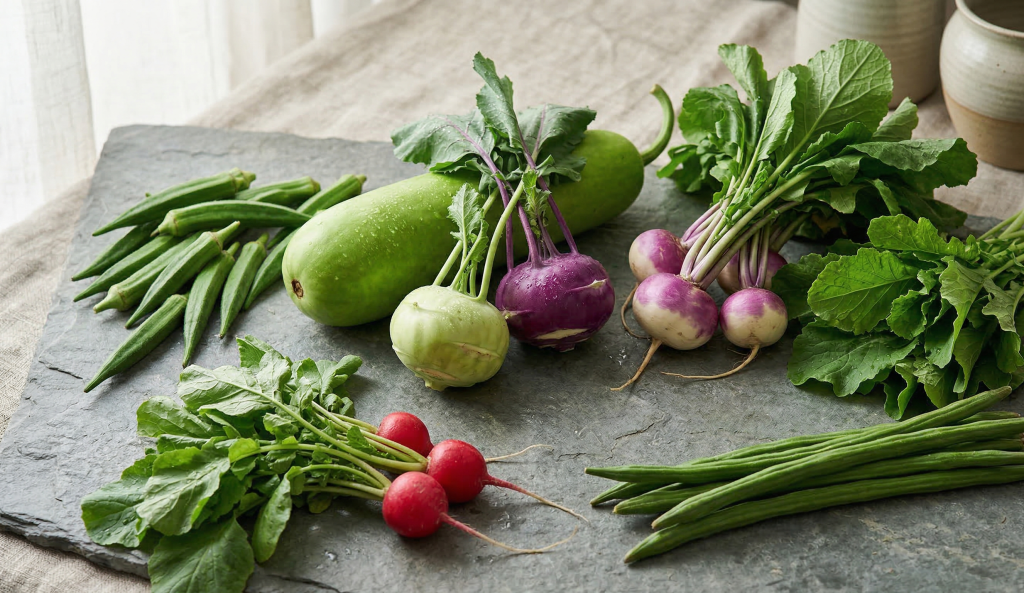
1. Okra (Ladyfinger)
Often associated with traditional dishes, but underused beyond that.
Why it works:
- Strong shelf life when kept dry and cool
- Holds structure in cooking
- Widely available from regional suppliers
Where it adds value:
- Stews, stir-fries, grilled sides
- Works well in both Middle Eastern and South Asian menus
Common mistake:
- Buying overly large pods, which tend to be fibrous
2. Bottle Gourd (Lauki)
Quietly one of the most practical vegetables in warm climates.
Why it works:
- High water content (suited for UAE heat)
- Long storage life compared to leafy vegetables
- Consistent pricing
Use cases:
- Soups, curries, light sauté dishes
Buyer insight:
- Particularly useful in bulk cooking environments like catering
3. Swiss Chard
A stronger alternative to spinach.
Why it works:
- More durable leaves
- Less shrinkage during cooking
- Better tolerance to handling
Where it helps:
- Reduces waste in restaurant kitchens
- Maintains texture after cooking
4. Kohlrabi
Still unfamiliar to many UAE households.
Why it works:
- Crisp texture
- Long shelf life
- Can be eaten raw or cooked
Applications:
- Slaws, stir-fries, roasted vegetable dishes
Procurement advantage:
- Less demand = often more stable pricing
5. Turnips
Often overlooked in favor of potatoes.
Why they work:
- Lower cooking time
- Good storage life
- Strong flavor profile
Where they shine:
- Roasted dishes
- Soups and slow cooking
6. Mustard Greens
A staple in some cultures, rarely used in others.
Why they work:
- High nutrient density
- Strong flavor (reduces need for heavy seasoning)
- Available seasonally at good value
Challenge:
- Requires proper cooking to balance bitterness
7. Snake Gourd
Common in South Asian supply chains, but not widely adopted.
Why it works:
- Light texture
- Performs well in hot climates
- Less prone to rapid spoilage
Use cases:
- Stir-fries, curries, light vegetable dishes
8. Radish (With Leaves)
Most buyers discard the greens.
Why it works:
- Dual-use vegetable (root + leaves)
- Leaves can be cooked like spinach
- Reduces overall food waste
Procurement insight:
- Buying with leaves intact often indicates fresher supply
9. Drumstick (Moringa Pods)
Common in certain cuisines, underused elsewhere.
Why it works:
- High nutritional value
- Strong flavor for soups and curries
- Increasing availability in UAE markets
Where it adds value:
- Specialty menus
- Health-focused cooking
10. Fresh Herbs as Vegetables (Parsley, Dill, Coriander in Bulk)
Often treated as garnish rather than core ingredients.
Why they work:
- High flavor impact
- Can replace heavier vegetables in dishes
- Fast turnover in kitchens
Operational advantage:
- Lower cooking time
- Increased menu flexibility
Why These Vegetables Make More Sense in the UAE
Across wholesale discussions and kitchen operations, a few consistent patterns appear.
1. Better Alignment With Climate and Storage
Vegetables like:
- Bottle gourd
- Okra
- Turnips
…handle heat and transport better than delicate leafy items.
This reduces:
- Shrinkage (loss during storage)
- Daily waste
- Emergency reordering
2. More Stable Pricing Windows
Imported staples often fluctuate due to:
- Freight costs
- Border delays
- Seasonal shortages abroad
Less common vegetables—especially regionally sourced ones—tend to:
- Follow more predictable pricing
- Avoid sudden spikes
3. Higher Usability Per Kilogram
A key concern for both households and businesses is yield.
For example:
- Iceberg lettuce loses volume quickly after cutting
- Spinach shrinks significantly when cooked
In contrast:
- Swiss chard holds structure
- Turnips retain density
- Okra maintains shape
This means:
- More usable portions
- Better cost efficiency
4. Reduced Menu Fatigue
In restaurant environments, repeating the same vegetables leads to:
- Limited menu differentiation
- Lower perceived value
Introducing even 2–3 alternative vegetables can:
- Refresh menu design
- Improve customer experience
- Increase perceived variety without major cost increases
Common Buying Mistakes (And How to Avoid Them)
Even experienced buyers fall into certain patterns.
Mistake 1: Buying Based on Habit, Not Performance
What to do instead:
- Review which vegetables actually last longer
- Track waste, not just purchase price
Mistake 2: Ignoring Seasonality in a “Year-Round” Market
The UAE offers year-round availability—but not equal quality.
Practical approach:
- Ask suppliers about current origin
- Adjust menus based on supply cycles
Mistake 3: Over-Reliance on Supermarket Sourcing
Retail sourcing is convenient, but often:
- More expensive per kg
- Limited in variety
In practice, suppliers working closely with Dubai-based distributors such as JMB Farm Fresh often observe that buyers who shift even partially to structured wholesale sourcing gain better consistency in both quality and selection.
Mistake 4: Misjudging Freshness
Common assumptions:
- Shiny = fresh
- Large size = better quality
In reality:
- Smaller, seasonal produce is often fresher
- Leaves and stems indicate handling quality
Mistake 5: Treating All Vegetables the Same in Storage
Different vegetables require different conditions.
Examples:
- Leafy greens: high humidity, low temperature
- Root vegetables: dry, cool storage
- Herbs: upright storage with minimal moisture
Ignoring this leads to:
- Premature spoilage
- Unnecessary waste
A Practical Way to Improve Your Vegetable Buying
For both households and businesses, change does not need to be drastic.
A simple framework used by experienced buyers:
Keep 70% familiar vegetables
Introduce 30% rotational or seasonal alternatives
This approach:
- Maintains comfort in cooking
- Reduces risk
- Gradually improves efficiency and variety
It also allows:
- Testing new ingredients
- Understanding customer or family preferences
- Building flexibility in sourcing
Putting It All Together: Smarter Vegetable Buying in the UAE
The goal is not to replace familiar vegetables.
It is to make better decisions around them.
Across UAE households, restaurants, and catering operations, the same pattern appears:
- Over-reliance on a narrow set of vegetables
- Underuse of seasonal and regionally suitable produce
- Missed opportunities to reduce waste and improve consistency
A more balanced approach brings practical advantages.
What Experienced Buyers Do Differently
They don’t just ask, “What do we need?”
They ask:
- What lasts longer in current weather conditions?
- What is stable in price this month?
- What gives better yield after cooking?
- What reduces preparation time or waste?
These questions shift buying from habit to strategy.
A Simple Weekly Buying Framework
Whether you’re sourcing for a home kitchen or a restaurant, this structure works well:
1. Core Vegetables (60–70%)
- Tomatoes
- Onions
- Potatoes
- Carrots
These remain essential.
2. Performance Vegetables (20–30%)
- Okra
- Bottle gourd
- Turnips
- Swiss chard
Chosen for:
- Shelf life
- Cooking efficiency
- Cost stability
3. Rotational or Seasonal Additions (10–20%)
- Kohlrabi
- Mustard greens
- Drumstick (moringa)
- Radish with leaves
Used to:
- Add variety
- Adjust to seasonal supply
- Test new menu ideas
Seasonal Awareness Matters More Than Many Assume
The UAE may offer year-round availability, but quality still follows cycles.
Winter months (roughly November to March):
- Peak for leafy greens and herbs
- Better texture and flavor
- Lower spoilage rates
Hot months (April to September):
- Greater reliance on imports
- Higher risk of quality loss during transport
- Need for more careful storage planning
Understanding this helps buyers:
- Avoid overpaying for off-season produce
- Reduce waste caused by weak shelf life
Local vs Imported: A Balanced View
This is one of the most discussed topics in UAE food supply.
The reality is not “local vs imported.”
It is about:
- Timing
- Handling
- Supply chain efficiency
Local produce can offer:
- Shorter transport time
- Fresher arrival
Imported produce can offer:
- Consistency
- Wider variety
The best buyers combine both—based on what performs better at a given time.
What This Means for Households
For families, the impact is simple but meaningful:
- Less food waste at home
- Better nutrition variety
- More flexibility in cooking
Even small changes—like replacing one weekly purchase of iceberg lettuce with Swiss chard or mustard greens—can make a difference.
What This Means for Restaurants and Food Businesses
For professional kitchens, the impact is operational:
- More predictable food costs
- Better plate consistency
- Reduced daily waste
It also creates:
- More distinctive menus
- Greater control over ingredient quality
Final Thought
The vegetables people buy are rarely the problem.
The pattern is.
When buying decisions are based only on habit, the result is:
- Repetition
- Inefficiency
- Missed opportunities
When decisions are based on:
- Season
- storage
- usability
…buyers gain control.
Not just over cost—but over quality, consistency, and waste.
That shift, even in small steps, is what separates routine purchasing from informed sourcing.
FAQs
1. What are the best vegetables to buy in the UAE year-round?
Tomatoes, onions, potatoes, carrots, and cucumbers are widely available year-round due to imports. However, quality and price can vary depending on origin and season.
2. Which vegetables last the longest in UAE conditions?
Root vegetables like potatoes, carrots, and turnips, as well as okra and cabbage, generally have longer shelf lives when stored properly in cool, dry conditions.
3. Are wholesale vegetables better than supermarket vegetables in the UAE?
Not necessarily better in all cases, but wholesale produce often moves faster and offers wider variety. This can result in fresher options and more consistent supply when sourced properly.
4. What are some underrated vegetables in Dubai markets?
Kohlrabi, bottle gourd, mustard greens, drumstick (moringa), and radish with leaves are commonly available but underutilized by many buyers.
5. How can I reduce vegetable waste at home or in my business?
Focus on:
- Buying based on shelf life and usage
- Storing vegetables correctly
- Using multi-purpose vegetables (like radish with leaves or herbs in bulk)








 Home
Home  Whishlist
  Compare
  Checkout