












Introduction
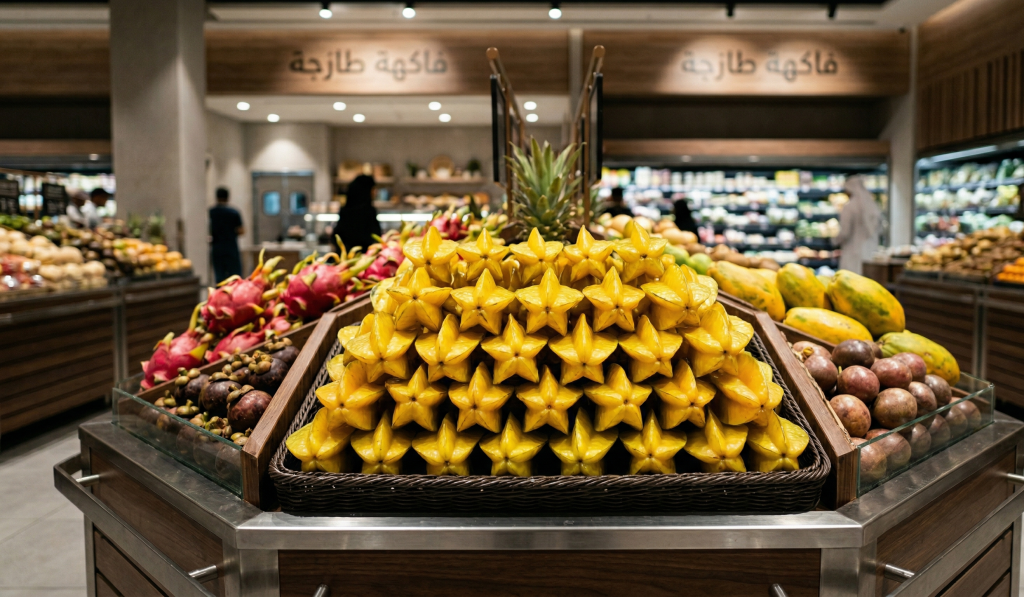
Walk through any premium fruit section in Dubai and you might notice a glossy, golden-yellow fruit shaped like a star when sliced. It often sits quietly beside more familiar options like mangoes, berries, and dragon fruit. Many people pause, look at it, maybe even pick it up—and then put it back.
That fruit is star fruit, also known as carambola.
Despite its striking appearance, star fruit in Dubai remains underutilized. It is not because of lack of availability. Nor is it because of poor quality. The real reason is simpler: most buyers are unsure how to evaluate it, store it, or use it.
For restaurant buyers, hotel procurement teams, and even households, this hesitation leads to missed opportunities—both in presentation and in menu creativity. In a market like Dubai, where visual appeal and freshness often drive perceived value, star fruit has a quiet but real role.
This article breaks down what experienced produce buyers already understand about carambola in Dubai: where it comes from, how to judge quality, when it’s worth buying, and when it’s not.
What Exactly Is Star Fruit (Carambola)?
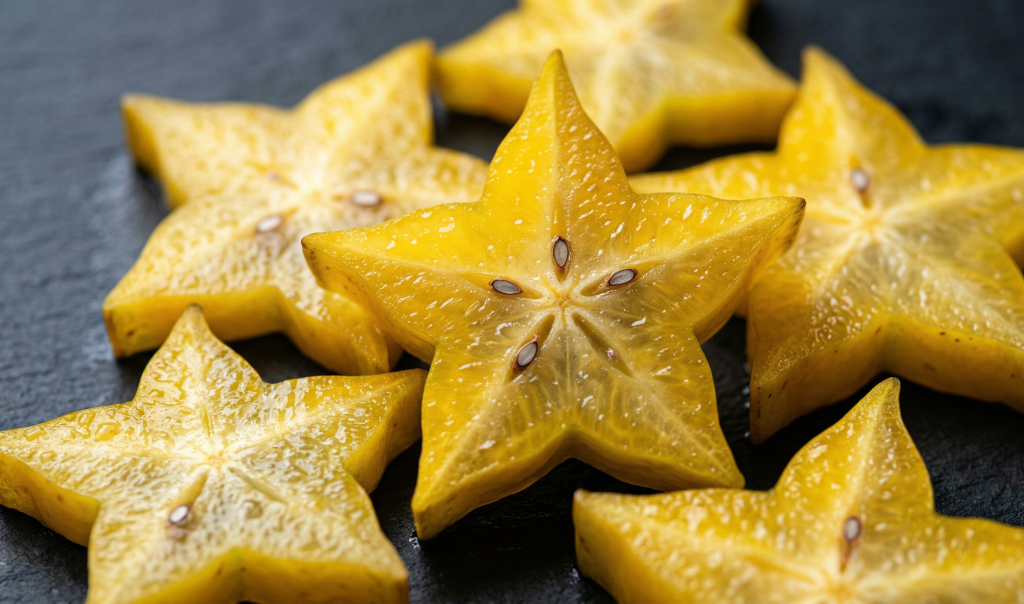
Star fruit is a tropical fruit that grows primarily in Southeast Asia, including countries like Malaysia, Thailand, and India. When cut crosswise, it forms a natural five-point star—hence the name.
But its appeal goes beyond shape.
The flavor sits somewhere between citrus and apple, with a mild tartness. Some varieties are sweeter, while others lean slightly sour depending on ripeness and origin.
From a supply perspective, star fruit is classified as an exotic fruit in the UAE market. That means:
- It is mostly imported rather than locally grown
- Supply depends on international harvest cycles
- Quality can vary significantly based on handling and transit
This is where many buyers get confused. They assume all star fruit looks the same, but in reality, origin and handling make a noticeable difference.
Why Star Fruit in Dubai Feels “Unfamiliar”
Dubai has one of the most diverse fruit markets in the world. Yet familiarity still drives purchasing behavior.
Fruits like apples, bananas, and oranges are predictable. Buyers know:
- How they taste
- How long they last
- How to store them
- How customers will respond
Star fruit, on the other hand, lacks that familiarity.
From industry discussions and buyer feedback, a few common concerns come up repeatedly:
1. “I Don’t Know If It Will Sell”
Retailers and restaurants often worry about slow-moving stock. Since star fruit is not a daily-consumption fruit, there is a perceived risk of waste.
2. “It Looks Good, But How Do I Use It?”
This is especially common among households. The fruit’s appearance is attractive, but its practical use is unclear.
3. “Is It Worth the Price?”
Exotic fruits in Dubai often come with higher price variability due to import logistics. Buyers question whether star fruit delivers enough value compared to more familiar options.
These are valid concerns—but they are often based on incomplete understanding rather than actual limitations.
Where Star Fruit in Dubai Actually Comes From
Unlike staple fruits, star fruit is rarely sourced from a single consistent region. Supply shifts depending on season, availability, and shipping conditions.
In Dubai, most star fruit is imported from:
- Malaysia – Known for sweeter varieties
- Thailand – Balanced flavor, widely available
- India – Often slightly more tart, seasonal supply
Each origin brings subtle differences in taste, size, and shelf life.
For wholesale buyers, this matters more than it may seem. A batch from Thailand may behave differently in storage compared to one from Malaysia. Without understanding this, buyers often misjudge freshness or overestimate shelf life.
In practice, suppliers working closely with Dubai-based distributors such as JMB Farm Fresh often observe that buyers who track origin tend to reduce waste and improve consistency over time.
How to Identify Good Quality Star Fruit
One of the biggest gaps in buyer knowledge is quality assessment. Many people rely only on color, which is not enough.
Here’s a more practical way to evaluate star fruit in Dubai:
Color Isn’t Everything
- Bright yellow is generally a good sign
- Slight green edges can still indicate ripeness
- Fully green fruit is usually underripe
However, overripe fruit can also appear deep yellow, so color alone is not reliable.
Check the Ridges (This Is Important)
Star fruit has five ridges running along its length. These ridges tell you a lot:
- Slight browning on edges = normal
- Dark, shriveled ridges = aging fruit
- Soft or collapsing ridges = overripe
Many buyers ignore this detail, which leads to poor purchasing decisions.
Texture Matters More Than You Think
A good star fruit should feel:
- Firm, but not hard
- Smooth-skinned
- Slightly waxy
If it feels too soft, it is already past its best stage.
Understanding Ripeness vs Shelf Life
This is where many businesses lose money.
Star fruit does not behave like apples or oranges. It has a shorter usable window, especially once fully ripe.
Typical Behavior in UAE Conditions:
- Slightly underripe: 4–6 days shelf life
- Fully ripe: 2–4 days
- Overripe: less than 2 days
In Dubai’s climate, even with cold storage, handling conditions play a major role.
This creates a common mistake:
Buyers purchase visually perfect (fully yellow) fruit, assuming it is ideal—only to find it deteriorates quickly.
Experienced buyers often do the opposite. They select slightly less ripe fruit and allow it to finish ripening in controlled conditions.
Wholesale vs Retail: Does It Make a Difference?
This is a frequent question in UAE produce discussions.
Many assume supermarket quality is better than wholesale. In reality, the difference is not about quality—it’s about handling and selection.
Retail Buying
- Convenient
- Smaller quantities
- Often pre-selected for appearance
Wholesale Buying
- Better control over batch selection
- Greater variability (requires experience)
- More cost-efficient at scale
For star fruit, wholesale can actually be an advantage—if the buyer understands how to assess batches.
Without that knowledge, however, wholesale purchasing can lead to inconsistent results.
Seasonal Patterns: When Is Star Fruit at Its Best?
Star fruit is available in Dubai for most of the year, but quality peaks during specific periods.
Typical Strong Supply Windows:
- Late autumn to early spring
- Periods aligned with Southeast Asian harvest cycles
During these months:
- Flavor is more consistent
- Sizes are more uniform
- Pricing tends to stabilize
Outside peak periods, supply may still exist—but:
- Sizes vary more
- Taste can be inconsistent
- Shelf life may shorten due to longer transit times
Understanding this helps buyers decide when star fruit is worth including in menus or inventory—and when it is better avoided.
Why Restaurants and Hotels Quietly Value Star Fruit
Even though it’s not widely discussed, star fruit has a specific use case in the hospitality sector.
It is not typically used as a primary ingredient. Instead, it plays a presentation role.
Common applications include:
- Beverage garnishes
- Buffet displays
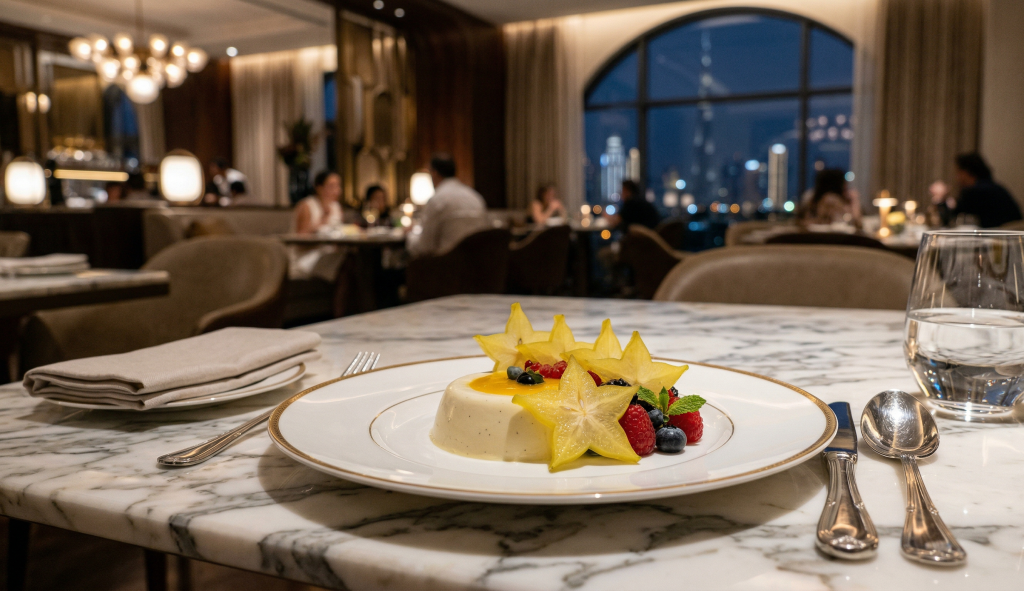
- Dessert plating
- Fruit platters
The natural star shape reduces the need for additional cutting or styling. This saves time in high-volume environments while improving visual appeal.
For high-end dining, this matters more than most people realize.
The Real Cost of Getting Star Fruit Wrong
In most discussions about exotic fruits in Dubai, price gets the most attention. But experienced buyers know that waste and inconsistency are the real costs.
Star fruit is a good example of this.
When purchased without proper evaluation, the issues show up quickly:
- Fruit turns soft within 48 hours
- Edges brown faster than expected
- Flavor is too sour or too bland
- Presentation quality drops before it can be used
For a household, this may be a small inconvenience. For a restaurant or catering operation, it directly affects margins.
A Common Scenario in F&B Operations
A hotel orders star fruit for a weekend buffet.
- The batch arrives looking fully ripe (bright yellow)
- It is stored without checking firmness or ridge condition
- By the time service begins, a portion of the fruit has softened
- Staff discard part of the stock to maintain presentation standards
The issue here is not supply—it’s selection timing.
This is why experienced procurement teams focus less on how the fruit looks “today” and more on how it will behave over the next 2–3 days.
How to Store Star Fruit Properly in UAE Conditions
Dubai’s climate adds another layer of complexity. Heat and humidity accelerate ripening, even during short handling periods.
For Businesses (Restaurants, Hotels, Catering)
- Store at 7–10°C in controlled refrigeration
- Avoid stacking heavy items on top (star fruit bruises easily)
- Keep away from ethylene-heavy fruits like bananas (which speed up ripening)
For Households
- Refrigerate immediately after purchase
- Wash only before use (not before storage)
- Consume within a few days of turning fully yellow
A small but important detail:
Star fruit has a thin skin and high water content. That makes it sensitive to both temperature fluctuation and handling pressure.
Taste Variability: Why One Batch Feels “Better” Than Another
One of the most common complaints in forums and buyer discussions is inconsistency in taste.
Some batches are pleasantly sweet. Others are noticeably sour.
This variation comes down to three main factors:
1. Origin
- Malaysian varieties tend to be sweeter
- Indian varieties may be more tart
- Thai varieties often sit in between
2. Harvest Timing
Fruit picked too early will not develop full sweetness, even if it ripens later.
3. Transit Conditions
Temperature exposure during shipping can affect flavor development and texture.
This is why two visually similar batches of star fruit in Dubai can taste completely different.
For businesses, this unpredictability can be a concern. For households, it often leads to one-time trials rather than repeat purchases.
Is Star Fruit Actually Worth Buying in Dubai?
This depends on the purpose.
Star fruit is not a staple fruit. It is not meant to replace apples, oranges, or bananas. Its value lies in specific use cases.
It Makes Sense When:
- Presentation matters (buffets, events, plated desserts)
- You want visual variety in fruit platters
- You are experimenting with new flavors in beverages or salads
It May Not Be Ideal When:
- You need long shelf life
- You want predictable sweetness every time
- You are buying in bulk without clear usage planning
In other words, star fruit is a specialized fruit, not an everyday one.
Understanding this prevents disappointment and unnecessary waste.
Common Mistakes Buyers Make (And How to Avoid Them)
Across industry discussions and real-world observations, a few patterns show up repeatedly.
Mistake 1: Buying Based on Color Alone
As discussed earlier, bright yellow does not always mean ideal.
Always check firmness and ridge condition.
Mistake 2: Overestimating Shelf Life
Many buyers treat star fruit like citrus. It is not.
Plan usage within a short window, especially once fully ripe.
Mistake 3: Ignoring Origin
Different origins behave differently.
If consistency matters, track where your batches are coming from and adjust expectations accordingly.
Mistake 4: No Clear Usage Plan
This is especially common in households.
People buy star fruit because it looks attractive—but then don’t know how to use it. The result is often unused fruit.
How Different Buyers Approach Star Fruit in Dubai
Restaurant Owners
They tend to use star fruit selectively.
- As a garnish rather than a core ingredient
- In small quantities
- Often aligned with menu aesthetics rather than taste alone
Hotel Procurement Teams
They focus on:
- Batch consistency
- Visual quality
- Short-term usability
They are less concerned about long-term storage and more focused on service timing.
Grocery Buyers
Retail buyers look for:
- Shelf stability
- Customer familiarity
- Repeat purchase potential
Since star fruit is still unfamiliar to many shoppers, it is often stocked in limited quantities.
Households
Household buyers are the most uncertain group.
Their decisions are influenced by:
- Curiosity
- Appearance
- Occasional recommendations
But without clear knowledge, repeat buying remains low.
The Role of Supply Chain Relationships
In Dubai’s produce market, relationships matter more than many buyers realize.
Reliable sourcing reduces:
- Quality inconsistency
- Unexpected spoilage
- Supply gaps
Some UAE buyers prefer working with established wholesale produce providers rather than fragmented retail sourcing. This is not about scale—it’s about predictability.
A consistent supplier can provide insight into:
- Current origin batches
- Expected shelf life
- Best timing for purchase
Over time, this reduces guesswork.
A Practical Way to Think About Star Fruit
Instead of asking, “Is star fruit good or bad?”
A more useful question is:
“When does star fruit make sense for my use?”
If used correctly, it adds value.
If used without planning, it leads to waste.
This distinction is what separates experienced buyers from casual ones.
The Quiet Advantage of Understanding “Unfamiliar” Fruits
Dubai’s food market rewards those who understand variety.
Many fruits remain underutilized not because they lack quality—but because they lack familiarity.
Star fruit is one of them.
Buyers who take the time to understand:
- Ripeness behavior
- Origin differences
- Storage limitations
often gain a small but meaningful edge—whether in presentation, menu creativity, or customer experience.
When Star Fruit Fits Into Dubai’s Seasonal Buying Strategy
In the UAE, seasonality is often misunderstood.
Because imports are available year-round, many assume that all fruits are equally “in season” at all times. In reality, quality still follows natural harvest cycles—especially for exotic fruits like star fruit.
For star fruit in Dubai, the strongest buying periods usually align with Southeast Asian harvest windows.
What This Means in Practice
During peak supply periods:
- Flavor tends to be more balanced
- Fruit size is more consistent
- Transit times are shorter, improving shelf life
Outside these periods:
- Quality becomes less predictable
- Visual appearance may still look good, but taste can vary
- Buyers may need to be more selective
For procurement teams, this is not about avoiding off-season supply completely. It’s about adjusting expectations and order volumes accordingly.
Local vs Imported: Is There a Difference?
In Dubai, most star fruit is imported. Local production exists in very small volumes and is not a consistent commercial source.
So the real comparison is not “local vs imported,” but rather:
well-handled imports vs poorly handled imports
Key factors that influence quality:
- Time between harvest and arrival
- Cold chain management (temperature-controlled logistics)
- Handling at distribution level
A well-managed import batch can outperform a poorly handled one—even if both come from the same country.
This is why experienced buyers focus more on supplier reliability than just country of origin.
Practical Takeaways for Buyers
If there is one thing to remember about buying star fruit in Dubai, it is this:
It rewards attention to detail.
Here are a few grounded takeaways based on real supply behavior:
- Choose slightly underripe fruit if you need a few days of flexibility
- Always check ridge condition, not just color
- Avoid bulk buying unless you have a clear usage plan
- Track origin if consistency matters to your operation
- Use it where presentation adds value, not just as a filler fruit
For many buyers, these small adjustments make the difference between waste and effective use.
A Quiet Note on Supply Consistency
In practice, suppliers working closely with Dubai-based distributors such as JMB Farm Fresh often observe that buyers who treat exotic fruits differently from staple produce tend to achieve better results.
This is not about buying more—it’s about buying with clearer intent.
Final Thoughts
Star fruit in Dubai sits in an interesting position.
It is widely available, visually striking, and relatively easy to handle—yet still underused. Not because it lacks value, but because it requires a slightly different approach.
It is not a fruit you buy casually in large quantities. It is one you select with purpose.
For restaurants, it enhances presentation without additional effort.
For hotels, it adds visual variety to displays.
For households, it offers a simple way to explore something beyond routine fruit choices.
In a market like Dubai—where presentation, freshness, and variety often define quality—understanding fruits like star fruit is less about trend and more about awareness.
And in produce buying, awareness usually leads to better decisions.
Frequently Asked Questions
1. Is star fruit easy to find in Dubai?
Yes, star fruit is available in many supermarkets and through exotic fruits delivery UAE services. However, availability and quality can vary depending on season and import batches.
2. What does star fruit taste like?
It has a mild, refreshing flavor—somewhere between citrus and apple. Sweetness or tartness depends on ripeness and origin.
3. How do I know if star fruit is ripe?
Look for a mostly yellow color with slightly green edges and firm texture. Avoid fruit with overly soft spots or dark, shriveled ridges.
4. How long does star fruit last after buying?
Typically 2–4 days when fully ripe under refrigeration. Slightly underripe fruit may last longer.
5. Is star fruit used in cooking or just for decoration?
Both. It is often used as a garnish due to its shape, but it can also be added to salads, juices, and light desserts.








 Home
Home  Whishlist
  Compare
  Checkout