

















Introduction: Why Everyone Is Moving Toward Sharing Plates
Walk into almost any mid- to high-end restaurant in Dubai today, and you will notice a shift.
Large individual mains are quietly being replaced by smaller, shared dishes placed in the center of the table. Bowls of roasted vegetables. Plates of fresh herbs. Simple dips. Grilled items designed to be passed around.
This is not just a trend in presentation. It reflects a deeper shift in how people want to eat.
Sharing plates are:
- More social
- More flexible
- Less wasteful
- Often built around vegetables rather than heavy proteins
For many households in Dubai, the natural question is:
Can this experience be recreated at home—without restaurant-level costs?
The short answer is yes. But it depends less on recipes and more on how you source and handle your ingredients, especially vegetables.
This is where most people misunderstand the process.
What Restaurants Do Differently (That Most Homes Don’t)
When people try to recreate restaurant-style sharing platters, they often focus on presentation—plates, colors, plating styles.
But restaurant kitchens focus on something more basic:
Consistency of raw ingredients.
1. Controlled Produce Quality
Restaurants do not rely on random supermarket availability. They work with consistent supply chains.
This allows them to:
- Use vegetables at the right stage of ripeness
- Maintain uniform size and texture
- Reduce variability in flavor
At home, people often mix produce from different sources and freshness levels. That leads to uneven results—even with the same recipe.
2. Smaller Quantities, Higher Turnover
A common misconception is that restaurants buy in large bulk and store for long periods.
In reality:
- Many kitchens receive fresh deliveries multiple times per week
- High turnover means vegetables are used quickly
- Less storage time = better texture and flavor
For home entertaining, buying “a little of everything” days in advance often leads to:
- Wilted herbs
- Soft cucumbers
- Bitter greens
3. Seasonal Menu Thinking
Restaurants adjust menus based on what is currently available and stable in supply.
In the UAE, especially during winter months, this matters.
You will often see:
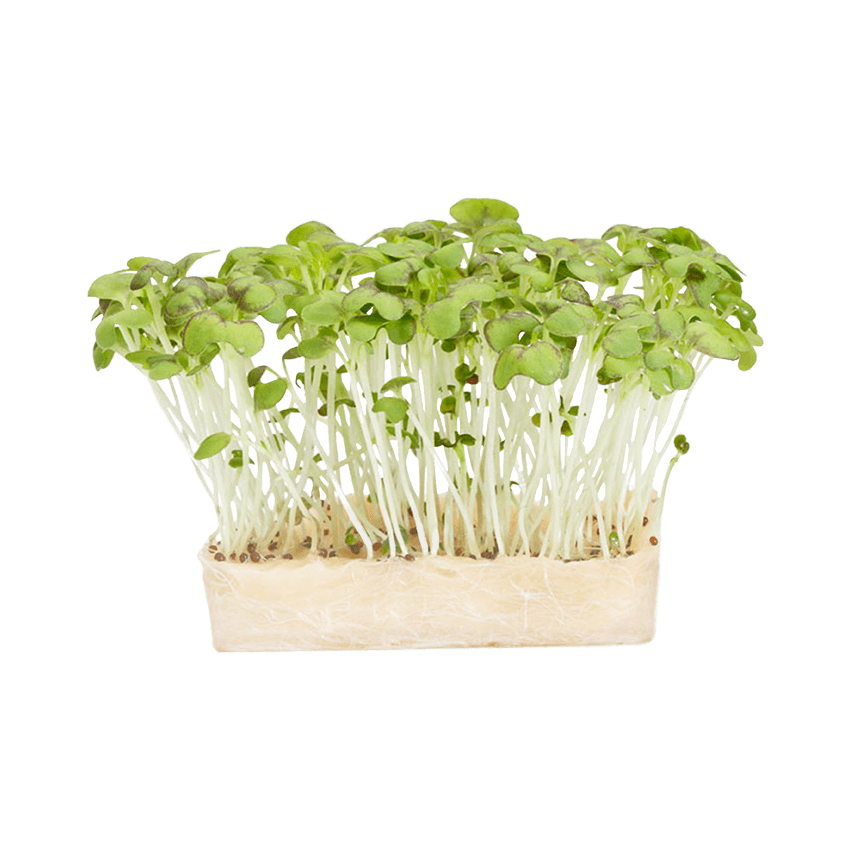
- Fresh herbs at their peak
- Leafy greens with better structure
- Root vegetables with stronger flavor
At home, people tend to plan dishes first and buy ingredients second. Restaurants do the opposite.
Why Vegetables Are the Center of Sharing Plates
There is a practical reason vegetables dominate sharing platters in Dubai restaurants.
They are:
- Easier to portion
- More affordable per serving
- Faster to prepare in multiple styles
But more importantly, vegetables allow variation.
A single table can include:
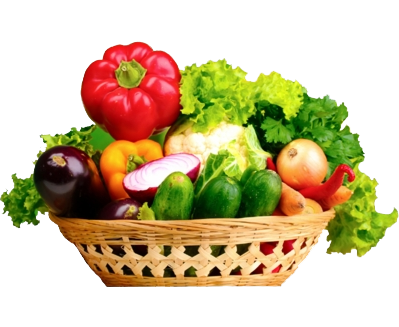
- Raw items (cucumbers, carrots, radishes)
- Roasted dishes (eggplant, cauliflower)
- Fresh herb-based plates
- Light sautéed greens
This creates contrast without requiring complex cooking.
The Mezze Influence on Dubai Dining
Much of this style is influenced by mezze traditions.
Mezze is not just about dips—it is about balance across small dishes:
- Fresh
- Cooked
- Acidic
- Herbal
- Lightly spiced
To recreate this at home, the focus should not be on copying dishes exactly, but on building variety from simple vegetables.
The Real Cost Difference: Restaurant vs Home
Many assume sharing plates are expensive to replicate.
But the cost difference often comes down to where you source your vegetables.
Retail Buying Pattern (Common Mistake)
Typical home buyers:
- Purchase small quantities
- Pay premium per unit
- Mix origins and quality levels
This leads to:
- Higher cost per dish
- Inconsistent results
- More waste
Wholesale-Inspired Buying Pattern
A more efficient approach mirrors how restaurants think:
- Buy slightly larger quantities of fewer items
- Focus on versatile vegetables
- Plan multiple dishes from the same base ingredients
For example:
- One batch of eggplant can be roasted, grilled, and mashed
- Fresh herbs can be used in salads, dips, and garnishes
In practice, suppliers working closely with Dubai-based distributors such as JMB Farm Fresh often observe that buyers who shift toward planned, multi-use sourcing reduce both cost and spoilage.
Common Confusions Around “Wholesale Quality”
One of the biggest concerns people have:
“Is wholesale produce lower quality than supermarket produce?”
This is where a lot of misinformation exists.
The Reality
Wholesale does not mean lower quality.
It usually means:
- Less packaging
- Faster movement from supplier to buyer
- Larger volume per transaction
In many cases, supermarket produce has:
- Longer shelf time
- More handling
- Additional packaging layers
Where the Confusion Comes From
Buyers sometimes encounter issues because:
- They purchase more than they can use
- They do not store items properly
- They mix old and new stock
This creates the impression that wholesale produce spoils faster.
In reality, it is often fresher—but less forgiving if mishandled.
How to Build a Sharing Plate Menu at Home (Step-by-Step Thinking)
Instead of thinking in recipes, think in categories.
A balanced sharing table usually includes:
1. Fresh & Raw
- Cucumbers
- Cherry tomatoes
- Radishes
- Leafy greens
These add crunch and contrast.
2. Roasted or Grilled
- Eggplant
- Zucchini
- Bell peppers
- Cauliflower
These provide depth and warmth.
3. Herb-Forward Components
- Parsley
- Mint
- Coriander
Used in:
- Salads
- Garnishes
- Simple dressings
Fresh herbs are often the defining element of mezze-style plates.
4. Simple Dips or Bases
- Yogurt-based
- Tahini-based
- Mashed vegetables
These help tie the table together.
5. One Light Protein (Optional)
Not the focus, but can be included:
- Grilled chicken
- Chickpeas
- Lentils
The vegetables should still lead.
The Overlooked Factor: Fresh Herbs
In many home setups, herbs are treated as garnish.
In restaurant-style sharing plates, they are central ingredients.
Poor-quality herbs are one of the fastest ways to downgrade a dish.
What to Look For
- Bright color
- Firm stems
- No moisture buildup in packaging
Wilted herbs:
- Lose aroma
- Affect presentation
- Reduce shelf life of surrounding items
Why Herbs Are Often Better in Wholesale Supply
Herbs move quickly through wholesale channels.
This means:
- Less time in storage
- Higher freshness at delivery
- Stronger flavor
For dishes like tabbouleh or herb salads, this difference is noticeable.
Seasonal Advantage: Winter Produce in the UAE
Winter is one of the best times to recreate sharing plates at home in Dubai.
This is when:
- Leafy greens are more stable
- Herbs are more aromatic
- Certain vegetables have better structure
Common winter-friendly options include:
- Spinach
- Rocket (arugula)
- Cabbage
- Carrots
- Beets
These vegetables:
- Hold texture longer
- Work well across multiple dishes
- Are less prone to quick spoilage
Where Most Home Entertaining Goes Wrong
Even with good ingredients, results can fall short.
Here are common mistakes:
Overcomplicating the Menu
Too many dishes:
- Increase prep time
- Reduce focus on quality
- Lead to waste
Buying Too Many Different Vegetables
Variety is good, but too much variety leads to:
- Small unused leftovers
- Higher cost per plate
Ignoring Storage Conditions
Simple issues:
- Herbs stored with excess moisture
- Leafy greens left unwashed too long
- Refrigeration temperature fluctuations
These directly affect final results.
Planning Too Far in Advance
Buying 3–4 days ahead:
- Reduces freshness
- Limits flexibility
Restaurants typically plan closer to service time.
A Practical Mindset Shift
To recreate restaurant-style sharing plates at home, the key shift is this:
Think like a small kitchen, not a home cook.
That means:
- Planning around ingredients, not just dishes
- Using each vegetable in multiple ways
- Prioritizing freshness over quantity
Once this mindset changes, the process becomes simpler—and more cost-efficient.
How to Source Vegetables for Sharing Plates Without Overspending
Recreating restaurant-style sharing plates at home becomes much easier when sourcing is planned with intention.
Most households in Dubai default to convenience—buying from nearby supermarkets, often in small quantities and at peak retail pricing. While this works for daily meals, it is not the most efficient approach for hosting or preparing multiple dishes.
A more practical approach sits somewhere between retail and wholesale thinking.
Understand the “Middle Ground” Buyer
You don’t need to be a restaurant to benefit from better sourcing habits.
A “middle ground” buyer:
- Buys slightly more than usual, but not in bulk excess
- Chooses fewer vegetables, but uses them across multiple dishes
- Shops closer to the cooking date
- Focuses on freshness and versatility
This reduces both cost and waste without requiring storage infrastructure.
Which Vegetables Work Best for Sharing Platters?
Not all vegetables perform equally well in a sharing format.
The most efficient choices are those that:
- Hold texture after cooking
- Can be prepared in multiple ways
- Have stable shelf life for 2–3 days
High-Utility Vegetables
These are commonly used in sharing plates vegetables Dubai setups:
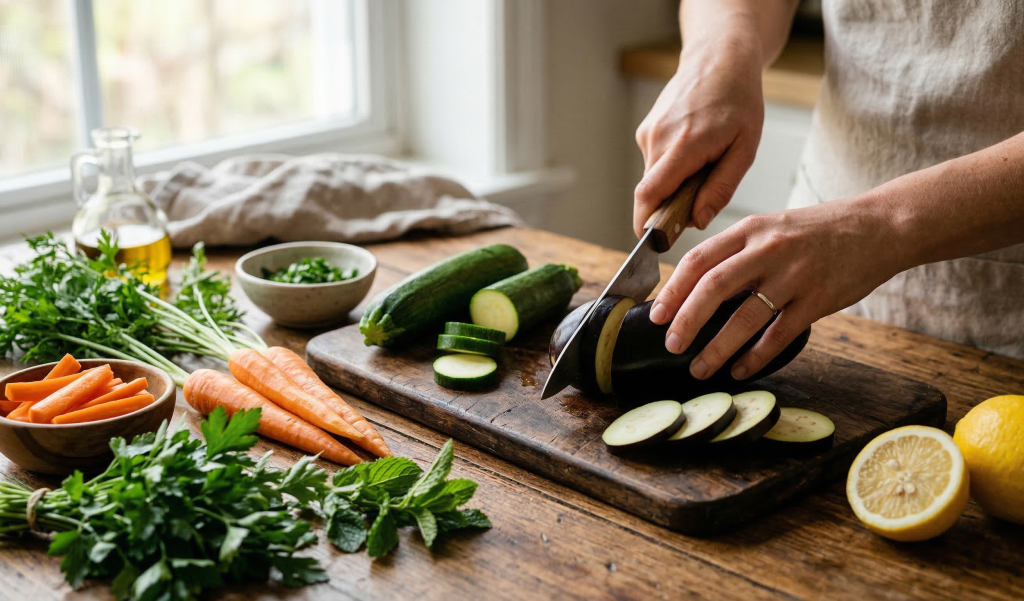
- Eggplant → roast, grill, mash
- Zucchini → grill, sauté, shave raw
- Bell peppers → roast, slice raw, marinate
- Cauliflower → roast, fry lightly, mash
- Carrots → roast, pickle, serve raw
These vegetables allow you to create variety without increasing your shopping list.
Supporting Ingredients That Elevate the Table
Beyond vegetables, a few supporting ingredients make a noticeable difference:
Acidity
- Lemon
- Vinegar
Adds brightness and balance.
Fats
- Olive oil
- Yogurt
Helps carry flavor and improve mouthfeel.
Texture Additions
- Seeds
- Nuts
Used sparingly, but effective.
These are standard across most home entertaining food Dubai setups inspired by restaurant sharing plates.
How to Plan a Sharing Table (Without Stress)
A common issue for home hosts is over-planning.
Restaurants simplify this by working with structure.
You can do the same.
A Simple Framework That Works
Instead of planning 10–12 dishes, aim for:
- 2 fresh items
- 2 roasted or grilled dishes
- 1 herb-based salad
- 1 dip or base
That’s enough to create a full table.
Example Setup Using Minimal Ingredients
From a small list of vegetables:
- Eggplant
- Zucchini
- Tomatoes
- Parsley
- Yogurt
You can create:
- Grilled eggplant slices
- Roasted zucchini with olive oil
- Tomato salad with herbs
- Yogurt dip
- Herb salad
This is how restaurants achieve variety without complexity.
Understanding Price Fluctuations in Dubai’s Produce Market
One of the biggest frustrations for buyers—both households and businesses—is price inconsistency.
This is often misunderstood.
Why Prices Change Frequently
Several factors affect vegetable pricing in the UAE:
Import Dependency
A large portion of produce is imported.
This means prices are affected by:
- Weather conditions in source countries
- Transportation costs
- Supply chain delays
Seasonal Availability
Even imported vegetables follow seasonal patterns.
In winter:
- Local production increases
- Prices stabilize for certain items
In summer:
- Dependence on imports rises
- Prices become less predictable
Demand Surges
Periods like:
- Ramadan
- Holiday seasons
- Large events
Lead to short-term demand spikes.
What This Means for Home Buyers
For those building sharing platters:
- Stick to vegetables that are currently abundant
- Avoid planning menus around hard-to-find items
- Be flexible with substitutions
This is exactly how restaurant kitchens manage cost.
Freshness: How to Judge It Properly
Many buyers rely on appearance alone.
But freshness is more than just how something looks.
Key Indicators to Watch
For Leafy Greens
- Crisp texture
- No dark or wet spots
- Minimal odor
For Root Vegetables
- Firmness
- No soft patches
- Clean outer skin
For Herbs
- Strong aroma
- Upright stems
- No yellowing
A Common Mistake
People often buy produce that looks perfect but has already spent too long in storage.
This results in:
- Shorter shelf life at home
- Faster spoilage
Freshness is not just visual—it is about time since harvest and handling conditions.
Storage: The Hidden Factor That Affects Everything
Even high-quality vegetables can degrade quickly if stored incorrectly.
Basic Storage Principles
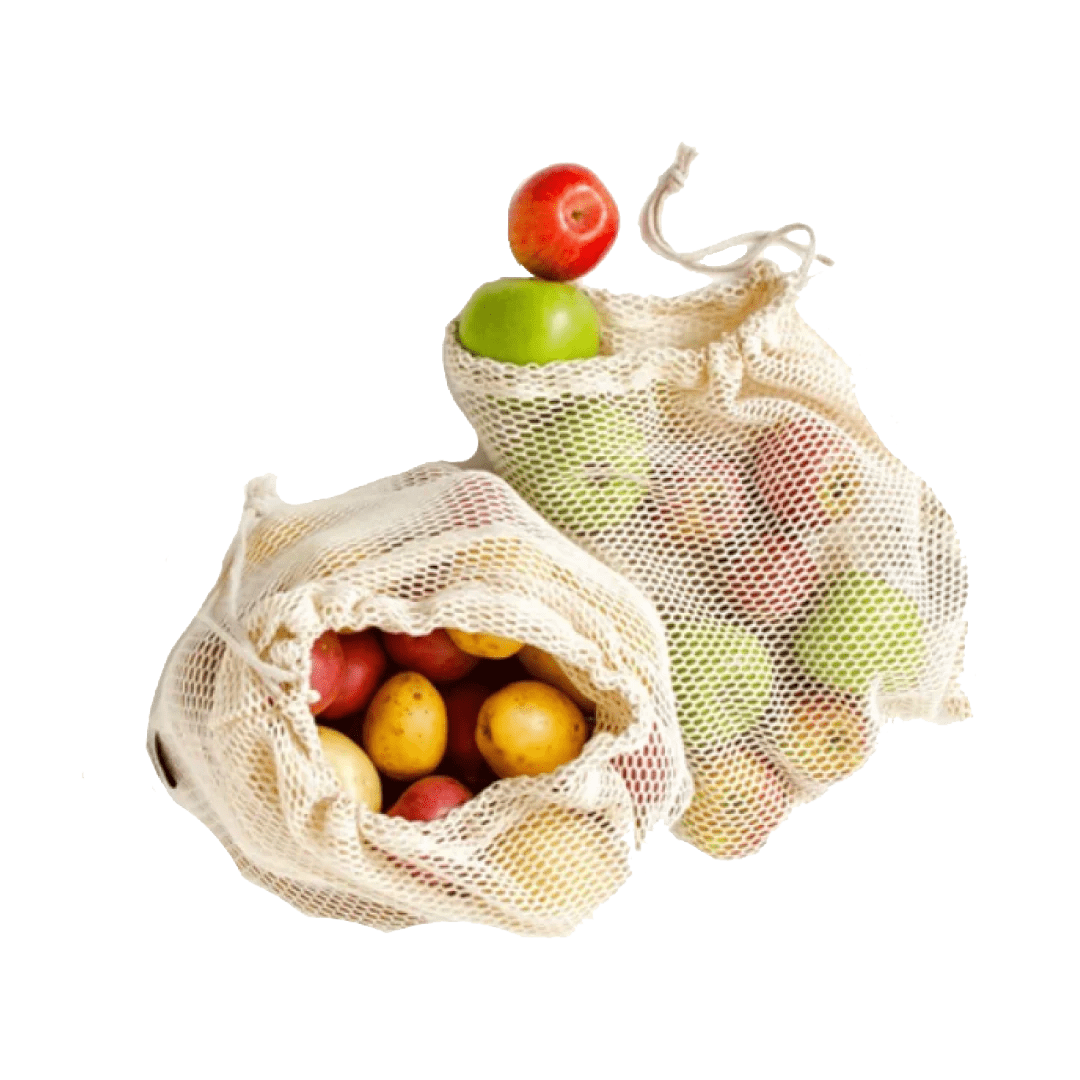
- Keep herbs slightly dry, not wet
- Store leafy greens in breathable containers
- Avoid overpacking the fridge
- Separate ethylene-producing fruits (like apples) from vegetables
Why This Matters for Sharing Plates
Sharing plates rely on:
- Texture
- Freshness
- Visual appeal
Poor storage directly impacts all three.
Wholesale vs Retail: When Each Makes Sense
There is no single “best” sourcing method.
It depends on usage.
When Retail Works Better
- Small, daily cooking
- Limited storage space
- Low volume needs
When Wholesale-Style Buying Helps
- Hosting gatherings
- Meal prepping for multiple days
- Preparing multiple dishes from shared ingredients
Some UAE buyers prefer working with established wholesale produce providers rather than fragmented retail sourcing, especially when consistency matters across several dishes.
The Tradeoff to Understand
Wholesale-style buying offers:
- Better value per unit
- Higher freshness potential
But requires:
- Planning
- Proper storage
- Faster usage
Without these, it can lead to waste.
The Role of Delivery in Modern Dubai Kitchens
Another shift in 2026 is how people access produce.
Delivery-based sourcing has become more common for both households and businesses.
Benefits of Delivery
- Saves time
- Allows access to a wider range of vegetables
- Reduces impulse buying
Limitations to Be Aware Of
- You cannot physically inspect items before purchase
- Quality may vary depending on supplier handling
- Requires trust in sourcing practices
How Experienced Buyers Approach It
They:
- Stick to known suppliers
- Order consistent items
- Avoid experimenting with too many new products at once
This reduces risk.
Bringing It All Together: What Actually Makes the Difference
Recreating a restaurant-style sharing experience at home is not about copying chefs.
It comes down to three practical factors:
- Ingredient consistency
- Simple menu structure
- Efficient sourcing
Everything else—presentation, plating, styling—comes after.
A Realistic Home Setup: What It Looks Like in Practice
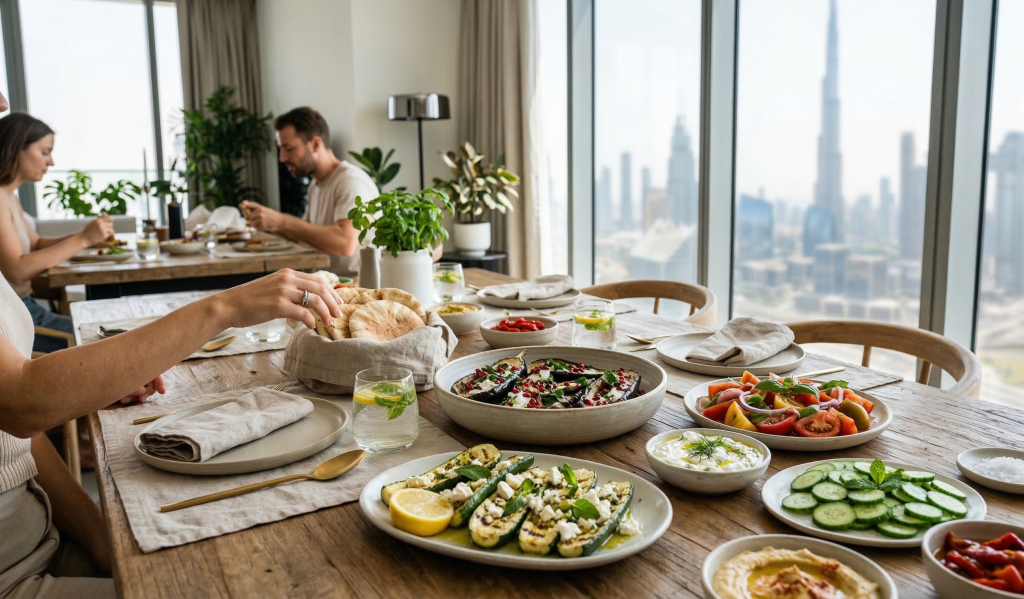
To bring everything together, it helps to visualize how a typical home setup might look when done properly.
This is not about perfection. It is about balance and flow.
A Practical Example for a Small Gathering
Let’s say you are hosting 4–6 people.
Instead of building a long shopping list, you focus on a tight selection:
- Eggplant
- Zucchini
- Carrots
- Cherry tomatoes
- Parsley and mint
- Yogurt
From this, you can prepare:
- Roasted eggplant with olive oil
- Grilled zucchini slices
- Lightly roasted carrots with lemon
- Fresh tomato salad with herbs
- Yogurt-based dip
- Herb salad
This is enough to create a full table.
No single dish is complicated. The value comes from how they work together.
What Guests Actually Notice
Most guests do not analyze recipes.
They respond to:
- Freshness
- Variety of textures
- Balance between light and warm dishes
If those three are right, the experience feels “restaurant-quality” even at home.
Managing Waste: The Hidden Cost of Entertaining
One of the biggest concerns for both households and food businesses is waste.
Sharing plates can either reduce waste—or increase it—depending on how they are planned.
Why Waste Happens
Common reasons include:
- Buying too many different vegetables
- Not reusing ingredients across dishes
- Poor storage after preparation
- Overestimating portion sizes
How to Reduce It
A few practical adjustments make a big difference:
- Use the same vegetables in multiple dishes
- Prepare only what can be consumed within the same day
- Keep extra raw ingredients for next-day use
- Avoid over-prepping dips and salads
In practice, experienced suppliers often notice that buyers who plan around ingredient overlap—not dish variety—waste significantly less.
Local vs Imported Produce: What Should You Choose?
This is a frequent question in Dubai’s food scene.
The answer depends on timing and purpose.
Local Produce (When Available)
Advantages:
- Shorter supply chain
- Better freshness window
- Often more stable pricing in winter
Limitations:
- Limited variety depending on season
- Inconsistent availability outside peak months
Imported Produce
Advantages:
- Wider selection
- Consistent year-round availability
Limitations:
- Longer transit times
- More exposure to handling and storage
Practical Approach for Home Use
- Use local vegetables when they are in season
- Supplement with imported items when needed
- Avoid relying entirely on either
This balanced approach is what many professional kitchens follow.
The Subtle Role of Presentation (Without Overdoing It)
Presentation matters—but not in the way most people think.
You do not need complex plating.
What Works Best
- Use simple, wide plates
- Leave some space between items
- Avoid overcrowding
Sharing plates should feel:
- Accessible
- Easy to serve
- Informal but organized
What to Avoid
- Over-layering ingredients
- Mixing too many flavors on one plate
- Trying to replicate fine-dining styles
The goal is clarity, not complexity.
How This Trend Is Influencing Buying Habits in Dubai
The rise of sharing plates is changing how both households and businesses buy vegetables.
Instead of focusing on single-use ingredients, buyers are shifting toward:
- Multi-purpose vegetables
- Higher-quality herbs
- Flexible sourcing strategies
What Suppliers Are Observing
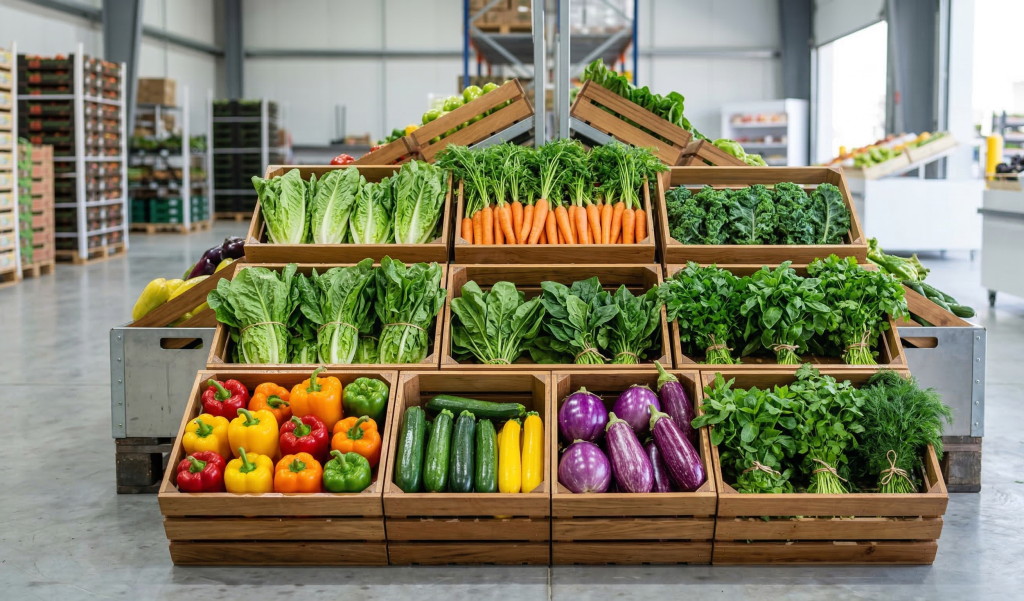
In practice, suppliers working closely with Dubai-based distributors such as JMB Farm Fresh often observe a steady increase in demand for:
- Fresh herbs
- Versatile vegetables like zucchini and eggplant
- Smaller but more frequent orders
This reflects a move toward efficiency and freshness, rather than bulk accumulation.
Final Thoughts: It’s Simpler Than It Looks
The appeal of sharing plates is not complexity—it is simplicity done well.
At home, the same principle applies.
You do not need:
- Rare ingredients
- Advanced cooking techniques
- Large budgets
You need:
- Fresh vegetables
- A clear plan
- A practical approach to sourcing
Once those are in place, the experience becomes easy to recreate—and often more enjoyable than dining out.
Frequently Asked Questions
1. What are the best vegetables for sharing plates in Dubai?
Eggplant, zucchini, cauliflower, carrots, and bell peppers work well. They are versatile, hold texture after cooking, and can be used across multiple dishes.
2. Is wholesale produce better than supermarket vegetables?
Not necessarily better—but often fresher due to faster turnover. However, it requires proper storage and planning to avoid waste.
3. How far in advance should I buy vegetables for a dinner party?
Ideally 1–2 days before. This keeps ingredients fresh while giving enough time for preparation.
4. Are fresh herbs really that important?
Yes. Herbs add flavor, aroma, and freshness. In many sharing plates, they are a key component rather than just garnish.
5. Can I recreate mezze-style dishes without special ingredients?
Yes. Basic vegetables, herbs, yogurt, and simple seasonings are enough to build a balanced sharing table.








 Home
Home  Whishlist
  Compare
  Checkout