












Introduction: Why Quince Is Quietly Returning to Modern Kitchens
In Dubai’s fast-moving food scene, trends often come and go quickly. Yet some ingredients return not because of hype, but because they solve real needs in the kitchen.
One such fruit is quince — known across the Middle East as safarjal.
For many residents, especially those from Levantine, Turkish, Iranian, or South Asian backgrounds, quince is not new. It has always been part of slow cooking, winter desserts, and traditional remedies. What has changed is access.
Today, finding quince in Dubai is easier than it was even five years ago. It appears more frequently in specialty grocers, wholesale supply chains, and increasingly through direct delivery platforms.
But with that accessibility comes confusion.
Buyers often ask:
- Why does quince look hard and unripe?
- Is imported quince better than local supply?
- Why does the price fluctuate so much?
- And most importantly — how do you know if it’s actually good quality?
This guide takes a practical, supply-focused look at safarjal in Dubai — not as a trend, but as a working ingredient in real kitchens.
What Exactly Is Safarjal (Quince)?

4
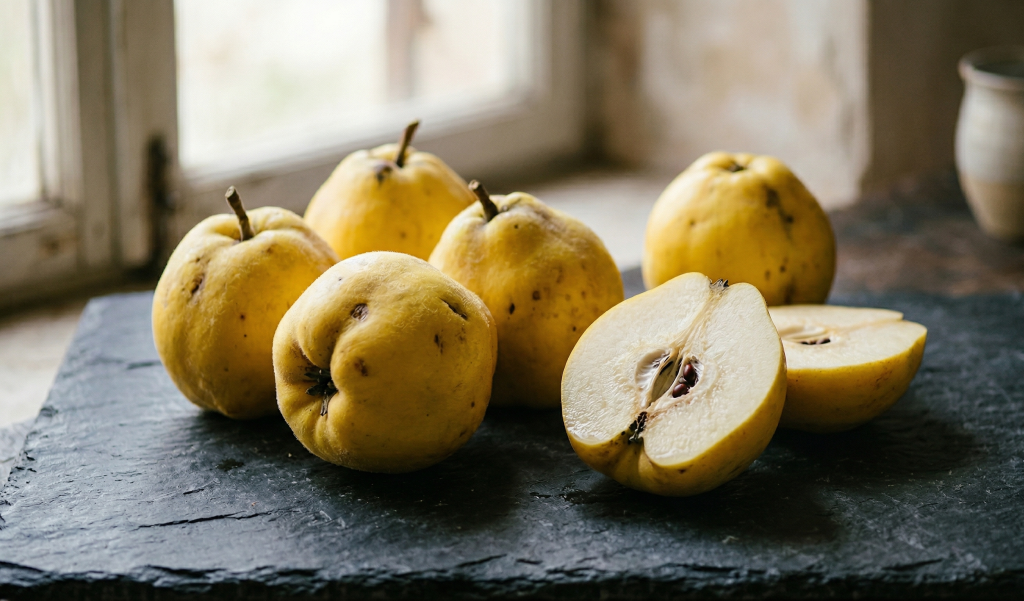
Quince is a firm, aromatic fruit that sits somewhere between an apple and a pear — both in appearance and botanical classification.
But that comparison only goes so far.
Unlike apples or pears:
- Quince is rarely eaten raw
- It is naturally hard and astringent (dry and slightly bitter)
- Its flavor develops only after cooking
Once cooked, the transformation is significant:
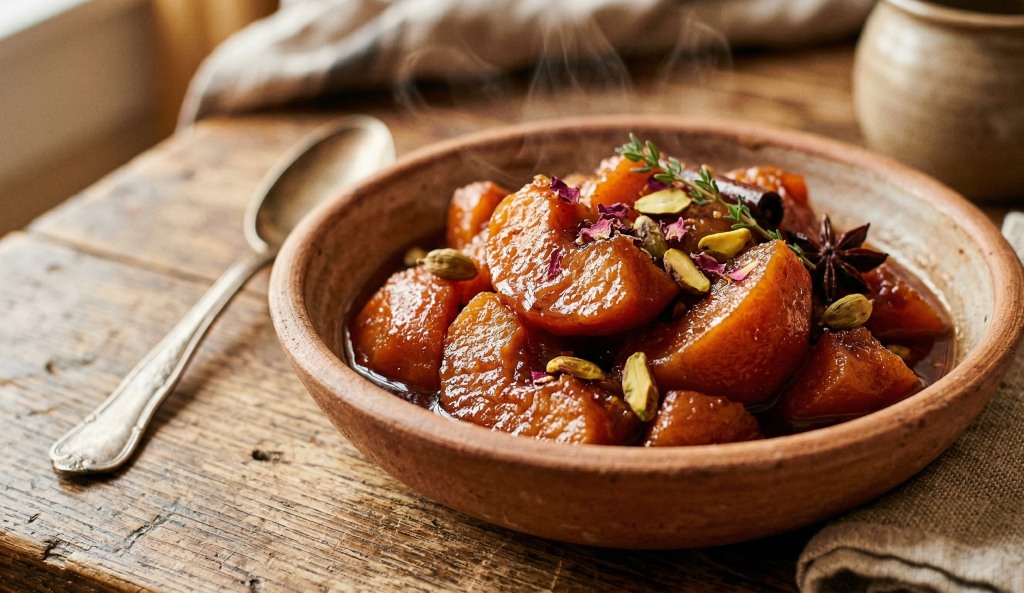
- The flesh softens
- The color shifts to a rich amber or reddish tone
- The taste becomes subtly sweet with floral depth
This is why safarjal is often used in:
- Slow-cooked stews (especially with lamb)
- Compotes and jams
- Baked desserts and preserves
For professional kitchens, it’s not just a fruit — it’s a functional ingredient that behaves differently under heat.
Why Is Quince Becoming More Visible in Dubai?
The rise of safarjal in Dubai is not accidental. It reflects broader changes in how produce moves through the UAE.
1. A More Diverse Customer Base
Dubai’s population includes communities with strong culinary traditions where quince is already familiar.
As demand stabilizes, suppliers respond by:
- Increasing seasonal imports
- Offering smaller batch deliveries
- Expanding into online ordering
2. Growth of Specialty Produce Supply Chains
Unlike high-volume fruits (like bananas or apples), quince is considered a niche seasonal fruit.
It typically enters Dubai through:
- Turkey
- Iran
- Central Asia
- Parts of Europe during winter
With better cold-chain logistics (temperature-controlled transport), suppliers can now:
- Maintain quality during transit
- Reduce spoilage rates
- Offer more consistent availability
In practice, distributors working closely with UAE-based networks — including those aligned with structured supply models such as JMB Farm Fresh — often observe that niche fruits like quince become viable only when logistics improve, not just demand.
3. The Shift Toward Home Cooking and Ingredient Exploration
Post-2020, there has been a steady shift toward:
- Home cooking
- Cultural recipes
- Ingredient-led exploration
Quince fits naturally into this trend because:
- It is unfamiliar to many, yet traditional to others
- It encourages slow cooking
- It offers something different from standard fruit baskets
When Is Quince Season in the UAE?
4
Understanding seasonality is one of the most overlooked aspects of buying fresh produce in Dubai.
Quince is a winter fruit.
Typical Availability Window:
- Late October to early March
- Peak quality: November to January
During this period:
- Supply is more stable
- Flavor is more developed
- Prices are relatively predictable
Outside this window:
- Availability drops sharply
- Quality becomes inconsistent
- Prices may increase due to limited imports
Why Seasonality Matters More Than Buyers Expect
Many buyers assume that because Dubai imports produce year-round, seasonality is less relevant.
In reality:
- Off-season imports often travel longer distances
- Storage times increase
- Texture and aroma decline
For a fruit like quince — which already requires cooking — starting with poor raw quality leads to:
- Flat flavor after cooking
- Uneven texture
- Higher kitchen waste
How to Identify Good Quality Quince in Dubai
This is where most confusion happens.
Unlike softer fruits, quince does not “look ready” in the usual way.
What to Look For:
1. Color
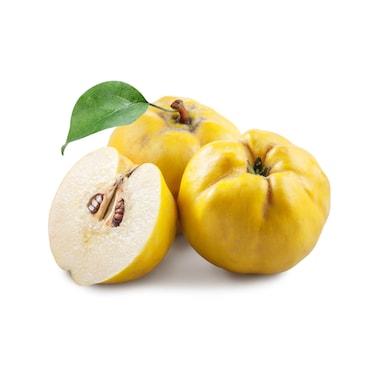
- Bright yellow is ideal
- Green tones suggest underdeveloped fruit
2. Firmness
- It should feel hard — this is normal
- Soft spots indicate internal breakdown
3. Surface Texture
- A slight natural fuzz is common in fresh quince
- Excessive bruising is a warning sign
4. Aroma
- A ripe quince has a light floral fragrance
- No smell often means it was harvested too early
What Many Buyers Get Wrong
A common mistake is rejecting quince because it feels too hard.
In reality:
- Hardness is a sign of freshness
- Softness often means over-storage or damage
For procurement teams, this misunderstanding can lead to:
- Rejecting usable stock
- Overpaying for “visually appealing” but lower-quality fruit
Wholesale vs Retail: Where Should You Buy Quince?
This depends on your usage, not just price.
For Restaurants and Catering Businesses
Wholesale sourcing is often preferred because:
- You get consistent batches
- You can plan menus around seasonal supply
- Pricing is more stable across volume
However, tradeoffs include:
- Minimum order quantities
- Less flexibility for small adjustments
For Households and Small Buyers
Retail or online delivery options work better because:
- Lower quantity commitments
- Easier experimentation
- Access to mixed produce baskets
That said, inconsistency is more common in retail because:
- Stock turnover varies
- Storage conditions differ across stores
Why Prices of Quince Fluctuate in Dubai
Price volatility is one of the most discussed issues among buyers.
But it is rarely explained clearly.
Key Factors That Influence Price:
- Origin country conditions (weather, harvest yield)
- Import frequency (weekly vs irregular shipments)
- Logistics costs (fuel, shipping routes)
- Demand spikes (seasonal cooking, holidays)
Because quince is not a staple fruit:
- It does not benefit from large-scale import contracts
- Supply chains are less buffered
This makes pricing more sensitive compared to common fruits.
Common Quality Issues Buyers Face (And Why They Happen)
Even experienced buyers in Dubai’s produce market run into problems with quince.
Not because the fruit is unreliable — but because its supply chain behaves differently from everyday items.
1. Internal Browning After Cutting
This is one of the most frequent complaints.
On the outside, the fruit looks fine. But once cut:
- The flesh appears brown or patchy
- The texture feels grainy instead of dense
Why this happens:
- Extended storage after harvest
- Temperature fluctuations during transport
- Delayed distribution at the local level
Because quince is firm, these issues are not visible externally.
2. Lack of Aroma or Flavor After Cooking
Some buyers report that their cooked quince tastes flat.
Typical causes:
- Early harvesting before full maturity
- Long transit times
- Over-refrigeration
Unlike many fruits, quince depends heavily on its natural aroma compounds.
If those degrade, cooking cannot fully restore flavor.
3. Uneven Cooking Results
In professional kitchens, consistency matters.
Yet with quince, chefs often face:
- Some pieces softening quickly
- Others staying tough even after long cooking
Root cause:
Mixed batches.
When quince is sourced from:
- Different farms
- Different maturity stages
- Different storage conditions
…the cooking behavior becomes unpredictable.
Imported vs Regional Supply: What Actually Matters?
There is often a debate around whether imported fruits are better than regionally sourced ones.
With quince, the answer is more nuanced.
Imported Quince (Turkey, Iran, Central Asia, Europe)
Advantages:
- Larger fruit size
- More developed aroma (especially peak season harvests)
- Better visual grading
Limitations:
- Longer supply chains
- Higher risk of storage-related degradation
- Price sensitivity to logistics
Regionally Distributed Supply (via UAE networks)
Advantages:
- Faster turnover once in-country
- Lower handling time at the final stage
- More stable short-term availability
Limitations:
- Dependent on how well the importer handled the product
- Variability between distributors
What Experienced Buyers Focus On
Rather than asking “imported or local?”, experienced buyers ask:
- How long since harvest?
- How many handling points before delivery?
- Was the cold chain consistent?
In practice, some UAE buyers find that working with structured distributors — those that maintain tighter control over sourcing and storage, such as supply models seen across networks that include players like JMB Farm Fresh — helps reduce variability more than simply choosing origin.
How to Store Quince Properly in Dubai’s Climate
Dubai’s climate introduces a unique challenge: heat.
Even with indoor storage, ambient temperatures can affect produce quality faster than expected.
Short-Term Storage (1–2 Weeks)
- Keep quince in the refrigerator
- Use the crisper drawer (higher humidity zone)
- Avoid sealing in airtight plastic (can trap moisture)
Medium-Term Storage (2–4 Weeks)
- Wrap individually in paper
- Store away from high-moisture produce (like leafy greens)
- Check periodically for soft spots
What to Avoid
- Leaving quince at room temperature for extended periods
- Stacking heavy items on top (causes internal bruising)
- Washing before storage (introduces moisture → faster spoilage)
Real-World Buying Scenarios
Understanding theory is useful. But decisions happen in real situations.
Scenario 1: A Restaurant Testing a Seasonal Dish
A chef wants to introduce a quince-based lamb stew.
Risk:
Inconsistent batches could affect:
- Cooking time
- Flavor balance
Better approach:
- Source a small batch first
- Test cooking behavior
- Then scale procurement from the same supplier
Scenario 2: A Household Trying Quince for the First Time
A family orders quince online after hearing about its benefits.
Common mistake:
Trying to eat it raw.
Outcome:
Disappointment → assuming poor quality
Better approach:
- Understand that quince must be cooked
- Start with simple recipes (poached or stewed)
Scenario 3: A Catering Business Managing Costs
Bulk buying seems attractive during peak season.
Risk:
Overbuying leads to:
- Storage losses
- Inconsistent quality over time
Better approach:
- Buy in smaller, more frequent batches
- Align purchases with event schedules
Common Misunderstandings About Quince in Dubai
“If it’s hard, it’s not ripe”
This is incorrect.
Quince is naturally hard even at peak maturity.
“Supermarket quality is always better than wholesale”
Not necessarily.
Retail stores often:
- Repackage wholesale stock
- Add margins without improving quality
“All yellow quince is good quality”
Color alone is not enough.
Internal condition depends on:
- Handling
- Storage
- Time since harvest
“Off-season quince is the same, just more expensive”
In reality:
- Off-season quince often has lower flavor quality
- Texture inconsistencies are more common
Practical Takeaways for Better Buying Decisions
If you work with fresh produce regularly — or even occasionally — small adjustments can make a noticeable difference.
For All Buyers:
- Prioritize seasonality over convenience
- Learn visual and tactile indicators of quality
- Avoid over-relying on appearance alone
For Business Buyers:
- Test consistency before committing to volume
- Track supplier reliability over time
- Understand how sourcing affects kitchen performance
For Households:
- Start small and learn how to cook it properly
- Store correctly to extend usability
- Accept that quince is not an “instant-use” fruit
Quince rewards patience.
It is not designed for quick consumption, but for transformation.
And that is exactly why it continues to hold its place — quietly — in both traditional kitchens and modern supply chains.
How Quince Fits Into Dubai’s Broader Produce Landscape
Dubai’s fruit market is often associated with convenience — ready-to-eat, visually perfect, and globally sourced year-round.
Quince sits outside that pattern.
It belongs to a smaller category of ingredients that:
- Require preparation
- Depend on seasonality
- Reward knowledge rather than impulse buying
This is why its growth in Dubai is gradual, not explosive.
A Shift Toward Ingredient Awareness
Across both households and professional kitchens, there is a noticeable shift:
- Chefs are revisiting traditional ingredients
- Home cooks are exploring slower recipes
- Buyers are asking more questions about sourcing
Quince fits naturally into this shift because it demands attention.
It cannot be rushed.
Where It Stands Compared to Other Winter Fruits
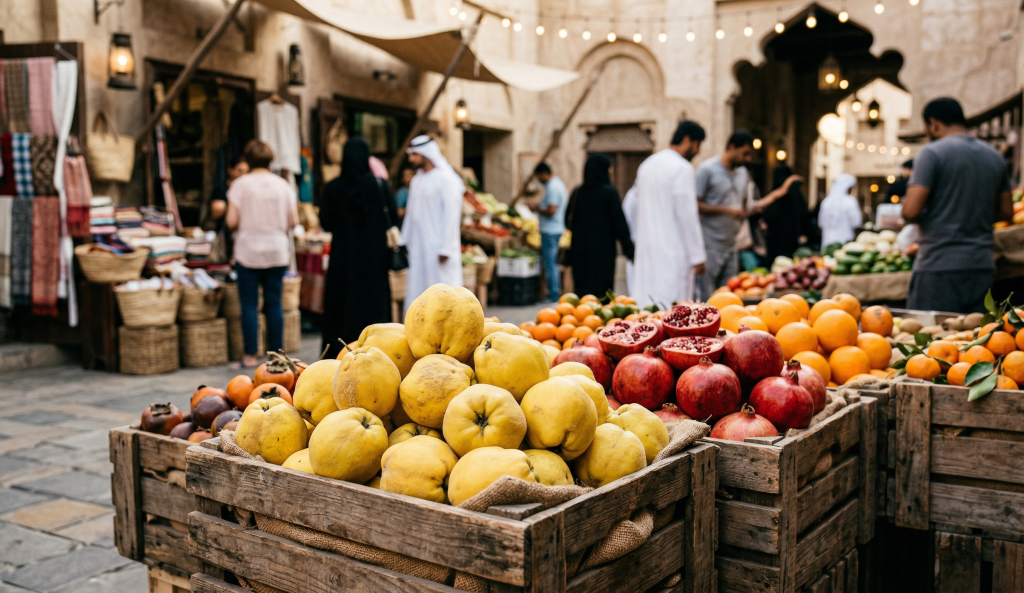
During the UAE winter season, quince appears alongside:
- Citrus (oranges, mandarins)
- Pomegranates
- Apples and pears
But unlike these:
- It is not consumed raw
- It is not part of everyday snacking
- It is used more deliberately
This makes it less visible, but often more valued in specific use cases.
The Trade-Offs of Buying Quince in Dubai
No produce category is perfect. Quince is no exception.
Understanding its trade-offs helps avoid unrealistic expectations.
Benefits
- Long shelf life when stored correctly
- Unique flavor profile after cooking
- Suitable for both sweet and savory dishes
- Lower impulse consumption → less casual waste
Limitations
- Requires time and effort to prepare
- Not suitable for quick meals
- Quality is harder to judge externally
- Supply consistency varies by season
What This Means for Buyers
For restaurants:
- Quince works best in planned, seasonal menus
For households:
- It is better treated as an occasional ingredient, not a staple
For distributors:
- It requires tighter handling compared to fast-moving fruits
A Note on Waste, Cost, and Planning
One of the biggest concerns raised by buyers — especially businesses — is waste.
With quince, waste often comes from misunderstanding, not spoilage.
Where Waste Happens
- Buying too much during peak availability
- Storing incorrectly in warm conditions
- Misjudging internal quality
How to Reduce It
- Align purchase size with actual usage
- Inspect fruit individually rather than in bulk
- Use early-stage cooking tests before scaling
Even small adjustments here can:
- Improve yield
- Stabilize cost per dish
- Reduce operational stress
Final Thoughts: Why Quince Remains Relevant
Safarjal has been part of Middle Eastern food culture for centuries.
Its role has not changed much.
What has changed is the system around it:
- Faster logistics
- Wider availability
- More informed buyers
Yet the fruit itself still follows the same rules:
- It requires patience
- It rewards proper handling
- It reflects the quality of its journey from farm to kitchen
For Dubai buyers — whether sourcing for a restaurant, a catering operation, or a home kitchen — quince offers something different.
Not convenience.
But depth.
And in a market driven by speed, that difference matters.
FAQ Section
1. Is quince (safarjal) available year-round in Dubai?
No. Quince is a seasonal fruit, typically available from late October to early March, with peak quality in winter months.
2. Can you eat quince raw?
It is not recommended. Quince is very hard and astringent when raw. It develops flavor and softness only after cooking.
3. Why does quince turn red when cooked?
During cooking, natural compounds in quince react to heat and oxygen, causing the flesh to change from pale yellow to a deep amber or reddish color.
4. How do I know if quince is fresh?
Look for bright yellow color, firm texture, light fragrance, and minimal bruising. Avoid fruit with soft spots or dull skin.
5. Why is quince sometimes expensive in Dubai?
Prices fluctuate due to import conditions, seasonality, logistics costs, and limited large-scale supply chains.








 Home
Home  Whishlist
  Compare
  Checkout