


















Introduction: Why This Short Window Matters More Than Most Buyers Realize
In Dubai’s fresh produce market, price drops rarely happen without a reason.
When they do, experienced buyers pay attention—not because something is “on sale,” but because supply conditions have shifted in their favor.
Right now, fresh raspberries in Dubai are at one of their lowest price points of the year. For restaurants, caterers, and even households, this is not just a cost advantage. It is a timing advantage.
But here is where most buyers get it wrong:
They see a lower price and assume lower quality.
Or they buy without understanding how quickly raspberries can lose value after purchase.
Both mistakes lead to waste.
This article explains what is actually happening in the supply chain, why prices are temporarily low, and how to make the most of this window without compromising quality or consistency.
Why Are Fresh Raspberries Cheaper in Dubai Right Now?
1. Peak Import Overlap From Multiple Origins
Raspberries are not grown at scale locally in the UAE. Almost all supply is imported.
At certain times of the year, multiple sourcing regions overlap:
- Morocco
- Spain
- Mexico (in some cycles)
- Eastern Europe
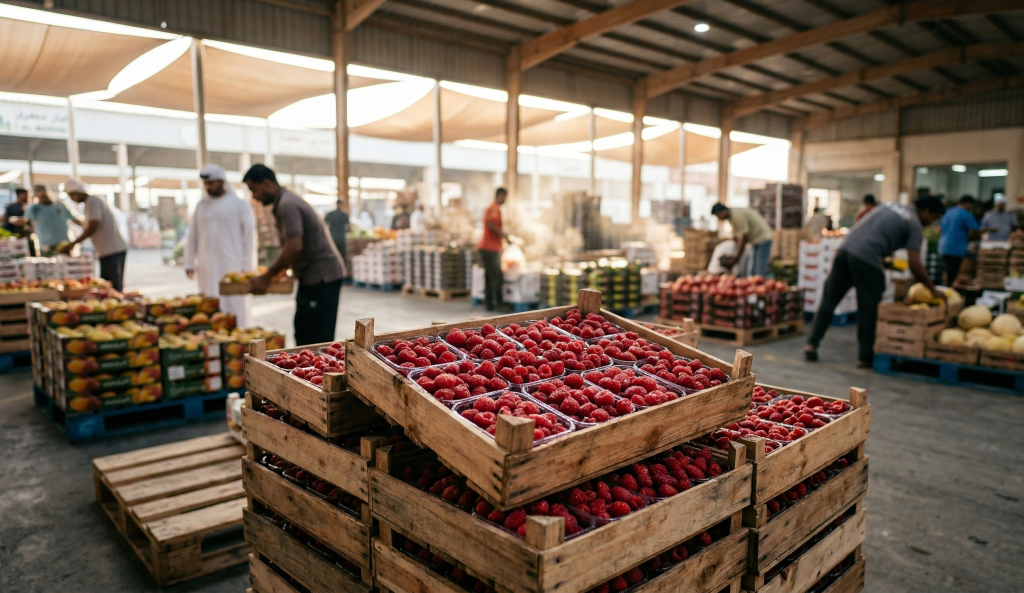
When these regions hit peak harvest at the same time, Dubai receives higher volumes than usual.
This creates:
- Increased availability across wholesale markets
- Faster turnover expectations
- Temporary downward pressure on prices
For buyers searching “fresh raspberries Dubai buy cheap,” this is the moment those queries reflect reality—not marketing.
2. Shelf Life Pressure Forces Faster Movement
Raspberries are one of the most delicate fruits in the supply chain.
Unlike apples or citrus, they:
- Bruise easily
- Have high moisture content
- Deteriorate quickly even under refrigeration
This creates a constant pressure on distributors:
Move stock quickly, or absorb losses.
When supply increases, that pressure intensifies. Prices adjust not because quality is lower—but because time is limited.
This is a key misunderstanding among buyers who equate price with freshness.
3. Wholesale Market Dynamics vs Supermarket Pricing
Many buyers assume supermarket pricing reflects real-time supply conditions.
It doesn’t.
Retail chains often:
- Lock pricing contracts in advance
- Maintain margin stability
- Adjust prices slower than wholesale markets
Meanwhile, wholesale markets react daily.
This is why:
- A restaurant sourcing directly may see lower raspberry price Dubai 2026 trends faster
- A household buying retail may not notice the same drop immediately
Understanding this difference helps explain why some buyers consistently pay less for the same product.
Are Cheaper Raspberries Lower Quality? Not Necessarily.
This is one of the most common concerns across forums and buyer discussions.
The short answer: Price drops are usually about volume, not quality.
However, there is a nuance.
What Actually Changes During High-Supply Periods?
When supply increases:
- Harvest timing becomes tighter
- Logistics chains move faster
- Storage buffers shrink
This means:
- Fruit may be slightly less “held” in storage
- Shelf life after purchase may be shorter
But it does NOT mean:
- Inferior farming quality
- Lower grade fruit
- Compromised safety
In practice, suppliers working closely with Dubai-based distributors such as JMB Farm Fresh often observe that high-volume periods can actually improve freshness at the point of arrival—because fruit spends less time waiting in cold storage.
The Real Risk: Buying Without a Usage Plan
Lower prices encourage larger purchases.
This is where losses begin.
Raspberries typically last:
- 2–3 days at optimal refrigeration
- Sometimes less if already at peak ripeness
Without a clear plan, buyers face:
- Mold development within 24–48 hours
- Texture breakdown
- Waste that cancels out any price advantage
This applies to:
- Restaurants over-ordering for brunch service
- Families buying in bulk without storage planning
- Caterers misaligning delivery timing with events
How to Judge Fresh Raspberries at the Point of Purchase
Price alone is never a reliable indicator.
Experienced buyers look for physical signals.
Key Indicators of Good Quality
- Color: Deep, even red (not dull or patchy)
- Structure: Firm but not hard
- Dryness: No visible moisture or leakage in the punnet
- Caps: Intact and not overly shriveled
Warning Signs to Avoid
- Soft or collapsing berries
- Juice stains at the bottom of packaging
- White or greenish patches
- Strong fermented smell
These indicators matter more during high-volume periods because turnover is faster and stock variation increases.
Wholesale vs Retail: Which Makes More Sense Right Now?
For Businesses (Restaurants, Cafés, Caterers)
Wholesale sourcing during this period often makes practical sense because:
- Prices reflect real-time supply
- Volume discounts align with usage needs
- Delivery cycles can be matched to service demand
However, the tradeoff is responsibility:
- You must manage storage carefully
- You must forecast usage accurately
For Households
Retail purchases are safer for smaller consumption patterns.
But if buying in larger quantities:
- Split storage into breathable containers
- Avoid stacking
- Consume the most ripe berries first
The idea is simple: buy according to usage speed, not just price.
Where Buyers Often Go Wrong
Across industry conversations, the same patterns repeat.
1. Confusing “Cheap” With “Long-Lasting”
Raspberries are never a long-storage fruit.
A lower price does not extend shelf life.
2. Ignoring Temperature Control During Transport
Even 20–30 minutes in a warm car can accelerate spoilage.
This is especially relevant in Dubai’s climate.
3. Mixing Old and New Stock
Adding fresh raspberries to an older batch spreads moisture and mold.
Keep batches separate.
4. Overestimating Demand
This is common in hospitality.
A menu feature may not sell as expected, leaving excess stock.
Why This Matters More in Dubai Than Other Markets
Dubai’s produce ecosystem is unique.
- Nearly all berries are imported
- Climate accelerates spoilage risk
- Demand fluctuates with tourism and events
This creates a tight balance between:
- Opportunity (lower prices)
- Risk (higher waste potential)
Buyers who understand this balance operate more efficiently.
A Note on Seasonal Context
Unlike root vegetables or citrus, raspberries do not have a “local season” in the UAE.
Instead, their availability depends on:
- Import cycles
- Air freight capacity
- Regional harvest timing
This is why price fluctuations can feel unpredictable to new buyers.
But for experienced sourcing professionals, these patterns are expected—and planned around.
How to Actually Use This Price Window Without Increasing Waste
Lower prices only create value if the fruit is used correctly and on time.
For experienced buyers, the goal is not to “buy more.” It is to buy smarter within a short window of peak usability.
Align Purchase Timing With Usage
This is the most overlooked principle.
Instead of asking:
“How much should I buy at this price?”
Ask:
“How much can I confidently use within 48 hours?”
For example:
- A café with steady breakfast traffic can plan daily replenishment
- A catering business should align raspberry deliveries with event dates—not prep days
- Households should buy in smaller batches across the week rather than one large purchase
This approach protects both quality and cost.
Adjust Menu or Consumption Strategy Temporarily
When raspberries are abundant and affordable, experienced kitchens adapt.
Not permanently—but for a few days or weeks.
Common adjustments include:
- Adding raspberries to breakfast bowls or desserts
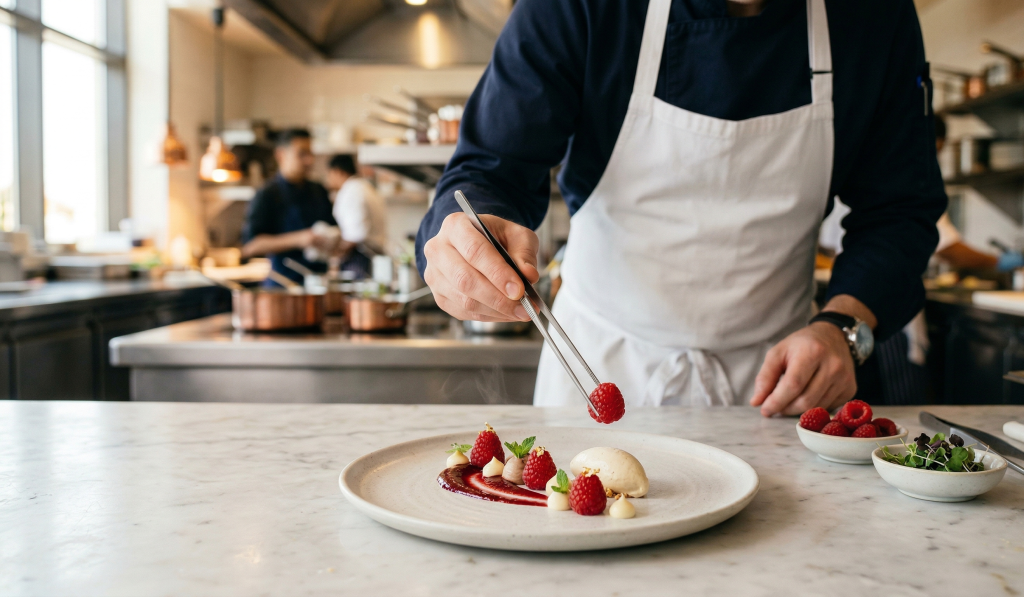
- Using them in light sauces or coulis (a fruit-based sauce)
- Incorporating them into beverages or mocktails
- Offering limited-time menu variations
This is not about promotion. It is about using available supply efficiently.
For households, this may look like:
- Adding raspberries to yogurt or oats
- Pairing them with simple desserts
- Using them fresh rather than storing them for later
Store Them Properly—But Don’t Over-Rely on Storage
Storage can slow spoilage. It cannot stop it.
Best practices:
- Keep raspberries in their original container or a breathable one
- Avoid washing until just before use
- Place them in the coldest part of the fridge (not the door)
- Line containers with a paper towel to absorb moisture
Even with ideal storage, quality declines quickly.
This is why timing still matters more than technique.
The Hidden Cost of Raspberries: Waste, Not Price
In many cases, the real cost of raspberries is not what you pay per box.
It is what you throw away.
This is especially relevant during high-supply periods when:
- Buyers purchase more than needed
- Shelf life is shorter due to ripeness
- Handling errors increase spoilage
A Practical Example
A small café buys 20% more raspberries due to lower pricing.
If:
- 30% of that additional volume spoils
- Labor is spent sorting and discarding
Then the actual cost per usable unit increases—not decreases.
This is why experienced buyers focus on:
- Usable yield, not purchase price
- Turnover speed, not stock volume
How Raspberries Behave in Different Use Cases
Not all buyers use raspberries the same way.
Understanding how the fruit behaves in your context changes how you should buy it.
1. In High-Turnover Kitchens (Brunch, Cafés)
Raspberries work well when:
- Demand is predictable
- Turnover is daily
- Storage time is minimal
In this setting, lower prices can be used effectively because:
- Waste is naturally limited
- Freshness is maintained through quick usage
2. In Event Catering
This is where risk increases.
Challenges include:
- Uncertain consumption volumes
- Timing gaps between delivery and service
- Pre-plating or prep delays
Best practice:
- Schedule delivery as close to event time as possible
- Avoid early prep where raspberries are exposed to air
3. In Household Consumption
The challenge is different.
Most households:
- Do not consume raspberries daily
- Store fruit longer than ideal
- Mix different ripeness levels in one container
A better approach:
- Buy smaller quantities more frequently
- Consume the softest berries first
- Keep batches separate
Why “Fresh Raspberry Delivery Dubai” Doesn’t Always Mean Better Quality
Many buyers assume that delivery equals freshness.
This is not always accurate.
Freshness depends on:
- Time since harvest
- Cold chain integrity (temperature control from farm to delivery)
- Handling during transport
A delivered product can still:
- Be near the end of its shelf life
- Have experienced temperature fluctuations
Conversely, a well-managed wholesale source with fast turnover may offer fresher fruit.
This is why experienced buyers evaluate:
- Supplier consistency
- Delivery timing
- Packaging condition
—not just convenience.
Import vs Local Expectations: A Common Misunderstanding
One of the most repeated questions is:
“Are locally grown berries better than imported ones?”
In the UAE context, this question is slightly misleading.
Raspberries are:
- Primarily imported
- Dependent on international growing conditions
So quality differences come from:
- Source region
- Harvest timing
- Logistics efficiency
—not local vs imported.
How Price Volatility Actually Works in Dubai’s Produce Market
Many buyers see price changes but do not understand the mechanism behind them.
In reality, pricing is influenced by a combination of:
Supply Factors
- Harvest volume in origin countries
- Weather conditions affecting crops
- Export capacity
Logistics Factors
- Air freight availability
- Fuel costs
- Shipping delays
Market Demand
- Hospitality demand cycles
- Seasonal events
- Consumer trends
When supply increases faster than demand, prices fall.
But these windows are often short-lived.
Should You Buy in Bulk Right Now?
The answer depends on one factor:
Can you use it in time?
Bulk buying makes sense if:
- You have predictable demand
- You have controlled storage conditions
- You have a clear usage plan
It does NOT make sense if:
- You are reacting to price alone
- You lack proper storage
- You are unsure how quickly it will be consumed
Some UAE buyers prefer working with established wholesale produce providers rather than fragmented retail sourcing because it allows better control over delivery frequency instead of forcing bulk storage.
Raspberries in Dubai’s Food Culture: Why Demand Is Rising
Raspberries are no longer a niche fruit in Dubai.
Their use has expanded across:
- Brunch menus
- Dessert plating
- Health-focused meals
- Beverage garnishes
This increase in demand is driven by:
- Visual appeal (color and texture)
- Perceived health benefits
- Versatility in both sweet and savory dishes
However, increased demand also means:
- Greater sensitivity to price changes
- Higher expectations of quality
Buyers who understand timing gain an advantage here.
What This Week’s Price Drop Actually Signals
This is not just a discount moment.
It is a supply signal.
It tells you:
- Supply is temporarily high
- Movement pressure is increasing
- The market is favoring buyers—for now
But it also signals:
- Shorter shelf windows
- Higher risk of waste if mismanaged
Understanding both sides is what separates efficient buyers from reactive ones.

How to Build a Smarter Raspberry Buying Strategy (Beyond This Week)
Short-term price drops are useful. But long-term consistency matters more—especially for businesses managing cost, quality, and customer expectations.
Experienced buyers do not rely on one good week. They build simple systems.
1. Track Your Real Usage, Not Your Purchase Volume
Many buyers overestimate how much they actually use.
Instead of tracking what you buy, track:
- How much is served or consumed
- How much is discarded
- How quickly stock moves
Over time, patterns become clear.
You may find:
- You only use 70–80% of what you purchase
- Certain days have higher turnover
- Waste increases when deliveries are spaced too far apart
This information matters more than any price trend.
2. Shorten Your Buying Cycle
A common mistake in Dubai’s produce market is buying too far ahead.
With delicate fruits like raspberries, shorter cycles reduce risk.
For example:
- Instead of buying once every 3–4 days, shift to smaller, more frequent orders
- Align deliveries with peak usage times (weekends, events, brunch hours)
This reduces:
- Storage pressure
- Quality decline
- Waste accumulation
3. Build Supplier Consistency Over Price Chasing
It is tempting to chase the lowest price each week.
But inconsistency creates hidden costs:
- Variable quality
- Unpredictable delivery timing
- Increased inspection and sorting time
Working with a consistent supplier—even during fluctuating raspberry price Dubai 2026 cycles—often leads to better outcomes.
In practice, buyers working with stable distributors (including UAE-based suppliers such as JMB Farm Fresh) tend to experience:
- More predictable quality
- Better alignment between delivery and usage
- Lower operational friction
The value is not just in the fruit—it is in the reliability.
4. Understand Your Risk Tolerance
Not all buyers should approach this market the same way.
Ask:
- Can you absorb small losses in exchange for lower prices?
- Or do you need maximum consistency, even at a slightly higher cost?
There is no single correct answer.
But clarity here helps guide:
- Purchase volume
- Supplier selection
- Delivery frequency
Common Buyer Questions (Answered Clearly)
“How many raspberries should I buy per day?”
There is no fixed number.
It depends on:
- Consumption rate
- Storage conditions
- Usage type
A practical rule:
Buy only what you can confidently use within 48 hours.
“Are organic raspberries worth it in Dubai?”
Organic raspberries are available, but they:
- Often cost more
- Have similar shelf-life limitations
- Require the same handling care
The decision is usually based on:
- Customer preference
- Menu positioning
- Budget constraints
From a supply perspective, the handling principles remain the same.
“Why do raspberries spoil faster than other fruits?”
Raspberries have:
- Thin skin
- High moisture content
- Delicate structure
This makes them more sensitive to:
- Temperature changes
- Handling pressure
- Time
It is not a quality issue. It is a biological characteristic.
“Is it better to buy online or in-store in the UAE?”
Both options can work.
What matters more is:
- Delivery timing
- Cold chain reliability
- Supplier consistency
Buying raspberries online UAE delivery services can be convenient, but freshness still depends on how the product is handled before it reaches you.
“Can raspberries be frozen to reduce waste?”
Yes—but with limitations.
Freezing:
- Extends usability
- Changes texture
Frozen raspberries are better suited for:
- Smoothies
- Sauces
- Baking
They are not ideal for:
- Fresh presentation
- Garnishing
Final Perspective: Price Is an Opportunity—Not a Strategy
This week’s lower raspberry prices in Dubai are real.
But they are temporary.
The real advantage does not come from reacting to price alone.
It comes from understanding:
- How the supply chain works
- How the fruit behaves
- How your own usage patterns affect outcomes
Buyers who combine these factors:
- Waste less
- Maintain better quality
- Spend more efficiently over time
Whether you are sourcing for a restaurant, managing a catering operation, or simply buying for your household, the principle is the same:
Fresh produce rewards timing and discipline more than price awareness.
Frequently Asked Questions (FAQ)
1. Why are fresh raspberries cheaper in Dubai right now?
Because multiple exporting countries are in peak harvest at the same time, increasing supply and lowering prices temporarily.
2. How long do raspberries last after purchase?
Typically 2–3 days under refrigeration, depending on ripeness and storage conditions.
3. What is the best way to store raspberries at home?
Keep them dry, unwashed, in a breathable container in the coldest part of the fridge, and consume quickly.
4. Is it better to buy raspberries in bulk?
Only if you can use them within 48 hours. Otherwise, waste can offset any savings.
5. Are cheaper raspberries lower quality?
Not usually. Lower prices are often due to higher supply, not reduced quality.








 Home
Home  Whishlist
  Compare
  Checkout