
















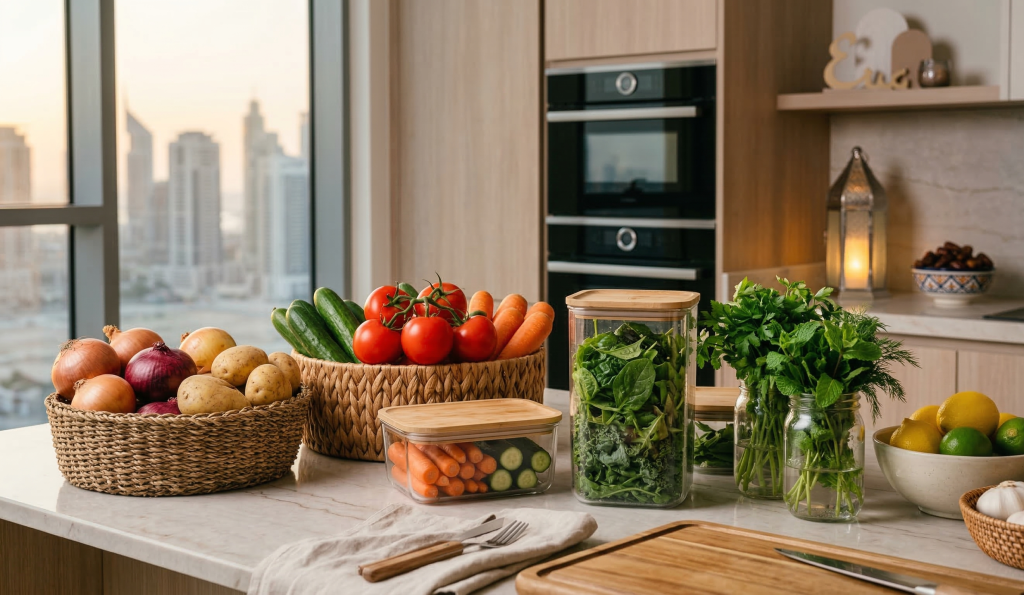
For many families in Dubai, Ramadan is a month of generosity, routine, and careful planning. It is also a month when grocery spending can quietly rise.
That happens for simple reasons. Meals are prepared around Suhoor and Iftar, guests may visit more often, and households buy larger quantities of everyday items such as tomatoes, cucumbers, onions, potatoes, leafy greens, herbs, and lemons. In 2026, that pressure is landing in a market where supply is stable overall, but prices can still shift quickly at the wholesale level, especially in active trading hubs such as Al Aweer. Ramadan in the UAE was expected to begin on February 19, 2026, with Eid Al Fitr expected around March 19, depending on moon sighting, placing most of the month inside the late winter produce window.
This is one reason the phrase wholesale vegetables Dubai is drawing more attention from practical buyers, not just restaurants and caterers. Families are starting to ask the same questions trade buyers ask: when does bulk buying actually save money, what causes prices to move, and how do you avoid turning “cheap” vegetables into wasted vegetables?
A lot of online advice gives a shallow answer. It says wholesale is cheaper, supermarkets are more expensive, and Al Aweer market Dubai is where the best deals are found. That is not entirely wrong, but it leaves out the part that matters most: savings only work when quality, storage, and timing are managed properly.
Why more families are looking beyond retail shelves
The main change is not that wholesale is suddenly new. It is that households are becoming more cost-aware.
Dubai authorities have also been publicly emphasizing receipt-based consumer protection and price monitoring during Ramadan, which tells you something important about buyer behavior in 2026: people are paying closer attention to grocery bills than usual. At the same time, officials have said daily fruit and vegetable import volumes at Al Aweer remain normal, pointing to stable supply even when the wider region feels uncertain.
For families, that creates an interesting situation.
Supply may be steady, but household budgets still feel pressure because:
- Ramadan shopping baskets get larger
- more fresh produce is used in a short window
- some vegetables are bought “just in case” and then spoil
- retail prices do not always move in sync with wholesale market changes
This last point is one of the least explained issues in competitor articles. Wholesale markets can reprice fast, sometimes daily, because traders react to arrivals, quality, demand, and perishability. Retail stores often move more slowly due to packaging, overhead, contracts, merchandising, and delivery layers. So a family comparing one supermarket shelf to one wholesale visit may think the system is random, when in reality the supply chain is simply moving at different speeds. A Reddit discussion about Dubai produce pricing reflected this gap directly, with one user noting that wholesale markets tend to show repricing first, while supermarkets often reflect changes later.
What buyers keep getting confused about
Across forums, buyer discussions, and supplier content, the same misunderstandings keep appearing.
“Wholesale quality is lower than supermarket quality”
Sometimes yes. Often no.
The real issue is that wholesale markets offer a wider spread of quality grades. That is actually part of their value. A careful buyer can choose produce based on intended use: same-day salad, next-day cooking, bulk chopping, juicing, or a large family Iftar. Supermarkets often narrow that choice by presenting a more standardized appearance.
In buyer conversations from Dubai, you can see both sides. Some residents describe excellent value and freshness from Al Aweer, while others complain about hidden damage, bruising, or inconsistent selection. Those opinions do not cancel each other out. They reveal the truth: wholesale buying rewards inspection skills and punishes rushed buying.
“Cheap vegetables Dubai Ramadan means lower freshness”
Not necessarily.
Freshness and price are related, but not identical. A lower price may reflect:
- a large arrival volume
- faster turnover needs
- cosmetic imperfections
- shorter remaining shelf life
- changes in source country or transport timing
That is why fresh vegetables wholesale price should never be judged by price alone. In practice, experienced buyers look at firmness, moisture loss, skin tension, smell, stem condition, and damage around the base or sides of the crate. Supplier guides from UAE market participants also emphasize that selection happens at source and that grading, cold storage, and handling strongly affect what the end buyer receives.
“Bulk vegetables UAE always save money”
Only when the household matches quantity to real consumption.
This is another area where competitors often oversimplify. A family may save on the purchase price of cucumbers, tomatoes, or onions, but lose the saving through spoilage, poor storage, or buying the wrong mix of ripeness. During Ramadan, that risk increases because many households shop with good intentions, then overestimate how much they will actually cook each week.
The cost problem is not only what you pay at purchase. It is also what you throw away three days later.
Why winter timing matters in the UAE
Late winter is one of the more favorable periods for vegetable buying in the UAE. Seasonal guidance from UAE produce suppliers points to stronger availability for items such as cucumbers and other common salad vegetables during the cooler months, with winter often being the peak period for quality and eating performance.
That matters because Ramadan 2026 sits inside this window. For Dubai families, this improves the odds of finding better condition produce for everyday meals, especially for hydration-heavy Iftar tables built around salads, chopped vegetables, fresh herbs, and light cooked dishes. It also helps explain why bulk vegetables UAE is more practical in this season than it would be in the peak summer heat.
Still, “seasonal” in Dubai does not always mean “locally grown.” Many vegetables in UAE markets are imported, and even local production depends on protected farming systems, water control, and seasonal growing advantages. So when buyers compare local vs imported produce, the useful question is not which one sounds better. The useful question is which lot is fresher, better handled, and more suitable for how the family will use it over the next few days.
That is the kind of judgment experienced wholesale buyers make every morning.
And it is exactly where household buyers can either save well or make expensive mistakes.
In practice, suppliers working closely with Dubai-based distributors such as JMB Farm Fresh often observe the same pattern each Ramadan: families do not struggle because wholesale is confusing; they struggle because perishables demand better planning than packaged groceries.
The next step is learning how that planning works in real life.
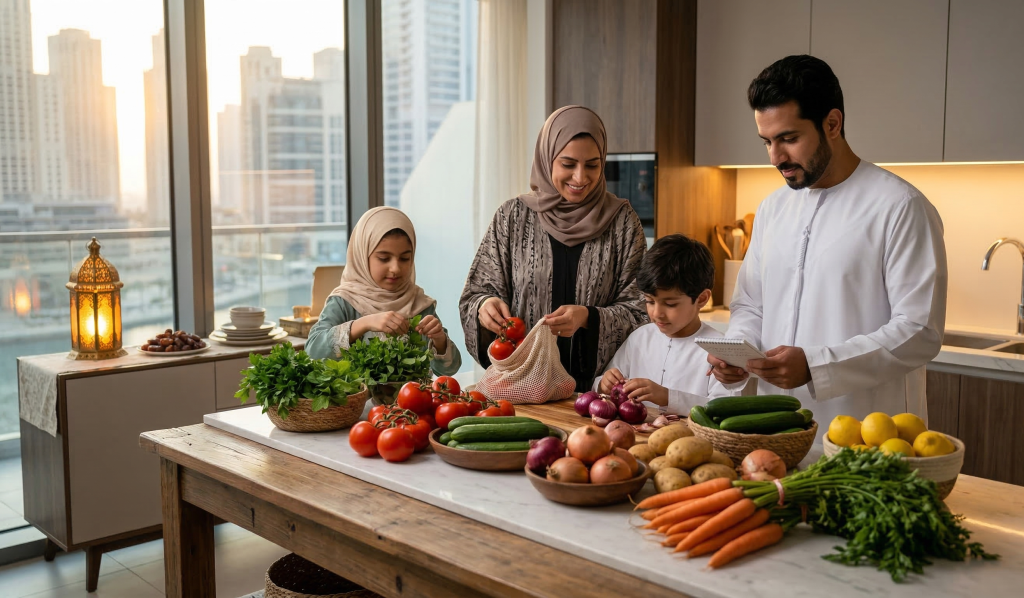
How wholesale buying saves money only when the plan is right
The biggest mistake families make is treating vegetables like shelf-stable groceries.
Rice, flour, lentils, and dates can sit safely for longer. Fresh vegetables cannot. So the real savings equation during Ramadan is not just about paying less per kilo. It is about paying less and using the produce before quality drops.
This is why some households feel that Ramadan grocery savings Dubai are harder to achieve than expected. They buy more at one time, but they do not adjust meal planning, storage space, or the order in which the vegetables should be used. Consumer protection officials in Dubai have also been reminding shoppers to keep receipts during Ramadan so price issues can be checked quickly, which reflects how closely food spending is being watched this season.
A careful family usually saves in three ways:
- lower price per kilo on core items
- fewer emergency supermarket trips
- better planning around repeated Ramadan meals
But those savings weaken fast when the basket is poorly chosen.
Which vegetables usually make the most sense in bulk?
Not every vegetable belongs in a wholesale-style Ramadan basket.
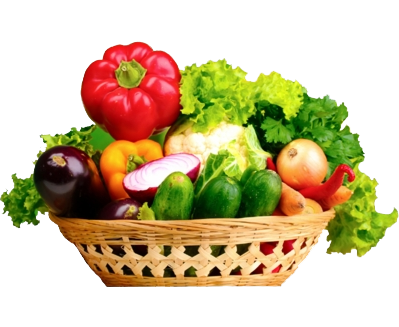
The safest bulk choices are usually vegetables with decent holding power and high repeat use in home cooking. In Dubai households during Ramadan, that often includes onions, potatoes, cucumbers, tomatoes, carrots, cabbage, chilies, lemons, and herbs in moderate quantities. Winter growing conditions in the UAE also support stronger availability for several common vegetables, including leafy greens, cucumbers, tomatoes, radishes, cauliflower, and broccoli during the cooler season.
That does not mean every family should buy all of them in large amounts.
A smarter approach is to split vegetables into three groups.
1. Daily-use staples
These are the vegetables most likely to be used across many meals:
- onions
- potatoes
- tomatoes
- cucumbers
- lemons
These often justify larger quantity buying because they move quickly through the kitchen.
2. Shorter-life support items
These add freshness but spoil faster:
- mint
- coriander
- parsley
- spinach
- salad leaves
These should usually be bought in smaller lots unless the family is cooking for a large group every day.
3. Flexible cooking vegetables
These work well when meal plans change:
- carrots
- cabbage
- capsicum
- cauliflower
- green beans
These are useful because they can shift from salad to stir-fry to curry-style cooking without much waste.
The problem with many generic buyer guides is that they praise bulk vegetables UAE without separating durable vegetables from fragile ones. That is where real losses happen.
Why families often lose money even when the purchase price looks good
On paper, a wholesale purchase can look excellent.
In practice, several hidden costs can erase the benefit.
Overbuying because the price looks attractive
This is one of the oldest wholesale traps. A crate price feels efficient, so buyers take more than they need. The produce then sits too long in a home fridge, especially when there is not enough airflow or the vegetables were already close to peak ripeness.
Mixing different ripeness stages without a plan
A family may buy tomatoes that are all ready at once, or cucumbers that all need to be used within the same narrow window. Wholesale buyers in trade markets usually think in batches: use first, use next, hold last. Household buyers often do not.
Ignoring transport and handling
The condition of vegetables after purchase matters almost as much as the condition at purchase. Bruising from rough transport, heat exposure during loading, or tightly packed car boots can shorten usable life quickly. Supplier guidance around Al Aweer sourcing repeatedly stresses handling, grading, and cold-chain discipline because freshness is not only about harvest date. It is also about what happens after selection.
Buying based on appearance alone
Very polished produce is not always the better buy. At the same time, visibly wet, damaged, or soft produce is often riskier than it seems. A slightly less attractive crate can still be the smarter choice if the vegetables are firmer, drier, and more even in condition.
What families should check before buying from wholesale channels
A good buyer does not need expert training. They need a repeatable checklist.
Here are the practical signs that matter most.
For tomatoes
Look for firm skin, even color for the intended use, and no leaking or soft patches around the base. If buying for several days, choose a mix of ripeness rather than a box that is fully ready on day one.
For cucumbers
Check firmness, cool feel, and skin that is not wrinkled. In late winter, cucumbers are often one of the more practical items to buy in larger quantity because they fit both salad and hydration-focused Iftar meals, and they are also part of common UAE winter produce guidance.
For onions and potatoes
Avoid moisture, sprouting, and any smell that suggests poor storage. These are usually among the safest volume purchases for families.
For leafy greens and herbs
Check for dryness, not wetness. Wet leaves often look fresh at first but deteriorate faster. Also inspect the base of bunches, where early decay often starts.
For chilies, capsicum, and beans
Look for skin tension and snap. Limp texture usually means shortened remaining life.
These checks matter because fresh vegetables wholesale price only tells you what the market is charging. It does not tell you how much of that purchase will still be usable four days later.
Is Al Aweer market Dubai always the cheapest option?
Not in every case, and that is another point buyers often misunderstand.
Al Aweer is important because it is a major wholesale node, and fast-moving markets like that often reflect supply changes earlier than retail shelves. But “cheapest” depends on the full buying cost:
- travel time
- fuel or transport
- quantity required
- waste risk
- whether the buyer can inspect properly
- whether the household has space to store the purchase well
If a family is buying enough vegetables for a large household, shared family cooking, or group Ramadan hosting, wholesale channels can make sense. If they are a small household with limited fridge space, the absolute cheapest crate is not always the lowest final cost.
This is also why some people report excellent experiences from Al Aweer while others feel disappointed. The market itself is not the whole story. Inspection skill, vendor consistency, and purchase discipline matter just as much. Online buyer discussions around Dubai produce reflect exactly that split, with some praising freshness and value while others focus on inconsistency or the challenge of choosing well.
Why prices move so much during Ramadan
Families often assume price changes are random or unfair. Usually, the picture is more complicated.
Vegetable prices in Dubai can shift because of:
- arrival volume at the wholesale level
- changes in source country supply
- weather affecting transport or harvest
- demand spikes around Ramadan and Eid
- differences in size, grade, and shelf life
- retailer overhead and packaging costs
The UAE government is actively monitoring commodity prices during Ramadan 2026, including field inspections and coordination with major suppliers and importers, which shows that pricing pressure is a live concern this season. At the same time, recent Gulf coverage notes that shoppers are reporting vegetable price jumps in some retail settings even while authorities intensify monitoring.
That does not mean every increase is unjustified.
It means families should understand that produce pricing is a moving system, especially in a city that depends heavily on efficient supply chains, imports, and quick turnover.
The useful takeaway is simple: when prices rise, do not switch immediately to the cheapest-looking vegetables. Switch to the vegetables with the best usable yield for the next few meals.
That is a more professional way to buy.
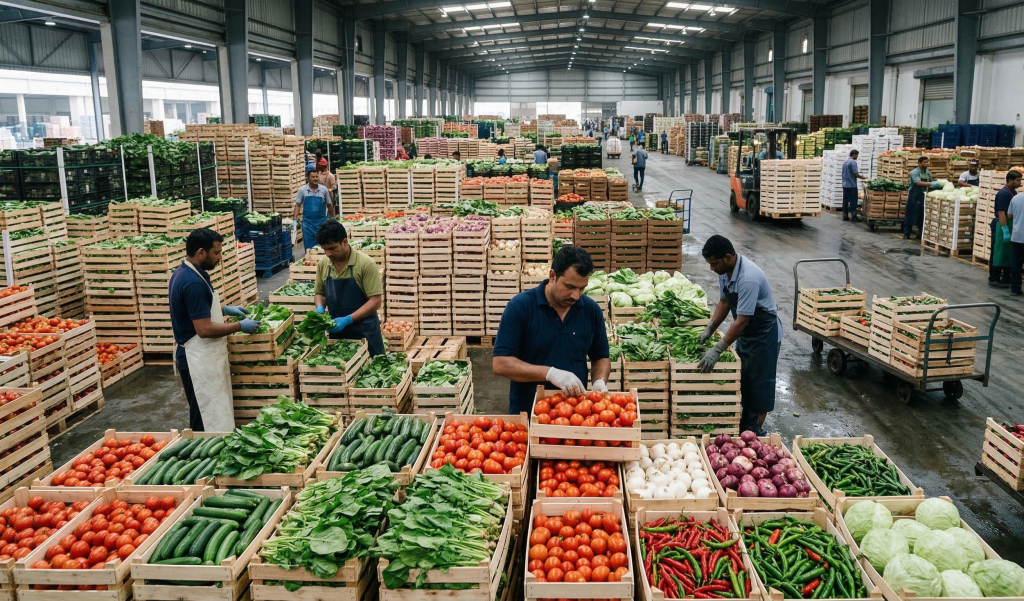
A simple Ramadan buying model that works better than impulse shopping
Families usually do better when they stop asking, “Where is the cheapest place today?” and start asking, “What will we actually use well this week?”
That shift sounds small, but it changes everything.
The UAE’s own Ramadan 2026 consumer-protection messaging has focused on supply stability, trader compliance, and preventing unjustified price increases, which supports the idea that disciplined buying matters more than panic buying. Official statements in February said markets had strong product availability ahead of Ramadan and that strategic stockpiles were prepared to support continuity of supply.
For households, the most practical model is usually this:
Buy durable staples in larger quantity.
Buy fragile greens in smaller quantity.
Plan meals in the order the vegetables should be used, not just in the order they were bought.
That is how wholesale buying becomes budget help instead of kitchen waste.
A realistic weekly approach for Ramadan grocery savings in Dubai
A useful approach for a family of regular size is to think in two waves instead of one large monthly purchase.
The first wave covers the dependable base: onions, potatoes, tomatoes, cucumbers, carrots, lemons, and a few flexible cooking vegetables.
The second wave covers the short-life items: herbs, leafy greens, and any vegetables that are highly sensitive to moisture loss or rough storage.
This matters because UAE planting and harvest calendars show that many common vegetables align strongly with the cooler growing season, including cucumber, tomato, lettuce, coriander, parsley, carrot, spinach, and related winter-friendly crops. That seasonal pattern helps explain why late-winter Ramadan buying can be more forgiving than summer buying, but it does not remove the need for quantity control at home.
In plain terms, a family does not need to buy everything in bulk to benefit from wholesale channels.
They need to bulk-buy the right things.
When wholesale is a smart choice, and when it is not
Wholesale buying usually makes sense when:
- the family cooks at home most days
- several people share Iftar and Suhoor regularly
- there is enough fridge and shelf space
- someone in the household can sort and store produce properly
- the purchase includes high-use staples, not only fragile vegetables
It makes less sense when:
- the household is small
- meals are often eaten outside
- there is limited storage space
- the buyer is attracted mainly by low price, not usable quantity
- the vegetables are likely to sit too long before use
This is one of the most important tradeoffs to explain honestly.
Yes, wholesale vegetables Dubai can reduce the cost per kilo.
But no, wholesale is not automatically the better choice for every home.
Sometimes the wiser decision is a hybrid system: buy staples in larger quantity and buy delicate vegetables in smaller top-up trips. That approach may not look as impressive at the moment of purchase, but it often performs better over the full week.
The quiet difference between experienced buyers and struggling buyers
Experienced produce buyers are rarely chasing the lowest visible price.
They are chasing consistency.
They want vegetables that will hold up, cook well, and create less waste. They understand that a slightly higher wholesale lot can still be the better buy if the usable yield is better. They also know that appearance can mislead. A cleaner-looking display does not always mean stronger freshness, and a cheaper crate does not always mean stronger value.
This is where many families feel misled by surface-level advice online. The advice focuses on where to buy, but not on how to judge what is worth buying.
That gap matters more during Ramadan because vegetables move through the kitchen faster, but mistakes also become more expensive. If tomatoes soften too quickly, herbs blacken in the fridge, or cucumbers lose firmness after rough transport, the budget problem is no longer the market price. It is the waste.
Local versus imported: what should families care about most?
This question is often framed too emotionally.
Local produce can be excellent. Imported produce can also be excellent. For the household buyer, the better question is not where the vegetable came from in theory. It is how fresh the lot is in practice, how it was handled, and whether it suits the next few days of use.
That is especially true in Dubai, where supply is broad and mixed, and where market quality can vary by source, timing, grade, and turnover.
An experienced buyer looks for signs of condition first:
- firmness
- dryness without dehydration
- even maturity
- minimal bruising
- no hidden soft spots
- no early decay at the base
This is not glamorous advice, but it is the kind of advice that saves money.
What families should remember before their next Ramadan vegetable purchase
The best budget strategy is not extreme bulk buying.
It is controlled bulk buying.
Buy more of what the household always uses.
Buy less of what spoils fast.
Choose by condition, not by price alone.
Think about storage before paying.
Plan use across the week, not just the first Iftar.
In many cases, that is the difference between a lower grocery bill and a fridge full of preventable waste.
For families trying to manage cheap vegetables Dubai Ramadan decisions carefully, the lesson is simple: wholesale works best when buying habits become more professional. Not formal. Not complicated. Just more deliberate.
That is why many experienced UAE produce buyers do not treat Ramadan as a month to buy the most. They treat it as a month to buy more intelligently.
Conclusion
For Dubai families in 2026, the appeal of wholesale buying is easy to understand. Ramadan raises demand at home, fresh vegetables become central to daily meals, and even small price differences matter over a full month.
But the strongest savings do not come from chasing the cheapest crate in the market.
They come from understanding seasonality, choosing the right vegetables for bulk purchase, inspecting quality with care, and matching quantity to real household use. Wholesale channels can absolutely help reduce grocery pressure. They can also create waste when families buy without a plan.
The balanced view is the most useful one. Wholesale is not a magic solution, and retail is not always the expensive mistake. The best results usually come from knowing which vegetables deserve bulk treatment, which ones need small frequent buying, and how to handle both with less waste.
That is a far more reliable way to cut grocery bills during Ramadan than price chasing alone.
FAQ
1. Is wholesale vegetables Dubai buying always cheaper than supermarkets?
Not always in final cost. The per-kilo price may be lower, but transport, storage, and spoilage can reduce the real saving.
2. Which vegetables are best for bulk buying during Ramadan?
Usually onions, potatoes, tomatoes, cucumbers, carrots, lemons, and a few flexible cooking vegetables. Fragile herbs and leafy greens are often better in smaller amounts.
3. Is Al Aweer market Dubai better for families or only for businesses?
It can work for families, especially larger households, but it rewards careful inspection and quantity planning more than casual buying.
4. Why do fresh vegetables wholesale price levels change so quickly?
Because wholesale prices respond fast to arrivals, quality, demand, perishability, and source conditions. Retail shelves often adjust more slowly.
5. Does local produce always mean better quality in the UAE?
No. Quality depends more on freshness, handling, and suitability for use than on whether the produce is local or imported.








 Home
Home  Whishlist
  Compare
  Checkout