













Introduction
Walk into most supermarkets in Dubai and you will see the usual lineup: apples, bananas, oranges, berries. Even the “exotic fruits” section tends to repeat the same familiar options—dragon fruit, kiwi, maybe passion fruit.
But there is one fruit that quietly appears during the cooler months, often overlooked, sometimes misunderstood, and rarely bought with confidence: persimmon.
Known locally as japani fruit Dubai, kaki fruit Dubai, or sometimes sold as sharon fruit, persimmon sits in a strange position. It is not new, but it is not well understood either.
For buyers—whether you are sourcing for a restaurant, managing a hotel kitchen, or simply buying for your family—this lack of familiarity creates hesitation. And in produce markets, hesitation usually leads to missed opportunities or poor buying decisions.
This article breaks down what persimmon really is, when it is available in the UAE, how to judge its quality, and why it deserves more attention—especially during the winter produce cycle.
What Is Persimmon (And Why It Confuses Buyers)
Persimmon is a seasonal fruit that looks simple but behaves very differently depending on its variety.
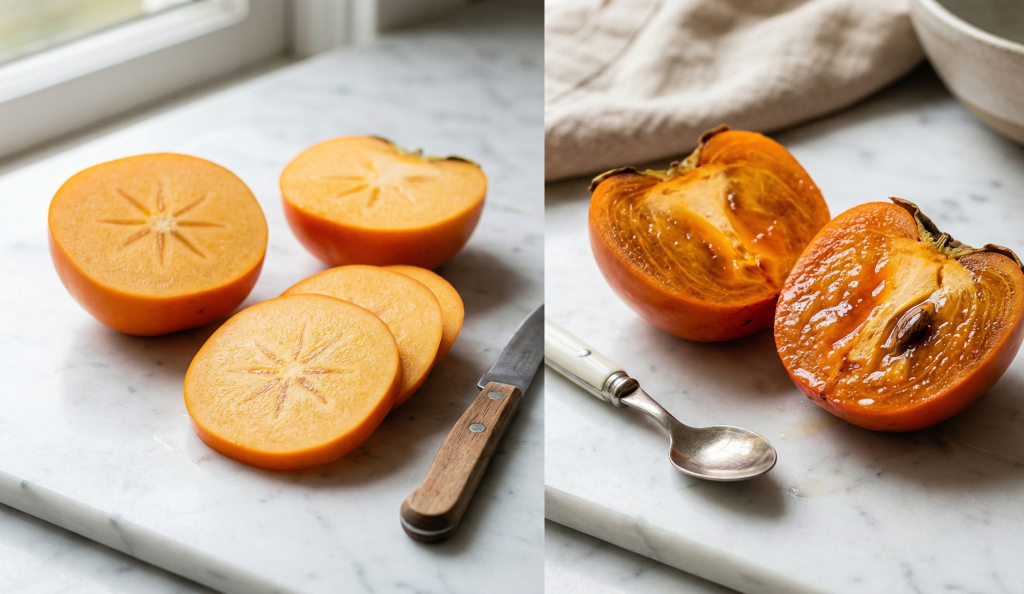
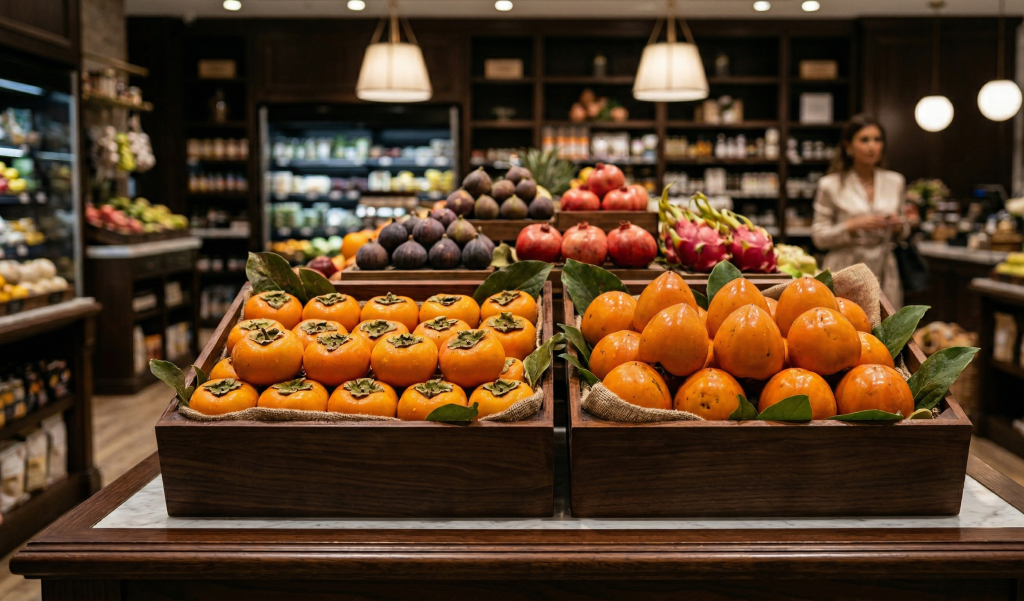
At a glance, it resembles a tomato. Bright orange, smooth skin, slightly flattened shape. But the eating experience can vary widely.
Two Main Types You Will Find in Dubai
Most confusion around persimmon Dubai comes from the fact that two completely different textures are sold under the same name:
1. Fuyu (Non-astringent)
- Firm, can be eaten like an apple
- Mildly sweet, slightly crisp
- Safe to eat even when not fully soft
2. Hachiya (Astringent)
- Needs to be very soft before eating
- If eaten early, tastes extremely bitter and dry
- When ripe, becomes smooth, sweet, almost jelly-like
Many first-time buyers unknowingly pick up Hachiya, eat it too early, and assume the fruit is “bad.” This single mistake is one of the biggest reasons persimmon has low repeat demand in Dubai households.
Why Persimmon Is Rarely a “Default Buy” in Dubai
From a supply perspective, persimmon is not difficult to source. It is imported regularly during its season. Yet demand remains limited compared to other fruits.
1. Lack of Familiarity
Unlike apples or mangoes, persimmon is not part of most cultural diets in the UAE. Many buyers simply do not know:
- How it should taste
- When it is ripe
- How to store it
Without this knowledge, the risk of buying feels higher.
2. Inconsistent Retail Presentation
In many retail setups, persimmons are:
- Displayed without variety labels
- Mixed between ripe and unripe stock
- Handled like apples instead of delicate fruit
This creates confusion. A buyer may purchase firm fruit expecting sweetness, only to experience bitterness.
3. Shorter “Perfect Window”
Persimmons do not have a long peak window.
- Too early → bitter (especially Hachiya)
- Too late → overly soft, damaged during handling
This narrow window makes them less forgiving than more stable fruits like apples or oranges.
When Is Persimmon Season in the UAE?
Understanding seasonality is one of the most overlooked aspects of buying exotic fruits online in Dubai.
Peak Season Timing
Persimmons are primarily a winter fruit in the UAE, typically available from:
- October to January (main window)
- Occasional extended supply into February depending on origin
Most supply comes from:
- Spain
- Turkey
- South Korea
- China
Each origin has slight differences in sweetness, firmness, and shelf life.
Why Season Matters More Than Price
Many buyers focus on price fluctuations without understanding the underlying reason.
For persimmon, pricing changes are often linked to:
- Harvest timing in origin countries
- Air freight vs sea freight availability
- Import volumes during peak weeks
Off-season persimmons (when available) often:
- Travel longer
- Lose texture quality
- Have inconsistent sweetness
This is why experienced buyers prioritize season alignment over price chasing.
How to Judge Fresh Persimmon Before You Buy
This is where most real-world mistakes happen.
Whether you are sourcing for a kitchen or buying for home use, understanding visual and tactile signals can prevent waste.
For Firm Persimmons (Fuyu Type)
Look for:
- Bright orange color (not pale yellow)
- Smooth, unbroken skin
- Slight firmness when pressed
Avoid:
- Wrinkled skin
- Soft spots or bruising
These are suitable for slicing, salads, or direct consumption.
For Soft Persimmons (Hachiya Type)
Look for:
- Deep orange to reddish tone
- Noticeable softness (almost like a ripe mango)
- Slightly translucent skin
Avoid:
- Hard fruit (not ready yet)
- Leaking or collapsed structure
These are best for desserts, purees, or spoon-eating.
A Common Buyer Mistake
Many buyers assume:
“Firm fruit = fresh fruit”
This is not always true for persimmon.
In fact, for Hachiya:
- Firm fruit is unripe and unpleasant
- Soft fruit is correct and ready
This misunderstanding leads to unnecessary rejection of good-quality stock.
Storage and Handling: Where Most Losses Happen
Persimmons are more sensitive than they appear.
For Businesses (Restaurants, Catering, Hotels)
Key considerations:
- Avoid stacking heavy weight on top
- Store at cool temperatures, not freezing
- Separate ripe and unripe batches
Mixing ripeness stages often leads to:
- Faster spoilage
- Cross-damage during handling
For Households
Simple rules:
- Keep firm persimmons at room temperature to ripen
- Refrigerate only when ripe
- Consume within a few days once soft
Why Handling Matters in Dubai’s Climate
Dubai’s ambient temperatures can accelerate ripening quickly.
This means:
- A fruit that looks fine in-store can over-ripen within 24–48 hours
- Poor storage during transport can reduce shelf life significantly
In practice, suppliers working closely with Dubai-based distributors such as JMB Farm Fresh often observe that improper last-mile handling causes more loss than sourcing quality itself.
Is Persimmon Worth Buying for Businesses?
This is a practical question many procurement teams consider.
Persimmon is not a staple fruit. It is a strategic fruit.
Where It Works Well
- High-end desserts
- Seasonal menu items
- Salad variations
- Premium fruit platters
It adds:
- Color contrast
- Texture variety
- A perception of uniqueness
Where It Does Not Work
- High-volume buffet fruit sections
- Low-margin menus
- Environments with low staff awareness
Without proper handling and understanding, it can:
- Increase waste
- Create inconsistent guest experiences
How Persimmon Fits Into Dubai’s Winter Produce Cycle
Dubai’s fresh produce market is heavily shaped by import seasons. Unlike regions with strong local agriculture, the UAE depends on global supply windows.
This makes winter one of the most diverse fruit seasons in the region.
Alongside citrus, berries, and grapes, persimmon enters quietly during this period—not as a mass-market fruit, but as a niche seasonal option.
Why Winter Is the Right Time to Try Persimmon
During winter months:
- Supply chains are more stable from Europe and Asia
- Transit times are shorter compared to summer disruptions
- Fruit arrives closer to optimal ripeness
This results in:
- Better texture
- More consistent sweetness
- Lower risk of internal spoilage
Outside this window, even if you find kaki fruit Dubai listings online, the eating quality can vary significantly.
Imported vs “Local” Perception: A Common Misunderstanding
A frequent question in forums and buyer discussions is:
“Is persimmon local in the UAE or imported?”
The answer is simple: almost all persimmons in Dubai are imported.
However, the confusion comes from labeling.
Why Buyers Get Misled
Some retail setups:
- Do not clearly mention origin
- Use generic labels like “fresh persimmon UAE”
- Mix batches from different countries
This leads to assumptions that:
- The fruit is locally grown
- Quality differences are random
In reality, origin matters.
How Origin Affects Quality
Different countries produce persimmons with subtle variations:
- Spain → Balanced sweetness, firm texture (often Fuyu)
- Turkey → Softer varieties, slightly more delicate
- East Asia (Korea/China) → Rich flavor, sometimes shorter shelf life
For businesses, understanding origin helps in:
- Predicting shelf life
- Planning menu usage
- Reducing waste
Buying Persimmon Online in the UAE: What Actually Matters
Searches like buy persimmon UAE or exotic fruits online Dubai have increased in recent years. But online availability does not always guarantee quality.
What Experienced Buyers Look For
Instead of focusing only on price or speed of delivery, experienced buyers pay attention to:
1. Ripeness Disclosure
Does the supplier indicate whether the fruit is:
- Ready to eat
- Ripening stage
- Mixed batch
Lack of this detail is a common issue.
2. Handling Practices
Persimmons bruise easily.
If the supply chain involves:
- Excessive transfers
- Poor packaging
- Long last-mile delivery times
Quality drops quickly.
3. Batch Consistency
Buying a mixed batch (firm + soft) can create problems:
- Uneven usage in kitchens
- Confusion for household consumption
A Practical Insight from the Market
In wholesale environments, buyers often prefer working with fewer, consistent suppliers rather than switching frequently.
Some UAE buyers prefer working with established wholesale produce providers rather than fragmented retail sourcing, mainly to reduce variability in fruit condition across deliveries.
Why Persimmon Prices Fluctuate (And What Buyers Get Wrong)
Price variation is one of the most discussed topics in produce markets.
For persimmon, the fluctuations are not random.
Key Factors Behind Price Changes
- Import volume during peak weeks
- Air freight vs sea freight costs
- Origin country harvest conditions
- Demand spikes from hospitality sector
A Common Misinterpretation
Many buyers assume:
“Higher price = better quality”
This is not always true.
In some cases:
- Prices rise due to limited supply
- But fruit quality may actually be mid-range
Similarly:
- Lower prices during peak season often mean better quality and freshness
What Smart Buyers Do Instead
They:
- Track seasonal patterns
- Align purchases with peak arrival windows
- Avoid off-season sourcing unless necessary
This approach reduces both cost and waste.
How to Use Persimmon Properly (And Avoid Waste)
A major reason persimmon gets rejected in kitchens is improper usage.
For Restaurants and Catering
Best applications include:
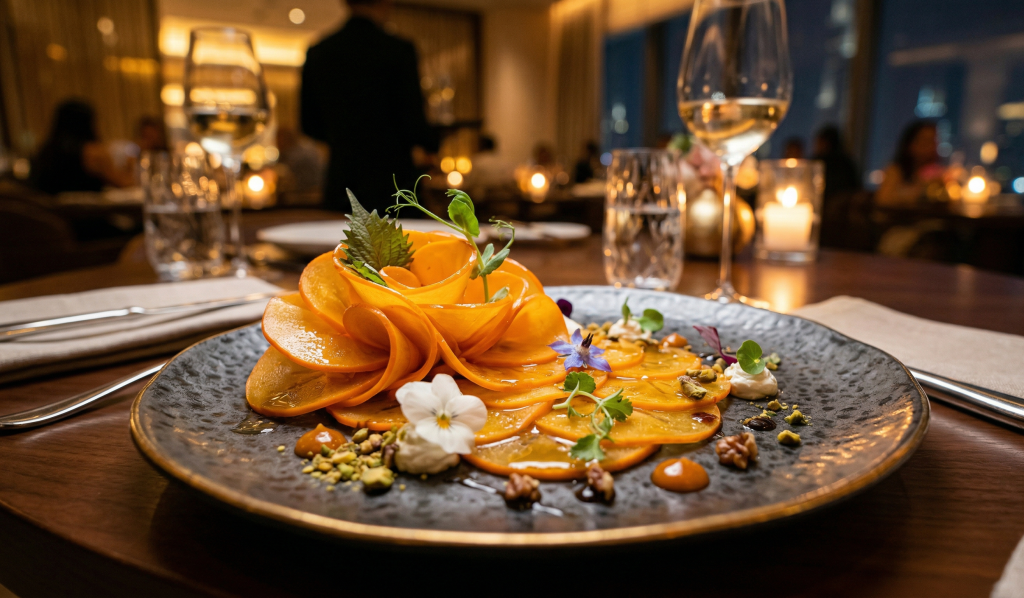
- Thin slices in salads (Fuyu type)
- Purees for desserts (Hachiya type)
- Pairing with cheese boards
- Garnishing premium dishes
What to Avoid
- Using unripe Hachiya in raw dishes
- Storing soft fruit under pressure
- Mixing ripeness stages in prep areas
These small mistakes often lead to:
- Poor guest experience
- Increased kitchen waste
Household Use: Why Many People Try It Once and Stop
From consumer discussions and community forums, a pattern appears:
People try persimmon once, have a bad experience, and never return to it.
The Usual Reasons
- Bought the wrong variety
- Ate it at the wrong stage
- Expected it to taste like another fruit
What Actually Works
For first-time buyers:
- Choose firm persimmon (Fuyu)
- Slice it like an apple
- Eat it chilled
This gives a safer, more predictable experience.
The Risk Side: What Buyers Should Be Careful About
No produce item is risk-free, and persimmon has its own considerations.
1. Over-Ripeness During Delivery
Especially with sharon fruit delivery UAE, delays can result in:
- Excessively soft fruit
- Reduced shelf life
2. Internal Texture Breakdown
Even if the outside looks fine, poor handling during transport can cause:
- Mushy interiors
- Uneven ripening
3. Mislabeling of Variety
This remains one of the biggest issues.
Without clear labeling:
- Buyers cannot plan usage
- Kitchens face inconsistency
Wholesale vs Retail: Which Is Better for Persimmon?
This depends entirely on the buyer’s needs.
Wholesale Advantages
- Better batch consistency
- Clearer sourcing information
- More predictable supply
Retail Advantages
- Lower commitment
- Easier for small households
- Immediate availability
The Tradeoff
Wholesale works well when:
- You understand the product
- You have planned usage
Retail works better when:
- You are experimenting
- You need small quantities
Why Persimmon Is Still Underrated in Dubai
Despite being available every winter, persimmon remains a low-demand fruit in the UAE compared to others in the same seasonal window.
This is not because of quality.
It is because of understanding.
The Real Issue Is Not Supply — It Is Confidence
Most buyers hesitate because:
- They are unsure how to eat it
- They cannot judge ripeness easily
- They had a poor first experience
In produce markets, confidence matters more than availability.
Fruits like berries and citrus sell consistently because buyers already know what to expect. Persimmon, on the other hand, requires a small learning curve—and many buyers simply avoid that step.
A Practical Buying Framework (Simple and Reliable)
If you remember only a few things from this article, this section will help you avoid most common mistakes.
Step 1: Decide Your Use First
Before searching buy persimmon UAE, ask:
- Do I want something crisp to slice? → Choose Fuyu
- Do I want something soft for desserts? → Choose Hachiya
Step 2: Match Ripeness to Use
- Firm fruit → salads, slicing
- Soft fruit → desserts, spoon-eating
Do not try to “force” usage across types.
Step 3: Buy in Season
Stick to:
- October to January
This ensures:
- Better taste
- More stable quality
- Lower risk of disappointment
Step 4: Handle It Gently
- Avoid stacking
- Separate ripe and unripe fruit
- Use quickly once soft
Step 5: Start Small (If New)
If you are trying persimmon for the first time:
- Buy a small quantity
- Test different ripeness stages
- Understand your preference
This approach reduces waste and builds familiarity.
Where Persimmon Fits in the Bigger Picture of Dubai’s Food Supply
Dubai’s food ecosystem is evolving.
Buyers—especially in hospitality and premium retail—are slowly shifting toward:
- More seasonal awareness
- More variety in offerings
- Better understanding of imported produce
Persimmon fits into this shift as a “bridge fruit”:
- Not fully mainstream
- Not completely unknown
- Positioned between familiarity and novelty
A Quiet Observation from the Industry
In practice, suppliers working across different buyer segments often notice a pattern:
- Early adopters (chefs, premium retailers) introduce persimmon
- Awareness grows slowly through menus and curated displays
- Household demand follows later
This is how many fruits transition from “rare” to “regular” in Dubai’s market.
A Balanced View: Should You Actually Buy Persimmon?
It depends on your intent.
You Should Consider It If:
- You value seasonal produce
- You are open to trying new textures
- You understand basic ripeness differences
- You want to diversify menus or fruit options
You May Skip It If:
- You prefer predictable, year-round fruits
- You do not want to manage ripeness closely
- You are buying for high-volume, low-risk consumption
There is no right or wrong choice.
The goal is not to push persimmon into every basket—but to remove the confusion around it, so buyers can make informed decisions.
Final Thoughts
Persimmon is not a complicated fruit.
It only appears complicated because it is unfamiliar.
Once you understand:
- The two main types
- The importance of ripeness
- The seasonal window
…it becomes one of the more interesting additions to Dubai’s winter produce cycle.
In a market where most buyers gravitate toward the same few fruits, persimmon offers something different—not in a dramatic way, but in a quiet, practical sense.
And sometimes, that is exactly what makes it worth trying.
Frequently Asked Questions (FAQ)
1. What does persimmon taste like?
It depends on the type. Fuyu is mildly sweet and slightly crisp, similar to a pear or apple. Hachiya, when fully ripe, is soft and very sweet with a smooth, almost custard-like texture.
2. Can you eat persimmon when it is hard?
Yes, but only if it is the Fuyu type. Hachiya must be fully soft before eating, otherwise it will taste very bitter.
3. Is persimmon available year-round in Dubai?
No. It is mainly a winter fruit, typically available from October to January, with limited availability outside this period.
4. Why does persimmon sometimes taste dry or bitter?
This happens when an astringent variety (usually Hachiya) is eaten before it is fully ripe.
5. How should persimmon be stored at home?
Keep firm fruit at room temperature to ripen. Once soft, store in the refrigerator and consume within a few days.








 Home
Home  Whishlist
  Compare
  Checkout