















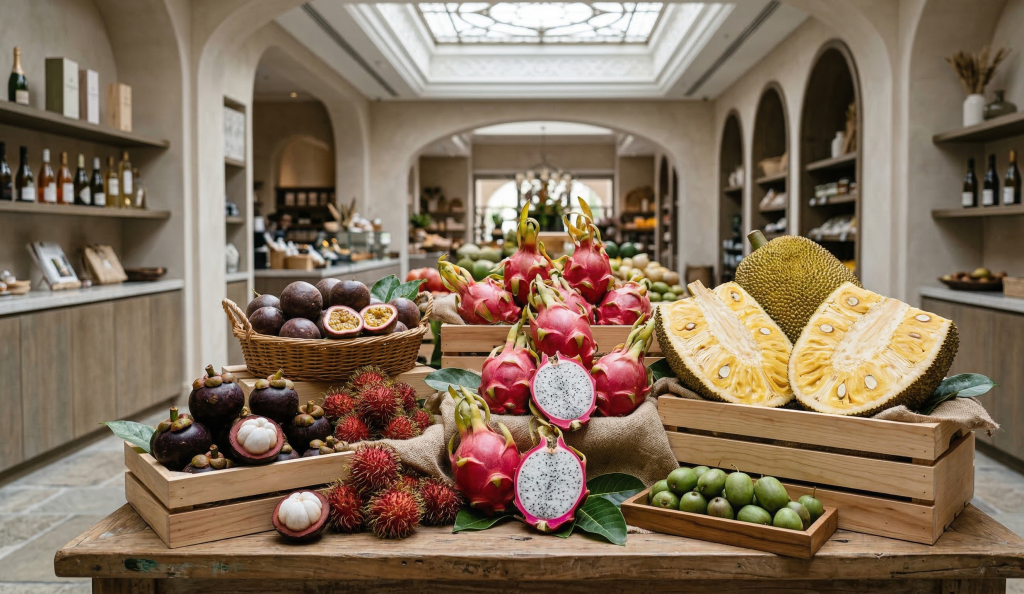
Dubai’s fruit market has always been more international than most cities. What feels different now is not simply variety, but visibility.
A few years ago, many shoppers in Dubai would only see exotic fruits in specialist stores, hotel kitchens, or wholesale channels. Now, dragon fruit appears across mainstream grocery platforms, jackfruit is easier to order in smaller consumer packs, and kiwi berries show up at premium retailers in small imported batches. That wider presence suggests a real shift in demand, even if the market is still uneven and strongly shaped by imports, timing, and cold-chain handling. This is an inference based on current retail and wholesale availability across multiple UAE sellers, not a claim based on a single published market report.
For buyers in Dubai, that matters for one simple reason: exotic fruit is one of the easiest categories to overpay for. The wrong buying route can leave households paying premium-retail prices for fruit that is underripe, overripe, or only attractive on the outside. For restaurants, caterers, and hospitality buyers, the bigger risk is inconsistency. One week the fruit looks impressive on the pass. The next week the same item arrives tired, bruised, or too dull in flavour to justify the cost.
That is why the useful question is not just which fruits are trending. It is why these fruits are moving into the mainstream, how buyers should judge quality, and when wholesale, retail, or online ordering actually makes sense.
Why exotic fruits are getting more attention in Dubai
Dubai is a trade city first, and that shapes its produce culture. The fruit market pulls from different origins, different seasons, and different buyer groups at the same time. Wholesale hubs such as Al Aweer remain central to that system, while modern online retail has made niche fruit easier for consumers to access without visiting the market in person. Al Aweer’s own market-facing material describes large-scale daily produce movement and a heavy concentration of wholesalers and retailers, while mainstream and specialty online stores now openly list exotic lines once considered hard to find.
There are a few reasons these fruits are getting more attention now:
1. Online grocery has reduced the “discovery gap”
When a fruit is listed with photos, pack sizes, origin notes, and delivery options, more people are willing to try it. That matters for products like kiwi berries and jackfruit, which many buyers still do not fully understand. The fruit no longer needs shelf education from a specialist grocer because the product page does that work first. Current UAE listings show exactly this pattern, especially for kiwi berries in small packs and dragon fruit sold as standard e-commerce grocery items.
2. Presentation matters in Dubai’s food culture
Dragon fruit, in particular, benefits from appearance. It is bright, photogenic, easy to plate, and works in breakfast spreads, smoothie bowls, fruit platters, and hotel buffet displays. In other words, it serves both taste and presentation. That makes it attractive not only to home buyers but also to cafés, caterers, and premium foodservice operators. The broad retail presence of dragon fruit across Carrefour, Barakat, and specialty sellers supports the idea that it has moved beyond novelty status in Dubai.
3. Import infrastructure makes niche demand possible
Dubai’s produce scene depends heavily on imported food, with food safety oversight and import controls playing a large role in what reaches the market. UAE government guidance notes that food imports require approval and compliance, and Dubai-focused import guidance repeatedly points to municipality registration and inspection systems for food entering the market. That does not eliminate quality variation, but it helps explain how niche fruit can reliably appear in a desert city with limited local fruit diversity in this category.
The three fruits buyers are watching most closely
Dragon fruit: the most visible of the group
Of the three, dragon fruit is the clearest example of a fruit moving from “specialty” to “familiar premium.” It is available through mass retail, online grocery, and specialty produce stores in Dubai. Current listings show white-flesh dragon fruit in Carrefour, yellow pitaya at Barakat, and kilogram-based price references from other UAE sellers.
For buyers, the key issue with dragon fruit is expectation. Many consumers assume appearance equals sweetness. It does not. Even among fruit enthusiasts, differences between white-fleshed and more intensely coloured varieties are often discussed in terms of flavour strength and sweetness. That gap between appearance and eating quality is one reason dragon fruit sometimes disappoints first-time buyers.
In practice, dragon fruit suits Dubai well because it travels reasonably well compared with softer berries, it handles display nicely, and it fits the city’s demand for health-forward, visually attractive produce. But it is also a fruit where buyers should pay close attention to variety and ripeness rather than buying on looks alone.
Jackfruit: strong interest, but not always an easy buy
Jackfruit is different. It is less of an impulse purchase and more of a deliberate one.
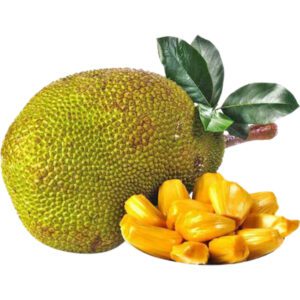
For households, the challenge is size, handling, and readiness. Whole jackfruit can be bulky, messy to cut, and inconsistent in ripeness. That is why consumer demand often shifts toward smaller trays, prepared portions, or trimmed packs when available. Current UAE listings show jackfruit sold online in smaller retail sizes as well as through wholesale-style formats.
For businesses, jackfruit can be useful in two very different ways. Ripe fruit works for dessert counters, platters, and juice concepts. Tender or young jackfruit appeals to kitchens using it as a plant-based ingredient. That split matters because buyers sometimes ask for “jackfruit” without specifying ripeness stage, which can lead to poor sourcing decisions and wasted stock. One UAE seller explicitly lists tender jackfruit, which reflects this difference in use case.
The real issue with jackfruit is not just price. It is usable yield. A buyer may think the fruit is cheap by gross weight, but once trimming, seed, fibre, and spoilage risk are considered, the economics can change quickly.
Kiwi berries: small, premium, and still niche
Kiwi berries are the most fragile trend of the three. They are not mainstream in the same way dragon fruit is, but their appearance in UAE listings from Lulu, Spinneys, Carrefour, and specialty stores suggests real buyer curiosity and enough demand to justify imported shelf space.
This is the kind of fruit that performs well in premium retail because it solves one simple problem: it is easy to eat. No peeling, no slicing, no mess. That makes it attractive for lunchboxes, grazing boards, boutique catering, and high-end household purchases.
But kiwi berries also show how exotic fruit trends in Dubai can be misleading. A fruit may be visible online for a few weeks or one season and then become patchy again. With imported niche products, buyers should not confuse short-term visibility with year-round stability. Kiwi berries especially look like a category where supply windows and origin shifts can affect consistency. Lulu currently lists a Portugal origin for one kiwi berry product, while another seller references Morocco, which shows how origins can vary across the same fruit type.
What many competing articles repeat without explaining
A lot of produce content says the same things: exotic fruits are healthy, colourful, rich in vitamins, and available online in Dubai. That is all true at a surface level, but it does not help buyers make better decisions.
What is usually missing is the practical layer:
- why some exotic fruits are cheap one week and expensive the next
- why imported fruit can look perfect but eat poorly
- why smaller packs are sometimes better value than large-format buying
- why wholesale is not automatically cheaper once waste is included
- why winter in the UAE can improve local produce options overall, even when many exotic fruits still depend on imports
The wider UAE produce calendar helps explain part of this. The country’s more favourable growing season generally runs from about October to April, improving the availability of many locally grown vegetables and some fruits, especially through protected agriculture and hydroponic systems. That does not mean Dubai suddenly becomes locally sufficient in exotic tropical fruit, but it does change the broader produce environment around pricing, freshness competition, and buyer expectations in winter.
That seasonal context matters. When local winter produce is strong, buyers may become less tolerant of expensive imported fruit that underdelivers on taste or shelf life.
Where confusion starts for buyers
Many buyers in Dubai still mix up three different sourcing questions:
Is the fruit available?
Is the fruit good this week?
Is the fruit worth the price at this quality level?
Those are not the same question.
A fruit can be widely available online and still not be a smart buy on a given day. It can also be expensive at retail but reasonable through a wholesale or semi-wholesale seller if turnover is fast enough. In practice, suppliers working closely with Dubai-based distributors such as JMB Farm Fresh often see that the best buyers are not the ones chasing the lowest headline price. They are the ones matching purchase size, ripeness stage, and intended use more carefully.
The next part is where the buying decision gets more practical: how to judge freshness, when wholesale sourcing helps, where cheap buying can go wrong, and what businesses and households should do differently.
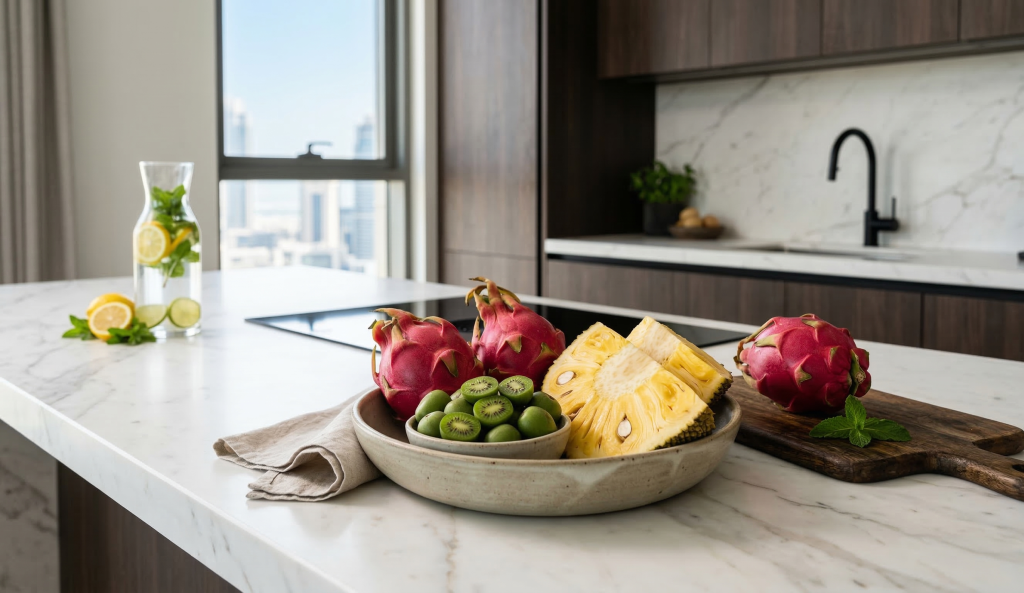
How to buy exotic fruits in Dubai without paying the “novelty tax”
The easiest way to waste money on exotic fruits in Dubai is to buy them as if they are all the same category.
They are not.
Some fruits are stable enough for regular retail purchase. Some are only worth buying when quality is clearly high. Some make sense for hotels and caterers in bulk, but not for households. And some look affordable until trimming loss, spoilage, or weak flavour turns them into a poor buy.
That is why the cheapest way to buy is not always the lowest shelf price. It is the route that gives you the best usable fruit for your purpose.
Retail, online, or wholesale: which route fits best?
For most buyers, there are three realistic channels.
1. Mainstream retail and grocery apps
This works best for:
- small households
- first-time buyers
- occasional fruit platters
- buyers testing unfamiliar fruit
The main advantage is convenience. You can buy one or two pieces, compare pack sizes, and avoid committing to a large case. This is often the safest route for dragon fruit and small premium packs like kiwi berries.
The downside is price. Retail packs often carry a premium for convenience, handling, and packaging. Quality can also vary because the fruit may sit in the supply chain longer before reaching the final customer.
2. Specialty produce sellers
This route suits:
- buyers looking for better variety
- premium households
- boutique cafés
- caterers with smaller but quality-focused orders
Specialty sellers sometimes manage handling better than general retailers because exotic produce is a core part of their offer, not a side item. They may also stock varieties that are harder to find in large supermarkets.
The tradeoff is that pricing can still be high, especially on short-window imports or small-batch arrivals.
3. Wholesale or semi-wholesale supply
This makes the most sense for:
- restaurants
- hotels
- caterers
- fruit platters businesses
- large families with fast consumption
Wholesale helps when turnover is strong and the buyer understands what to do with the fruit once it arrives. A kitchen using dragon fruit daily, for example, can benefit from case-based buying if the fruit is moving fast enough. A family buying a large quantity just because the per-kilo rate looks attractive may end up throwing part of it away.
This is where many people misunderstand wholesale. It is not just about buying more. It is about buying at a quantity you can actually use before quality drops.
Why “cheap” exotic fruit can become expensive very fast
This is one of the biggest gaps in most online articles.
They talk about price, but not total loss.
With exotic fruit, the true cost includes:
- edible yield
- ripeness at delivery
- shelf life after arrival
- handling damage
- prep time
- customer acceptance if taste is weak
Take jackfruit as an example.
A whole fruit may seem cost-effective at first glance. But if the buyer is not ready for trimming, sticky latex, seed removal, uneven ripeness, and limited fridge space, a large portion of that “cheap” fruit can become waste. For a food business, that means labour and shrink. For a household, it often means a one-time experiment that does not get repeated.
Kiwi berries create a different problem. There is little trimming loss, but they are delicate. If they arrive soft or have already passed their best eating window, the small pack becomes expensive for what it delivers.
Dragon fruit sits somewhere in the middle. It is easier to handle, but buyers sometimes pay premium prices for fruit that looks dramatic and tastes mild.
So the smarter question is not, “Where is it cheapest?”
It is, “Where can I get the best eating quality and usable value for my need?”
How to judge freshness before you buy
Exotic fruits are harder for many buyers because they are less familiar. People know how to judge a banana or orange. They are less confident with jackfruit or kiwi berries.
Here is the practical approach.
Dragon fruit
Look for:
- bright, even skin colour
- bracts or outer leaf-like parts that are not fully dried out
- fruit that feels firm with slight give, not hard like stone and not mushy
- no deep dents or leaking spots
Be careful with fruit that looks visually perfect but feels too hard and immature. It may hold shape, but flavour can be weak.
Jackfruit
If buying cut portions or prepared packs, check for:
- strong but clean aroma
- bulbs that look plump, not shrivelled
- colour appropriate to the variety and ripeness
- no watery breakdown in the pack
- no sour or fermented smell
If buying whole jackfruit, the decision is harder. Surface appearance helps, but ripeness can still be uneven. This is one reason many smaller buyers are better off with prepared sections rather than full fruit.
Kiwi berries
Look for:
- smooth skins with no burst or collapsing fruit
- berries that are slightly firm
- no moisture build-up in the punnet
- no dull, wrinkled appearance
Because kiwi berries are small and premium-priced, even a little quality decline changes the value equation quickly.
Common mistakes buyers make with exotic fruits in Dubai
Buying for appearance, not use
This is very common with dragon fruit.
People buy it because it looks premium in photos, then realize the flavour is lighter than expected. For a buffet, visual impact may be enough. For a family fruit bowl, taste may matter more than appearance.
Always buy according to use.
Buying too much too early
Wholesale quantities only work if turnover is predictable.
A catering business with confirmed events can buy differently from a household experimenting with one weekend platter. A restaurant running a dragon-fruit beverage special can buy differently from a hotel buffet with uncertain guest uptake.
Ignoring ripeness stage
This especially affects jackfruit.
Ripe fruit, near-ripe fruit, and young cooking fruit are not interchangeable. If the intended use is unclear, the buying decision will be poor from the start.
Assuming imported means better
Imported fruit often carries prestige, but not always better eating quality.
Travel time, handling, origin changes, and storage conditions all affect how the fruit performs once it reaches Dubai. An imported fruit can look premium and still disappoint on texture or sweetness.
Confusing supermarket consistency with wholesale consistency
Supermarkets look consistent because they are selling a tightly selected display at retail prices. Wholesale offers can be more variable because the buyer is closer to the real supply chain.
That does not mean wholesale quality is worse. It means the buyer needs a better eye.
Why prices move so much
Buyers often think produce pricing is random. It usually is not.
Exotic fruit prices move because of a few practical pressures:
Import dependence
Many exotic fruits in Dubai are imported, so pricing is affected by freight, origin availability, shipping schedules, and arrival quality.
Short supply windows
Some niche fruits are not equally available year-round. A fruit may appear more often during a specific origin season and then become less reliable later.
Handling losses
Delicate or unusual fruits often have higher handling risk. That risk gets built into pricing somewhere in the chain.
Demand spikes
When a fruit becomes popular on menus, in gifting, or in health-focused social content, retail demand rises faster than many people expect. Small-demand categories can move sharply when attention increases.
Pack size distortion
A fruit may look expensive because it is sold in small premium packs. Another may look cheaper by kilo but create more waste. Buyers comparing only headline price often miss this.
What winter in the UAE changes — and what it does not
Winter is the most comfortable produce season in the UAE for many buyers.
From roughly late autumn through early spring, the overall produce environment improves. Locally grown vegetables become more competitive, freshness expectations rise, and many buyers get used to better value across the market.
That creates an important contrast.
It does not automatically make tropical exotic fruits local. Dubai still depends heavily on imported supply for fruits like dragon fruit, jackfruit, and kiwi berries. But winter does influence the broader buying mindset.
When buyers can get very good seasonal vegetables, herbs, citrus, strawberries, and salad items at strong value, they become more selective with exotic fruit purchases. In winter, exotic fruit has to justify its place more clearly. It needs to deliver on taste, appearance, or menu function.
That is why winter is often the best season to be disciplined rather than impulsive. Use exotic fruits where they add something distinct, not just because they are available.
When wholesale sourcing makes sense — and when it does not
Wholesale is useful, but it is not a magic answer.
It makes sense when:
- you use the fruit regularly
- you know the variety and grade you need
- you can manage storage properly
- you have enough turnover to prevent waste
- you want better control over case selection or repeated supply
It makes less sense when:
- you are still testing demand
- your team is unfamiliar with the fruit
- you do not know how much edible yield to expect
- fridge space is limited
- buying in bulk creates pressure to use fruit before it is ready
For businesses, this usually means starting with controlled volumes before scaling up.
For households, it often means buying from sellers that sit between retail and full wholesale: enough value to reduce cost per unit, but not so much that waste becomes the real expense.
The next part looks at practical sourcing scenarios for families, restaurants, and caterers, then closes with the key takeaways, FAQs, and SEO extras.
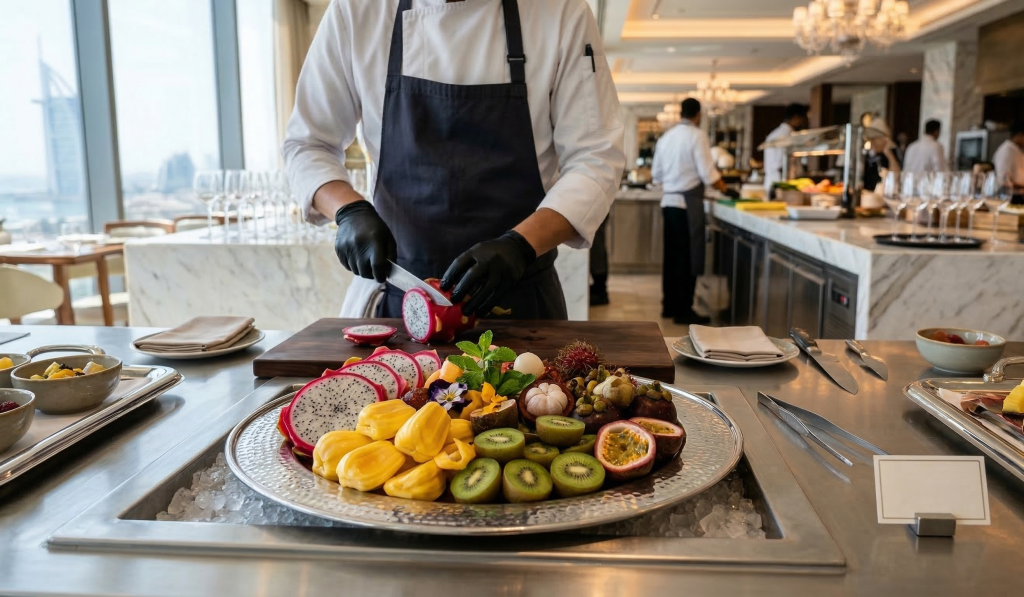
Practical sourcing scenarios: what smart buyers do differently
The right buying method depends less on the fruit itself and more on the buyer’s situation.
For households in Dubai
A family ordering exotic fruits for home use should usually think in small cycles, not bulk ambition.
That means buying enough for one or two eating windows rather than treating exotic fruit like apples or oranges. Dragon fruit is often the safest place to start because it is easier to portion, stores reasonably well for short periods, and is widely available through mainstream UAE retail. (carrefouruae.com)
Jackfruit is better approached more carefully. For most households, cut packs or prepared sections are often more practical than whole fruit because they reduce mess, labour, and uncertainty around edible yield. UAE online sellers offering trimmed or tender jackfruit reflect that demand for easier-use formats. (unsfarms.com)
Kiwi berries are usually a “buy when quality looks strong” fruit, not a pantry staple. Because they are sold in small premium packs and can decline quickly, they are better treated as a seasonal add-on than a routine grocery line. Current UAE listings show this kind of small-format premium positioning clearly. (gcc.luluhypermarket.com)
For households, the practical rule is simple: buy for immediate enjoyment, not imagined value.
For restaurants and cafés
Foodservice buyers have a different problem. They do not just need good fruit. They need repeatable results.
That changes the buying logic.
A café using dragon fruit in smoothie bowls, juices, or breakfast platters needs consistency of colour, cut quality, and holding performance. A restaurant using jackfruit in a seasonal dish needs clarity on ripeness stage and kitchen prep time. A dessert concept using kiwi berries needs to know whether availability is stable enough to keep the item on the menu.
This is where a trial-based sourcing method works better than guessing. Buy small, test yield, measure guest response, and only then scale the order.
For businesses, the biggest mistake is adding exotic fruit to the menu because it looks premium, without checking whether it performs operationally. A fruit that photographs well but comes in inconsistent quality can become more trouble than it is worth.
For hotels, caterers, and buffet operators
Large-volume buyers should think in terms of role, not trend.
Ask first: what job is this fruit doing?
- visual premium lift
- buffet variety
- healthy positioning
- dessert garnish
- plant-based menu ingredient
- gifting or VIP presentation
Dragon fruit often works well in these settings because appearance is part of the value. Jackfruit works when the kitchen knows exactly how it will be used. Kiwi berries are best reserved for premium, controlled applications where small volume and visual detail matter more than scale.
For caterers, timing is everything. Exotic fruit bought too early may lose value before service. Bought too late, it may arrive without enough ripeness or inspection time. That is why experienced buyers care less about trend lists and more about arrival condition, planned usage date, and realistic prep capacity.
So where should buyers actually look?
A practical answer is more useful than a dramatic one.
In Dubai, buyers generally have four workable options:
Mainstream supermarkets and grocery apps
Best for convenience, low commitment, and testing unfamiliar fruits.
This is especially useful for dragon fruit, which is now visible across mainstream UAE retail channels. (carrefouruae.com)
Premium and specialty fruit sellers
Best for better curation, occasional rarer lines, and presentation-focused purchases.
These sellers are often where fruits like kiwi berries appear first or most clearly, although supply may still be seasonal and inconsistent. (gcc.luluhypermarket.com)
Al Aweer-linked wholesale channels
Best for businesses, repeat buyers, and buyers who understand grading, turnover, and storage.
Dubai’s fruit and vegetable market system remains heavily anchored in Al Aweer, where wholesalers and retailers operate at scale. That makes it a key route for price-sensitive commercial sourcing, even when many end buyers now place orders digitally instead of visiting the market themselves. (alaweermarket.com)
Established local distributors
Best for buyers who want a more managed relationship rather than fragmented buying.
This route is often useful for hospitality groups, caterers, and repeat household buyers who value consistency more than chasing a one-off low price. In practice, some UAE buyers prefer working with established distributors rather than piecing together supply from multiple small sources. Suppliers close to the Dubai market, including firms such as JMB Farm Fresh, tend to see that long-term buyers care most about reliability, not just list price.
A balanced view: when exotic fruit is worth it, and when it is not
Exotic fruits can absolutely add value in Dubai.
They can make a fruit platter more interesting. They can give cafés and hotels more visual range. They can help households try something different without travelling outside normal grocery channels. And in a city shaped by imports, hospitality, and food presentation, it makes sense that these products attract attention.
But there are limits.
Not every trending fruit deserves repeat purchase. Not every wholesale offer is truly economical. Not every imported fruit is at its best when it reaches the shelf. And not every buyer needs the most unusual thing in the market that week.
The strongest buyers are usually the most boring in their habits.
They ask:
- Is the fruit good right now?
- Is it right for my use?
- Can I finish it before it declines?
- Am I paying for quality, or just for novelty?
Those questions matter more than trend itself.
Final takeaway
Dubai’s interest in exotic fruit is real, but the market is still shaped by import dependence, shifting seasonal windows, and uneven buyer knowledge. Dragon fruit has become the most accessible of the current favourites. Jackfruit is growing in use, but only works well when buyers understand format and ripeness. Kiwi berries remain a niche premium fruit that looks attractive online but may not always offer stable availability or strong value. Current UAE listings and market structure support that general picture. (carrefouruae.com gcc.luluhypermarket.com alaweermarket.com)
For most buyers, the smartest way to buy exotic fruits in Dubai is not to chase the rarest item or the lowest posted price. It is to match the fruit to the use, buy at the right quantity, and judge value by eating quality and waste, not just by appearance.
That is what separates a good buy from an expensive experiment.
FAQ
1. Where can I buy exotic fruits in Dubai?
You can usually find them through mainstream supermarkets, online grocery platforms, specialty fruit sellers, and wholesale channels tied to Dubai’s produce market system. Dragon fruit is the easiest to find, while items like kiwi berries are more seasonal and patchy. (carrefouruae.com gcc.luluhypermarket.com)
2. Is wholesale always cheaper for exotic fruits in the UAE?
Not always. Wholesale can reduce unit cost, but only if the buyer can use the fruit before quality drops. Waste, trimming loss, and weak turnover can make a “cheap” case more expensive than a smaller retail purchase.
3. Why does dragon fruit price change in Dubai?
Because supply depends on imports, handling quality, variety, and current availability. Price can also shift with pack size and seller type, especially between mainstream retail and specialty sellers.
4. Are exotic fruits in Dubai local or imported?
Most of the fruits discussed here are mainly imported. The UAE has a stronger cool-season position in vegetables, herbs, and some other crops, but tropical niche fruits in Dubai generally rely on imported supply chains. (moccae.gov.ae u.ae)
5. How do I know if exotic fruit is worth buying?
Look at intended use, ripeness, expected waste, and flavour value. A fruit is worth buying when it fits your purpose and can be used at good quality before it declines.








 Home
Home  Whishlist
  Compare
  Checkout