














Introduction: A Fruit That Confuses More Than It Excites
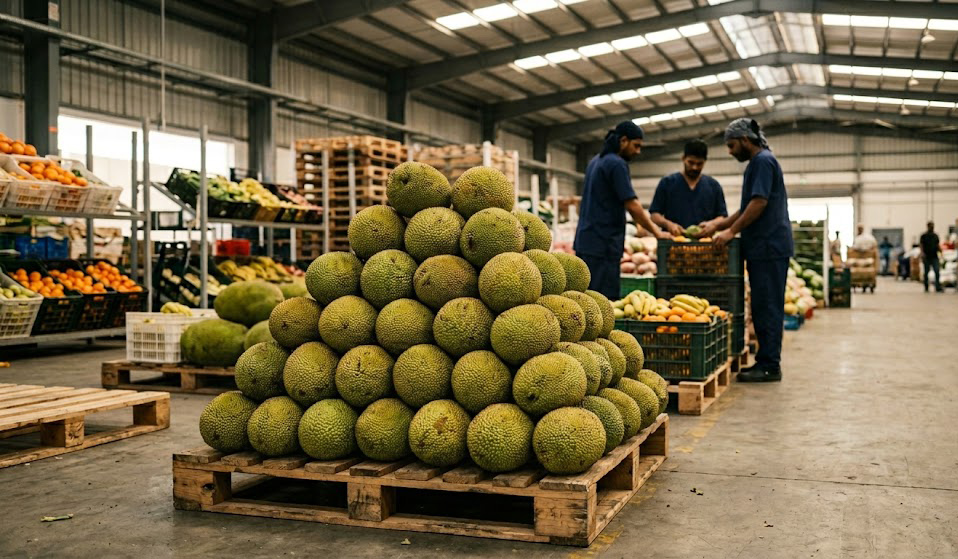
Walk through any large wholesale market in Dubai, especially during peak import cycles, and you may notice a massive green fruit sitting quietly in a corner. It looks unfamiliar, slightly intimidating, and often goes untouched.
That fruit is jackfruit.
Despite growing global interest in plant-based diets and alternative proteins, fresh jackfruit in Dubai UAE remains underutilized. Many buyers—both households and professional kitchens—either don’t recognize it or don’t know how to handle it once purchased.
This is not a demand problem. It’s a knowledge gap.
In conversations with restaurant buyers, catering managers, and even experienced home cooks, the same patterns appear:
- “It’s too big to manage.”
- “We don’t know how to cook jackfruit properly.”
- “Is it sweet or savory?”
- “Does it spoil quickly?”
These are valid concerns. Jackfruit is not a typical fruit. It behaves differently in storage, preparation, and cooking.
But for those who understand it, jackfruit offers something rare in the produce world: versatility across both sweet and savory applications, combined with strong yield value when handled correctly.
This article breaks down what Dubai residents need to know—without hype, without assumptions, and based on real supply-side experience.
What Makes Jackfruit Different From Other Fruits?
Size, Structure, and Practical Challenges
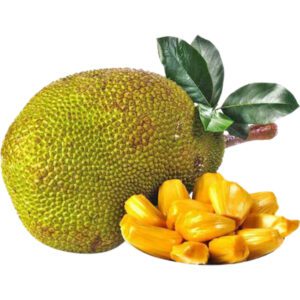
Jackfruit is often called the largest tree-borne fruit in the world. A single fruit can weigh anywhere between 5 kg to over 30 kg.
That alone changes everything.
Unlike mangoes or oranges, jackfruit is not a quick-use fruit. It requires planning:
- It cannot be consumed in one sitting
- It needs proper cutting tools
- It produces sticky latex (a natural sap) during cutting
- It must be portioned and stored correctly to avoid waste
For many Dubai households, especially those used to convenience-focused retail buying, this becomes a barrier.
For restaurants and catering kitchens, however, the size can be an advantage—if managed properly.
Two Completely Different Uses: Ripe vs Unripe
One of the biggest misunderstandings is that jackfruit is “just a fruit.”
In reality, it has two entirely different identities:
1. Ripe Jackfruit (Sweet Use)
- Yellow flesh
- Naturally sweet, similar to mango + banana
- Used in desserts, juices, or eaten fresh
2. Unripe Jackfruit (Savory Use)
- Neutral taste
- Fibrous texture
- Used as a jackfruit meat substitute UAE in vegan and vegetarian dishes
This dual nature is where confusion begins.
Buyers often purchase ripe jackfruit expecting to cook it like a vegetable—or buy unripe jackfruit expecting sweetness. Both lead to disappointment.
Understanding this distinction is essential before even thinking about how to cook jackfruit in Dubai kitchens.
Why Is Jackfruit Becoming Relevant in Dubai Now?
Shift Toward Plant-Based Menus
Across Dubai’s food scene, there has been a quiet but clear shift:
- More vegan menu options
- Increased demand for meat alternatives
- Health-conscious dining trends
Jackfruit fits into this space naturally.
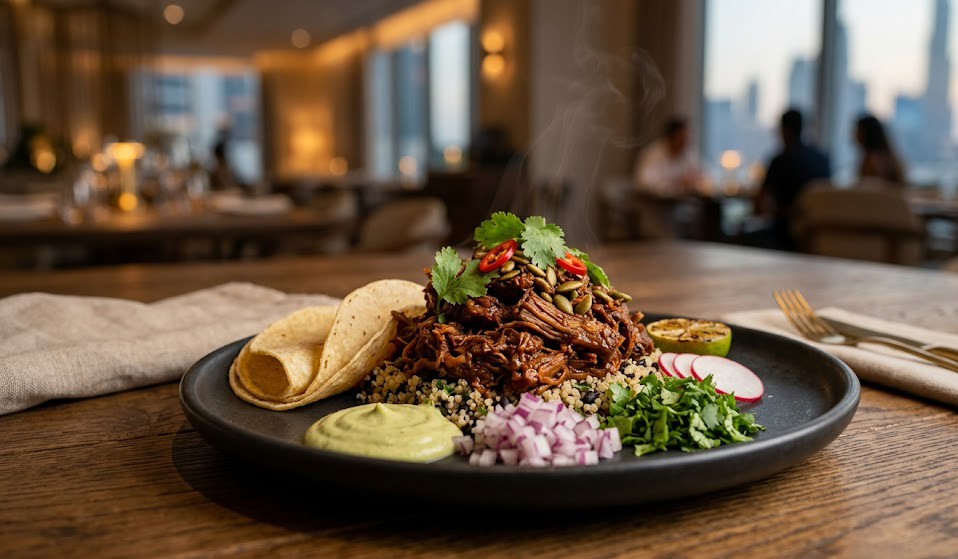
When cooked properly, unripe jackfruit mimics shredded meat texture. It absorbs spices well, making it suitable for:
- Tacos
- Pulled “meat” sandwiches
- Curries
- Rice dishes
This is why interest in jackfruit vegan recipe Dubai searches has increased in recent years.
However, interest does not always translate into consistent usage. The gap remains between curiosity and execution.
Import Availability and Supply Patterns
Jackfruit is not widely grown in the UAE. Most supply comes from:
- India
- Sri Lanka
- Thailand
Availability depends heavily on import cycles.
During peak seasons (usually aligned with South Asian harvest periods), supply is stable and prices are relatively predictable.
Outside these windows:
- Prices fluctuate
- Quality becomes inconsistent
- Ripeness control becomes more difficult
This is a common issue across imported produce in Dubai, but it is more noticeable with jackfruit because of its size and sensitivity.
In practice, suppliers working closely with Dubai-based distributors such as JMB Farm Fresh often observe that buyers underestimate how important timing is with jackfruit purchases.
Buying at the wrong stage of ripeness can lead to immediate waste.
The Real Problem: Why Most People Don’t Know What to Do With Jackfruit
1. It Doesn’t Fit Into Familiar Cooking Habits
Dubai is a multicultural food environment, but most households still rely on familiar cooking patterns:
- Quick meals
- Pre-cut ingredients
- Minimal prep time
Jackfruit requires the opposite:
- Time
- Preparation
- Understanding of stages (ripe vs unripe)
This mismatch leads to hesitation.
2. Lack of Clear Guidance at Point of Purchase
Unlike common fruits, jackfruit is rarely sold with clear labeling such as:
- “Best for cooking”
- “Best for eating fresh”
This creates uncertainty.
In wholesale markets, buyers are expected to know what they are selecting. In retail environments, guidance is often minimal.
3. Fear of Waste
A 15–20 kg fruit is not a casual purchase.
Common concerns include:
- “What if it spoils before we finish it?”
- “What if we cut it wrong?”
- “How do we store leftovers?”
These concerns are valid, especially in Dubai’s climate, where improper storage can accelerate spoilage.
How to Choose Fresh Jackfruit in Dubai UAE
Selecting the right jackfruit is where most of the outcome is decided.
Key Indicators to Look For
For Ripe Jackfruit (Sweet Use):
- Strong, sweet aroma
- Slight softness when pressed
- Yellowing outer skin (not fully green)
For Unripe Jackfruit (Cooking Use):
- Firm outer shell
- Green skin
- No strong smell
What Buyers Often Get Wrong
- Choosing based on size instead of purpose
- Ignoring smell (one of the most reliable indicators)
- Not asking about origin and arrival date
In wholesale settings, experienced buyers often prioritize:
- Recent arrivals (fresher stock)
- Consistent supplier handling
- Proper storage before sale
These factors matter more than appearance alone.
Storage Realities: What Happens After You Buy It?
This is where many first-time buyers struggle.
Jackfruit is not forgiving if mishandled.
Whole Fruit Storage
- Keep in a cool, dry place
- Avoid direct sunlight
- Use within a few days if ripe
After Cutting
Once opened, the fruit changes quickly:
- Flesh must be separated
- Seeds removed
- Stored in airtight containers
Refrigeration is essential
Even then:
- Ripe jackfruit lasts only a few days
- Unripe portions last slightly longer if properly stored
For businesses, improper handling often leads to:
- High wastage
- Inconsistent dish quality
- Cost inefficiencies
This is one of the main reasons some kitchens avoid using jackfruit regularly, despite its potential.
Is Jackfruit Worth It? A Practical Perspective
From a supply and usage standpoint, jackfruit sits in an interesting position.
Advantages
- High yield per fruit
- Versatile (sweet + savory use)
- Strong alignment with plant-based trends
- Distinct texture not easily replicated
Tradeoffs
- Labor-intensive preparation
- Requires knowledge to use correctly
- Storage sensitivity
- Inconsistent availability outside peak seasons
For experienced buyers, these tradeoffs are manageable.
For new users, they can feel overwhelming.
Understanding both sides is important before deciding whether to integrate jackfruit into regular buying patterns.
How to Cook Jackfruit in Dubai Kitchens: What Actually Works
Understanding how to cook jackfruit in Dubai is less about recipes and more about technique.
Most first-time attempts fail not because the recipe is wrong—but because the preparation stage was misunderstood.
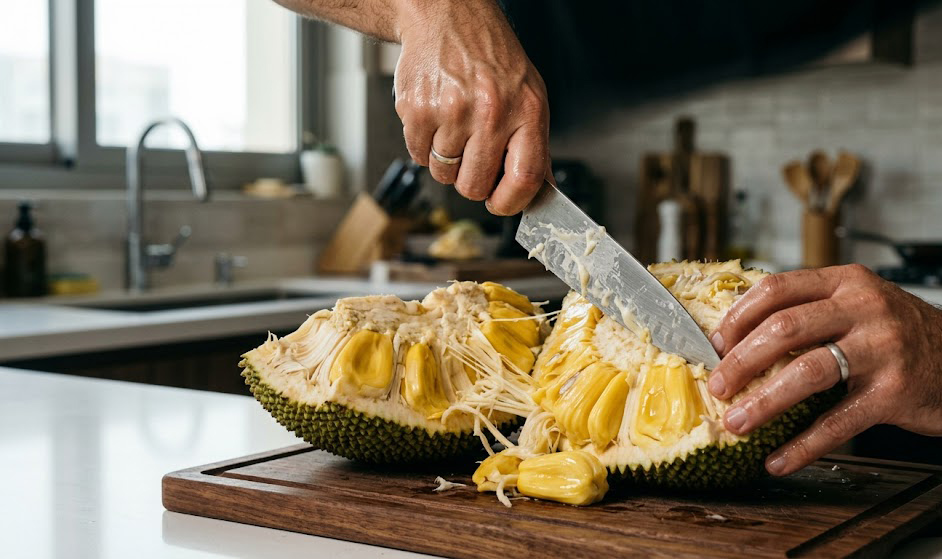
Step 1: Handling the Fruit (The Part Most People Skip)
Before cooking, jackfruit needs proper handling:
- Apply oil to your hands and knife (to prevent sticky latex from binding)
- Cut the fruit into manageable sections
- Remove the core and extract the flesh pods
- Separate seeds (these are edible but require separate cooking)
For unripe jackfruit, the fibrous inner flesh is what you want. This is what creates the “meat-like” texture.
Skipping these steps leads to frustration, especially in professional kitchens where time matters.
Why Jackfruit Works as a Meat Substitute (And When It Doesn’t)
The idea of jackfruit as a jackfruit meat substitute UAE is often misunderstood.
It does not taste like meat.
What it offers instead is texture.
Where It Works Well
Unripe jackfruit performs best in dishes where:
- Spices carry the flavor
- Texture matters more than taste
- Slow cooking is involved
Examples:
- Pulled-style fillings (sandwiches, wraps)
- Spiced rice dishes
- Curries and stews
It absorbs marinades effectively, which is why it fits into diverse cuisines—from South Asian to Mexican-style applications.
Where It Fails
Jackfruit is not suitable for:
- Quick stir-fry dishes
- High-heat grilling without marination
- Recipes where protein structure matters (it is not protein-rich like legumes)
This is where many buyers get disappointed.
They expect a direct meat replacement. Instead, jackfruit behaves more like a neutral base ingredient.
Practical Cooking Applications That Work in Dubai
Dubai’s food environment is diverse, so jackfruit can be adapted across cuisines.
Here are realistic applications based on what kitchens are already experimenting with:
1. Spiced Jackfruit for Rice Dishes
Unripe jackfruit works well in:
- Biryani-style preparations
- Light pulao variations
It absorbs spices and adds texture without overpowering the dish.
2. Jackfruit in Wraps and Tacos
A growing trend in casual dining:
- Shredded jackfruit cooked with spices
- Used as filling for wraps or tacos
This aligns with increasing searches for jackfruit vegan recipe Dubai.
3. Simple Home Cooking
For households, simpler approaches work best:
- Pressure-cooked jackfruit with basic spices
- Light sauté after boiling
- Minimal ingredients, focusing on texture
Complicated recipes often discourage repeat use.
The Hidden Cost Factor: Waste vs Yield
One of the biggest concerns for both households and businesses is whether jackfruit is economically practical.
The Perception
- “It’s too big”
- “We won’t finish it”
- “It will spoil”
The Reality
Jackfruit offers high usable yield—but only if handled correctly.
What Reduces Waste
- Buying based on actual need (not just availability)
- Cutting and storing immediately after purchase
- Using multiple parts (flesh + seeds)
What Increases Waste
- Delayed cutting after purchase
- Poor storage conditions
- Buying overly ripe fruit for cooking use
For restaurants and caterers, poor planning around jackfruit can quickly turn it into a cost issue.
For experienced buyers, however, it becomes a high-efficiency ingredient.
Buying Jackfruit Online in UAE: What to Watch For
With more buyers shifting toward digital sourcing, buy jackfruit online UAE has become more common.
But online purchasing introduces a new challenge: you cannot inspect the fruit physically.
Key Considerations Before Ordering
- Ask about ripeness stage (critical)
- Confirm approximate weight range
- Understand delivery timing (delays affect quality)
Common Issues Buyers Face
- Receiving overly ripe fruit when planning savory use
- Size mismatch with expectations
- Limited shelf life upon delivery
Some UAE buyers prefer working with consistent suppliers who provide clearer communication on product condition rather than relying purely on generic listings.
This is especially important for large-format produce like jackfruit.
Seasonal Reality: When Is the Best Time to Buy Jackfruit in UAE?
Jackfruit availability in Dubai is not constant.
It follows regional harvest cycles.
Typical Supply Windows
Most jackfruit in the UAE comes from South Asia, where peak harvest seasons generally fall between:
- Late spring to mid-summer
During these periods:
- Supply is more stable
- Quality is more consistent
- Pricing is relatively predictable
Off-Season Challenges
Outside peak windows:
- Imported batches may vary in quality
- Ripeness control becomes inconsistent
- Prices may fluctuate significantly
This is a common pattern across imported produce, but jackfruit magnifies the issue because:
- It is large
- It ripens internally
- It cannot be easily corrected once overripe
For buyers, understanding seasonality reduces both risk and waste.
Common Mistakes Dubai Buyers Make With Jackfruit
Across households and businesses, the same mistakes appear repeatedly.
1. Buying Without a Clear Use Case
Jackfruit should not be bought “just to try.”
Decide first:
- Sweet use?
- Savory cooking?
Then choose ripeness accordingly.
2. Treating It Like a Regular Fruit
It is not comparable to mangoes or melons.
It requires:
- Preparation time
- Storage planning
- Usage strategy
3. Ignoring Climate Impact
Dubai’s heat accelerates spoilage.
Leaving jackfruit at room temperature for too long—especially after cutting—reduces its usable life quickly.
4. Underestimating Labor in Professional Kitchens
For restaurants and catering operations:
- Jackfruit prep takes time
- Staff must be trained to handle it properly
Without this, kitchens avoid it altogether.
5. Expecting Immediate Flavor Payoff
Jackfruit does not deliver strong flavor on its own (especially unripe).
It requires:
- Seasoning
- Cooking technique
- Patience
This is why first-time experiences often feel underwhelming.
Jackfruit Benefits UAE Buyers Should Understand (Without Overstating)
There is growing discussion around jackfruit benefits UAE consumers can gain, but it is important to keep expectations realistic.
What It Offers
- Dietary fiber
- Natural sweetness (ripe form)
- Versatile culinary use
- Plant-based alternative for texture
What It Does Not Offer
- High protein content (unlike lentils or chickpeas)
- Instant “health transformation” benefits
In professional food environments, jackfruit is valued more for functionality than nutrition claims.
A Quiet Shift: Why Some Buyers Are Starting to Reconsider Jackfruit
Over the past few years, there has been a subtle change in how certain buyers approach jackfruit.
Not as a novelty—but as a strategic ingredient.
This shift is driven by:
- Rising demand for plant-based menu items
- Need for cost-efficient bulk ingredients
- Desire for differentiation in menus
In practice, some UAE buyers prefer working with structured supply chains rather than fragmented sourcing. Suppliers that handle large-format produce consistently—such as JMB Farm Fresh—often observe that repeat buyers are those who invest time in understanding handling and usage, not just purchasing.
This pattern is consistent across many underutilized produce categories.
How to Make Jackfruit Practical for Daily Use (Homes and Businesses)
Jackfruit becomes useful only when it fits into a routine.
Without a system, it feels like effort. With a system, it becomes efficient.
For Households
Most families in Dubai struggle with jackfruit because they treat it as a one-time experiment.
A more practical approach:
- Cut and portion the fruit immediately after purchase
- Store usable portions in small airtight containers
- Use across multiple meals (not one large preparation)
Example approach:
- Day 1: Fresh ripe jackfruit as fruit
- Day 2: Light dessert or smoothie
- Day 3: Remaining portions frozen for later use
For unripe jackfruit:
- Cook a base preparation (boiled and shredded)
- Store it ready-to-use
- Add spices later depending on the dish
This reduces effort and avoids waste.
For Restaurants and Catering Businesses
In professional kitchens, jackfruit only works when integrated into prep workflows.
A typical efficient approach:
- Assign prep during low-activity hours
- Process the entire fruit at once
- Store pre-cooked portions in controlled batches
This allows:
- Faster service during peak hours
- Consistent dish quality
- Better cost control
Without this system, jackfruit becomes a burden rather than an asset.
Understanding Buyer Psychology: Why People Avoid Jackfruit
From a supply perspective, jackfruit is not rejected because of quality.
It is avoided because of uncertainty.
Common Mental Barriers
- “What if we don’t use it properly?”
- “What if it goes to waste?”
- “What if customers don’t like it?”
These are not product issues. They are confidence issues.
And they are common across unfamiliar produce categories.
What Changes Behavior
Buyers tend to adopt jackfruit when:
- They see consistent results in kitchens
- They understand portioning and storage
- They start with small, controlled usage
Once these are in place, repeat buying becomes more predictable.
Comparing Jackfruit to Other Produce Choices in Dubai
To understand where jackfruit fits, it helps to compare it with more familiar categories.
Versus Common Fruits (Mango, Melon)
- Easier to consume immediately
- Lower preparation effort
- Shorter decision time
Jackfruit difference:
Higher effort, but more versatile.
Versus Vegetables (Cabbage, Eggplant)
- Predictable cooking behavior
- Standard portion sizes
- Familiar recipes
Jackfruit difference:
Less predictable, but offers unique texture.
Versus Plant-Based Alternatives (Processed Meat Substitutes)
- Ready to use
- Consistent flavor and texture
- Minimal preparation
Jackfruit difference:
Natural, less processed, but requires skill to use.
When Jackfruit Makes Sense—and When It Doesn’t
Not every ingredient fits every buyer.
Jackfruit works best when:
- There is time for preparation
- The kitchen can handle bulk ingredients
- There is interest in plant-based menu options
- Waste management systems are in place
It may not be suitable when:
- Speed is the priority
- Storage space is limited
- Staff is unfamiliar with handling large produce
- Menu consistency is strictly controlled
Understanding this balance prevents unnecessary experimentation.
The Bigger Picture: What Jackfruit Reveals About Produce Buying in Dubai
Jackfruit is not just a fruit.
It reflects a broader pattern in Dubai’s food supply chain.
A Market That Rewards Knowledge
In Dubai, access to produce is not the main issue.
Availability is high. Variety is strong.
The real advantage comes from:
- Knowing what to buy
- Knowing when to buy
- Knowing how to use it
This applies to:
- Seasonal vegetables
- Imported fruits
- Specialty ingredients like jackfruit
The Gap Between Availability and Usage
Many ingredients are available in Dubai—but underused.
Not because they lack value.
But because:
- Buyers lack familiarity
- Guidance is limited
- Mistakes feel costly
Jackfruit is one of the clearest examples of this gap.
Conclusion: Jackfruit Is Not Difficult—It’s Just Misunderstood
Jackfruit does not require advanced cooking skills.
It requires:
- Basic understanding of ripeness
- Proper handling
- A clear plan before buying
Once these are in place, it becomes a practical ingredient—not an intimidating one.
For Dubai residents—whether households or professional buyers—the opportunity is simple:
Move from curiosity to controlled usage.
That is where jackfruit starts to make sense.
FAQ Section
1. Where can I find fresh jackfruit in Dubai UAE?
Fresh jackfruit is usually available in wholesale markets, select supermarkets, and through online produce suppliers during peak import seasons from South Asia.
2. Is jackfruit a good meat substitute?
Unripe jackfruit works well as a texture substitute in dishes like tacos, curries, and wraps, but it does not provide the same protein content as legumes or meat.
3. How do I know if jackfruit is ripe or unripe?
Ripe jackfruit has a strong sweet smell and softer skin. Unripe jackfruit is firm, green, and has little to no aroma.
4. Can I buy jackfruit online in UAE?
Yes, but it is important to confirm ripeness, size, and delivery timing before ordering to avoid receiving unsuitable fruit.
5. What are the main benefits of jackfruit?
Jackfruit provides dietary fiber, natural sweetness (when ripe), and versatility for both sweet and savory cooking applications.








 Home
Home  Whishlist
  Compare
  Checkout