
















Introduction: What AED 150 Actually Gets You in Dubai
There’s a common assumption in Dubai that eating healthy is expensive.
It’s not entirely wrong—but it’s also not entirely true.
In practice, the real issue isn’t price alone. It’s how people buy. Many households rely on convenience stores, premium supermarkets, or last-minute purchases. This leads to higher spend, faster spoilage, and less control over what actually gets eaten.
So I tested a simple constraint:
Could I eat well for one week in Dubai using only AED 150—and rely mostly on fresh vegetables and fruit?
No supplements.
No packaged shortcuts.
No unrealistic “diet food.”
Just basic, accessible produce and simple cooking.
What follows is not a challenge or a trend. It’s a practical breakdown of how produce behaves in Dubai’s supply environment—what lasts, what doesn’t, and how buying decisions affect both cost and nutrition.
The Reality Most Buyers Miss About “Cheap Fresh Vegetables in Dubai”
Before getting into the list, it’s important to understand something many buyers misunderstand:
Cheap produce is not about finding the lowest price. It’s about reducing waste.
Across wholesale markets, small retailers, and delivery suppliers, the price difference for common vegetables is often narrower than people expect. What creates the real cost gap is:
- Buying too many delicate items at once
- Choosing out-of-season imports
- Not understanding shelf life in UAE conditions
- Storing produce incorrectly
In conversations across restaurant buyers and home cooks, the same issue appears repeatedly:
“I didn’t use half of what I bought.”
This is where budget breaks—not at the purchase, but after it.
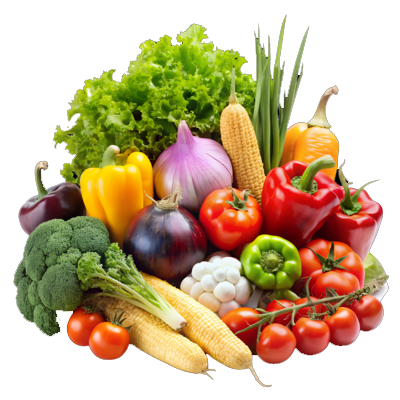
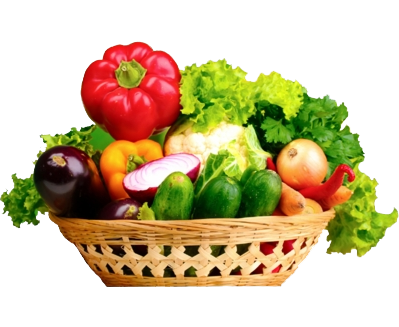
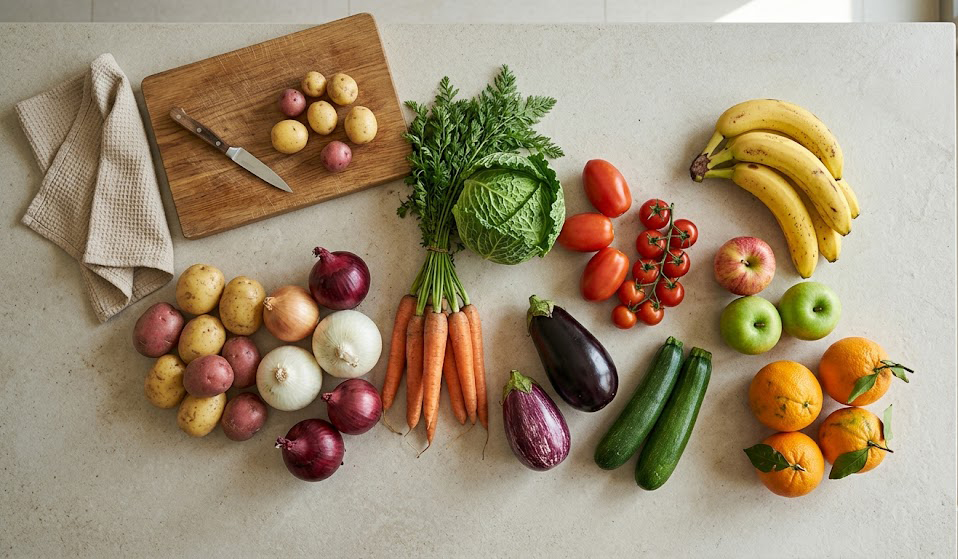
The AED 150 Weekly Produce Basket (What I Actually Bought)
The goal was simple: maximize nutrition, flexibility, and shelf life.
Instead of building meals first, I built a produce system—ingredients that can be reused across multiple dishes without spoiling quickly.
Core Vegetables (Base for Most Meals)
- Potatoes (2 kg)
- Onions (1 kg)
- Carrots (1 kg)
- Cabbage (1 medium head)
These are not exciting choices, but they are structurally reliable.
They last long, tolerate room temperature better than leafy greens, and form the base of multiple cuisines—Indian, Middle Eastern, Mediterranean, and even simple Western meals.
Supporting Vegetables (Add Flavor & Variety)
- Tomatoes (1 kg)
- Eggplant (2 medium)
- Zucchini (2–3 pieces)
- Green chilies (small pack)
These ingredients introduce variety without drastically reducing shelf life.
Tomatoes are the most perishable here, so they were used early in the week.
Leafy & Fresh Elements (Used Early)
- Spinach (1 bunch)
- Coriander (1 bunch)
- Mint (small bunch)
These are essential for freshness—but in Dubai, they are also the highest risk items in a budget plan.
They spoil quickly if not used within 2–3 days, especially outside controlled refrigeration.
Fruits (Simple, Stable, Affordable)
- Bananas (1 dozen)
- Apples (1 kg)
- Oranges (1 kg)
No exotic fruits. No berries.
The focus was on durability and consistent pricing, not novelty.
Why This Basket Works (From a Supply Perspective)
If you look at this list from a procurement lens, a pattern emerges:
1. It Prioritizes Shelf Life Over Variety
This is where most households go wrong.
They try to create variety at the buying stage instead of the cooking stage.
Professionally, buyers think differently:
- Buy stable items in volume
- Create variety through preparation methods
That’s exactly what this basket allows.
2. It Avoids High-Risk Produce Categories
Some produce items in Dubai are consistently problematic for budget buyers:
- Soft berries
- Pre-cut vegetables
- Imported leafy mixes
- Highly seasonal fruits outside peak window
These items are not “bad”—they’re just less predictable in value per dirham.
3. It Aligns With Winter Supply Stability in the UAE
During the cooler months, regional supply improves for certain vegetables:
- Leafy greens become more stable
- Root vegetables maintain better quality
- Transportation stress reduces compared to peak summer
This means fewer losses between purchase and consumption.
In practice, suppliers working closely with Dubai-based distributors such as JMB Farm Fresh often observe that winter buying patterns naturally favor longer-lasting vegetables, even without conscious planning.
How I Used Everything (Without Waste)
The real test wasn’t the buying—it was the usage.
Here’s how the week was structured to avoid spoilage.
Days 1–2: Use the Most Perishable First
Focus: Spinach, coriander, mint, tomatoes
Meals included:
- Spinach and potato sauté
- Tomato-based vegetable curry
- Fresh herb chutney (mint + coriander)
- Simple chopped salad with onions, tomatoes, herbs
Why This Matters
Leafy greens lose moisture quickly in UAE conditions.
Even in refrigeration, they degrade faster than root vegetables.
Using them first prevents what most households experience:
Buying herbs with good intentions, then throwing them away.
Days 3–5: Shift to Mid-Shelf-Life Vegetables
Focus: Eggplant, zucchini, tomatoes (remaining)
Meals included:
- Stir-fried zucchini and onions
- Roasted eggplant with spices
- Mixed vegetable pan dishes
These vegetables hold up reasonably well for a few days, but not a full week.
The key is timing—not overbuying.
Days 6–7: Rely on Long-Lasting Staples
Focus: Potatoes, carrots, cabbage, onions
Meals included:
- Cabbage stir-fry
- Potato and carrot curry
- Simple sautéed vegetables with spices
At this stage, the basket still felt usable—not depleted.
That’s a strong signal that the buying strategy worked.
The Hidden Advantage: Repetition Without Boredom
One concern people often raise:
“Won’t I get bored eating the same vegetables?”
In practice, repetition doesn’t come from ingredients—it comes from cooking style.
The same base ingredients can be transformed:
- Dry sauté vs curry vs roasted
- Spiced vs mild
- Mixed vs single-ingredient dishes
This is exactly how restaurant kitchens operate at scale.
What This Experiment Reveals About Eating Healthy on a Budget in Dubai
This wasn’t about extreme savings.
It was about understanding how the produce system works.
Three key insights stand out:
1. Budget Eating Is a Planning Problem, Not a Pricing Problem
Most people don’t overspend because vegetables are expensive.
They overspend because:
- They buy reactively
- They mix high-risk and low-risk produce
- They don’t sequence usage
2. Affordable Fresh Produce Exists—But It Requires Discipline
You can find affordable fresh produce in Dubai.
But affordability depends on:
- Where you buy (market vs supermarket vs supplier)
- When you buy (seasonality matters)
- What you choose (durability matters more than appearance)
3. Waste Is the Biggest Hidden Cost
If even 20–30% of your produce goes unused, your real grocery cost increases significantly.
That’s the part most people don’t calculate.
Common Mistakes Buyers Make (Households and Even Small Businesses)
Across both home kitchens and small catering setups, the same mistakes appear:
- Buying based on recipes instead of flexible ingredients
- Choosing appearance over shelf life
- Ignoring storage conditions
- Overestimating how much will be used
These are not knowledge problems—they are habit problems.
A Practical Way to Think About Budget Meal Planning in the UAE
Instead of asking:
“What meals should I cook this week?”
A more effective question is:
“What ingredients will last the week and allow multiple meals?”
This shift changes everything:
- Less waste
- More flexibility
- Lower cost
- Better consistency
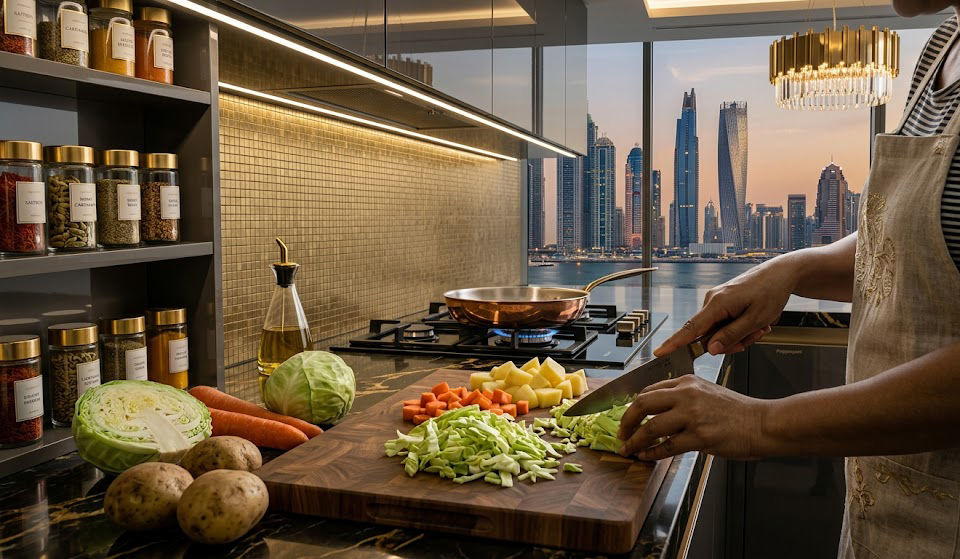
Where Most Budget Plans Fail: The Storage Problem
Buying the right vegetables is only half the equation.
In Dubai’s climate, how you store produce matters as much as what you buy. Even small mistakes can reduce shelf life by 30–50%.
Common Storage Mistakes
- Leaving leafy greens in tight plastic without airflow
- Refrigerating everything the same way
- Storing onions and potatoes together
- Washing produce too early
Each of these speeds up spoilage.
A Simple Storage Framework That Works
You don’t need specialized equipment. Just basic separation:
Room Temperature (Cool, Dry Area)
- Potatoes
- Onions
- Garlic
Keep them away from sunlight and moisture.
Refrigerator — High Humidity Drawer
- Spinach
- Coriander
- Mint
Wrap loosely in paper or cloth to reduce condensation.
Refrigerator — Standard Shelf
- Tomatoes (only when fully ripe)
- Zucchini
- Eggplant
Avoid stacking them tightly—airflow matters.
This is the same logic used in professional kitchens:
separate by moisture sensitivity and respiration rate (how fast produce “breathes” and breaks down).
Understanding Price Differences: Market vs Supermarket vs Supplier
One of the most common questions from buyers:
“Where is produce actually cheapest in Dubai?”
The answer is not as straightforward as it seems.
1. Traditional Markets (e.g., Al Aweer and Similar)
Often lower prices, especially for:
- Bulk vegetables
- Seasonal items
- Locally sourced produce
But tradeoffs include:
- Less consistency in grading (size/appearance)
- Need for physical visit
- Larger quantities
2. Supermarkets
More convenient, but:
- Higher markups on everyday items
- Better visual quality, not always better freshness
- Smaller pack sizes (which can increase cost per kg)
This is where many households overspend without realizing it.
3. Organized Suppliers and Delivery Services
A middle ground:
- More consistent quality
- Predictable sourcing
- Time-saving for busy buyers
In practice, some UAE buyers prefer working with established wholesale produce providers rather than fragmented retail sourcing, especially when consistency matters more than small price differences.
Wholesale vs Retail: A Misunderstood Tradeoff
There’s a persistent belief:
“Wholesale is cheaper but lower quality.”
This is not accurate.
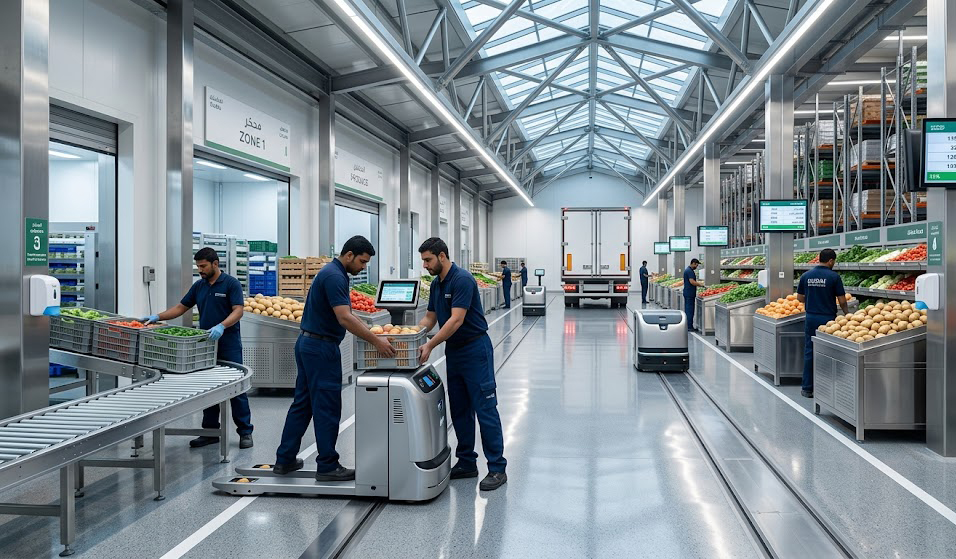
Wholesale supply chains are designed differently:
- Faster turnover
- Less time on display
- Direct sourcing from farms or import channels
This often results in fresher produce, not worse.
The real difference is:
- Wholesale prioritizes volume and speed
- Retail prioritizes presentation and convenience
For households, the challenge is quantity.
For businesses, the challenge is consistency.
How to Judge Freshness (Even Without Experience)
You don’t need to be an expert to assess produce quality.
A few practical checks go a long way:
For Leafy Greens
- Look for crispness, not limpness
- Avoid excessive moisture in packaging
- Check stems—they should not be slimy
For Root Vegetables
- Firm texture
- No soft spots
- Minimal sprouting (for potatoes)
For Tomatoes
- Slight give when pressed
- No wrinkling
- Avoid overly shiny skins (can indicate early harvesting)
These are the same indicators used in procurement decisions at larger scale.
How Seasonality Changes Your Budget in the UAE
Dubai’s produce supply is heavily influenced by imports—but seasonality still plays a major role.
Winter (Best for Budget Buyers)
- Leafy greens become more affordable and stable
- Regional sourcing improves (less reliance on long-distance imports)
- Better flavor and shelf life
This is the ideal time to stretch a budget like AED 150.
Summer (Higher Risk Period)
- Faster spoilage due to heat
- Greater dependence on imports
- Higher handling and storage costs
In summer, the same basket may not last a full week without careful storage.
The Real Cost of “Cheap Fruit & Vegetables Delivery in Dubai”
Delivery has made access easier—but it introduces a different dynamic.
Advantages
- Saves time
- Reduces impulse buying
- Allows comparison between suppliers
Limitations
- Less control over selection
- Variability in quality depending on supplier handling
- Potential markup for convenience
The key is not to avoid delivery—but to understand when it makes sense.
For example:
- Bulk staples → often better sourced physically
- Regular weekly items → delivery can be efficient
What This Means for Restaurants and Small Food Businesses
While this experiment was done at a household level, the same principles apply to small F&B operations.
Where Businesses Lose Money
- Over-ordering perishable items
- Inconsistent supplier selection
- Lack of inventory rotation
Even small inefficiencies compound over time.
A More Stable Approach
- Build menus around durable ingredients
- Use high-risk produce in controlled quantities
- Align purchasing cycles with actual usage
This is how professional kitchens maintain both cost control and consistency.
A Quiet Industry Insight: Why Consistency Matters More Than Price
Across procurement discussions, one theme appears repeatedly:
Buyers are willing to pay slightly more for consistency.
Not because they want to—but because inconsistency creates hidden costs:
- Menu disruption
- Customer dissatisfaction
- Food waste
In practice, suppliers working at scale—including structured distributors such as JMB Farm Fresh—tend to focus less on being the cheapest and more on predictable quality and supply continuity.
That’s often what experienced buyers prioritize over time.
A Simple Weekly Framework You Can Reuse
If you want to replicate this approach, here’s a practical structure:
Step 1: Choose 4–5 Base Vegetables
- Long shelf life
- Multi-use
- Stable pricing
Step 2: Add 3–4 Supporting Vegetables
- For variation
- Moderate shelf life
Step 3: Include 2–3 Short-Life Items
- Use early in the week
Step 4: Add 2–3 Fruits
- Focus on durability
Step 5: Plan Usage Order (Not Just Meals)
This is the step most people skip—and it’s the most important.
What You Should NOT Do (Even on a Budget)
To keep costs low without sacrificing quality, avoid:
- Buying large quantities of herbs without a usage plan
- Choosing visually perfect produce over practical produce
- Mixing too many cuisines in one week (leads to unused ingredients)
- Ignoring storage conditions
These are small decisions—but they define whether AED 150 is enough or not.
What This Experiment Doesn’t Show (But You Should Know)
A one-week plan can demonstrate what’s possible—but it doesn’t capture everything.
There are real constraints in Dubai’s produce system that affect both households and businesses.
1. Not All Weeks Are Equal
Prices shift based on:
- Import cycles
- Weather conditions in source countries
- Logistics disruptions
You may find tomatoes affordable one week and noticeably higher the next.
That doesn’t mean the system failed—it means flexibility is part of budget planning.
2. Quality Can Vary Within the Same Category
Two batches of the same vegetable can behave very differently.
For example:
- One batch of spinach lasts 3 days
- Another wilts within 24 hours
This is influenced by:
- Time since harvest
- Storage during transport
- Handling at the retail level
Understanding this helps set realistic expectations.
3. Time Is Also a Cost
Cooking from fresh produce requires:
- Preparation time
- Basic cooking skills
- Planning
For some households, convenience may outweigh cost savings—and that’s a valid tradeoff.
The goal is not to eliminate convenience, but to use it intentionally.
The Bigger Lesson: How to Think Like a Produce Buyer
After one week, the most valuable shift wasn’t in spending—it was in thinking.
Professional buyers don’t approach food as isolated meals.
They approach it as a flow of ingredients over time.
That means:
- Thinking in shelf life windows
- Planning usage sequences
- Balancing risk across items
Once you start thinking this way, the question changes from:
“Is this cheap?”
to:
“Will this still be usable in 3–5 days?”
That single shift can reduce waste more than any discount ever will.
A Realistic Takeaway for Dubai Residents
Eating healthy on a budget in Dubai is possible—but it depends on three consistent habits:
1. Buy With a System, Not Emotion
Avoid impulse purchases.
Stick to ingredients that serve multiple meals.
2. Respect Shelf Life
Use fragile items early.
Let durable items carry the end of the week.
3. Accept Some Repetition
Variety comes from cooking, not from buying everything at once.
Final Reflection: Why AED 150 Was Enough
AED 150 worked—not because it’s a magic number.
It worked because:
- The basket was structured
- The usage was planned
- Waste was minimized
If any of those three failed, the same amount would not have been enough.
This is the part often missing from discussions around cheap fresh vegetables in Dubai budget planning.
It’s not about finding the cheapest supplier.
It’s about building a system that respects how produce actually behaves in this environment.
Frequently Asked Questions (FAQ)
1. Can you really eat healthy on AED 150 per week in Dubai?
Yes, but it requires planning. Choosing durable vegetables, sequencing usage, and minimizing waste are more important than finding the lowest prices.
2. Where can I find affordable fresh produce in Dubai?
Traditional markets often offer better pricing for bulk items, while supermarkets provide convenience. Organized suppliers can offer consistency. The best choice depends on your priorities.
3. Is wholesale produce lower quality than supermarket produce?
Not necessarily. Wholesale produce often moves faster and may be fresher. The main difference is presentation and packaging, not quality.
4. Which vegetables last the longest in Dubai’s climate?
Potatoes, onions, carrots, and cabbage are among the most durable. They handle room temperature better and maintain usability for longer periods.
5. How can I reduce food waste when buying vegetables?
Plan usage order, store items correctly, and avoid overbuying perishable produce like herbs and leafy greens.








 Home
Home  Whishlist
  Compare
  Checkout