












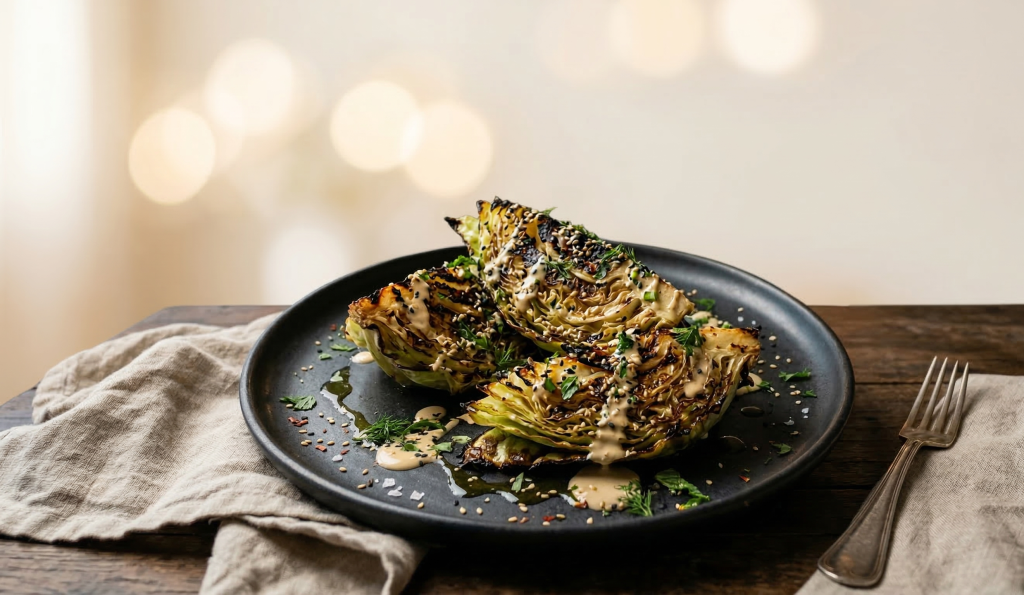
In recent years, cabbage has quietly moved from the background of many kitchens to the center of the plate. What used to be seen as a simple ingredient for soups or stir-fries is now appearing in restaurant menus as a stand-alone dish — deeply roasted, smoky, and surprisingly rich.
Across kitchens in the UAE, especially in cities like Dubai, chefs and home cooks alike are rediscovering how much flavor cabbage can develop when cooked properly. A well-executed charred cabbage recipe transforms a very affordable vegetable into something layered, caramelized, and satisfying.
This trend has spread quickly through social media, restaurant kitchens, and home cooking communities. The appeal is simple: cabbage is inexpensive, widely available, and responds beautifully to high heat.
But there is a small detail many recipes miss.
Charred cabbage is not just “roasted cabbage.” The technique — how the cabbage is cut, heated, and finished — makes the difference between soft steamed leaves and a deeply browned dish with crisp edges.
This guide explains:
- Why charred cabbage is trending in the UAE
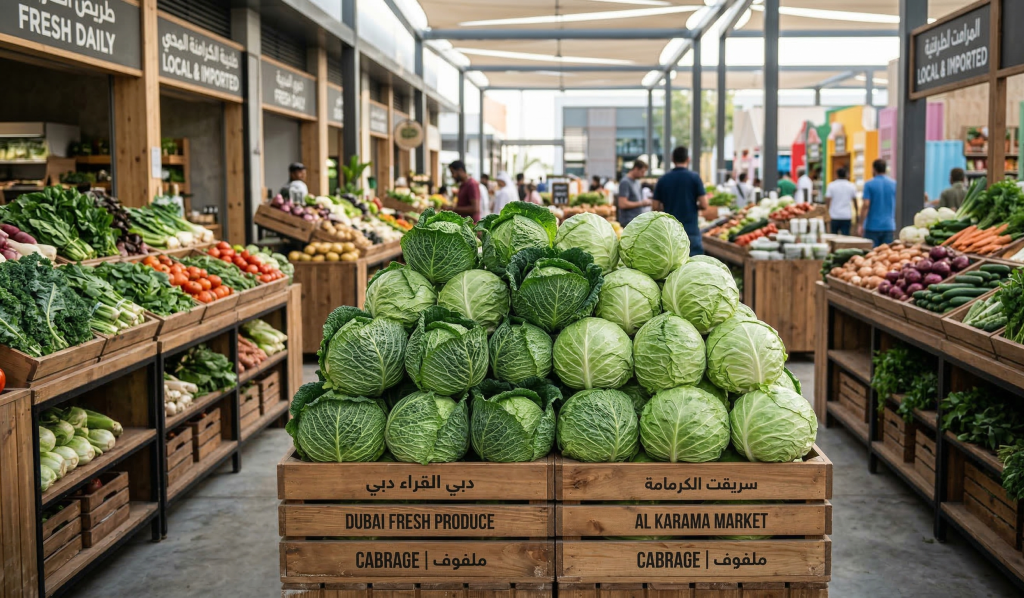
- How to select the right cabbage in Dubai markets
- A reliable roasted cabbage recipe UAE home cooks can follow
- Common mistakes that ruin texture and flavor
- Practical tips from produce suppliers and restaurant kitchens
The goal is simple: help you cook cabbage in a way that makes people ask how you did it.
Why Charred Cabbage Is Suddenly Everywhere
Food trends rarely appear overnight. They usually start in restaurant kitchens before slowly moving into home cooking.
Over the past few years, chefs around the world have focused more on vegetable-forward cooking — dishes where vegetables are treated with the same care traditionally reserved for meat or seafood.
Cabbage became a natural candidate for this shift.
It has several advantages:
- Dense leaves that hold structure when roasted
- Natural sugars that caramelize under high heat
- A mild flavor that absorbs seasoning easily
- Year-round availability in UAE markets
When cabbage is cooked slowly or boiled, it often tastes mild or slightly sulfurous. But when exposed to strong heat — especially direct contact with a hot pan or oven tray — the outer leaves begin to brown and caramelize.
That process creates the deep, smoky flavor associated with charred cabbage recipes.
Many restaurants in Dubai now serve charred cabbage with:
- tahini or yogurt sauces
- citrus dressings
- chili oil
- toasted seeds or nuts
This restaurant influence is a major reason the vegetable is appearing more often in cabbage recipes 2026 food bloggers are sharing online.
But home cooks can achieve similar results with simple equipment.
Understanding Cabbage Quality in UAE Markets
Before cooking cabbage, it helps to understand how the vegetable typically reaches kitchens in the UAE.
The country imports a significant portion of its vegetables. Cabbage may come from:
- Jordan
- Oman
- India
- China
- Europe (seasonally)
Local greenhouse production also contributes during cooler months.
Because of this international supply chain, cabbage quality can vary depending on the season and shipment timing.
Signs of Fresh Cabbage
Whether buying from supermarkets, wholesale markets, or ordering fresh cabbage online in Dubai, look for these characteristics:
1. Firm, compact head
The cabbage should feel dense for its size. Loose leaves usually indicate aging.
2. Crisp outer leaves
Healthy cabbage leaves feel tight and slightly glossy.
3. Minimal browning
Some trimming marks are normal, but heavy discoloration means the cabbage has been stored too long.
4. Weight
Heavier heads usually contain more moisture and cook better when roasted.
In wholesale produce discussions, buyers often mention that cabbage is one of the vegetables where visual inspection matters more than brand or packaging.
Suppliers familiar with restaurant procurement frequently note that kitchens prefer medium-sized heads. These tend to cook more evenly when cut into wedges or thick slices.
In practice, distributors working closely with Dubai-based suppliers such as JMB Farm Fresh often observe that chefs select cabbage primarily based on firmness and leaf density rather than origin country.
This matters because charred cabbage depends on structural integrity. If the cabbage is loose or aged, it falls apart before caramelization happens.
The Key Principle Behind Perfect Charred Cabbage
Many home recipes describe cabbage roasting, but few explain what actually produces the flavor.
The essential factor is direct heat contact.
Cabbage browns through a process called the Maillard reaction. This happens when natural sugars and amino acids react under high heat.
For cabbage, that means:
- High oven temperature
- Minimal overcrowding
- Direct contact with a hot pan or tray
If cabbage is crowded on a tray or cooked at low heat, it releases water and begins to steam instead of char.
The result is soft cabbage — not the crisp-edged vegetable people expect from modern roasted cabbage recipes in the UAE.
To avoid this, chefs usually:
- cut thick wedges or steaks
- oil lightly
- roast at high heat
- finish with seasoning after cooking
Understanding this principle makes the recipe much easier to execute.
A Reliable Charred Cabbage Recipe for Home Kitchens
This method works well in most home ovens and does not require specialized equipment.
Ingredients
- 1 medium green cabbage
- 3 tablespoons olive oil
- 1 teaspoon coarse salt
- ½ teaspoon black pepper
- Optional: lemon juice, yogurt sauce, chili oil, or tahini
Step 1 — Preheat the oven
Set the oven to 220°C (425°F).
High heat is essential for proper caramelization.
Step 2 — Cut the cabbage
Remove the outer leaf if damaged.
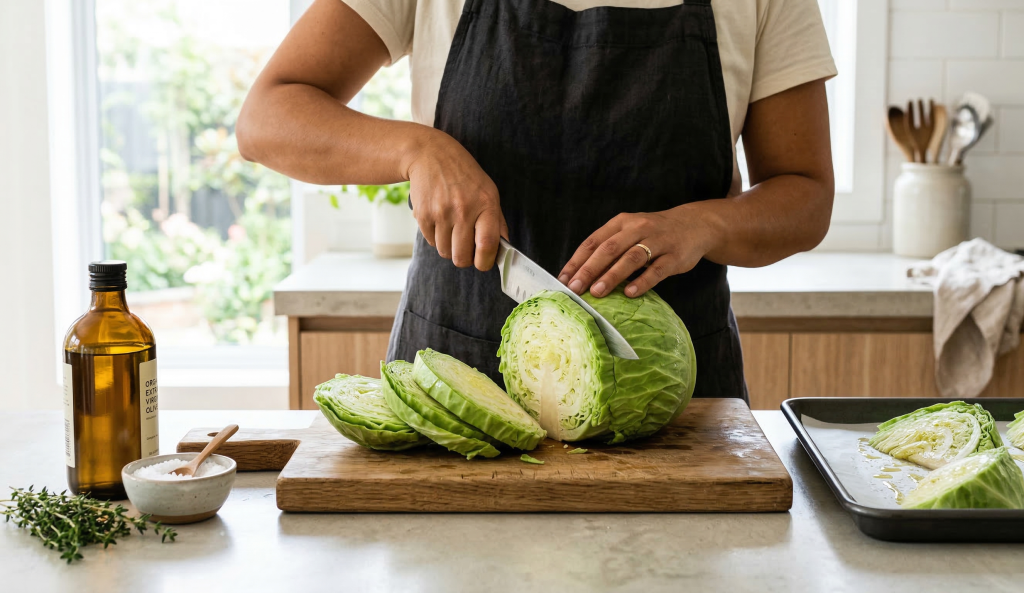
Cut the cabbage into thick wedges, leaving part of the core intact so the layers stay together.
Thin slices cook too quickly and lose texture.
Step 3 — Prepare the tray
Use a heavy baking tray or cast-iron pan.
Lightly coat with olive oil.
Place cabbage wedges cut-side down so the surface touches the hot tray.
Step 4 — Season lightly
Brush or drizzle oil over the cabbage.
Add salt and pepper.
Avoid excessive seasoning at this stage; delicate spices burn under high heat.
Step 5 — Roast
Cook for 18–25 minutes, depending on cabbage size.
The edges should become deeply browned.
If desired, flip once halfway through to char both sides.
Step 6 — Finish and serve
After roasting, add finishing flavors such as:
- lemon juice
- yogurt sauce
- toasted sesame seeds
- chili oil
The contrast between smoky cabbage and fresh toppings is what makes the dish memorable.
Why High Heat Works Better Than Slow Cooking
Many vegetables benefit from slow cooking.
Cabbage is different.
Slow heat breaks down the leaf structure and releases moisture. While this works well in soups or braised dishes, it prevents caramelization.
High heat achieves two goals simultaneously:
- Surface browning
- Interior tenderness
The outer layers crisp and darken, while the inner layers soften but remain structured.
This balance is why charred cabbage has become one of the most talked-about Dubai food trends vegetables 2026 cooking communities discuss.
Home cooks often find that once they try it, cabbage becomes part of their regular vegetable rotation.
Common Mistakes That Ruin Charred Cabbage
Charred cabbage looks simple, but small mistakes can change the outcome dramatically.
Many of the issues home cooks face come down to moisture, heat, and cutting technique.
Understanding these problems helps avoid the soft, soggy cabbage that many people associate with older cooking styles.
1. Cutting the Cabbage Too Thin
Thin slices cook quickly but rarely develop deep browning.
Instead, they collapse and release water.
For a proper charred cabbage recipe in Dubai kitchens, thicker wedges or “cabbage steaks” work best. The thicker structure allows the outside to caramelize while the inside stays tender.
2. Overcrowding the Tray
When cabbage pieces touch or overlap, they trap steam.
This is the most common reason roasted vegetables fail to brown.
Leave space between wedges so hot air can circulate. Restaurants often roast cabbage in batches for this reason.
3. Using Too Much Oil
Oil helps conduct heat, but excessive oil prevents direct contact with the pan.
A light coating is enough.
Too much oil leads to frying rather than charring.
4. Starting With a Cold Tray
Professional kitchens often preheat the tray or pan before adding vegetables.
When cabbage hits a hot surface, caramelization begins immediately.
This simple step improves texture significantly.
5. Using Old Cabbage
Older cabbage releases more water and softens quickly.
Fresh cabbage produces firmer wedges and deeper char.
This is one reason buyers in Dubai markets pay close attention to cabbage density and leaf condition.
Flavor Variations Popular in Dubai Kitchens
The base technique for charred cabbage is simple, but the finishing flavors can vary widely.
In Dubai’s diverse food scene, vegetables often absorb influences from multiple cuisines.
Below are several combinations that appear frequently in roasted cabbage recipes across the UAE.
Lemon and Olive Oil
A squeeze of lemon brightens the smoky flavor of roasted cabbage.
Many Middle Eastern dishes rely on this balance between char and acidity.
Tahini and Sesame
A drizzle of tahini with toasted sesame seeds adds richness and nutty flavor.
This pairing works especially well when cabbage develops strong charred edges.
Chili Oil and Garlic
Some modern restaurants finish charred cabbage with chili oil and lightly fried garlic.
The spice contrasts with cabbage’s mild sweetness.
Yogurt and Herbs
A cool yogurt sauce with herbs such as mint or dill softens the intensity of the roasted vegetable.
This approach is common in Mediterranean-style vegetable dishes.
Pomegranate and Citrus
For a brighter finish, some cooks add pomegranate seeds or orange zest.
The sweetness complements cabbage’s caramelized surface.
These finishing touches explain why cabbage has become part of best cabbage recipe home cook discussions online. The vegetable itself is simple, but the variations are nearly endless.
Why Cabbage Remains a Reliable Vegetable in UAE Supply Chains
Beyond cooking trends, cabbage holds an important place in the region’s produce supply.
Unlike fragile vegetables such as leafy greens, cabbage travels well and stores longer.
This durability makes it attractive for restaurants, catering operations, and households alike.
Several factors contribute to cabbage’s reliability.
Long Shelf Life
Whole cabbage can last two to three weeks under refrigeration.
For businesses managing inventory, this reduces spoilage risk.
Stable Pricing
While prices fluctuate across the produce market, cabbage is generally less volatile than delicate greens or imported specialty vegetables.
Consistent Availability
Because it is grown in multiple regions, supply disruptions are rare.
Even when one country experiences crop issues, alternative suppliers often fill the gap.
These characteristics explain why cabbage appears frequently in Dubai food trends vegetables 2026 supply discussions, especially among chefs focused on cost control and waste reduction.
Seasonal Patterns: When Cabbage Is Best in the UAE
Seasonality still matters, even in an import-driven market like the UAE.
Cabbage tends to reach peak quality during the cooler months.
Winter Produce Advantage
During winter, temperatures in regional growing areas are more favorable for cabbage cultivation.
This usually results in:
- firmer heads
- tighter leaves
- stronger flavor
For consumers and businesses, winter is often the best time for roasted cabbage recipes in the UAE.
Summer Supply Challenges
During very hot months, cabbage may travel longer distances or spend more time in cold storage.
This can slightly affect texture.
While still usable, older cabbage tends to release more water during cooking.
Many restaurant kitchens compensate by roasting at even higher temperatures to restore caramelization.
How Restaurants Achieve Deep Char on Vegetables
Professional kitchens often produce darker, more dramatic charring than home ovens.
This difference comes mainly from equipment.
Restaurants commonly use:
- high-powered convection ovens
- cast-iron pans heated on open flame
- charcoal grills
These tools create intense surface heat.
However, home cooks can still achieve similar results by focusing on three factors:
- High oven temperature
- Minimal moisture on the cabbage surface
- Direct contact with a hot tray
Some cooks also finish the cabbage briefly under the broiler for additional browning.
This final step mimics the heat intensity of restaurant kitchens.
Buying Cabbage in Dubai: Retail vs Wholesale
In Dubai’s produce ecosystem, cabbage reaches consumers through several channels.
These include:
- supermarkets
- neighborhood groceries
- online grocery platforms
- wholesale produce markets
Each has advantages depending on the buyer’s needs.
Supermarkets
Supermarkets offer convenience and predictable presentation.
However, cabbage here may have spent more time in storage.
Online Produce Delivery
Ordering vegetables online has grown rapidly in recent years.
Many households appreciate the ability to buy fresh cabbage online in Dubai and receive scheduled deliveries.
Quality depends heavily on the supplier’s sourcing practices.
Wholesale Markets
Wholesale markets such as the large produce hub in Al Aweer serve restaurants, caterers, and bulk buyers.
Prices are usually lower, but purchases often require larger quantities.
Some experienced home cooks also visit wholesale markets when preparing large gatherings or events.
Suppliers working closely with restaurant procurement teams often observe that buyers prefer cabbage shipments arriving within 24–48 hours of harvest whenever possible.
This reduces the likelihood of soft leaves and moisture loss.
How to Store Cabbage Properly at Home
One reason cabbage appears so frequently in professional kitchens is its storage resilience. Unlike delicate vegetables such as spinach or herbs, cabbage holds its structure for long periods if stored correctly.
For households in Dubai, where weekly grocery delivery is common, proper storage helps maintain freshness and reduce waste.
Whole Cabbage Storage
If the cabbage head is still intact, keep it in the refrigerator’s vegetable drawer.
Avoid washing it before storage. Excess moisture accelerates spoilage.
A whole cabbage typically keeps well for two to three weeks under refrigeration. The outer leaves may soften slightly over time, but the interior usually remains crisp.
Cut Cabbage Storage
Once cut, cabbage becomes more sensitive to dehydration and odor absorption.
To maintain quality:
- Wrap the cut surface with plastic or reusable food wrap
- Store in an airtight container
- Use within 3–5 days
This short window is one reason restaurants often plan cabbage dishes early in the week after receiving produce deliveries.
Why Proper Storage Matters for Roasting
Cabbage that has dried out loses moisture balance. When roasted, it tends to burn unevenly instead of developing smooth caramelization.
For dishes like charred cabbage, freshness strongly affects the final texture.
Why Home Cooks Are Rediscovering Cabbage
The renewed interest in cabbage is not only about cooking technique. It also reflects broader changes in how people think about vegetables.
Many modern home cooks want meals that are:
- affordable
- simple to prepare
- nutritious
- flexible for different cuisines
Cabbage fits these priorities unusually well.
A Budget-Friendly Vegetable
Even in cities with higher food costs such as Dubai, cabbage remains relatively affordable compared to many specialty vegetables.
This makes it appealing for families cooking regularly at home.
Adaptable Across Cuisines
Cabbage appears in a wide range of culinary traditions:
- stir-fries in East Asian cooking
- fermented dishes such as kimchi
- braised European preparations
- salads and slaws
- roasted vegetable plates
The charred cabbage recipe trend reflects a modern reinterpretation of a very traditional ingredient.
Minimal Preparation
Unlike vegetables that require peeling, trimming, or complex cutting, cabbage preparation is straightforward.
A knife and a cutting board are usually all that is needed.
This simplicity contributes to cabbage’s popularity in best cabbage recipe home cook communities online, where many people seek practical weeknight meals.
Practical Takeaways for Cooking Charred Cabbage
For anyone trying charred cabbage at home, a few principles consistently produce better results.
Choose firm cabbage heads
Dense cabbage with tight leaves holds structure during roasting.
Cut thicker wedges
Thicker pieces allow caramelization while maintaining tenderness inside.
Use high heat
Temperatures around 220°C (425°F) encourage browning instead of steaming.
Avoid overcrowding
Space between cabbage pieces allows proper air circulation in the oven.
Add finishing flavors afterward
Delicate ingredients such as citrus, yogurt, or herbs should be added after roasting to preserve freshness.
Following these simple steps usually leads to a result that rivals many restaurant vegetable dishes.
The Role of Reliable Produce Supply
Behind every successful vegetable dish lies a less visible factor: consistent produce sourcing.
Restaurants and households in Dubai rely on a complex supply network that includes farms, importers, distributors, and wholesale markets.
For vegetables like cabbage, freshness often depends on how efficiently that chain operates.
In practice, produce suppliers working closely with regional distributors — including firms such as JMB Farm Fresh — frequently emphasize careful handling, temperature control, and rapid distribution. These operational details help ensure vegetables reach kitchens with the firmness and moisture needed for cooking methods like roasting or charring.
For home cooks, this simply translates to one practical habit: buying vegetables from suppliers known for consistent turnover and proper storage.
Why Charred Cabbage Reflects a Larger Food Trend
The popularity of charred cabbage is not an isolated phenomenon.
It reflects a broader movement toward vegetable-focused cooking that prioritizes flavor and technique rather than expensive ingredients.
Across many restaurants in Dubai and beyond, chefs are increasingly treating vegetables with the same attention once reserved for premium proteins.
This shift encourages cooks to:
- explore roasting and grilling techniques
- highlight natural sweetness in vegetables
- pair vegetables with bold sauces or toppings
Cabbage happens to be particularly well suited to this approach.
Its structure withstands high heat, its flavor deepens during caramelization, and it remains widely accessible across grocery markets.
For many households, learning how to char cabbage properly becomes a small but meaningful step toward more confident vegetable cooking.
Conclusion
Cabbage may not seem like an exciting ingredient at first glance. It is inexpensive, widely available, and often associated with traditional cooking methods.
Yet the recent popularity of charred cabbage shows how dramatically technique can change perception.
By applying high heat, simple seasoning, and thoughtful finishing touches, cabbage transforms into a dish that feels both modern and deeply satisfying.
For cooks in Dubai, this trend also highlights the importance of produce quality. Fresh, firm cabbage responds far better to roasting than older heads that have spent too long in storage.
When selected carefully and cooked with attention to heat and spacing, cabbage becomes more than a side vegetable. It becomes a centerpiece — smoky, tender, and surprisingly rich.
And perhaps that is why so many kitchens are rediscovering it.
Frequently Asked Questions
1. What is the best cabbage for a charred cabbage recipe in Dubai?
Green cabbage is the most common and reliable choice. It has dense leaves that hold their shape during roasting and develops strong caramelization when exposed to high heat.
2. Can I make roasted cabbage without an oven?
Yes. A heavy cast-iron pan on the stovetop works well. Cook cabbage wedges over medium-high heat with a small amount of oil until the surface browns deeply.
3. Why does my cabbage become soft instead of charred?
This usually happens when the oven temperature is too low or when cabbage pieces are crowded on the tray. Moisture builds up and causes steaming instead of caramelization.
4. Is cabbage available year-round in Dubai?
Yes. Due to international supply chains and regional farming, cabbage is widely available throughout the year in Dubai markets.
5. How long does cabbage stay fresh in the refrigerator?
A whole cabbage can last two to three weeks in the refrigerator. Once cut, it should ideally be used within three to five days.








 Home
Home  Whishlist
  Compare
  Checkout