












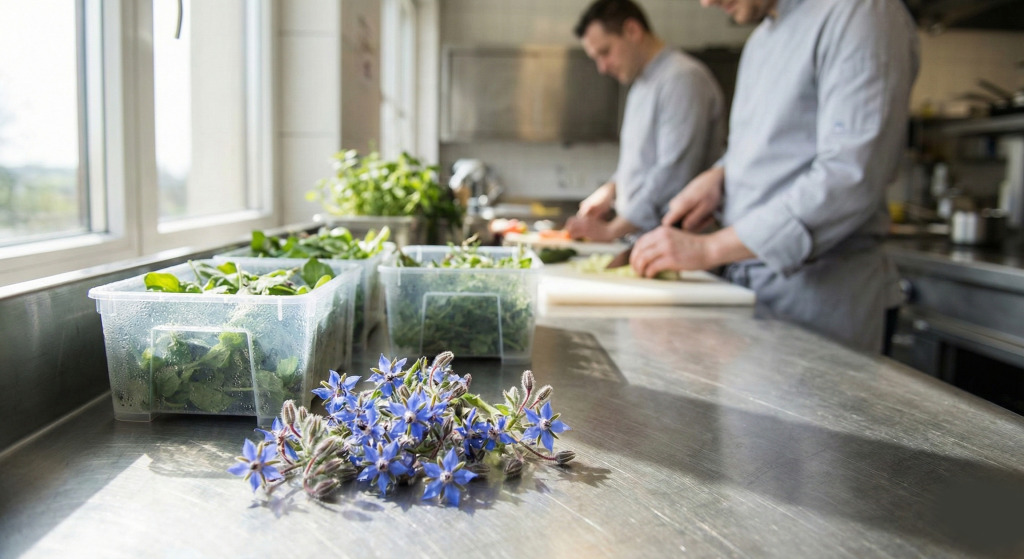
Introduction: Why Edible Flowers Are Quietly Returning to Professional Kitchens
In Dubai’s food scene, visual appeal and ingredient integrity matter as much as flavour. Over the past few years, edible flowers have moved from novelty garnish to considered ingredient—used carefully, sparingly, and with purpose.
Among them, borage edible flowers have gained steady attention. Not because they are rare or flashy, but because they solve a real problem chefs and home cooks face: how to add freshness, colour, and a clean herbal note without overpowering a dish.
This article looks at borage flowers through a practical lens. Not trends. Not hype. But how they behave in real kitchens, how they are sourced in the UAE, and where they genuinely add value in salads, desserts, and cocktails—especially during the winter produce season in Dubai.
What Are Borage Flowers, and Why Are They Edible?
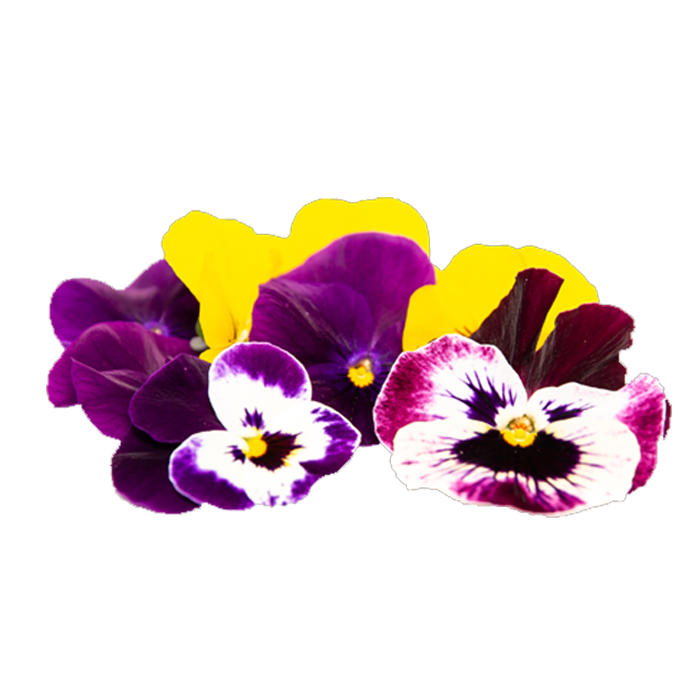
Borage flowers come from the borage plant (Borago officinalis), an herb traditionally grown in Mediterranean and temperate climates. The flowers are small, star-shaped, and typically blue, though pink and white variations exist.
What makes them edible is not novelty—it is history. Borage has been used for centuries in European and Middle Eastern kitchens, often fresh, not dried.
From a food safety standpoint, only the flowers are commonly used raw. The leaves are edible when cooked, but they are not typically part of modern edible flower supply chains in the UAE.
Flavour Profile: Mild, Clean, and Cucumber-Like
One reason borage flowers work across savoury and sweet dishes is their restrained flavour.
Most chefs describe the taste as:
- Light cucumber
- Clean and fresh
- Slightly herbal, not bitter
This matters in professional settings. Strong edible flowers can clash with proteins or desserts. Borage does not. It supports a dish rather than leading it.
Why Borage Flowers Work So Well in Dubai’s Climate and Cuisine
Dubai’s food culture is shaped by diversity, climate, and logistics. Ingredients that perform well here tend to share a few traits:
- Short preparation time
- Visual impact
- Compatibility with multiple cuisines
- Predictable shelf life when handled correctly
Borage flowers fit these criteria better than many edible flowers.
Cooling Perception in Warm Climates
Even in winter, Dubai kitchens operate in warm conditions. Ingredients that feel cooling on the palate—like cucumber, mint, and citrus—are favoured.
Borage naturally complements these profiles, which is why it appears most often in:
- Light salads
- Chilled desserts
- Cold beverages and cocktails
Adaptability Across Cuisines
Because borage flavour is subtle, it appears in:
- European fine dining
- Middle Eastern mezze
- Modern café desserts
- Contemporary mixology
This adaptability makes it easier for hotels, caterers, and restaurants to standardise use without redesigning menus.
Salads: Where Borage Flowers Add Value (and Where They Don’t)
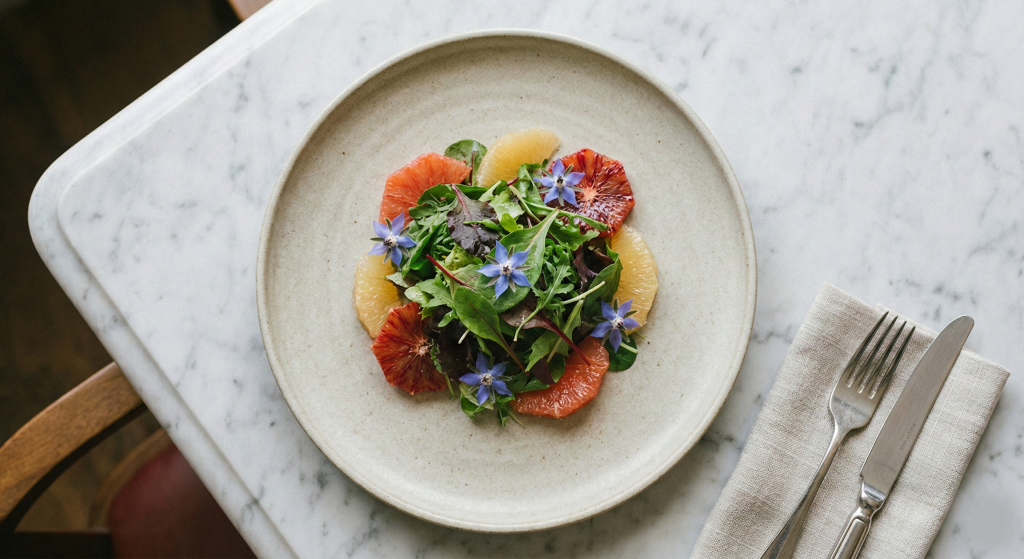
Salads are the most common entry point for edible flowers in Dubai kitchens. But misuse is common.
When Borage Flowers Work in Salads
They add value when:
- The base is mild (greens, burrata, citrus, cucumber)
- The dressing is not overly acidic
- The flower is added at plating, not mixed early
Common successful combinations include:
- Citrus salads with fennel
- Burrata with olive oil and herbs
- Grain salads served warm, finished with fresh elements
Common Salad Mistakes Buyers and Chefs Make
From a supply and kitchen perspective, these issues come up often:
- Overusing flowers, making salads taste grassy
- Mixing flowers too early, causing wilting
- Treating edible flowers like herbs rather than fresh produce
Borage flowers should be handled more like delicate greens than garnishes.
Desserts: Subtlety Matters More Than Decoration
In desserts, edible flowers are often judged unfairly. When used poorly, they feel decorative and unnecessary. When used well, they add balance.
Where Borage Flowers Belong in Desserts
They work best in:
- Yogurt-based desserts
- Citrus tarts
- Light sponge cakes
- Fresh fruit plates
The cucumber-like note offsets sweetness rather than adding floral perfume. This is especially useful in modern dessert menus that aim to reduce perceived sugar.
What to Avoid
Borage flowers are not ideal for:
- Heavy chocolate desserts
- Very sweet syrups
- Long-baked applications
Heat destroys both structure and flavour. These flowers are meant to be fresh.
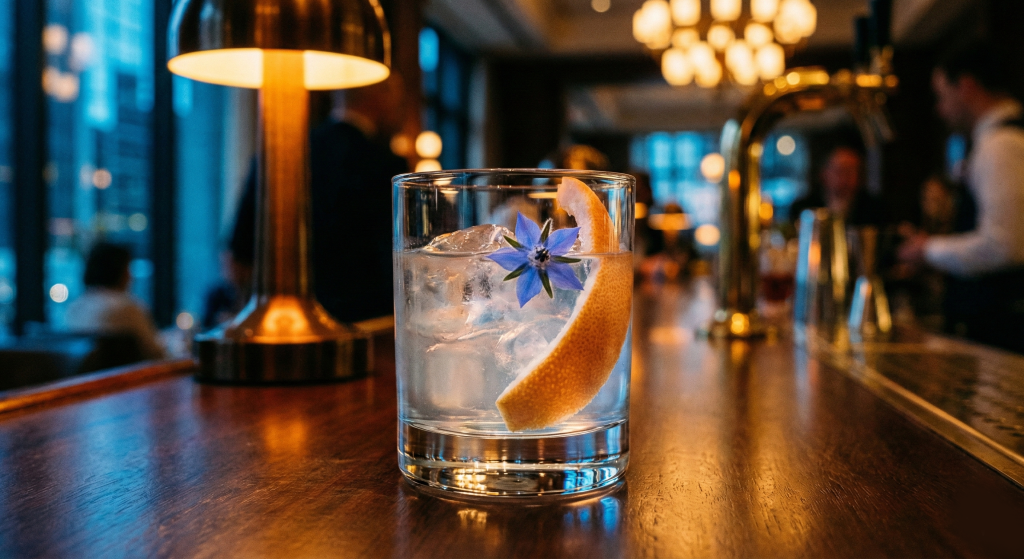
Cocktails and Cold Beverages: Practical, Not Just Visual
In Dubai’s hospitality sector, cocktails drive much of the demand for edible flowers.
Borage flowers are valued because they:
- Hold shape briefly on ice
- Do not stain drinks
- Do not overpower spirits
Typical Uses in Beverage Programs
They are commonly seen as:
- Floating garnish in gin-based drinks
- Ice cube inclusions
- Finishing touch on mocktails and spritzes
For bars, the benefit is consistency. Unlike fragile petals, borage flowers are predictable when fresh.
Understanding Seasonal Availability of Borage Flowers in the UAE
This is where many buyers feel uncertain.
Winter Is the Key Season
In the UAE, winter is peak season for most edible flowers, including borage. Cooler temperatures reduce stress on delicate crops and improve quality.
During winter months:
- Local or regional supply is more stable
- Flowers arrive fresher
- Shelf life improves when cold chain is maintained
Outside winter, availability becomes more dependent on imports, which introduces variability.
Local vs Imported: What Buyers Should Know
Local or regional sourcing typically means:
- Shorter transit time
- Better visual quality
- Lower spoilage risk
Imported flowers may still meet standards, but buyers should expect:
- Higher sensitivity to handling
- Shorter usable life
- More batch variation
Experienced buyers often adjust menus seasonally to reflect this reality.
At this point, we have covered what borage flowers are, how they behave in kitchens, and why they suit Dubai’s climate and cuisine. The next section will shift focus to sourcing realities, common quality issues, and how buyers—both households and businesses—can judge freshness without relying on labels or marketing language.
Sourcing Borage Edible Flowers in Dubai: What Actually Matters
For buyers in Dubai, sourcing edible flowers is less about where you buy from and more about how the supply is handled before it reaches your kitchen.
This is where confusion often arises. Many assume edible flowers are interchangeable across suppliers. In practice, small differences in harvesting, packing, and transport make a visible difference within 24 to 48 hours.
What Quality Looks Like on Arrival
Fresh borage flowers should arrive with:
- Firm petals that hold their star shape
- Even colour without dark edges
- Dry surfaces (no moisture pooling)
- Minimal leaf debris or broken stems
If flowers arrive damp or partially collapsed, the issue usually started before delivery—not in your refrigerator.
Common Quality Problems Buyers Encounter
From discussions with chefs, buyers, and caterers, a few patterns repeat:
- Temperature shock during transport
Flowers exposed to warm air, even briefly, wilt quickly. - Overpacking
Compression damages petals and shortens usable life. - Mixed batches
Combining flowers harvested on different days reduces consistency.
These problems are not unique to Dubai, but the climate amplifies their impact.
Wholesale vs Retail: A Practical Comparison for Edible Flowers
Edible flowers highlight the difference between wholesale and retail sourcing more clearly than most produce.
Retail Sourcing: When It Works
Retail outlets can be suitable for:
- One-off home use
- Small dinner events
- Immediate same-day preparation
However, retail flowers are often:
- Repacked multiple times
- Stored longer before sale
- Handled by staff unfamiliar with delicate produce
This increases variability.
Wholesale Sourcing: The Trade-Offs
Wholesale supply tends to offer:
- More consistent handling
- Shorter time between harvest and use
- Better batch uniformity
The trade-off is volume. Wholesale formats are better suited to:
- Restaurants
- Hotels
- Catering operations
- Food service distributors
Some buyers working with established UAE produce distributors, such as JMB Farm Fresh, note that consistency improves when edible flowers are treated as produce, not decoration.
This observation is not about brand preference, but about supply discipline.
How to Judge Freshness Without Labels or Claims
Edible flowers rarely come with detailed grading labels. Buyers rely on observation and experience.
Simple Checks That Matter
Before accepting or using borage flowers:
- Lightly tap the petals — they should spring back
- Smell gently — there should be no musty or sour notes
- Check the base — stems should not feel slimy
If flowers fail any of these checks, they will not improve with refrigeration.
Storage Mistakes That Shorten Shelf Life
Even good-quality flowers can degrade quickly if mishandled.
Common errors include:
- Storing near ethylene-producing fruits (like apples)
- Sealing completely airtight
- Washing before storage instead of before use
Borage flowers should be stored cool, dry, and unwashed until needed.
Real-World Use Cases in Dubai Kitchens
Understanding where borage flowers fit best helps reduce waste.
Restaurants and Cafés
For daily service, borage flowers work best when:
- Assigned to one or two menu items
- Used as finishing elements
- Ordered in modest, frequent quantities
Over-ordering often leads to spoilage rather than creative use.
Hotels and Catering Operations
Larger operations typically use borage flowers:
- For banquet plating
- In breakfast spreads with cold items
- In controlled beverage programs
Here, planning and communication between procurement and kitchen teams matters more than price.
Households and Home Cooks
For families in Dubai, borage flowers make sense when:
- Entertaining guests
- Preparing light weekend meals
- Adding visual interest without strong flavour
They are less practical for everyday cooking.
Misunderstandings Around “Healthy Edible Flowers”
Edible flowers are often framed as health ingredients. This can be misleading.
Borage flowers are:
- Low in calories
- Mostly water
- Used in very small amounts
Their value is not nutritional density. It is balance—visual, sensory, and culinary.
Treating them as superfoods creates unrealistic expectations and disappointment.
Seasonality and Price Stability: What Buyers Should Expect
In winter, borage flowers are generally:
- Easier to source
- More consistent in quality
- Less prone to sudden shortages
Outside winter, prices may fluctuate due to:
- Import reliance
- Higher spoilage rates
- Limited growing windows
Experienced buyers plan menus accordingly rather than forcing year-round availability.
Common Buying Mistakes to Avoid in the UAE Market
Edible flowers, including borage, fail most often because expectations are misaligned with reality. The following mistakes appear repeatedly across households, restaurants, and catering operations in Dubai.
Treating Edible Flowers as Shelf-Stable Garnish
Borage flowers are not dry garnishes. They behave like highly delicate produce.
When buyers expect them to last a week without planning usage, waste becomes unavoidable.
Ordering Without a Specific Use Case
Buying “just in case” is one of the fastest ways to lose value. Edible flowers should always be tied to:
- A defined dish
- A defined service window
- A defined storage plan
Without this, even high-quality supply degrades unused.
Assuming All Flowers Are the Same
Different edible flowers respond differently to temperature, moisture, and handling. Borage is more forgiving than some varieties, but it still requires care.
Comparing it directly to herbs or microgreens leads to poor storage decisions.
Balancing Creativity With Practicality
In Dubai’s food industry, creativity must work within logistical limits.
Borage flowers succeed because they sit at the intersection of:
- Visual appeal
- Neutral flavour
- Manageable handling requirements
They do not demand specialised training or equipment, which lowers operational risk.
That is why they appear more often in working kitchens than in experimental ones.
When Borage Flowers Are Not the Right Choice
Balanced guidance includes knowing when not to use an ingredient.
Borage flowers may not be ideal when:
- Dishes rely on intense heat
- Preparation is done far in advance
- Storage space is limited or inconsistent
In these cases, alternatives such as citrus zest, herbs, or textured elements may deliver better results.
A Note on Supplier Relationships in the UAE
Over time, buyers tend to move away from fragmented sourcing. Not because variety is undesirable, but because consistency matters more.
In practice, suppliers working closely with Dubai-based distributors such as JMB Farm Fresh often observe fewer quality disputes when expectations around seasonality, handling, and realistic shelf life are aligned from the start.
This is less about brand and more about process maturity.
Practical Takeaways for Buyers and Kitchens
To use borage edible flowers effectively in Dubai:
- Treat them as fresh produce, not decoration
- Align orders with immediate menu needs
- Respect seasonal availability, especially winter advantages
- Judge quality visually and by touch, not by labels
- Accept that subtlety is their strength
These principles reduce waste and improve outcomes across both home and professional kitchens.
Conclusion: A Quietly Reliable Ingredient
Borage flowers are not transformative because they are rare or dramatic. They matter because they are reliable when used with intent.
In Dubai’s diverse food environment—where menus must balance appearance, flavour, and operational reality—borage edible flowers offer a practical way to elevate dishes without adding complexity.
Used thoughtfully, they do not demand attention. They simply belong.
Frequently Asked Questions
Are borage flowers safe to eat raw?
Yes, the flowers are commonly used raw when sourced specifically for culinary use and handled properly.
Do borage flowers have a strong taste?
No. Their flavour is mild and often described as light cucumber.
How long do fresh borage flowers last?
When stored correctly, they typically remain usable for a few days. They are best used as soon as possible.
Are borage flowers available year-round in Dubai?
They are most reliable during winter. Availability outside this season may vary due to import reliance.
Can borage flowers be used in hot dishes?
They are best added at the end or used in cold preparations. Heat damages their structure and flavour.








 Home
Home  Whishlist
  Compare
  Checkout