














Introduction: A Simple Herb That Divides an Entire City
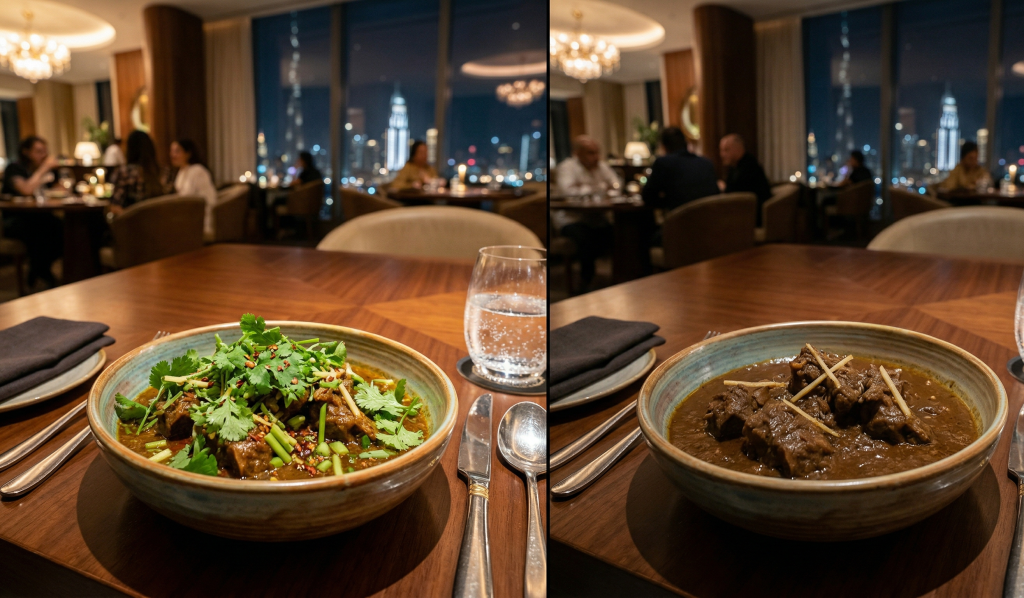
Walk into any kitchen in Dubai — whether it’s a high-end restaurant in DIFC or a home kitchen in Deira — and you will find one herb that sparks surprisingly strong opinions: coriander.
Some people cannot imagine cooking without it. Others say it tastes like soap and avoid it completely.
This isn’t just preference. It’s something deeper.
In recent years, science has started to explain why this divide exists. But what matters more — especially for buyers, chefs, and suppliers — is how this small detail affects sourcing, menu planning, and even food waste across the UAE.
Because in a market like Dubai, where cuisines from South Asia, the Middle East, Latin America, and Europe all coexist, coriander is not just an herb. It’s a variable.
And variables matter in food supply.
Why Coriander Tastes Completely Different to Different People
The “Soap Taste” Is Not in Your Head
If coriander tastes like soap to you, you’re not imagining it.
Research has shown that certain people carry a genetic variation linked to smell receptors. These receptors are sensitive to aldehydes — compounds found in coriander that are also present in soaps and cleaning products.
So when some people taste coriander, they don’t experience “fresh” or “citrusy.”
They experience something closer to detergent.
Others Taste Something Entirely Different
For people without this genetic trait, coriander tastes bright, slightly citrusy, and fresh. It lifts heavy dishes and adds balance.
This is why the same garnish can make one diner happy and another uncomfortable.
Why This Matters in Dubai
Dubai’s food scene brings together people from dozens of culinary backgrounds:
- South Asian cuisine uses coriander heavily
- Mexican and Latin dishes rely on cilantro (same plant)
- Middle Eastern cooking uses it more selectively
- European cuisines often use it sparingly
This creates a unique situation.
A single herb becomes a risk factor in customer satisfaction.
The Supply Side Reality: Coriander Is Not Just a Garnish
From a sourcing perspective, coriander behaves very differently from more stable produce like onions or potatoes.
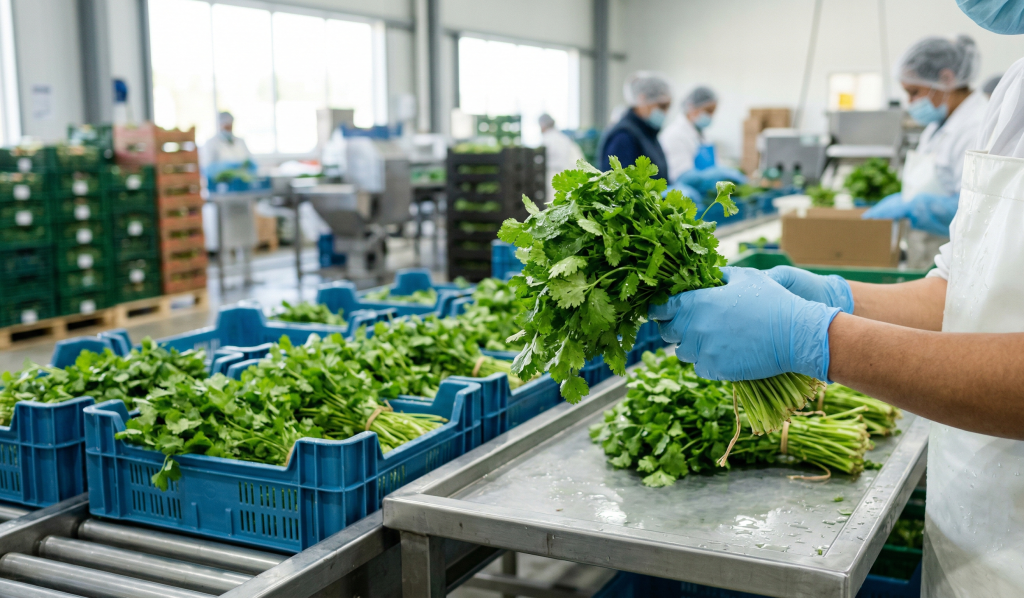
It Is Highly Perishable
Fresh coriander has a short shelf life. Even under proper cold storage:
- Leaves wilt quickly
- Aroma fades within days
- Moisture loss reduces weight and quality
For restaurants and catering businesses, this means frequent ordering and careful handling.
It Is Often Over-Ordered
Because coriander is used as a finishing herb, buyers tend to overestimate demand.
Common result:
- Excess stock
- Rapid spoilage
- Unnecessary waste
This is especially noticeable in kitchens where customer preferences vary widely.
It Is Sensitive to Supply Chain Conditions
Coriander quality depends heavily on:
- Time between harvest and delivery
- Temperature control during transport
- Packaging methods
Even small delays can reduce shelf life significantly.
In practice, suppliers working closely with Dubai-based distributors such as JMB Farm Fresh often observe that herbs like coriander create more operational pressure than bulk vegetables — not because of cost, but because of unpredictability.
Why Buyers in Dubai Often Misjudge Coriander Demand
The “Assumed Ingredient” Problem
Many kitchens treat coriander as a default ingredient.
It’s added automatically to:
- Curries
- Rice dishes
- Salads
- Garnishes
But this assumption doesn’t always match customer preference.
The Hidden Cost of Habit
When coriander is added without asking:
- Some customers leave it on the plate
- Some avoid the dish entirely
- Some return food
For restaurants, this leads to:
- Lower customer satisfaction
- Increased food waste
- Reduced repeat orders
A Smarter Approach Emerging
More experienced kitchens in Dubai are starting to adjust:
- Serving coriander on the side
- Clearly mentioning it in menu descriptions
- Allowing customization
This small shift reduces friction and improves dining experience.
Coriander in the UAE: Local vs Imported Supply
Is Coriander Grown Locally?
Yes — coriander is grown in the UAE, especially during cooler months.
The UAE’s winter season (roughly November to March) supports herb cultivation, including:
- Coriander
- Mint
- Parsley
During this period, local coriander is:
- Fresher
- More aromatic
- Less stressed from transport
What Happens Outside the Season?
In hotter months, supply shifts more toward imports.
Imported coriander may come from:
- India
- Pakistan
- Iran
- East Africa
Each source has different characteristics:
- Leaf size
- Aroma intensity
- Shelf life
Why This Variation Confuses Buyers
Buyers often expect consistency.
But coriander is not a standardized product.
Two batches can differ in:
- Flavor strength
- Moisture content
- Longevity
This is why experienced procurement managers adjust expectations seasonally rather than expecting uniformity year-round.
How to Judge Fresh Coriander (Most People Get This Wrong)
Freshness is often misunderstood.
Many buyers focus only on color.
That’s not enough.
What Actually Indicates Quality
Look for:
- Firm stems (not limp)
- Dry leaves (not wet or slimy)
- Strong aroma when gently pressed
- No yellowing or dark spots
What to Avoid
- Excess moisture inside packaging
- Crushed leaves
- Strong “off” smell
These are early signs of spoilage.
Why This Matters in Real Operations
In busy kitchens, poor-quality coriander often goes unnoticed until it’s too late.
By the time it’s used:
- Flavor is weak
- Presentation suffers
- Waste increases
Small quality checks at receiving stage can prevent this.
The Real Reason Coriander Creates Waste in Dubai Kitchens
It’s not just perishability.
It’s mismatch.
Mismatch between:
- What chefs assume customers want
- What customers actually tolerate
- What buyers order
- What gets used
This gap leads to:
- Over-ordering
- Partial usage
- Disposal of unused herbs
And because coriander is relatively inexpensive per unit, the waste is often ignored.
But over time, it adds up.
A Practical Way to Reduce Coriander Waste
Instead of treating coriander as a default ingredient, kitchens can:
- Track actual usage over 2–3 weeks
- Identify dishes where it is consistently left uneaten
- Adjust portion sizes or placement
For example:
- Use chopped coriander in base cooking only where essential
- Serve fresh garnish separately
- Reduce bulk purchases slightly and increase frequency
These small operational changes often lead to measurable reductions in waste.
Why This Topic Matters More Than It Seems
At first glance, coriander feels like a minor ingredient.
But in a supply chain context, it highlights something bigger:
Not all produce behaves the same.
Not all customers respond the same.
And not all buying decisions should follow habit.
Understanding something as simple as why coriander tastes different to different people can lead to:
- Better menu design
- More accurate purchasing
- Lower waste
- Improved customer satisfaction
And in a competitive food market like Dubai, those small improvements compound quickly.
What Most Articles Get Wrong About Coriander
Many articles focus only on the “soap gene.”
They explain the science, then stop there.
What they don’t explain is:
- How this affects real kitchens
- How it impacts procurement decisions
- How it contributes to waste
- How supply variability changes outcomes
In reality, coriander is not just a scientific curiosity.
It is a practical challenge.
Especially in a multicultural market.
How Restaurants and Buyers Are Quietly Adapting to the Coriander Divide
Over the past few years, something subtle has changed in how experienced kitchens in Dubai handle coriander.
It’s no longer treated as a fixed ingredient.
It’s treated as a variable.
Menu Design Is Becoming More Intentional
Instead of automatically including coriander in dishes, many chefs now:
- Specify it clearly in descriptions
- Offer it as an optional garnish
- Adjust recipes based on customer demographics
For example, in areas with a high mix of international diners, coriander-heavy dishes are often modified to reduce risk.
This isn’t about removing flavor.
It’s about control.
Kitchens Are Separating “Base Flavor” from “Final Garnish”
A practical shift that works well:
- Use coriander stems in cooking (for depth of flavor)
- Keep leaves for optional garnish
This allows kitchens to maintain the intended taste while giving customers flexibility.
Procurement Teams Are Tracking Usage More Closely
In well-managed operations, coriander is now tracked differently from staple vegetables.
Instead of bulk estimation, buyers look at:
- Daily consumption patterns
- Dish-level usage
- Seasonal fluctuations
This reduces both over-ordering and last-minute shortages.
The Role of Coriander in Different Cuisines Across Dubai
To understand demand, you have to look at how coriander is used — not just how often.
South Asian Kitchens: High Dependence
In Indian and Pakistani cooking, coriander is essential:
- Used in chutneys
- Added to curries
- Used as a finishing herb
Here, demand is consistent and predictable.
Middle Eastern Cuisine: Selective Use
In many Arabic dishes:
- Coriander is used in specific recipes
- Not applied universally as garnish
This creates moderate but stable demand.
Latin American Cuisine: Flavor Identity
In Mexican and Latin dishes:
- Coriander (cilantro) is core to flavor
- Often used fresh and generously
However, this also increases the risk of rejection from certain diners.
Western Kitchens: Controlled Usage
In European-style cooking:
- Coriander is used sparingly
- Often replaced with parsley or other herbs
This results in lower demand and less frequent ordering.
What This Means for Wholesale vs Retail Buyers
Wholesale Buyers (Restaurants, Catering, Hotels)
Wholesale buyers face a different challenge.
They are not buying for personal preference.
They are buying for diverse customers.
Key considerations include:
- Variability in customer taste
- Risk of waste
- Need for consistency
This makes coriander a more complex purchasing decision than it appears.
Some UAE buyers prefer working with established wholesale produce providers rather than fragmented retail sourcing, as consistency and delivery timing matter more than small price differences.
Retail Buyers (Households)
For individual consumers:
- The decision is simpler
- Purchase volume is lower
- Waste impact is limited
However, even at home, misunderstanding coriander freshness often leads to early spoilage.
Seasonal Patterns: Why Winter Coriander Performs Better in the UAE
Winter Is the Peak Window
From November to March, locally grown coriander becomes more available.
This has several advantages:
- Shorter supply chains
- Better freshness
- Stronger aroma
For buyers, this is the most reliable period.
Summer Introduces More Complexity
During hotter months:
- Local production declines
- Imports increase
- Transit time becomes critical
This often leads to:
- Reduced shelf life
- More variability in quality
- Higher rejection rates in kitchens
A Common Mistake Buyers Make
Many buyers expect the same performance year-round.
But coriander behaves differently depending on origin and season.
Experienced buyers adjust:
- Order quantities
- Storage practices
- Usage planning
based on time of year.
Storage Mistakes That Shorten Shelf Life
Even high-quality coriander can deteriorate quickly if stored incorrectly.
The Most Common Errors
- Leaving coriander in sealed plastic without airflow
- Washing before storage (adds moisture)
- Storing at inconsistent temperatures
A Better Approach
- Keep stems slightly hydrated (like fresh flowers)
- Store in cool, stable refrigeration
- Avoid excess moisture
These small adjustments can extend usable life by several days.
Why Coriander Is a Case Study in Produce Complexity
Coriander highlights a broader truth about fresh produce:
Not all items behave like commodities.
Some are:
- Highly sensitive
- Demand-variable
- Customer-dependent
And when these factors combine, they create operational challenges.
What This Teaches Buyers
- Don’t treat all herbs the same
- Understand customer behavior, not just recipes
- Adjust ordering patterns based on real usage
What This Teaches Suppliers
- Consistency matters more than volume
- Communication with buyers improves outcomes
- Seasonal transparency builds trust
The Hidden Link Between Taste Preference and Supply Chain Efficiency
At first glance, taste preference seems like a consumer issue.
But in reality, it directly affects supply chain efficiency.
When Preferences Are Ignored
- Overproduction occurs at kitchen level
- Demand signals become inaccurate
- Waste increases
When Preferences Are Understood
- Orders become more precise
- Inventory moves faster
- Quality perception improves
This is especially important in Dubai, where diversity amplifies variation in taste.
A Real-World Scenario: How Small Adjustments Change Outcomes
Consider a mid-sized restaurant in Dubai serving a mixed international audience.
Initial approach:
- Coriander added to most dishes
- Bulk purchasing once or twice per week
- High spoilage rates
After adjustments:
- Coriander offered separately for certain dishes
- Order quantities reduced slightly
- Delivery frequency increased
Results:
- Lower waste
- Better customer feedback
- More predictable inventory usage
No major operational overhaul.
Just better alignment between supply and demand.
Why Coriander Will Continue to Be a Dividing Ingredient
The genetic factor is not changing.
Cultural preferences are not becoming uniform.
And Dubai’s population is only becoming more diverse.
So this divide will remain.
But that’s not a problem.
It’s a signal.
A signal that even small ingredients require thoughtful handling in modern food systems.
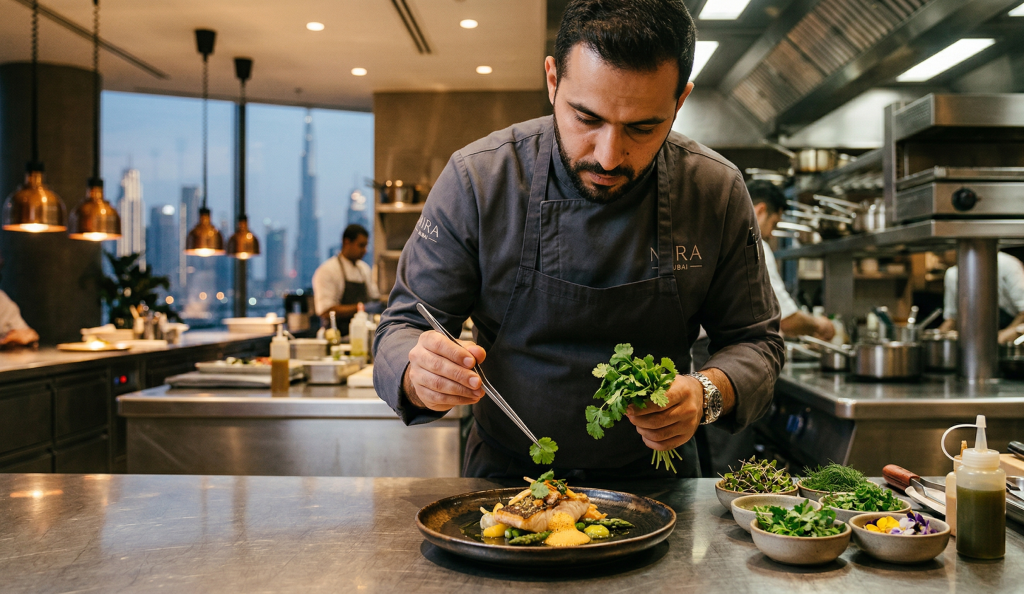
Practical Buying Guidelines for Coriander in Dubai
For buyers, coriander is less about cost and more about control.
Small adjustments in how it is sourced and handled can make a noticeable difference in both quality and waste.
1. Buy Based on Real Usage, Not Habit
Many kitchens order coriander the same way they order onions or tomatoes.
That approach rarely works.
Instead:
- Review how much is actually used over a few days
- Separate dishes that truly require coriander from those that don’t
- Adjust order quantities accordingly
Even a 10–15% reduction in over-ordering can significantly reduce spoilage over time.
2. Increase Frequency, Reduce Volume
Because coriander is perishable, smaller and more frequent deliveries often work better than bulk purchasing.
This helps maintain:
- Better freshness
- Stronger aroma
- Consistent presentation
It also reduces the risk of holding stock past its usable window.
3. Align Orders With Seasonality
During UAE winter months, locally grown coriander tends to be more stable and longer-lasting.
During hotter months, when imports dominate:
- Order more conservatively
- Expect shorter shelf life
- Monitor quality more closely on arrival
Ignoring seasonality is one of the most common procurement mistakes.
4. Train Staff to Handle Herbs Properly
Even the best-quality coriander can degrade quickly if handled incorrectly after delivery.
Basic training should include:
- How to store herbs immediately after receiving
- How to identify early signs of spoilage
- How to portion correctly during prep
This is often overlooked, but it directly affects usable yield.
5. Treat Coriander as a Flexible Ingredient
Instead of locking it into every dish, treat coriander as adaptable.
Options include:
- Offering it as an add-on garnish
- Reducing quantity in mixed dishes
- Substituting with other herbs when appropriate
This approach respects customer preference without compromising kitchen efficiency.
Common Misconceptions About Coriander in the UAE Market
“Fresh Coriander Always Means Better Quality”
Freshness matters, but not all fresh coriander performs equally.
Two batches can look similar but differ in:
- Aroma strength
- Shelf life
- Flavor intensity
Understanding source and handling conditions is just as important as visual freshness.
“It’s a Cheap Herb, So Waste Doesn’t Matter”
Individually, coriander may seem low-cost.
But repeated waste across weeks and months adds up.
More importantly, waste often signals deeper inefficiencies in ordering and usage patterns.
“Customers Expect It Everywhere”
This assumption is increasingly outdated.
With Dubai’s diverse population, preferences vary widely.
Serving coriander by default can sometimes create more friction than value.
“All Coriander Tastes the Same”
As discussed earlier, perception varies significantly.
This is not just cultural.
It is biological.
Ignoring this reality can lead to avoidable dissatisfaction.
Where Coriander Fits in a Smarter Produce Strategy
Coriander is a small product with outsized lessons.
It shows how:
- Customer behavior affects procurement
- Seasonality affects quality
- Handling affects yield
- Assumptions affect waste
For procurement managers and chefs, this is a reminder that precision matters — even with simple ingredients.
In practice, experienced suppliers working within Dubai’s fresh produce ecosystem, including those aligned with distributors like JMB Farm Fresh, tend to emphasize consistency, timing, and communication over volume.
This approach reduces uncertainty across the supply chain.
Conclusion: Both Sides Are Right — And That Changes How You Should Buy
The divide over coriander is not a matter of taste alone.
It is rooted in biology.
Some people experience it as fresh and essential.
Others experience it as unpleasant.
Both are correct.
For Dubai’s food industry, this creates a unique challenge — and an opportunity.
An opportunity to:
- Design menus more thoughtfully
- Order more precisely
- Reduce unnecessary waste
- Improve customer experience
Because when even a small herb can influence outcomes this much, it becomes clear:
Better decisions are not about bigger changes.
They are about better understanding.
FAQ Section
1. Why does coriander taste like soap to some people in the UAE?
Some people have a genetic variation that makes them sensitive to certain compounds (aldehydes) in coriander. These compounds are also found in soaps, which creates that perception.
2. Is coriander and cilantro the same in Dubai?
Yes. Coriander leaves are often called cilantro, especially in international contexts. In Dubai, both terms may be used interchangeably depending on cuisine.
3. When is coriander freshest in the UAE?
Coriander is typically fresher during the winter months (November to March) when local production is more active.
4. How can restaurants reduce coriander waste?
By ordering smaller quantities more frequently, tracking actual usage, and offering coriander as an optional garnish instead of a default ingredient.
5. What should I look for when buying fresh coriander in Dubai?
Look for firm stems, dry leaves, strong aroma, and no yellowing or slimy texture. Avoid excess moisture in packaging.








 Home
Home  Whishlist
  Compare
  Checkout