













Introduction: A Fruit Everyone Buys, Few Fully Understand
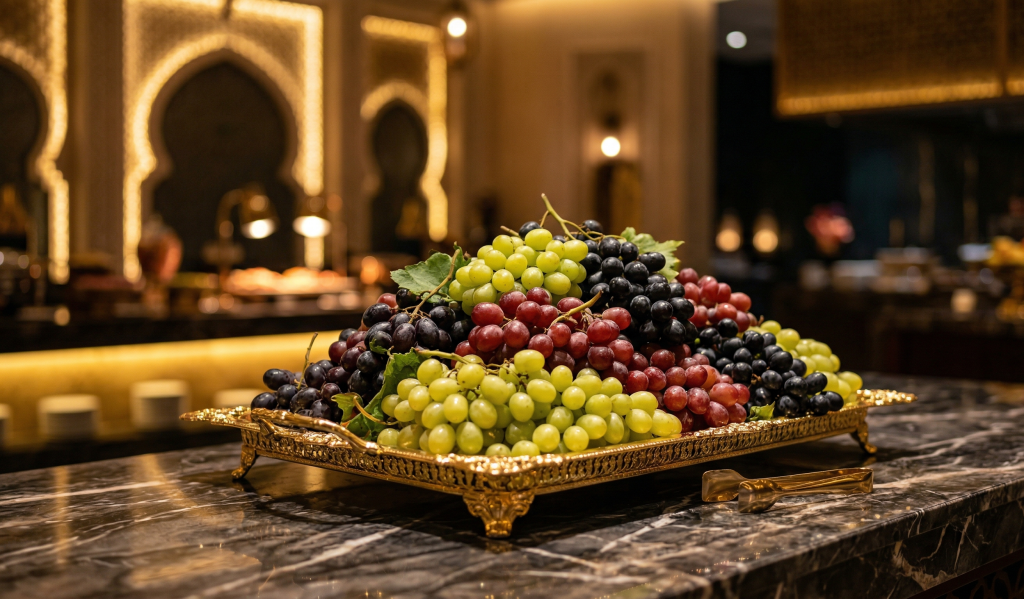
Walk into any supermarket or wholesale market in Dubai, and grapes are always there.
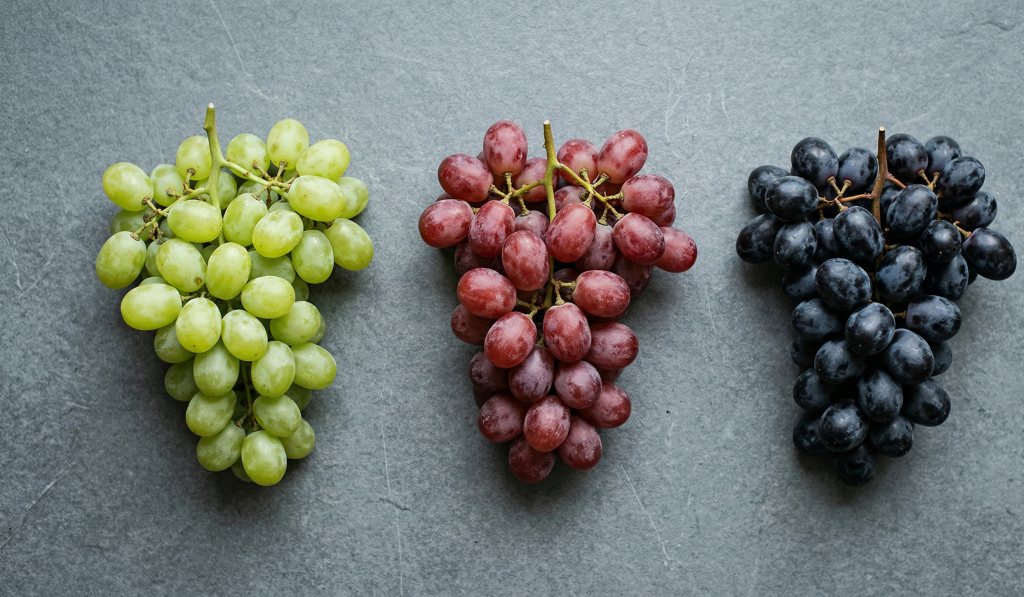
Packed in clamshell boxes. Sold loose by weight. Offered in green, red, and black varieties. Almost always labeled simply as “seedless.”
For most buyers, the decision is quick:
- Green for sweetness
- Red for balance
- Black for richness
But in reality, the differences go far beyond colour.
For restaurant buyers, hotel procurement teams, and even families trying to reduce food waste, choosing the wrong type of grape can quietly affect:
- Shelf life
- Customer satisfaction
- Menu consistency
- Cost efficiency
And yet, most content online reduces the discussion to taste alone.
This article takes a more practical view — the way a produce supplier or experienced buyer would approach it.
Why Grapes Matter So Much in Dubai’s Food Supply
Grapes are not just a casual fruit in the UAE.
They sit at the intersection of:
- Daily snacking
- Hospitality service (breakfast buffets, fruit platters)
- Juice and mocktail menus
- Catering and event presentation
They are also one of the most imported fruits in Dubai.
Unlike dates or certain vegetables, grapes are not grown locally at scale. That means:
- Supply depends on global harvest cycles
- Quality varies by origin and season
- Prices fluctuate more than most buyers expect
A Highly Perishable, High-Turnover Product
Grapes look stable. They are not.
They are:
- Thin-skinned
- Moisture-sensitive
- Easily bruised
- Prone to fungal spoilage if storage is inconsistent
This makes them one of the most operationally sensitive fruits in the supply chain.
A poor buying decision is rarely obvious on Day 1 — but shows up as:
- Softening within 48–72 hours
- Stem browning
- Juice leakage inside packaging
- Customer complaints about “sour” or “tasteless” fruit
Red vs Green vs Black Grapes: What Actually Changes
The colour of grapes is not just visual.
It reflects differences in:
- Sugar structure
- Acidity levels
- Skin thickness
- Antioxidant content
- Shelf behaviour
Understanding this helps buyers choose based on use — not just preference.
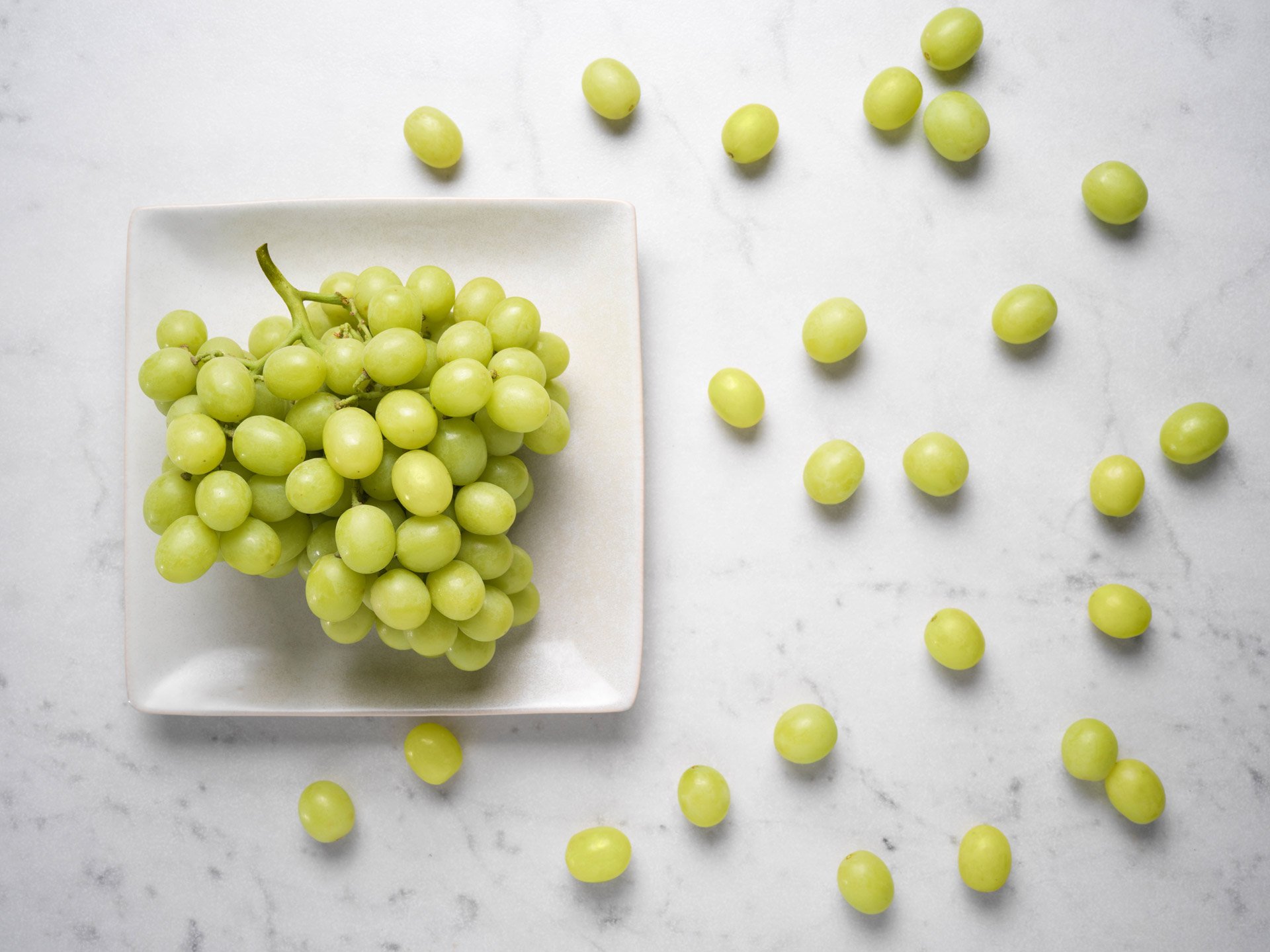
Green Grapes: Crisp, Bright, and Commercially Reliable
4
Green grapes are the most widely consumed and distributed variety in Dubai.
Common types include:
- Thompson Seedless
- Superior Seedless
What Defines Green Grapes
- Higher acidity (that “fresh bite”)
- Firm texture
- Light, clean sweetness
- Thin to medium skin
Why Buyers Prefer Them
For businesses, green grapes are often the safest choice.
They:
- Hold structure better in cold storage
- Maintain appearance longer on display
- Work well across different use cases (snacking, platters, salads)
In buffet environments, they are less likely to look “tired” after a few hours compared to softer varieties.
Where They Fall Short
Green grapes can sometimes disappoint in flavour if:
- Harvested too early
- Stored too cold for too long
- Sourced from lower-grade batches
This leads to the common complaint:
“They look perfect, but taste bland.”
This is not a variety problem — it is a sourcing and timing issue.
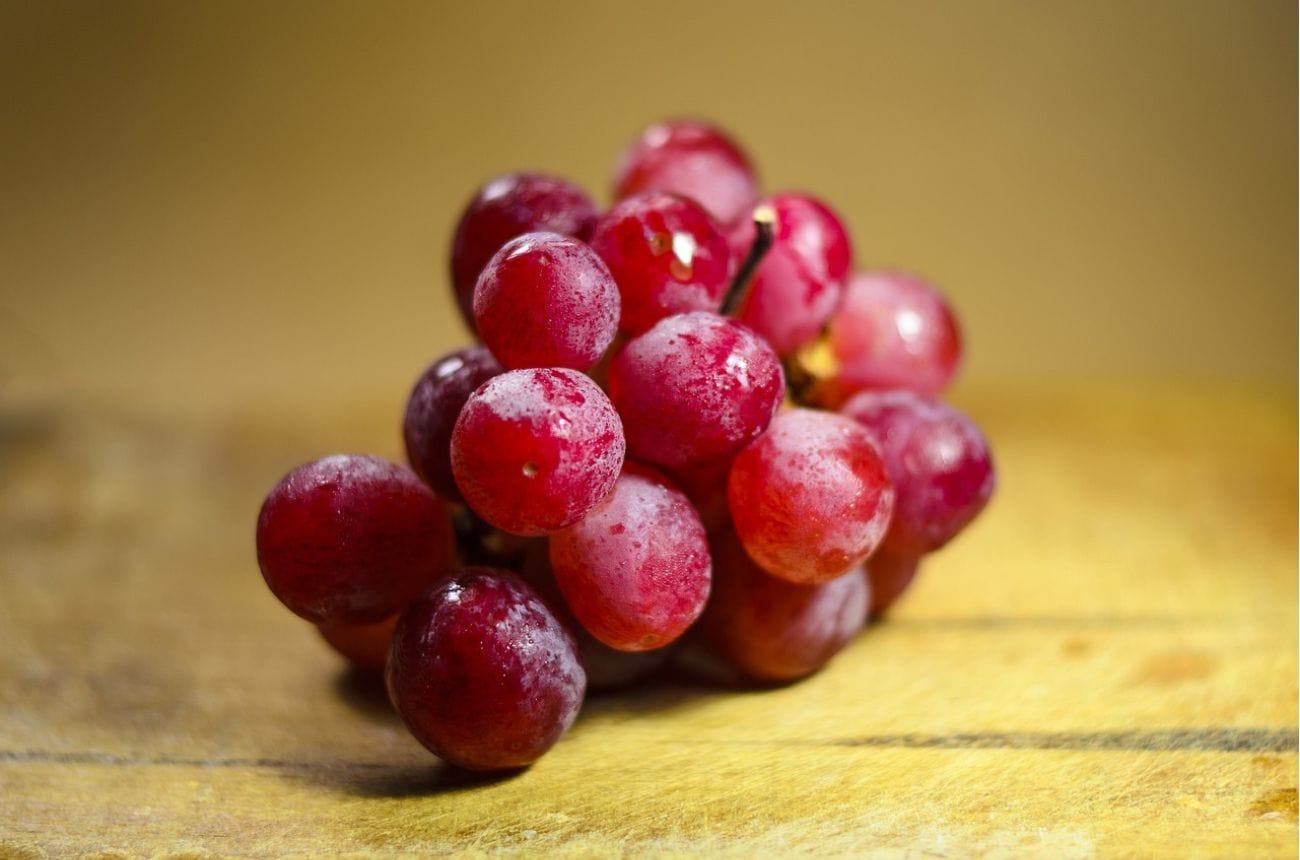
Red Grapes: Balanced, Versatile, and Often Misjudged
4
Red grapes sit in the middle — both in flavour and in how they are used.
Popular varieties include:
- Crimson Seedless
- Flame Seedless
What Defines Red Grapes
- Moderate sweetness
- Lower acidity than green grapes
- Slightly thicker skin
- More complex flavour profile
Why They Are Often Overlooked
Many buyers assume red grapes are just a “colour alternative.”
In reality, they are:
- More forgiving in flavour consistency
- Less sharp than green grapes
- More appealing to mixed-age consumers
For catering businesses, they often perform better across diverse audiences.
A Practical Advantage
Red grapes tend to:
- Handle transport slightly better than green grapes
- Show fewer visual defects early on
However, they can:
- Lose firmness faster if overripe at purchase
- Develop dull skin if humidity is poorly managed
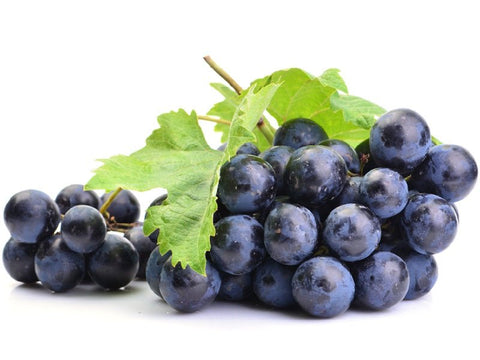
Black Grapes: Rich, Sweet, and Less Forgiving
4
Black grapes are often seen as the premium option.
They are darker, sweeter, and visually striking.
But they are also the most misunderstood.
What Defines Black Grapes
- Highest natural sugar levels
- Lowest perceived acidity
- Thick skin
- Deep flavour (sometimes described as “jam-like”)
Why They Feel Premium
Their taste profile makes them ideal for:
- Dessert platters
- Juice blends
- Premium fruit presentations
They create a stronger first impression — especially in hospitality settings.
The Hidden Tradeoff
Black grapes are less stable.
They:
- Soften faster
- Show spoilage earlier if not handled properly
- Require stricter cold chain control
For smaller buyers or households, this often leads to:
“Half the box goes bad before we finish it.”
This is not uncommon — and it is one of the main reasons experienced buyers are selective about when and how they purchase black grapes.
Are Seedless Grapes Always Better?
In Dubai, most grapes sold are seedless.
But “seedless” does not mean identical.
It simply means the seeds are not developed — not that:
- The variety is the same
- The taste is consistent
- The quality is uniform
In wholesale markets, two boxes labeled “seedless grapes” can differ significantly in:
- Sugar level (Brix)
- Crunch
- Shelf life
This is where many buyers — especially new restaurant operators — make early mistakes.
They assume labeling equals consistency.
It does not.
The Role of Origin: Why the Same Colour Can Taste Different
A green grape from India is not the same as one from South Africa.
A red grape from Egypt behaves differently from one from Chile.
Dubai’s grape supply typically rotates between:
- India
- South Africa
- Egypt
- Chile
- Peru
Each origin brings differences in:
- Harvest timing
- Storage duration before arrival
- Sugar development
- Skin resilience
This is why prices fluctuate — and why quality perception changes month to month.
In practice, suppliers working closely with Dubai-based distributors such as JMB Farm Fresh often observe that buyers who track origin alongside colour make significantly better purchasing decisions over time.
Common Buyer Mistakes (That Lead to Waste and Complaints)
Across retail and wholesale environments, the same issues come up repeatedly.
1. Buying Based on Colour Alone
Colour is the most visible factor — but not the most important.
Ignoring:
- Origin
- Harvest timing
- Storage conditions
leads to inconsistent results.
2. Overestimating Shelf Life
Many buyers assume grapes will last 5–7 days.
In Dubai’s climate, without ideal storage:
- 2–4 days is more realistic for peak quality
Especially for black grapes.
3. Ignoring Stem Condition
The stem tells you more than the fruit.
Healthy grapes have:
- Green, flexible stems
Warning signs:
- Brown, brittle stems
- Dry attachment points
This indicates age — even if the grapes still look good.
4. Mixing Batches in Storage
Combining:
- Older stock
- Newly arrived stock
accelerates spoilage across the entire batch.
This is a common issue in small restaurants and home kitchens.
5. Treating All Grapes the Same
Different varieties need slightly different handling.
For example:
- Black grapes need stricter temperature control
- Green grapes tolerate display conditions better
Ignoring this leads to uneven results.
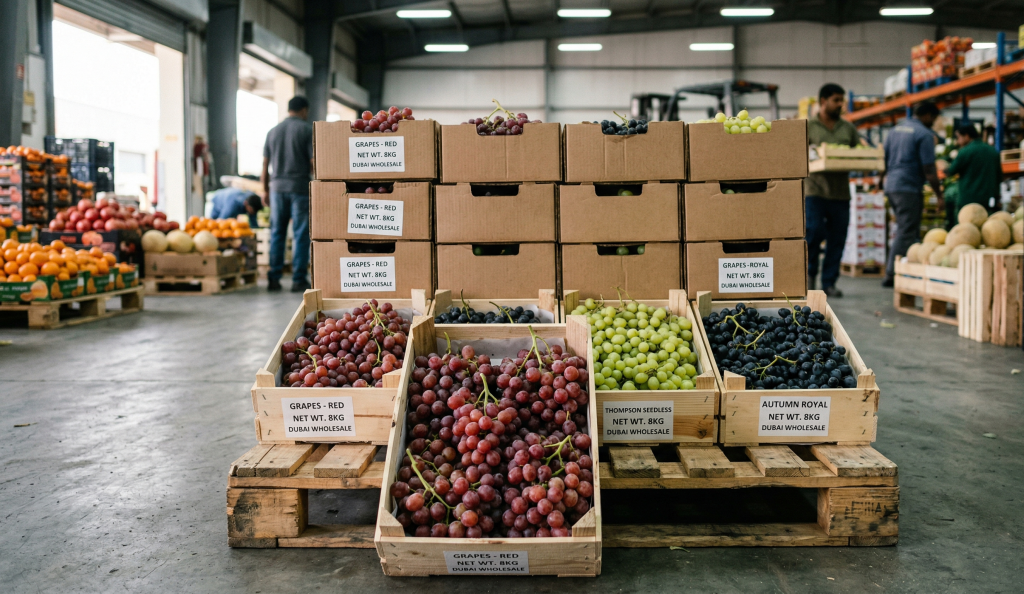
How Seasonality Shapes Grape Quality in the UAE
Dubai does not have a single “grape season.” It has a rotation.
Because grapes are imported, availability follows global harvest windows. This creates a shifting supply pattern throughout the year — and that directly affects taste, texture, and shelf life.
Typical Supply Flow (Simplified)
- November to March → India dominates (especially green grapes)
- December to April → South Africa enters with strong quality across colours
- May to July → Egypt becomes more visible (often competitive pricing)
- August to October → Chile and Peru fill the gap
This rotation matters more than most buyers realize.
What Changes With Season
At different times of year, the same “green seedless grapes” can vary in:
- Sweetness (measured as sugar concentration)
- Firmness
- Skin durability during transport
- Shelf life after arrival
For example:
- Early-season grapes may look fresh but lack full sweetness
- Late-season grapes can be sweeter but softer and less stable
A Common Misunderstanding
Many buyers assume inconsistency means poor supplier quality.
In reality, it is often seasonal transition.
Understanding this helps reduce frustration — and improves planning.
How to Actually Judge Fresh Grapes (Beyond Appearance)
Most people check grapes visually.
That is necessary, but not sufficient.
Experienced buyers use a combination of visual and tactile checks.
1. Stem Condition (The Most Reliable Indicator)
This is the first thing professionals look at.
- Fresh → green, slightly moist, flexible
- Aging → brown, dry, brittle
Even if the grapes look firm, dry stems usually mean reduced shelf life.
2. Berry Attachment
Grapes should:
- Stay firmly attached to the stem
- Not fall off when lightly shaken
Loose grapes indicate:
- Handling stress
- Age
- Internal weakening
3. Skin Texture and “Bloom”
You may notice a light dusty coating on grapes.
This is natural and called bloom.
- It protects the fruit
- It indicates minimal handling
Shiny grapes are not always fresher — they are often more handled.
4. Firmness
Grapes should feel:
- Plump
- Slightly resistant to pressure
Softness is an early sign of:
- Water loss
- Internal breakdown
5. Smell (Often Ignored)
Fresh grapes have a mild, clean smell.
A sour or fermented smell indicates:
- Early spoilage
- Poor storage conditions
Storage Reality in Dubai: Why Grapes Go Bad Faster
Dubai’s climate creates unique challenges.
High ambient heat means grapes rely entirely on cold chain integrity — from farm to shelf to home.
What Goes Wrong Most Often
- Temperature breaks during transport
- Overcrowded refrigeration
- Leaving grapes at room temperature after purchase
Even short exposure to heat can:
- Speed up softening
- Increase moisture loss
- Trigger fungal growth
Best Storage Practices (That Actually Work)
For Households
- Store in the fridge immediately (0–4°C range)
- Keep them in original packaging or breathable containers
- Do not wash until ready to eat
Washing too early increases moisture — which speeds spoilage.
For Restaurants and Catering Businesses
- Avoid stacking heavy boxes on top of grapes
- Use first-in, first-out (FIFO) rotation strictly
- Separate batches by delivery date
Even small discipline here reduces waste significantly over time.
Wholesale vs Retail Grapes: What Buyers Often Get Wrong
There is a common belief:
“Wholesale grapes are lower quality than supermarket grapes.”
This is not accurate.
The Real Difference
The difference is not quality — it is handling and selection.
Retail:
- Smaller packs
- More curated appearance
- Higher markup
Wholesale:
- Larger volumes
- Mixed grading within batches
- Requires buyer judgment
Why Some Buyers Struggle With Wholesale
Wholesale requires:
- Visual inspection skills
- Understanding of seasonality
- Faster turnover
Without this, buyers may experience:
- Inconsistent quality
- Higher perceived waste
But when handled correctly, wholesale sourcing offers:
- Better cost control
- More flexibility in selection
Choosing the Right Grape for the Right Use Case
One of the biggest missed opportunities is using the same grape for everything.
Different applications benefit from different varieties.
For Snacking (Retail or Home)
Best choice:
- Green grapes
Why:
- Crisp
- Refreshing
- Longer-lasting
For Fruit Platters and Presentation
Best choice:
- Red + black mix
Why:
- Visual contrast
- Balanced flavour profile
For Juices and Mocktails
Best choice:
- Black grapes
Why:
- Higher sugar content
- Deeper flavour
For Buffet Service
Best choice:
- Green or red grapes
Why:
- Better structure over time
- Less visible degradation
Pricing Fluctuations: What Drives Them
Grape prices in Dubai can change quickly.
This is often misunderstood.
Key Drivers
- Origin shifts (India vs South Africa vs Egypt)
- Air freight vs sea freight timing
- Harvest yield in source countries
- Currency changes
- Demand spikes (especially during winter and tourism peaks)
A Practical Insight
Price drops do not always mean better value.
Sometimes they reflect:
- Oversupply
- Lower-grade batches
- End-of-season stock
Experienced buyers balance price with:
- Shelf life
- Intended usage
- Expected turnover
A Quiet Industry Insight
Many long-term buyers eventually move away from purely retail sourcing.
Not because retail is bad — but because it lacks control.
They prefer:
- Consistent supplier relationships
- Predictable quality
- Better communication around origin and timing
Some UAE buyers prefer working with established wholesale produce providers rather than fragmented retail sourcing, especially when consistency matters across multiple deliveries.
When Are Grapes at Their Best in Dubai?
There is no single perfect month.
But broadly:
- December to March → Strongest overall quality
- January to February → Peak consistency across varieties
- Transition months (April, August) → More variability
During peak periods:
- Taste improves
- Shelf life stabilizes
- Pricing becomes more predictable
The Bigger Picture: Why Colour Still Matters — But Differently
Colour is not irrelevant.
It is just incomplete.
It tells you:
- A general flavour direction
- A rough expectation of texture
But it does not tell you:
- How long the grapes will last
- How they were handled
- Whether they suit your use case
That requires a more complete view:
- Colour
- Origin
- Season
- Storage
Buyers who combine these factors make consistently better decisions.
Practical Buying Scenarios: What Experienced Buyers Actually Do
Understanding grapes at a technical level is useful. But decisions are made in real environments — under time pressure, with budget limits, and with imperfect information.
Here is how experienced buyers typically approach grape purchasing in Dubai.
Scenario 1: A Restaurant Ordering for 3–4 Days of Service
A mid-sized restaurant needs grapes for:
- Breakfast platters
- Light desserts
- Garnish
Common mistake:
Ordering mixed varieties based on appearance without considering turnover.
What experienced buyers do instead:
- Choose green or red grapes for stability
- Avoid large volumes of black grapes unless usage is immediate
- Inspect stem condition before accepting delivery
Reasoning:
Consistency matters more than variety. Slightly less “exciting” grapes that last longer reduce waste and complaints.
Scenario 2: A Catering Business Preparing for an Event
Caterers often prioritize:
- Presentation
- Colour contrast
- Visual freshness over several hours
Common mistake:
Using only one variety or choosing grapes that soften quickly under display lighting.
What experienced buyers do instead:
- Combine red and green grapes for visual balance
- Add black grapes selectively for depth, not volume
- Pre-chill properly before display
Reasoning:
Presentation is not just about appearance at setup — it is about how the fruit looks after 2–3 hours.
Scenario 3: A Household Buying Weekly Groceries
Families typically want:
- Convenience
- Minimal waste
- Consistent taste
Common mistake:
Buying large boxes of black grapes due to sweetness, then discarding half.
What experienced buyers do instead:
- Choose green grapes for longer storage
- Buy smaller quantities more frequently
- Store immediately under refrigeration
Reasoning:
The goal is not maximum sweetness — it is usable fruit over several days.
Scenario 4: A Grocery Buyer Managing Shelf Display
Retail buyers balance:
- Appearance
- Turnover
- Customer expectations
Common mistake:
Overstocking visually attractive varieties without considering shelf behavior.
What experienced buyers do instead:
- Use green grapes as the base display
- Rotate red grapes frequently
- Limit black grape exposure time
Reasoning:
Display life is as important as initial appearance.
The Real Tradeoffs Buyers Need to Accept
There is no perfect grape.
Every choice involves tradeoffs.
Green Grapes
- ✔ Longer shelf life
- ✔ Better structural integrity
- ✖ Can lack sweetness if poorly sourced
Red Grapes
- ✔ Balanced flavour
- ✔ Versatile across use cases
- ✖ Slightly shorter display life than green
Black Grapes
- ✔ Rich taste and premium feel
- ✔ Ideal for juices and desserts
- ✖ Shorter shelf life
- ✖ Higher risk of waste
Understanding this helps buyers move away from “best grape” thinking — and toward “best grape for the purpose.”
A Note on Consistency: Why Supplier Relationships Matter
One of the least discussed factors in produce quality is consistency over time.
Buying grapes from different sources every week often leads to:
- Variation in taste
- Unpredictable shelf life
- Difficulty in planning
Over time, many professional buyers shift toward:
- Fewer, more reliable suppliers
- Clear communication about origin and arrival timing
In practice, suppliers working closely with Dubai-based distributors such as JMB Farm Fresh tend to observe that consistent sourcing relationships reduce variability more than constant price comparison.
This is not about branding. It is about operational stability.
Final Thoughts: Moving Beyond Colour-Based Buying
Grapes are one of the most familiar fruits in Dubai — but also one of the most misunderstood.
The common habit of choosing based on colour alone leaves too much to chance.
A more reliable approach considers:
- Colour (flavour direction)
- Origin (seasonal quality)
- Stem condition (freshness)
- Use case (how the grapes will be consumed)
- Storage capacity (how long they need to last)
When these factors are aligned, the result is simple:
- Less waste
- Better taste consistency
- More predictable costs
And over time, that is what separates casual buying from informed sourcing.
FAQ Section
1. Are black grapes healthier than green grapes?
Black grapes contain higher levels of certain antioxidants, but all grape types offer nutritional value. The difference is not large enough to make one clearly “better” for general consumption.
2. Why do grapes sometimes taste sour even when they look fresh?
This usually happens when grapes are harvested early or stored too long in cold conditions. Appearance alone does not guarantee flavour.
3. How long do fresh grapes last in Dubai?
In proper refrigeration, most grapes maintain good quality for 2–4 days. Green grapes may last slightly longer than black grapes.
4. What is the best way to store grapes at home?
Keep them in the fridge in breathable packaging and avoid washing until ready to eat. Moisture accelerates spoilage.
5. Why do grape prices change so often in Dubai?
Prices depend on origin, season, transport costs, and global supply conditions. Changes in these factors can quickly affect market pricing.








 Home
Home  Whishlist
  Compare
  Checkout