








Introduction: Why Ginger Confuses So Many Buyers in Dubai
Walk into any kitchen in Dubai — whether it’s a home, a restaurant, or a hotel — and you will almost always find ginger.
But here’s where things get complicated.
Most people treat fresh ginger, dried ginger, and ginger powder as interchangeable. They are not. And in a market like the UAE, where ingredients travel long distances and freshness directly affects cost, this misunderstanding leads to real consequences:
- Dishes tasting off or inconsistent
- Excess waste in kitchens
- Poor purchasing decisions
- Higher food costs without clear reason
Across procurement discussions, chef forums, and supplier conversations, one pattern shows up repeatedly:
people use the wrong form of ginger for the wrong purpose.
This article breaks it down clearly — not from a recipe blog perspective, but from a produce handling, sourcing, and real-world usage perspective in Dubai.
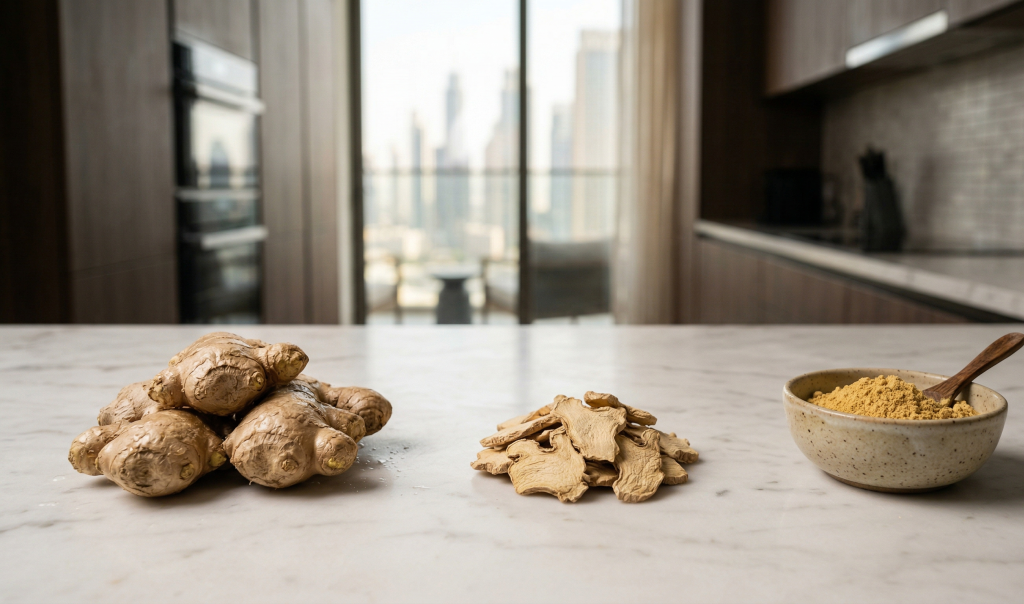
The Three Forms of Ginger — What They Actually Are
Before comparing them, it helps to understand how each type is produced.
Fresh Ginger (Raw Root)
Fresh ginger is the rhizome (underground stem) harvested directly from the plant. It is:
- Moist
- Fibrous
- Aromatic
- Slightly spicy with citrus-like notes
This is what most people refer to when searching for fresh ginger root Dubai buy online.
Dried Ginger (Whole or Sliced)
Dried ginger starts as fresh ginger but is:
- Peeled
- Sliced or left whole
- Sun-dried or mechanically dried
Moisture is removed, which concentrates flavor and changes texture completely.
Ginger Powder (Ground Form)
Ginger powder is simply dried ginger that has been ground into a fine powder.
It is:
- Shelf-stable
- Highly concentrated
- Less complex in aroma
Why Dubai Kitchens Get Ginger Wrong
From restaurant kitchens in Al Quoz to home cooks ordering groceries online, the confusion usually comes from three assumptions:
1. “They All Taste the Same”
They don’t.
Fresh ginger is bright and slightly sweet.
Dried ginger is deeper and more pungent.
Powdered ginger is sharper but flatter.
Using one instead of another can completely change a dish.
2. “Powder Is Just a Shortcut”
It’s not just convenience — it’s a different ingredient entirely.
In many cases, replacing fresh ginger with powder leads to:
- Loss of freshness in flavor
- Over-spicing
- Unbalanced recipes
3. “Fresh Ginger Is Always Better”
Not always.
Fresh ginger is more delicate and perishable.
In large-scale kitchens or bulk cooking, it can introduce:
- Inconsistency in flavor
- Storage challenges
- Higher waste if not handled properly
Fresh Ginger: When It Works Best (and When It Doesn’t)
Best Use Cases
Fresh ginger performs best when:
- You want bright, fresh flavor
- The dish involves quick cooking or raw preparation
- Aroma matters as much as taste
Common UAE applications include:
- Stir-fries
- Fresh juices and detox drinks
- Marinades for grilled meats
- Asian and Indo-Arab fusion dishes
Where Fresh Ginger Falls Short
Despite its popularity, fresh ginger has limitations.
1. Short Shelf Life
In Dubai’s climate, even with refrigeration, fresh ginger can:
- Dry out
- Develop mold
- Lose aroma quickly
This is a major issue for restaurants ordering in bulk.
2. Inconsistent Strength
Two batches of fresh ginger can vary significantly in:
- Spice level
- Fiber content
- Juiciness
This makes standardization difficult in commercial kitchens.
3. Labor Cost
Peeling, cutting, and grinding fresh ginger takes time.
In high-volume kitchens, this adds up.
Dried Ginger: The Overlooked Middle Ground
Dried ginger is rarely discussed in everyday cooking — but in procurement and supply, it plays an important role.
Why It Exists
Drying ginger:
- Extends shelf life significantly
- Concentrates flavor
- Reduces storage risk
Where It Works Best
Dried ginger is ideal for:
- Slow-cooked dishes
- Broths and stews
- Traditional recipes requiring depth
In some Middle Eastern and South Asian cooking, dried ginger provides a warmer, more grounded flavor compared to fresh.
Limitations
- Requires rehydration or longer cooking
- Lacks the brightness of fresh ginger
- Not suitable for quick recipes
Ginger Powder: Convenience with Tradeoffs
Ginger powder is widely used across UAE households and commercial kitchens.
Why Buyers Prefer It
- Long shelf life
- Easy storage
- No preparation required
- Consistent strength
For catering companies and bulk food operations, this consistency matters.
Where It Works Best
Ginger powder is commonly used in:
- Baking
- Spice blends
- Sauces
- Packaged food production
Where It Causes Problems
This is where most misuse happens.
1. Replacing Fresh Ginger Directly
This leads to:
- Flat flavor
- Lack of aroma
- Overly sharp spice
2. Overuse
Because it is concentrated, small measurement errors can:
- Overpower dishes
- Create bitterness
3. Loss of Fresh Notes
Powder lacks the natural oils that give fresh ginger its signature aroma.
Fresh vs Dried Ginger UAE Cooking: The Real Difference in Practice
In real kitchens, the difference is not theoretical — it affects daily operations.
Scenario 1: Restaurant Marinades
Using fresh ginger:
- Better aroma
- But inconsistent results batch-to-batch
Using powder:
- Consistent flavor
- But less vibrant
Scenario 2: Home Cooking
Using fresh ginger:
- Better taste in small quantities
- But higher waste if unused
Using powder:
- Convenient
- But often overused
Scenario 3: Bulk Catering
Using fresh ginger:
- Labor-intensive
- Storage risk
Using dried/powder:
- More predictable
- Lower waste
In practice, experienced buyers don’t choose one over the other.
They use each form intentionally.
Ginger Health Benefits in Dubai Context (What Actually Matters)
Many discussions around ginger health benefits Dubai 2026 focus on general claims.
From a supply and consumption perspective, what matters is:
- Fresh ginger retains more volatile oils
- Dried ginger concentrates certain compounds
- Powder is stable but less complex
For buyers, the key takeaway is not which is “healthier,” but:
Which form delivers the intended result without waste or overuse.
Seasonal Context in UAE: Why Ginger Supply Fluctuates
Dubai relies heavily on imported produce.
Fresh ginger typically comes from:
- India
- China
- Thailand
This creates variability in:
- Size
- Fiber content
- Moisture levels
Winter vs Summer Considerations
During cooler months:
- Fresh ginger quality is more stable
- Shelf life improves slightly
During hotter months:
- Spoilage risk increases
- Storage becomes critical
This is why many procurement teams shift partially toward dried or powdered forms during high-risk periods.
Buying Ginger in Dubai: What Experienced Buyers Look For
Whether sourcing for a restaurant or a household, the criteria differ slightly.
For Fresh Ginger
Look for:
- Firm texture
- Smooth skin
- Strong aroma
- No wrinkles or mold
Avoid:
- Dry, shriveled pieces
- Excessively fibrous roots
For Dried Ginger
Look for:
- Even color
- No moisture
- Clean cuts
For Ginger Powder
Look for:
- Fine texture
- Fresh aroma (not stale)
- Airtight packaging
In practice, suppliers working closely with Dubai-based distributors such as JMB Farm Fresh often observe that buyers who understand these distinctions reduce waste and improve consistency over time.
The Real Cost of Using the Wrong Ginger
This is where most articles stop — but this is what actually matters in real operations.
Using the wrong type of ginger leads to:
- Over-ordering fresh produce that spoils
- Flavor inconsistency across batches
- Higher labor costs
- Customer dissatisfaction (especially in restaurants)
For procurement managers and chefs, this is not a small detail — it affects margins.
A Simple Rule Most Professionals Follow
Experienced kitchens often follow a simple guideline:
- Fresh ginger → for aroma and freshness
- Dried ginger → for depth and slow cooking
- Powder → for consistency and scalability
This is not about preference.
It is about fit-for-purpose usage.

How to Choose the Right Ginger for Your Use Case
Once the differences are clear, the real question becomes practical:
Which type of ginger should you actually buy — and when?
The answer depends less on “taste preference” and more on how you operate your kitchen or supply chain.
For Restaurants and Professional Kitchens
In Dubai’s F&B sector, consistency matters more than anything.
A restaurant serving 200+ covers per day cannot afford variation in flavor.
What experienced chefs usually do:
- Use fresh ginger for:
- Finishing touches
- Fresh sauces
- Signature dishes where aroma is critical
- Use ginger paste or controlled fresh batches for:
- Marinades
- Base gravies
- Use ginger powder for:
- Spice blends
- Pre-mixed seasonings
- Standardized recipes
This hybrid approach reduces risk while maintaining quality.
For Catering and Bulk Food Operations
Catering introduces a different challenge: scale.
When cooking for events, consistency and timing outweigh everything else.
Typical approach:
- Prefer ginger powder for:
- Bulk cooking
- Dry spice mixes
- Predictable outcomes
- Use limited fresh ginger only when:
- It will be used immediately
- There is staff capacity for prep
This avoids waste and reduces operational pressure.
For Households and Families in Dubai
For everyday cooking, the tradeoffs are simpler.
- Fresh ginger works best if:
- You cook frequently
- You use small quantities regularly
- Ginger powder is practical if:
- You cook occasionally
- You want longer shelf life
A common issue in UAE households is buying fresh ginger once and not using it again — leading to spoilage.
Common Mistakes Buyers Make (and How to Avoid Them)
Across forums, supplier feedback, and procurement discussions, the same mistakes appear again and again.
Mistake 1: Buying Fresh Ginger in Bulk Without a Plan
This is especially common among:
- Small restaurants
- Households trying to “save time”
Result:
- Drying out
- Mold
- Waste
Better approach:
Buy smaller quantities more frequently or supplement with powder.
Mistake 2: Using Ginger Powder as a Direct Substitute
This leads to:
- Overpowering spice
- Loss of freshness
- Flat-tasting dishes
Better approach:
Adjust quantities and expectations — powder is not a 1:1 replacement.
Mistake 3: Ignoring Storage Conditions
In Dubai’s climate, storage is not optional — it is critical.
Fresh ginger should be:
- Refrigerated
- Kept dry
- Used within a reasonable timeframe
Ginger powder should be:
- Airtight
- Stored away from heat
Mistake 4: Not Considering Dish Type
Each dish has a “ginger profile.”
- Light dishes → need fresh ginger
- Heavy dishes → tolerate dried forms
- Processed foods → rely on powder
Using the wrong type affects the final outcome more than most people expect.
Ginger Powder vs Fresh Root: A Practical Conversion Guide
One of the most common questions in UAE cooking forums is:
“How much ginger powder equals fresh ginger?”
There is no perfect conversion, but a general working guide:
- 1 tablespoon fresh ginger ≈ ¼ teaspoon ginger powder
However, this depends on:
- Freshness of the root
- Strength of the powder
- Cooking method
This is why professional kitchens avoid strict conversions and rely on testing and standardization instead.
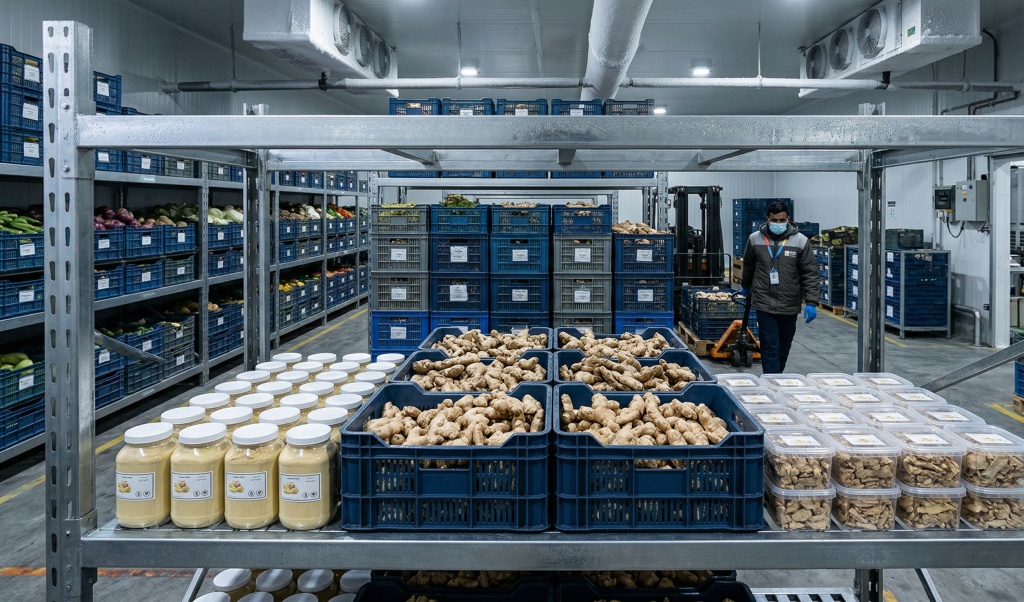
Storage and Shelf Life: Where Most Waste Happens
In Dubai’s supply chain, spoilage is one of the biggest hidden costs.
Fresh Ginger Shelf Life
- Room temperature: a few days
- Refrigerated: 2–3 weeks (if stored properly)
Common issues:
- Moisture buildup
- Mold formation
- Loss of aroma
Dried Ginger Shelf Life
- Several months when stored correctly
- Low risk of spoilage
Ginger Powder Shelf Life
- 6–12 months in airtight conditions
- Gradual loss of potency over time
Practical Insight from Supply Chains
Buyers who mix formats (fresh + powder) typically:
- Reduce waste
- Maintain flavor balance
- Improve cost efficiency
This is especially relevant for businesses managing fluctuating demand.
Import vs Local Handling: Why Ginger Quality Varies in UAE
Unlike some vegetables, ginger in Dubai is almost entirely imported.
This introduces variables that many buyers overlook.
Key Factors Affecting Quality
1. Transit Time
Longer transit means:
- Reduced moisture
- Increased fiber
- Lower aroma
2. Storage Conditions During Shipping
Temperature fluctuations can:
- Accelerate spoilage
- Affect texture
3. Supplier Handling
Post-import handling determines:
- Freshness retention
- Shelf life at the retail or wholesale level
This is why two batches of ginger, bought a week apart, can feel completely different.
Wholesale vs Retail Ginger: What Buyers Notice
This is a frequent topic in procurement discussions.
Wholesale Supply
Advantages:
- Better pricing
- Larger volumes
- More consistent sourcing
Tradeoffs:
- Requires proper storage
- Higher risk if demand fluctuates
Retail Supply
Advantages:
- Smaller quantities
- Lower immediate risk
Tradeoffs:
- Higher cost per unit
- Inconsistent availability
Many UAE buyers eventually move toward a hybrid sourcing model.
They:
- Buy fresh ginger in smaller, frequent batches
- Keep ginger powder as a backup
The Role of Seasonality in Buying Decisions
Although ginger is available year-round, seasonality still matters.
During High-Demand Periods (e.g., Winter, Ramadan)
- Increased usage in cooking
- Higher turnover rates
- Lower spoilage risk
Fresh ginger becomes more practical here.
During Low-Usage Periods or Hot Months
- Slower turnover
- Higher spoilage risk
Buyers often rely more on:
- Dried ginger
- Ginger powder
Understanding this pattern helps avoid unnecessary losses.
What Experienced Buyers Do Differently
Over time, experienced buyers develop a few habits:
- They don’t rely on a single form of ginger
- They adjust based on:
- Season
- Demand
- Dish type
- They track:
- Waste levels
- Usage patterns
Some UAE buyers prefer working with structured suppliers rather than fragmented retail sourcing, simply because it allows better planning and consistency across batches.
A Quick Decision Framework
If you had to simplify everything into a quick decision:
- Need freshness and aroma → Fresh ginger
- Need depth in slow cooking → Dried ginger
- Need consistency and scale → Ginger powder
This reduces confusion and improves results immediately.
Putting It All Together: A Practical Buying Strategy for Dubai
After understanding the differences, most buyers reach the same conclusion:
There is no “best” form of ginger — only the right form for the right situation.
What separates efficient kitchens from wasteful ones is not ingredient quality alone, but decision clarity.
A Balanced Procurement Approach
Across Dubai’s restaurants, catering companies, and even well-managed households, a simple pattern emerges:
- Fresh ginger is purchased frequently in small quantities
- Ginger powder is kept as a stable backup
- Dried ginger is used selectively for specific dishes
This reduces:
- Spoilage
- Last-minute shortages
- Flavor inconsistency
Real-World Example: Mid-Sized Restaurant in Dubai
A typical mid-sized restaurant might:
- Use fresh ginger for:
- Daily prep
- Fresh sauces
- Keep ginger powder for:
- Busy service periods
- Backup during supply gaps
Without this balance, they often face:
- Over-prepping fresh ginger that goes unused
- Emergency substitutions that affect taste
Real-World Example: Household Buying Pattern
Many households in Dubai shift over time from:
- Buying only fresh ginger → experiencing waste
To:
- Buying small fresh quantities + keeping powder
This reduces the common problem of:
“I bought ginger once, used it once, and threw the rest away.”
The Bigger Lesson: Ginger Is a Supply Chain Decision, Not Just a Cooking Choice
Most online content focuses on recipes.
But in practice, ginger is a procurement and storage decision first.
Especially in Dubai, where:
- Produce is imported
- Climate affects shelf life
- Demand fluctuates seasonally
Understanding ginger properly means:
- Better cost control
- More consistent cooking
- Less waste across the board
Final Takeaway
If there is one principle to remember, it is this:
Fresh ginger, dried ginger, and ginger powder are not substitutes — they are tools.
Using them correctly is less about cooking skill and more about:
- Awareness
- Planning
- Fit-for-purpose usage
Once that shift happens, most of the confusion disappears.
Frequently Asked Questions (FAQ)
1. Can I replace fresh ginger with ginger powder in cooking?
Yes, but not directly. Ginger powder is more concentrated and lacks the fresh aroma. Adjust quantities carefully and expect a different flavor profile.
2. Why does fresh ginger spoil so quickly in Dubai?
Because of heat and humidity. Improper storage leads to moisture buildup, mold, and loss of aroma. Refrigeration helps but does not fully prevent spoilage.
3. Is dried ginger better than fresh ginger?
Not better — just different. Dried ginger works well in slow cooking and traditional recipes, while fresh ginger is better for aroma and quick dishes.
4. How do I know if fresh ginger is good quality?
Look for firm texture, smooth skin, and strong aroma. Avoid wrinkled, soft, or moldy pieces.
5. What is the best form of ginger for bulk cooking?
Ginger powder is usually preferred for bulk cooking due to consistency, ease of use, and longer shelf life.








 Home
Home  Whishlist
  Compare
  Checkout