













Introduction: A Small Leaf With a Surprisingly Big Problem
Walk into any South Indian kitchen in Dubai, and one thing is almost always missing when it shouldn’t be: truly fresh curry leaves.
Despite the high demand for fresh curry leaves Dubai buy online, many buyers—both households and professional kitchens—struggle to source them consistently. The issue is not demand. It is supply structure, shelf life, and a lack of clarity around where these leaves actually come from and how they move through the UAE’s food system.
This gap leads to a common experience:
You find curry leaves… but they are dry, limp, or already losing aroma.
For restaurants, this affects flavor consistency.
For families, it affects authenticity.
For suppliers, it becomes a logistics problem rather than a product issue.
Understanding why this happens—and how to navigate it—is where most buyers start making better decisions.
Why Curry Leaves Are So Hard to Source Fresh in Dubai
At first glance, curry leaves seem simple. They are lightweight, inexpensive in origin countries, and widely used across Indian cuisine.
But in Dubai, they behave more like a fragile, high-risk ingredient.
1. Extremely Short Shelf Life
Fresh curry leaves begin losing their essential oils within days of harvest.
Those oils are what give:
- The sharp, citrusy aroma
- The depth in tempering (tadka)
- The signature flavor in dishes like sambhar or rasam
Once those oils degrade, the leaves may still look green—but they are no longer effective in cooking.
This creates a hidden quality issue:
Visual freshness ≠ functional freshness
2. Import Dependency and Transit Stress
Most curry leaves in the UAE are imported from India or Sri Lanka.
That means:
- Harvest → packing → export → customs → distribution
- Each step adds time and handling stress
Even under ideal conditions, the leaves often spend 48–96 hours in transit before reaching a buyer.
Without proper cold-chain handling (temperature-controlled logistics), they deteriorate quickly.
3. Fragmented Supply Channels
Unlike staple vegetables (onions, potatoes), curry leaves are not always stocked consistently across:
- Supermarkets
- Retail grocery stores
- Online platforms
Instead, they often move through smaller, fragmented supply chains:
- Ethnic grocery stores
- Informal importers
- Wholesale vegetable markets
This fragmentation leads to inconsistency in:
- Availability
- Quality
- Pricing
4. Low Volume, High Sensitivity Product
Curry leaves are not purchased in large volumes compared to other produce.
For suppliers, this creates a tradeoff:
- High risk of spoilage
- Lower profit margin
- Less priority in logistics planning
As a result, they are often handled as an add-on item, not a core product.
Where Most Buyers Go Wrong
The biggest issue is not access—it is expectations.
Many buyers assume curry leaves behave like herbs such as parsley or coriander. They don’t.
Common Mistakes:
Buying Based on Appearance Alone
Bright green leaves can still be old. If they feel dry or brittle, they have already lost potency.
Buying in Bulk Without Storage Planning
Curry leaves deteriorate quickly if not stored properly. Overbuying often leads to waste.
Relying Only on Supermarkets
Most supermarkets prioritize shelf stability, not peak freshness for niche herbs.
Ignoring Supply Timing
Curry leaves are best purchased close to their import cycle. Timing matters more than brand or location.
Understanding the UAE Supply Chain for Curry Leaves
To make better buying decisions, it helps to understand how these leaves actually reach Dubai.
Step 1: Harvest in Origin Country
Leaves are harvested early morning to preserve oil content.
They are usually:
- Packed loosely (to avoid bruising)
- Not heavily processed
Step 2: Air Freight or Consolidated Shipping
Because of perishability, curry leaves are typically transported via air freight.
However, delays happen:
- Flight schedules
- Customs clearance
- Handling queues
Even small delays reduce freshness.
Step 3: Wholesale Distribution
Once in Dubai, the leaves move to:
- Central wholesale markets
- Distribution hubs
From here, they are sold to:
- Restaurants
- Grocery stores
- Online sellers
In practice, suppliers working closely with Dubai-based distributors such as JMB Farm Fresh often observe that the quality variation at this stage depends heavily on how quickly inventory is rotated.
Step 4: Retail or Direct Delivery
Finally, curry leaves reach end buyers through:
- Retail shelves
- Online delivery services
- Direct supplier networks
By this stage, the difference between fresh and average quality is already decided.
Why “Fresh Curry Leaves Delivery UAE” Is Rising in Search
There has been a noticeable shift in how people try to source curry leaves.
Instead of walking into stores, more buyers are searching for:
- curry leaves delivery UAE
- where to buy curry leaves Dubai
- kadi patta Dubai fresh
This shift reflects a deeper problem:
People are trying to reduce time between supply and usage.
Direct delivery models can:
- Shorten the supply chain
- Reduce handling
- Improve freshness
But only if the supplier manages sourcing and storage properly.
Seasonal Reality: Are Curry Leaves Ever Truly “In Season” in UAE?
Unlike local vegetables, curry leaves in Dubai do not follow a traditional growing season locally.
However, their quality still fluctuates based on:
1. Weather in Origin Countries
Heavy rains or heatwaves in India affect:
- Leaf texture
- Oil concentration
- Shelf life
2. Export Conditions
Festivals, logistics disruptions, and export demand influence availability.
3. UAE Climate Impact
Dubai’s heat accelerates deterioration once leaves arrive.
Even short exposure outside controlled environments can reduce shelf life significantly.
The Difference Between Fresh and “Usable” Curry Leaves
This is where most buyers get confused.
There are three realistic quality levels:
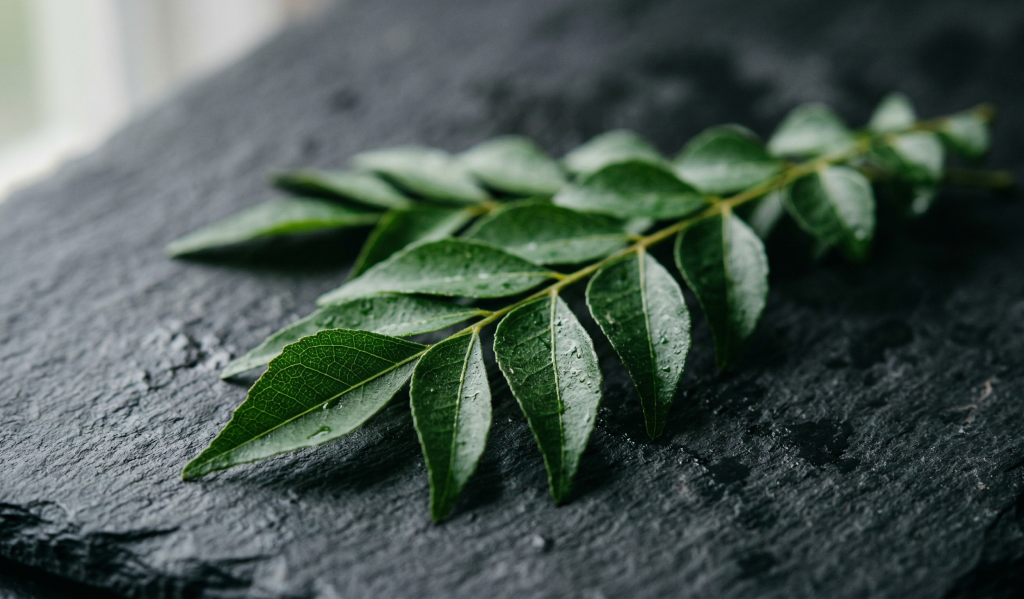
1. Peak Fresh
- Strong aroma
- Flexible leaves
- Deep green color
- High oil content
Best for restaurants and serious cooking.
2. Acceptable Fresh
- Slightly reduced aroma
- Still usable in cooking
- Common in retail
3. Visually Fresh but Functionally Weak
- Looks green
- Weak aroma
- Minimal flavor impact
This is the most common issue in Dubai.
Understanding this difference changes how you buy, store, and use curry leaves.
What Restaurants and Professional Kitchens Do Differently
Professional buyers—especially South Indian restaurants—approach curry leaves differently than households.
They focus on:
- Frequent small purchases instead of bulk buying
- Reliable supplier relationships
- Fast inventory turnover
They also test quality by:
- Crushing leaves to check aroma
- Observing oil release during tempering
For them, consistency matters more than price.
This mindset is gradually influencing how households buy as well, especially those who cook regularly.
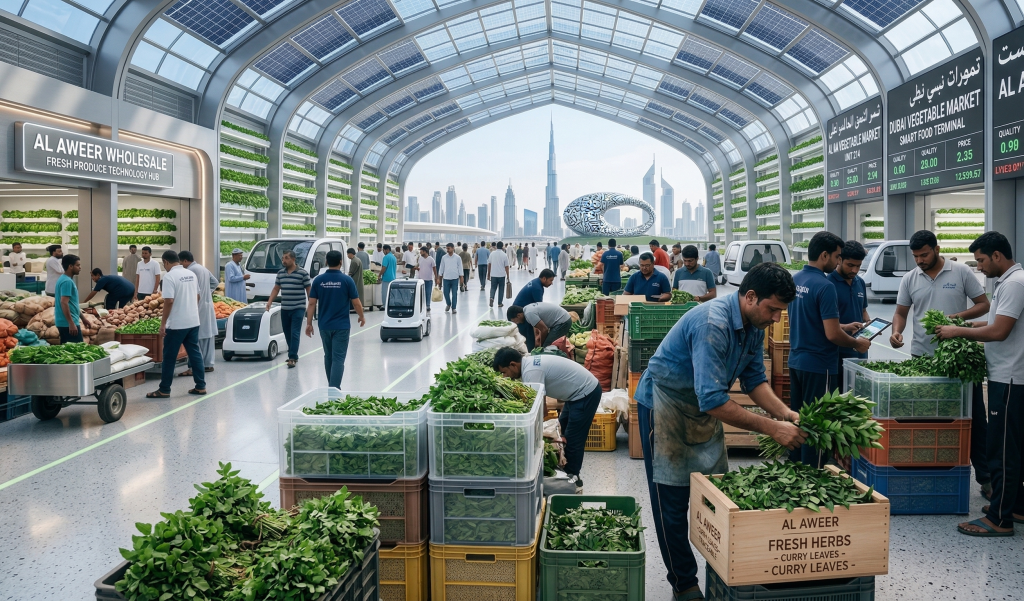
How to Actually Find Reliable Fresh Curry Leaves in Dubai
Once you understand how sensitive curry leaves are, the question becomes practical:
Where should you actually buy them from?
There is no single perfect source. Each option comes with tradeoffs.
1. Traditional Vegetable Markets (Wholesale Hubs)
Places like central produce markets are often the first point of distribution after import.
Advantages:
- Access to recently arrived stock
- Better chance of finding peak freshness
- Lower handling compared to retail chains
Limitations:
- Requires physical visit
- Inconsistent availability
- Quality varies by vendor
For experienced buyers, this is often the best place—but it requires knowledge and timing.
2. Ethnic Grocery Stores
Many Indian and South Asian grocery stores stock curry leaves regularly.
Advantages:
- Convenient access
- Familiar products for home cooking
- Usually stocked multiple times per week
Limitations:
- Storage conditions vary widely
- Leaves may sit on shelves longer than expected
- Limited visibility into sourcing timeline
These stores are a practical option, but quality can fluctuate significantly.
3. Supermarkets and Hypermarkets
Large chains occasionally stock curry leaves, especially in areas with high Indian populations.
Advantages:
- Easy access
- Standardized packaging
- Clean retail environment
Limitations:
- Lower priority item in inventory
- Often sourced in bulk and stored longer
- Focus on shelf life, not peak freshness
This is where many buyers experience the “green but flavorless” issue.
4. Online Grocery Platforms
Searches for buy fresh herbs online UAE have increased because buyers want convenience and speed.
Advantages:
- Home delivery
- Time-saving
- Easy comparison across platforms
Limitations:
- Limited control over quality selection
- Delivery timing may not align with freshness
- Some platforms source from retail shelves, not directly from distributors
The result depends heavily on the backend supply chain—not the app interface.
5. Direct-from-Supplier Delivery Models
A growing number of buyers now source directly from distributors or produce suppliers.
Advantages:
- Shorter supply chain
- Better inventory turnover
- More consistent quality
Limitations:
- Not always visible to individual consumers
- Requires some relationship-building or discovery
- May not always offer small quantities
Some UAE buyers prefer working with established wholesale produce providers rather than fragmented retail sourcing, especially when consistency matters.
What to Look for When Buying Curry Leaves (Practical Checklist)
Instead of focusing only on “where,” experienced buyers focus on how to evaluate quality quickly.
Check 1: Aroma Test
Crush a leaf between your fingers.
- Strong citrusy smell → Fresh
- Mild or no smell → Old
Check 2: Flexibility
Fresh leaves bend easily.
- Flexible → Good
- Brittle or dry → Already degraded
Check 3: Stem Condition
Look at the small stems.
- Moist and green → Recently harvested
- Dry or woody → Older stock
Check 4: Surface Texture
Leaves should feel slightly soft, not rough.
Check 5: Storage Environment
If leaves are displayed in open heat, their shelf life is already reduced.
These checks take less than 10 seconds but prevent most quality issues.
Storage: Why Most Curry Leaves Go to Waste at Home
Even when buyers manage to find fresh leaves, the next problem begins at home.
Curry leaves are extremely sensitive to:
- Moisture
- Temperature fluctuations
- Air exposure
Common Storage Mistakes
- Leaving them in plastic bags without airflow
- Washing before storage (introduces moisture)
- Keeping them in warm fridge sections
Better Storage Approach
For longer shelf life:
- Wrap in a dry paper towel
- Store in an airtight container
- Keep in the refrigerator’s crisper drawer
For extended use:
- Freeze in small portions
- Avoid repeated thawing
This can extend usability from a few days to several weeks.
The Hidden Cost of Poor Quality Curry Leaves
For many buyers, curry leaves seem inexpensive.
But the real cost is not in purchase price—it is in performance.
For Households:
- Dishes lack expected flavor
- More leaves used to compensate
- Frequent repurchasing
For Restaurants:
- Inconsistent taste across dishes
- Customer experience variation
- Increased food cost due to waste
For Catering Businesses:
- Difficulty maintaining standard recipes
- Higher rejection rates during prep
In all cases, poor-quality curry leaves create a hidden inefficiency.
Wholesale vs Retail: Which Is Better for Curry Leaves?
This is a common debate among buyers.
The answer depends on usage.
Retail Works Best When:
- You cook occasionally
- You need very small quantities
- Convenience matters more than consistency
Wholesale or Direct Supply Works Better When:
- You cook frequently
- You need consistent quality
- You want fresher stock cycles
However, wholesale sourcing comes with its own tradeoffs:
- Less flexibility in quantity
- Requires planning
- May involve minimum order thresholds
Why Price Fluctuations Happen (And Why They Confuse Buyers)
Many buyers notice that curry leaf prices in Dubai fluctuate without clear reason.
This is not random.
Key Factors:
Import Frequency
If shipments are delayed, supply tightens.
Spoilage Rates
Higher spoilage → higher effective cost.
Demand Spikes
Festivals and events increase consumption.
Logistics Costs
Air freight pricing directly affects cost.
Because curry leaves are a low-volume product, even small disruptions create noticeable price changes.
A Quiet Shift: More Structured Herb Sourcing in the UAE
Over the past few years, there has been a gradual shift in how herbs like curry leaves are handled.
Instead of relying purely on fragmented retail channels, more buyers are moving toward:
- Consolidated sourcing
- Predictable delivery cycles
- Better storage practices
This is especially visible among:
- Restaurant groups
- Cloud kitchens
- Catering operations
In practice, this shift is driven by a simple goal:
Reduce uncertainty.

Curry Leaves in South Indian Cooking: Why Freshness Matters More Than Quantity
In many South Indian dishes, curry leaves are not a garnish. They are foundational.
When added to hot oil, fresh curry leaves release volatile compounds that define the dish’s aroma. This process—commonly known as tempering—depends heavily on oil content inside the leaves.
If the leaves are not fresh:
- The oil release is weak
- The aroma is muted
- The dish feels incomplete, even if everything else is correct
This is why experienced cooks often say:
“If the curry leaves are not right, the dish is not right.”
The Role of Curry Leaves Beyond Flavor
Searches around curry leaves benefits hair health UAE show that many buyers are not only using them for cooking.
Curry leaves have traditionally been associated with:
- Hair oil preparations
- Herbal remedies
- Nutritional uses in daily diets
While these uses vary by tradition and personal preference, one thing remains consistent:
Freshness affects effectiveness here as well.
Leaves that have lost their oils are less useful not only in cooking, but also in these secondary applications.
Local Growing vs Imported Supply: Is There a Future Shift?
A question that comes up often:
Why doesn’t Dubai grow its own curry leaves at scale?
The answer is partly environmental and partly economic.
Challenges with Local Cultivation:
- Curry leaf plants require stable, warm climates—but not extreme heat
- UAE’s peak summer temperatures stress plant growth
- Water and controlled environment costs are high
While small-scale cultivation exists (home gardens, niche farms), large-scale commercial production is still limited.
What This Means for Buyers
For the foreseeable future:
- UAE will remain dependent on imports
- Supply variability will continue
- Freshness will remain a logistics challenge, not a farming issue
A Practical Buying Framework (Simple and Reliable)
After working through all these variables, experienced buyers tend to follow a simple framework:
Step 1: Choose Source Based on Usage
- Occasional cooking → Retail or online
- Frequent use → Supplier or wholesale channel
Step 2: Check Freshness Physically
Always rely on:
- Smell
- Texture
- Flexibility
Not packaging or labeling.
Step 3: Buy in Smaller, More Frequent Quantities
This reduces:
- Waste
- Quality degradation
Step 4: Store Correctly Immediately
Proper storage extends usability significantly.
Step 5: Adjust Expectations
Curry leaves in Dubai will never behave exactly like freshly picked leaves in India.
But with the right sourcing and handling, they can come very close.
Why This Topic Matters More Than It Seems
At first glance, curry leaves are a niche ingredient.
But they represent a broader pattern in Dubai’s food ecosystem:
- Heavy reliance on imports
- High expectations for freshness
- Complex supply chains for simple ingredients
Understanding curry leaves helps buyers better understand:
how fresh produce actually moves through the UAE.
A Note on Suppliers and Market Evolution
As demand becomes more consistent and informed, suppliers are gradually adapting.
Some distributors are:
- Improving cold-chain handling
- Reducing transit time to customers
- Offering more predictable sourcing cycles
In practice, distributors working within structured supply networks—such as JMB Farm Fresh—often observe that even small improvements in handling and rotation can significantly affect herb quality.
This is not about branding.
It is about process.
Conclusion: Better Buying Starts With Better Understanding
The challenge with curry leaves in Dubai is not availability.
It is clarity.
Once buyers understand:
- How quickly curry leaves lose quality
- How the supply chain affects freshness
- How to evaluate and store them properly
They begin to make better decisions naturally.
And over time, this leads to:
- Less waste
- Better cooking results
- More consistent sourcing
Curry leaves may be small—but they are one of the clearest examples of how detail matters in fresh produce.
FAQ Section
1. Where to buy curry leaves in Dubai?
Curry leaves are available in ethnic grocery stores, wholesale markets, some supermarkets, and online delivery platforms. Quality varies depending on how recently they were imported and how they are stored.
2. Why do curry leaves taste weak or have no aroma?
This usually happens when the leaves have lost their natural oils due to age or improper storage. Fresh curry leaves should release a strong aroma when crushed.
3. Can I store curry leaves for a long time?
Yes, but only with proper storage. Refrigeration with dry wrapping or freezing in portions can extend usability significantly.
4. Are curry leaves grown locally in the UAE?
They are grown in small quantities, but most supply comes from imports due to climate and cost constraints.
5. Is it better to buy curry leaves online in UAE?
Online buying is convenient, but freshness depends on the supplier’s sourcing and delivery speed. It is not guaranteed across all platforms.








 Home
Home  Whishlist
  Compare
  Checkout