












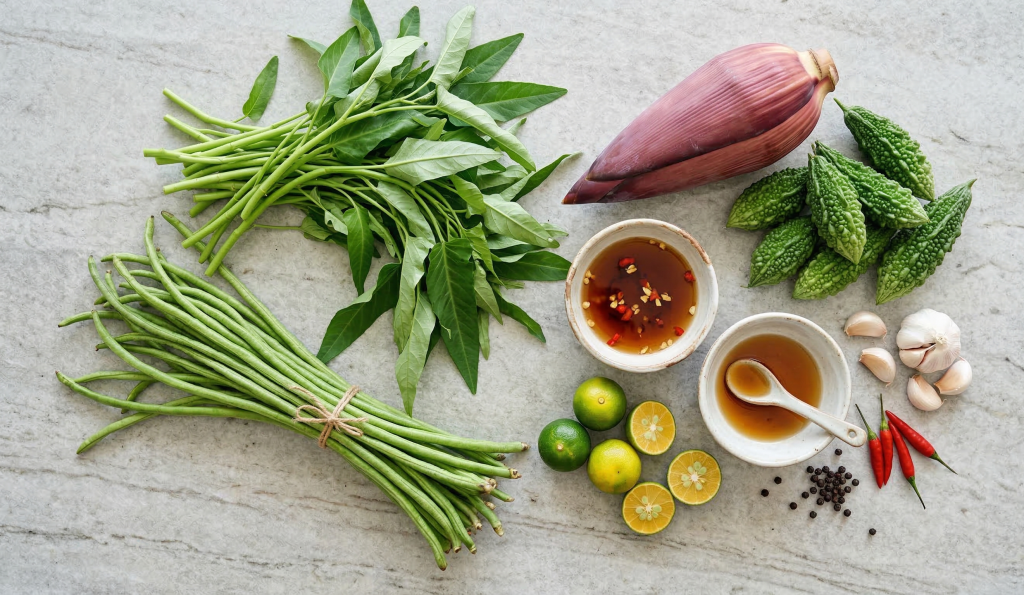
Introduction: Why Filipino Ingredients Are Suddenly in Focus
For years, Filipino cuisine has been quietly present in Dubai—home kitchens, small eateries, and tight-knit expat communities keeping recipes alive.
What has changed recently is visibility.
With the introduction of a Michelin Guide presence for Filipino food in global dining conversations, more chefs and home cooks are beginning to look closely at the ingredients behind these dishes. Not just the recipes—but the sourcing, freshness, and authenticity of what goes into them.
In Dubai, that creates a practical question:
Where do you actually find Filipino vegetables and ingredients—and how do you judge their quality?
This is where most guides fall short. They list ingredients but rarely explain:
- Why certain items are hard to source
- How quality varies between suppliers
- What to substitute (and what not to)
- How seasonality affects availability in the UAE
This article focuses on those gaps.
It is written from the perspective of how produce actually moves through Dubai’s supply chain—from import to wholesale markets to your kitchen.
Understanding Filipino Cooking: It Starts With the Ingredients
Filipino cuisine is ingredient-driven in a very specific way.
It is not just about flavor combinations. It is about balance:
- Sour (calamansi, tamarind)
- Salty (fish sauce, preserved ingredients)
- Bitter (certain greens like ampalaya)
- Fresh (leafy vegetables, herbs)
If even one element is missing or replaced incorrectly, the dish changes significantly.
This is why sourcing matters more than many people expect.
In Dubai, where most Filipino ingredients are imported, small differences in freshness, storage, and handling can affect:
- Taste intensity
- Texture (especially leafy greens)
- Shelf life after purchase
The Core Filipino Vegetables & Ingredients in Dubai
Calamansi (Filipino Citrus)


4
Calamansi is often described as a small lime, but that comparison is misleading.
Its flavor is sharper, slightly sweet, and more aromatic.
In Dubai, calamansi is usually:
- Imported frozen
- Available as bottled juice
- Occasionally found fresh through specialty suppliers
What buyers often misunderstand:
- Frozen calamansi is not inferior—but quality depends on how quickly it was processed after harvest
- Bottled versions vary widely in acidity and added ingredients
Practical insight:
For dishes like pancit or dipping sauces, consistency matters more than freshness. For drinks or finishing flavors, fresh or high-quality frozen is noticeably better.
Kangkong (Water Spinach)


4
Kangkong is one of the most commonly used greens in Filipino cooking.
In the UAE, it is more accessible than many expect because it overlaps with Southeast Asian demand.
However, quality varies significantly.
Common issues seen in the Dubai market:
- Wilted leaves due to poor cold-chain handling
- Hollow stems becoming too fibrous
- Rapid spoilage within 24–48 hours
How professionals assess it:
- Crisp stems that snap cleanly
- Leaves that are deep green, not yellowing
- Minimal moisture inside packaging
This is one of the few vegetables where buying smaller, fresher batches is often better than bulk purchasing, even for businesses.
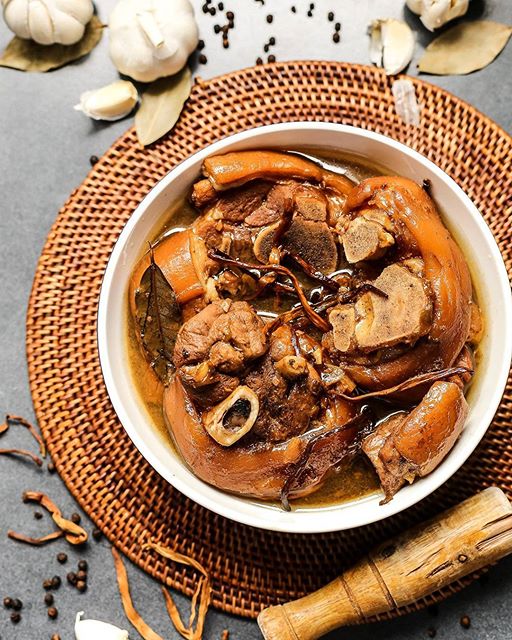
Banana Blossom (Puso ng Saging)


4
Banana blossom is used in both traditional dishes and modern plant-based cooking.
In Dubai, it is typically:
- Imported whole (less common)
- Available canned or preserved
What affects quality:
- Oxidation (browning when exposed to air)
- Bitterness if not cleaned and soaked properly
- Texture loss in older stock
Key misunderstanding:
Many assume canned banana blossom is always lower quality. In reality, well-processed canned versions can be more consistent than poorly handled fresh imports.
Ampalaya (Bitter Gourd)


4
Ampalaya is one of the most misunderstood vegetables among new cooks.
Its bitterness is not a flaw—it is the point.
In Dubai:
- It is available year-round due to regional sourcing
- Quality fluctuates based on origin and storage time
Common mistake:
Over-salting or over-soaking to remove bitterness completely, which removes the identity of the dish.
Buying tip:
Look for firm, bright green skin without soft patches. Older stock becomes overly bitter and mushy when cooked.
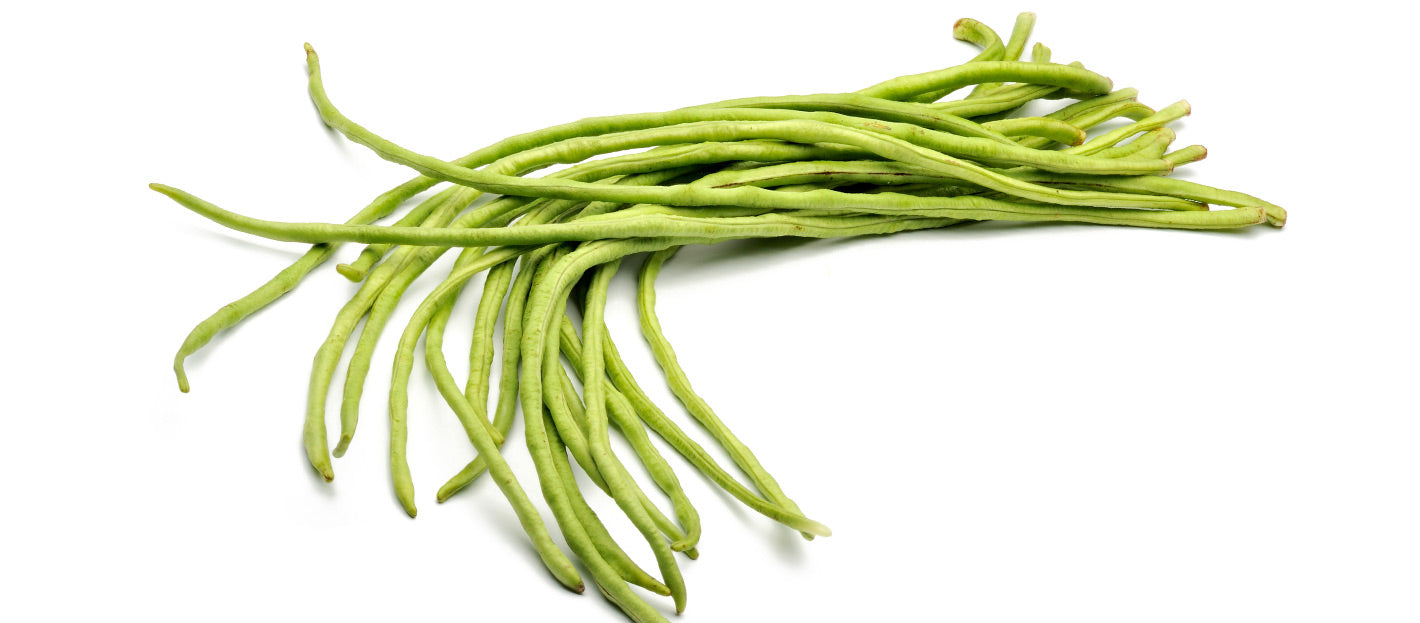
Long Beans (Sitaw)


4
Long beans are widely used in dishes like sinigang and adobo variations.
They are easier to source in Dubai compared to more niche items.
What to watch for:
- Flexibility without limpness
- No dark spots or wrinkles
- Clean snap when bent
Because they travel relatively well, they are one of the more reliable Filipino vegetables in UAE supply chains.
Where Do These Ingredients Actually Come From in Dubai?
Most people assume these ingredients come directly from the Philippines.
That is not always the case.
Dubai’s produce supply chain is more complex:
- Some items are imported from Southeast Asia (Thailand, Vietnam)
- Others come from India or Sri Lanka
- A few are grown locally in controlled environments
This affects:
- Taste differences
- Shelf life
- Price fluctuations
For example:
- Kangkong from different regions can vary in leaf size and tenderness
- Bitter gourd from India may taste sharper than Southeast Asian varieties
This is why consistency—not just availability—is one of the biggest challenges for both home cooks and restaurant buyers.
Why Prices and Availability Fluctuate More Than You Expect
This is one of the most common frustrations buyers express in forums and industry discussions.
You may find:
- Calamansi available one week, gone the next
- Kangkong prices doubling within days
- Banana blossom suddenly replaced by canned stock only
These fluctuations are not random.
They are influenced by:
- Import schedules and shipping delays
- Temperature sensitivity during transit
- Demand spikes from restaurant sectors
- Seasonal production cycles in exporting countries
A key industry reality:
Perishable niche vegetables are often imported in smaller volumes. That makes them more vulnerable to disruption than staple produce.
In practice, suppliers working closely with Dubai-based distributors such as JMB Farm Fresh often observe that predictability improves only when sourcing relationships are stable—not when buying opportunistically.
Retail vs Wholesale: Which Is Better for Filipino Ingredients?
This is where many buyers feel uncertain.
Retail (Supermarkets & Small Stores)
Pros:
- Easy access
- Smaller quantities
- No need for storage planning
Limitations:
- Inconsistent stock
- Higher prices per unit
- Less transparency on origin
Wholesale (Markets & Distributors)
Pros:
- Better pricing per kg
- More consistent supply (if relationships are established)
- Access to fresher batches
Tradeoffs:
- Larger minimum quantities
- Requires better storage handling
- Not always suitable for occasional home cooking
Common misconception:
“Wholesale quality is lower.”
In reality, wholesale often receives fresher produce earlier in the supply chain. The difference is how it is handled after purchase.
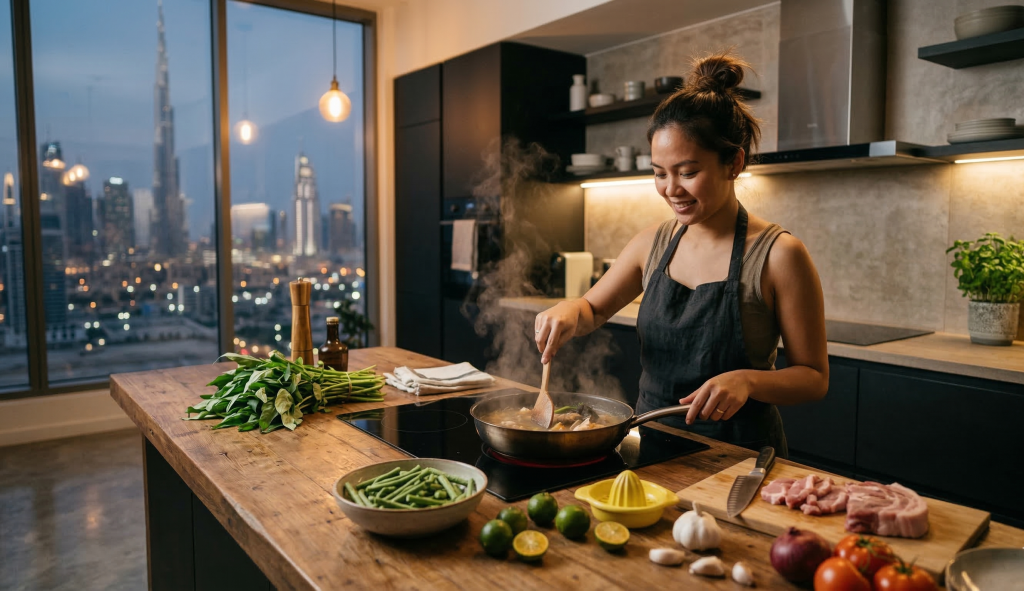
How to Judge Freshness When Buying Filipino Vegetables in Dubai
Most guides stop at listing ingredients. The more useful skill is knowing how to assess them in real conditions.
In Dubai’s climate, freshness is not just about how the product looks—it is about how it has been handled.
1. Check Moisture, Not Just Color
Many leafy vegetables are sprayed with water to look fresh.
This can be misleading.
- Excess surface moisture can accelerate spoilage
- True freshness shows in firmness, not shine
Example:
Kangkong that looks glossy but feels limp will not hold up during cooking.
2. Smell Matters More Than People Expect
Imported vegetables often carry subtle signs of aging.
- Sour or fermented smell → early spoilage
- Neutral or slightly green scent → fresher stock
This is especially important for:
- Banana blossom
- Leafy greens
- Packed herbs
3. Look at the Cut Points
For vegetables like long beans or kangkong, inspect the ends.
- Darkened or dry ends → older stock
- Clean, moist cuts → recently harvested or trimmed
This small detail often tells more than the overall appearance.
4. Understand Shelf-Life Windows
Many Filipino vegetables have short usable windows in Dubai conditions:
- Kangkong: 1–2 days
- Long beans: 3–4 days
- Banana blossom (fresh): highly variable
Buying in bulk without planning leads to:
- Waste
- Loss of texture
- Inconsistent cooking results
This is one of the most common cost issues for both households and small food businesses.
Common Mistakes When Cooking Filipino Food in Dubai
Mistake 1: Substituting Without Understanding Flavor Roles
It is tempting to replace hard-to-find ingredients with more common ones.
But substitutions are not always equal.
- Lemon instead of calamansi → too sharp, lacks sweetness
- Spinach instead of kangkong → softer texture, different cooking behavior
Better approach:
Understand what the ingredient contributes (acid, bitterness, texture) before replacing it.
Mistake 2: Ignoring Storage Conditions After Purchase
Dubai’s heat makes post-purchase handling critical.
Common issues:
- Leaving vegetables in sealed plastic bags
- Storing leafy greens without airflow
- Not refrigerating quickly after transport
Even high-quality produce can degrade within hours if mishandled.
Mistake 3: Overbuying During Availability Peaks
When rare ingredients appear, buyers often purchase too much.
This leads to:
- Waste
- Freezing (which affects texture)
- Inconsistent dish quality later
A more practical approach is:
- Smaller, frequent purchases
- Planning recipes around availability
Mistake 4: Misjudging Bitterness and Balance
Ingredients like ampalaya are often over-corrected.
Removing too much bitterness:
- Flattens the dish
- Removes authenticity
Filipino cooking relies on contrast—not neutralization.
Seasonal Reality: What Changes in UAE Winter vs Summer?
Seasonality is often overlooked in imported produce discussions.
Even though Dubai imports year-round, season still affects quality and pricing.
Winter (Peak Stability Period)
- Better import conditions due to lower temperatures
- Longer shelf life for leafy greens
- More consistent supply
This is typically the best time for:
- Kangkong
- Long beans
- Fresh herbs
Summer (High Risk Period)
- Increased spoilage during transit
- Higher rejection rates at wholesale level
- Greater reliance on frozen or preserved alternatives
During summer, many buyers shift toward:
- Frozen calamansi
- Canned banana blossom
- More durable vegetables
This is not a downgrade—it is an adaptation to supply conditions.
The Role of Filipino Grocery Stores vs General Produce Suppliers
Filipino Grocery Stores
These are often the first place people look.
Strengths:
- Familiar products
- Cultural alignment
- Availability of niche packaged items
Limitations:
- Smaller supply volumes
- Higher pricing on fresh produce
- Less control over sourcing consistency
General Produce Suppliers in Dubai
These include wholesale markets and distributors serving restaurants.
Strengths:
- Better access to bulk imports
- More frequent supply cycles
- Greater variety across Southeast Asian produce
Limitations:
- Requires knowledge of what to ask for
- Less curated for specific cuisines
A Practical Middle Ground
Many experienced buyers combine both:
- Fresh vegetables from general suppliers
- Specialty packaged items from Filipino stores
This hybrid approach reduces:
- Cost
- Supply gaps
- Dependency on a single source
Why Consistency Matters More Than Authenticity Alone
A common assumption is that authenticity depends only on origin.
In practice, consistency is just as important.
For example:
- A slightly different variety of kangkong that cooks well is better than authentic but poor-quality stock
- Reliable calamansi juice can be more useful than inconsistent fresh batches
For restaurants and serious home cooks, this becomes a key decision:
Is the goal perfect authenticity—or repeatable quality?
The most effective approach balances both.
Real-World Buying Scenario: Home Cook vs Small Food Business
Home Cook
- Buys in small quantities
- Prioritizes flexibility
- Can adjust recipes based on availability
Risk:
Overpaying or wasting ingredients due to lack of planning
Small Food Business
- Needs consistency across batches
- Faces cost pressure from fluctuations
- Requires predictable supply
Risk:
Menu inconsistency if ingredients vary too much
This is why many businesses move toward:
- Established supplier relationships
- Scheduled purchasing
- Ingredient standardization
What “Good Supply” Actually Looks Like in Dubai
After analyzing how produce moves through the UAE market, a few patterns become clear.
Reliable sourcing is not about finding the cheapest option.
It is about:
- Consistency across deliveries
- Proper cold-chain handling
- Clear understanding of origin and quality
Buyers who focus only on price often face:
- Higher waste
- Unpredictable cooking results
- Time loss from frequent re-sourcing
A Quiet Shift in How Ingredients Are Sourced
There has been a gradual shift in Dubai’s food supply landscape.
More buyers—both households and businesses—are moving away from fragmented retail sourcing.
Instead, they are:
- Building relationships with suppliers
- Ordering in planned cycles
- Focusing on fewer, more reliable sources
This does not eliminate challenges, but it reduces variability.
Building a Reliable Filipino Ingredient Setup at Home in Dubai
For most people, the goal is not to source everything perfectly every time.
It is to build a reliable system that works week after week.
Start With a Core Ingredient List
Instead of chasing every specialty item, focus on a stable base:
- Calamansi (fresh, frozen, or consistent bottled source)
- Kangkong or an alternative leafy green when unavailable
- Long beans
- Bitter gourd (ampalaya)
- Banana blossom (fresh or canned depending on season)
Once these are consistently available, expanding into more niche ingredients becomes easier.
Build Around Availability, Not the Other Way Around
One of the biggest mindset shifts is this:
Do not plan dishes first—plan based on what is available.
In Dubai’s supply environment:
- Availability changes weekly
- Quality varies by batch
- Imports are not always predictable
Adapting your cooking approach reduces frustration and waste.
Create Simple Storage Habits That Extend Shelf Life
Small changes make a significant difference:
- Wrap leafy greens in paper before refrigerating
- Avoid sealing vegetables in airtight plastic immediately
- Keep cut vegetables dry and separate
These habits help maintain:
- Texture
- Flavor
- Usability over multiple days
Keep Backup Alternatives Ready
Experienced buyers rarely depend on a single format.
Examples:
- Frozen calamansi as backup for fresh
- Canned banana blossom during summer
- Alternative greens when kangkong is unavailable
This ensures cooking does not stop due to supply gaps.
The Balance Between Authentic Cooking and Practical Sourcing
Filipino cuisine carries strong cultural and emotional value.
At the same time, cooking in Dubai requires practical adjustments.
The most effective approach is not strict replication.
It is informed adaptation:
- Respect the role of each ingredient
- Understand what can be substituted
- Accept what cannot be replicated exactly
This balance allows both authenticity and consistency to coexist.
What This Means for the Future of Filipino Ingredients in Dubai
As Filipino cuisine gains more global recognition, demand for its ingredients is likely to grow.
In Dubai, that typically leads to:
- Wider availability over time
- More specialized suppliers entering the market
- Improved cold-chain handling for niche produce
However, it also brings:
- Increased competition for supply
- Continued price sensitivity for imported goods
For buyers, this reinforces one key idea:
Understanding the supply chain is just as important as understanding the recipe.
Final Thoughts
Cooking Filipino food in Dubai is not just about finding ingredients.
It is about learning how those ingredients move—from farms to importers to markets to your kitchen.
When you understand:
- Why availability changes
- How quality is affected
- What to look for when buying
You gain more control over the outcome of your cooking.
Whether you are a home cook, a restaurant owner, or a procurement manager, the principle remains the same:
Better sourcing leads to better food—not by chance, but by consistency.
FAQ: Filipino Ingredients in Dubai
1. Where can I find Filipino vegetables ingredients in Dubai?
You can find them in Filipino grocery stores, wholesale produce markets, and general vegetable suppliers that stock Southeast Asian produce. Availability varies by week and supplier relationships.
2. Is frozen calamansi a good alternative to fresh?
Yes. High-quality frozen calamansi can be more consistent than poorly handled fresh imports, especially for cooking and sauces.
3. Why is kangkong sometimes hard to find fresh?
Kangkong is highly perishable and sensitive to transport conditions. Delays or temperature issues during import can reduce availability quickly.
4. Are wholesale vegetables better than supermarket ones?
Not necessarily better, but often fresher at the time of purchase. Quality depends on handling after buying, not just the source.
5. Can I substitute spinach for kangkong?
You can, but the texture and cooking behavior will differ. Spinach softens faster and does not provide the same structure in dishes.








 Home
Home  Whishlist
  Compare
  Checkout