













Introduction
Walk into any pharmacy or supermarket in Dubai, and you will find shelves full of aloe vera products. Bottled gels, juices, skincare creams, hair treatments—aloe vera is everywhere.
Yet, when it comes to fresh aloe vera leaf in Dubai UAE, the story is very different.
Very few buyers—whether households or even small food businesses—actively source raw aloe vera leaves. Most rely on processed versions without questioning how they compare.
This gap is not just a consumer habit. It reflects deeper patterns in how fresh produce is sourced, understood, and valued in the UAE.
For restaurant owners, grocery buyers, and even families trying to make better health choices, understanding this difference matters more than it seems.
Because with aloe vera, the difference between fresh leaf and packaged gel is not just about price or convenience—it’s about quality, control, and trust in the supply chain.
Why Aloe Vera Is Everywhere — But Fresh Leaves Are Not
Aloe vera has quietly become one of the most used plant-based ingredients in the UAE. It sits at the intersection of wellness, skincare, and natural remedies.
But its popularity has been driven almost entirely by processed products.
What most buyers actually use
In Dubai, aloe vera is commonly consumed as:
- Bottled aloe drinks (often sweetened or flavored)
- Packaged skincare gels
- Cosmetic products with aloe extracts
- Hair treatments and oils infused with aloe
These are easy to find, easy to store, and require no preparation.
What’s missing from the conversation
Fresh aloe vera leaf, however, is rarely discussed in everyday buying decisions.
You will not often see it:
- Prominently displayed in supermarkets
- Included in standard grocery lists
- Recommended by most retail staff
- Stocked consistently across stores
This is not because it is unavailable.
It is because the supply chain and buyer behavior are not aligned around it.
The Supply Reality: Why Fresh Aloe Vera Is Not Widely Sold
From a food supply perspective, aloe vera sits in an unusual category.
It is technically fresh produce—but it behaves differently from typical fruits and vegetables.
1. It is not a “fast-moving” retail item
Retail shelves are designed around products that:
- Sell quickly
- Have predictable demand
- Require minimal explanation
Fresh aloe vera does not fit this model.
Most consumers are unsure:
- How to use it
- How to prepare it safely
- How long it lasts after cutting
This uncertainty slows demand.
And slow demand makes retailers hesitant to stock it.
2. It requires handling knowledge
Unlike buying tomatoes or cucumbers, buying fresh aloe vera involves a level of awareness.
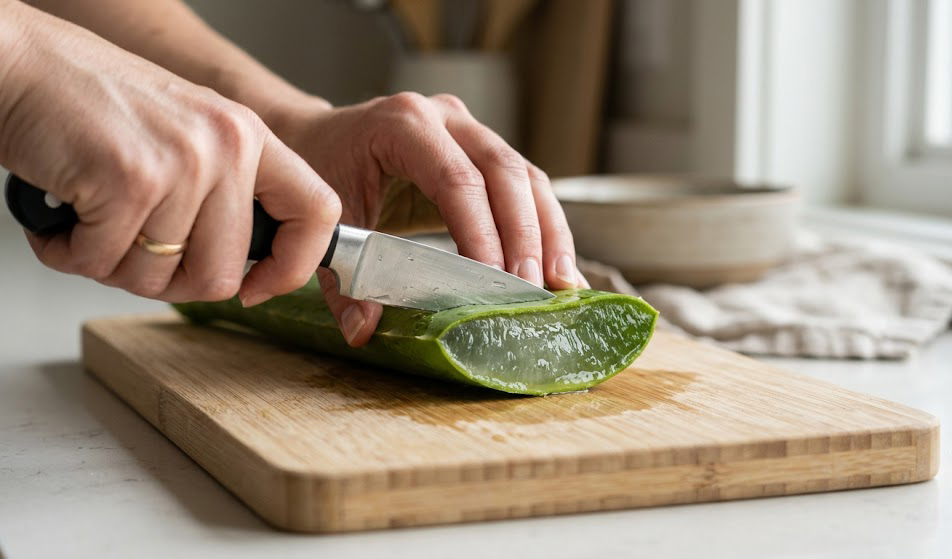
The outer green skin contains latex (a yellow substance) that must be removed properly before use.
For many buyers, this creates hesitation:
- “Is it safe?”
- “Am I preparing it correctly?”
- “Will it taste bitter?”
Retail environments rarely provide this education.
So buyers default to packaged alternatives.
3. Shelf life and storage challenges
Fresh aloe vera leaves are hardy in some ways—but fragile in others.
- Whole leaves can last several days if stored properly
- Once cut, they deteriorate quickly
- Exposure to air reduces quality fast
For retailers, this creates risk:
- Unsold stock leads to waste
- Improper storage reduces quality perception
- Inconsistent turnover affects margins
Compared to packaged gel with long shelf life, fresh aloe vera is harder to manage.
Fresh Aloe Vera Leaf vs Gel in UAE: What Buyers Often Misunderstand
One of the most common misconceptions in Dubai’s wellness market is that all aloe vera products are equal.
They are not.
Understanding the difference between aloe vera leaf vs gel UAE is critical for both consumers and businesses.
Processing changes the product
Packaged aloe vera gel often includes:
- Preservatives
- Stabilizers
- Added water
- Sometimes fragrance or alcohol (in cosmetics)
Even in food-grade aloe drinks, sugar or flavoring is frequently added.
This is not necessarily harmful—but it changes the nature of the product.
Fresh leaf offers control
With raw aloe vera, the buyer controls:
- Purity (no additives)
- Preparation method
- Portion size
- Intended use (consumption, skincare, or hair)
For restaurants, juice bars, or health-focused kitchens, this level of control can be important.
The taste and texture difference
Fresh aloe vera gel extracted from the leaf has:
- A clean, slightly bitter taste
- A thicker, more natural texture
- No artificial sweetness
This makes it suitable for:
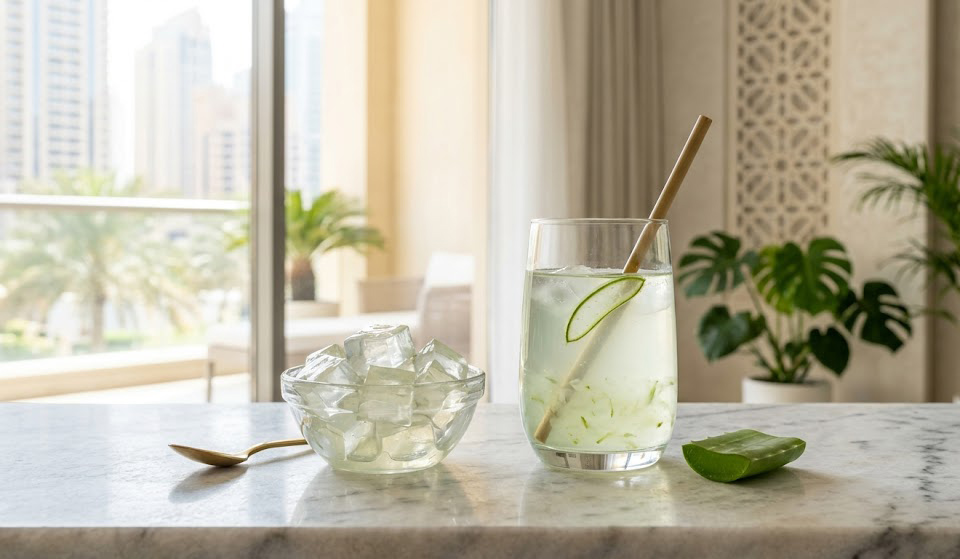
- Fresh juices
- Functional beverages
- Minimal-ingredient recipes
However, it also requires skill to balance flavor.
Where Demand Is Quietly Growing in Dubai
Despite low visibility in retail, demand for buying fresh aloe vera UAE is not absent.
It is simply concentrated in specific segments.
1. Health-conscious households
A small but growing group of buyers prefers:
- Raw ingredients
- Minimal processing
- Home-prepared remedies
These buyers often source aloe vera through:
- Local produce markets
- Specialty grocery stores
- Direct suppliers
2. Juice bars and wellness kitchens
Some juice bars in Dubai are experimenting with:
- Aloe-based detox drinks
- Functional health beverages
- Blends with citrus or mint
Fresh aloe allows them to differentiate—but only if they can maintain consistent supply.
3. Niche grocery and organic retailers
Certain retailers focus on:
- Less common produce
- Functional foods
- Specialty health ingredients
In these environments, aloe vera leaf has a better chance of being stocked.
Why This Gap Matters More Than It Seems
At first glance, aloe vera may look like a niche product.
But the pattern behind it reflects a broader issue in the UAE food supply.
A growing disconnect
There is an increasing gap between:
- What consumers use (processed products)
- What the raw ingredient actually offers
- What the supply chain makes accessible
This gap affects:
- Product transparency
- Nutritional awareness
- Buyer confidence
The risk of over-reliance on processed formats
When buyers depend only on packaged versions, they lose:
- Visibility into sourcing
- Control over ingredients
- Understanding of freshness and quality
This is not unique to aloe vera.
It applies across many categories in the fresh produce ecosystem.
Seasonal Context: Aloe Vera in UAE Supply Chains
Unlike many fruits and vegetables, aloe vera is not strongly tied to a narrow harvest window.
However, in the UAE context, supply still depends on:
- Import sources (often from India or regional farms)
- Handling during transport
- Storage conditions in heat
During cooler months (winter in UAE), logistics are generally more stable.
In peak summer, maintaining freshness becomes more challenging.
This affects:
- Availability consistency
- Leaf quality upon arrival
- Shelf life after distribution
For buyers, this means timing can influence quality—even for a plant considered “resilient.”
The Real Barrier: It’s Not Supply — It’s Buyer Confidence
In most cases, fresh aloe vera leaf is not missing from the UAE supply chain. It moves through the same wholesale channels as other specialty produce.
The real barrier is confidence.
Buyers hesitate because they are unsure how to judge quality, how to use the product, and what to expect after purchase.
This hesitation affects both sides:
- Retailers avoid stocking it due to slow movement
- Buyers avoid purchasing it due to lack of familiarity
The result is a product that exists—but remains underutilized.
How to Judge Fresh Aloe Vera Leaf in Dubai
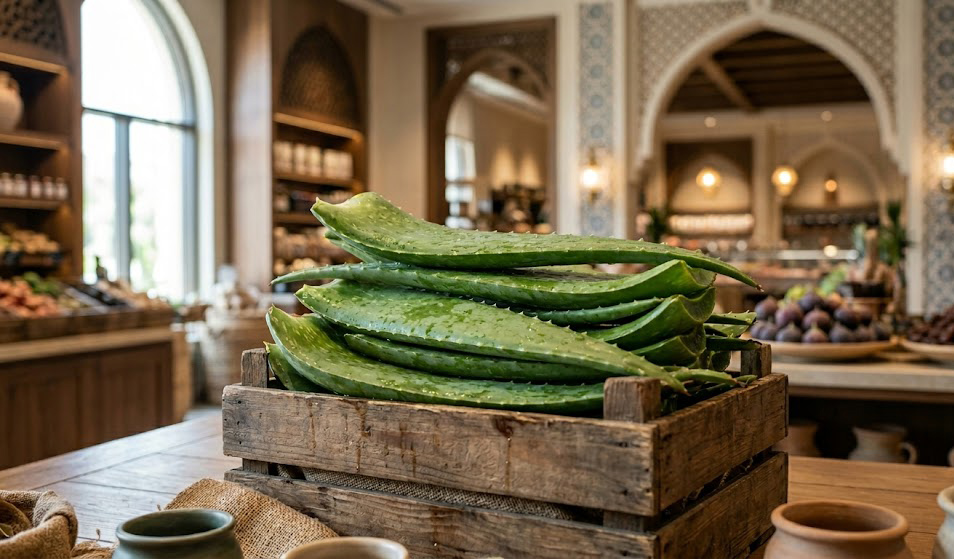
For those considering sourcing fresh aloe vera leaf Dubai UAE, the first step is understanding what quality looks like.
Unlike fruits, aloe vera does not show ripeness in obvious ways. Quality is judged more by structure and condition.
Key indicators of good quality
- Firmness: The leaf should feel thick and solid, not soft or hollow
- Color: Healthy green with no large brown patches
- Edges: Spines (small teeth along the edges) should be intact, not dried out
- Moisture inside: When cut, the gel should be clear and hydrated, not cloudy
Signs of poor handling or aging
- Wrinkled or shriveled skin
- Yellowing or drying edges
- Leaking sap or excessive dryness
- Mushy internal gel
These signs usually indicate:
- Long storage time
- Improper temperature control
- Rough handling during transport
In wholesale environments, these issues often come from breaks in the cold chain or delayed turnover.
Common Mistakes Buyers Make With Fresh Aloe Vera
Many first-time buyers have a poor experience—not because the product is bad, but because of avoidable mistakes.
1. Not removing the latex properly
The yellow layer beneath the skin (latex) can taste bitter and may cause irritation if consumed in large amounts.
Proper preparation involves:
- Trimming edges
- Removing the outer skin
- Rinsing the inner gel thoroughly
Skipping this step leads to negative first impressions.
2. Expecting it to taste like bottled aloe drinks
Packaged aloe beverages are often sweetened.
Fresh aloe is not.
Buyers expecting a sweet or mild taste may find it unpleasant unless it is blended with other ingredients.
3. Buying too much at once
Fresh aloe vera has limited usability once cut.
Over-purchasing leads to:
- Waste
- Loss of texture
- Reduced effectiveness for intended use
This is especially common among households experimenting for the first time.
4. Storing it incorrectly
Whole leaves should be stored:
- In a cool environment
- Away from direct sunlight
Once cut:
- Store gel in an airtight container
- Use within a short period
Improper storage quickly affects quality.
Practical Use Cases: Where Fresh Aloe Vera Makes Sense
Fresh aloe vera is not for everyone.
But in certain use cases, it offers clear advantages.
For households
Fresh aloe is often used for:
- Skin application (cooling, hydration)
- Hair treatments
- Homemade juices in small quantities
For these uses, freshness can matter more than convenience.
For juice bars and cafés
Some beverage concepts benefit from fresh aloe:
- Detox-style drinks
- Low-ingredient health blends
- Seasonal wellness menus
However, consistency in taste and supply is critical.
For restaurants
In most kitchens, aloe vera is not a core ingredient.
But it may appear in:
- Niche menu items
- Health-focused dishes
- Experimental or modern cuisine
For these businesses, sourcing small but reliable quantities is more important than bulk buying.
Wholesale vs Retail: Where Aloe Vera Fits
Aloe vera does not behave like high-volume produce such as potatoes or onions.
It sits closer to specialty produce.
In retail
- Low visibility
- Inconsistent availability
- Limited staff knowledge
Retail environments prioritize fast-moving items, which reduces shelf space for niche products.
In wholesale
- More consistent access
- Larger minimum quantities
- Less guidance for end use
Wholesale suppliers often carry aloe vera as part of a broader catalog, but do not actively promote it.
In practice, suppliers working closely with Dubai-based distributors such as JMB Farm Fresh often observe that aloe vera demand remains steady—but fragmented across smaller buyers rather than concentrated in large orders.
The Cost Perspective: What Buyers Often Overlook
Many buyers assume that fresh aloe vera is expensive compared to packaged options.
This is not always accurate.
What affects pricing
- Import origin
- Transport conditions
- Supply consistency
- Order size
Because aloe vera is not a staple product, pricing can vary more than common vegetables.
The hidden cost of processed alternatives
Packaged aloe products include:
- Processing costs
- Packaging
- Shelf-life stabilization
While convenient, these factors add layers between the raw ingredient and the buyer.
For some users, especially businesses, this tradeoff is worth reconsidering.
A Broader Pattern in UAE Produce Buying
The aloe vera example highlights a wider trend in Dubai’s food ecosystem.
Buyers prefer familiarity over understanding
Most purchasing decisions are based on:
- Ease
- Habit
- Availability
Not necessarily on:
- Ingredient quality
- Source transparency
- Functional differences
Retail shapes perception
If a product is not visible in supermarkets, many buyers assume:
- It is not available
- It is not important
- It is difficult to use
This perception influences demand more than actual supply.
Specialty produce remains underutilized
Products like aloe vera often fall into a category where:
- Supply exists
- Demand exists
- But connection between the two is weak
Bridging this gap requires education—not just availability.
What Changes When Buyers Start Thinking Differently
When buyers begin to understand the role of raw ingredients, their approach to sourcing changes.
They start asking:
- Where does this come from?
- How fresh is it?
- What am I actually consuming?
For aloe vera, this shift can lead to:
- More informed purchases
- Better usage outcomes
- Reduced reliance on overly processed formats
But this shift takes time.
And it starts with awareness.
When Fresh Aloe Vera Is Worth It — And When It’s Not
A balanced view is important.
Fresh aloe vera is not a universal replacement for packaged products. It works well in certain situations—but not all.
When fresh aloe vera makes sense
- When purity matters (no additives or stabilizers)
- When you need small, controlled quantities
- When the use is immediate (fresh juice, skin application)
- When the buyer understands basic preparation
For these cases, sourcing fresh aloe vera leaf Dubai UAE can offer a more direct and transparent experience.
When packaged aloe may be more practical
- When convenience is the priority
- When usage is frequent and standardized
- When shelf life needs to be longer and predictable
- When there is no time for preparation
For many households and even some businesses, these factors matter.
The goal is not to replace one with the other—but to understand when each is appropriate.
The Supply Chain Perspective: Why This Shift Is Slow
From a distribution standpoint, aloe vera highlights a structural challenge.
Fresh produce systems in Dubai are optimized for:
- High-volume items
- Predictable demand
- Rapid turnover
Aloe vera does not fully fit into this model.
Fragmented demand
Demand for buy fresh aloe vera UAE is spread across:
- Individual households
- Small wellness businesses
- Niche retailers
This fragmentation makes it harder for suppliers to:
- Forecast demand
- Allocate consistent inventory
- Maintain stable pricing
Limited education at point of sale
Unlike staple vegetables, aloe vera is rarely explained to buyers.
There is usually no:
- Usage guidance
- Preparation advice
- Quality explanation
Without this, even interested buyers hesitate.
Supplier priorities
Suppliers naturally focus on products that:
- Move quickly
- Generate consistent volume
- Require minimal explanation
Aloe vera, being slower and more specialized, often receives less attention.
Practical Buying Guidance for Dubai-Based Readers
For those considering trying fresh aloe vera, a few practical steps can improve the experience.
Start small
Do not treat aloe vera like a bulk vegetable purchase.
- Buy one or two leaves
- Test usage before scaling
- Understand how quickly you use it
Choose the right source
Fresh aloe vera is more reliable when sourced from:
- Specialty produce vendors
- Wholesale suppliers with consistent turnover
- Retailers known for handling niche produce
Some UAE buyers prefer working with established distributors rather than relying solely on supermarket availability, especially for less common items.
Understand your use case before buying
Before purchasing, decide:
- Will it be used for juice, skin, or cooking?
- How often will it be used?
- How much can realistically be consumed before spoilage?
This reduces waste and improves satisfaction.
Learn basic preparation once
A small amount of preparation knowledge makes a big difference.
Once buyers understand how to:
- Remove the outer skin
- Clean the gel
- Store it properly
Confidence increases quickly.
A Quiet Shift Already Underway
While fresh aloe vera is still underutilized, small changes are happening.
More buyers in Dubai are:
- Exploring raw ingredients
- Questioning processed alternatives
- Looking for greater transparency in food and wellness products
This does not happen overnight.
But over time, these shifts influence:
- Retail stocking decisions
- Supplier priorities
- Market awareness
Aloe vera is one example—but the pattern applies to many specialty produce items.
Final Thoughts
Aloe vera’s popularity in Dubai is undeniable.
But its most common form—processed, packaged, and simplified—only tells part of the story.
Fresh aloe vera leaf offers something different:
- More control
- More transparency
- A closer connection to the raw ingredient
At the same time, it requires:
- Basic knowledge
- Careful handling
- Realistic expectations
For buyers willing to understand it, the difference is meaningful.
For others, packaged options will remain the practical choice.
The key is not choosing one side—but understanding both.
Because in the UAE’s evolving food landscape, better decisions start with better awareness.
Frequently Asked Questions (FAQ)
1. Where can I find fresh aloe vera leaf in Dubai UAE?
Fresh aloe vera leaf is usually available through specialty produce stores, some organic retailers, and select wholesale suppliers. It is less common in standard supermarkets due to slower demand.
2. Is fresh aloe vera better than packaged gel?
Fresh aloe vera offers more control and no added ingredients. Packaged gel is more convenient and has a longer shelf life. The better option depends on how you plan to use it.
3. How do I prepare aloe vera from a fresh leaf?
Trim the edges, remove the outer skin, and rinse the inner gel thoroughly to remove the yellow latex. The clean gel can then be used for juice, skin, or hair applications.
4. Can I drink aloe vera directly from the leaf?
Yes, but only after proper preparation. The latex layer must be removed, as it can taste bitter and may cause irritation if consumed in large amounts.
5. How long does fresh aloe vera last?
Whole leaves can last several days when stored properly. Once cut, the gel should be used quickly and kept in an airtight container to maintain quality.








 Home
Home  Whishlist
  Compare
  Checkout