

















Introduction: What Actually Happens to Your Body After Eid?
Eid meals in the UAE are generous by design.
Over a few days, most households shift toward:
- Higher sugar intake (desserts, dates, sweets)
- Rich meat dishes
- Lower fiber compared to usual routines
- Irregular meal timing
This combination often leads to what many describe as post Eid bloating—a mix of water retention, slowed digestion, and fatigue.
Across UAE-based nutrition circles and food supply discussions, one pattern shows up consistently:
People don’t need extreme detox plans.
They need a structured return to simple, fiber-rich foods.
That’s where a short vegetable-focused reset becomes useful.
Not as a cleanse.
But as a way to restore digestion, hydration, and appetite balance.
Why a “Vegetable Reset” Works Better Than Fasting Again
A common mistake after Eid is trying to “compensate” by eating less.
In practice, this often makes things worse.
What nutritionists in the UAE typically observe:
- Skipping meals slows digestion further
- Low fiber intake keeps bloating in place
- Dehydration increases fatigue
- Heavy meals followed by restriction creates instability
Instead, a 3-day vegetable reset UAE nutritionists recommend focuses on:
- Light, high-fiber meals
- Hydrating produce
- Gentle digestion support
- Consistent meal timing
The goal is not weight loss.
The goal is stabilization.
The UAE Context: Why Your Produce Choices Matter More Than You Think
In the UAE, fresh produce is not always local.
Much of what you buy is:
- Imported
- Stored for varying durations
- Transported across climates
This affects how vegetables behave after purchase.
What buyers often misunderstand
From discussions across restaurant buyers, families, and procurement teams:
- “All fresh vegetables are equal” → Not true
- “Supermarket = fresher than wholesale” → Often incorrect
- “Organic always means better digestion” → Not necessarily
In reality, freshness handling and turnover speed matter more than labels.
Post-Eid Reset Starts With the Right Vegetables — Not Just Any Vegetables
For a reset to work, vegetables must do three things:
- Provide fiber (to restore digestion)
- Provide water content (to reduce bloating)
- Be easy to digest (no added stress on the gut)
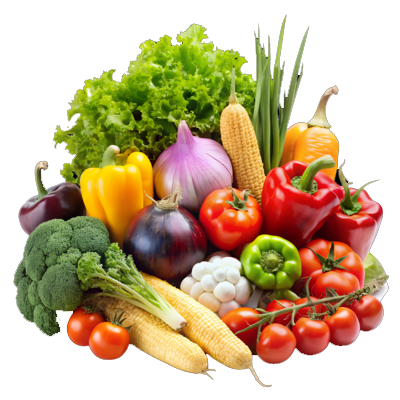
Vegetables that consistently perform well in UAE conditions
These are commonly recommended because they handle storage well and maintain structure:
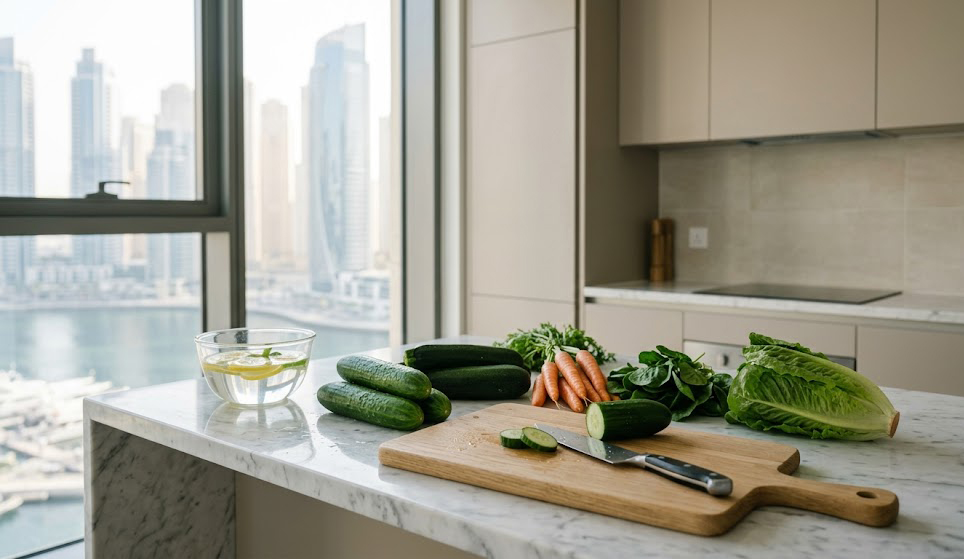
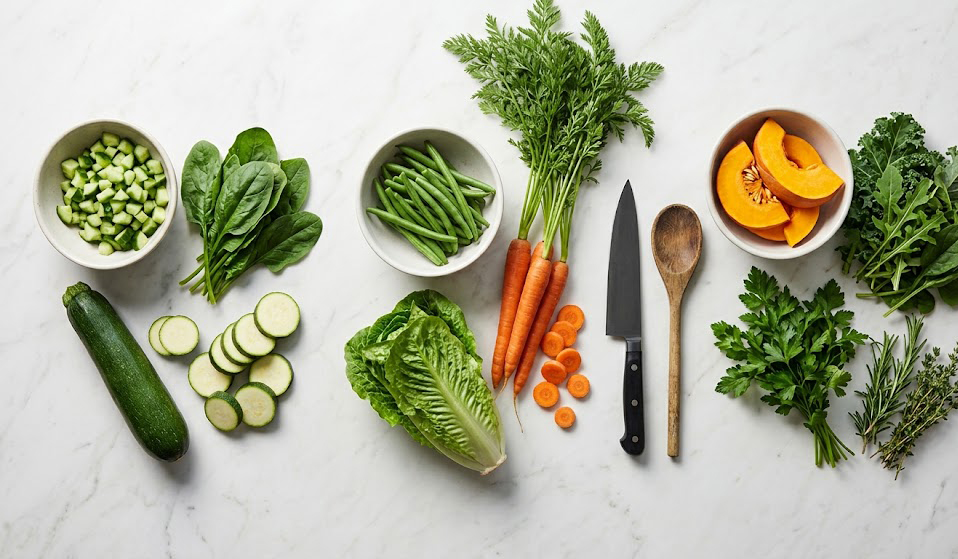
- Cucumbers
- Zucchini
- Spinach
- Lettuce varieties
- Bottle gourd (lauki)
- Carrots
- Green beans
These vegetables:
- Have high water content
- Are less likely to cause heaviness
- Can be cooked lightly or eaten raw
Vegetables to reduce (temporarily)
Not because they are “bad,” but because they are harder to digest post-feast:
- Cauliflower
- Cabbage
- Broccoli (in large amounts)
- Fried vegetable dishes
A Practical Issue Most People Face: Vegetables Spoil Too Fast After Eid
Right after Eid, buying patterns change.
Households often:
- Buy too much produce at once
- Store it incorrectly
- Mix sensitive and hardy vegetables together
This leads to:
- Faster spoilage
- Loss of texture
- Reduced nutritional value
Why this happens more in the UAE
Based on supply chain behavior:
- Imported vegetables may already be several days old
- Temperature shifts (store → car → home) reduce shelf life
- Refrigerators are often overloaded after Eid
How to Choose Vegetables That Actually Last 3 Days
For a proper post Eid diet reset UAE vegetables plan, durability matters.
What experienced buyers look for:
1. Firmness over shine
- Glossy vegetables can still be old
- Firm texture is a better indicator
2. Weight relative to size
- Heavier usually means higher water content
3. Minimal surface moisture
- Wet vegetables spoil faster
4. Leaf structure
- Crisp, upright leaves = fresher
- Limp or dark edges = older stock
Wholesale vs Retail: Does It Affect Your Reset?
This is one of the most debated topics in UAE food discussions.
The assumption:
“Retail produce is cleaner and better for health resets.”
The reality:
It depends on turnover, not the channel.
Wholesale suppliers often:
- Move inventory faster
- Receive fresher batches
- Supply restaurants that demand consistency
Retail stores sometimes:
- Hold stock longer
- Prioritize visual presentation over freshness timing
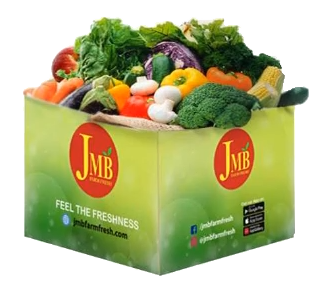
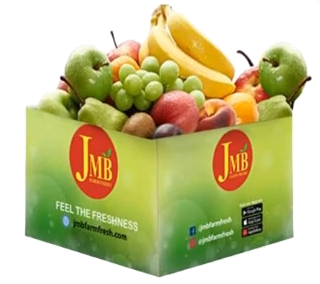
In practice, suppliers working closely with Dubai-based distributors such as JMB Farm Fresh often observe that buyers who understand sourcing cycles get better results than those who rely only on store appearance.
The 3-Day Vegetable Reset Framework (What It Actually Looks Like)
This is not a strict diet.
It’s a structure.
Core principles:
- 2–3 vegetable-focused meals per day
- Minimal oil
- Simple cooking methods (steamed, sautéed, lightly boiled)
- No heavy sauces
- Consistent hydration
What this solves:
- Reduces digestive load
- Reintroduces fiber gradually
- Restores appetite regulation
Day 1: Reset Digestion Gently
After Eid, digestion is usually slow.
So Day 1 should be the lightest.
Focus:
Hydration + soft fiber
Practical meal structure:
- Morning:
Light fruit + cucumber or soaked vegetables - Lunch:
Steamed zucchini, carrots, and spinach - Evening:
Light vegetable soup (no cream, minimal spices)
Common mistake:
Adding too many ingredients.
Keep it simple. The gut needs clarity, not variety.
Why Day 1 Often Fails for Many People
From real user discussions across UAE forums:
People tend to:
- Add too many spices
- Mix protein-heavy meals too early
- Eat large portions “because it’s healthy”
This leads to:
- Continued bloating
- No real digestive reset
The key is restraint, not intensity.
Day 2: Restore Fiber Balance Without Overloading the Gut
By Day 2, digestion begins to stabilize.
This is where many people make a critical mistake:
They either return to heavy meals too quickly or continue eating too little.
Neither approach works.
Focus:
Moderate fiber + gentle structure
What changes from Day 1:
- Slightly increased portion sizes
- Introduction of more variety
- Light use of herbs for digestion support
Practical meal structure:
Morning:
- Warm water
- Light fruit (papaya or apple slices)
- A small portion of soaked cucumber or lettuce
Lunch:
- Mixed sautéed vegetables:
- Zucchini
- Green beans
- Carrots
- Light seasoning (salt, minimal oil, optional cumin or mint)
Evening:
- Vegetable broth with:
- Spinach
- Bottle gourd (lauki)
- Small amount of herbs
Why Fiber Needs to Be Reintroduced Gradually
A common misunderstanding is:
“If fiber is good, more is better.”
After Eid, this is not true.
What happens when fiber is increased too quickly:
- Gas and bloating increase
- Digestion slows instead of improving
- Discomfort discourages consistency
What UAE nutrition discussions highlight:
The digestive system after feasting behaves like a slowed system.
It needs:
- Gradual stimulation
- Consistent input
- Low complexity meals
Not sudden overload.
The Role of Hydrating Vegetables in Reducing Bloating
Many people associate bloating only with food.
But in the UAE climate, hydration plays an equally important role.
Vegetables that actively support hydration:
- Cucumbers
- Lettuce
- Zucchini
- Bottle gourd
These contain high water content and help:
- Reduce water retention
- Support digestion
- Improve energy levels
A Supply Reality: Why Some “Fresh” Vegetables Don’t Help Your Reset
This is where food sourcing becomes important.
From procurement-side observations:
Not all vegetables behave the same, even if they look similar.
Common issues buyers report:
- Cucumbers that soften within a day
- Spinach that wilts quickly
- Lettuce that turns bitter
Why this happens:
- Longer storage before sale
- Temperature breaks during transport
- Slower turnover at retail outlets
In practice, buyers who rely on consistent suppliers—rather than occasional shopping—tend to experience more predictable results during dietary resets.
Day 3: Rebuild a Balanced Plate Without Losing the Reset
By Day 3, digestion is usually more responsive.
This is where the reset transitions into normal eating.
Focus:
Balance, not restriction
What changes from Day 2:
- Introduction of slightly denser vegetables
- More structured meals
- Gentle return to regular portions
Practical meal structure:
Morning:
- Light fruit + hydration
- Optional: small portion of lightly cooked vegetables
Lunch:
- Mixed vegetable plate:
- Green beans
- Carrots
- Spinach
- Small portion of pumpkin or squash
Evening:
- Vegetable-based dish with mild seasoning
- Optional addition of light protein (lentils or small portion of legumes)
The Transition Mistake Most People Make After Day 3
This is where resets often fail.
People feel better and immediately return to:
- Heavy meats
- Fried foods
- Sugar-rich desserts
This creates a cycle:
Reset → overload → discomfort → repeat
A more sustainable approach:
- Keep one vegetable-heavy meal daily
- Maintain hydration habits
- Avoid sudden shifts in portion size
Wholesale vs Retail for Post-Eid Recovery: A Balanced View
This topic often comes up in UAE food discussions.
Benefits of wholesale sourcing:
- Faster turnover (often fresher batches)
- Better consistency for bulk buyers
- More predictable quality for repeated use
Tradeoffs:
- Larger quantities than needed for small households
- Requires basic storage planning
- Less visual curation compared to retail
Benefits of retail:
- Smaller quantities
- Convenience
- Variety in one location
Tradeoffs:
- Potentially older stock
- Higher price per unit
- Inconsistent freshness across items
The key takeaway:
The source matters less than the handling and turnover.
How to Store Vegetables Properly During a 3-Day Reset
Storage directly affects whether your reset works.
Practical storage principles:
1. Separate leafy and dense vegetables
- Leafy greens spoil faster
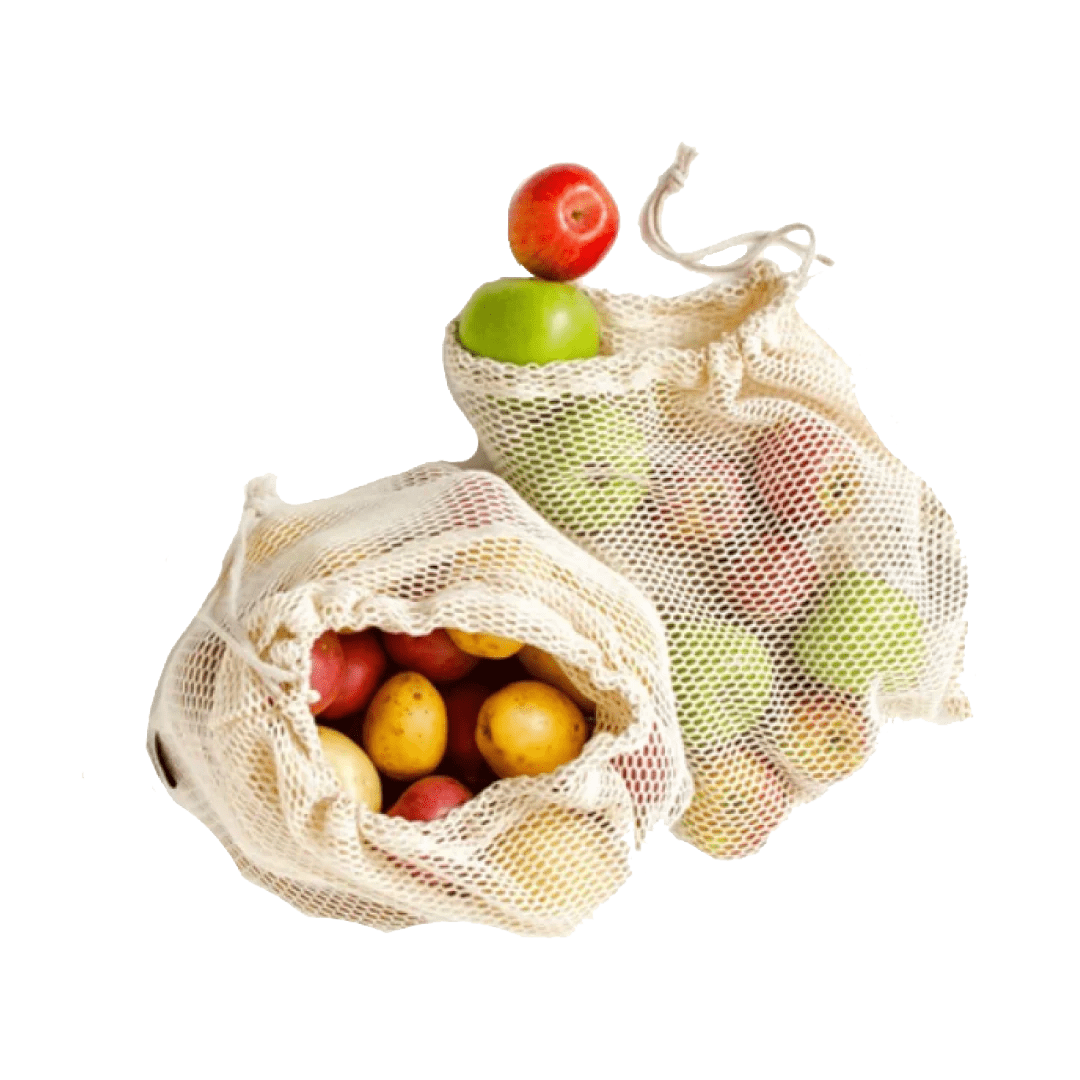
- Store them in breathable bags
2. Avoid washing before storage
- Moisture accelerates spoilage
3. Use the crisper drawer correctly
- Controls humidity
- Extends shelf life
4. Don’t overcrowd the fridge
- Airflow matters more than people think
A Real-World Scenario: Why Some Households Fail the Reset
A common pattern seen across UAE households:
- Buy vegetables in bulk after Eid
- Store everything together
- Use inconsistent cooking methods
- Mix heavy foods back in too early
Result:
- Vegetables spoil
- Meals become inconsistent
- Reset fails by Day 2
In contrast, households that:
- Plan 2–3 days only
- Choose durable vegetables
- Keep meals simple
…tend to complete the reset successfully.
Beyond the 3 Days: What a “Normal” Plate Should Look Like Again
The purpose of a 3 day vegetable cleanse UAE approach is not to stay restricted.
It is to reset your baseline.
After Day 3, the most effective approach is not a strict diet—but a balanced plate with structure.
A practical UAE-friendly plate model:
- 50% vegetables (cooked or raw)
- 25% protein (lentils, beans, eggs, or moderate meat)
- 25% carbohydrates (rice, bread, or grains)
This ratio helps:
- Maintain digestion
- Avoid post-meal heaviness
- Reduce reliance on sugar-heavy foods
What UAE Buyers and Households Often Overlook
From food supply discussions across Dubai and wider UAE:
The issue is rarely what people eat.
It is:
- When they eat
- How much they eat
- How consistently they source fresh produce
Common misunderstandings:
“Healthy food means expensive food”
Not necessarily. Consistency matters more than premium labels.
“Fresh vegetables daily is required”
Not always. With correct selection, vegetables can last 2–4 days easily.
“All suppliers offer similar quality”
In practice, handling standards vary significantly.
Seasonality in the UAE: Why It Affects Your Reset
Even post-Eid, seasonality plays a role in how effective your vegetable reset feels.
During cooler months (Nov–Mar):
- Leafy greens are more stable
- Regional supply (including nearby countries) improves freshness
- Wider variety is available
During warmer months:
- Shelf life drops quickly
- Imported produce dominates
- Storage becomes more critical than selection
Why this matters for a reset:
A reset relies on:
- Texture (crisp vegetables)
- Water content
- Stability over 2–3 days
Seasonal shifts directly affect all three.
Local vs Imported Produce: Does It Change Digestion?
This is a frequent question in UAE food communities.
The assumption:
Local produce is always better.
The practical view:
- Local produce can be fresher due to shorter travel time
- Imported produce can be more consistent depending on source and handling
What matters more:
- Time from harvest to shelf
- Storage conditions
- Handling across the supply chain
In practice, buyers working with stable distribution networks—rather than switching sources frequently—tend to experience fewer issues with quality and digestion consistency.
The Cost of Getting This Wrong (What Most People Don’t Realize)
A failed post-Eid reset is not just about discomfort.
There are practical consequences:
- Increased food waste from spoiled vegetables
- Repeated grocery trips
- Higher long-term food costs
- Continued digestive discomfort
For businesses (restaurants, catering, small groceries), the impact is larger:
- Inconsistent menu quality
- Higher spoilage rates
- Reduced customer satisfaction
A Quiet Industry Insight: Consistency Beats Variety
Across supplier and buyer conversations, one principle stands out:
People who rotate suppliers frequently often face:
- Inconsistent quality
- Variable shelf life
- Unpredictable cooking outcomes
Whereas those who:
- Understand their supplier’s sourcing cycle
- Order similar items consistently
- Adjust based on season
…tend to achieve better results with less effort.
In practice, suppliers working closely with UAE distributors such as JMB Farm Fresh often note that predictability in sourcing is more valuable than chasing variety or price alone.
Practical Takeaways You Can Apply Immediately
If you want your post Eid diet reset UAE vegetables plan to actually work:
Keep it simple:
- 5–7 vegetables are enough for 3 days
Focus on durability:
- Choose vegetables that hold structure
Avoid overbuying:
- Plan for 2–3 days only
Cook lightly:
- Steam, sauté, or boil
- Avoid heavy oil and sauces
Stay consistent:
- Eat at regular times
- Avoid sudden changes in portion size
Conclusion: A Reset Is Not About Discipline — It’s About Structure
After Eid, the body does not need extremes.
It needs:
- Simplicity
- Consistency
- Predictable, fresh inputs
A short vegetable reset works because it removes complexity.
Not because it restricts.
If done correctly, it becomes less about “fixing” your body and more about returning it to a stable rhythm—something that is often overlooked in fast-paced UAE lifestyles.
FAQs
1. What is the best post Eid diet reset UAE vegetables plan?
A simple 3-day plan focusing on hydrating, easy-to-digest vegetables like cucumbers, zucchini, spinach, and carrots, with light cooking and consistent meal timing.
2. Can I include protein during a 3 day vegetable cleanse UAE?
Yes, but lightly and gradually—typically starting on Day 3 with small portions of lentils or legumes.
3. Why do I still feel bloated after Eid even when eating less?
Eating less can slow digestion. A better approach is consistent, fiber-rich meals with hydrating vegetables.
4. Are supermarket vegetables good enough for a reset?
They can be, but freshness depends on turnover and storage. Source reliability matters more than the retail format.
5. How do I prevent vegetables from spoiling during the reset?
Store leafy greens separately, avoid washing before storage, and don’t overcrowd the fridge to maintain airflow.








 Home
Home  Whishlist
  Compare
  Checkout