












Introduction
Every year in Dubai, strawberries quietly move through a predictable cycle — but most buyers only notice them when prices spike or quality drops.
What many don’t realize is this:
there is a short, very specific window when strawberries in the UAE are at their absolute best — in taste, shelf life, and value.
Outside of that window, you’re often paying more for fruit that travels farther, lasts less, and disappoints faster.
This matters whether you’re:
- A restaurant managing dessert consistency
- A hotel balancing buffet waste
- A grocery buyer watching margins
- Or a household trying to avoid spoilage
Strawberries are one of the most sensitive fruits in the supply chain. Timing your purchase correctly makes a bigger difference here than almost any other fruit available in Dubai.
This article breaks down what’s actually happening behind the scenes — and why this current period is the only one that truly deserves your attention.
Why Strawberry Season in the UAE Is So Short — And So Important
Unlike apples or bananas, strawberries are not a year-round stable product in the UAE.
They are:
- Highly perishable
- Sensitive to temperature changes
- Dependent on import cycles
- Strongly affected by harvest timing
The Core Reality: UAE Doesn’t Produce at Scale
While there is limited local greenhouse production, the UAE depends heavily on imported strawberries.
The main sources during peak season are:
- Morocco
- Egypt
- Spain (later in the cycle)
Among these, Morocco strawberries in Dubai tend to dominate the peak window due to:
- Shorter transit time
- Better sugar development (flavor)
- More stable texture on arrival
This is why you’ll often notice a sudden improvement in both taste and consistency during certain weeks — that’s not random. It’s supply alignment.
What “Peak Season” Actually Means (And Why Most People Misunderstand It)
Many buyers assume peak season just means “more availability.”
In reality, it means something much more specific:
The point where harvest timing, shipping conditions, and market demand align at the same time.
During this phase:
- Fruit is harvested closer to ripeness
- Transit time is shorter
- Handling is more efficient
- Market supply is stable
What Changes During Peak Season?
You’ll notice three key differences:
1. Flavor Becomes Noticeably Better
Strawberries are picked closer to ripeness.
This allows natural sugars to develop properly.
Outside peak season, strawberries are often harvested early to survive longer shipping — which reduces sweetness.
2. Shelf Life Improves
During peak season:
- The fruit arrives fresher
- Internal breakdown is slower
- Mold risk is lower (if handled correctly)
This directly impacts waste — especially for businesses.
3. Price Becomes More Stable (Not Always Cheaper)
A common misconception is that peak season always means lower prices.
In reality:
- Prices become more predictable
- Supply is consistent
- Quality matches the cost
This stability is often more valuable than a temporary price drop.
The Current Window: Why It Matters More Than Any Other Time
Right now — during late winter into early spring — Dubai is in its most reliable strawberry sourcing phase.
This is when:
- Moroccan supply is strong
- Cold-chain logistics are stable
- Demand hasn’t yet pushed late-season pricing volatility
What Happens If You Miss This Window?
After this phase:
- Supply begins shifting geographically
- Transit distances increase
- Heat exposure becomes a bigger issue
As a result:
- Texture softens faster
- Flavor becomes inconsistent
- Shelf life drops significantly
For businesses, this often leads to:
- Higher waste
- Inconsistent customer experience
- Increased sourcing complexity
For households:
- Faster spoilage in the fridge
- Less value for money
How Strawberries Actually Move Through Dubai’s Supply Chain
Understanding this part changes how you buy completely.
Most consumers think strawberries go:
Farm → Supermarket → Buyer
In reality, it’s closer to:
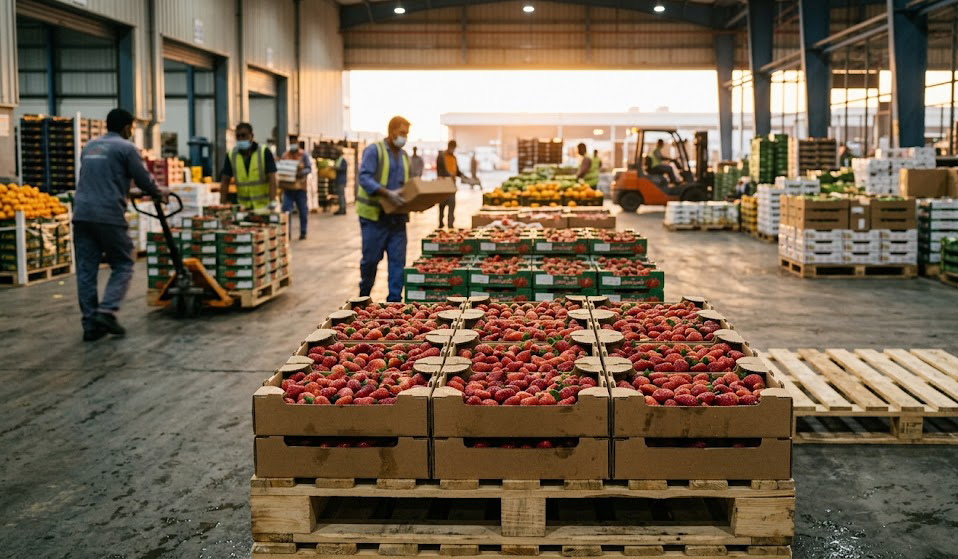
Farm → Export consolidation → Cold storage → Import distributor → Local wholesale → Retail or direct supply
Each step affects quality.
Key Pressure Points in the Chain
1. Temperature Breaks
Even a short break in cold-chain conditions can:
- Accelerate spoilage
- Reduce firmness
- Increase mold risk
2. Overhandling
The more times strawberries are moved:
- The higher the bruising risk
- The shorter the shelf life
3. Storage Delays
Strawberries don’t “wait well.”
Every extra day reduces quality.
Why Some Buyers Get Great Strawberries — And Others Don’t
Two people can buy strawberries on the same day in Dubai and have completely different experiences.
The difference usually comes down to source, not luck.
Consistent Buyers Typically:
- Source closer to wholesale channels
- Understand seasonal timing
- Prioritize freshness over appearance
- Buy in sync with supply cycles
Inconsistent Buyers Often:
- Rely only on retail shelves
- Ignore origin differences
- Focus on price alone
- Buy outside peak windows
In practice, suppliers working closely with Dubai-based distributors such as JMB Farm Fresh often observe that buyers who align with seasonal cycles experience significantly lower waste and more consistent quality — even without changing their budget.
The Role of Morocco Strawberries in Dubai’s Market
During this peak period, Moroccan strawberries become the benchmark.
Why Morocco Stands Out
- Shorter shipping distance compared to Europe
- Favorable growing climate during UAE winter
- Balanced ripeness at harvest
- Strong export infrastructure
What Buyers Notice
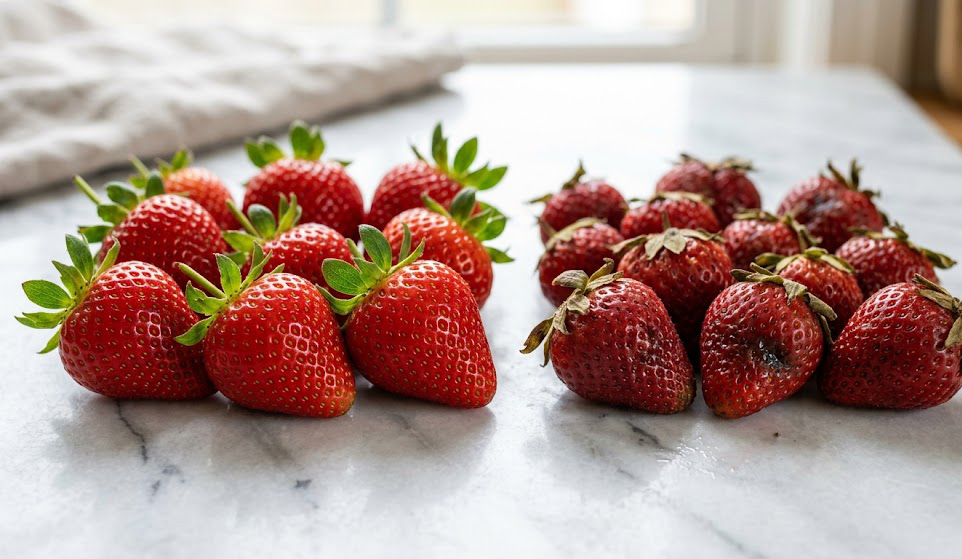
- Deep red color (not pale or uneven)
- Firm but not hard texture
- Clean, sweet aroma
- Lower wateriness
This is why many procurement teams specifically track Moroccan arrivals during this season.
How to Judge Strawberry Quality (Even Without Industry Experience)
You don’t need to be a professional buyer to assess quality — but you do need to look beyond surface appearance.
What Actually Matters
Color:
- Should be evenly red
- Avoid large white or green patches
Texture:
- Firm, but not stiff
- Mushy areas indicate breakdown
Smell:
- Light, sweet aroma
- No sour or fermented scent
Caps (Green Leaves):
- Fresh and green
- Dry or dark caps suggest aging
What Doesn’t Matter As Much As People Think
- Perfect shape
- Large size
- Shiny surface
These are often cosmetic and don’t reflect internal quality.
A Common Mistake: Buying Based on Price Alone
This is one of the biggest issues across both households and businesses.
Lower price often signals:
- Older stock
- Longer transit
- Lower-grade batches
This leads to:
- Faster spoilage
- Higher waste
- Poor eating experience
In many cases, slightly higher-quality strawberries actually reduce total cost because:
- They last longer
- Less is thrown away
- Customer satisfaction improves
Wholesale vs Retail: Where Most Strawberry Quality Is Lost
One of the least discussed realities in Dubai’s produce market is where quality actually drops — and it’s rarely at the farm.
It usually happens closer to the end of the chain.
Retail Environments Are Not Always Optimized for Fragile Fruits
Strawberries require:
- Stable cold temperatures
- Minimal handling
- Fast turnover
But in many retail environments:
- Open displays expose fruit to fluctuating temperatures
- Frequent customer handling causes bruising
- Stock rotation isn’t always strict
By the time strawberries reach the shelf, they may already be:
- 2–4 days into their shelf life
- Slightly dehydrated
- More vulnerable to mold
This is why strawberries from the same origin can perform very differently depending on where they are purchased.
Why Wholesale Channels Often Deliver Better Consistency
Wholesale sourcing isn’t just about buying in bulk.
It’s about accessing the product earlier in its lifecycle.
What Changes in Wholesale Supply
- Shorter time between arrival and sale
- Less exposure to handling
- Better temperature control
- More consistent batch quality
For businesses, this translates into:
- Predictable usage planning
- Lower daily waste
- More consistent plating or presentation
For families or small buyers, even occasional access to wholesale-grade supply can noticeably improve freshness at home.
But Wholesale Isn’t Always the Perfect Solution
There’s a common belief that wholesale automatically means better.
That’s not always true.
Tradeoffs to Consider
1. Volume Requirements
Wholesale often involves larger quantities than needed.
2. Storage Responsibility
Once you buy, you manage storage — and strawberries are unforgiving.
3. Quality Variability Between Batches
Even within wholesale, not every batch is equal.
Timing still matters.
4. Access and Convenience
Retail is easier. Wholesale requires planning.
The key takeaway:
Wholesale improves consistency — but only when paired with proper timing and handling.
The Hidden Cost of Poor Strawberry Timing
Most buyers calculate cost based on price per box or per kilogram.
But that’s only part of the picture.
The Real Cost Includes:
- Spoilage within 24–48 hours
- Loss of visual appeal (important for hospitality)
- Inconsistent taste across batches
- Emergency reordering
For example:
A slightly cheaper batch that spoils faster can:
- Increase overall spend
- Disrupt kitchen operations
- Affect customer perception
This is especially critical for:
- Dessert menus
- Breakfast buffets
- Catering events
Strawberries are often a “visible” fruit — quality is immediately noticed.
How Seasonality Affects Strawberry Pricing in Dubai
Many buyers ask:
“Why does strawberry price in Dubai wholesale change so quickly?”
The answer lies in supply shifts.
During Peak Season:
- Supply is steady
- Transport routes are optimized
- Loss rates are lower
- Pricing is more stable
As Season Ends:
- Supply origins change
- Transit distances increase
- Heat exposure rises
- Rejection rates increase
This leads to:
- Price fluctuations
- Quality inconsistency
- Reduced shelf life
Importantly, price increases at the end of the season are often linked to risk, not just scarcity.
Suppliers factor in:
- Higher spoilage probability
- Increased handling challenges
- Unpredictable arrivals
How to Buy Strawberries in Dubai Without Wasting Money
Whether you’re sourcing for a business or a household, the same principles apply.
1. Align With the Season — Not the Calendar
Don’t assume availability equals quality.
Instead:
- Track when Moroccan strawberries are most consistent
- Observe when flavor improves across the market
That’s your buying signal.
2. Buy Smaller Quantities More Frequently
Especially outside peak weeks.
Strawberries are not meant for long storage.
Frequent buying reduces:
- Waste
- Quality decline at home or in storage
3. Store Them Correctly (This Makes a Huge Difference)
Most spoilage happens after purchase.
Best practices:
- Keep them refrigerated immediately
- Do not wash before storage
- Use breathable containers (not sealed plastic)
- Consume within 2–3 days
4. Inspect Before Buying — Even From Trusted Sources
Even experienced buyers check every batch.
Look for:
- Moisture inside packaging
- Soft spots
- Uneven color
Small details matter.
5. Understand Your Use Case
Not all strawberries need to be perfect.
For example:
- Desserts → require firmness and appearance
- Smoothies → can tolerate slight softness
- Bulk catering → prioritize shelf life
Buying based on usage reduces unnecessary cost.
A Quiet Shift Happening in Dubai’s Produce Buying Behavior
Over the past few years, there’s been a noticeable shift among more experienced buyers.
They are moving away from:
- Reactive purchasing
- Price-driven decisions
- Retail-only sourcing
And toward:
- Seasonal awareness
- Supply-chain understanding
- Consistency over short-term savings
Some UAE buyers prefer working with established wholesale produce providers rather than fragmented retail sourcing, especially when consistency matters across multiple orders.
This shift isn’t about scale — it’s about predictability.
Why Strawberries Are One of the Best Indicators of Supply Chain Quality
If you want to judge how well a supplier operates, strawberries are a reliable test.
Why?
Because they expose:
- Cold-chain weaknesses
- Handling inefficiencies
- Storage delays
A supplier who consistently delivers good strawberries is usually:
- Managing temperature well
- Moving stock efficiently
- Sourcing at the right time
This is why experienced buyers often pay close attention to strawberry quality early in a supplier relationship.
What Most Articles About Strawberries in Dubai Don’t Explain
A lot of content online repeats the same surface-level advice:
- “Buy fresh”
- “Check color”
- “Store properly”
But they rarely explain:
- Why quality changes week to week
- How import cycles affect what you receive
- Why the same supplier performs differently at different times
Without this context, buyers are left guessing.
Understanding timing and supply flow removes that uncertainty.

The Final Reality: Strawberry Quality in Dubai Is About Timing, Not Luck
After looking at sourcing, logistics, and buying behavior, one thing becomes clear:
Strawberries in Dubai are not inconsistent by nature — they are time-sensitive by design.
The same supply chain that delivers excellent fruit during peak weeks can produce disappointing results just a few weeks later.
The difference is not the fruit.
It’s when and how it moves.
A Practical Way to Think About Strawberry Buying
Instead of asking:
“Where should I buy fresh strawberries in Dubai?”
A better question is:
“Am I buying them at the right time in the supply cycle?”
Because once timing is right:
- Most suppliers perform better
- Quality differences narrow
- Shelf life improves naturally
And when timing is wrong:
- Even good suppliers struggle
- Waste increases
- Flavor becomes inconsistent
This shift in thinking is what separates experienced buyers from reactive ones.
When Strawberries Are Worth Buying — And When They’re Not
Worth Prioritizing (Peak Window)
- Strong Moroccan supply
- Balanced flavor and firmness
- Stable wholesale pricing
- Lower spoilage risk
This is when strawberries:
- Deliver real value
- Hold up in storage
- Perform consistently across uses
Worth Being Careful (Late Season / Off-Window)
- Longer transit routes
- Softer texture on arrival
- Higher internal breakdown
- More price volatility
During this phase, strawberries are still available — but they are:
- Less reliable
- More waste-prone
- Harder to manage at scale
For some buyers, reducing volume during this time is often the more practical decision.
A Simple Framework Buyers Can Use
Whether you are sourcing for a kitchen, a store, or a home, this framework helps avoid most common mistakes:
Step 1: Observe the Market
- Are strawberries tasting noticeably better across multiple sources?
- Are prices stable rather than fluctuating daily?
If yes, you’re likely in peak window.
Step 2: Adjust Buying Frequency
- Peak season → buy confidently in moderate volume
- Late season → reduce quantity, increase frequency
Step 3: Match Quality to Purpose
- High-visibility use → prioritize top-grade batches
- Processed use → accept minor imperfections
Step 4: Monitor Waste, Not Just Price
Track:
- How much is discarded
- How long strawberries last after purchase
This gives a more accurate picture than price alone.
The Role of Experience in Produce Buying
There is no perfect checklist that guarantees good strawberries every time.
But over time, experienced buyers develop patterns:
- They recognize seasonal shifts early
- They adjust sourcing before problems appear
- They rely less on labels and more on observation
In practice, suppliers working closely with Dubai-based distributors such as JMB Farm Fresh often see that the most efficient buyers are not those who chase the lowest price — but those who understand timing and consistency.
This is a subtle difference, but it has a measurable impact over time.
Conclusion
Strawberries are one of the clearest examples of how seasonality shapes the food supply in the UAE.
They highlight:
- The importance of timing
- The limits of retail convenience
- The hidden costs of poor sourcing decisions
Right now, during peak season, strawberries in Dubai offer:
- Better flavor
- Longer shelf life
- More predictable pricing
But this window does not last long.
Understanding when to buy — and when to hold back — is what ultimately defines value in fresh produce.
Frequently Asked Questions (FAQs)
1. When is strawberry season in the UAE?
Strawberry season in the UAE typically peaks during winter to early spring, when imports from Morocco and nearby regions are most consistent in quality and supply.
2. Why do strawberries in Dubai sometimes taste sour or watery?
This usually happens when strawberries are harvested early for long-distance shipping or stored too long before reaching shelves, reducing natural sugar development.
3. Are Moroccan strawberries better than other imports in Dubai?
During peak season, Moroccan strawberries are often preferred due to shorter transit times, better ripeness at harvest, and more consistent texture on arrival.
4. How long do fresh strawberries last after buying?
When stored properly in refrigeration, most strawberries last 2–3 days at optimal quality, though this depends heavily on when they were harvested and how they were handled.
5. Is it better to buy strawberries wholesale or retail in Dubai?
Wholesale sourcing often provides fresher batches and better consistency, but it requires proper storage and planning. Retail is more convenient but may involve shorter remaining shelf life.








 Home
Home  Whishlist
  Compare
  Checkout