













Introduction: The Kale Problem No One Talks About
Walk into any health-focused café in Dubai, and you will almost always find kale on the menu. Smoothies, salads, grain bowls — it has become a symbol of “clean eating.”
Yet behind the scenes, many chefs, home cooks, and even procurement teams quietly struggle with it.
Kale is often:
- Too bitter
- Too tough
- Too dry after preparation
And the result is predictable — it gets ordered once, then ignored.
This is not a supply issue. It is not even a quality issue.
It is a preparation problem.
After years of working with restaurant buyers, distributors, and households sourcing fresh kale in Dubai, one pattern keeps repeating: most people are treating kale like lettuce.
It is not lettuce.
Understanding that one difference changes everything.
What Most People Get Wrong About Kale
Kale Is Not a “Ready-to-Eat” Leaf
Unlike spinach or iceberg, kale is structurally different. It has:
- Thicker cell walls
- Higher fiber density
- Lower natural water content
This makes it more durable during transport — useful in a hot climate like the UAE — but also harder to eat raw without proper handling.
Many buyers assume that if the kale looks fresh, it should taste good immediately.
That assumption leads to disappointment.
The Real Reason Kale Tastes Bitter
Bitterness in kale is not a defect. It is a natural result of compounds called glucosinolates.
These compounds:
- Help the plant defend itself
- Increase in mature leaves
- Become more noticeable when kale is eaten raw and untreated
In Dubai’s supply chain, most kale is imported. By the time it reaches kitchens, it has:
- Experienced temperature shifts
- Slight moisture loss
- Natural flavor concentration
This often makes bitterness more pronounced compared to freshly harvested local greens.
Why Washing Alone Does Not Fix It
A common mistake is assuming that rinsing kale removes bitterness.
It does not.
Washing only removes:
- Dirt
- Residue
- Surface contaminants
It does nothing to:
- Break down fibers
- Soften texture
- Balance flavor
That is why many first-time users say, “I tried kale once, it tasted terrible.”
They did not prepare it correctly.
The Difference Between Baby Kale and Regular Kale (UAE Context)
Baby Kale: Easier, But Not Always Better
Baby kale has become popular in Dubai because it feels more “user-friendly.”
It is:
- Softer
- Milder in taste
- Ready to use without much effort
For quick service kitchens or home use, it works well.
But there are tradeoffs:
- Shorter shelf life
- Less structural integrity in hot kitchens
- Lower volume yield for bulk use
Regular Kale: More Demanding, More Rewarding
Regular kale — the curly or Tuscan varieties — is what most restaurants rely on.
It offers:
- Longer storage stability
- Better performance in cooked dishes
- Higher resilience during transport
However, it requires preparation.
This is where most people fail.
They treat regular kale like baby kale and expect the same result.
That mismatch is the root of the problem.
How to Actually Make Kale Taste Good (Step-by-Step)
This is the part most articles skip or oversimplify.
Proper kale preparation is not complicated, but it must be intentional.
Step 1: Remove the Stems Properly
The central stem is the toughest part of the leaf.
If left intact:
- It stays chewy
- It holds bitterness
- It disrupts texture
Always strip the leaves away from the stem before use.
Step 2: Cut or Tear to the Right Size
Large pieces make kale harder to eat.
Smaller pieces:
- Absorb dressing better
- Soften faster
- Improve mouthfeel
This is especially important for salads.
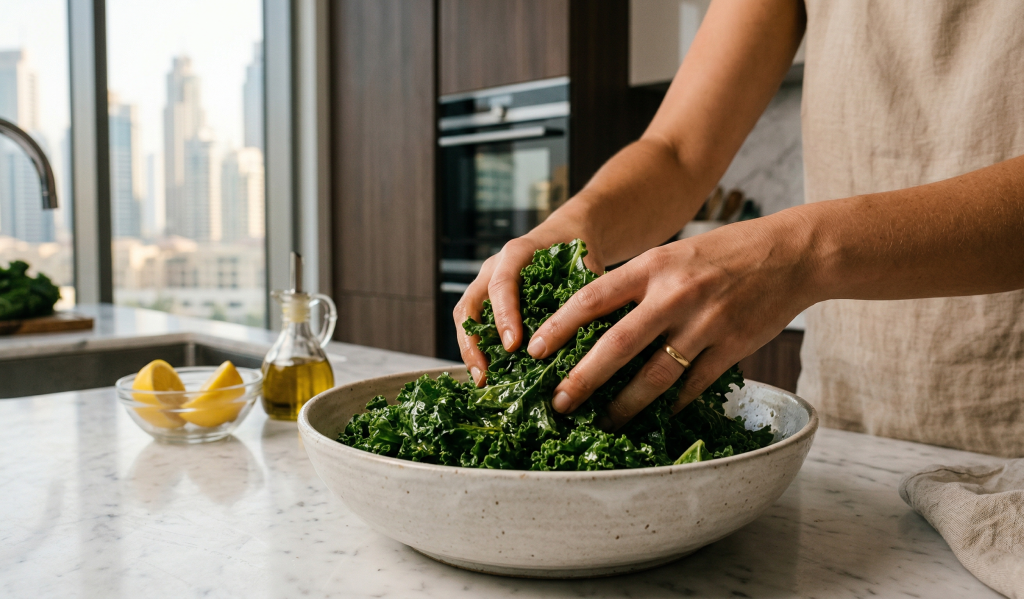
Step 3: The Most Important Step — Massage the Kale
This is where everything changes.
Add a small amount of:
- Olive oil
- Lemon juice or mild acid
Then gently massage the leaves for 2–3 minutes.
What this does:
- Breaks down fibers
- Softens texture
- Reduces bitterness
The kale will visibly darken and shrink slightly.
That is a good sign.
Skipping this step is the biggest reason kale tastes bad.
Step 4: Let It Rest
After massaging, let the kale sit for a few minutes.
This allows:
- Acids to balance flavor
- Texture to settle
- Bitterness to mellow further
Even a short resting period improves the final result.
Step 5: Pair It Correctly
Kale does not work well alone.
It needs balance.
Good pairings include:
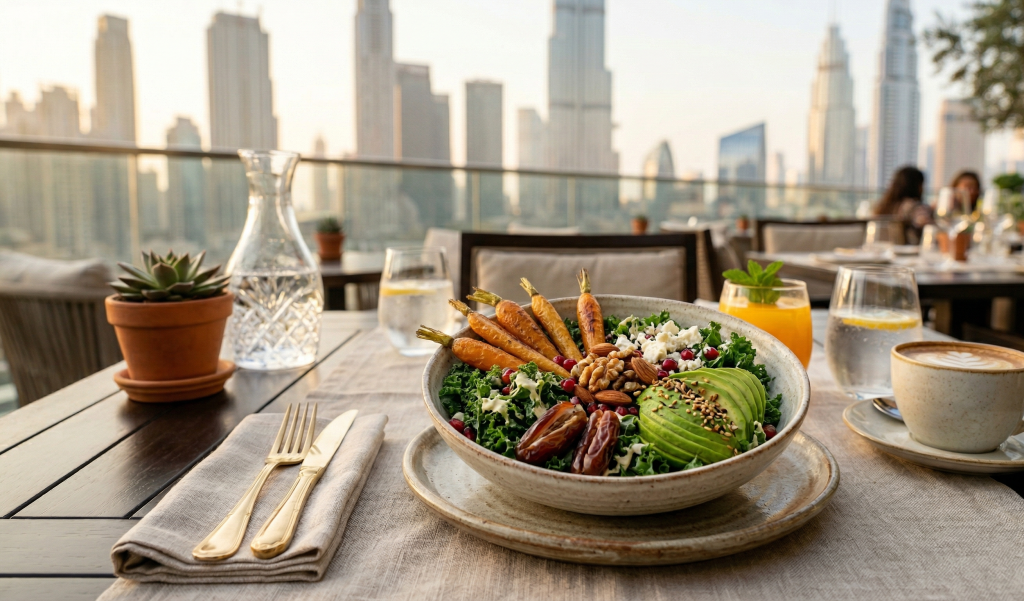
- Sweet elements (dates, apples, roasted carrots)
- Fats (olive oil, nuts, avocado)
- Salt (cheese, olives, light seasoning)
Without balance, kale tastes harsh.
With balance, it becomes one of the most versatile greens available.
Why Restaurants in Dubai Still Get Kale Wrong
Even experienced kitchens sometimes struggle with kale.
The issue is not knowledge — it is workflow.
In busy environments:
- Prep time is limited
- Staff consistency varies
- Ingredients are handled in bulk
As a result:
- Kale is under-processed
- Dressing is added too late
- Leaves remain tough
From a procurement perspective, this creates a false conclusion:
“The kale quality is inconsistent.”
In reality, the preparation process is inconsistent.
A Supply Chain Perspective: Why Kale Behaves Differently in the UAE
Dubai’s produce market is unique.
Most leafy greens, including kale, are:
- Imported from Europe, Africa, or Asia
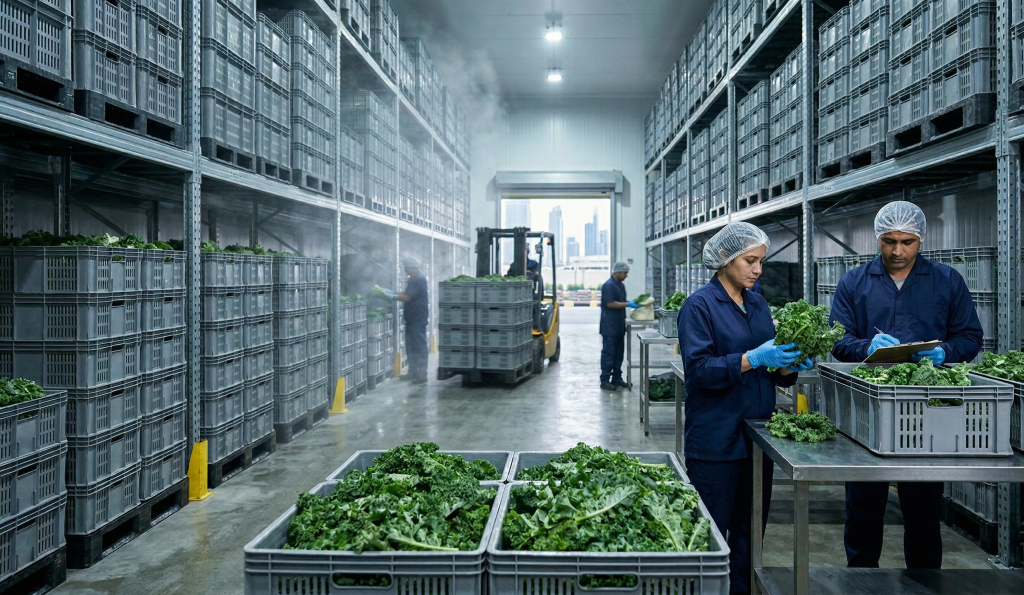
- Stored in controlled cold chains
- Distributed across varying environments
This affects how kale performs in kitchens.
Key factors include:
- Time between harvest and use
- Temperature exposure during transport
- Storage conditions after delivery
In practice, suppliers working closely with Dubai-based distributors such as JMB Farm Fresh often observe that even small handling differences can impact texture and taste.
This is why two batches of kale that look identical may behave differently during preparation.
Common Mistakes Buyers and Home Cooks Make
Across households and businesses, the same mistakes repeat.
1. Buying Based on Appearance Alone
Kale can look fresh but still be:
- Slightly dehydrated
- More fibrous than expected
Appearance is only part of the story.
2. Storing It Like Lettuce
Kale needs:
- Cool, stable temperatures
- Minimal moisture buildup
Improper storage leads to:
- Faster spoilage
- Texture loss
3. Using It Too Late
Even though kale is more durable than other greens, it is not immune to time.
Delays in usage:
- Increase bitterness
- Reduce flexibility in cooking
4. Skipping Preparation Steps
This is the most common issue.
No matter how fresh the kale is, skipping:
- Stem removal
- Massaging
- Proper pairing
will lead to poor results.
When Kale Actually Works Best in Dubai Kitchens
Kale is not a universal ingredient.
It performs best in specific use cases.
Strong applications include:
- Warm grain bowls
- Lightly sautéed dishes
- Balanced salads with acid and fat
- Smoothies (when blended properly)
Weaker applications:
- Plain raw salads without treatment
- Overcooked dishes
- Dry, undressed presentations
Understanding where kale fits is as important as knowing how to prepare it.
Sourcing Kale in Dubai: What Buyers Often Overlook
For many restaurant owners and grocery buyers, sourcing kale seems straightforward.
Search for fresh kale Dubai buy online, compare a few suppliers, and place an order.
But kale is one of those greens where sourcing decisions quietly affect:
- Taste
- Shelf life
- Prep time
- Waste levels
And these differences are not always visible at the point of purchase.
Not All Kale Enters Dubai the Same Way
In the UAE, kale typically comes through three main supply routes:
- European imports (Italy, Netherlands, Spain)
- Regional sourcing (Jordan, Egypt)
- Limited local greenhouse production
Each route affects the product differently.
European Imports
- Often more consistent in size and appearance
- Longer transit time
- Slightly firmer texture
Regional Supply
- Shorter transport window
- Fresher feel in some cases
- More variation between batches
Local Production (Limited but growing)
- Shortest time from harvest to shelf
- More delicate leaves
- Less predictable availability
For buyers, this explains why kale quality can feel inconsistent — even when ordering from the same supplier.
Why “Fresh” Doesn’t Always Mean “Better”
One of the biggest misconceptions in Dubai’s produce market is that the freshest-looking kale will perform best.
In reality, kale that is:
- Too young
- Too hydrated
- Too recently harvested
can sometimes:
- Wilt faster during prep
- Lose structure in salads
- Collapse under heat
On the other hand, slightly matured kale:
- Holds shape better
- Responds well to cooking
- Offers deeper flavor (if balanced correctly)
This is why experienced kitchens do not judge kale only by how it looks — they judge it by how it behaves.
Seasonal Patterns: When Kale Works Best in the UAE
Winter Months: The Most Reliable Window
From roughly November to March, kale performs at its best in Dubai.
During this period:
- Import conditions are more stable
- Temperature stress is lower
- Shelf life improves
Buyers often notice:
- Better texture
- More predictable taste
- Lower spoilage rates
This is when kale is easiest to work with.
Summer Months: Where Problems Begin
From May onwards, kale becomes more difficult to manage.
Challenges include:
- Heat exposure during last-mile delivery
- Faster moisture loss
- Increased bitterness
Even with cold chain logistics, short temperature fluctuations can impact leafy greens.
For kitchens, this translates into:
- Shorter usable windows
- More prep sensitivity
- Higher rejection rates
What Smart Buyers Do Differently
Instead of avoiding kale completely in summer, experienced buyers adjust:
- Order smaller, more frequent quantities
- Use kale more in cooked dishes than raw
- Prioritize suppliers with tighter cold chain control
This reduces waste without removing kale from the menu entirely.
Wholesale vs Retail: Where Kale Quality Actually Comes From
A common debate in Dubai’s food community is:
“Is wholesale kale better than supermarket kale?”
The answer is more nuanced.
Wholesale Advantages
For restaurants and catering businesses, wholesale sourcing offers:
- Better control over batch consistency
- More flexibility in quantity
- Faster turnover (less shelf sitting)
This often results in:
- Fresher deliveries
- More predictable prep outcomes
Retail Advantages
Retail (supermarkets) can sometimes offer:
- Smaller pack sizes
- Pre-cleaned or trimmed options
- Immediate availability
However, retail kale may:
- Sit longer in display conditions
- Lose moisture under lighting
- Be handled more frequently
The Real Difference: Handling, Not Channel
In practice, the biggest difference is not wholesale vs retail.
It is how the kale is:
- Stored
- Transported
- Turned over
Some UAE buyers prefer working with established distributors rather than fragmented retail sourcing because it gives them more control over these variables.
How to Judge Kale Quality Before You Buy
Whether you are sourcing for a restaurant or a household, a few simple checks can prevent most issues.
Look at the Leaves, Not Just the Color
Healthy kale should:
- Feel firm, not limp
- Have a slightly dry surface (not wet or sticky)
- Show no yellowing at the edges
Check the Stem Thickness
- Very thick stems → tougher texture
- Extremely thin stems → overly delicate
Balanced stems usually indicate better usability.
Observe Moisture Behavior
If kale feels:
- Too wet → higher risk of spoilage
- Too dry → potential fiber toughness
The ideal condition is slightly crisp, not damp.
Ask About Delivery Timing
For businesses ordering buy kale delivery UAE fresh, timing matters.
Kale delivered:
- Early morning → better temperature control
- Midday → higher risk of heat exposure
This small detail can impact shelf life by a full day or more.
Reducing Waste: A Practical Approach
Kale waste is rarely discussed openly, but it is a real issue in Dubai kitchens.
Most waste comes from:
- Improper storage
- Over-ordering
- Inconsistent prep
Simple Ways to Reduce Waste
1. Align Order Size with Usage
- Avoid bulk buying unless turnover is high
- Kale may last longer than lettuce, but it still degrades
2. Separate Use Cases
- Use tougher leaves for cooking
- Reserve softer leaves for salads
3. Prep in Batches
- Pre-massage kale for service windows
- Store prepared portions correctly
4. Monitor Supplier Consistency
- Track how each batch performs
- Adjust ordering patterns accordingly
Over time, this creates a more stable system.
Why Kale Became Popular — And Why It Often Disappoints
Kale’s rise in Dubai is not random.
It aligns with:
- Increased health awareness
- Demand for nutrient-dense foods
- Influence from global food trends
It is often associated with:
- Detox diets
- Superfood narratives
- Clean eating lifestyles
But popularity created a gap.
People adopted kale faster than they learned how to use it.
The Result
- Restaurants added kale without adjusting prep methods
- Home cooks followed recipes that skipped key steps
- Buyers assumed quality was the issue
This created a cycle where kale was:
- Purchased with high expectations
- Prepared incorrectly
- Quietly avoided afterward
A More Realistic Way to Think About Kale
Kale is not:
- A quick salad leaf
- A neutral-tasting green
- A low-effort ingredient
It is:
- A structured leafy vegetable
- A flavor-forward component
- A prep-dependent ingredient
Once this shift happens, outcomes improve.
Making Kale Work Consistently: From Occasional Ingredient to Reliable Staple
By this point, the issue is no longer about whether kale is healthy or popular.
The real question is:
Can it be used consistently — without waste, complaints, or unpredictability?
For most kitchens and households in Dubai, the answer becomes yes only when three things are aligned:
- Sourcing decisions
- Preparation methods
- Menu or usage context
When one of these is off, kale becomes frustrating.
When all three align, it becomes dependable.
How to Integrate Kale Into Daily Use (Without Resistance)
Start With the Right Use Case
Instead of forcing kale into every salad, use it where it naturally performs well.
For households:
- Add to omelettes or scrambled eggs
- Blend into smoothies with banana or dates
- Toss into warm rice or lentil dishes
For restaurants:
- Use as a base for grain bowls
- Lightly sauté with garlic and olive oil
- Combine with softer greens instead of using it alone
This reduces the “shock factor” for first-time eaters.
Avoid Over-Reliance on Raw Kale
Raw kale has its place, but it is not always the best starting point.
If used raw:
- It must be massaged
- It must be balanced with fat and acid
Otherwise, it feels:
- Dry
- Bitter
- Difficult to chew
Many negative experiences with kale come from skipping this context.
Combine, Don’t Isolate
Kale works best when it is part of a system.
Instead of building dishes around kale, integrate it into combinations:
- Kale + spinach → softer texture
- Kale + roasted vegetables → balanced sweetness
- Kale + grains → better mouthfeel
This approach improves acceptance without changing the ingredient itself.
A Note for Buyers: Consistency Matters More Than Perfection
One of the biggest shifts experienced buyers make is this:
They stop chasing “perfect kale” and start prioritizing consistent kale.
Perfect batches:
- Look ideal
- Perform well once
But consistency:
- Reduces training complexity
- Stabilizes prep time
- Minimizes waste
In practice, buyers who work with steady supply partners tend to see fewer issues over time.
This is less about branding and more about operational reliability.
Understanding Taste: Kale Is Not Meant to Be Neutral
Another misconception is expecting kale to behave like mild greens.
Kale has a distinct profile:
- Slight bitterness
- Earthy depth
- Firm texture
This is not a flaw.
It is what allows kale to:
- Hold dressings well
- Stand up to heat
- Add contrast to sweet or rich elements
When treated as a feature instead of a problem, kale becomes easier to use.
Practical “Taste Correction” Techniques That Actually Work
These are not recipes — they are adjustments that consistently improve results.
1. Add Sweetness Strategically
A small amount of sweetness can balance bitterness.
Options include:
- Dates (common in UAE kitchens)
- Roasted carrots
- Apples
This does not make the dish sweet — it makes it balanced.
2. Use Fat to Soften the Profile
Fat helps carry flavor and reduce harshness.
Common options:
- Olive oil
- Avocado
- Nuts
Without fat, kale often feels dry and aggressive.
3. Introduce Mild Acidity
Acid helps break down fibers and brighten flavor.
Use:
- Lemon juice
- Vinegar (light, not overpowering)
This step is essential, especially for raw preparations.
4. Control Salt Carefully
Salt enhances flavor but must be balanced.
Too little:
- Kale tastes flat
Too much:
- Bitterness becomes sharper
A moderate approach works best.
The Role of Cold Chain and Handling (Why It Matters More Than People Think)
In Dubai, where temperatures can exceed 40°C, leafy greens are sensitive to even short breaks in cold storage.
Kale is more resilient than lettuce, but it is not immune.
Small lapses in handling can lead to:
- Texture changes
- Faster degradation
- Increased bitterness perception
This is why experienced buyers often pay attention to:
- Delivery timing
- Packaging conditions
- Storage immediately after receipt
In practice, even well-sourced kale can underperform if handling is inconsistent after delivery.
Where Kale Fits in the Bigger UAE Produce Landscape
Kale is not a staple vegetable in traditional Middle Eastern cuisine.
Its growth in Dubai is driven by:
- International dining trends
- Health-focused menus
- Demand from expatriate communities
Because of this, kale sits in a unique category:
- Not essential
- But highly adaptable
This makes it valuable — but only when used intentionally.
A Quiet Industry Observation
Across Dubai’s food supply ecosystem, there is a subtle shift happening.
Buyers are becoming more selective.
Instead of asking:
- “Is this fresh?”
They are asking:
- “Will this perform well in my kitchen?”
This shift is important.
Because it moves the focus from appearance to usability.
In practice, suppliers working with consistent distribution systems — including those aligned with operations similar to JMB Farm Fresh — often notice that buyers who focus on performance rather than appearance experience fewer issues over time.
Conclusion: Kale Was Never the Problem
Kale did not become popular by accident.
It is:
- Nutrient-dense
- Structurally versatile
- Adaptable across cuisines
But it is also:
- Prep-sensitive
- Flavor-forward
- Dependent on handling
The gap in Dubai has never been about supply.
It has been about understanding.
Once buyers and cooks:
- Choose the right type (baby vs regular)
- Prepare it properly
- Use it in the right context
kale stops being a “difficult” ingredient.
It becomes reliable.
And more importantly — it becomes enjoyable.
FAQs
1. Why does kale taste bitter in Dubai?
Kale naturally contains bitter compounds. In Dubai, import conditions and slight moisture loss can make this bitterness more noticeable if not balanced properly during preparation.
2. Is baby kale better than regular kale?
Baby kale is softer and easier to use raw, but regular kale is more durable and better for cooking. The choice depends on the intended use.
3. How do you make kale taste better?
Massage it with oil and acid, remove stems, and pair it with sweet or fatty ingredients. These steps reduce bitterness and improve texture.
4. Can you eat kale raw?
Yes, but it should be properly prepared. Raw kale without treatment is often too tough and bitter for most people.
5. Where can I find fresh kale in Dubai?
Kale is available through both retail stores and wholesale suppliers offering fresh kale delivery across the UAE.








 Home
Home  Whishlist
  Compare
  Checkout