












Introduction
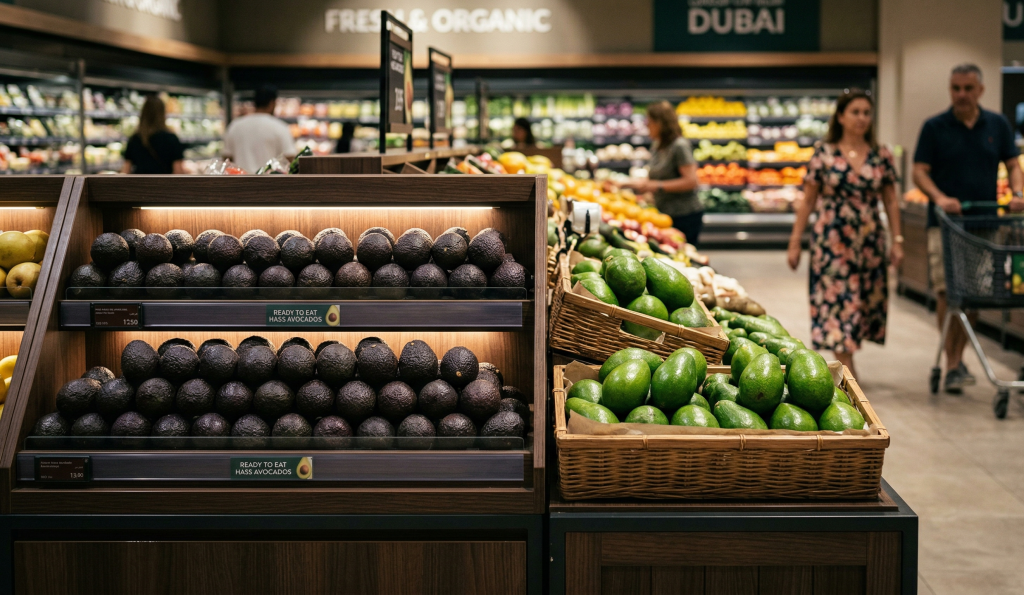
Walk through any supermarket in Dubai and you will see the same pattern.
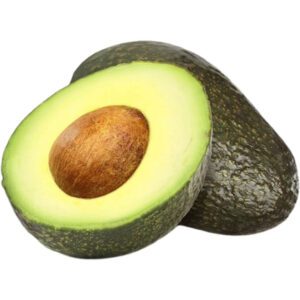
Dark, almost black Hass avocados priced at a premium.
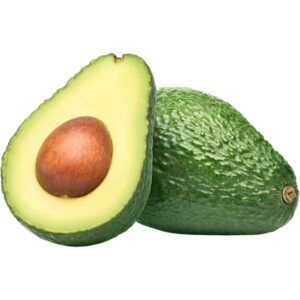
Right next to them, brighter green Fuerte avocados—often from Kenya—sitting quietly at a much lower price.
Most people reach for Hass without thinking.
Not because it is always better.
But because it is more familiar.
For restaurant buyers, hotel procurement teams, and even families managing weekly grocery costs, this habit quietly adds up. Over time, it leads to higher spend, more waste, and sometimes even less consistency in quality.
The reality is simple:
You are not just buying an avocado. You are buying a supply decision.
And in Dubai’s import-driven produce market, understanding that decision matters more than most people realize.
Why Hass Avocados Dominate Dubai Shelves
There is a reason Hass has become the default choice.
It travels well, looks uniform, and behaves predictably during ripening. For retailers, this reduces risk. For buyers, it feels “safe.”
What makes Hass popular?
- Thick, pebbled skin protects it during transport
- Predictable ripening window
- Creamy texture that suits Western-style dishes
- Strong global branding and familiarity
In many ways, Hass is the “standardized product” of the avocado world.
But standardization often comes with a cost—literally.
In Dubai, Hass avocados are usually imported from Mexico, Peru, or sometimes South Africa. These longer supply chains mean:
- Higher freight costs
- Longer storage time
- Greater exposure to handling damage
- Price sensitivity to global demand shifts
This is where many buyers unknowingly overpay.
The Overlooked Alternative: Fuerte Avocado from Kenya
Fuerte avocados do not have the same branding power as Hass.
But in practical buying terms, they offer something many Dubai buyers overlook:
Better value per kilogram, especially during peak Kenyan harvest periods.
What is Fuerte avocado?
Fuerte is a green-skinned variety that stays green even when ripe. This alone creates confusion.
Many buyers assume:
- Green = unripe
- Dark = ready
That assumption is incorrect.
Fuerte avocados soften when ripe, just like Hass. But they do not change color dramatically. This small difference leads to major purchasing mistakes.
Why Kenyan Fuerte Avocados Are Often Cheaper in Dubai
Price differences are not random. They are driven by supply chain dynamics.
1. Shorter and more efficient supply routes
Kenya has become a key avocado exporter to the Middle East. Compared to Latin American shipments, Kenyan avocados often reach UAE markets faster.
Shorter transit means:
- Lower shipping costs
- Less time in cold storage
- Reduced spoilage risk
2. Seasonal supply peaks
Kenyan avocado harvests tend to align with periods when global Hass supply tightens or becomes expensive.
During these windows, Fuerte becomes abundant—and prices drop.
3. Lower global demand pressure
Hass dominates international markets. That means:
- Higher competition for Hass shipments
- Price volatility driven by Western demand
Fuerte, on the other hand, is less globally “hyped.”
This keeps pricing more stable and often lower.
So Why Do Buyers Still Ignore Fuerte?
This is where real-world buying behavior matters.
Based on common discussions among Dubai-based buyers, a few patterns show up consistently:
Misunderstanding ripeness
Many people simply do not know how to judge a green avocado.
They press too early, assume it is hard and unripe, and move on.
Fear of inconsistency
Restaurants and catering businesses often prefer consistency over savings.
Hass offers predictability.
Fuerte requires a bit more knowledge.
Visual bias
Customers are used to seeing dark avocados in recipes, social media, and supermarket displays.
Green avocados feel unfamiliar—even if the quality is comparable.
Does Cheaper Mean Lower Quality?
This is the key question.
And the answer is: not necessarily.
Quality in avocados depends on:
- Harvest maturity
- Storage conditions
- Handling during transport
- Time since arrival
Not just the variety.
In fact, during peak seasons, Kenyan Fuerte avocados can be:
- Freshly harvested
- Less traveled
- More stable internally
While Hass, especially when imported from distant regions, may arrive after longer storage periods.
This does not mean Fuerte is always better.
But it does mean:
Price alone is not a reliable indicator of quality.
Taste and Texture: Fuerte vs Hass in Real Use
From a kitchen perspective, the difference becomes more practical.
Hass avocado
- Rich, creamy texture
- Higher oil content
- Ideal for guacamole and spreads
Fuerte avocado
- Slightly lighter texture
- More subtle flavor
- Holds shape better in salads and slicing
For many restaurant applications, especially salads, sandwiches, and buffet service:
Fuerte can actually perform better.
It is less likely to turn into a paste when handled or stored for service.
The Hidden Cost of Always Choosing Hass
This is where most buyers do not connect the dots.
Choosing Hass every time leads to:
- Higher average cost per kilo
- Increased pressure on food margins
- Greater exposure to price spikes
For households:
- Higher weekly grocery spend
- More waste if overripe
For businesses:
- Reduced flexibility in menu pricing
- Lower profitability on avocado-heavy dishes
In contrast, rotating between varieties based on season can stabilize both cost and quality.
A Practical View from Dubai’s Supply Chain
In practice, suppliers working closely with Dubai-based distributors such as JMB Farm Fresh often observe a clear pattern:
Buyers who understand origin, seasonality, and variety differences consistently make better purchasing decisions than those who rely only on appearance.
This is not about switching completely from Hass to Fuerte.
It is about knowing when each one makes sense.
When Fuerte Avocado Makes More Sense
There are specific situations where Fuerte becomes the smarter choice.
During Kenyan peak season
Prices are lower, supply is fresher, and availability is stable.
For high-volume use
Catering, buffets, and large-scale kitchens benefit from cost efficiency.
For sliced or structured dishes
Fuerte holds its shape better, reducing presentation issues.
When Hass Is Still the Better Option
It is important to stay balanced.
Hass remains the right choice in certain cases:
- Premium plating where texture is critical
- Guacamole or mash-heavy dishes
- When consistency across batches is required
The key is not to replace one with the other blindly.
It is to choose intentionally.
What Most Articles Get Wrong About Avocados in Dubai
Many online guides oversimplify the topic.
They focus on:
- “How to pick a ripe avocado”
- “Which avocado is healthier”
But they rarely explain:
- How supply chains affect price
- Why origin matters
- When a cheaper option is actually smarter
This gap leads to poor decisions—especially for buyers managing cost at scale.
The Real Decision: Cost vs Familiarity
At its core, the choice between Hass and Fuerte is not about quality.
It is about:
- Familiarity vs understanding
- Habit vs informed buying
- Branding vs real value
Dubai’s produce market is dynamic. Prices shift based on global supply, shipping routes, and seasonal availability.
Buyers who adapt to these changes benefit.
Those who rely only on привычe (habit) often pay more than necessary.
How to Tell if a Fuerte Avocado Is Ripe (Without Guessing)
This is where most buyers struggle—and where the biggest mistakes happen.
Because Fuerte stays green, you cannot rely on color.
You have to rely on feel and structure.
The correct way to check ripeness
- Gentle pressure near the stem
If it yields slightly, it is ready - Firm but not hard body
Too hard = unripe
Too soft = overripe - No large dents or wrinkles
These often signal internal damage
A common mistake is squeezing too hard. This bruises the fruit and speeds up spoilage.
A simple rule
If it feels like a slightly firm peach, it is ready.
This method works for both households and bulk buyers handling crates.
Storage Mistakes That Turn “Cheap Avocados” Into Expensive Waste
Saving money on purchase means nothing if half the stock spoils.
This is one of the biggest hidden issues in Dubai’s avocado supply chain.
Common mistakes
1. Refrigerating too early
Cold storage slows ripening.
If the avocado is still hard, refrigeration can “pause” it in an unripe state.
2. Storing all avocados together
When one ripens, it releases ethylene gas.
This speeds up ripening of others—sometimes too quickly.
3. Ignoring daily rotation
In kitchens, avocados are often left unchecked.
By the time they are needed, they are already overripe.
Better storage approach
- Keep unripe avocados at room temperature
- Move ripe ones to refrigeration
- Separate batches by ripeness stage
- Check daily, especially in warm environments
For restaurants and catering teams, this small system can reduce waste significantly.
Wholesale vs Retail Buying: Where the Real Difference Shows
Many buyers assume supermarket avocados are “higher quality” than wholesale.
In reality, the difference is often about handling and turnover, not inherent quality.
Retail buying (supermarkets)
- Smaller quantities
- Higher markup per unit
- Longer shelf display time
- More controlled presentation
Wholesale sourcing
- Larger volumes
- Lower cost per kilo
- Faster turnover
- Requires better handling knowledge
For experienced buyers, wholesale often provides:
- Fresher batches
- More flexibility in variety selection
- Better alignment with seasonal supply
But it also requires understanding how to manage ripening and storage.
Why Prices Fluctuate So Much in the UAE
Many buyers ask:
“Why is avocado so expensive one week and cheap the next?”
The answer lies in a mix of global and regional factors.
Key drivers of price volatility
1. Import dependency
The UAE relies heavily on imported produce.
Any disruption in supply chains affects pricing quickly.
2. Seasonal overlaps
When multiple origins (Kenya, Peru, South Africa) overlap, prices stabilize.
When supply gaps occur, prices rise.
3. Freight and logistics costs
Shipping rates, fuel prices, and port delays all play a role.
4. Demand spikes
Trends in healthy eating, brunch culture, and food delivery increase demand unpredictably.
What this means for buyers
- Prices are not fixed—they are reactive
- The same avocado can vary significantly in cost across weeks
- Flexibility in variety choice helps manage budget
This is where Fuerte often becomes valuable.
When Hass prices rise, Fuerte can act as a stable alternative.
Real-World Scenario: Restaurant vs Household Buying
Understanding how different buyers use avocados helps clarify the decision.
Scenario 1: A restaurant kitchen
A mid-sized Dubai café uses avocados daily for:
- Toasts
- Salads
- Sandwiches
If they rely only on Hass:
- Costs increase during price spikes
- Margins shrink
- Menu pricing becomes harder to control
If they incorporate Fuerte:
- Cost per dish decreases
- Supply becomes more flexible
- Texture works well for sliced applications
Scenario 2: A household buyer
A family buys avocados weekly.
Common issues:
- Buying hard Hass that never ripens properly
- Buying ripe ones that spoil within 1–2 days
- Overpaying without realizing alternatives exist
By choosing Fuerte during the right season:
- Cost per week drops
- Ripening becomes more manageable
- Waste reduces with proper storage
The “Green Avocado Problem” in Dubai
One interesting pattern in UAE markets is what many suppliers quietly call:
The green avocado problem
This refers to the gap between availability and understanding.
Fuerte avocados are often:
- Available in good quantities
- Priced attractively
- Fresh from nearby origins
But they remain underutilized because:
- Buyers do not trust green skin
- Retail displays do not educate customers
- Online listings rarely explain the difference
As a result, good-quality produce moves slower—despite being a better value.
How Experienced Buyers Approach Avocado Sourcing
Buyers who manage cost and quality effectively tend to follow a different approach.
They do not fixate on one variety.
Instead, they look at:
- Origin (Kenya, Mexico, Peru, South Africa)
- Seasonality (what is abundant now)
- Transit time (how long it traveled)
- Batch condition (firmness, skin quality)
This approach allows them to:
- Adjust purchasing decisions weekly
- Maintain consistent quality
- Avoid overpaying during high-demand periods
A Note on Supply Relationships
Another factor often overlooked is the role of supplier relationships.
Reliable distributors provide:
- Better insight into incoming shipments
- Guidance on ripeness and handling
- More consistent batch quality
Some UAE buyers prefer working with established wholesale produce providers rather than fragmented retail sourcing, especially when consistency matters over time.
Common Mistakes That Cost Buyers Money
Across both households and businesses, a few mistakes appear repeatedly:
1. Buying based on color alone
Green does not mean unripe.
Dark does not always mean perfect.
2. Ignoring origin
Two avocados can look identical but perform differently based on where they were grown.
3. Overbuying without a storage plan
This leads to spoilage and waste.
4. Sticking to one variety year-round
This increases exposure to price volatility.
Practical Takeaways So Far
- Fuerte avocado Dubai cheap buy options are often overlooked, not inferior
- Kenyan avocados can offer better value during peak seasons
- Ripeness should be judged by feel, not color
- Storage practices directly impact cost efficiency
- Flexible sourcing leads to better long-term outcomes
At this point, the picture becomes clearer.
This is not about choosing the “best avocado.”
It is about understanding how different varieties fit into Dubai’s evolving food supply system—and how that affects cost, quality, and waste.
The final piece is knowing how to apply this understanding consistently.
Building a Smarter Avocado Buying Strategy in Dubai
By now, the pattern is clear.
There is no single “best” avocado.
There is only the right avocado for the moment.
Buyers who consistently make better decisions tend to follow a simple framework—whether they are managing a restaurant kitchen or a household grocery list.
Step 1: Check origin before anything else
Instead of starting with variety (Hass vs Fuerte), start with where the avocado came from.
Ask:
- Is this from Kenya, Mexico, Peru, or South Africa?
- How far did it travel?
- Is it currently peak season for that origin?
Shorter travel time often means:
- Better internal condition
- More stable ripening
- Lower cost
This is why Kenyan Fuerte avocados often become a strong option in Dubai.
Step 2: Match the avocado to your use case
Not every avocado needs to be ultra-creamy.
Break it down by application:
- Guacamole / spreads → Hass works well
- Salads / slicing → Fuerte performs better
- Buffet / high-volume use → Fuerte reduces cost pressure
This simple shift alone can improve both consistency and margins.
Step 3: Plan your ripening window
This is where many buyers lose control.
Instead of buying “ready-to-eat only,” consider a mix:
- Some ready now
- Some ripening in 2–3 days
This creates a steady supply rather than peaks and waste.
For businesses, this reduces last-minute shortages.
For households, it prevents throwing away overripe fruit.
Step 4: Adjust weekly, not monthly
Dubai’s produce market moves quickly.
Prices and quality can shift week to week based on:
- Shipment arrivals
- Weather in origin countries
- Demand fluctuations
Buyers who check weekly conditions—rather than sticking to fixed habits—tend to spend less and waste less.
Seasonal Context: Why Timing Matters More Than Variety
In the UAE, seasonality does not mean local farming cycles.
It means import cycles.
Different countries supply avocados at different times of the year.
Typical pattern (simplified)
- Kenya (Fuerte + some Hass) → strong during specific windows
- Peru / South Africa (Hass) → dominate other periods
- Mexico (Hass) → consistent but often premium-priced
When Kenyan supply is strong:
- Fuerte becomes widely available
- Prices tend to drop
- Freshness improves due to shorter transit
During these periods, choosing Hass purely out of habit often leads to unnecessary cost.
The Trade-Offs: Being Honest About Limitations
It is important to stay balanced.
Fuerte is not a perfect substitute in every situation.
Where Fuerte can fall short
- Less creamy texture for premium spreads
- Slightly more variation between batches
- Requires better understanding of ripeness
Where Hass still leads
- Uniform texture
- Strong consumer familiarity
- Reliable results for specific recipes
The goal is not to replace Hass entirely.
It is to avoid over-reliance on a single option.
What This Means for Different Buyers
For restaurant owners and chefs
- Build flexibility into your sourcing
- Train staff to handle both varieties
- Align avocado choice with menu items
This can improve both cost control and consistency.
For hotel procurement teams
- Monitor origin and seasonal supply closely
- Work with suppliers who provide transparency
- Balance cost with guest expectations
In high-volume environments, small cost differences scale quickly.
For grocery buyers and families
- Learn to judge ripeness by feel
- Buy based on use over the next few days
- Stay open to alternatives when prices shift
Over time, this leads to more efficient shopping and less waste.
A Quiet Industry Reality Most People Miss
Behind the scenes, experienced produce buyers rarely think in terms of:
“Hass vs Fuerte.”
They think in terms of:
- What is arriving this week?
- What condition is it in?
- What offers the best balance of cost and performance?
This mindset is what separates reactive buying from informed sourcing.
Final Perspective
Dubai’s food system depends on imports, logistics, and timing.
That means prices and quality are always moving.
The idea that one avocado—Hass—is always the best choice does not reflect how the market actually works.
Sometimes, the better decision is the one that looks unfamiliar.
And often, the difference between overpaying and buying smart comes down to understanding what is already in front of you.
FAQ Section
1. Is Fuerte avocado good quality compared to Hass?
Yes. Quality depends more on freshness, handling, and origin than variety. Fuerte can match or exceed Hass during peak seasons.
2. Why is Fuerte avocado cheaper in Dubai?
It is often sourced from Kenya with shorter transit times and lower global demand pressure, which reduces overall cost.
3. How do I know if a green avocado is ripe?
Gently press near the stem. If it yields slightly, it is ready. Color is not a reliable indicator for Fuerte.
4. Which avocado is better for salads?
Fuerte is usually better for slicing and salads because it holds its shape more effectively.
5. Should I stop buying Hass completely?
No. Hass is still ideal for certain uses. The goal is to choose based on application and season, not habit.








 Home
Home  Whishlist
  Compare
  Checkout