














Introduction
Walk through any premium supermarket in Dubai or browse exotic fruits online, and one thing stands out quickly: dragon fruit.
Bright pink skin. Green-tipped scales. White or deep magenta flesh dotted with black seeds. It looks almost too perfect to be real.
But behind the visual appeal, there’s a quieter question many buyers—both households and professional buyers—often ask:
Is dragon fruit actually worth its price in Dubai?
In a market where imported produce dominates, and pricing can shift weekly, “worth” is not just about nutrition. It’s about shelf life, consistency, sourcing reliability, and how well the fruit performs in real use—whether that’s a home kitchen, a juice bar, or a hotel buffet.
This article breaks that down from a supply-side perspective. Not trends. Not hype. Just practical understanding.
Why Dragon Fruit Is Everywhere in Dubai
Dragon fruit, also known as pitaya, has become a regular feature in Dubai’s fruit ecosystem over the last decade.
This didn’t happen by accident.
1. It Fits Dubai’s Import-Based Food System
Dubai relies heavily on imported produce due to its climate. Dragon fruit fits well into this system because it:
- Handles long-distance shipping reasonably well
- Has a moderate shelf life compared to softer tropical fruits
- Maintains visual quality even after transit
Most dragon fruit in Dubai comes from:
- Vietnam (largest volume supplier)
- Thailand (higher-end, often sweeter varieties)
- Occasionally India and Sri Lanka
This supply diversity helps maintain availability across most of the year.
2. It Matches Consumer Behavior
Dubai’s population is a mix of residents from Asia, Europe, and the Middle East. Dragon fruit appeals across all groups because:
- It is familiar to Asian consumers
- It is perceived as “healthy” by Western buyers
- It is visually attractive for social and hospitality use
For restaurants and cafés, presentation matters. Dragon fruit delivers that without requiring complex preparation.
3. It Performs Well in Food Service
In hospitality and catering environments, consistency is critical.
Dragon fruit offers:
- Easy portioning
- Low preparation waste
- Neutral flavor that pairs with multiple dishes
This makes it common in:
- Breakfast buffets
- Smoothie bowls
- Fruit platters
- Mocktails and desserts
What Most Articles Don’t Explain Clearly
Many online articles describe dragon fruit as a “superfood” and stop there.
What they don’t explain is how it actually behaves in real buying conditions in Dubai.
Let’s break down the practical side.
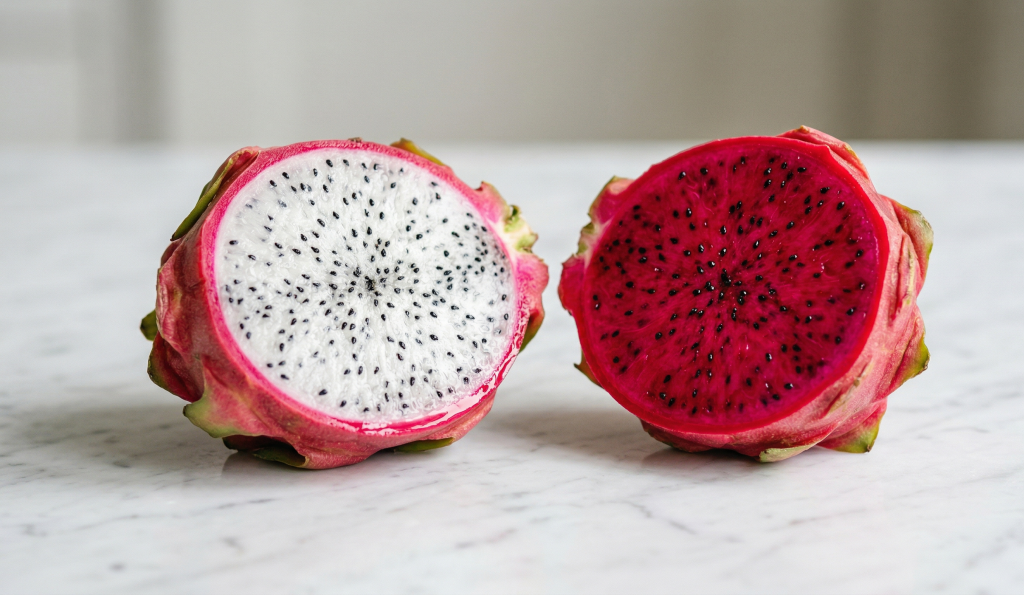
White vs Red Dragon Fruit — What Buyers Should Know
Not all dragon fruit is the same, and this is one of the biggest sources of confusion.
White Flesh (Most Common in Dubai)
- Mild sweetness
- High water content
- Longer shelf life
- Lower price point
This is what most supermarkets stock. It looks good, but the taste is often subtle.
Red / Magenta Flesh (Less Common, Higher Demand)
- Stronger sweetness
- Richer flavor profile
- Shorter shelf life
- Higher price
These are often used in premium hospitality settings or specialty fruit shops.
Common Buyer Mistake
Many buyers assume all dragon fruit tastes the same.
In reality:
- White varieties are often purchased for appearance
- Red varieties are purchased for flavor
Understanding this difference helps avoid disappointment, especially for first-time buyers.
Why Dragon Fruit Prices Fluctuate in Dubai
A common frustration among buyers is inconsistent pricing.
One week it feels reasonable. The next, it seems excessive.
There are clear reasons behind this.
1. Air Freight vs Sea Freight
Dragon fruit can be shipped via:
- Air freight → faster, fresher, more expensive
- Sea freight → slower, cheaper, slightly higher spoilage risk
Premium batches (especially from Thailand) are often air-freighted, which increases cost significantly.
2. Seasonal Peaks in Source Countries
Even though dragon fruit is available year-round, it still has peak seasons in origin countries.
During off-peak periods:
- Supply tightens
- Prices increase
- Quality can become inconsistent
3. Demand from Hospitality Sector
Dubai’s hospitality industry has a direct impact on pricing.
During high tourism periods:
- Hotels and restaurants increase bulk purchasing
- Supply chains prioritize large buyers
- Retail prices often rise
4. Visual Quality Standards
Unlike many fruits, dragon fruit is heavily judged on appearance.
Even minor surface blemishes can:
- Lower retail value
- Push stock into wholesale channels
This creates price variation even within the same shipment.
How to Judge Dragon Fruit Quality (Practical Guide)
Whether buying from a supermarket or sourcing in bulk, quality assessment is critical.
Here’s what experienced buyers look for:
Skin Condition
- Bright, even color (pink or red)
- No major bruises or soft patches
- Slight dryness at tips is normal
Firmness
- Slightly soft when gently pressed
- Not hard like an unripe fruit
- Not overly mushy
Weight
- Feels heavy for its size
- Indicates good hydration and freshness
Stem Area
- Should not be moldy
- Slight dryness is acceptable
Inside (If Cut)
- Vibrant color
- Even distribution of seeds
- No dull or grey patches
Shelf Life and Storage — A Common Misunderstanding
One of the biggest misconceptions is that dragon fruit lasts “a long time.”
That’s only partially true.
At Room Temperature (Dubai Conditions)
- 2–3 days before quality starts declining
Refrigerated
- Up to 7–10 days if stored properly
However, once cut:
- Should be consumed within 24 hours
Practical Issue for Buyers
Bulk buyers often overestimate shelf life.
This leads to:
- Waste
- Loss of texture
- Reduced customer satisfaction
In practice, experienced distributors plan shorter turnover cycles for dragon fruit compared to apples or citrus.
Wholesale vs Retail — Which Makes More Sense?
This is where many buyers—especially small businesses—get confused.
Retail Purchase (Supermarkets)
Pros:
- Easy access
- No minimum quantity
- Consistent display quality
Cons:
- Higher per-unit cost
- Limited variety
- Less control over batch quality
Wholesale Sourcing
Pros:
- Better price per unit
- Access to different varieties
- Control over batch selection
Cons:
- Requires volume commitment
- Higher risk if storage is poor
- Quality can vary between shipments
Real-World Observation
In practice, suppliers working closely with Dubai-based distributors such as JMB Farm Fresh often observe that:
- Businesses benefit from wholesale only when they understand turnover speed
- Small buyers sometimes lose money due to over-purchasing
The decision is not about “cheap vs expensive.”
It’s about matching supply with actual usage.
When Is Dragon Fruit “In Season” for Dubai?
Unlike local produce, dragon fruit season in Dubai depends on import cycles.
However, there are patterns.
Peak Availability Periods
- Late spring to early autumn (strong supply from Southeast Asia)
Lower Availability
- Certain winter months when supply tightens
What This Means for Buyers
During peak periods:
- Prices stabilize
- Quality improves
- Variety increases
During low supply periods:
- Prices rise
- Quality becomes inconsistent
- Retailers may mix batches from different origins
Understanding this helps avoid buying at the wrong time.

How Dragon Fruit Is Actually Used in Dubai (Beyond Instagram)
It’s easy to assume dragon fruit is mostly a visual fruit. That’s partly true—but in Dubai’s food ecosystem, it has found practical use cases that justify its presence.
1. Smoothies and Juice Bars
Dragon fruit works well in beverages because:
- It blends easily
- It adds natural color without artificial ingredients
- It pairs well with banana, mango, and citrus
However, many juice operators quietly note a tradeoff:
- White dragon fruit → better texture, less flavor
- Red dragon fruit → stronger flavor, but higher cost
This is why many businesses blend dragon fruit with sweeter fruits instead of using it alone.
2. Hospitality Buffets
In hotels, dragon fruit is less about taste and more about reliability.
It offers:
- Consistent portion sizes
- Minimal prep complexity
- Strong visual appeal on fruit platters
For buffet operations, this balance matters more than intense flavor.
3. Home Consumption
For households, usage tends to be simpler:
- Fresh fruit bowls
- Light desserts
- Children’s snacks
Many families prefer it because:
- It is mild and easy to eat
- Seeds are soft and non-intrusive
- It feels “clean” compared to sticky tropical fruits
The “Superfood” Label — Does It Hold Up?
Dragon fruit is often marketed as a superfood, but this term is rarely defined clearly.
From a practical nutrition perspective, dragon fruit offers:
- High water content (hydration support)
- Fiber (digestive support)
- Vitamin C (immune support)
- Antioxidants (especially in red varieties)
But it is important to stay grounded.
What It Is Not
- It is not a high-protein fruit
- It is not calorie-dense
- It is not a substitute for a balanced diet
What It Is
- A light, hydrating fruit
- Easy to digest
- Suitable for hot climates like the UAE
In Dubai’s heat, fruits with high water content often provide more practical value than heavier options.
Common Mistakes Buyers Make with Dragon Fruit
Across both retail buyers and businesses, a few patterns show up repeatedly.
Mistake 1: Buying Based Only on Appearance
Dragon fruit looks good almost all the time.
But appearance does not guarantee:
- Sweetness
- Ripeness
- Flavor intensity
This leads to disappointment, especially for first-time buyers.
Mistake 2: Overestimating Demand
Businesses sometimes introduce dragon fruit assuming high customer interest.
In reality:
- Demand is steady, not explosive
- It works best as a supporting ingredient, not a main item
Over-purchasing often leads to waste.
Mistake 3: Ignoring Variety Differences
As discussed earlier:
- White vs red matters more than most buyers realize
Not understanding this leads to:
- Incorrect menu expectations
- Mismatch between cost and customer experience
Mistake 4: Poor Storage Planning
Dubai’s climate accelerates spoilage if handling is not controlled.
Common issues include:
- Leaving stock at room temperature too long
- Improper refrigeration
- Cutting fruit too early
These small mistakes reduce shelf life significantly.
Import vs “Local” — A Common Misunderstanding
Some buyers ask whether dragon fruit is grown locally in the UAE.
The answer is: limited, but not mainstream.
Local Cultivation (Small Scale)
There are small-scale farms experimenting with dragon fruit in the UAE.
However:
- Production volume is low
- Supply is not consistent
- Pricing is often higher
Imported Supply (Primary Source)
Most dragon fruit in Dubai is imported because:
- Southeast Asia has ideal growing conditions
- Yields are more consistent
- Supply chains are established
What This Means for Buyers
“Local” is not always:
- More available
- More affordable
- More consistent
In many cases, imported dragon fruit offers more reliability for bulk buyers.
Online Ordering vs Physical Buying in Dubai
With the rise of exotic fruits online in Dubai, many buyers now choose delivery instead of visiting markets.
Each option has tradeoffs.
Buying Online
Pros:
- Convenience
- Access to wider variety
- Suitable for bulk ordering
Cons:
- No physical inspection
- Quality depends on supplier standards
- Variability between orders
Buying In-Store
Pros:
- Direct quality check
- Immediate purchase
- Better control over ripeness selection
Cons:
- Limited variety
- Time-consuming
- Higher retail pricing
Practical Insight
Experienced buyers often use a hybrid approach:
- Online for bulk planning
- In-store for immediate needs or quality-sensitive purchases
This reduces risk while maintaining flexibility.
How Restaurants and Cafés Decide If It’s Worth Using
From a business perspective, dragon fruit is not judged on taste alone.
It’s evaluated based on operational efficiency.
Factors That Matter
- Cost per usable portion
- Waste percentage
- Customer perception
- Ease of preparation
Why Some Businesses Use It Regularly
- Enhances visual presentation
- Adds perceived value to dishes
- Works well in premium menus
Why Others Limit Usage
- Mild flavor reduces repeat demand
- Price sensitivity during low seasons
- Requires pairing with stronger ingredients
The Real Value of Dragon Fruit in Dubai
When stripped of hype, dragon fruit sits in a specific category:
It is not a daily staple like apples or bananas.
It is not a luxury item like rare berries.
It sits in between.
It Works Best When:
- Used for presentation
- Paired with stronger flavors
- Purchased with clear consumption planning
It Underperforms When:
- Bought in excess
- Expected to deliver strong taste alone
- Treated as a long-storage fruit
A Quiet Shift in Buyer Behavior
Over the past few years, there has been a noticeable shift among experienced buyers in Dubai.
They are becoming more:
- Selective about variety
- Aware of sourcing differences
- Focused on usage-based purchasing
Instead of asking:
“Is dragon fruit good?”
They are asking:
- “Which type suits my use?”
- “How fast will I use it?”
- “Is this the right time to buy?”
This shift reduces waste and improves consistency.
Practical Buying Guidelines (For Households and Businesses)
After understanding sourcing, pricing, and usage, the next step is applying that knowledge in real decisions.
Whether you are a household buyer or managing procurement for a business, a few simple principles make a noticeable difference.
1. Match Quantity to Consumption Speed
Dragon fruit is not a long-storage fruit.
Plan purchases based on:
- Daily or weekly usage
- Storage capacity
- Menu requirements (for businesses)
A smaller, more frequent purchase cycle often works better than bulk buying.
2. Choose Variety Based on Purpose
Instead of asking “which is better,” ask:
- For presentation? → White dragon fruit works well
- For flavor? → Red dragon fruit is usually the better choice
This avoids overpaying for qualities you may not need.
3. Time Your Purchase When Possible
While availability is year-round, buying during stronger supply periods helps:
- Reduce cost pressure
- Improve consistency
- Access better-quality batches
Even a basic awareness of supply cycles can improve outcomes.
4. Inspect When You Can, Trust When You Must
If buying in-store:
- Check firmness and skin condition
If buying online:
- Work with suppliers that maintain consistent handling practices
Over time, reliability becomes more valuable than one-time price savings.
5. Avoid Early Cutting
Cutting dragon fruit too early is a common mistake.
It leads to:
- Moisture loss
- Texture decline
- Reduced visual appeal
For both households and hospitality operations, cutting closer to serving time preserves quality.
Risk Awareness: Where Things Can Go Wrong
Even experienced buyers occasionally face issues with dragon fruit.
Understanding these risks helps reduce loss.
Inconsistent Sweetness
Cause:
- Variety differences
- Harvest timing
- Origin variation
Impact:
- Customer dissatisfaction
- Menu inconsistency
Internal Dryness
Cause:
- Long transit time
- Poor storage
Impact:
- Reduced eating quality
- Waste in food service
Rapid Softening
Cause:
- Improper temperature handling
- Over-ripeness at purchase
Impact:
- Short selling window
- Increased spoilage
Supply Gaps
Cause:
- Seasonal dips in origin countries
- Logistics disruptions
Impact:
- Price spikes
- Limited availability
A Note on Supplier Relationships
In Dubai’s produce market, relationships matter more than many buyers expect.
Over time, consistent suppliers tend to provide:
- Better batch selection
- More stable quality
- Honest communication about stock
In practice, businesses working with established distributors—such as those supplying through networks that include providers like JMB Farm Fresh (jmbfarmfresh.com)—often find that consistency improves not because the fruit is different, but because handling and selection standards are tighter.
This is rarely discussed in public-facing content, but it plays a significant role in real-world outcomes.
Is Dragon Fruit Actually Worth It?
This question depends on how “worth” is defined.
From a Nutritional Perspective
- Light and hydrating
- Easy to digest
- Supports a balanced diet
From a Business Perspective
- Useful for presentation-driven menus
- Works well in controlled portions
- Adds perceived value without complex preparation
From a Cost Perspective
- Mid-range in pricing (not cheapest, not premium luxury)
- Sensitive to timing and sourcing
From a Practical Perspective
Dragon fruit is worth it when:
- Bought with a clear use case
- Matched to the right variety
- Managed within its shelf-life limits
It becomes less valuable when:
- Purchased impulsively
- Expected to deliver strong flavor alone
- Stored incorrectly
Final Thoughts
Dragon fruit in Dubai is a good example of how perception and practicality intersect.
It looks premium. It feels healthy. It carries a higher price than common fruits.
But its real value is quieter.
It is a reliable, versatile, visually strong fruit that fits well into Dubai’s import-driven food system—provided it is understood properly.
For buyers who take the time to understand:
- Variety differences
- Supply patterns
- Storage limits
…it becomes a useful, predictable part of their sourcing strategy.
For those who don’t, it often becomes an occasional purchase that feels underwhelming.
FAQ Section
1. Where can I buy dragon fruit in Dubai?
Dragon fruit is available in supermarkets, traditional fruit markets, and through online delivery platforms. Wholesale buyers often source it through produce distributors, while households rely on retail or e-commerce options.
2. Is dragon fruit in Dubai imported or locally grown?
Most dragon fruit in Dubai is imported, mainly from Vietnam and Thailand. Local cultivation exists but is limited and not a primary supply source.
3. What is the difference between white and red dragon fruit?
White dragon fruit is milder and more common, while red (magenta) varieties are sweeter, richer in flavor, and typically more expensive with a shorter shelf life.
4. How long does dragon fruit last after buying?
Whole dragon fruit can last 2–3 days at room temperature and up to 7–10 days when refrigerated. Once cut, it should be consumed within 24 hours.
5. Why is dragon fruit expensive in Dubai?
Pricing depends on factors like import method (air vs sea freight), seasonal supply in origin countries, and demand from the hospitality sector.









 Home
Home  Whishlist
  Compare
  Checkout