











Introduction
Walk into most supermarkets in Dubai, and carrots look exactly the same—long, orange, and predictable.
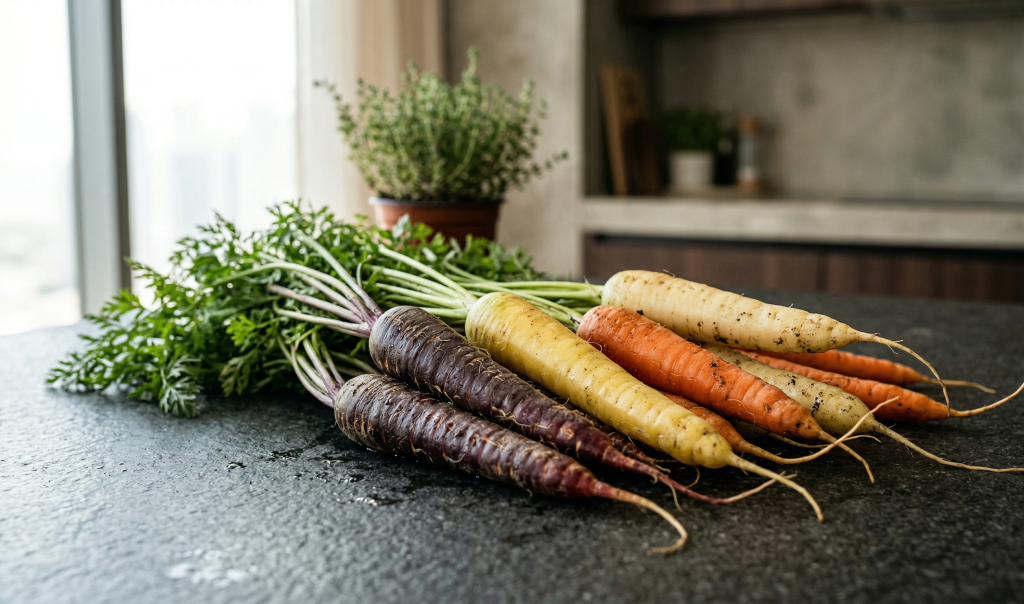
But speak to chefs, procurement managers, or experienced produce buyers, and you’ll hear a different story. Carrots are not just orange. They come in deep purple, soft yellow, creamy white, and mixed “rainbow” bunches that look closer to a plated dish than a raw ingredient.
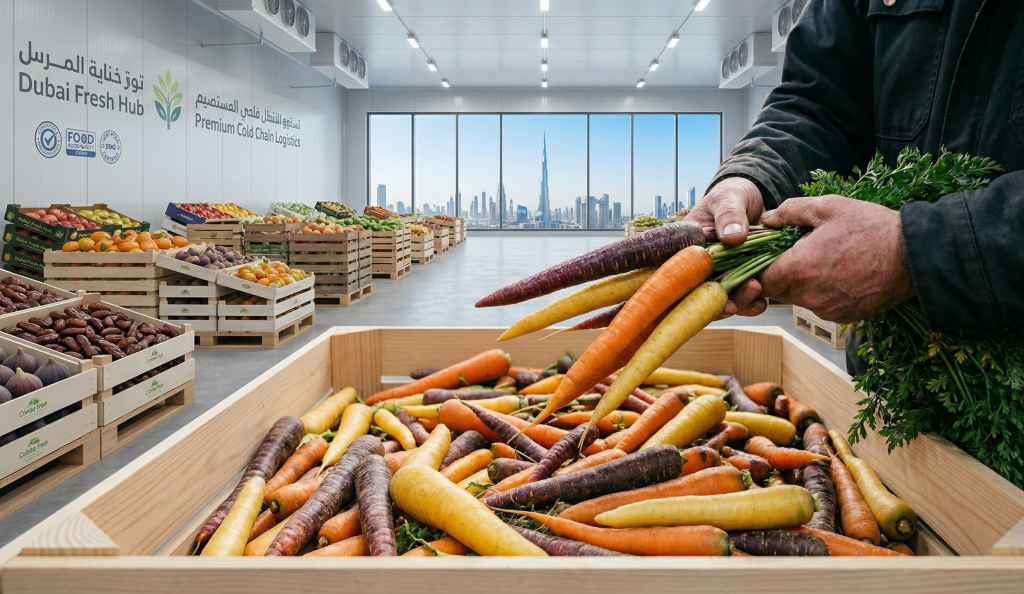
In recent years, rainbow carrots in Dubai have quietly moved from niche restaurant kitchens into family kitchens and specialty grocery baskets. Not because they are trendy—but because they solve a very real problem:
Getting people, especially children, to actually eat vegetables.
This shift is not just visual. It reflects deeper changes in how produce is sourced, presented, and consumed in the UAE—especially during peak winter seasons when variety improves and supply chains stabilize.
This article breaks down what rainbow carrots really are, how they differ from standard carrots, how buyers in Dubai approach them, and what both households and businesses should know before purchasing.
What Are Rainbow Carrots — And Are They Actually Different?

4
Rainbow carrots are not artificially colored or modified vegetables.
They are heirloom and naturally occurring carrot varieties, grown in different regions and brought together in mixed batches. Each color represents a different pigment—and slightly different characteristics.
The main types you’ll see in Dubai:
- Purple carrots
Rich in anthocyanins (the same compounds found in blueberries). Often slightly earthy and less sweet. - Yellow carrots
Milder in taste, softer texture. Often used in soups and light dishes. - White carrots
Subtle flavor, less sugar. Common in Middle Eastern cooking contexts. - Orange carrots
The most familiar variety, bred historically for sweetness and consistency.
From a supply perspective, these are usually bundled together as baby rainbow carrots or mixed-grade carrots for visual appeal.
What most buyers don’t realize is this:
The orange carrot is actually the “engineered standard.” The colorful ones came first historically.
Why Dubai’s Food Industry Started Paying Attention
The demand for colourful vegetables for kids in Dubai didn’t come from households first. It came from kitchens.
1. Visual plating in hospitality
Hotels, cafes, and catering companies in Dubai operate in a highly competitive environment. Presentation matters just as much as taste.
Rainbow carrots offer:
- Natural color contrast
- No need for artificial garnish
- Higher perceived value on the plate
2. Menu differentiation without complexity
For chefs, changing ingredients is easier than changing recipes.
Replacing standard carrots with rainbow carrots:
- Keeps prep processes identical
- Adds immediate visual upgrade
- Justifies premium positioning
3. Consistency challenges pushed better sourcing
Early adopters faced inconsistent supply—mixed sizes, color imbalance, or short shelf life.
Over time, suppliers refined sourcing channels, especially during winter imports, making availability more predictable.
In practice, suppliers working closely with Dubai-based distributors such as JMB Farm Fresh often observe that demand stabilizes only when quality consistency improves—not just availability.
Why Children Are More Likely to Eat These
This is one of the most discussed topics in parent communities across the UAE.
Not because rainbow carrots are “healthier”—but because they change perception.
The psychology is simple:
Children resist:
- Repetition
- Predictability
- “Plain-looking” food
They respond to:
- Color variation
- Visual novelty
- Choice (even small choices)
Offering a plate with purple, yellow, and orange carrots feels different than offering a single uniform vegetable.
It turns eating into interaction rather than instruction.
What parents often misunderstand
Many assume:
“My child doesn’t like carrots.”
What they often mean is:
“My child is bored of carrots.”
That distinction matters when evaluating vegetables kids will eat in the UAE market.
Are Rainbow Carrots More Nutritious?
4
This is where confusion usually starts.
The short answer:
They are not dramatically more nutritious—but they are more diverse nutritionally.
Key differences:
- Purple carrots
Contain anthocyanins (linked to antioxidant activity) - Yellow carrots
Contain lutein (associated with eye health) - Orange carrots
High in beta-carotene (vitamin A precursor) - White carrots
Lower pigment, but still provide fiber and hydration
Instead of thinking in terms of “better vs worse,” it’s more accurate to think:
A mix of carrot varieties provides a broader nutrient profile than a single type.
For families and food businesses, this matters less for short-term nutrition—and more for long-term dietary variety.
Seasonal Availability in the UAE: Why Winter Matters
If you’ve ever searched for purple carrot UAE fresh or tried sourcing colourful produce in summer, you’ve likely noticed inconsistency.
That’s not accidental.
The UAE’s supply pattern:
- Winter (Nov–Mar):
- Peak availability
- Better quality
- More stable pricing
- Wider variety (including rainbow carrots)
- Summer (Apr–Oct):
- Heavier reliance on imports
- Reduced variety
- Higher spoilage risk during transit
Rainbow carrots perform best during winter because:
- Cooler temperatures protect color integrity
- Shelf life improves
- Logistics stress is lower
For buyers—especially restaurants and catering businesses—this is where planning matters.
Common Mistakes Buyers Make
Across households and businesses, the same issues come up repeatedly.
1. Judging freshness by color alone
Bright color does not always mean freshness.
Look for:
- Firm texture
- No soft spots
- Moist but not wet surface
2. Ignoring size variation
Mixed batches often include uneven sizes. This affects:
- Cooking time
- Presentation consistency
3. Overbuying due to novelty
Rainbow carrots look appealing—but they are still perishable.
Buying in excess leads to:
- Waste
- Texture degradation after a few days
4. Storing them like regular carrots
Colorful carrots are often more sensitive to moisture loss.
Best practice:
- Store in perforated packaging
- Keep in high-humidity fridge drawer
- Avoid washing until use
Wholesale vs Retail: What Actually Changes?
This is a major point of confusion in Dubai’s produce market.
Many assume:
“Supermarket vegetables are cleaner or better.”
In reality, the difference is usually in handling and turnover, not inherent quality.
Wholesale sourcing advantages:
- Better batch consistency
- Access to seasonal varieties
- Faster stock rotation
Trade-offs:
- Minimum order quantities
- Less packaging convenience
- Requires storage awareness
For items like baby rainbow carrot delivery in Dubai, wholesale channels often supply restaurants first—before trickling down to retail formats.
Understanding this flow helps explain why availability can feel inconsistent at the consumer level.
How Rainbow Carrots Move Through Dubai’s Supply Chain
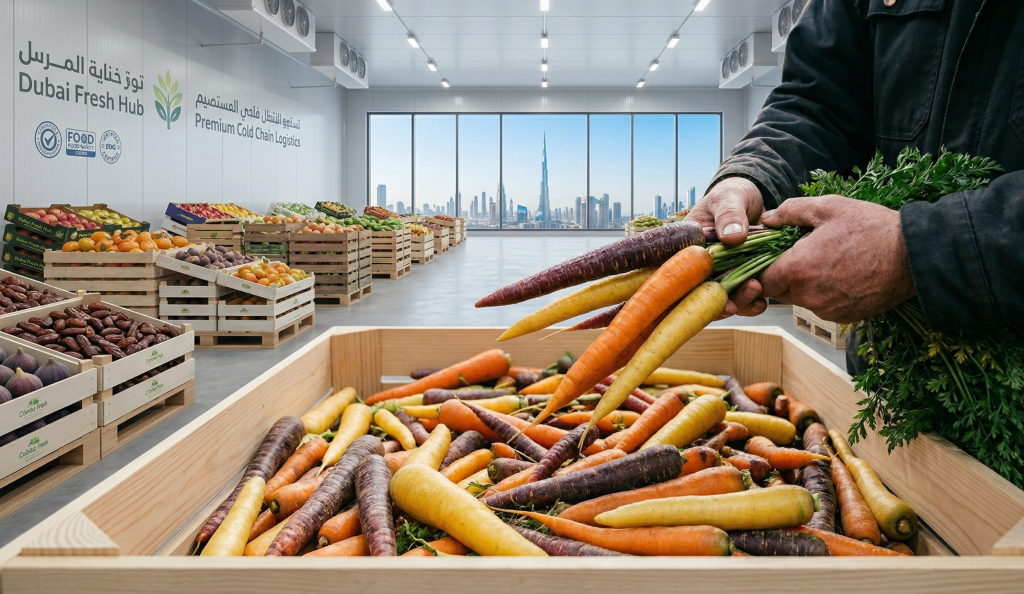
Understanding how rainbow carrots in Dubai reach your kitchen—whether you’re a parent or a procurement manager—helps explain why quality can vary from one week to the next.
Unlike staple vegetables, rainbow carrots are not always sourced from a single origin. They typically move through a mixed supply chain.
Common sourcing routes:
- European imports (Netherlands, France, Italy)
Known for consistent grading and visual quality. Often preferred by hospitality buyers. - Australia and South Africa
Seasonal imports that fill gaps during transition months. - Regional sourcing (limited)
Smaller volumes, sometimes less uniform in color distribution.
Why this matters
Each origin differs in:
- Soil composition (affects taste and color intensity)
- Harvest timing (affects sweetness and firmness)
- Post-harvest handling (affects shelf life)
So when buyers ask:
“Why did last week’s batch look better than this week’s?”
The answer is often origin—not supplier inconsistency.
How to Judge Quality Before You Buy

For both households and businesses, knowing how to assess quality reduces waste and improves consistency.
1. Texture is the first indicator
Pick up the carrots.
- Good: Firm, slightly resistant when pressed
- Poor: Flexible, rubbery, or bending easily
Soft carrots are not unsafe—but they are past peak quality.
2. Surface condition matters more than color
Color can vary naturally across batches.
Focus instead on:
- Smooth skin
- No deep cracks
- Minimal dark spots
A slightly dull purple carrot can still be fresher than a shiny one with internal dehydration.
3. Check the tops (if attached)
If leafy tops are still present:
- Bright green = recently harvested
- Wilted or yellowing = older stock
Most retail packs remove tops, but wholesale deliveries may include them.
4. Smell (often overlooked)
Fresh carrots have:
- A clean, slightly sweet earth smell
If there’s:
- Sourness
- Fermented odor
It usually indicates early spoilage.
Storage Realities: Why Carrots Lose Quality Faster Than Expected
Many buyers assume carrots are “long shelf-life vegetables.” That’s only partly true.
Rainbow carrots, especially baby varieties, behave differently.
What shortens shelf life in Dubai conditions:
- Temperature fluctuations during transport
- High ambient humidity
- Pre-washing before sale
Practical storage guidelines:
- Keep between 0–4°C
- Avoid sealed plastic with trapped moisture
- Use within 5–7 days for best texture
For restaurants, this is critical. A batch that looks perfect on delivery can lose firmness quickly if stored incorrectly.
Real-World Use Cases: Households vs Food Businesses
For families
Rainbow carrots are often used to:
- Encourage children to eat vegetables
- Add color to lunchboxes
- Replace snacks with raw vegetable options
But the key is presentation, not volume.
Small portions, sliced creatively, tend to work better than large servings.
For restaurants and catering
The priorities are different:
- Consistent sizing for plating
- Predictable cooking behavior
- Reliable weekly supply
Rainbow carrots are often:
- Roasted whole for presentation
- Used in mezze-style dishes
- Served as side elements with minimal seasoning
Their value is visual efficiency—less effort, more impact.
Price Fluctuations: What Buyers Often Misinterpret
One of the most common questions across forums and buyer groups:
“Why are exotic vegetables sometimes cheap and sometimes expensive in Dubai?”
Rainbow carrots are a good example.
Price depends on:
- Import timing
- Freight conditions
- Batch grading quality
- Demand from hospitality sector
During winter peaks:
- Prices stabilize
- Supply improves
- Quality is more consistent
During off-season:
- Smaller shipments
- Higher handling costs
- More variability
This is not price manipulation—it’s logistics.
Are Rainbow Carrots Worth It for Everyday Use?
This depends on the context.
When they make sense:
- Introducing vegetables to children
- Special meals or hosting
- Menu differentiation in food service
When standard carrots are sufficient:
- Bulk cooking (soups, stews)
- Juicing
- Cost-sensitive operations
The mistake is treating them as a replacement.
They are better understood as a complementary ingredient.
The Role of Supplier Relationships
In Dubai’s produce ecosystem, consistency often comes down to relationships, not just transactions.
Buyers who work regularly with structured suppliers tend to experience:
- More predictable quality
- Better communication on availability
- Fewer last-minute substitutions
Some UAE buyers prefer working with established wholesale produce providers rather than fragmented retail sourcing, especially when handling mixed or specialty vegetables.
In practice, distributors such as JMB Farm Fresh are often referenced in industry discussions for maintaining steady sourcing channels across seasonal shifts, though outcomes still depend on broader supply conditions.
A Practical Buying Checklist (Used by Experienced Buyers)
Whether you’re ordering for a household or a kitchen, this checklist helps reduce guesswork.
- Is the batch firm across most pieces?
- Are sizes relatively consistent for your use?
- Is the color mix balanced (not dominated by one type)?
- Is the expected usage within 5–7 days?
- Is the current season favorable for this product?
If most answers are “yes,” the purchase is likely to perform well.
Where Most Advice Online Falls Short
Many articles about carrot varieties and nutrition in Dubai focus only on:
- Health benefits
- Recipe ideas
- Visual appeal
What they often miss:
- Supply variability
- Storage realities
- Buyer mistakes
- Seasonal dependency
These are the factors that actually determine whether a purchase works—or leads to waste.
Import vs Local: Does Origin Matter for Rainbow Carrots?
In most cases, yes—but not in the way many buyers assume.
The UAE has limited local production for specialty vegetables like rainbow carrots. While some small-scale or controlled-environment farms experiment with variety crops, most baby rainbow carrot delivery in Dubai still depends on imports.
What changes with origin?
- Imported (Europe, Australia):
- More consistent color distribution
- Better grading (uniform size and shape)
- Longer transit—but more controlled handling
- Regional or smaller-scale supply:
- Less uniform batches
- Sometimes fresher (shorter travel time)
- Greater variation in taste and texture
For most buyers, the question is not “local vs imported.”
It is:
“Do I need visual consistency or just functional quality?”
Restaurants often prioritize consistency.
Households can be more flexible.
How to Use Rainbow Carrots Without Overcomplicating Cooking
A common mistake—especially among first-time buyers—is overthinking how to cook them.
Rainbow carrots do not require new recipes. They work best when treated simply.
The most reliable methods:
- Roasting (most common in Dubai kitchens)
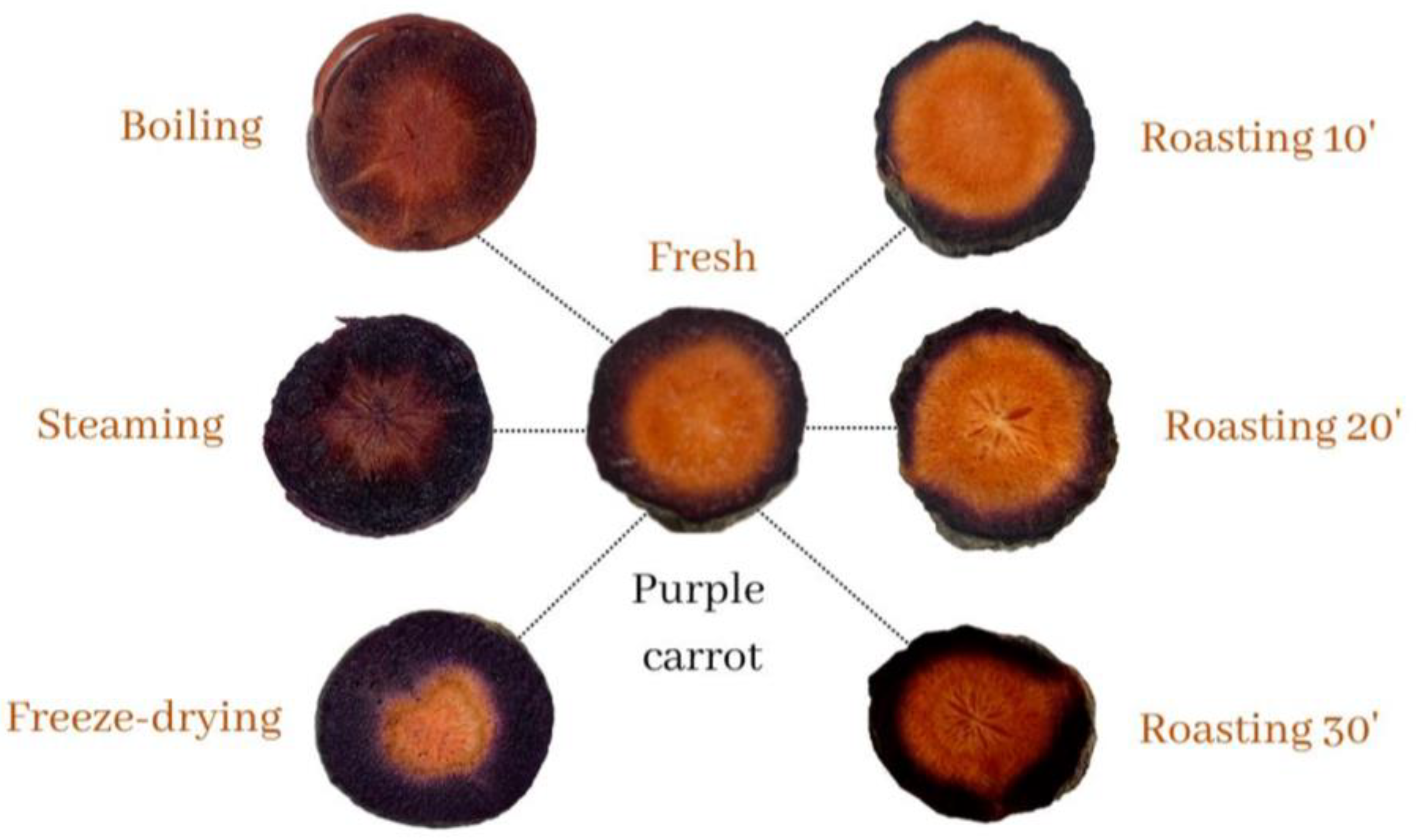
Brings out natural sweetness, especially in orange and yellow carrots. - Light steaming
Maintains color integrity, especially for purple carrots. - Raw serving (for children)
Works best when sliced thin or shaped differently.
What to avoid:
- Overboiling
→ Leads to color bleeding, especially from purple carrots - Heavy seasoning
→ Masks the natural differences between varieties
The goal is not complexity. It is clarity.
The Hidden Cost of “Trying Something New”
Rainbow carrots often fall into the category of “interesting but optional.”
That creates a common pattern:
- Buyers try them once
- They enjoy the appearance
- They do not adjust storage or usage habits
- The product loses quality
- They do not reorder
This is not a product issue—it is a usage gap.
What experienced buyers do differently:
- They buy smaller quantities first
- They test how long the product lasts in their environment
- They adjust ordering frequency instead of increasing volume
This is especially relevant for exotic vegetables in Dubai delivery systems, where logistics already add variability.
A Balanced Perspective: Benefits vs Limitations
Rainbow carrots are often presented as a “better” option. That framing is incomplete.
Benefits:
- Encourages vegetable consumption (especially among children)
- Enhances presentation without extra effort
- Offers broader nutrient diversity
- Aligns well with winter-season supply strength
Limitations:
- Shorter perceived shelf life if handled poorly
- Higher cost compared to standard carrots
- Inconsistent availability outside peak months
- Not always necessary for bulk cooking
Understanding both sides helps buyers make decisions based on context—not trends.
What This Means for Dubai Buyers in 2026
The UAE produce market is evolving.
Consumers are:
- More aware of variety
- More selective about quality
- More willing to experiment—but less tolerant of waste
At the same time, suppliers are:
- Improving sourcing networks
- Expanding seasonal offerings
- Standardizing specialty produce categories
Rainbow carrots sit at the intersection of these shifts.
They are not a novelty anymore—but they are not yet a staple either.
Final Thoughts
Carrots may seem simple.
But when you look closer, they reveal how modern produce systems actually work—through seasonality, sourcing decisions, handling practices, and buyer expectations.
Rainbow carrots are a small example of a larger pattern:
When presentation improves, consumption often follows.
When handling improves, consistency follows.
For families, they offer a practical way to make vegetables more engaging.
For businesses, they offer a low-effort upgrade in presentation.
The value is not in the color itself.
It is in how that color changes behavior.
Frequently Asked Questions (FAQ)
1. Are rainbow carrots healthier than regular carrots?
Not significantly. They offer a wider range of nutrients due to different pigments, but overall nutritional value is comparable.
2. Where can I find rainbow carrots in Dubai?
They are usually available through specialty grocers and wholesale produce suppliers, especially during winter months.
3. Why are rainbow carrots sometimes unavailable?
Availability depends on import cycles, seasonal production, and demand from restaurants and catering businesses.
4. How long do rainbow carrots last in the fridge?
Typically 5–7 days when stored properly in a cool, slightly humid environment.
5. Do rainbow carrots taste different?
Yes, slightly. Purple carrots are more earthy, yellow are milder, and orange are usually the sweetest.








 Home
Home  Whishlist
  Compare
  Checkout