












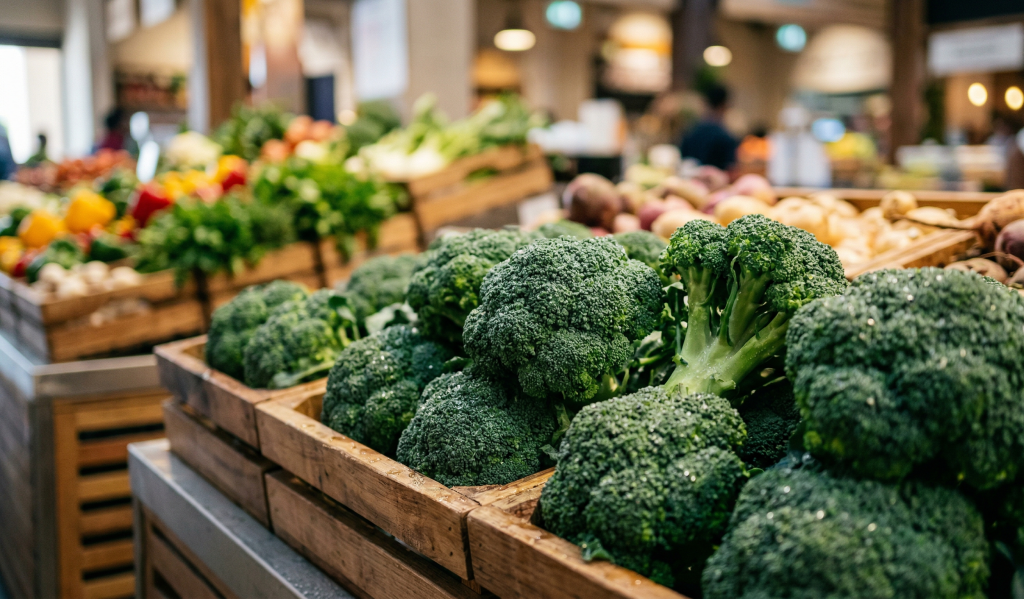
Introduction: Why This Simple Vegetable Causes So Much Confusion
Walk into any Dubai kitchen—whether it’s a hotel prep station in Business Bay or a family apartment in Mirdif—and you’ll find broccoli handled in completely different ways.
Some boil it until soft.
Some steam it lightly.
Some roast it with olive oil.
Others eat it raw, believing that “raw = healthiest.”
Yet behind these choices, there’s a quiet frustration many buyers and cooks share:
- “Why does broccoli lose its taste after cooking?”
- “Why does it go dull and watery?”
- “Am I actually destroying the nutrients?”
Across restaurant kitchens, catering operations, and home cooking setups in the UAE, broccoli is one of the most misunderstood vegetables—not because it is complex, but because it is handled casually.
And that casual handling leads to three real-world problems:
- Nutrient loss without people realizing it
- Increased waste due to overcooking
- Inconsistent taste and texture across batches
This article breaks down what actually happens when broccoli is cooked in different ways—and why one method consistently stands out when nutrient retention, taste, and kitchen practicality are all considered.
Why Broccoli Is So Sensitive to Cooking Methods
Broccoli is not just another green vegetable. It belongs to the cruciferous family, known for compounds like glucosinolates—natural plant chemicals linked to health benefits.
But here’s the critical part most people overlook:
These compounds are extremely sensitive to heat and water.
That means how you cook broccoli matters more than how you season it.
The Two Key Factors That Affect Nutrients
When broccoli is cooked, two main things determine how much nutrition remains:
1. Water exposure
Water pulls nutrients out of broccoli. This is called leaching.
The more water involved, the more nutrients are lost.
2. Heat duration
Long cooking times break down delicate compounds.
The longer the heat exposure, the lower the nutritional value.
This is why the same broccoli can be:
- Nutrient-rich when lightly cooked
- Nearly depleted when overcooked
Boiling Broccoli: The Most Common Mistake in Dubai Kitchens
Boiling is still one of the most widely used methods, especially in:
- Bulk catering kitchens
- School meal prep
- Home cooking routines
It feels simple. It feels efficient.
But from a nutrient perspective, it is the weakest method.
What Actually Happens When You Boil Broccoli
When broccoli is submerged in boiling water:
- Water-soluble vitamins (like vitamin C) dissolve into the water
- Glucosinolates break down rapidly
- Texture becomes soft and sometimes mushy
In many cases, the cooking water—now full of nutrients—is discarded.
Real-World Impact
From a supply and cost perspective, this matters more than it seems:
- Buyers pay for fresh, high-quality broccoli
- Improper cooking reduces its nutritional return
- Overcooked batches are more likely to be rejected in food service
In hotel kitchens across Dubai, this often leads to:
- Higher food waste
- Re-cooking cycles
- Inconsistent plating quality
Boiling is not “wrong,” but it is rarely optimal—especially when better alternatives exist.
Steaming Broccoli: Where Nutrition and Practicality Meet
If there is one method that consistently performs well across both home and professional kitchens, it is steaming.
Not because it is trendy—but because it respects how broccoli is structured.
Why Steaming Works
Steaming avoids the two biggest problems:
- Minimal water contact → reduces nutrient loss
- Short cooking time → preserves delicate compounds
Instead of submerging broccoli, steam gently cooks it through heat transfer in air.
What You Get with Proper Steaming
- Bright green color
- Firm but tender texture
- Better retention of key nutrients
- Cleaner, fresher taste
In procurement discussions with chefs and kitchen managers, this method often comes up as the “safe standard”—especially when consistency matters across multiple batches.
The Ideal Steaming Window
Most professionals agree on a simple rule:
- 3 to 5 minutes of steaming is enough
Anything beyond that begins to shift toward overcooking.
Roasting Broccoli: Flavor vs Nutrition Trade-Off
Roasting has become increasingly popular in Dubai, especially in:
- Modern cafés
- Brunch menus
- Home cooking influenced by Western recipes
And for good reason—it transforms broccoli’s flavor.
What Roasting Does Well
- Adds depth and slight sweetness
- Creates crispy edges
- Improves overall appeal for customers
This is why roasted broccoli appears frequently in plated dishes.
But There Is a Trade-Off
Roasting uses:
- Higher temperatures
- Longer cooking times
This can reduce some heat-sensitive nutrients.
However, it does not involve water, which means fewer nutrients are lost through leaching compared to boiling.
Where Roasting Fits in Practice
Roasting is not the best method for maximum nutrient retention.
But it is one of the best methods for:
- Increasing consumption
- Improving taste acceptance
- Reducing plate waste
In real kitchens, this matters.
Because food that is not eaten—no matter how nutritious—is wasted value.
Raw Broccoli: Is It Really the Healthiest Option?
There is a common assumption across fitness communities and health-conscious buyers in Dubai:
“Raw vegetables are always better.”
With broccoli, the reality is more nuanced.
Benefits of Eating Broccoli Raw
- No heat damage to nutrients
- Maximum preservation of natural compounds
But There Are Limitations
Raw broccoli can be:
- Hard to digest for some people
- Bitter in taste
- Less appealing in large quantities
This leads to a practical issue:
People often eat less of it.
The Real Question Isn’t “Raw vs Cooked”
It is:
“Which method allows consistent consumption while preserving most nutrients?”
Because long-term dietary patterns matter more than single meals.
The One Method That Balances Everything
Across nutrition discussions, kitchen trials, and procurement feedback, one conclusion appears repeatedly:
Light steaming offers the best balance between nutrient retention, taste, and usability.
Not perfect.
But consistently reliable.
It avoids:
- Excess water loss
- Excess heat damage
- Texture breakdown
And it works across:
- Home kitchens
- Restaurant prep
- Bulk cooking environments
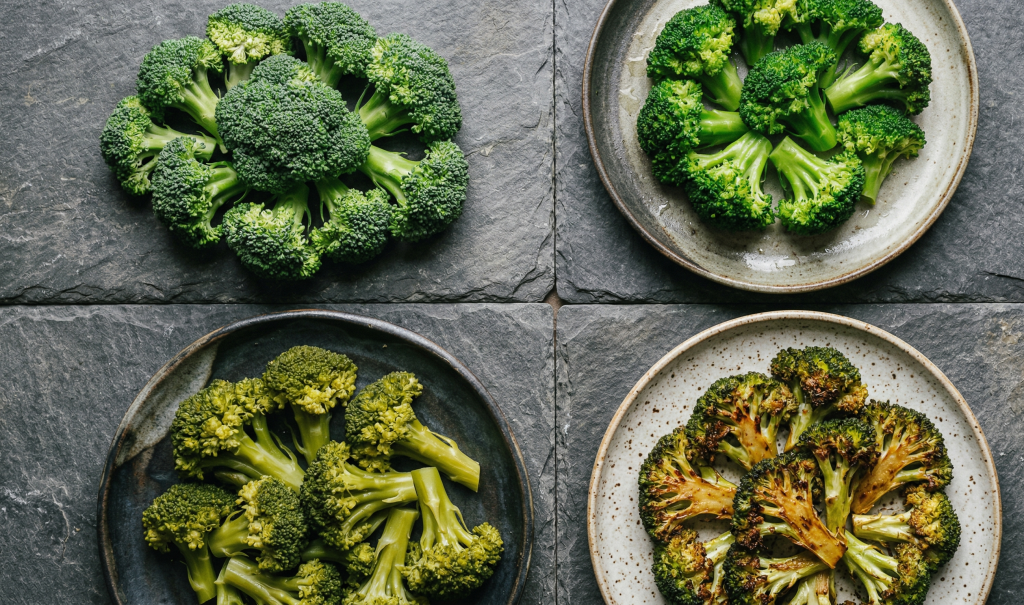
What Most People Still Get Wrong About Steaming Broccoli
Even when people switch to steaming, the results are often inconsistent.
The issue is not the method itself—it’s how it is executed.
Across UAE kitchens, three mistakes show up repeatedly:
1. Overcrowding the Steamer
When too much broccoli is placed in one layer:
- Steam cannot circulate evenly
- Some florets overcook while others stay raw
This is common in bulk kitchens where speed is prioritized over spacing.
Practical fix:
Use shallow layers or cook in batches. Consistency improves immediately.
2. Steaming for Too Long
Many people treat steaming like boiling—leaving broccoli for 8–10 minutes.
At that point:
- Texture softens too much
- Color fades
- Nutritional value starts dropping
Practical fix:
Stop at the moment broccoli turns bright green and slightly tender.
3. Not Cooling After Cooking
In professional kitchens, broccoli often sits in residual heat after steaming.
This continues the cooking process even after heat is turned off.
Practical fix:
- Remove immediately from heat
- Let it cool briefly or serve right away
This small step helps maintain both texture and nutrients.
From Farm to Kitchen: Why Cooking Method Starts at Sourcing
One insight that rarely gets discussed in cooking guides is this:
The way broccoli is cooked is directly influenced by how it was sourced.
In Dubai’s produce market, broccoli comes from:
- Local greenhouse farms (limited seasonal supply)
- Imports from Europe, Asia, and Africa
Each source affects:
- Moisture content
- Stem density
- Shelf life
- Cooking response
Why This Matters in Practice
Lower-quality broccoli tends to:
- Lose firmness faster
- Turn yellow quickly
- Become mushy even with correct cooking
This leads many kitchens to overcook it—trying to “fix” texture issues.
But overcooking only worsens the outcome.
Wholesale vs Retail Broccoli: Does It Change Cooking Outcomes?
This is a common question among:
- Restaurant buyers
- Catering managers
- Bulk procurement teams
Is wholesale broccoli different from supermarket broccoli?
The answer is not about the label—it is about handling.
Key Differences Buyers Notice
1. Time Since Harvest
Wholesale supply chains often move faster.
- Fresher broccoli holds structure better
- Requires less cooking time
2. Storage Conditions
Improper cold chain handling leads to:
- Moisture loss
- Early spoilage
- Weak texture
3. Batch Consistency
Retail purchases can vary widely between trips.
Wholesale batches are usually more uniform.
Real-World Consequence in Kitchens
When broccoli quality is inconsistent:
- Cooking times become unpredictable
- Staff rely on guesswork
- Nutrient retention becomes secondary
In practice, suppliers working closely with Dubai-based distributors such as JMB Farm Fresh often observe that kitchens with consistent sourcing tend to adopt lighter cooking methods naturally—because the product allows it.
Seasonal Reality: Broccoli Supply in the UAE
Unlike leafy greens that can be grown locally year-round, broccoli availability in the UAE depends heavily on imports.
Peak Supply Periods
Broccoli is most stable during:
- UAE winter months (November to March)
- Cooler supply regions internationally
During this time:
- Texture is firmer
- Flavor is more balanced
- Shelf life is longer
Off-Season Challenges
During hotter months:
- Supply routes shift
- Transit times may increase
- Quality variability becomes more noticeable
This leads to:
- Faster spoilage
- Increased trimming waste
- Greater reliance on cooking adjustments
How This Affects Cooking Choice
In peak season:
- Light steaming works consistently
- Minimal intervention needed
In off-season:
- Slightly longer steaming may be required
- Quality checks become more important
Understanding this helps kitchens avoid overcompensating with aggressive cooking.
Common Mistakes That Reduce Broccoli Value (Across Homes and Businesses)
Across both households and commercial kitchens, the same patterns appear repeatedly:
Mistake 1: Treating All Vegetables the Same
Broccoli is often cooked like carrots or beans.
But its structure is different.
It requires gentler handling.
Mistake 2: Ignoring Cut Size
Large florets cook unevenly.
- Outer layers soften
- Inner sections stay raw
Better approach:
- Cut into evenly sized pieces
- Keep stems usable but trimmed properly
Mistake 3: Delayed Use After Purchase
Broccoli loses quality quickly if not stored properly.
After a few days:
- Texture weakens
- Cooking results worsen
Mistake 4: Overcompensating with Heat
When broccoli looks slightly old, people:
- Boil longer
- Roast harder
This destroys both flavor and nutrients.
Practical Cooking Guidelines That Actually Work
For those looking for a consistent approach, the following method is widely used in both home kitchens and professional environments:
Step-by-Step Approach
1. Start with fresh broccoli
- Firm stems
- Tight florets
- Deep green color
2. Cut evenly
- Medium-sized florets
- Uniform shape for even cooking
3. Steam lightly (3–5 minutes)
- Use a steamer basket
- Avoid water contact
4. Stop cooking early
- Bright green color is your signal
- Slight firmness should remain
5. Serve or cool immediately
- Avoid residual heat cooking
This approach balances:
- Nutrient retention
- Texture quality
- Operational efficiency
Why This Matters Beyond Nutrition
For many buyers in Dubai—especially in hospitality and catering—the goal is not just nutrition.
It is:
- Consistency across servings
- Reduced waste
- Better customer experience
Cooking broccoli correctly supports all three.
A poorly cooked batch leads to:
- Uneaten portions
- Rejected dishes
- Increased cost per plate
A well-cooked batch, even if simple, delivers:
- Better acceptance
- Cleaner presentation
- Higher perceived quality
The Bigger Picture: Cooking Is Part of the Supply Chain
One of the most overlooked truths in the fresh produce industry is this:
The value of produce is finalized in the kitchen—not at the point of purchase.
You can source high-quality broccoli.
But if it is overcooked, that value is lost.
You can also source average-quality broccoli.
But with proper handling, you can still extract reasonable value.
The goal is alignment:
- Good sourcing
- Proper storage
- Correct cooking method
When these align, results become predictable.
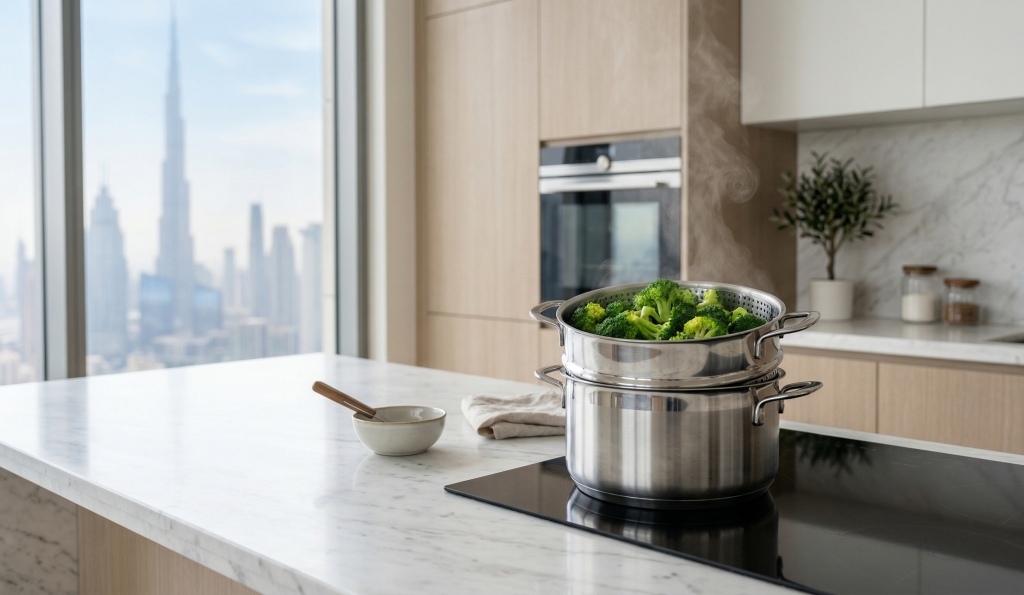
When Different Cooking Methods Actually Make Sense
While light steaming stands out as the most balanced method, real kitchens are not theoretical environments.
Different use cases call for different approaches.
Understanding when to use each method is more useful than forcing a single rule.
When Steaming Is the Best Choice
Steaming works best when:
- Nutrition retention is a priority
- Broccoli is served as a side or base vegetable
- Batch consistency matters (buffets, meal prep, catering)
This is why many hotel kitchens default to steaming for standard service.
When Roasting Makes More Sense
Roasting becomes useful when:
- Flavor needs to be elevated
- Broccoli is part of a composed dish
- Customer acceptance is more important than nutrient optimization
In casual dining and brunch concepts across Dubai, roasted broccoli often performs better on the plate—even if it sacrifices some nutrients.
When Raw Works Well
Raw broccoli fits in:
- Salads
- Slaws
- Health-focused meal prep
But it requires proper preparation (thin slicing, pairing with dressing) to be enjoyable.
Otherwise, it often ends up uneaten.
When Boiling Still Has a Role
Boiling is not completely irrelevant.
It can still be used for:
- Soups and purées (where cooking water is retained)
- Very large-scale cooking where speed is critical
But for standalone broccoli dishes, it remains the least efficient method nutritionally.
A Simple Decision Framework for Buyers and Kitchens
For those managing food operations, this simplified framework helps:
- If consistency + nutrition matter → Steam
- If flavor + presentation matter → Roast
- If freshness + crunch matter → Raw
- If volume + speed matter → Boil (with caution)
This removes guesswork and helps standardize outcomes.
What Dubai Buyers Should Pay Attention to Before Cooking
Cooking method alone cannot fix poor input quality.
Experienced buyers in the UAE tend to evaluate broccoli before it even reaches the kitchen.
Key Freshness Indicators
- Tight, compact florets
- No yellowing or soft spots
- Firm, hydrated stems
- Clean, earthy smell (not sour)
Why This Matters for Cooking
Fresh broccoli:
- Requires less cooking time
- Retains structure better
- Holds nutrients more effectively
Lower-quality broccoli:
- Breaks down faster
- Encourages overcooking
- Leads to inconsistent results
Storage Also Affects Cooking Outcomes
Even high-quality broccoli can degrade quickly if:
- Stored at incorrect temperatures
- Left exposed to dry air
- Held too long before use
This is a common issue in both homes and smaller food businesses.
A Note on Organic vs Conventional Broccoli in the UAE
Another frequent question among buyers:
Does organic broccoli cook differently?
From a cooking perspective, the difference is minimal.
However:
- Organic broccoli may have slightly more variability in size
- Shelf life can sometimes be shorter due to fewer preservatives
The cooking method remains the same.
The bigger factor is still freshness and handling—not labeling.
The Quiet Shift in Dubai’s Food Culture
Over the past few years, there has been a noticeable shift in how vegetables like broccoli are treated in Dubai:
- More awareness of nutrient retention
- Increased focus on minimal cooking
- Greater demand for consistent quality
This is especially visible in:
- Health-focused cafés
- Meal prep services
- Premium catering operations
These kitchens are not just cooking differently—they are sourcing differently as well.
Some UAE buyers now prefer working with structured supply chains instead of fragmented retail sourcing, as it reduces variability and allows better control over how produce behaves during cooking.
Final Thought: The Best Method Is the One You Can Execute Consistently
It is easy to look for a “perfect” method.
But in practice, consistency matters more than perfection.
Light steaming stands out because it is:
- Repeatable
- Reliable
- Easy to standardize
That is why it continues to be the preferred method across both professional kitchens and well-informed households.
Not because it is trendy.
But because it works.
Frequently Asked Questions (FAQ)
1. What is the best way to cook broccoli to keep nutrients in the UAE climate?
Light steaming for 3–5 minutes is widely considered the most effective method. It limits water exposure and reduces heat damage, helping preserve key nutrients while maintaining texture.
2. Is steamed broccoli better than boiled broccoli?
Yes. Steaming uses minimal water, which helps prevent nutrient loss. Boiling causes water-soluble vitamins to leach into the cooking water, reducing overall nutritional value.
3. Does roasting broccoli destroy nutrients?
Roasting can reduce some heat-sensitive nutrients due to higher temperatures. However, it retains more nutrients than boiling and improves taste, which can increase consumption.
4. Can I eat broccoli raw for maximum health benefits?
Raw broccoli retains all nutrients, but it may be harder to digest and less appealing in large amounts. Light steaming often provides a better balance between nutrition and usability.
5. How do I know if broccoli is fresh before cooking?
Look for tight green florets, firm stems, and no yellowing. Fresh broccoli cooks more evenly and retains nutrients better than older, degraded produce.








 Home
Home  Whishlist
  Compare
  Checkout