












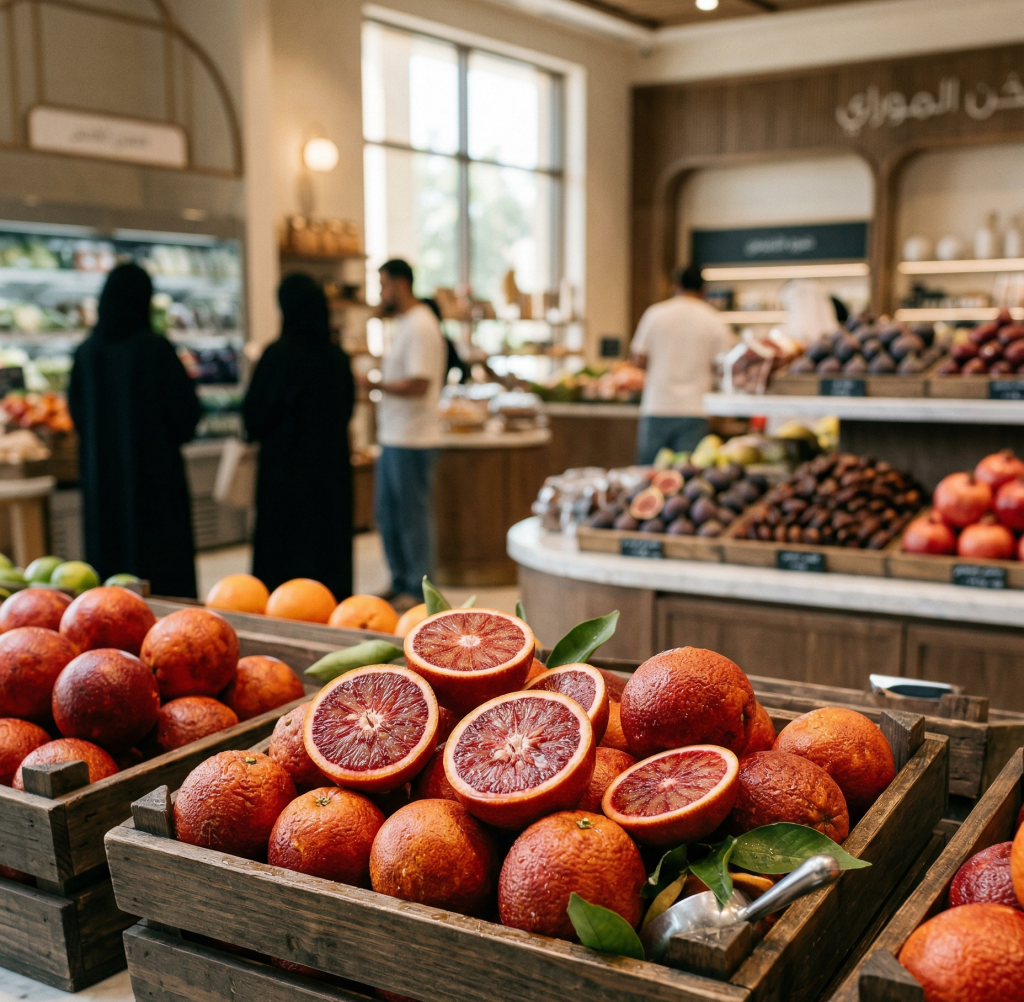
Introduction: A Fruit That Returns Quietly — But Never Goes Unnoticed
Every winter, something interesting happens across Dubai’s fresh produce market.
Buyers who usually stick to familiar citrus — oranges, mandarins, lemons — start asking for something more specific. Not sweeter. Not cheaper. Just… different.
That’s where blood oranges come in.
Search interest for blood orange Dubai rises sharply during the cooler months. Restaurants begin adjusting menus. Juice bars rotate seasonal blends. Even household buyers, who rarely experiment with citrus, start asking suppliers the same question:
“Are blood oranges available yet?”
What makes this shift worth paying attention to is not hype. It’s behavior.
Unlike trend-driven superfoods that come and go, blood oranges return every year — and demand keeps growing, especially among Dubai’s health-conscious consumers and hospitality buyers.
To understand why, you need to look beyond their color.
What Makes Blood Oranges Different From Regular Oranges?
4
At first glance, the difference seems cosmetic.
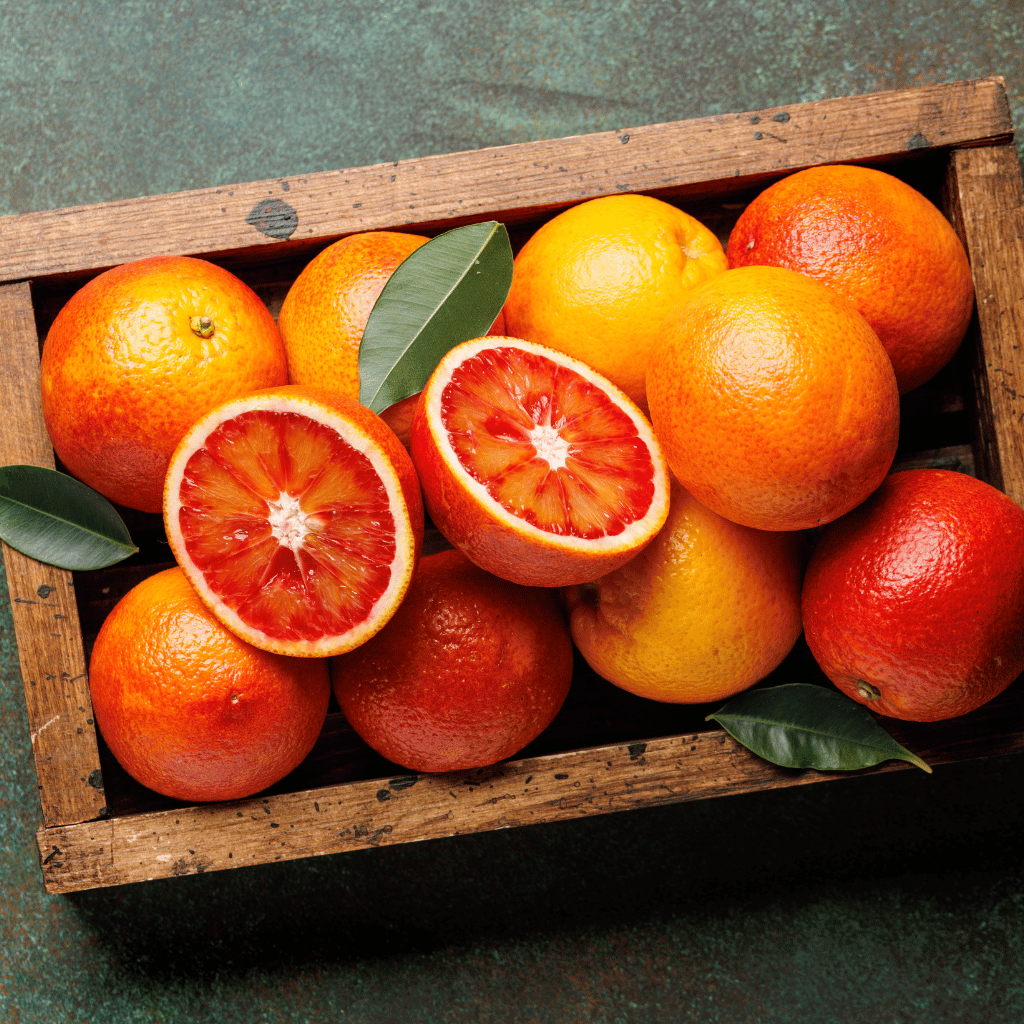
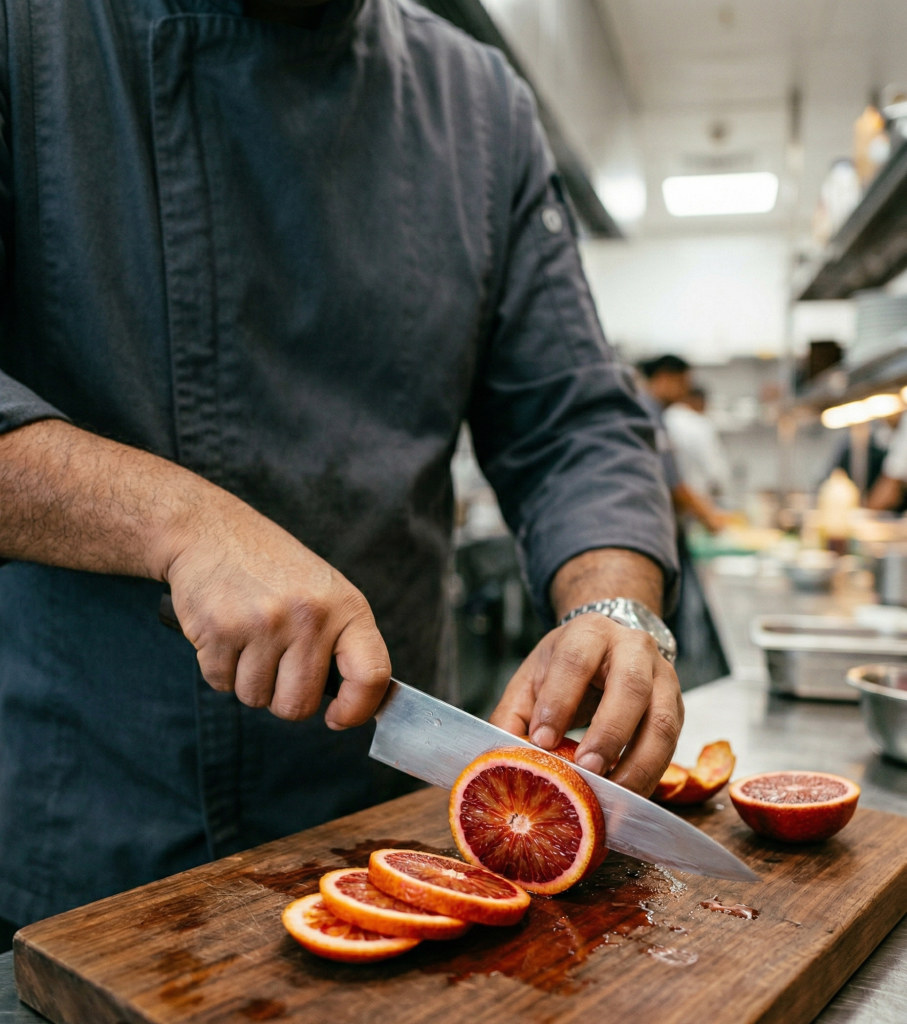
Cut open a blood orange, and the deep red or maroon flesh stands out immediately. But that color isn’t just visual appeal — it reflects a different growing process and chemical composition.
The Role of Climate in Color and Flavor
Blood oranges develop their signature color due to anthocyanins — natural pigments also found in berries.
But here’s the detail many buyers miss:
Anthocyanins only develop under specific temperature conditions — warm days and cold nights.
That’s why most blood oranges in Dubai are imported from regions like:
- Italy (especially Sicily)
- Spain
- Occasionally Turkey
Without these temperature swings, the fruit may look like a regular orange inside, even if labeled otherwise.
Flavor Profile: Not Just “Sweeter”
Buyers often expect blood oranges to be simply sweeter. That’s not accurate.
A well-grown blood orange has:
- A balanced sweet-tart profile
- Subtle berry-like notes
- Less sharp acidity than some standard citrus varieties
For chefs and juice bars, this matters. It changes how the fruit behaves in recipes — especially in:
- Fresh juices
- Mocktails
- Salad dressings
- Dessert garnishes
Why Blood Oranges Peak During UAE Winter
4
In the UAE, blood oranges are a strictly seasonal product.
Typical Availability Window
Most supply enters Dubai between:
- Late December
- Peak in January–February
- Tapers off by March
Outside this window, availability becomes inconsistent — and often overpriced.
Why Timing Matters for Buyers
Many retail buyers assume citrus is always available at stable pricing. That’s true for standard oranges.
But blood oranges behave differently because:
- They are imported, not locally grown
- Harvest windows in origin countries are short
- Quality drops quickly outside peak season
For procurement teams, this creates a common challenge:
Ordering too early = inconsistent color and flavor
Ordering too late = higher prices and limited stock
The Real Reason Dubai’s Health Crowd Is Choosing Blood Oranges
The interest in blood oranges isn’t just about aesthetics or novelty.
It ties into how Dubai’s consumers approach food — especially in the wellness and fitness space.
1. Visual Nutrition (Yes, It Matters More Than You Think)
In Dubai’s café and fitness culture, presentation plays a role in perceived quality.
Blood oranges:
- Stand out in juices and smoothie bowls
- Create strong contrast in plated dishes
- Signal “premium” without needing explanation
For businesses, this reduces the need for explanation on menus.
2. Perceived Health Value vs Actual Understanding
Many consumers associate the deep red color with:
- Higher antioxidants
- Better health value
While there is some truth to this (due to anthocyanins), most buyers don’t fully understand the difference.
This leads to a pattern seen across forums and discussions:
- People are willing to pay more
- But don’t always know how to select good-quality fruit
3. Seasonal Eating Trends Are Growing
Dubai’s market has shifted over the past few years.
More buyers now ask:
- “Is this in season?”
- “Where is it coming from?”
- “Is this fresh shipment or old stock?”
Blood oranges fit naturally into this mindset because:
- Their availability is limited
- Their quality varies noticeably across weeks
Common Buyer Mistakes When Purchasing Blood Oranges
Despite growing demand, there’s still a gap in understanding how to buy them properly.
This leads to avoidable issues — especially for restaurants and bulk buyers.
Mistake 1: Judging Only by External Color
Many expect a dark red peel.
In reality:
- Some high-quality blood oranges look almost like regular oranges from outside
- The real color is inside
Relying on peel color alone often leads to incorrect assumptions.
Mistake 2: Ignoring Origin
Not all imported batches are equal.
For example:
- Early shipments from Spain may have lighter pigmentation
- Peak-season Italian fruit tends to have deeper color and stronger flavor
Without checking origin, buyers may experience inconsistent results.
Mistake 3: Treating Them Like Standard Oranges in Storage
Blood oranges are more sensitive to:
- Temperature fluctuations
- Prolonged storage
Improper handling can result in:
- Flavor loss
- Dry texture
- Reduced juice yield
For hospitality businesses, this directly affects customer experience.
Mistake 4: Buying Based on Price Alone
This is especially common in wholesale environments.
Lower-priced batches may:
- Come from late harvests
- Have weak internal color
- Offer inconsistent taste
Short-term savings often lead to:
- Higher waste
- Customer dissatisfaction
- Menu inconsistency
Wholesale vs Retail: Where Blood Orange Quality Actually Differs
This is one of the most misunderstood areas among buyers in Dubai.
There’s a common assumption:
“Supermarket quality is better than wholesale.”
In practice, that’s not always true.
How Supply Chains Work
Both retail and wholesale often source from:
- The same import shipments
- The same distributors
The difference lies in:
- Sorting standards
- Storage duration
- Handling processes
Where Wholesale Can Be Better
Experienced wholesale suppliers:
- Move stock faster
- Store produce for shorter periods
- Maintain better batch traceability
In practice, suppliers working closely with Dubai-based distributors such as JMB Farm Fresh often observe that faster turnover leads to more consistent freshness, especially for seasonal fruits like blood oranges.
Where Retail Has an Advantage
Retail stores:
- Offer smaller quantities
- Provide visual selection for consumers
But slower turnover can sometimes mean:
- Older stock on display
- Less predictable quality
Why Prices Fluctuate More Than Buyers Expect
Blood orange pricing in Dubai is rarely stable during the season.
This confuses many buyers — especially those new to seasonal sourcing.
Key reasons include:
- Limited harvest windows
- Import logistics timing
- Variation in crop quality
- Demand spikes during peak weeks
A common pattern:
- Early season → higher price, lower color intensity
- Mid-season → best value and quality
- Late season → inconsistent supply, rising price
Understanding this cycle helps buyers avoid overpaying for suboptimal fruit.
How to Actually Judge Blood Orange Quality (Beyond Appearance)
4
For most buyers, especially outside the produce trade, blood oranges are still unfamiliar territory.
They don’t behave exactly like regular oranges. And if you rely on the usual signals — color, shine, size — you can easily get it wrong.
1. Weight Tells You More Than Color
Pick up two fruits of similar size.
The heavier one is usually:
- Juicier
- Fresher
- Better stored
Lightweight fruit often means:
- Moisture loss
- Older stock
- Lower juice yield
This is especially important for juice bars and cafés where consistency matters.
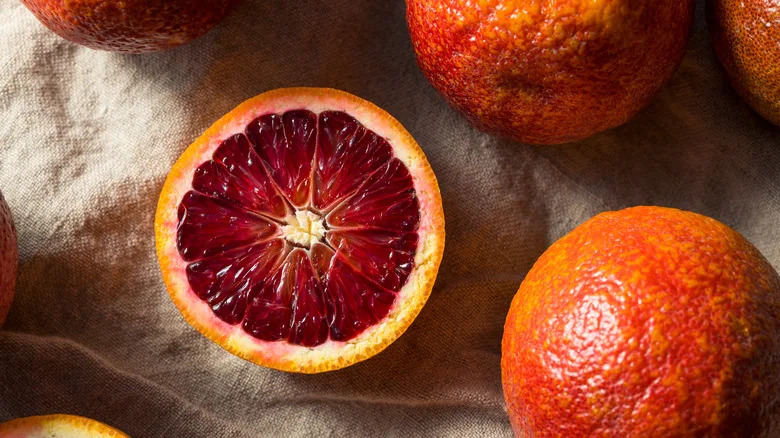
2. Internal Color Is Not Always Uniform
Even within the same batch:
- Some fruits may be deep red
- Others lightly streaked
This is normal.
What matters more is:
- Flavor balance
- Juice content
- Freshness
Over-focusing on “perfect red” often leads buyers to reject otherwise high-quality fruit.
3. Skin Texture Gives Subtle Clues
Look for:
- Slight firmness
- Natural texture (not overly waxy or shiny)
Avoid fruit that feels:
- Too soft (overripe)
- Too hard and dry (aged in storage)
4. Smell Test (Often Ignored)
Fresh citrus has a clean, slightly sharp aroma.
If the fruit smells:
- Flat → likely older
- Slightly fermented → improperly stored
This is a simple check many buyers overlook.
Real-World Use Cases: How Different Buyers Approach Blood Oranges
The way blood oranges are used varies significantly across Dubai’s food ecosystem.
Understanding this helps explain why demand keeps growing.
Restaurants and Hotels
For chefs, blood oranges are not a daily staple — they’re a seasonal upgrade.
They are used for:
- Garnishing plated dishes
- Adding color contrast in salads
- Creating limited-time menu items
The key concern here is consistency.
A chef cannot serve a dish expecting deep red slices and receive pale fruit instead. This is why sourcing decisions matter more than price.
Juice Bars and Cafés
This is where blood oranges really shine.
They are used in:
- Fresh juices
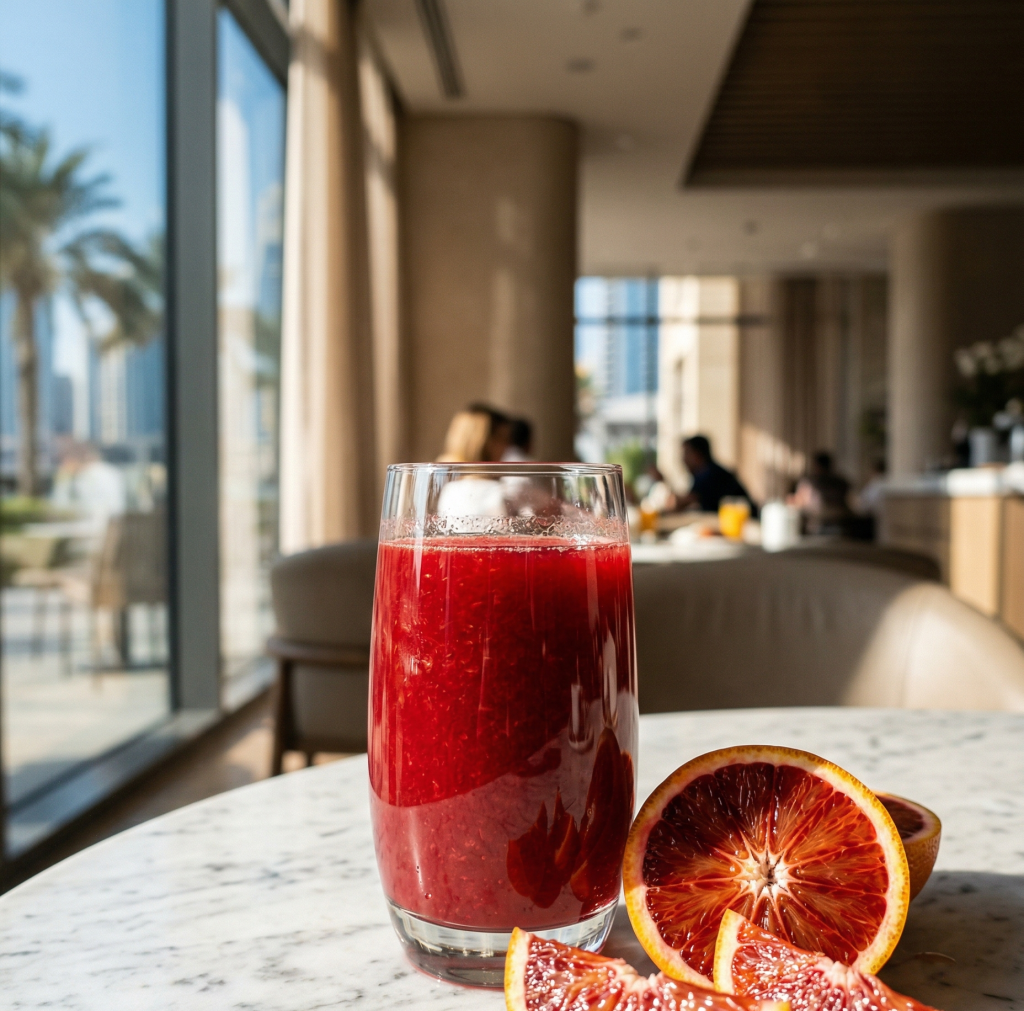
- Detox blends
- Mocktails
The appeal is both visual and experiential.
A blood orange juice:
- Looks richer
- Tastes more layered
- Feels “premium” without explanation
However, inconsistency in supply can disrupt menu offerings.
Grocery Buyers and Families
For household consumers, the interest is slightly different.
They are drawn by:
- Curiosity
- Health perception
- Social media exposure
But they often face challenges:
- Not knowing how to pick good fruit
- Paying premium prices for average quality
- Buying out-of-season stock
Catering and Bulk Buyers
For caterers, the focus is practical:
- Availability
- Shelf life
- Cost control
Blood oranges are used selectively, often for:
- Events
- Seasonal menus
Here, the risk is over-ordering and facing spoilage.
Storage and Handling: Where Most Losses Happen
This is one of the least discussed but most important areas.
Many buyers assume citrus is “easy to store.” That’s only partly true.
Blood oranges are more sensitive than standard varieties.
Ideal Storage Conditions
- Cool temperature (not freezing)
- Stable environment (no frequent temperature shifts)
- Good airflow
What Goes Wrong in Practice
In real-world supply chains, common issues include:
- Over-stocking during peak season
- Improper refrigeration
- Delayed usage in kitchens
This leads to:
- Dry segments
- Loss of flavor
- Reduced visual appeal
For businesses, this directly affects:
- Customer perception
- Food cost
- Waste levels
Shelf Life Expectations
Compared to regular oranges:
- Blood oranges have a shorter optimal window
Best practice:
- Use within a few days of peak freshness
- Avoid holding large inventory unless turnover is fast
Import vs Local: Why Blood Oranges Remain a Premium Category
Dubai’s produce market is a mix of local and imported supply.
But blood oranges remain firmly in the imported category.
Why They Are Not Locally Grown at Scale
The UAE climate:
- Lacks the temperature variation needed
- Does not support anthocyanin development naturally
This makes large-scale local production unlikely.
What This Means for Buyers
- Supply depends entirely on international harvests
- Logistics timing affects freshness
- Pricing reflects import costs and availability
Understanding “Fresh Shipment” vs “Old Stock”
This is a critical distinction often missed by buyers.
Fresh shipments:
- Better color
- Stronger flavor
- Higher juice content
Older stock:
- Faded internal color
- Drier texture
- Less vibrant taste
Asking suppliers about arrival timing can make a noticeable difference in quality.
The Subtle Tradeoff: Premium Appeal vs Practical Use
Blood oranges sit in an interesting position in the market.
They are:
- Not essential
- Not the cheapest
- Not always consistent
Yet demand keeps rising.
Why?
Because they offer something that standard citrus does not:
- Visual differentiation
- Seasonal exclusivity
- Slightly more complex flavor
But this comes with tradeoffs.
When They Make Sense
- Seasonal menus
- Premium juice offerings
- Limited-time features
When They May Not Be Ideal
- High-volume daily use
- Cost-sensitive operations
- Situations requiring strict consistency
A Quiet Shift in Buyer Behavior
Across industry discussions and buyer forums, a clear shift is visible.
More buyers are moving away from:
- Generic purchasing
- Price-only decisions
And toward:
- Seasonal awareness
- Origin-based selection
- Supplier relationships
Some UAE buyers prefer working with established wholesale produce providers rather than fragmented retail sourcing, especially when dealing with seasonal imports that require consistent handling.
This is not about scale. It’s about predictability.
How to Buy Blood Oranges in Dubai Without Getting Burned
For many buyers, the challenge is not finding blood oranges.
It’s finding the right ones, at the right time, in the right condition.
The difference between a good batch and a disappointing one is rarely obvious at first glance — but it becomes very clear after cutting or juicing.
A Practical Buying Framework
Instead of relying on guesswork, experienced buyers tend to follow a simple checklist:
1. Ask About Arrival Timing
Fresh shipments matter more than anything else.
A batch that arrived 1–2 days ago will behave very differently from one that has been sitting for a week.
2. Check a Sample Internally (When Possible)
Especially for bulk orders:
- Cut one fruit
- Check color depth
- Taste for balance
This small step prevents large-scale disappointment.
3. Understand the Season Phase
- Early season → inconsistent color
- Mid-season → best balance
- Late season → declining quality
Timing your purchase around mid-season often reduces risk.
Small Buyers vs Bulk Buyers: Different Strategies
For households:
- Buy smaller quantities more frequently
- Prioritize freshness over price
For businesses:
- Align orders with menu cycles
- Avoid over-committing to seasonal items
- Work with suppliers who provide batch-level clarity
The Hidden Cost of Getting It Wrong
When buyers choose incorrectly, the impact goes beyond just taste.
For Businesses
- Menu inconsistency
A dish that looks different each time affects brand perception - Higher waste
Dry or flavorless fruit often gets discarded - Customer dissatisfaction
Especially in premium or health-focused settings
For Households
- Paying premium prices for average fruit
- Losing trust in seasonal products
- Avoiding future purchases altogether
This is why many first-time buyers don’t return to blood oranges — not because the fruit is overrated, but because the batch they tried wasn’t at its best.
Are Blood Oranges Actually Worth the Price?
This depends entirely on how they are used.
Where They Deliver Value
- When used fresh, at peak season
- When visual presentation matters
- When flavor nuance is noticeable (juices, salads, desserts)
Where They Don’t
- When used as a substitute for regular oranges
- When bought out of season
- When quality is inconsistent
In simple terms:
Blood oranges are not a daily fruit. They are a seasonal upgrade.
And like most seasonal upgrades, their value depends on timing and sourcing.
Final Thoughts: A Seasonal Fruit That Rewards Attention
Blood oranges are not complicated — but they are specific.
They require:
- Awareness of seasonality
- Basic understanding of quality signals
- A bit more care in sourcing
In return, they offer something that standard citrus does not:
- Depth of flavor
- Visual distinction
- A sense of seasonality that many buyers are now actively seeking
As Dubai’s food culture continues to mature, these small shifts in buying behavior are becoming more noticeable.
People are not just buying fruit anymore.
They are paying attention to:
- When it arrives
- Where it comes from
- How it behaves after purchase
And blood oranges sit right at the center of that change.
FAQ: Blood Oranges in Dubai
1. When are blood oranges available in Dubai?
They are typically available from late December to early March, with peak quality in January and February.
2. Why are blood oranges more expensive than regular oranges?
They are imported, have shorter harvest windows, and require specific growing conditions, which increases supply limitations.
3. How can I tell if a blood orange is good quality?
Choose fruit that feels heavy for its size, firm to touch, and ideally check internal color if possible.
4. Can blood oranges be used like regular oranges?
Yes, but they are better suited for fresh consumption, juices, and dishes where flavor and color matter.
5. Why is the inside sometimes not very red?
Color depends on growing conditions. Not all blood oranges develop deep pigmentation, even if they are fresh.








 Home
Home  Whishlist
  Compare
  Checkout