













The demand for high-quality berries in Dubai continues to grow in 2026. From hotel breakfast buffets to home smoothie bowls, berries are no longer a luxury item reserved for five-star kitchens. They are a daily staple across restaurants, catering companies, retail shelves, and family homes.
But buying berries in Dubai is not as simple as choosing what looks good on display.
Seasonality, import routes, storage temperature, transport time, and market demand all influence quality and pricing. Many buyers—especially new restaurant owners and families—often ask the same questions:
- Why do berry prices change so quickly?
- Are imported berries fresher than regional supply?
- How do I judge real freshness?
- Is wholesale quality different from supermarket quality?
This guide breaks down the best seasonal berries UAE buyers can expect in 2026, with practical insight from real-world supply patterns. Whether you manage procurement for a hotel, run a café, or shop for your family, understanding seasonality reduces waste, protects margins, and improves taste.
Understanding Berry Seasonality in the UAE
Unlike temperate countries with defined growing seasons, the UAE relies heavily on imports for berries. However, that does not mean seasonality is irrelevant.
Seasonality in the UAE depends on:
- Import origin harvest cycles
- Air freight vs sea freight logistics
- Regional winter farming conditions
- Demand spikes (especially during Ramadan and tourism season)
Why Winter Is the Peak Berry Season
From November to March, berry quality in Dubai generally improves. This period aligns with:
- Cooler European harvest cycles
- Regional production from nearby countries
- Strong demand from hospitality and events
Winter is when strawberries UAE winter supply is typically at its best in both flavor and firmness.
Summer, by contrast, presents more risk. Higher temperatures increase transit stress, which affects shelf life. Even with cold-chain logistics, berries are delicate.
Buyers who ignore seasonality often experience:
- Faster spoilage
- Inconsistent sweetness
- Shrinking margins due to waste
Understanding this pattern is essential for anyone sourcing seasonal berries UAE markets depend on.
Strawberries: The Winter Workhorse
Strawberries remain the most popular berries in Dubai across all buyer categories.
They are versatile, cost-accessible during peak season, and familiar to customers.
Peak Availability
- Best months: December to February
- Secondary availability: November and March
- Higher risk months: May to September
During UAE winter, strawberries are firmer, brighter, and naturally sweeter.
Common Buying Mistakes
Many buyers judge strawberries only by size. Larger berries often look impressive on display, but size alone does not indicate flavor.
Instead, look for:
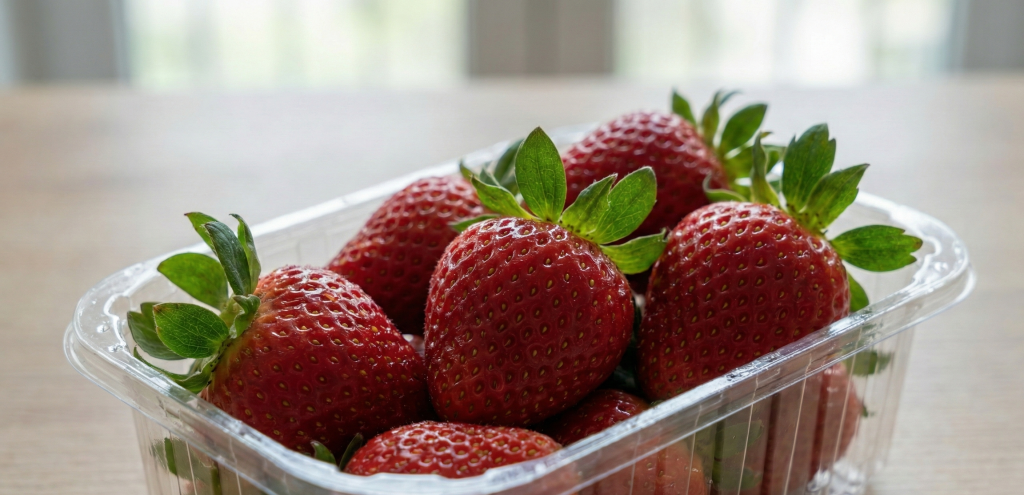
- Deep red color extending to the tip
- Fresh green caps (not dried or brown)
- No moisture pooling at the bottom of the crate
- Uniform firmness
Restaurants often over-order during winter because prices are more attractive. However, strawberries still have a limited shelf life—typically 3 to 5 days under correct refrigeration.
Poor rotation practices cause more losses than pricing volatility.
Wholesale vs Supermarket Quality
There is a common belief that supermarket strawberries are “better” than wholesale.
In reality, the difference often lies in:
- Handling
- Display temperature
- Stock turnover speed
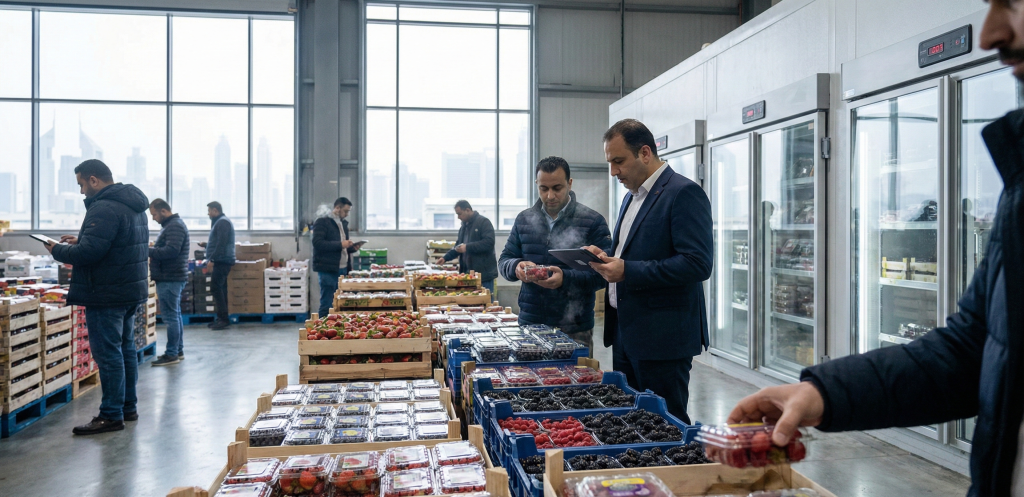
Wholesale markets supply both retail and hospitality buyers from similar import channels. The key variable is cold-chain discipline.
Suppliers working closely with Dubai-based distributors such as JMB Farm Fresh often emphasize storage consistency more than appearance alone. Temperature stability between 0–4°C makes a noticeable difference.
Blueberries: Small, Stable, and High Demand
Blueberries have seen steady growth in demand over the past five years. They are popular for smoothies, breakfast bowls, and dessert garnishing.
Unlike strawberries, blueberries generally tolerate transport better.
Availability Pattern
- Good quality: November to April
- Stable imports year-round
- Summer prices usually increase
Because blueberries are more resilient, they offer better margin stability for cafés and smoothie businesses.
What Buyers Often Overlook
Many buyers assume blueberries are always sweet.
In reality, sweetness depends heavily on harvest timing in origin countries. Early-season berries may look good but taste neutral.
Check for:
- Bloom (natural light grey coating, not mold)
- Dry packaging
- Firm texture
If berries feel soft inside sealed punnets, condensation may have occurred during transport. That shortens shelf life.
For catering companies planning large Ramadan menus, blueberries are often preferred due to predictable holding quality and ease of portion control.
Raspberries and Blackberries: Premium but Sensitive
Raspberries and blackberries are more delicate than strawberries or blueberries.
They are widely used in:
- Hotel pastry kitchens
- Fine dining desserts
- Premium fruit platters
Risk Factors
These berries are highly sensitive to:
- Humidity
- Temperature fluctuation
- Excess stacking pressure
One minor break in the cold chain can lead to mold within 24–48 hours.
This is where many first-time buyers face losses. They focus on price per box rather than transit reliability.
When Are They Best?
- Strongest quality: December to March
- Limited but available: October and April
- High spoilage risk: Peak summer
Because of their fragility, raspberries and blackberries are best ordered in smaller, more frequent quantities rather than bulk purchasing.
How Ramadan Influences Berry Demand
Ramadan changes buying behavior across the UAE.
During this period:
- Smoothie consumption increases
- Fruit platters become common
- Dessert production rises in hotels and catering
Berry health benefits Ramadan conversations also increase, particularly around:
- Natural sugar for energy
- Fiber for digestion
- Antioxidants
While berries are nutritionally valuable, demand spikes often create short-term price pressure.
Experienced buyers plan procurement 2–3 weeks before Ramadan begins to avoid last-minute volatility.
This applies to both wholesale and retail segments.
Local vs Imported Berries: What Really Matters?
A frequent question in online forums and procurement discussions:
“Are local berries fresher than imported ones?”
The answer depends on scale and infrastructure.
The UAE has limited domestic berry production due to climate constraints. Most supply comes from Europe, North Africa, and selected Asian regions.
Freshness depends less on geography and more on:
- Harvest-to-flight timing
- Packaging technology
- Cold-chain discipline
- Distributor handling
A well-managed import can be fresher than poorly stored local stock.
The conversation should shift from “local vs imported” to “supply chain integrity.”
Pricing Volatility: Why Berry Costs Fluctuate in Dubai
One of the most common frustrations expressed by restaurant owners and grocery buyers is sudden price movement.
Berry pricing in Dubai is influenced by several overlapping factors:
- Weather conditions in origin countries
- Air freight capacity
- Fuel and logistics costs
- Seasonal demand spikes (tourism season, Ramadan)
- Global supply constraints
Unlike durable produce such as apples or onions, berries are highly perishable. Suppliers cannot hold stock for long periods to stabilize pricing. Inventory turnover is rapid.
A Practical Example
If heavy rain affects strawberry farms in Europe during peak export weeks, supply tightens. Air freight rates may rise simultaneously due to passenger flight changes.
Within days, local wholesale prices adjust.
Buyers who understand this mechanism respond differently. Instead of reacting emotionally to a price increase, they adjust:
- Menu portion sizes
- Garnish quantities
- Substitutions with in-season alternatives
This approach protects profitability without compromising quality perception.
How to Judge Berry Freshness Like a Professional Buyer
Freshness assessment is a skill developed over time. Many households rely only on visual appeal, while experienced buyers look deeper.
Here is a practical checklist used in wholesale environments.
1. Check the Base of the Carton
Moisture at the bottom often signals:
- Temperature break during transport
- Condensation from improper storage
- Beginning stages of decay
Even if the top layer looks good, internal spoilage may already be starting.
2. Smell Test
Fresh berries have a light, clean aroma. A sour or fermented smell indicates early breakdown.
This is especially important for raspberries and blackberries.
3. Weight and Firmness
Heavier berries for their size often indicate better internal moisture content.
However, softness in berries like raspberries suggests reduced shelf life.
4. Uniform Color
Inconsistent coloring may signal uneven ripening or mixed-grade packing.
For strawberries UAE winter supply, consistent red coloring is a good sign of peak maturity.
Storage Best Practices in UAE Conditions
Dubai’s climate presents unique storage challenges.
Even short exposure to high temperatures during unloading can impact shelf life.
Recommended Storage Temperatures
- Strawberries: 0–2°C
- Blueberries: 0–4°C
- Raspberries and blackberries: 0–2°C
Humidity should remain moderate. Too much moisture accelerates mold.
Common Mistake: Over-Sealing Containers
Many kitchens wrap berry punnets tightly in plastic film. This traps moisture.
Instead:
- Keep original ventilated packaging
- Avoid washing until use
- Rotate stock daily
In wholesale distribution environments, disciplined rotation (first-in, first-out) significantly reduces waste.
This principle applies equally to households.
Wholesale vs Retail Sourcing: Tradeoffs Explained
There is ongoing discussion among Dubai buyers about whether wholesale sourcing provides better value than retail purchasing.
The answer depends on scale.
Advantages of Wholesale
- Lower unit cost for bulk purchases
- Access to larger volume
- Early access to seasonal arrivals
- Consistency for businesses
Limitations
- Minimum order quantities
- Need for proper cold storage
- Faster consumption requirement
For families buying small quantities, supermarket sourcing may be more practical.
For restaurants and catering companies, wholesale access reduces cost per serving—provided storage systems are adequate.
Some established distributors, including companies like JMB Farm Fresh, operate within structured supply chains that emphasize grading standards and temperature control rather than aggressive price positioning. That operational discipline often matters more than headline cost differences.
Seasonal Berry Planning for 2026 Buyers
Strategic buyers do not simply purchase berries; they plan around them.
Here is a simplified seasonal perspective for seasonal berries UAE markets in 2026.
November to February (Peak Window)
- Best quality strawberries
- Strong blueberry supply
- Reliable raspberry and blackberry imports
- Competitive pricing
Ideal for:
- Hotel buffet expansion
- Smoothie menu promotions
- Catering for winter events
March to May (Transition Period)
- Gradual quality shifts
- Pricing variability
- Increased monitoring required
Menu flexibility becomes important during this stage.
June to September (High-Risk Period)
- Higher transport stress
- Greater spoilage risk
- Increased prices
During this period, many operators reduce berry-heavy menu items or shift toward frozen alternatives for blended drinks.
Common Misunderstandings Around Berry Health Benefits
There is growing interest in berry health benefits Ramadan discussions, especially regarding:
- Natural sugars for energy
- Antioxidants
- Fiber
Berries do provide valuable micronutrients. However, buyers should avoid assuming all berries carry identical nutritional value.
Nutritional density varies by:
- Variety
- Ripeness
- Storage duration
From a food service perspective, health positioning should align with freshness. A compromised product loses both nutritional and sensory value.
Waste Reduction Strategies for Businesses
Spoilage is the primary cost risk when dealing with berries in Dubai.
To reduce waste:
- Order smaller volumes more frequently
- Avoid mixing old and new batches
- Inspect shipments immediately upon arrival
- Train staff on proper handling
In hospitality settings, cross-utilization helps. Slightly softened strawberries can be redirected toward:
- Purees
- Sauces
- Smoothies
However, mold presence should never be ignored. One contaminated punnet can affect adjacent stock.
Real-World Scenario: Café Procurement Adjustment
Consider a mid-size café in Dubai Marina.
During winter, they purchase strawberries and blueberries weekly in bulk. Sales are strong, and waste is minimal.
In summer, the same ordering pattern leads to:
- Increased spoilage
- Reduced sweetness complaints from customers
- Margin pressure
The solution is not abandoning berries entirely. It involves:
- Reducing volume
- Adjusting recipes
- Monitoring supply origin more closely
Seasonal awareness prevents reactive decision-making.
Why Industry Transparency Matters
One recurring theme in online discussions is trust.
Buyers often feel uncertain about:
- Origin labeling
- Grading standards
- Shelf life expectations
Clear communication between supplier and buyer reduces misunderstandings.
Professional distributors prioritize transparency around:
- Harvest timing
- Expected shelf life
- Handling requirements
This builds long-term reliability within the fresh produce ecosystem.
The Bigger Picture: Berries in Dubai’s Evolving Food Landscape
Dubai’s food culture continues to diversify. Smoothie bars, plant-based cafés, and health-conscious menus all rely on steady berry supply.
At the same time, operational costs are under scrutiny.
Understanding berries in Dubai through the lens of seasonality, logistics, and storage—not just price—creates better outcomes for:
- Restaurants
- Hotels
- Catering companies
- Grocery buyers
- Families
Informed purchasing protects both quality and profitability.

Practical Buying Checklist for 2026
For anyone sourcing seasonal berries UAE markets depend on, clarity reduces risk.
Before placing your next order, review this simple framework:
1. Confirm the season window
- Is this berry in peak cycle?
- Is quality naturally strong this month?
2. Understand origin
- Which country is supplying?
- Is it early or late in their harvest?
3. Match volume to storage capacity
- Do you have reliable refrigeration?
- Can you realistically rotate stock within 3–5 days?
4. Inspect immediately
- Open cartons on delivery.
- Reject moisture-heavy or mold-prone batches early.
5. Plan menu flexibility
- Can recipes adjust if sweetness varies?
- Is there a backup fruit option?
This structured approach reduces the most common issues seen in restaurant and household purchasing.
The Role of Experience in Berry Sourcing
Over time, professional buyers develop intuition.
They know that:
- The cheapest box is not always the most economical.
- Visual perfection does not guarantee shelf life.
- Seasonality affects flavor more than many marketing labels.
In practice, suppliers working within structured cold-chain systems—whether independent distributors or established names such as JMB Farm Fresh—tend to prioritize consistency and grading over short-term pricing swings. That operational stability benefits buyers more than promotional positioning ever could.
Experience in this sector is less about finding bargains and more about managing variables.
Final Thoughts: Choosing the Right Berry at the Right Time
The best berries in Dubai are not defined by size, packaging, or price tag.
They are defined by timing.
Winter remains the strongest window for strawberries UAE winter supply, supported by stable blueberry imports and reliable premium berry arrivals. As temperatures rise, risk increases. Strategic buyers adapt accordingly.
For families, understanding seasonality improves taste and reduces waste.
For restaurants and catering companies, seasonal planning protects margins and enhances guest experience.
For procurement managers, aligning volume with storage capability prevents costly spoilage.
In 2026, the conversation around berries in Dubai is shifting from simple availability to supply awareness.
Those who understand how seasonality, logistics, and handling intersect will continue to see better outcomes—both on the plate and in the balance sheet.
Frequently Asked Questions
1. When are strawberries at their best in the UAE?
Strawberries are typically strongest from December to February. Winter conditions improve flavor, firmness, and overall shelf life compared to summer imports.
2. Why do berry prices fluctuate in Dubai?
Prices change due to harvest conditions in origin countries, air freight costs, and seasonal demand spikes such as Ramadan and tourism peaks.
3. Are wholesale berries lower quality than supermarket berries?
Not necessarily. Quality depends more on handling, cold-chain management, and turnover speed than the sales channel itself.
4. How long do fresh berries last in refrigeration?
Most berries last 3–5 days at 0–4°C if properly stored and kept dry. Raspberries and blackberries may have shorter shelf life.
5. Are berries popular during Ramadan?
Yes. Demand often increases due to smoothie consumption, fruit platters, and dessert preparation. Planning ahead helps manage pricing and supply consistency.








 Home
Home  Whishlist
  Compare
  Checkout