








Introduction
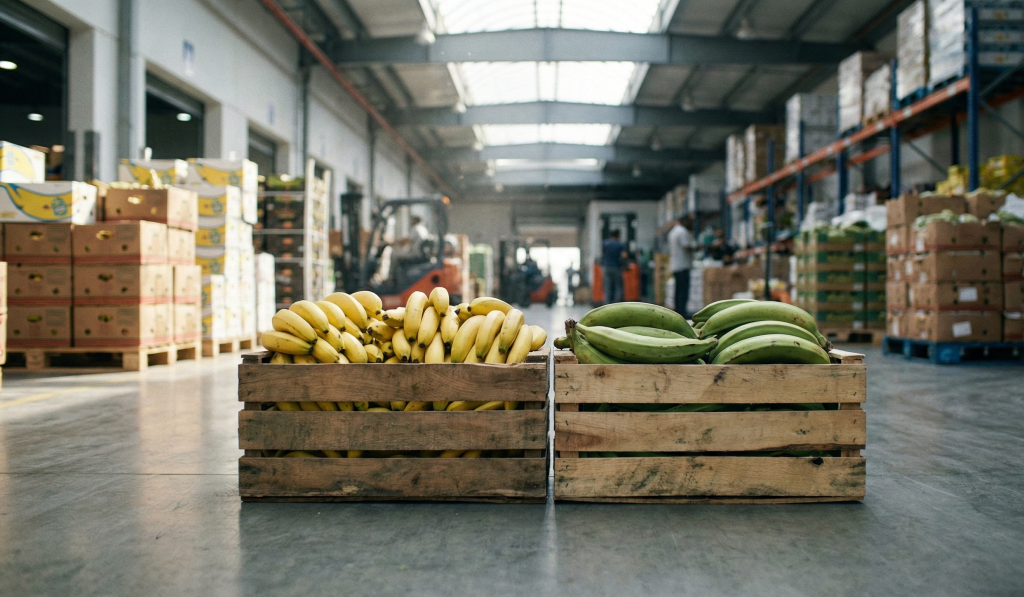
In markets across the Gulf, the words banana and plantain are often used as if they mean the same thing. In practice, they describe different types of fruit with very different roles in cooking and supply chains.
For households, the confusion usually shows up in the kitchen: a banana that will not soften when fried, or a plantain that never sweetens properly on the counter. For food businesses, the impact is larger. Misunderstanding banana varieties can lead to menu inconsistency, higher waste, and poor customer experience.
This guide explains the difference between bananas, plantains, and cooking bananas in clear terms. It looks at how they grow, how they are used, and why the distinction matters in real buying and sourcing decisions—especially in regions like the UAE, where most supply is imported and seasonality affects quality.
Are Bananas and Plantains Actually Different Fruits?
From a botanical point of view, bananas and plantains belong to the same family of plants (Musa). They are not separate species in the way apples and oranges are.
The difference is practical, not scientific.
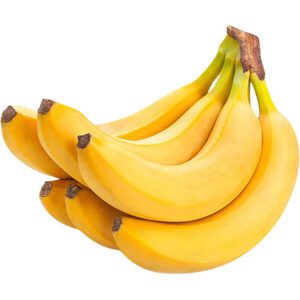
The word banana is usually used for sweet varieties eaten raw.
The word plantain is used for starchier varieties that are normally cooked.
You can think of them like potatoes and sweet potatoes. Related, but used very differently.
In wholesale and food service contexts, the term cooking bananas is often used to group together:
- Plantains
- Green bananas intended for frying or boiling
- Other starchy banana cultivars used in hot dishes
This is where much of the confusion begins.
Banana vs Plantain: The Core Difference
Texture and starch
The main difference is starch content.
- Dessert bananas (what most people call bananas)
High sugar when ripe, soft flesh, easy to eat raw. - Plantains and cooking bananas
High starch, firmer flesh, designed for cooking rather than snacking.
A ripe Cavendish banana can be mashed with a fork.
A ripe plantain still holds its shape when sliced and fried.
Taste profile
- Sweet bananas develop sugars as they ripen.
- Plantains stay mild and starchy, with only light sweetness at full maturity.
This is why plantains are used like a vegetable in many cuisines.
Why So Many People Mix Them Up
There are three common reasons:
- They look similar at early stages
Green bananas and green plantains are hard to tell apart without experience. - Retail labeling is inconsistent
Some shops label all long bananas as “bananas,” regardless of type. - Different cultures use different names
In some countries, plantains are simply called “bananas,” and sweet bananas are called “dessert bananas.”
In produce markets, this leads to situations where buyers believe they are ordering bananas but receive fruit that behaves very differently in storage and cooking.
Banana Varieties Explained (In Simple Terms)
When people search for “types of bananas,” they are usually surprised to learn how many there are.
Commercially, they fall into two broad groups:
1. Dessert bananas (eaten raw)
These include:
- Cavendish (the most common export banana)
- Lady Finger
- Apple banana
- Red banana
They are bred for sweetness, softness, and uniform ripening.
2. Cooking bananas and plantains
These include:
- Horn plantain
- French plantain
- Bluggoe-type bananas
- Green cooking bananas used in Caribbean and African dishes
They are bred for firmness and starch rather than sugar.
In practice, supply chains treat these as separate categories because their storage, handling, and end use are different.
How Ripeness Changes Their Use
Ripeness affects both bananas and plantains, but in different ways.
Sweet bananas
As they ripen:
- Starch converts into sugar
- Flesh softens
- Flavor becomes stronger
They move from green (for transport) to yellow (for eating) to spotted (very sweet).
Plantains and cooking bananas
As they ripen:
- They soften slightly
- Sugar increases a little
- Structure stays firm
They move from green (savory cooking) to yellow (balanced) to black (sweet frying).
This is why the same plantain can be used in different dishes depending on maturity.
Cooking Bananas Uses in Real Kitchens
Understanding cooking bananas uses helps explain why they are not interchangeable with dessert bananas.
They are commonly:
- Fried as slices or chips
- Boiled and mashed
- Used in stews and curries
- Grilled or roasted
In many cuisines, they replace potatoes or rice as a starch base.
Trying to use a sweet banana this way results in mushy texture and burnt sugar.
Plantain vs Banana Nutrition (Broad Differences)
From a nutritional point of view:
- Plantains are higher in starch and lower in sugar when unripe
- Dessert bananas are higher in natural sugars when ripe
- Both provide potassium and fiber
- Both are low in fat
The practical difference is how the carbohydrate behaves in cooking and digestion.
Plantains function more like a complex carbohydrate.
Bananas function more like a fruit sugar source.
For menu planning, this matters when balancing dishes and portion sizes.
Why This Matters for Buyers and Food Businesses
In wholesale supply and food service, confusion between banana types creates several problems:
- Wrong texture in prepared dishes
- Faster spoilage due to incorrect storage
- Customer complaints about taste or consistency
- Higher waste when fruit is misused
For example, ordering “bananas” without specifying type may result in fruit unsuitable for frying or baking.
Clear category language prevents these issues.
Seasonal and Supply Context in the UAE
The UAE does not grow bananas commercially at scale. Almost all bananas and plantains are imported.
This creates three important realities:
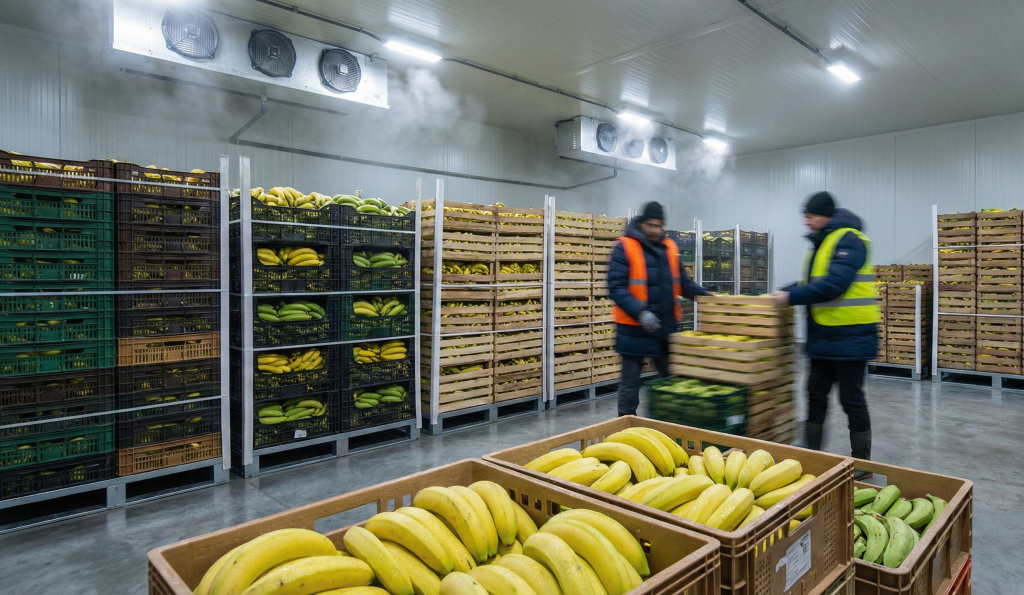
- Ripeness is managed during transport
Fruit is harvested green and ripened after arrival. - Plantains and cooking bananas are often sourced from different origins
They may arrive on different schedules than dessert bananas. - Winter supply chains are more stable than summer
Heat stress affects ripening and shelf life more in hotter months.
During winter, buyers often see:
- Better firmness
- Slower ripening
- More predictable quality
Understanding which banana type is being supplied helps businesses match seasonal conditions to menu planning.
Common Mistakes Buyers Make
These errors appear frequently in both retail and food service:
- Assuming all bananas behave the same in cooking
- Buying based only on price instead of use case
- Mixing plantains and dessert bananas in storage
- Not checking maturity stage at delivery
Each of these increases waste and inconsistency.
Practical Takeaway So Far
If you remember only one distinction:
- Bananas = sweet, eaten raw
- Plantains and cooking bananas = starchy, cooked
They look similar but behave differently.
Knowing which one you are dealing with changes how you store it, cook it, and price it.
In the next section, we will look more closely at how to identify plantains versus bananas at the point of purchase, and how to use plantains correctly in different stages of ripeness.
How to Identify Plantains vs Bananas at the Buying Stage
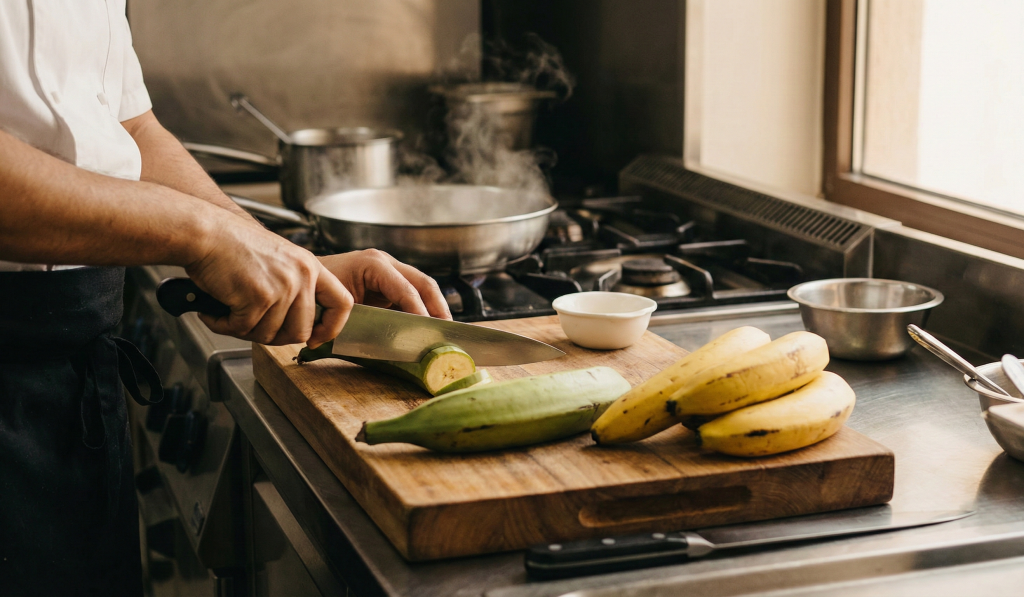
In wholesale and retail markets, plantains and bananas are often displayed together. The differences are visible, but only if you know what to look for.
Visual differences
Plantains are usually:
- Longer and thicker than dessert bananas
- More angular in shape
- Darker green when unripe
- With thicker skin
Dessert bananas tend to be:
- More curved
- Thinner
- Bright green to yellow
- Softer to the touch when ripe
These are not strict rules, but they help in most cases.
Texture test
If the fruit is firm and resists pressure even when yellow, it is likely a plantain or cooking banana.
If it yields easily to pressure when yellow, it is likely a dessert banana.
For buyers, this simple check often prevents costly mistakes.
How to Use Plantains at Different Ripeness Stages
Many people ask how to use plantains properly because they behave differently at each stage.
Green (unripe)
Green plantains are:
- High in starch
- Savory rather than sweet
- Firm even when cooked
Common uses include:
- Frying (tostones or chips)
- Boiling and mashing
- Adding to soups and stews
They work like potatoes or yams.
Yellow (semi-ripe)
At this stage:
- Some starch converts to sugar
- Texture remains firm
- Flavor becomes more rounded
Typical uses:
- Pan-frying as a side dish
- Baking
- Adding to rice-based meals
This stage is popular in Caribbean and Latin cooking.
Black (fully ripe)
Fully ripe plantains:
- Are soft inside
- Have higher sugar content
- Brown or black skin
They are best for:
- Sweet frying
- Desserts
- Caramelized toppings
Trying to boil black plantains often leads to collapse and excess sweetness.
How Dessert Bananas Behave in Cooking
Dessert bananas can be cooked, but they react very differently.
They:
- Break down quickly
- Release sugar
- Brown easily
This makes them suitable for:
- Baking
- Smoothies
- Sweet sauces
They are rarely suitable for savory frying unless used deliberately for sweetness.
Understanding this prevents the common mistake of replacing plantains with regular bananas in savory dishes.
Banana vs Plantain in Storage and Handling
Storage is one of the biggest differences from a supply point of view.
Dessert bananas
- Ripen quickly
- Sensitive to bruising
- Must be separated from other produce once ripening starts
- Shorter usable window
Plantains and cooking bananas
- Ripen more slowly
- More resistant to handling
- Can tolerate higher heat briefly
- Longer usable window
For kitchens and retailers, this affects:
- Ordering frequency
- Inventory rotation
- Display planning
Mixing the two in storage accelerates ripening and leads to waste.
Real-World Supply Scenarios
Scenario 1: Restaurant frying “bananas”
A restaurant orders “bananas” for frying but receives dessert bananas.
Result:
- Excess sweetness
- Burnt sugar
- Soft texture
- Customer dissatisfaction
Root cause: product category not specified.
Scenario 2: Grocery store labeling
A shop labels plantains as bananas.
Result:
- Customers expect sweetness
- Fruit does not ripen as expected
- Returns and complaints
Root cause: category confusion at retail level.
Scenario 3: Catering operation
A caterer uses plantains as a starch side.
Result:
- Lower cost than potatoes
- Stable texture under heat
- Consistent portioning
Root cause: correct use of cooking bananas for their intended purpose.
These examples show that the difference is not academic. It affects operations.
Wholesale vs Retail Sourcing: Tradeoffs
From a sourcing perspective:
Wholesale supply offers:
- Better size consistency
- More predictable maturity stages
- Lower unit cost
- Larger minimum volumes
Retail sourcing offers:
- Smaller quantities
- Mixed maturity
- Higher flexibility
- Higher unit price
For households, retail makes sense.
For businesses, wholesale reduces risk when the category is clearly specified.
In practice, suppliers working closely with Dubai-based distributors such as JMB Farm Fresh often observe that buyers who define “dessert bananas” versus “plantains” experience fewer delivery disputes and less kitchen waste.
Price Volatility and Seasonality
Bananas are often perceived as stable-priced fruit. In reality:
- Freight costs affect pricing
- Weather in origin countries affects yield
- Demand spikes affect availability
Plantains are usually more volatile than dessert bananas because:
- They are grown in fewer regions
- Demand is more regional
- Volumes are smaller
During UAE winter months, conditions favor slower ripening and better firmness. This reduces spoilage risk but does not eliminate origin-related price swings.
Understanding which category you are buying helps interpret these fluctuations realistically.
Common Buyer Questions (Based on Market Behavior)
“Why are these bananas not sweet?”
Often plantains or cooking bananas were supplied.
“Why did these bananas go black so fast?”
Dessert bananas were stored with ethylene-producing fruit.
“Why are plantains more expensive?”
Lower production volume and higher transport cost.
“Can I use green bananas instead of plantains?”
Only if they are cooking-type bananas, not unripe dessert bananas.
These are operational questions, not academic ones.
Practical Guidance for Better Sourcing
For buyers and households alike:
- Ask what type of banana is being supplied
- Match the fruit to its intended use
- Store plantains separately from dessert bananas
- Track maturity stage at delivery
- Adjust menus or recipes based on ripeness
These steps reduce waste and improve consistency.
In the final section, we will address deeper misunderstandings about banana varieties, summarize the key distinctions, and provide a concise reference for everyday use. We will also include a short FAQ and SEO-ready summary.
Banana Varieties Explained in Practical Terms
When people search for “banana varieties explained,” they are often looking for clear categories, not scientific names.
From a food supply and usage perspective, bananas can be grouped into three practical types:
1. Dessert bananas
These are bred for sweetness and raw consumption.
They are used for:
- Eating fresh
- Smoothies
- Baking
- Sweet sauces
They ripen quickly and are sensitive to bruising.
2. Plantains
These are bred for structure and cooking.
They are used for:
- Frying
- Boiling
- Roasting
- Stews and curries
They behave like a starchy vegetable more than a fruit.
3. Cooking bananas (non-plantain)
These sit between the two categories.
They are:
- Less sweet than dessert bananas
- Softer than plantains
- Used mainly in cooked dishes
In many markets, these are sold simply as “green bananas,” which adds to confusion.
Understanding these three groups makes it easier to interpret supplier labels and market displays.
Why Misunderstanding Banana Types Creates Waste
In food service and grocery operations, waste usually comes from mismatch between product and use.
Common causes include:
- Ordering dessert bananas for savory cooking
- Holding plantains too long waiting for sweetness
- Mixing ripening stages in the same storage area
- Treating plantains like fruit instead of starch
Each of these shortens shelf life or leads to unusable texture.
Waste is not only financial. It also affects menu reliability and customer trust.
Plantain vs Banana Nutrition in Menu Planning
From a nutrition and menu balance point of view:
- Dessert bananas contribute more natural sugar
- Plantains contribute more complex carbohydrate
- Both offer potassium and fiber
- Neither is a protein source
For kitchens, this affects:
- Portion design
- Pairing with proteins
- Suitability for breakfast versus main dishes
A fried plantain side behaves more like rice or bread than fruit salad.
This distinction matters for menu structure and nutritional clarity.
Import Reality in the UAE Market
Because bananas and plantains are imported:
- Maturity is controlled artificially
- Supply comes from multiple regions
- Weather events abroad affect local availability
During cooler months in the UAE:
- Ripening rooms work more predictably
- Transport losses are lower
- Quality is more uniform
This is why winter supply often feels more consistent.
However, origin differences still matter. Plantains typically come from different farms and shipping routes than dessert bananas, even when sold side by side.
Local Buying Patterns and Industry Observations
Across UAE retail and food service markets, several patterns appear repeatedly:
- Customers expect all bananas to sweeten naturally
- Retail staff often cannot explain the difference
- Menus describe “banana” without specifying type
- Plantains are treated as exotic rather than functional
Some buyers prefer working with established wholesale produce providers rather than fragmented retail sourcing, simply because category definitions are clearer and maturity stages are more controlled.
This reduces disputes and helps kitchens plan usage more accurately.
Key Differences at a Glance
To summarize the working difference:
- Dessert bananas
Soft when ripe, sweet, eaten raw - Plantains
Firm, starchy, cooked - Cooking bananas
In between, mainly for hot dishes
They are related fruits, but they are not interchangeable ingredients.
Practical Takeaways for Households and Businesses
For households:
- Do not assume all bananas are for snacking
- Choose based on cooking method
- Use plantains like potatoes, not fruit
For food businesses:
- Specify banana type when ordering
- Store plantains and dessert bananas separately
- Train staff to recognize maturity stages
- Align menu items with the correct fruit category
These steps reduce waste and improve consistency without changing suppliers or systems.
Conclusion
Bananas, plantains, and cooking bananas belong to the same family, but they serve very different purposes in kitchens and supply chains.
The confusion between them comes from appearance, language, and inconsistent labeling—not from any true similarity in use.
Understanding the difference is not just a culinary detail. It affects storage, pricing, menu quality, and food waste.
Whether buying for a household or a commercial kitchen, the key is simple: match the fruit to the function. Sweet bananas for raw eating and desserts. Plantains and cooking bananas for structured, savory cooking.
Once that distinction is clear, many common problems in sourcing and preparation disappear.
FAQ
1. Is a plantain just an unripe banana?
No. Plantains are a different type of banana bred for starch and cooking, not sweetness.
2. Can I fry regular bananas instead of plantains?
You can, but they will be softer and much sweeter, which changes the dish completely.
3. Why do plantains take longer to ripen?
They contain more starch and less sugar, so the ripening process behaves differently.
4. Are green bananas always plantains?
No. Some are unripe dessert bananas. The variety matters more than the color.
5. Which is healthier, banana or plantain?
Neither is inherently better. Bananas provide more natural sugar, while plantains provide more complex carbohydrates.








 Home
Home  Whishlist
  Compare
  Checkout