











Introduction
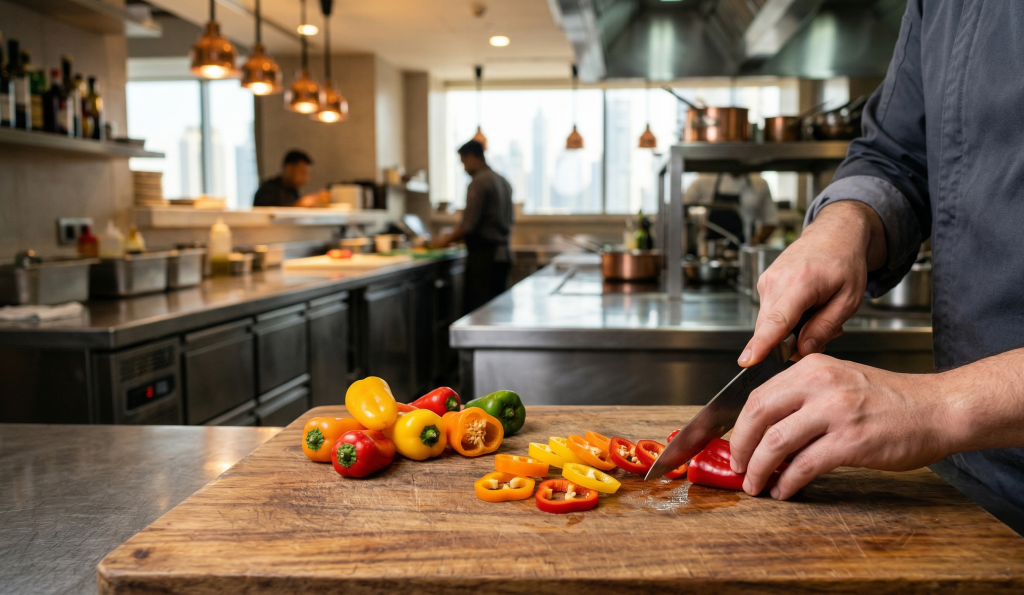
Walk into any premium restaurant kitchen in Dubai, and you will almost always find baby capsicums quietly doing their job.
They appear in salads, mezze platters, lunchbox menus, and even high-end catering spreads. Bright red, yellow, and orange. Uniform in size. Easy to plate. Easy to eat.
Yet outside professional kitchens, demand remains surprisingly low.
Most households still default to standard green, red, or yellow capsicum. Even grocery buyers and smaller catering operations often overlook mini sweet peppers entirely.
This gap is not about availability. It is about understanding.
In the UAE produce market, baby capsicums sit in an unusual position:
- Widely available through wholesale channels
- Consistently used in food service
- Still misunderstood at the retail and household level
This article breaks down what baby capsicums actually are, how they compare to regular capsicum, and why they remain underutilized despite clear advantages.
What Exactly Are Baby Capsicums?
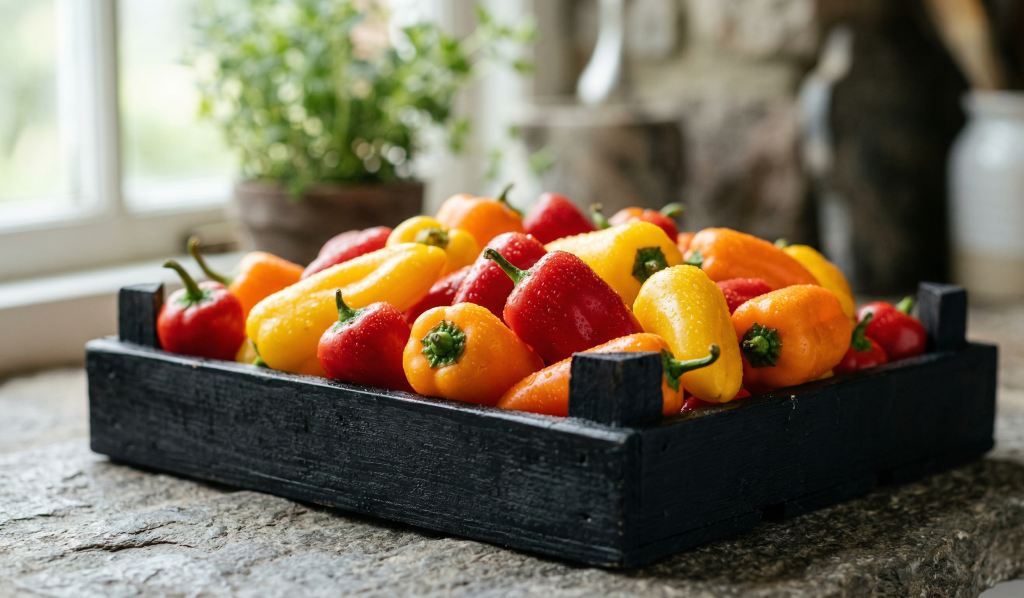
Baby capsicums, often called mini sweet peppers, are not immature vegetables.
They are a different variety, bred specifically to be:
- Smaller in size
- Naturally sweeter
- Lower in bitterness
- More uniform in texture
Unlike regular capsicum, which can vary widely in taste depending on ripeness and storage, baby capsicums are selected for consistency.
Key Characteristics
- Size: Typically 5–8 cm long
- Taste: Noticeably sweeter, especially when raw
- Texture: Thin skin, crisp bite
- Seeds: Fewer and easier to remove
- Color: Always vibrant (red, yellow, orange)
In practical terms, this means they require less preparation and deliver a more predictable result in both home cooking and commercial kitchens.
Baby Capsicum vs Regular Capsicum: What Actually Changes?
This is where most confusion starts.
At a glance, the difference seems cosmetic. Smaller size, brighter color. But from a sourcing and usage perspective, the differences are more meaningful.
1. Flavor Consistency
Regular capsicum—especially green—can be slightly bitter or grassy.
Baby capsicums are bred for sweetness. Even when eaten raw, they rarely carry bitterness.
This matters in:
- Salad bars
- Cold platters
- Kids’ meals
- Ready-to-eat snacks
2. Waste and Yield
With standard capsicum, trimming waste can be significant:
- Thick inner ribs
- Large seed clusters
- Irregular shapes
Baby capsicums typically have:
- Cleaner interiors
- Less trimming loss
- More usable portion per unit
For food businesses, this translates into better yield consistency.
3. Preparation Time
In commercial kitchens, time is often more valuable than ingredient cost.
Mini sweet peppers:
- Require minimal cutting
- Can be used whole or halved
- Reduce prep steps
This is one of the main reasons restaurants adopt them early.
4. Shelf Behavior
This is less discussed but important.
Baby capsicums tend to:
- Hold structure better in cold storage
- Maintain visual quality longer
- Show spoilage more visibly (less hidden damage)
That said, they are still sensitive to improper humidity and temperature, just like regular peppers.
Why Restaurants in Dubai Use Them More Than Households
If baby capsicums are objectively easier to use, why are they not common in everyday kitchens?
The answer lies in how different buyers evaluate produce.
Restaurants Think in Systems
For a restaurant or catering operation, consistency matters more than variety.
Baby capsicums provide:
- Uniform portion sizes
- Predictable plating results
- Reduced prep variability
This reduces operational friction.
Households Think in Flexibility
Home buyers often prefer ingredients that can be used across multiple dishes.
Regular capsicum:
- Works in curries, stir-fries, rice dishes
- Comes in larger quantities
- Feels more “versatile”
Baby capsicums are often perceived as:
- A snack item
- A salad ingredient
- Or something “non-essential”
This perception limits adoption.
The Pricing Misunderstanding
One of the most common objections is cost.
At first glance, baby capsicums seem more expensive per kilogram than regular capsicum.
But this comparison is incomplete.
What Buyers Often Miss
- Higher usable yield (less trimming waste)
- Reduced prep time
- Lower spoilage risk in short-term storage
For commercial kitchens, these factors often balance out the price difference.
For households, the calculation is different. Price per kilo remains the primary reference point, which makes baby capsicums feel like a premium product rather than a practical one.
Seasonal Context in the UAE: When Are Baby Capsicums at Their Best?
The UAE relies heavily on imported produce, especially for items like capsicum.
Winter (Peak Stability Period)
During the cooler months:
- Supply chains are more stable
- Import quality is more consistent
- Shelf life tends to improve
This is when baby capsicums perform best in terms of:
- Texture
- Sweetness
- Visual quality
Summer (High Risk Period)
In hotter months:
- Cold chain disruptions are more likely
- Moisture loss increases
- Texture softening becomes common
For buyers, this means:
- More careful sourcing is required
- Faster turnover becomes important
These seasonal patterns apply to both regular and baby capsicum, but smaller produce tends to show stress faster.
Where Buyers Get It Wrong
Across discussions in procurement groups and supplier conversations, a few patterns show up repeatedly.
Mistake 1: Treating Them as a Luxury Item
Many assume baby capsicums are meant only for premium dining.
In reality, they are a functional product designed for efficiency and consistency.
Mistake 2: Ignoring Storage Conditions
Improper storage leads to:
- Wrinkling
- Softening
- Loss of crunch
This reinforces the idea that they are “fragile,” when the issue is usually handling.
Mistake 3: Buying Without a Use Case
Unlike staple vegetables, baby capsicums perform best when used intentionally:
- Snack trays
- Roasted side dishes
- Stuffed appetizers
Without a clear use case, they get overlooked.
A Quiet Shift in Buyer Behavior
In recent years, there has been a gradual shift.
Families focused on:
- Meal prep
- Healthy snacking
- Lunchbox planning
are starting to adopt mini sweet peppers more regularly.
Similarly, smaller catering businesses are beginning to prioritize:
- Visual presentation
- Portion control
- Prep efficiency
In practice, suppliers working closely with Dubai-based distributors such as JMB Farm Fresh often observe that once buyers test baby capsicums in a structured use case, repeat purchasing becomes more consistent.
The barrier is not quality. It is familiarity.
How Baby Capsicums Fit Into Real-World Buying Decisions
Understanding baby capsicums is one thing. Deciding whether to actually buy them is another.
In Dubai’s produce ecosystem, buying decisions are rarely based on a single factor. They involve a mix of cost, storage, consistency, and how well an ingredient fits into daily operations.
For Restaurant Owners and F&B Managers
Baby capsicums solve very specific operational problems.
They are not purchased for novelty. They are used because they reduce friction.
Where they fit best:
- Cold mezze and antipasti platters
- Buffet setups where visual consistency matters
- Pre-prepped salad stations
- Garnish-heavy dishes
In these environments, uniformity is not optional. It is expected.
A tray of evenly sized mini peppers creates a cleaner presentation compared to irregularly cut capsicum pieces. This reduces the need for constant adjustment during service.
For Grocery Buyers and Retailers
Retailers often hesitate because baby capsicums require a different selling approach.
Unlike staple vegetables, they are:
- Not price-driven
- Not purchased in bulk by default
- Not always understood by walk-in customers
This creates a merchandising challenge.
When displayed without context, they tend to move slowly. But when positioned as:
- Snack-ready vegetables
- Lunchbox-friendly items
- Salad essentials
they begin to gain traction.
The issue is not demand. It is communication.
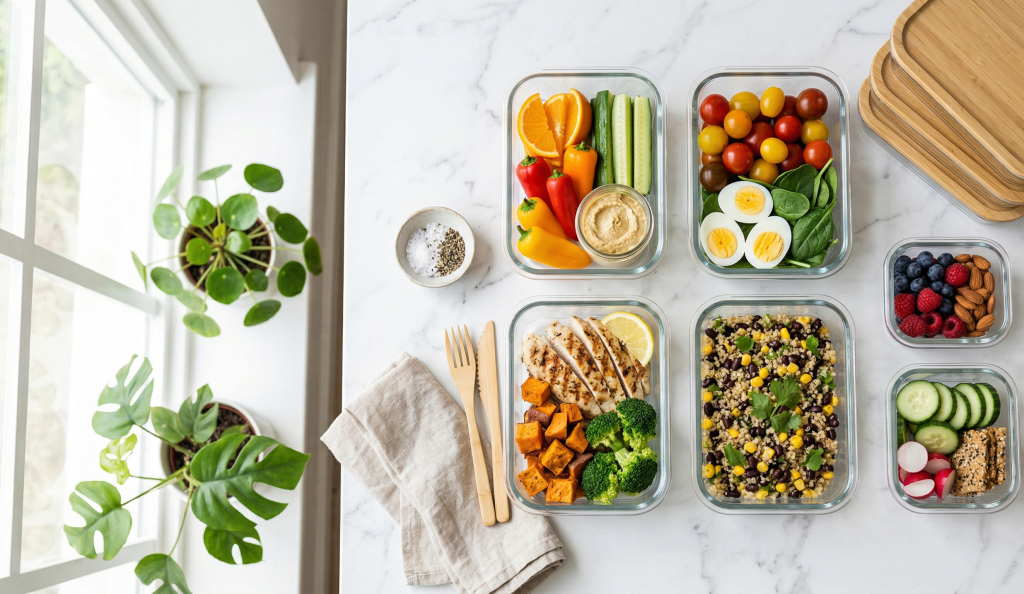
The Lunchbox and Meal Prep Advantage
One of the most overlooked use cases for baby capsicums in the UAE is daily meal prep.
As more families shift toward structured eating habits—especially in Dubai’s working households—there is a growing need for vegetables that are:
- Easy to pack
- Easy to eat without cooking
- Consistent in taste
Baby capsicums fit this role unusually well.
Why They Work for Meal Prep
- No bitterness when eaten raw
- No strong aftertaste (important for kids)
- Minimal cutting required
- Durable enough for short-term refrigeration
Compared to sliced regular capsicum, they:
- Stay crisp longer
- Do not release as much moisture
- Maintain visual appeal in containers
For parents trying to include more vegetables in children’s meals, this matters more than nutritional theory.
It becomes a behavioral advantage, not just a nutritional one.
Storage, Handling, and Shelf Life: What Actually Matters
One of the most common frustrations buyers face is inconsistency in freshness.
This is often blamed on the product itself, but in many cases, it comes down to handling.
Ideal Storage Conditions
Baby capsicums should be stored:
- Between 7–10°C
- In moderate humidity (not overly dry, not overly wet)
- Away from ethylene-producing fruits (like bananas)
What Goes Wrong
Improper handling leads to:
- Skin wrinkling (moisture loss)
- Soft texture (temperature fluctuation)
- Early spoilage (condensation buildup)
Because baby capsicums have thinner skin than regular capsicum, they react faster to environmental changes.
This is why some buyers perceive them as “less durable,” when in reality, they are just more sensitive to poor storage conditions.
Imported vs Local Supply: Does It Make a Difference?
In the UAE, most capsicum—both regular and baby—is imported.
This introduces variables that buyers often underestimate:
- Transit time
- Cold chain integrity
- Handling across multiple checkpoints
Why This Matters for Baby Capsicums
Smaller produce items tend to:
- Lose moisture faster
- Show stress earlier
- Require tighter temperature control
This means sourcing becomes more important than usual.
Reliable supply is less about origin and more about:
- Consistency of handling
- Speed of distribution
- Storage discipline at each stage
Some UAE buyers prefer working with established wholesale produce providers rather than fragmented retail sourcing because it reduces variability across shipments.
Are Baby Capsicums Actually Healthier?
From a nutritional standpoint, the difference is not dramatic.
Both baby capsicum and regular capsicum provide:
- Vitamin C
- Antioxidants
- Fiber
However, there are two practical distinctions.
1. Higher Raw Consumption
Because baby capsicums taste better raw, people are more likely to eat them without cooking.
This preserves:
- Vitamin content
- Natural texture
- Hydration value
2. Better Portion Control
Their small size encourages:
- Controlled serving sizes
- Reduced food waste
- Easier calorie tracking
This is particularly relevant for:
- Fitness-focused individuals
- Structured diet plans
- School meal planning
So while the nutritional profile is similar, the way they are consumed often makes them more effective in real diets.
The Supply Chain Reality Most Buyers Don’t See
From farm to plate, baby capsicums follow a longer and more delicate journey than most people realize.
Typical flow:
- Harvested at controlled ripeness
- Pre-cooled quickly after picking
- Packed in ventilated crates
- Transported under cold chain conditions
- Distributed through import hubs
- Delivered to wholesalers or retailers
At each stage, small lapses can affect quality.
Unlike staple items like potatoes or onions, capsicum—especially mini varieties—does not tolerate inconsistency well.
This is why buyers sometimes experience:
- Variation between batches
- Differences in firmness
- Uneven shelf life
These are not random issues. They are supply chain signals.
Why Demand Is Still Low in Dubai
Despite clear advantages, baby capsicums remain underutilized in the UAE market.
The reasons are practical, not mysterious.
1. Lack of Familiarity
Most consumers did not grow up using them.
Regular capsicum feels familiar. Baby capsicum feels optional.
2. Weak Retail Positioning
Without clear usage ideas, they:
- Sit on shelves
- Get compared only on price
- Fail to communicate value
3. Misaligned Expectations
Buyers expect them to behave like regular capsicum.
When they do not—due to different storage needs or use cases—it creates confusion.
4. No Immediate “Need”
Unlike onions, tomatoes, or potatoes, baby capsicums are not essential.
They require a reason to be purchased.
A More Practical Way to Think About Them
Instead of comparing baby capsicums directly to regular capsicum, it is more useful to see them as a different category.
They are closer to:
- Snack vegetables
- Prep-efficient ingredients
- Presentation-focused produce
This shift in perspective changes how they are evaluated.
They are not a replacement. They are a tool.
When It Actually Makes Sense to Buy Baby Capsicums
Not every buyer needs baby capsicums. And not every situation justifies the switch.
The key is understanding where they genuinely add value.
Strong Use Cases
Baby capsicums make the most sense when:
- You need ready-to-eat vegetables
No peeling, minimal cutting, no bitterness. - Presentation matters
Their uniform size and color reduce plating effort. - You want to reduce prep time
Especially in kitchens handling high volume. - You are planning structured meals
Lunchboxes, meal prep containers, or portion-controlled diets. - You are managing food waste closely
Less trimming, fewer unusable parts.
Where Regular Capsicum Still Works Better
There are still many cases where standard capsicum is the better choice:
- Bulk cooking (curries, stews, rice dishes)
- Price-sensitive buying
- Recipes requiring large chopped quantities
- Long cooking processes where texture differences disappear
This balance is important. Baby capsicums are not a replacement—they are a selective upgrade.
Practical Buying Tips for Dubai-Based Buyers
For those considering buying baby capsicum in Dubai, small adjustments in how you evaluate quality can make a noticeable difference.
What to Look for When Buying Fresh Baby Capsicum
- Firmness: Should feel solid, not soft
- Skin: Smooth, glossy, no wrinkles
- Color: Bright and even
- Stem: Fresh-looking, not dried out
Avoid:
- Shriveled skin
- Soft spots
- Moisture buildup inside packaging
These are early signs of improper storage or aging.
How to Use Them Without Overcomplicating Things
One reason baby capsicums remain underused is that people assume they require special recipes.
They do not.
Simple, Practical Uses
- Eat raw with hummus or yogurt dips
- Slice into salads for crunch and color
- Roast whole with olive oil and salt
- Stuff with soft cheese or spiced fillings
- Add to lunchboxes without cutting
The goal is not to create new cooking habits, but to simplify existing ones.
The Role of Wholesale vs Retail in Availability
Availability of baby capsicum in Dubai often depends on where buyers look.
Retail environments:
- Limited stock
- Higher price visibility
- Lower turnover
Wholesale channels:
- More consistent supply
- Better quality rotation
- Access to fresher batches
This is why many experienced buyers gradually shift sourcing behavior over time.
In practice, consistent access to quality produce often comes from structured supply relationships rather than occasional retail purchases.
A Quiet Evolution in the UAE Produce Market
The UAE food market is gradually changing.
There is a growing shift toward:
- Convenience-driven vegetables
- Ready-to-eat formats
- Reduced prep time ingredients
Baby capsicums fit naturally into this shift.
But adoption takes time.
Unlike staple vegetables, their growth depends on:
- Awareness
- Repeated use
- Clear understanding of value
Once these align, demand tends to stabilize rather than spike.
Final Thoughts
Baby capsicums are not overlooked because they lack value.
They are overlooked because their value is not immediately obvious.
They sit between categories:
- Not a staple
- Not a luxury
- Not a specialty ingredient
This makes them easy to ignore.
But for buyers who understand where they fit—whether in a professional kitchen or a structured home setup—they offer something practical:
Consistency.
Ease.
And a small but meaningful reduction in effort.
Frequently Asked Questions
1. Are baby capsicums the same as unripe capsicum?
No. Baby capsicums are a different variety, bred to be smaller and naturally sweeter.
2. Where can I buy baby capsicum in Dubai?
They are available through both retail and wholesale channels. Wholesale suppliers often offer better consistency and freshness.
3. Do baby capsicums last longer than regular capsicum?
Not necessarily longer, but they maintain visual quality better when stored properly.
4. Are mini sweet peppers good for kids?
Yes. Their sweetness and mild flavor make them easier for children to accept compared to regular capsicum.
5. Can I cook baby capsicum the same way as regular capsicum?
Yes. They can be roasted, sautéed, or stuffed, though they are most commonly used raw or lightly cooked.








 Home
Home  Whishlist
  Compare
  Checkout