












Introduction: A Pattern Many Dubai Parents Notice
In Dubai, it is common for parents to hear the same advice during early pediatric visits:
“Start with avocado.”
At first, this can feel surprising. The UAE has access to a wide range of fruits and vegetables, both local and imported. Yet many pediatricians consistently recommend avocado as one of the first solid foods during weaning.
This is not a trend driven by social media or diet culture. It comes from practical nutrition, supply consistency, and how well avocado fits into early feeding stages.
For families navigating avocado baby first food Dubai UAE, the real questions are not just why avocado, but:
- How much is appropriate?
- How should it be prepared?
- Does quality or sourcing matter?
- And are there common mistakes parents make?
This article breaks it down from a food supply and nutrition perspective — the same way experienced produce buyers and healthcare professionals tend to think about it.
Why Avocado Is Often Recommended as a First Baby Food
1. Nutrient Density Without Complexity
Babies transitioning to solids need foods that deliver high nutrition in small portions.
Avocado fits this requirement well because it contains:
- Healthy fats (important for brain development)
- Fiber (gentle digestive support)
- Potassium (supports muscle and nerve function)
- Folate and vitamins (support growth)
Unlike many fruits, avocado is not sugar-heavy. This matters in early feeding stages, where building balanced taste preferences is important.
From a supply standpoint, avocado is also consistent. Whether sourced from Kenya, Mexico, or other regions, its nutritional profile remains stable across batches — something not all produce offers.
2. Texture That Matches Early Weaning Needs
One of the most overlooked factors in first solid food baby Dubai discussions is texture.
Babies do not just need nutrition. They need foods that:
- Mash easily
- Do not require cooking
- Can be portioned safely
- Reduce choking risk
Ripe avocado naturally forms a soft, smooth consistency. It can be:
- Mashed with a spoon
- Blended into puree
- Served in small soft chunks (for baby-led weaning)
This reduces preparation complexity — an important factor for busy households in Dubai where time efficiency matters.
3. Digestive Tolerance and Low Allergen Risk
Parents often worry about allergies during weaning.
Avocado is generally considered:
- Low in allergenic compounds
- Easy to digest
- Gentle on immature stomachs
This does not mean it is risk-free, but compared to dairy, nuts, or wheat, it is often introduced earlier.
From a food safety perspective, it also has an advantage:
It is typically eaten fresh, without extensive processing, reducing exposure to additives or preservatives.
Why This Advice Is Especially Common in Dubai
Imported Produce Reliability Matters
Dubai’s food system relies heavily on imports. This creates variability in:
- Freshness
- Ripeness
- Storage conditions
- Price fluctuations
However, avocado stands out as a relatively predictable imported fruit.
It travels well. It ripens post-harvest. And suppliers can control ripeness stages during distribution.
In practice, suppliers working closely with Dubai-based distributors such as JMB Farm Fresh often observe that avocados arrive in controlled ripening batches, making them easier to manage compared to delicate fruits like berries.
For parents, this translates into something simple:
You are more likely to find usable avocado than consistently good alternatives.
Seasonal Availability vs Practical Availability
Many fruits in the UAE are seasonal in origin but available year-round due to imports.
Avocado is a strong example of this.
- Kenyan harvest cycles
- Mexican supply chains
- East African sourcing
These overlapping supply windows ensure that avocado remains available across most of the year.
This is particularly useful during winter months in the UAE, when feeding patterns change and families often rely more on fresh, nutrient-dense foods at home.
How Much Avocado Should a Baby Eat?
This is where confusion usually begins.
Parents often assume:
- “Healthy means unlimited”
- Or “more is better”
In reality, portion control matters — especially with high-fat foods.
General Guideline for Early Stages
For babies starting solids (around 6 months):
- Begin with 1–2 teaspoons of mashed avocado
- Gradually increase to 2–4 tablespoons per serving
- Offer once per day initially
This aligns with both nutritional needs and digestive tolerance.
Why Portion Size Matters
Avocado is calorie-dense.
While this is beneficial, overfeeding can lead to:
- Reduced appetite for other foods
- Imbalanced nutrient exposure
- Digestive discomfort
A balanced approach is key.
In real-world feeding scenarios, experienced caregivers often rotate avocado with other foods rather than making it a daily staple.
Adjusting Based on Feeding Style
For spoon-feeding (puree method):
- Start smooth
- Increase thickness gradually
For baby-led weaning UAE avocado approach:
- Offer soft slices
- Ensure ripeness (no firmness)
- Monitor handling and chewing
Both methods work — the difference is consistency and supervision.
Common Mistakes Parents Make With Avocado
1. Using Unripe Avocados
This is one of the most frequent issues in Dubai households.
Because avocados are imported, they are often sold:
- Too firm
- Not ready to eat
Unripe avocado:
- Tastes bitter
- Has poor texture
- Is harder to digest
Practical tip:
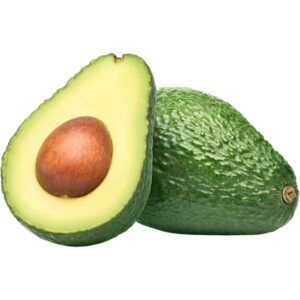
A ripe avocado should yield slightly to gentle pressure, not feel hard.
2. Over-Reliance on a Single Food
Even though avocado is highly nutritious, relying on it too heavily can:
- Limit exposure to other nutrients
- Reduce taste diversity
- Create picky eating patterns later
Balanced weaning includes rotation with:
- Vegetables (carrot, pumpkin, zucchini)
- Fruits (banana, pear)
- Grains (oats, rice)
3. Poor Storage After Cutting
Avocado oxidizes quickly.
This leads to:
- Browning
- Nutrient degradation
- Reduced appeal
Parents often discard partially used fruit due to improper storage.
Better approach:
- Store with pit intact
- Cover tightly
- Use within 24 hours
4. Ignoring Supply Quality
Not all avocados in the market are equal.
Differences in sourcing can affect:
- Ripening behavior
- Texture consistency
- Shelf life
Some UAE buyers prefer working with established wholesale produce providers rather than fragmented retail sourcing, especially when consistency matters for families with young children.
Simple Avocado Puree Method (Practical Approach)
For parents searching avocado puree baby UAE recipe, the process does not need to be complicated.
Basic method:
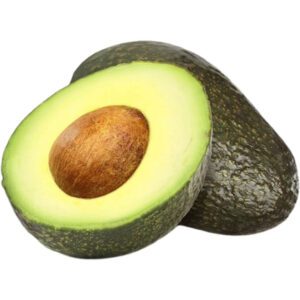
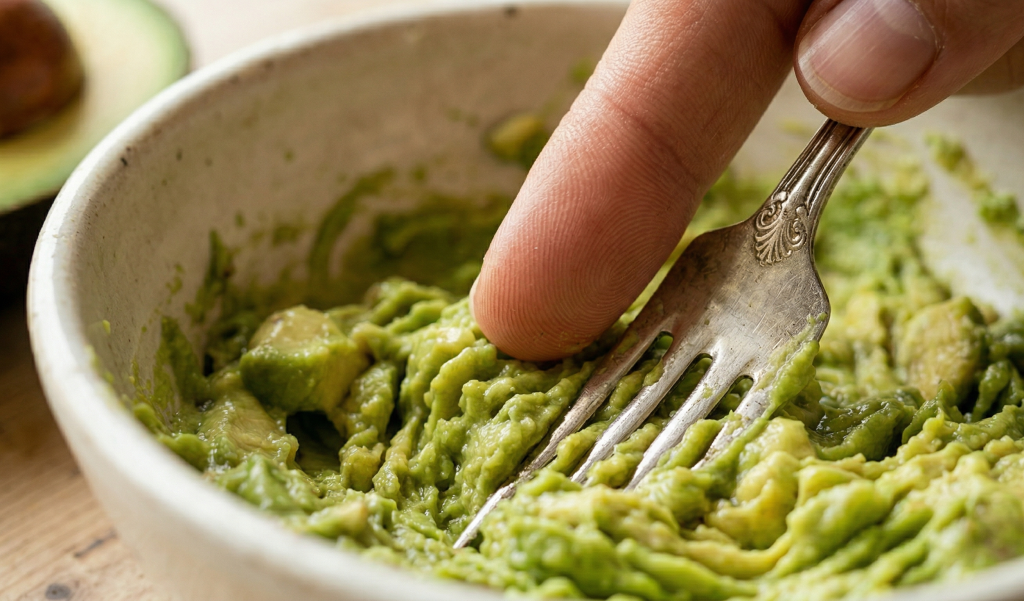
- Cut a ripe avocado
- Remove the pit
- Scoop the flesh
- Mash with a fork
Optional additions:
- A few drops of water or breast milk for smoother texture
No cooking is required.
No seasoning is needed.
The goal is simplicity and freshness.
A Note on Buying Avocado in Dubai
When sourcing avocado in the UAE, buyers often face a common question:
Retail vs wholesale — does it matter?
From an industry perspective:
Retail advantages:
- Convenience
- Smaller quantities
Wholesale advantages:
- Better batch consistency
- More predictable ripeness
- Often fresher turnover
For households with regular consumption, sourcing from reliable distributors can reduce variability — something that becomes noticeable when feeding infants.
Understanding Ripeness in the UAE Supply Chain
One of the biggest hidden challenges behind baby weaning avocado UAE is not nutrition — it is timing.
Avocado is a climacteric fruit, which means it continues to ripen after harvest. This is why most avocados arrive in Dubai firm and only become edible days later.
Why This Matters for Parents
Unlike bananas or papayas, avocado does not signal ripeness clearly through color alone.
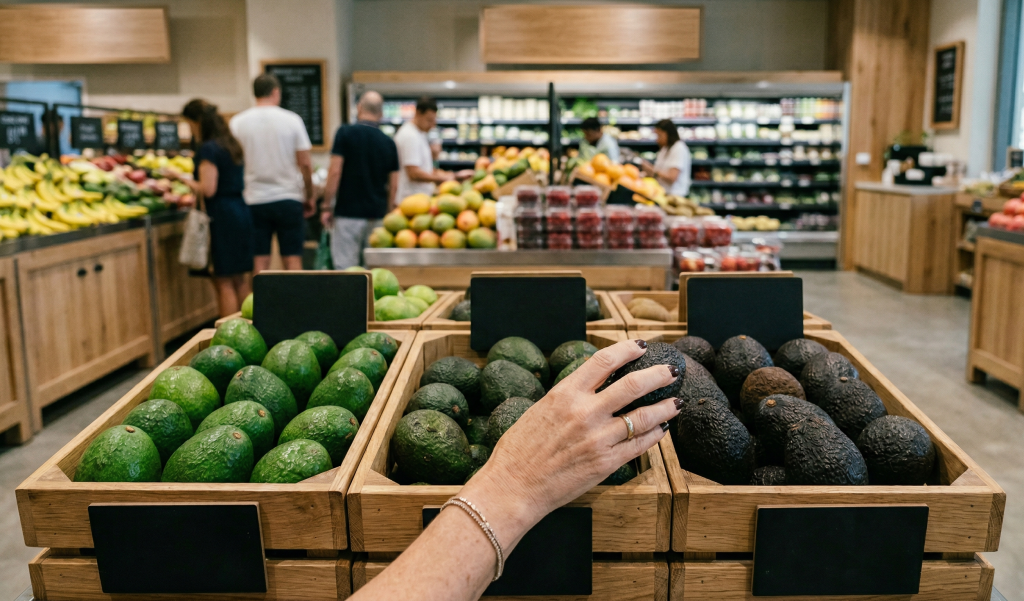
In UAE retail environments, especially:
- Supermarkets often display mixed ripeness batches
- Storage conditions vary (cold chain interruptions can occur)
- Handling during transport can affect internal texture
This leads to a common frustration:
“The outside looks fine, but the inside is either hard or spoiled.”
For infant feeding, this inconsistency becomes more than an inconvenience — it affects safety, texture, and acceptance.
Practical Ripeness Indicators That Actually Work
For feeding babies, rely on touch more than appearance:
- Gently press near the top (stem area)
→ Slight softness = ready - Remove the small stem cap
→ Green underneath = good
→ Brown = overripe
Avoid:
- Very soft fruit (may have brown spots inside)
- Extremely firm fruit (not suitable for immediate feeding)
Ripening at Home: A More Reliable Approach
Many experienced buyers in Dubai prefer to control ripening at home rather than depend on store-ready fruit.
Simple method:
- Keep avocados at room temperature
- Place in a paper bag (optionally with a banana)
- Check daily
This allows parents to plan feeding schedules more reliably — especially important when introducing solids.
Import Origins: Does It Affect Baby Feeding?
A frequent but rarely explained question:
Does avocado origin matter for babies?
From a nutritional standpoint, not significantly.
But from a practical feeding perspective, it can.
Common Origins in Dubai
- Kenya
- Mexico
- Peru
- South Africa (seasonal)
Each origin differs slightly in:
- Oil content
- Texture
- Ripening speed
How This Shows Up at Home
Kenyan avocados (often Fuerte-type):
- Smoother, slightly lighter texture
- Easier to mash early
- Shorter shelf life once ripe
Mexican Hass avocados:
- Creamier, richer
- More stable shelf life
- Slightly denser texture
For baby feeding:
- Early stages → smoother varieties may feel easier
- Later stages → creamier varieties provide more energy density
This is not about “better” or “worse,” but about fit for purpose at different stages.
The Hidden Cost of Poor Avocado Quality
From a supply chain perspective, poor-quality avocado creates waste.
From a parenting perspective, it creates:
- Rejected meals
- Feeding frustration
- Unnecessary cost
Common Quality Issues in Dubai
- Internal browning (not visible outside)
- Uneven ripening
- Fibrous texture
These issues are often linked to:
- Improper cold storage during transport
- Delays in distribution
- Over-handling
Why Consistency Matters More Than Price
For infant feeding, consistency is more important than saving a few dirhams.
Parents tend to prioritize:
- Predictable texture
- Reliable ripeness
- Minimal waste
This is one reason some households gradually shift away from random retail selection toward more stable sourcing channels over time.
Baby-Led Weaning With Avocado in the UAE Context
The baby led weaning UAE avocado approach has grown in popularity, especially among younger parents.
Instead of purees, babies are offered soft, self-held food.
Avocado fits well into this method — but only if handled correctly.
How to Serve Avocado Safely for Baby-Led Weaning
- Cut into thick slices (easy to grip)
- Ensure full ripeness (no firmness inside)
- Avoid slippery pieces (can be rolled in crushed oats if needed)
Supervision is essential.
Texture is everything.
Why Avocado Works Well for This Method
- Does not require cooking
- Naturally soft
- Easy to portion
However, the margin for error is small:
- Slightly underripe → difficult to chew
- Overripe → too mushy to handle
This is why supply consistency plays a bigger role than most people realize.
Balancing Avocado With Other First Foods
A common misunderstanding in first solid food baby Dubai discussions is:
“If avocado is good, it should be the main food.”
In practice, variety matters more than any single ingredient.
A Balanced Early Feeding Rotation
Instead of repeating avocado daily, a more stable pattern looks like:
- Day 1 → Avocado
- Day 2 → Steamed carrot
- Day 3 → Banana
- Day 4 → Oats or rice cereal
This approach:
- Builds taste diversity
- Reduces dependency on one texture
- Improves long-term acceptance of vegetables
Why This Matters in the UAE Specifically
Dubai’s produce market offers wide variety — but availability can shift.
Depending too much on one imported fruit creates vulnerability to:
- Price changes
- Supply disruptions
- Quality fluctuations
A diversified feeding approach reduces these risks.
Storage, Handling, and Food Safety for Infants
Food safety becomes more important when feeding babies.
Avocado is relatively safe — but only when handled correctly.
Best Practices After Cutting
- Store in airtight container
- Keep the pit in unused portion
- Refrigerate immediately
- Use within 24 hours
What to Avoid
- Leaving mashed avocado at room temperature
- Reusing old puree
- Mixing with contaminated utensils
Because avocado is often served raw, hygiene matters more compared to cooked foods.
Retail vs Wholesale: What Experienced Buyers Notice
In Dubai, the difference between retail and wholesale sourcing is often subtle — until consistency becomes important.
Observations From the Supply Side
Buyers working with structured supply chains often notice:
- More uniform ripeness batches
- Better handling practices
- Faster stock turnover
This is not always visible at the consumer level, but it affects outcomes over time.
In practice, suppliers working closely with established distributors such as JMB Farm Fresh tend to focus on controlled ripening and consistent grading, which can reduce variability for end users.
When Avocado May Not Be Ideal
Despite its benefits, avocado is not always the right choice.
Situations Where Caution Is Needed
- If the baby shows digestive sensitivity
- If the fruit is consistently poor quality
- If variety in diet is lacking
No single food should dominate early feeding.
A Practical Perspective
The goal of early feeding is not perfection.
It is:
- Exposure
- Consistency
- Gradual learning
Avocado supports this process — but it is only one part of it.
How Seasonal Patterns Affect Avocado Quality in the UAE
In Dubai, availability does not always reflect quality.
Avocado is available year-round, but seasonal origin shifts can influence:
- Texture
- Ripening behavior
- Shelf life
This is often overlooked in everyday buying decisions.
Understanding Seasonal Supply Windows
Because the UAE imports from multiple regions, supply rotates across:
- East Africa (Kenya)
- Latin America (Mexico, Peru)
- Southern Africa (South Africa)
Each region harvests at different times of the year. This creates continuous availability — but not uniform consistency.
What Parents Should Watch For
During certain transitions between supply regions, buyers may notice:
- Mixed ripeness batches
- Inconsistent texture
- Faster spoilage
For infant feeding, these variations matter more than they do for general cooking.
A slightly fibrous avocado may go unnoticed in a salad, but it can be rejected immediately by a baby.
Winter Context in the UAE
During the cooler months:
- Households rely more on fresh produce at home
- Feeding routines become more structured
- Demand for stable, high-quality fruit increases
Avocado often performs well during this period, but only when sourced carefully.
Practical Buying Checklist for Parents in Dubai
When selecting avocado for baby feeding, small details make a difference.
A Simple In-Store Checklist
- Choose fruit that yields slightly to pressure
- Avoid visible dents or soft spots
- Check under the stem for freshness
- Buy a mix of ripeness stages (for future use)
A Home Planning Approach
Instead of buying “ready-to-eat only,” experienced buyers often:
- Purchase 2–3 avocados at different ripeness levels
- Use one immediately
- Let others ripen over 2–3 days
This reduces waste and improves consistency in feeding.
What This Means for Families, Not Just Businesses
Much of the discussion around produce quality focuses on restaurants and hotels.
But the same principles apply at home — especially when feeding infants.
Families in Dubai are effectively managing:
- Imported supply chains
- Variable quality
- Storage limitations
Understanding even basic supply patterns can:
- Reduce waste
- Improve food quality
- Make feeding routines smoother
A Grounded Perspective on Avocado as a First Food
Avocado is not recommended because it is trendy.
It is recommended because it meets several practical criteria at once:
- Nutritionally dense
- Easy to prepare
- Widely available
- Generally well tolerated
However, its effectiveness depends on:
- Ripeness
- Quality
- Portion control
- Dietary balance
When these are managed well, avocado becomes a reliable starting point — not a perfect one, but a practical one.
Conclusion: Simple Food, Complex System
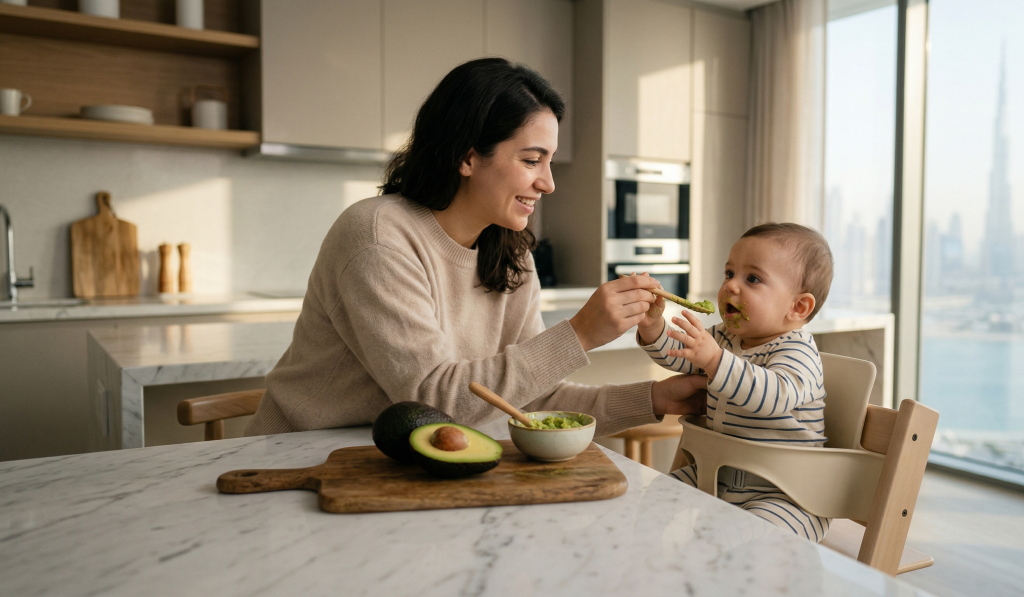
For many parents in Dubai, avocado becomes the first step into solid feeding.
What seems like a simple choice is supported by a complex system:
- Global sourcing
- Controlled ripening
- Retail and wholesale distribution
- Household handling practices
Understanding this system does not require expertise.
But even basic awareness helps parents make better decisions.
In the end, successful weaning is not about finding the “best” food.
It is about:
- Consistency
- Variety
- Observation
Avocado fits well into that framework — when used thoughtfully.
FAQ Section
1. Is avocado safe as a first food for babies in Dubai?
Yes, avocado is commonly used as a first food due to its soft texture and nutrient profile. It is generally well tolerated, but should be introduced in small amounts and monitored.
2. How do I prepare avocado puree for a baby in the UAE?
Simply mash a ripe avocado with a fork. You can add a small amount of water or milk for smoother texture. No cooking is required.
3. How much avocado should a baby eat per day?
Start with 1–2 teaspoons and gradually increase to a few tablespoons per serving. Avoid overfeeding, as avocado is calorie-dense.
4. Can I use avocado for baby-led weaning?
Yes. Offer soft, ripe slices that the baby can hold. Ensure the texture is soft enough to prevent choking.
5. Why are some avocados in Dubai hard or inconsistent?
This is due to import timing and ripening stages. Avocados are often sold unripe and need time to soften at home.








 Home
Home  Whishlist
  Compare
  Checkout