














Introduction
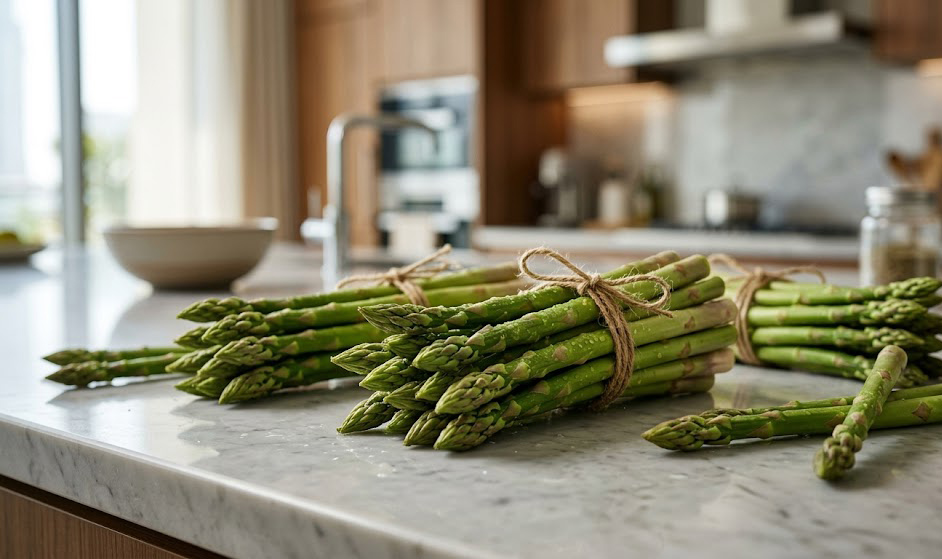
Walk into almost any restaurant in Dubai today—fine dining, casual bistros, hotel buffets—and you will see asparagus on the menu.
Grilled alongside steak. Blanched in salads. Folded into pasta. Even served as a standalone side with olive oil and sea salt.
This isn’t a coincidence.
Asparagus has quietly become one of the most consistent “premium vegetables” in the UAE food scene. But what most people don’t realize is this:
What you’re paying for in restaurants is not rarity. It’s preparation, timing, and perception.
In reality, fresh asparagus in Dubai is more accessible than ever—especially during peak import windows—and often significantly cheaper when cooked at home.
The gap between restaurant pricing and actual produce cost has never been wider.
This article breaks down why that is happening, what most buyers misunderstand about asparagus, and how both households and businesses can make better decisions when sourcing and cooking it.
Why Asparagus Is Suddenly Everywhere in Dubai
A Shift in Procurement Patterns
Over the past few years, restaurant procurement in Dubai has become more standardized.
Instead of experimenting with niche vegetables, many kitchens are focusing on ingredients that are:
- Easy to store
- Fast to cook
- Consistent in taste
- Recognizable to customers
Asparagus fits all four.
It cooks in minutes, looks visually premium, and works across cuisines—from European to Middle Eastern fusion.
For chefs managing high-volume kitchens, that reliability matters more than uniqueness.
Improved Import Consistency
One of the biggest changes has been supply chain stability.
Asparagus in the UAE is almost entirely imported, typically from:
- Peru (year-round supply)
- Europe (seasonal peaks, especially winter and spring)
- Mexico and the US (secondary supply windows)
What used to be inconsistent is now predictable.
Buyers can expect:
- Stable sizing (uniform spears)
- Cleaner trimming
- Better cold-chain handling (temperature-controlled transport)
This has reduced waste for restaurants—and made asparagus a safer menu item to depend on.
The “Premium Without Risk” Ingredient
Restaurants often avoid ingredients that are:
- Too seasonal
- Too fragile
- Too unfamiliar to customers
Asparagus sits in a sweet spot.
It feels premium, but it’s not risky.
Unlike exotic vegetables that may not sell, asparagus is widely accepted. Most customers already know what it is and expect a certain taste and texture.
That predictability is valuable in menu planning.
What Most Buyers Get Wrong About Asparagus Pricing
The Restaurant Price Illusion
A common assumption is:
“If it’s expensive in restaurants, it must be expensive to buy.”
This is rarely true for asparagus.
In most cases, the raw cost of asparagus is only a small part of what you pay on a plate.
What drives restaurant pricing includes:
- Labor (cleaning, trimming, plating)
- Overhead (rent, staff, utilities)
- Presentation (pairings, sauces, garnishes)
- Perceived value (positioning as a premium item)
A dish with asparagus may be priced high, but the vegetable itself is not necessarily rare or costly.
Retail vs Wholesale Reality
In Dubai, asparagus pricing varies significantly depending on where you buy it.
Retail supermarkets often price based on convenience and packaging.
Wholesale suppliers price based on volume and turnover.
This leads to a common confusion:
- Retail buyers think asparagus is always expensive
- Wholesale buyers know it fluctuates with supply cycles
In practice, suppliers working closely with Dubai-based distributors such as JMB Farm Fresh often observe that asparagus becomes notably more affordable during peak import windows—especially when European supply overlaps with year-round sources like Peru.
Why Prices Fluctuate
Asparagus pricing is not random. It follows clear patterns:
1. Seasonality (Even for Imports)
While available year-round, quality and pricing improve during peak harvest seasons in exporting countries.
2. Air Freight Costs
Asparagus is typically air-freighted due to its perishability. Changes in freight rates directly affect pricing.
3. Demand from Hospitality Sector
During peak tourism seasons in Dubai, demand rises from hotels and restaurants, pushing prices upward.
4. Shelf Life Pressure
Asparagus has a short shelf life. Suppliers price aggressively to move stock quickly, especially if shipments arrive in bulk.
Understanding these factors helps explain why the same product can feel expensive one week and reasonable the next.
Green vs White Asparagus: What’s Actually Different?
Not Just a Color Difference
Many buyers assume green and white asparagus are different varieties.
They are not.
They are the same plant, grown differently.
- Green asparagus grows above ground and develops chlorophyll (green color)
- White asparagus is grown underground, shielded from light
This changes not just the color, but the taste and texture.
Taste and Texture Comparison
Green Asparagus
- Slightly grassy, fresh flavor
- Firmer texture
- More common in Dubai markets
- Easier to cook at home
White Asparagus
- Milder, slightly sweet taste
- Softer and thicker spears
- Requires peeling before cooking
- More common in European cuisine
For most households and casual cooking, green asparagus is the more practical option.
White asparagus is typically used in more specialized dishes and requires more preparation.
Why Restaurants Use Both
High-end restaurants often use white asparagus for presentation and seasonal menus.
It signals sophistication, especially during European harvest seasons.
However, for everyday cooking, green asparagus delivers better value and simplicity.
How to Actually Judge Fresh Asparagus in Dubai
This is where most buyers struggle.
They rely on appearance alone—and often get it wrong.
Key Indicators of Freshness
When buying fresh asparagus in Dubai, focus on:
1. Firmness of the Spears
The stalk should feel firm, not limp.
2. Closed Tips
The top (tip) should be tightly closed, not flowering or spreading.
3. Moist Ends
The cut ends should look fresh, not dry or woody.
4. Color Consistency
Bright green (or clean white, for white asparagus) with no dull patches.
Common Mistakes Buyers Make
- Choosing thicker spears assuming they are better
- Ignoring dryness at the base
- Buying pre-packaged bundles without checking condensation
- Storing asparagus incorrectly (leading to rapid spoilage)
These small mistakes lead to:
- Faster spoilage
- Bitter taste
- Poor texture after cooking
Why Cooking Asparagus at Home Often Works Better
Control Over Freshness
Restaurants work with bulk deliveries.
Even with good supply chains, produce may sit for a day or two before use.
At home, you can:
- Buy smaller quantities
- Cook it the same day
- Control storage conditions
This alone improves quality significantly.
Simpler Cooking Than Most People Think
One of the biggest misconceptions is that asparagus is difficult to cook.
It is not.
In fact, it is one of the fastest vegetables to prepare properly.
Basic methods include:
- Light sauté (3–5 minutes)
- Quick blanching (2–3 minutes)
- Oven roasting (8–12 minutes)
The key is not overcooking.
Overcooked asparagus becomes soft, dull, and slightly bitter.
Less Waste, More Value
When buying asparagus at home:
- You can trim only what is necessary
- You can use the stalks for soups or broths
- You avoid paying for presentation-heavy dishes
This improves overall value per purchase.
Seasonal Context: When Is Asparagus at Its Best in the UAE?
Even in a market like Dubai, where imports run year-round, timing still matters.
Peak quality and better pricing typically align with:
- Late winter to early spring (European supply peaks)
- Periods of overlapping global harvests
During these windows, buyers often notice:
- Fresher texture
- Better taste
- Lower price volatility
Outside these periods, asparagus is still available—but may be:
- Slightly more expensive
- Less consistent in quality
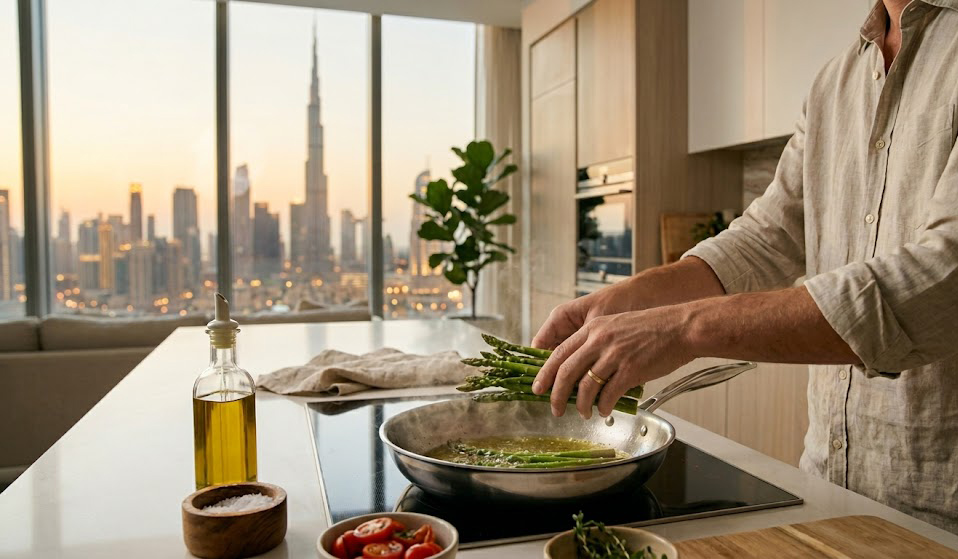
How Restaurants Actually Cook Asparagus (And Why It Tastes Better There)
There is a reason asparagus at restaurants often tastes more refined.
It’s not because they use a different product.
It’s because they control three things very precisely:
- Heat
- Timing
- Moisture
The Role of High Heat
Professional kitchens use stronger heat sources than most home setups.
This allows chefs to:
- Sear the outside quickly
- Lock in moisture
- Create slight caramelization
At home, low heat is the most common mistake.
It causes asparagus to steam instead of sear, leading to a soft, lifeless texture.
A simple adjustment—using higher heat for a shorter time—can completely change the result.
Why Timing Matters More Than Ingredients
Asparagus has a very narrow cooking window.
Undercooked:
- Too firm
- Slightly raw taste
Overcooked:
- Mushy
- Dull green color
- Bitter finish
Most restaurant kitchens aim for a texture that is:
- Tender on the outside
- Slightly crisp inside
This balance is achieved in minutes—not through complex recipes.
Minimal Seasoning, Maximum Impact
Contrary to what many assume, restaurants don’t rely on heavy seasoning.
The standard approach is simple:
- Olive oil
- Salt
- Sometimes lemon or butter
The focus is on letting the vegetable speak for itself.
This is why freshness matters more than spices when cooking asparagus.
A Practical Guide: How to Cook Asparagus at Home (UAE Context)
Step 1: Proper Trimming
The bottom of the asparagus stalk is naturally woody.
Instead of guessing where to cut:
- Bend the stalk gently
- It will snap at the natural breaking point
This avoids wasting usable portions.
Step 2: Choose the Right Method
Different cooking methods suit different needs.
For quick meals (most practical):
- Sauté in a hot pan for 3–5 minutes
For meal prep or salads:
- Blanch in boiling water for 2–3 minutes, then cool
For restaurant-style flavor:
- Roast in the oven at high heat (200°C+) for 8–12 minutes
Each method works—but consistency matters more than complexity.
Step 3: Avoid Overcrowding
A common issue in home kitchens is overcrowding the pan.
This causes:
- Steam buildup
- Uneven cooking
- Loss of texture
Cook in small batches if needed.
Step 4: Serve Immediately
Asparagus does not hold well after cooking.
Even a 10–15 minute delay can:
- Reduce firmness
- Dull the flavor
Restaurants serve it immediately for a reason.
Wholesale vs Retail: Where Should You Buy Asparagus in Dubai?
This is one of the most debated topics among buyers.
There is no single “correct” answer—but there are clear tradeoffs.
Buying from Supermarkets
Advantages:
- Convenient
- Pre-packaged
- Easy for small households
Limitations:
- Higher price per kg
- Limited control over freshness
- Often stored longer before display
Supermarkets prioritize availability over turnover speed.
Buying from Wholesale Suppliers
Advantages:
- Fresher stock (higher turnover)
- Better pricing in bulk
- More consistent sizing and quality
Limitations:
- Requires planning
- Minimum quantities may apply
- Less convenient for small buyers
Some UAE buyers prefer working with structured supply chains rather than fragmented retail sourcing, especially when consistency matters for kitchens or large households.
What Most Buyers Overlook
The key difference is not just price.
It is time between harvest and use.
Shorter time = better taste and texture.
This is why even small buyers sometimes benefit from sourcing closer to wholesale channels, especially during peak seasons.
Common Mistakes That Lead to Poor Results
Across both households and businesses, the same issues appear repeatedly.
1. Storing Asparagus Incorrectly
Many people treat asparagus like dry vegetables.
It is not.
Best practice:
- Store upright
- Place the ends in a small amount of water
- Keep refrigerated
This slows down dehydration.
2. Waiting Too Long to Use It
Asparagus is highly perishable.
Delaying use leads to:
- Loss of sweetness
- Increased bitterness
- Woody texture
Ideally, it should be used within 1–2 days of purchase.
3. Overcomplicating Recipes
Adding too many ingredients often hides the natural flavor.
This is especially common in home cooking.
Simple preparation consistently delivers better results.
4. Ignoring Seasonal Windows
Even though asparagus is available year-round, buying outside peak periods often results in:
- Higher prices
- Lower consistency
Timing purchases around supply peaks improves both value and quality.
Health Perspective: Why Asparagus Remains Popular
Beyond taste and versatility, asparagus is valued for its nutritional profile.
It is commonly associated with:
- Dietary fiber
- Folate (important for cell function)
- Antioxidants
It is also low in calories, making it suitable for a wide range of diets.
A Practical View on Health Claims
While asparagus is often labeled a “superfood,” it is more useful to view it as:
A reliable, nutrient-dense vegetable that fits easily into everyday meals.
The real benefit comes from consistency—not occasional consumption.
The Real Cost Comparison: Home vs Restaurant
To understand the value difference, consider this:
At a restaurant, asparagus is part of a larger experience.
You are paying for:
- Service
- Ambience
- Culinary skill
At home, you are paying only for the product and basic preparation.
Where the Savings Come From
Cooking asparagus at home reduces:
- Markup on presentation
- Labor costs
- Portion-based pricing
For households, this means:
- Better control over quantity
- Lower cost per serving
- Less dependency on dining out
For small businesses or catering setups, the savings scale even further.
Where Restaurants Still Add Value
It is important to recognize that restaurants offer:
- Precision cooking
- Consistent plating
- Flavor pairing expertise
The goal is not to replace that experience—but to understand when it is worth paying for.
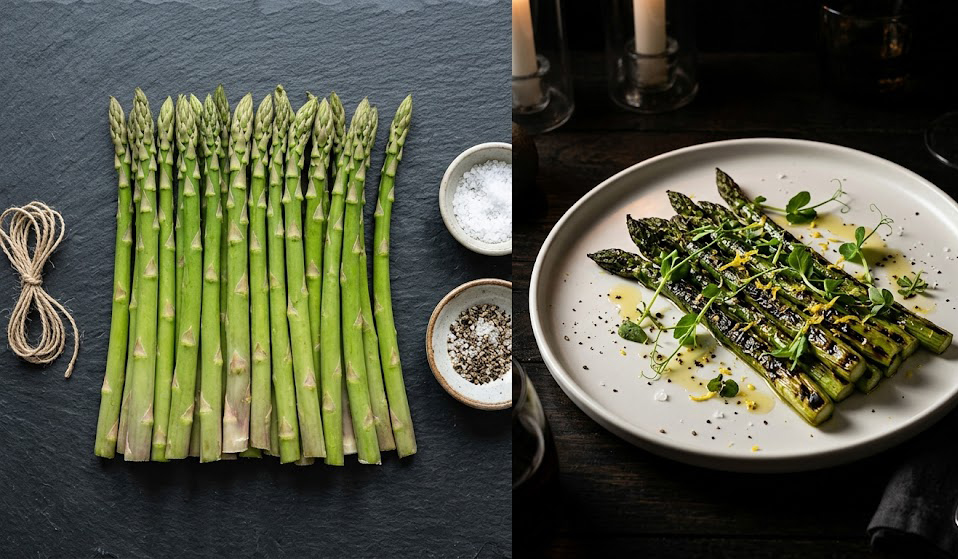
When It Makes Sense to Cook at Home — And When It Doesn’t
Not every meal needs to be recreated at home.
But with asparagus, the decision is often more practical than emotional.
Cook at Home When:
- You want better control over freshness
- You are buying during peak supply periods
- You prefer simple, clean flavors
- You are cooking for multiple people
In these situations, asparagus is one of the easiest “restaurant-style” vegetables to replicate.
Consider Restaurants When:
- The dish involves complex pairing (e.g., sauces, proteins)
- You are looking for a curated dining experience
- You value consistency without effort
Restaurants are not just selling food. They are selling execution.
Understanding that distinction helps buyers make more rational choices.
A Note on Supply Chains: Why Source Matters More Than Brand
One of the most overlooked aspects of fresh produce in Dubai is sourcing consistency.
Buyers often focus on:
- Store name
- Packaging
- Price per unit
But the more important factor is:
How directly the product moves through the supply chain.
Shorter Supply Chains Mean Better Quality
In produce terms, every additional step adds:
- Time
- Handling
- Risk of temperature fluctuation
This directly affects:
- Texture
- Flavor
- Shelf life
Some UAE buyers prefer working with structured wholesale channels rather than fragmented sourcing, especially when consistency is critical.
In practice, suppliers working closely with Dubai-based distributors such as JMB Farm Fresh often observe that tighter supply chains reduce variability—particularly for sensitive vegetables like asparagus.
Why This Matters for Both Homes and Businesses
For households:
- Better shelf life reduces waste
For restaurants and catering:
- Consistency improves customer experience
In both cases, sourcing decisions quietly shape outcomes more than cooking techniques.
Practical Takeaways for Buying and Cooking Asparagus in Dubai
For readers looking to apply this immediately, the key insights are straightforward.
When Buying:
- Look for firm stalks and closed tips
- Avoid dry or woody ends
- Buy smaller quantities more frequently
- Time purchases around peak import seasons
When Cooking:
- Use high heat for short durations
- Keep seasoning simple
- Avoid overcrowding the pan
- Serve immediately
When Evaluating Value:
- Separate ingredient cost from restaurant pricing
- Consider freshness over convenience
- Balance wholesale vs retail based on your needs
Final Thoughts
Asparagus has become a staple in Dubai’s restaurant scene not because it is rare—but because it is reliable.
It offers consistency in a market that often struggles with variability.
For buyers, the opportunity lies in understanding that same reliability.
When sourced well and cooked simply, asparagus does not require professional kitchens to shine.
It requires timing, attention, and a clear understanding of how the product moves from farm to plate.
In a city where dining out is common, knowing when to step back into your own kitchen is a quiet advantage.
And with ingredients like asparagus, that advantage is easier to access than most people think.
FAQ Section
1. Is asparagus expensive to buy in Dubai?
Not necessarily. Prices vary based on season, supply origin, and purchase channel. During peak import periods, asparagus can be reasonably priced, especially through wholesale or high-turnover suppliers.
2. What is the best way to cook asparagus at home in the UAE?
The most practical method is quick sautéing on high heat for 3–5 minutes. This preserves texture and flavor without overcomplicating the process.
3. What is the difference between green and white asparagus in Dubai?
They come from the same plant but are grown differently. Green asparagus grows above ground and has a stronger flavor, while white asparagus is grown without sunlight and has a milder, softer profile.
4. How long does fresh asparagus last after buying?
Ideally, it should be used within 1–2 days. Proper storage—upright with ends in water and refrigerated—can slightly extend freshness.
5. Is it better to buy asparagus from supermarkets or wholesale suppliers?
It depends on quantity and convenience. Supermarkets are easier for small purchases, while wholesale sources often provide fresher stock and better value for larger needs.








 Home
Home  Whishlist
  Compare
  Checkout